May 19, 20265 min read
A Guide to Hiking Crete’s Samaria GorgeMay 19, 2026
5 MIN READ

Writer
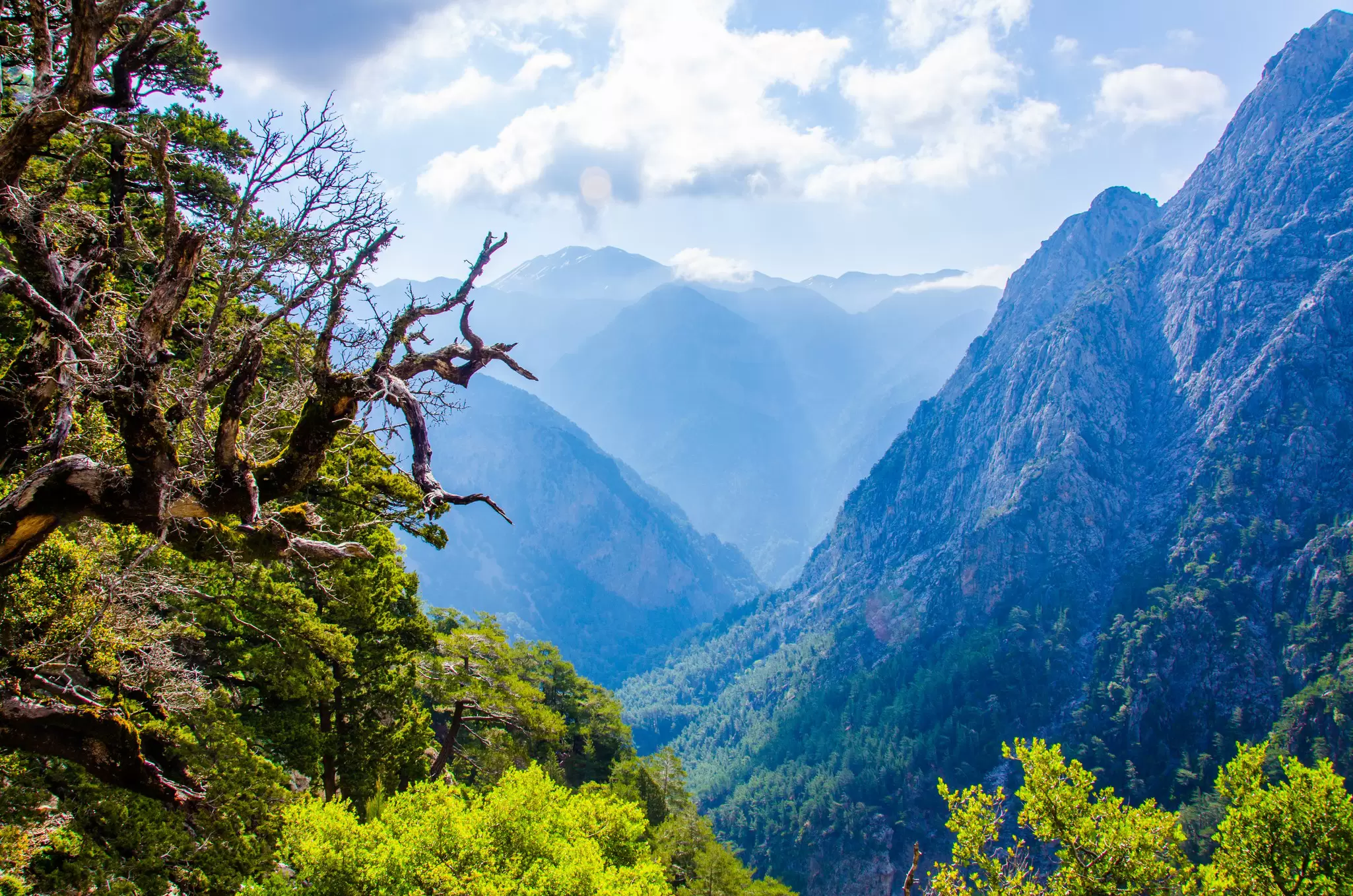
Samaria Canyon, Crete. Simon Dannhauer/Shutterstock
Writer
Highlights
Writer Caterina Hrysomallis guides you through hiking Crete's Samaria Gorge.
Pack light for the 16km descent from Omalos to Agia Roumeli's black-sand beach.
Walk past Samaria's abandoned village and baby-pink oleander before the narrow Gates.
Catch the ferry from Agia Roumeli to car-free Loutro for swims and fresh-caught fish.
Lonely Planet may earn a commission from affiliate links on our site. All recommendations and reviews reflect our own independent opinions.
Think Greece, and images of beaches, blue-and-white villages and seaside tavernas spring to mind. On Crete, Greece’s largest island, visions of thrilling hiking are also in order.
Crete has some of the best hikes in the country – and the Samaria Gorge in the White Mountains might be the best of the lot. The second-largest such gorge in Europe, it once served as a lifeline for Crete, supplying much of the island’s fresh water. Today, it attracts active types from all over, who want combine some exercise with inspiring encounters with nature. And some time on the beach after all that exertion.
Here’s all you need to know about hiking Crete’s Samaria Gorge.
The gorge hike is ideal for those who want a challenge and a glimpse into history – with a cherry on top. At the heart of the gorge is the deserted village of Samaria, first inhabited in the 1300s. Given how hard it is to access, it served as a strategic safe haven through conflicts and wars. Yet it’s what at the end of the hike provides the ultimate motivator.
The point-to-point hike starts at an altitude of 1200m in the mountain town of Omalos, and gradually slopes down to sea level at the black-sand beach of Agia Roumeli on Crete’s southern shore. In the summer, the Mediterranean beckons for a celebratory post-hike swim.
The 16km (10-mile) one-way trail takes about 6 to 7 hours to complete. I strongly recommend planning ahead to continue your journey from Agia Roumeli and staying on one of the southern coast’s beach towns. My top pick is Loutro, a cove that’s petite and perfectly picturesque, with some of the clearest waters I’ve ever soaked in.
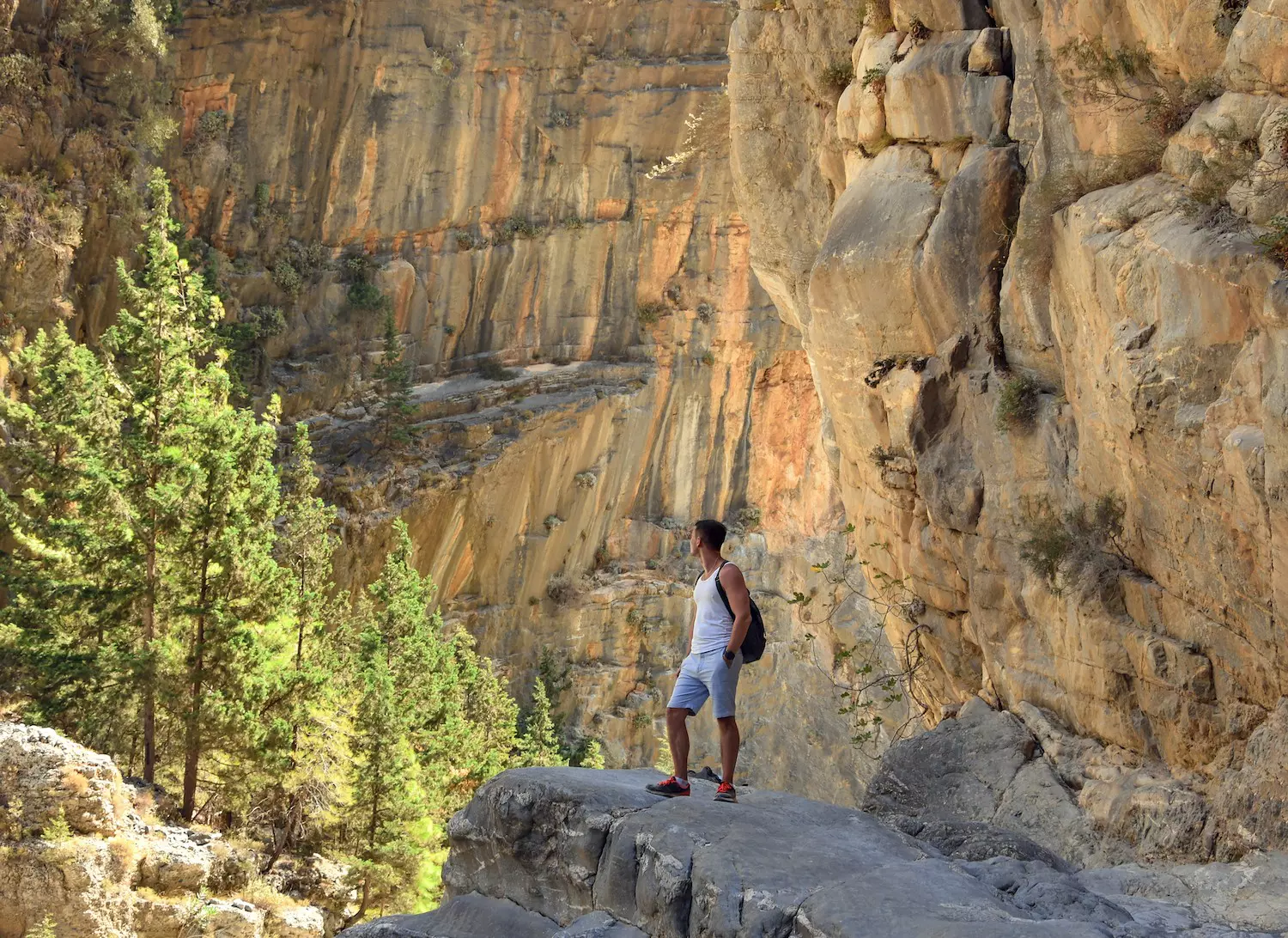
Whether you’re continuing on to Loutro or just doing the hike itself, packing light is the way to go, for the more weight you have on your back, the bigger the challenge. Packing lighter could reduce your chances of stumbling or even falling on the downhill trail.
This means finding a place to store what you don’t carry on your back. In my opinion, the best option is to stay in the city of Hania before the hike, then request to store your luggage at your accommodation while you spend some time away. (Hania, by the way, has great appeal, including its dining scene and remaining mix of Roman, Byzantine, Ottoman and Venetian architecture.)
On the practical side, Hania is a transport hub, making it a great setting-off point for the gorge. After your hike and beachside getaway, you can loop back to Hania to retrieve your luggage – and continue onward to see more of Crete.
There are a few ways to get to Omalos, the most affordable option being the the public bus, with regular departures from Hania in the warmer months. It’s best to catch an early-morning bus, to allow enough time for the hike and a swim at Agia Roumeli before heading on to your next destination.
If you want to leave the planning to others, travel companies also run guided tours of the gorge, including bus transfers. If you don’t need a ride back to your origin and want to continue onward to Loutro, be sure to let your guide know.
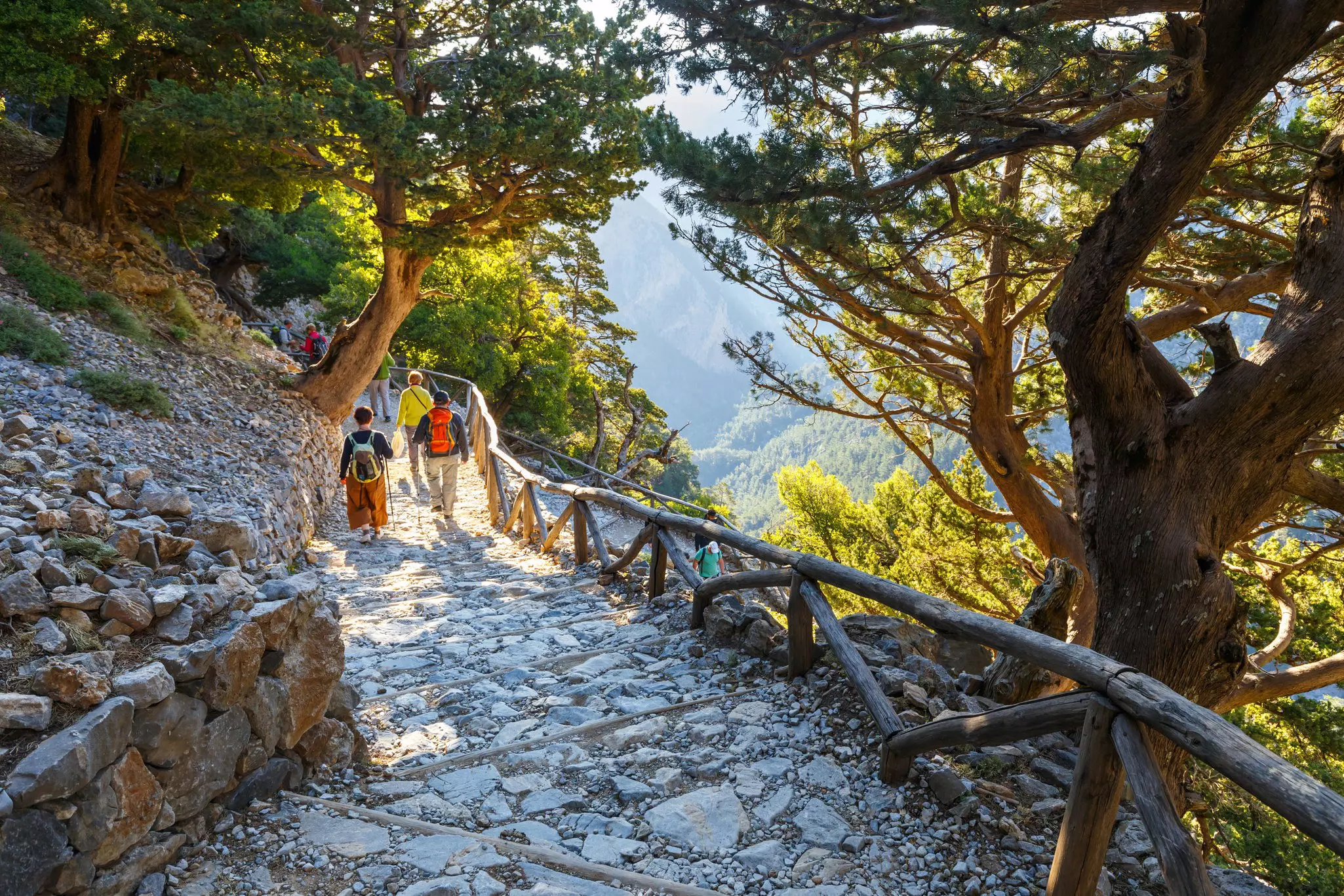
You will need to take care on the gorge’s steep and narrow stretches. The start of the hike involves a steep descent, so approach with caution.
When these hardest parts are over, you’ll pass an ancient church and the abandoned village of Samaria. You’ll see how the gorge’s tough, rugged terrain is softened throughout by the presence of baby-pink oleander flowers.
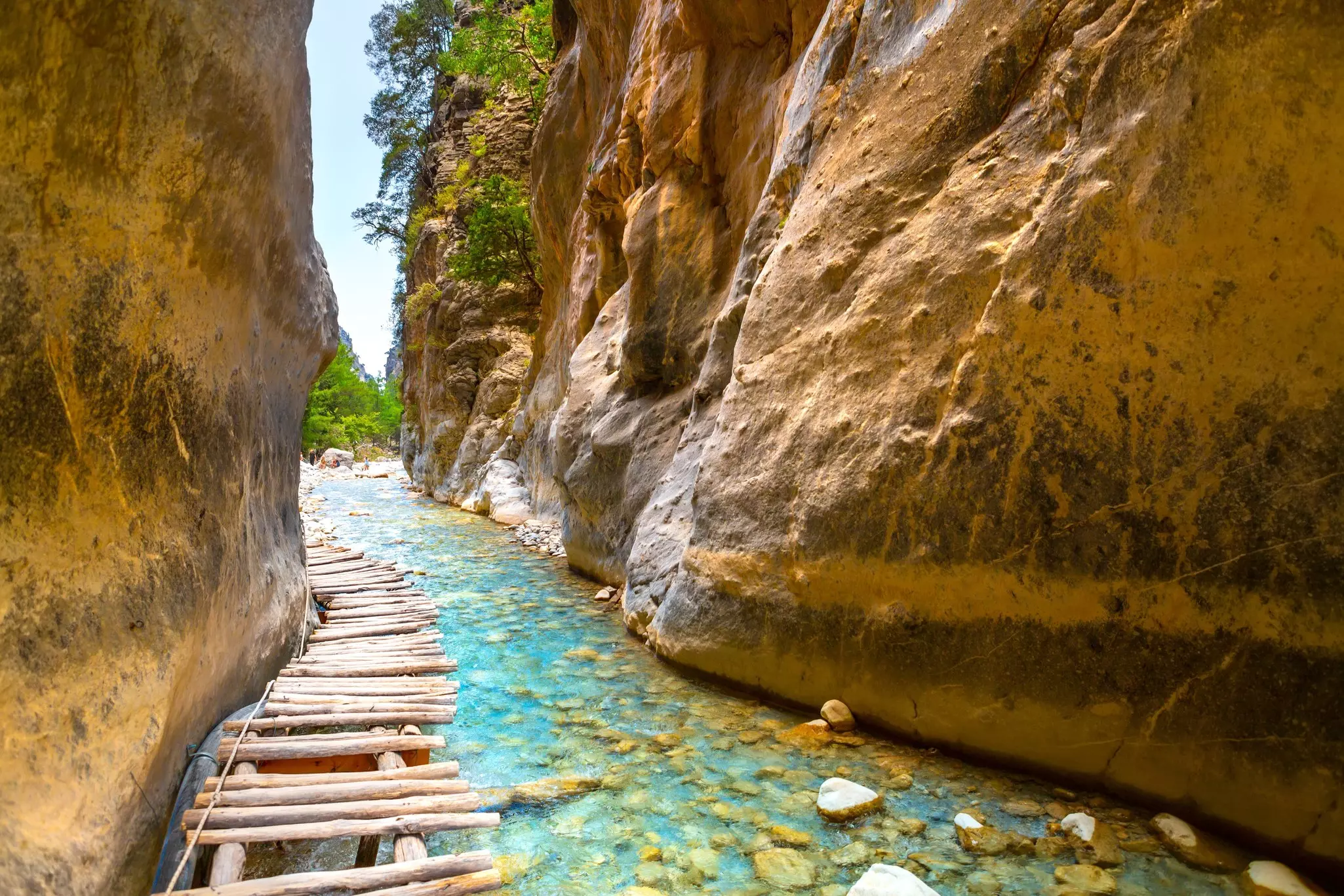
The path narrows at the “gates of Samaria,” where the gorge’s walls soar to about 300m. Small wooden bridges zigzag to guide hikers over an impossibly clear stream. Crossing these is perhaps the most fun part of the hike.
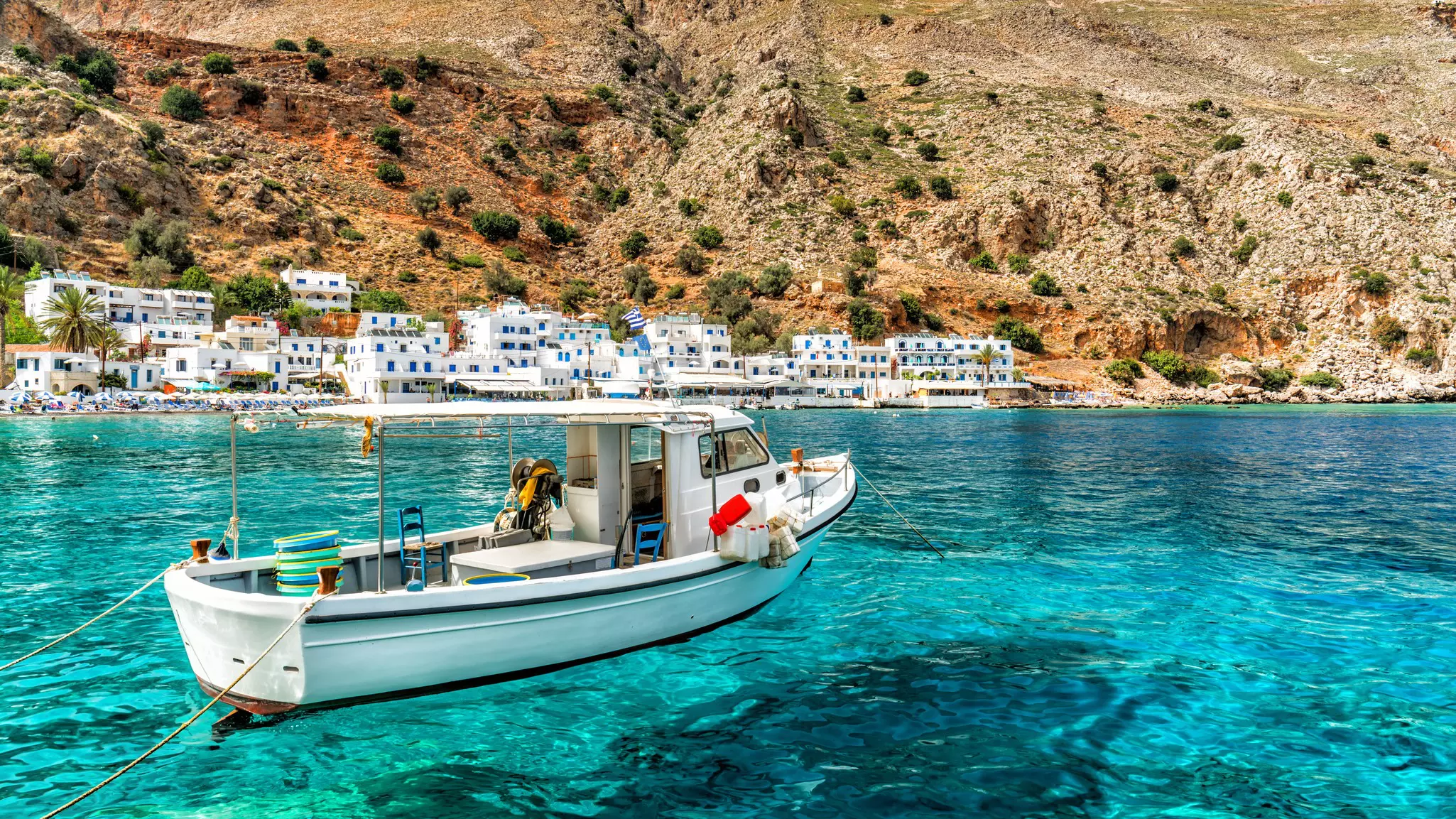
The ferries at the gorge’s end at Agia Roumeli will whisk hikers to several neighboring beach towns, including Loutro. If you want to visit Loutro, it’s best to book your ferry ticket and accommodation in advance to ensure you don’t miss out, especially in the summer.
Part of what makes Loutro exceptional is that there are no cars; it’s only accessible via ferry or foot from the neighboring town of Hora Sfakion. Even if cars weren’t banned, it would be geographically impossible for them to reach Loutro, since the village is perched on the sea, protected by a dramatic 600m-high cliff face, with no roads in our out. I’d recommend staying at least 2 nights here to enjoy swims, fresh-caught fish and the chance to unwind.
From Loutro, you can catch a ferry to the adjacent town of Hora Sfakion, from where you can catch a bus through the White Mountains back to Hania.
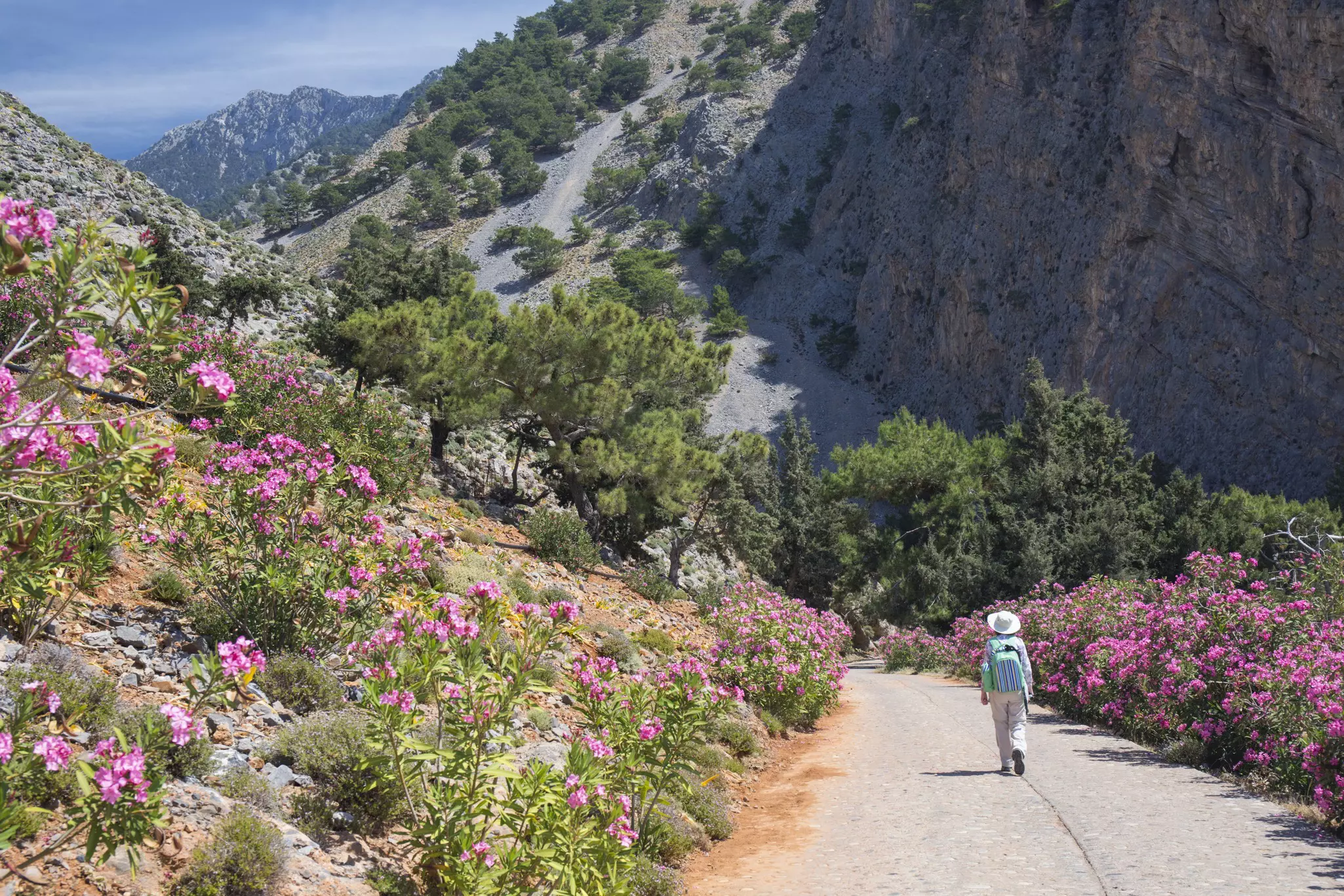
If I did it again I might do it in reverse – though not the full length (that steep section at the top would be intense even without all the hikers coming down). Instead, I’d walk a shorter loop trail, starting at Agia Roumeli and heading in via the “end” of the gorge for a different, calmer experience.
Book your Greece trip with Lonely Planet Journeys
See Greece how it's meant to be seen
Accommodations, activities and ground transportation all taken care of, so you can focus on the fun part. Tell us what your dream trip to Greece looks like, and our local experts will build it from scratch. Or start with one of our itineraries and make it your own.

Explore related stories