The Bahamas
Spangled between the depths of the North Atlantic and Florida's eastern coast, the Bahamas – not technically part of the Caribbean – comprises more than 700 stunning subtropical islands and 2400 cays, most uninhabited, and all fringed by spectacular coral and fathomless ocean trenches. From the grit and bustle of funky Nassau to the vast mangroves of Andros, there's an astonishing array of beaches, reefs, forests and historic towns to be discovered, all within the compass of an hour's flight.
The Bahamas is an inescapably pricey destination but whether sailing around the Abacos’ history-filled Loyalist Cays, partying at Paradise Island’s Atlantis resort, swimming with wild pigs or lounging on Eleuthera’s pink-sand beaches, there’s likely a Bahamian island to match most every water- and sand-based compulsion, all framed by a backdrop of gorgeous, mesmerizing blue.
The Bahamian locals are a laid-back lot and a night spent at a fish fry with a rum punch in hand is not to be missed.

Featured Story
Top 14 beaches in The Bahamas
4 min read — Published February 22nd, 2021
Lonely Planet EditorsWriter
With more than 700 stunning islands making up The Bahamas, picking the best beach is no easy task. Here's our list of the best beaches in The Bahamas.
Latest Stories from The Bahamas
Planning Toolkit
Tips & Travel trends to help you pick the perfect time to visit this destination.
Everything you need to know about services, requirements, and the application process when traveling internationally.
Check out these fun-filled activities that the entire family can enjoy.
Browse the various transportation options to make your trip that much easier when you arrive.
Top attractions
These are our favorite local haunts, touristy spots, and hidden gems throughout The Bahamas.
National Park
Exuma Cays Land and Sea ParkFounded as the world's first land-and-sea reserve in 1958, this stunning 283-sq-kilometer expanse of reef, cay and sea is world-famous among divers. One of the jewels of the Bahamas, the reserve protects the second largest barrier reef in the Western hemisphere, after the Mesoamerican Reef in Central America, ensuring prolific marine fauna below the water and plentiful land-based life on shore. Unfortunately (or fortunately, in conservation terms) it's only accessible by private boat or charter, so getting here can be costly, but most visitors agree it's worth the expense for the spectacular natural environment. Who to do in Exuma Land & Sea Park Most people who make their way to this idyllic Marine Protected Area are drawn by the wildlife. The reserve is run according to strict No Take principles, meaning nothing can be taken away from, or left on the islands, preserving a pristine natural ecosystem for an amazing variety of marine life, abundant birdlife, and some interesting critters on land. Keep an eye out for rare Bahamian rock iguanas, rodent-like hutias, and stromatolites, created by blue-green algae that have been alive for more than 2000 years. The most thrilling part of Exuma Cays Land & Sea Park is under the water, so you'll need to bring your own snorkeling or diving gear (and your own boat) or arrange a boat trip in either Nassau or George Town, the tiny capital of Great Exuma, the largest cay in the Exuma group. Several operators offer diving and snorkelling day-trips in and around the marine reserve, including Dive Exuma in George Town. You can also come on all-inclusive, week-long diving trips that hopscotch around the park's top dive sites. Commonly seen marine species include angelfish, eagle rays, reef sharks, Nassau grouper, porcupine fish, clown fish, lobsters and turtles, though there's a chance of spotting bull sharks and other larger critters at several locations in the park. Another perk for divers is the collection of 'blue holes' formed by collapsed undersea sinkholes, which lie dotted around the islands, with several close to Stocking Island. However, the most famous site is Thunderball Grotto, a shallow network of caves and tunnels that will be forever linked to the eponymous 1965 James Bond film. There are also some charismatic non-native animals who have made a name for themselves at Exuma. While divers are off swimming with sharks elsewhere in the Bahamas, visitors to the Exumas swim with... well, pigs. The feral hogs on uninhabited Major Cay have been living here for well over a decade, and they routinely swim out from the shore in search of food, usually provided by visiting day trippers (if you participate, don't get too close, and use natural plant-based food). Getting to Exuma Cays Land and Sea Park There are several ways to reach this stunning natural playground, though costly flights and boat fares are an unavoidable part of getting around in the Bahamas. Some high fliers come with their own boats, but ordinary folks usually visit on live-aboard dive trips or day-trips by chartered boat from Nassau, or Great Exuma, the sleepy, 37-mile-long cay at the south end of the Exuma archipelago. While you may not save much money, there are definite advantages to coming via Great Exuma, not least the chance to glimpse Bahamian life away from the main islands. Great Exuma is about 135 miles southeast of Nassau and the island's garden shed-sized Exuma International Airport receives regular flights from Nassau, Rock Sound, Atlanta, Fort Lauderdale and Miami. It's a short cab ride from the airport to George Town, the island's diminutive capital, with its scattering of low-rise, pastel-colored buildings. There are a couple of boat trip and dive operators based at the town jetty, and you can find budget accommodation at the motel-style Marshall's Guest House, or posher rooms (and good Italian food) at Club Peace & Plenty. The beaches around George Town are no great shakes, but water taxi operators can zip you over to Stocking Island, the gorgeous sand-edged islet to the north of Great Exuma. Bank on around BS$20 for a return trip – just tell the boatman when and where to pick you up. There are beach bars and resort restaurants dotted along the long, lovely beach that traces the north shore, but with the low, scrubby Bahamian vegetation, there's not much shade – slap on the sunscreen. Alternatively, take a taxi to languorous Tropic of Cancer Beach in Moore Hill on neighboring (and linked) Little Exuma. If you have your own boat, it's a different story; mooring fees inside Exuma Land and Sea Park are moderate (from BS$25) and you can kayak and camp on the Hawksbill, Warderick Wells and O’Briens cays inside the reserve if you pay BS$250 for a permit, plus a B$25 daily fee. Make arrangements at the Exuma Cays Land and Sea Park Headquarters on Warderick Wells Cay. If you don't have your own boat, Out Islands Explorers in George Town offers sailing trips, guided kayak trips, and kayak rentals.
National Park
Blue Holes National ParkThe limestone rock of the Bahamas is pock-marked by blue holes–deep vertical 'caves' created by the collapse of limestone sinkholes. Over the centuries, these eroded hollows have filled with rain and seawater, creating unique aquatic ecosystems all over the Bahamas, including in this fascinating national park on Andros in the Out Islands. Many offshore sinkholes can be explored by divers, but Blue Holes National Park is the best place to explore this remarkable geological phenomenon on land–and by explore, we mean 'throw on your swimsuit and dive in'. Exploring Blue Holes National Park Most tropical archipelagos were created by volcanic activity but the islands of the Bahamas were formed when a massive plateau of prehistoric limestone subsided into the sea. This twist of geology has created perfect conditions for the formation of blue holes, with water constantly dissolving new hollows beneath the bedrock (you'll find similar geological conditions along the cenote -filled coast of Yucatán in Mexico). Visitors to the Bahamas will find blue holes on many islands but Andros is the easiest place to get close to blue holes on land. This 40,000-acre national park comprises vast tracts of Caribbean pine and coppice forest pitted with dozens of blue holes–more than 50 at the latest count, but future sinkholes are forming all the time below the surface. Trails and info boards introduce you to the flora, fauna and geology of these unusual ecosystems, but for most people, the big attraction is being able to swim in the cool waters of these idyllic-looking natural swimming holes. The most accessible blue hole is Captain Bill's Hole, with a swimming deck, toilets and a high platform for leaping into the water. It's easily reached from Andros Town, following a lane that leads inland off the Queens Hwy near Mapen's Store. Rainbow Blue Hole, to the east of the Queens Hwy, is also very accessible. Other blue holes take a bit more effort to reach; marine explorer Jacques Cousteau put the sinkhole known as Cousteau's Blue Hole on the map in the 1970s after releasing dye into the water to prove that the blue hole was linked by underground channels to the sea. With a mask and snorkel, you might spot some of the blue holes' unique cavefish, which have evolved to thrive in these unusual conditions. However, the best blue holes for aquatic life are offshore–the dive center at Small Hope Bay Lodge on the fringes of the national park can arrange dives to several blue holes offshore from Andros that are teeming with marine life. Travel on from Andros to Long Island via Nassau, and you can explore Dean's Blue Hole, the second deepest blue hole in the world, which drops 203m, right off the beach. It's an amazing site for scuba and free-diving, opening onto a chamber that is vastly bigger than the bottleneck opening at the surface. Getting to Blue Holes National Park Coming from Andros Town, the access road for the park heads west off the Queen's Hwy along Leroy Hanna Dr from the settlement of Love Hill. Scooters and cars can be rented for exploring. Ask locals to point you towards the tracks leading to specific blue holes. To reach Dean's Blue Hole on Long Island, you'll need to fly into Deadman's Cay airport via Nassau.
National Park
Clifton Heritage National ParkThe scrub forest, wetlands, beaches and historic relics of Clifton Heritage National Park narrowly avoided being bulldozed to make space for new tourist developments, but thankfully, this strip of coast was preserved, protecting an important piece of the Bahamas ' natural and cultural heritage. The park is probably most known for its surreal underwater sculpture garden, but on land are important sites from the islands' colonial and pre-colonial history – it's worth swinging by while exploring New Providence on a day trip from Nassau. Exploring Clifton Heritage National Park Only narrowly saved from the developers in 2000, the youngest national park in the Bahamas bears witness to the whole spectrum of human habitation on the islands. Tucked into a huge green swagger of coppiced woodland and wetlands are Loyalist and slavery-era remains left behind from the abandoned Whylly Plantation, a garden of artworks by Bahamian artists, and sites that were sacred to the island's original Lucayan inhabitants. The former Whylly Plantation crowns a tall cliff, and dotted amongst the vegetation are the remains of modest huts and the stone walls of the owners' sprawling mansion, slowly being reclaimed by nature. Some structures have been restored to show how they would have appeared in colonial times, when the island was dotted with cotton plantations–a reminder of Bahamas' history that can be overlooked while enjoying its beaches and cocktails. Tours will walk you through the complex history of the site, which still feels a million miles from the big city crush of Nassau. The cliffs drop down to the water at several lovely beaches named for their cameo roles in movies filmed on New Providence. There are no prizes for guessing what was filmed at Jaws Beach–a pretty, low-key and safe beach for swimming and snorkelling–while Flipper Beach featured in the eponymous dolphin flick (an early outing for a young Elijah Wood). Meanwhile, scenic Johnston Beach was a location for cheesy reality TV show The Bachelorette. Your chances of seeing sharks or dolphins are extremely slim, but you might spot the odd courting couple. Beneath the surface of the ocean are the surreal forms of the Sir Nicolas Nuttall Coral Reef Sculpture Garden, centered on Jason de Caires Taylor's Ocean Atlas, a huge statue of a Bahamian girl holding the future of the oceans on her shoulders. More statues are scattered over the sandy seabed, slowly being claimed by marine life. The project was launched in 2014 by the Bahamas Reef Environment Education Foundation and you can explore with a mask and snorkel for a BS$22.50 fee (or BS$50 if you need to hire gear) which helps support their work. Getting to Clifton Heritage National Park The reserve is about as far as you can get from Nassau on New Providence without falling into the sea. Local bus services from Nassau fizzle out well short of the west coast, so it's easiest to come by taxi, or with a rented car or scooter. While you're here, you can head onto Adelaide Village, an outpost originally settled by people freedom from slavery, which has a fine sandy beach where you may spot the odd (harmless) nurse shark if you go snorkeling.
House
Dolphin HouseLooking like something Gaudí might have created on a tropical holiday, this astonishing house is the lifelong labor of Bimini historian and poet Ashley Saunders. Born on the site (all the surrounding houses belong to the Saunders family), Ashley was inspired by swimming with wild dolphins, and has been building this 'tribute' to them since 1993. Think of it as a shell trinket box on a monumental scale; it's one of the most unique sights in the Bahamas, and well worth a trip if you're in the Bimini Islands. Finding Dolphin House Closer to Miami than Nassau, this pocket-sized paradise comprises North, South and East Bimini and a scattering of private and uninhabited islets. To find Dolphin House, head to Alice Town on fishing hook-shaped North Bimini, the largest island in the group. This slightly haphazard but good-natured island town is an easy BS$5 bus and ferry ride from the airport on South Bimini, and it also has some budget places to stay – a rare find in this group of islands. Sea Crest Hotel is the pick of the cheapies. Dolphin House lies inland from the shore, near the big game fishing marina. Plastered with dolphin mosaics, sea glass, shells, Lucayan artifacts, coconut-rum bottles, pickled-sausage jars and every conceivable type of flotsam and jetsam, it's absolutely unique and quite beautiful. There's a historical precedent for this assembly of found objects – the Saunders family have lived in the Biminis for five generations and once made a living scavenging from shipwrecks. Downstairs you'll find a museum filled with salvaged ephemera such as a brass naval cannon from an 18th-century British wreck, photos of Ernest Hemingway having his hair cut, conch shells used by the islands' pre-colonial Lucayan inhabitants, copper from a pirate ship and countless other random objects. There's also a gift shop, where you can get both volumes of Ashley's written history of Bimini. The Hemingway photos hark back to the 1930s, when 'Papa' used to come this way to wrestle with marlin and other big game fish, renting a small cottage called Blue Marlin near Brown's Marina. If you feel inclined to follow in Hemingway's footsteps, local fishing boat operators can equip you with a rod and tackle and take you out in pursuit of sharks, sailfish, swordfish, marlin and more. A good place to start is the Bimini Big Game Club, a tasteful, 1950s resort that attracts shoals of anglers in season. To preserve fish populations, tag and release is the way to go. You can also dive some interesting local sites (including sandbars frequented by hammerhead sharks) with Neal Watson’s Bimini Scuba Center. Getting to Dolphin House & North Bimini The islands of the Bahamas are widely scattered, so getting around can be complicated and expensive. Set midway between Nassau and Florida, the Biminis are best reached via a 30-minute flight from Nassau, Miami or Fort Lauderdale. Alice Town is the best hub for independent travelers; the swanky Resorts World complex attracts high fliers on all-inclusive packages.
Gardens
Garden of the GrovesThe west end of Grand Bahama is mostly scrub pine and asphalt, so finding this green maze of walkways, trees and water features is like discovering an oasis. The gardens are named not for the leafy glades but for Wallace Groves, the controversial financier who transformed Freeport and Lucaya from sleepy backwaters into essential stops for the international jet set. Today, nearly fifty years after the first shrubs were planted, the gardens are a green, serene escape from the built-up buzz of Freeport. Exploring the Garden of the Groves The Garden of the Groves has been through a lot over the years. The city of Freeport has expanded almost to the front gates, and Hurricane Frances raged through in 2004, followed by Hurricane Dorian in 2019. But with support from local people, the gardens have bounced back every time, and today, there are more than 10,000 species of flowers, shrubs and trees making a green bower of the five hectares of grounds. A walking trail meanders through groves of tamarind and Java plum trees, past cascading (man-made) waterfalls, a placid lagoon and a tiny 19th-century hilltop chapel that has become a popular spot for wedding ceremonies. There's a big playground and a calm cafe, serving conch burgers, juices and cocktails, and the spiritually minded can take a meditative stroll through the limestone labyrinth, a replica of the one in the cathedral at Chartres in France. Kids will dig the tropical birds and butterflies who swing by the gardens, and the raccoon habitat, where specimens caught causing trouble elsewhere on the island are bought to retire in comfortable captivity. The Bahamian raccoon is believed to have arrived with seafarers from Guadeloupe in the 19th century, and these imported critters cause havoc for local bird and reptile life, hence the relocation program. It's worth saying something about Wallace Groves, the gardens' controversial namesake. The larger-than-life financier moved to Grand Bahama from the US after serving two years in prison for fraud and conspiracy, and set about transforming the island, building a new business empire on lumber, casinos, and–it's claimed–backhanders to and from members of the Bahamian elite and the Miami Mob. He certainly put Grand Bahama on the map, and the gardens are one of the best parts of his legacy. Getting to the Garden of the Groves The Garden of the Groves is several kilometers east of Freeport on Midshipman Rd; the island's minibuses are fairly relaxed about following fixed routes, and drivers will take you to the gardens for about BS$5 if you request it. Alternatively, take a taxi or rent a car or scooter.
Museum
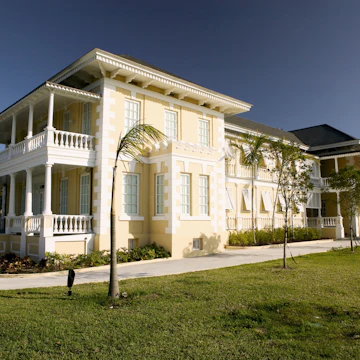
National Art Gallery of the BahamasAnchoring the West Hill St tourist enclave, the National Art Gallery is a welcome oasis inside the stately 1860s-era Villa Doyle and one of the gems in the Bahamian cultural crown. The permanent collection focuses on modern and contemporary Bahamian artists, from renowned sculptor Antonius Roberts to folk painter Wellington Bridgewater. There are also pieces by artists of the wider Caribbean, and temporary exhibits on ecological, cultural and historical themes relevant to the islands.
Aquarium
Discover Atlantis TourStrolling through a glass tunnel while sharks glide overhead is, simply put, awesome. This thrill is found in the Predator’s Lagoon, one of the exhibits on this walking tour of Atlantis’ Marine Habitat aquariums and faux-archaeological sites. Look for manta rays, spiny lobsters, striped Nemos, translucent jellyfish and thousands of other sea creatures in the underground Great Hall of Waters.
Factory
Graycliff Cigar CoWandering into this cigar factory is like falling into 1920s Cuba. In a narrow, smoke-yellowed room with old-fashioned mosaic floors, torcedores (cigar rollers) are busy at work, their fingers a blur as they roll hand-dried tobacco leaves into premium stogies. You can wander through and take photos for free, or a guided factory tour is BS$10. Book ahead for a cigar-rolling lesson (BS$75) or a cigar-rolling demo with rum tasting (BS$150).
Beach
Pink Sands BeachThe powdery sand here shimmers with a pink glow – a result of finely pulverized coral – that’s a faint blush by day and a rosy red when fired by the dawn or sunset. It’s been called the world’s most beautiful beach by a slew of international glossies, and we won’t argue, especially when you get past the rows of blue-and-white umbrellas and loungers. Follow Chapel St or Court St to public access paths to the Atlantic side shores.
Top experiences
Whether it’s a guided tour of a historic landmark, private tasting of local delicacies, or an off-road adventure — explore the best experiences in The Bahamas.
- Activities
Tours, Sightseeing & Cruises
Nassau Food Tasting and Cultural Walking TourTours, Sightseeing & Cruises
Sandy Toes Full Day Excursion to Rose IslandTours, Sightseeing & Cruises
Nassau Shore Excursion: Island Highlights Sightseeing TourTours, Sightseeing & Cruises
Nassau Rum and Food Walking TourTravel & Transportation Services
Exuma Full-day ExperienceTours, Sightseeing & Cruises
Full-Day Small-Group Tour to Pig Beach by PowerboatTours, Sightseeing & Cruises
CocoNutz Cruisers Electric Bicycle TourTours, Sightseeing & Cruises
ATV Island Tour (Beach Break, Lunch,Tropical Drinks with Free pickup & drop offTours, Sightseeing & Cruises
Atv tour of NassauTours, Sightseeing & Cruises
Rum Reggae and Rhythms TourTours, Sightseeing & Cruises
Funky Nassau Jeep AdventureOutdoor Activities
Pearl Island Escape incl. Snorkeling Experience with LunchTours, Sightseeing & Cruises
007 Morning Half Day Boat Charter - Rose IslandTours, Sightseeing & Cruises
Flight & Small Group Tour to Swimming Pigs with 7 Stops Including Sunken PlaneTours, Sightseeing & Cruises
Swimming Pigs, Pink Sand Beaches & Snorkeling to Spanish WellsTours, Sightseeing & Cruises
Morning Pig Encounter - Pigs can’t fly, but they do swim!
Featured videos
Unusual beaches you have to see to believe
2:28