Oct 23, 202612 min read
The 12 Best Things to Do in CambodiaJan 8, 2026
9 MIN READ

Writer
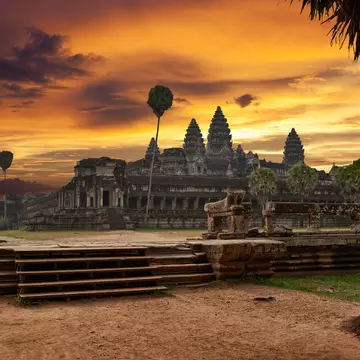
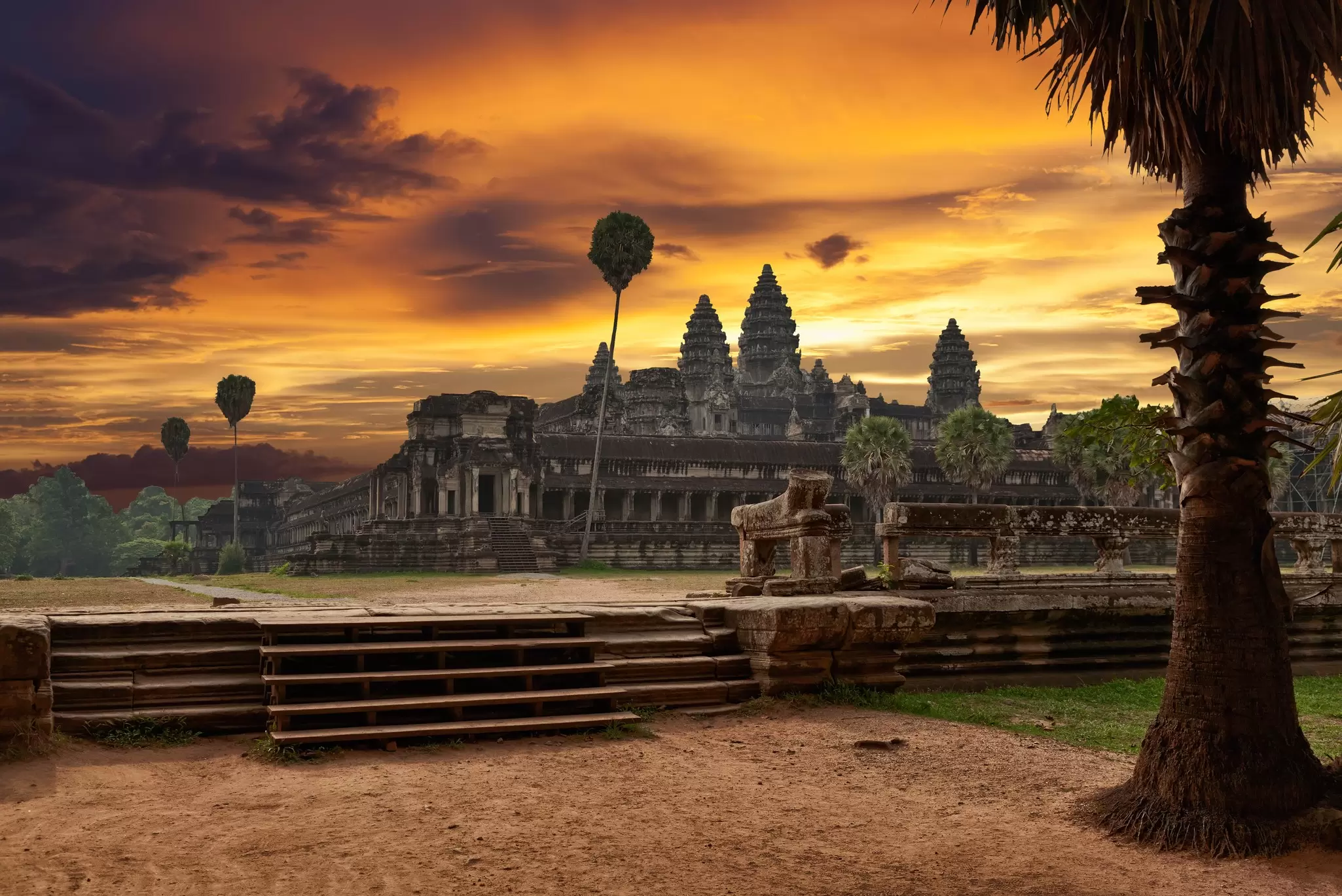
Angkor Wat at sunset. Muzhik/Shutterstock
Writer
Highlights
Writer Nick Ray guides you through Angkor Wat, the world's largest religious building.
Admire the 800m bas-reliefs and 2000 apsara carvings, then climb to the Bakan Sanctuary.
Arrive via Siem Reap, rent a remork-moto or bicycle and allow at least three hours inside.
Dress modestly to reach the upper level; a three-day pass for US$62 unlocks dozens of temples.
Lonely Planet may earn a commission from affiliate links on our site. All recommendations and reviews reflect our own independent opinions.
In the 12th century, the Khmer kings of Cambodia packed the equivalent of all of Europe’s great cathedrals into an area the size of Los Angeles. Almost a millennium later, the fabled Temples of Angkor are a bucket-list destination for history enthusiasts – and for anyone who wants to be dazzled by human achievement.
Indeed, the temple complex, a UNESCO World Heritage site, is an essential stop for many travelers to Southeast Asia. And the star of the site is Angkor Wat – the ultimate statement of Khmer architectural ingenuity, a perfect blend of religious symbolism and symmetry, and the largest religious building in the world. The temple remains a source of fierce national pride in Cambodia: the structure is the only building to be featured on a national flag.
Since almost every inch of this immense complex is covered with intricate carvings and motifs, there’s a huge amount to see and interpret. Which means it pays to do a little homework on this most iconic of temples before setting out.
Here’s all first-time visitors to Angkor Wat need to know.
While it’s possible to visit Angkor Wat at any time of year, the peak season runs from November to February. In this window, the weather is relatively dry and cool – although it’s still plenty hot enough for most visitors, with daily high temperatures reaching around 85°F (30°C).
The coolest (not to mention most dramatic) time of day to visit the site is at sunrise, though you should expect crowds. (The site opens at 5am, though the upper level, known as the Bakan Sanctuary, doesn‘t open until 7:30am.) The site empties out around lunchtime, when tour groups head into town, though the sun is at its peak. Sunset is another popular time to visit, when the temple appears to glow as the sun dips. Be aware that Angkor Wat closes soon after sunset; the site is not currently open at night.
Allow at least 3 hours to do Angkor Wat justice – or set aside half a day if you want to see every nook and cranny. Many visitors arrive early for sunrise, then stick around to explore while temperatures are cooler, between 6am and 9am.
Don’t forget that Angkor is much more than its namesake wat (temple). More than 70 spectacular temples lie scattered around Angkor Wat, such as the Bayon, with its vast carved faces of the Buddhist deity Avalokiteshvara, and banyan-encrusted Ta Prohm (perhaps familiar from Lara Croft: Tomb Raider). You’ll have no problems filling at least 3 days exploring the complex.
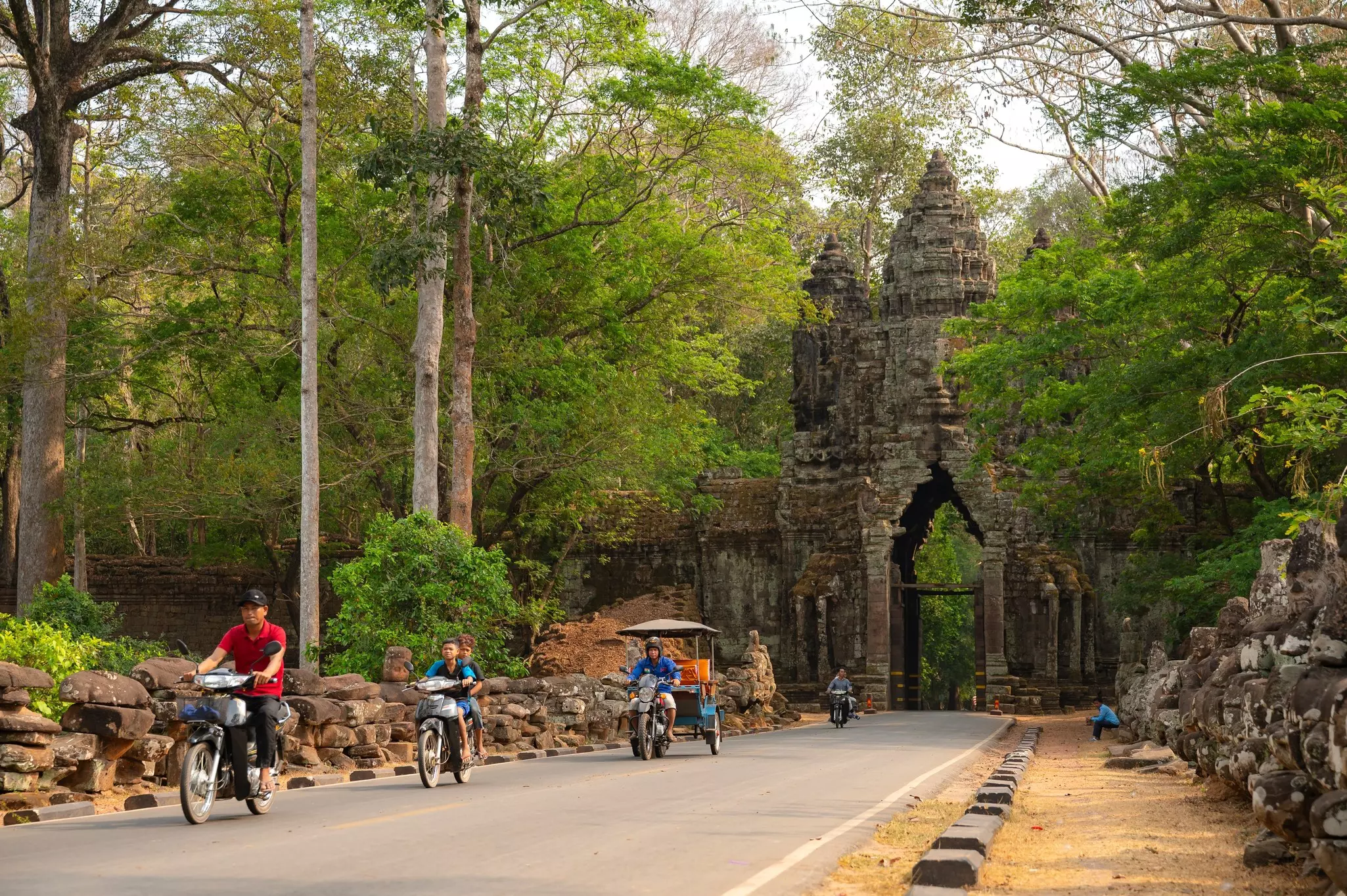
Served by flights from around Southeast Asia, Siem Reap–Angkor International Airport (SAI), 45km from the town of Siem Reap and the Angkor complex, is the global gateway to Angkor Wat. A taxi from the airport to town costs about US$35 one-way; a regular shuttle bus costs US$8 per person. Buses and minivans connect Siem Reap with other popular destinations in Cambodia, including Phnom Penh and Battambang, as well as Bangkok in Thailand.
To get from Siem Reap to Angkor Wat, you can choose from rental motorbikes (good for one or two people), remork-motos (tuk-tuks) that fit two to four passengers, and private cars or minivans, best suited to families or small groups.

Lonely planet’s trusted travel insurance provider
Travel with confidence. Protect your trip and your wallet.
We don’t represent World Nomads, we receive a fee from quotes using this link. This is not a recommendation to buy travel insurance.
Eco-friendly options for exploring include mountain bikes and electric bicycles available for rent in Siem Reap: a cycling path connects the town with Angkor Wat and other key temples. Guided tours can also be arranged through hotels and tour operators in Siem Reap.
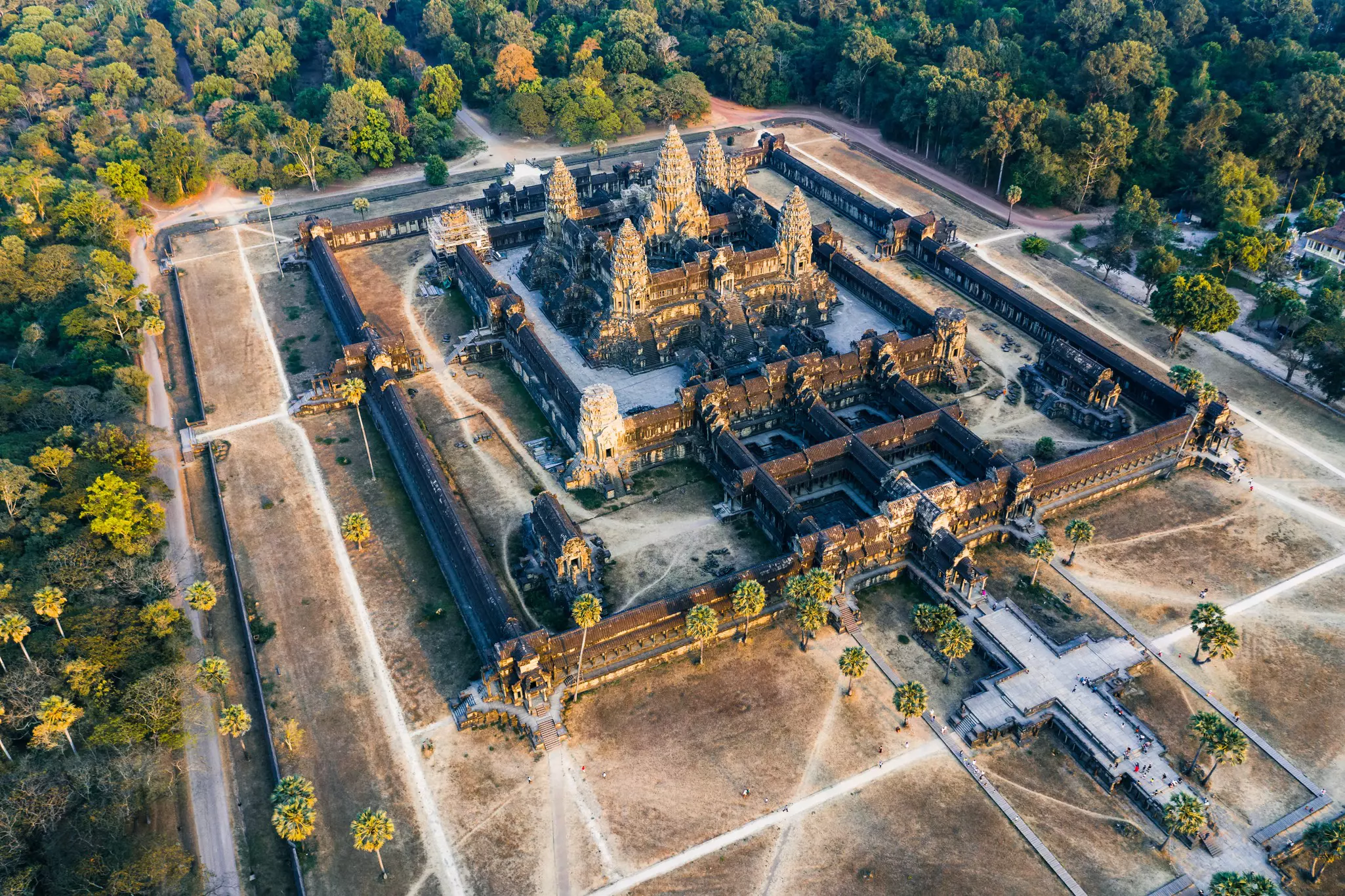
Angkor Wat has the epic proportions of the Great Wall of China, the detail and intricacy of the Taj Mahal and the symbolism and symmetry of the Great Pyramid at Giza – all rolled into one.
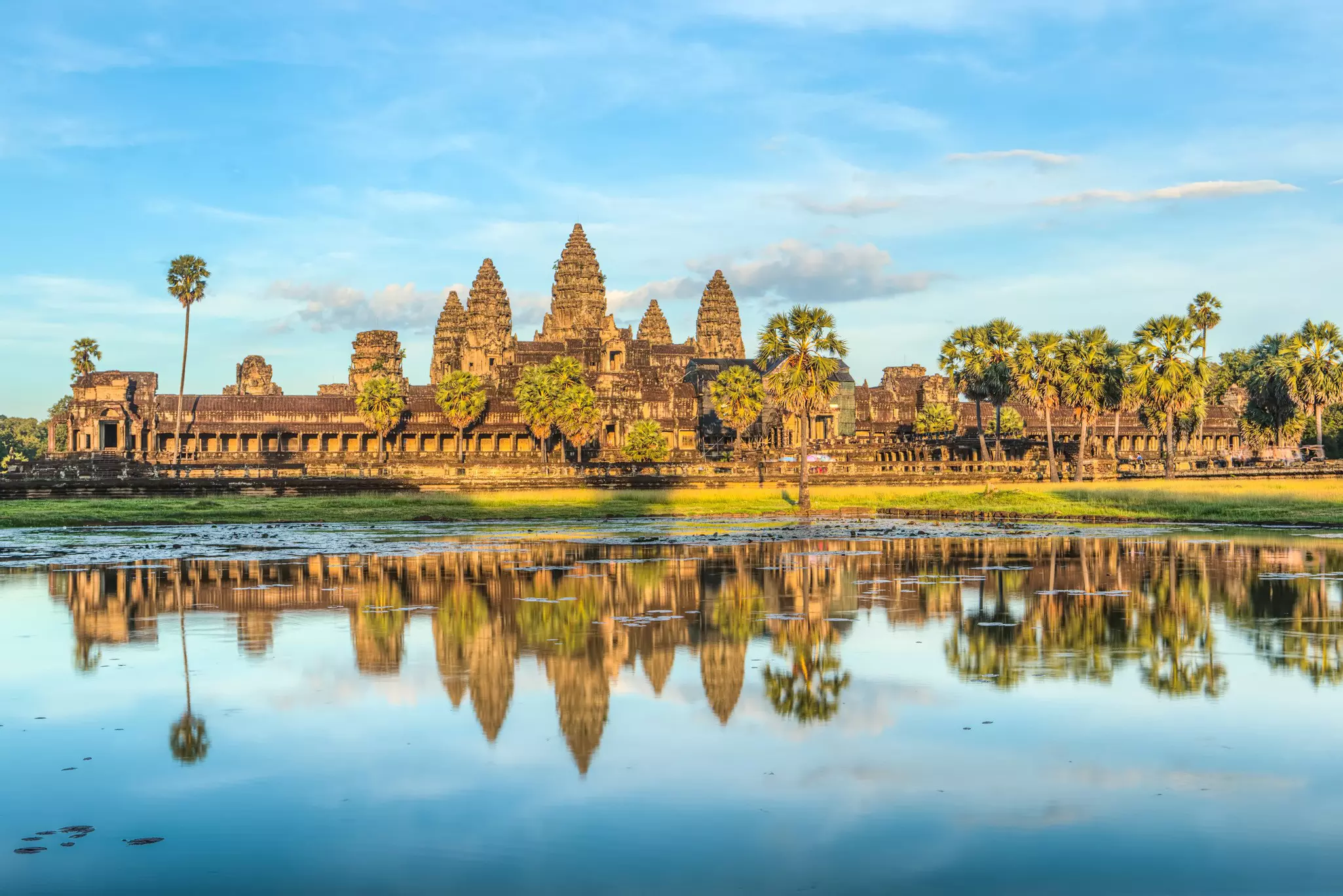
The vast moat (which makes those at European castles seem like gutters) rings a huge rectangular compound measuring 1.5km by 1.3km. To the west, a sandstone causeway crosses the moat, leading the faithful into the sacred temple grounds.
Angkor Wat replicates the spiritual geography of the universe in miniature. The central tower represents Mt Meru, the sacred mountain of the Hindu faith and the spiritual home of the gods, while the moat represents the oceans. The seven-headed naga (mythical serpent) that guards the causeway is a symbolic bridge for humankind to reach the abode of the gods.
After you take in Angkor Wat’s imposing grandeur, it’s time to admire its fascinating decorative flourishes. Stretching around the outside of the central temple complex is an 800m-long sequence of incredible bas-reliefs, with intricate carvings depicting historical events and stories from Hindu mythology. The most famous of these are panels showing the Churning of the Ocean of Milk – the ancient Hindu creation story – and a frieze featuring Suryavarman II and his all-conquering armies on the march.
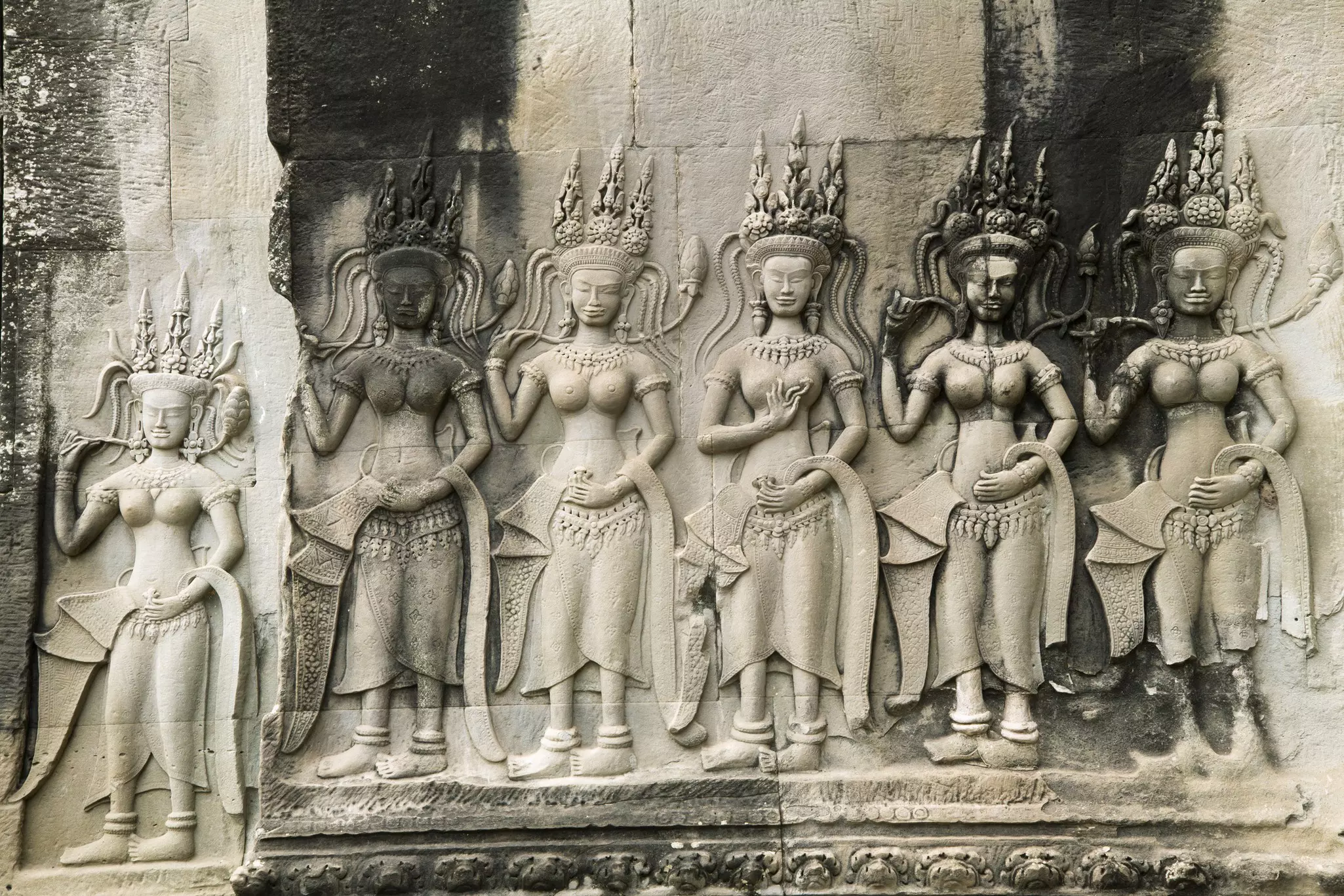
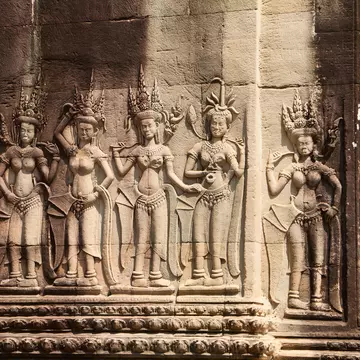
Angkor Wat is famous for having some 2000 beguiling apsaras (celestial nymphs) carved into its walls; each one is unique. (Budding stylists will love admiring the dozens of different hairstyles on display.) While many of these exquisite carvings were damaged during chemical cleaning treatments in the 1980s, and by ongoing bat urine and droppings, they are receiving ongoing restoration by teams from the German Apsara Conservation Project.
The stairs to the upper level of the temple are deliberately steep: for reaching the kingdom of the gods was never meant to be an easy task! Also known as the Bakan Sanctuary, the upper level of Angkor Wat is open to a limited number of visitors per day, with a strict queuing system.
At the summit, four Buddha images stand in the doorways of the central tower, illustrating the temple’s transition from Hinduism to Buddhism under King Jayavarman VII. From this elevated position, impressive views open up across the vast temple compound and surrounding forest.
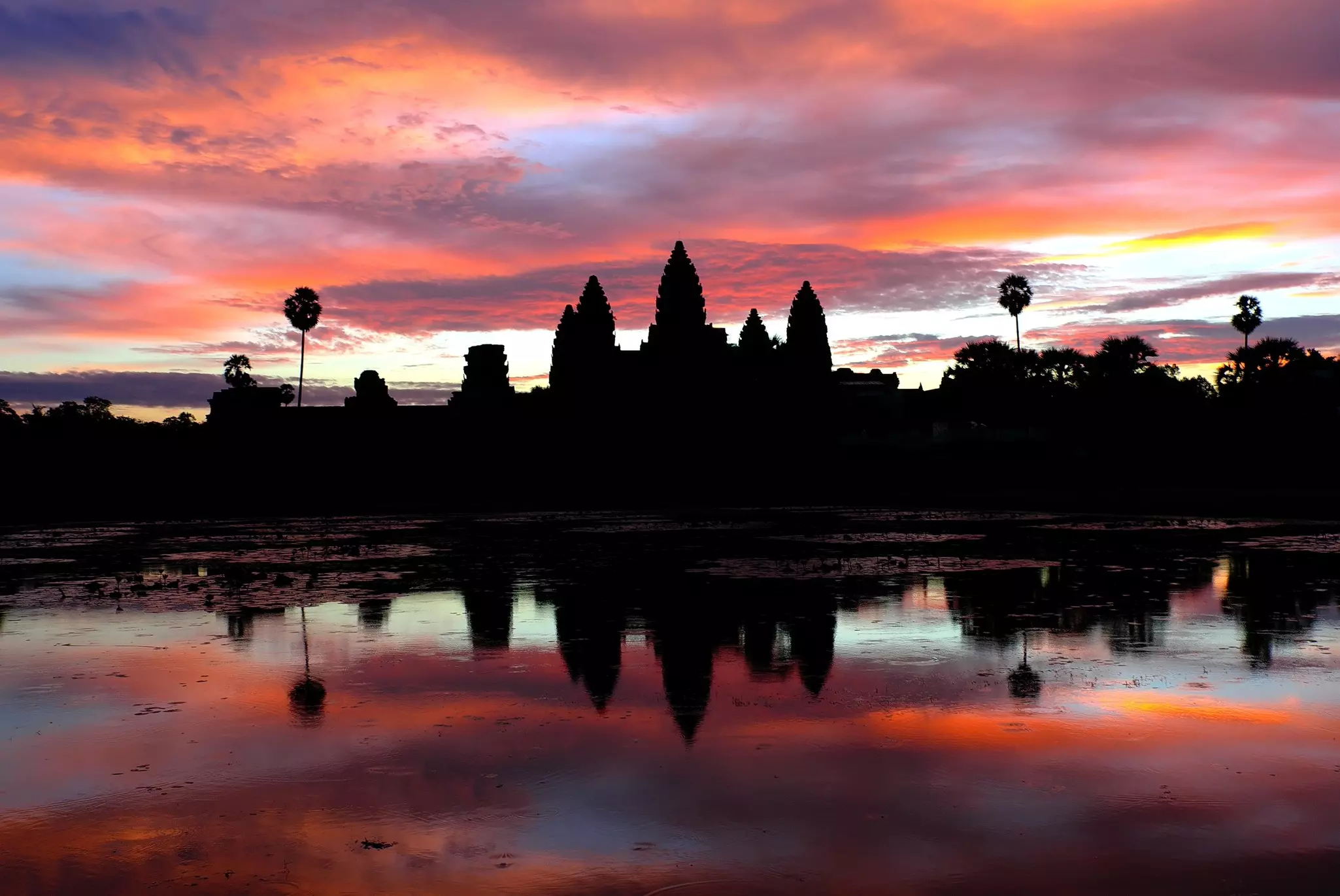
One of the best ways to escape the crowds at Angkor Wat is to enter via the “back door,“ on the east side of the temple, before sunrise. The approach to this alternate entrance leads through the forest, alive with the sounds of cicadas and birdsong, the shadowy outline of this world wonder barely visible against the dark sky.
Bring a flashlight and shine it toward the lower level to see carvings emerge from the darkness, seemly coming to life. After this spooky experience, succumb to temptation and join the masses for the main event: watching the sunrise from the western side of the temple.
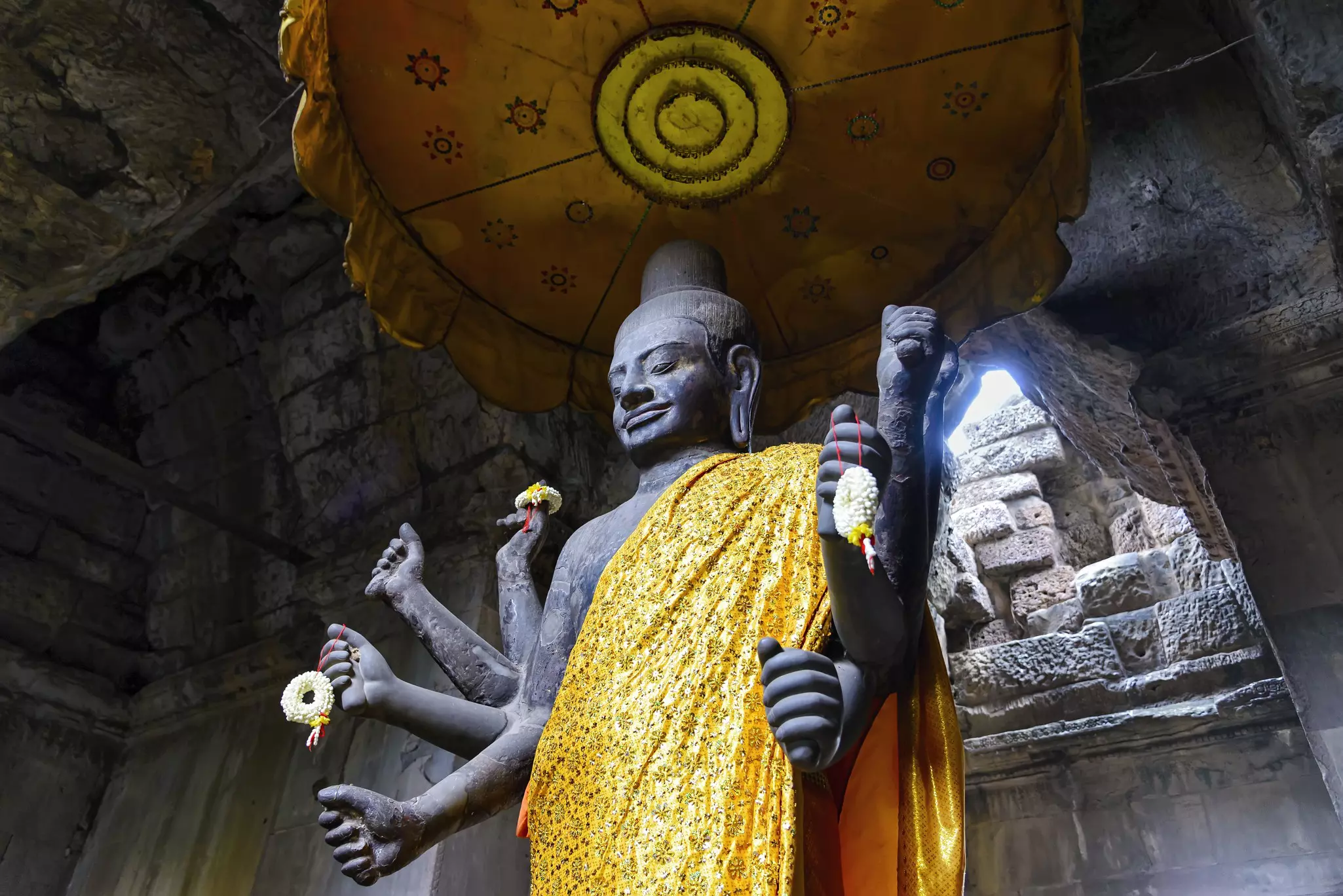
Tickets to the Angkor complex – including Angkor Wat and dozens of surrounding temples – are valid for 1 day (US$37), 3 days (US$62) or 1 week (US$72). While these prices may seem steep, the tickets also grant access to Angkor Thom, the Bayon, Ta Prohm, Preah Khan, Banteay Srei and a host of other world-class temples. We definitely advise going for the 3-day pass, which can be used over the course of one week, so you can pace out your visits to these epic monuments.
General living costs in Siem Reap, the dormitory town for Angkor Wat, are very reasonable, with good value accommodation and plenty of cheap eats and drinks.
Debit cards, credit cards and electronic payments are now widely accepted in Cambodia, and you can use these to purchase your Temples of Angkor pass, either on arrival in Siem Reap or online via the official website.
Temples of Angkor Pass: US$37/62/72 for 1/3/7 days
Hostel room in Siem Reap: US$5–20
Boutique hotel room in Siem Reap: US$50–150
Bottle of Cambodia beer at a bar: US$1–3
Cup of French-style coffee: US$1–3
Bowl of kyteow (noodle soup): US$2–3
Dinner for two at a local restaurant: US$10–20
Local tour guide for Angkor Wat: US$30–40 per day
Remork-moto (tuk-tuk) for visit: US$15–20 per day
Bicycle rental: US$2–10 per day
Angkor Wat was built by King Suryavarman II, who reigned from 1113 to 1150 CE, though the temple was never finished during his lifetime. The sandstone blocks used to construct Angkor Wat were quarried from the holy mountain of Phnom Kulen, more than 50km away, then floated down the Siem Reap River on rafts. The logistics of such an operation are mind-blowing: according to temple inscriptions, the construction of Angkor Wat involved 300,000 workers and 6000 elephants.
Unlike typical Khmer temples, which are aligned to face east, Angkor Wat is oriented to the west: in Hindu culture, the direction symbolically associated with death. What’s more, its bas-reliefs were designed to be viewed in a counterclockwise direction, a practice associated with ancient Hindu funerary rites. Such evidence once led scholars to conclude that Angkor Wat must have existed primarily as a tomb.
However, the Hindu deity Vishnu is also frequently associated with the west – and it is now widely accepted that Angkor Wat served as both a temple to Vishnu and as a mausoleum for Suryavarman II. Unlike the other monuments at Angkor, Angkor Wat was never abandoned, and has been in almost continuous use as a temple since it was built.
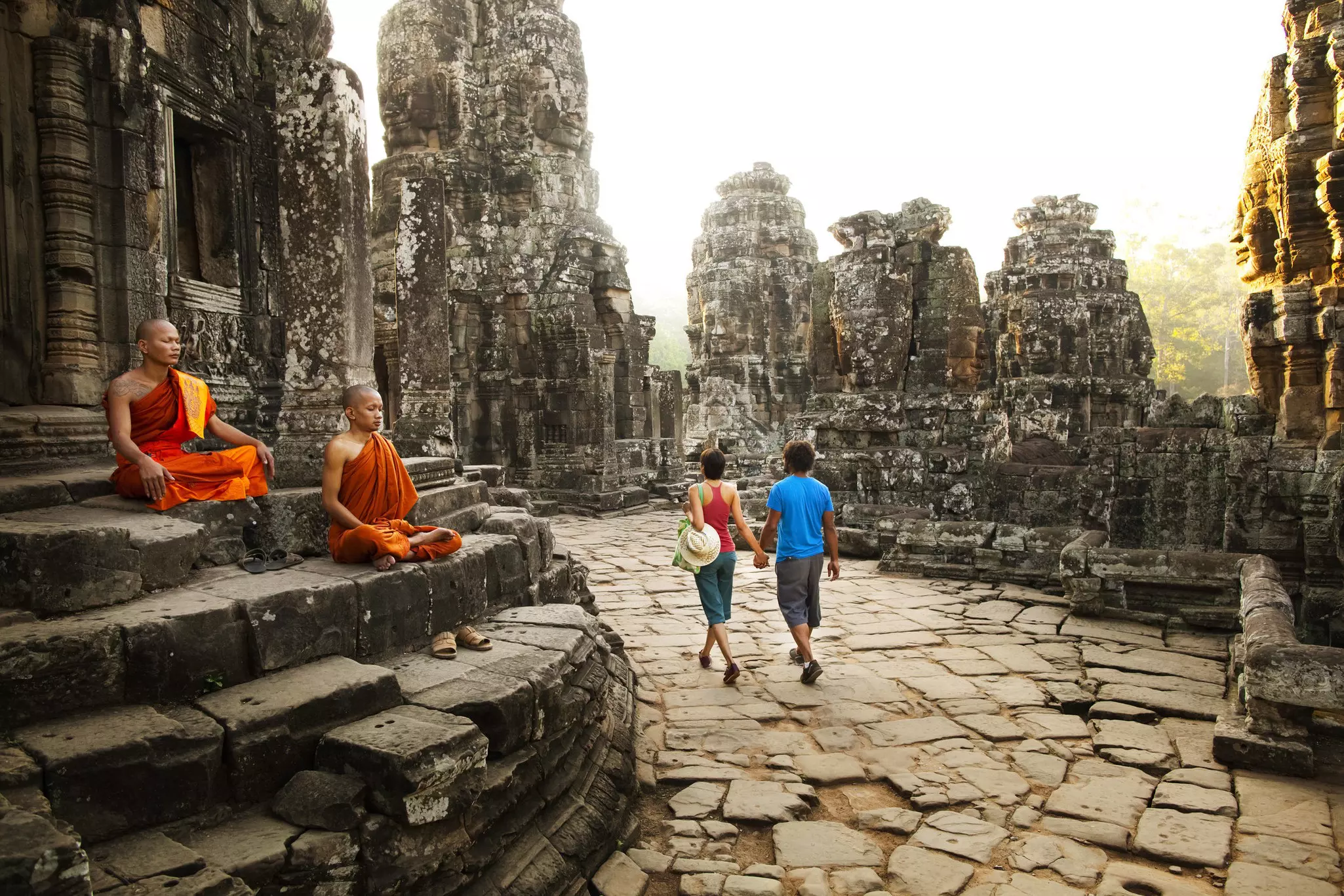
As the temples of Angkor are a sacred religious site for the Khmer people, visitors should dress modestly. It is not possible to visit the highest level of Angkor Wat unless your upper arms are covered and your legs are covered at least down to the knees.
Local authorities have produced a visitor “code of conduct” and a video to encourage appropriate dress and remind tourists not to touch, sit or climb on the ancient structures; to pay attention to restricted areas; and to show respect to monks.
Explore related stories