Sep 7, 202613 min read
Taking the Train from Delhi to Mumbai (What You Need to Know)Jan 28, 2026
7 MIN READ

Writer
The Shiv Shanti Bhuvan is a colorful example of Mumbai's art deco style ©Alisha Vasudev/Lonely Planet

Writer
Lonely Planet may earn a commission from affiliate links on our site. All recommendations and reviews reflect our own independent opinions.
In the 1930s, art deco – that rule-breaking architectural shift of color and curve – touched down in Mumbai. While visiting Europe, Mumbai architects and businesspeople had absorbed the aesthetic; they then returned home to introduce the eye-catching style to theaters, apartments and offices, constructing gorgeous neon-lit cinemas and buildings patterned in alluring geometric shapes facing the sea. From the country’s prime maritime city, a wave of fashion, film and commerce inspired by art deco spread across India.
Indian architects embraced art deco’s glamour and vocabulary, noted for bold tones and designs borrowed from ancient Egypt and Mesopotamia, and added Indian symbols and motifs. While they also turned to plaster, stone and metal, the material of choice was the newly debuted reinforced concrete.
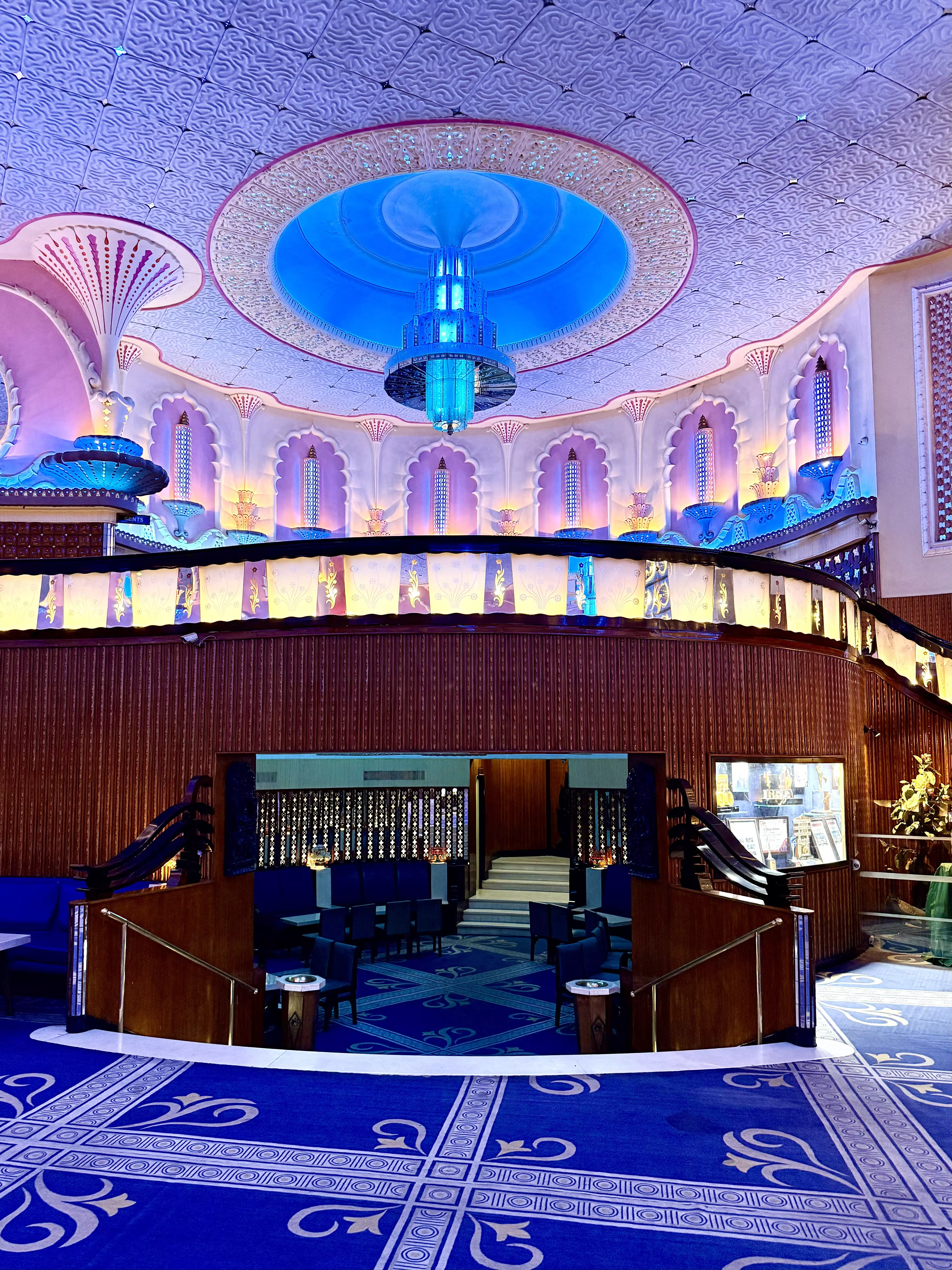
As “Indo Deco” emerged, it evolved to reflect the tropical climate, with the use of curved balconies, eyebrow chajjas (window sunshades), and nautical and tropical motifs. Architects adopted portholes and wave and sunrise designs on iron grilles and windows.
Indian imagery featured too. In Pune, the Sugandhi building celebrates local life and religious symbolism in the use of the lotus flower and swastika, an Indian symbol of spirituality. The wealthy rulers of India’s princely states did much to advance this new style, giving impetus to its evolution, especially in Bombay, says the Art Deco Mumbai Trust.
While Mumbai gets a lot of love – UNESCO has protected the city's Indo Deco legacy since 2018 – architects and fans are raising the profile nationwide and preserving art deco structures across the country. Many lack protection; some are gone, their demolitions marked on social media as “deco goodbyes.”
I’ve been captivated by art deco since contributing photographs of Havana to Thames & Hudson’s definitive Art Deco Sculpture book. Last year I was introduced to Indo Deco by Jaipur Houses on an insightful walking tour of the Pink City.
The first building of the genre in Mumbai was the Syndicate Bank (1932), embellished with zigzags and torches topped with ziggurat flames, and more than 1500 art deco structures remain across the city, 76 of which are protected. Here’s a peek at where to find art deco all around India.
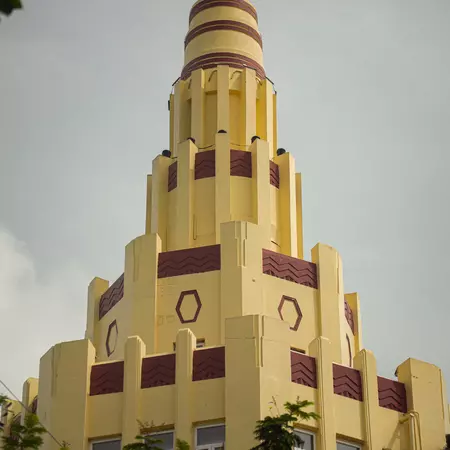
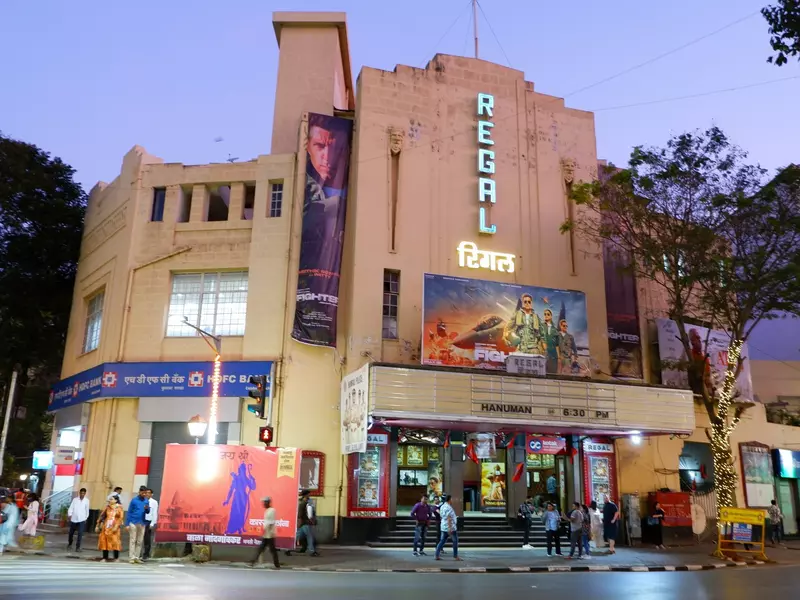
Mumbai’s art deco jewels adorn the curving Marine Dr, aka the Queen’s Necklace, and cluster between the Oval and the sea (find your way around with this map from Art Deco Mumbai Trust). Residential highlights include the mustard yellow Shiv Shanti Bhuvan, with its green accents; the curved, shiplike Soona Mahal; and the beautiful colors and geometric banding of the Rab Mahal.
Cinema and commerce hosted the style too. Blinking in the night are the neon-lit Regal Cinema; the towered Eros, with its fabulous restored interior; and Liberty's streamlined piano keyboard facade.
Elsewhere, find regal deco examples: the Dhanraj Mahal, a Hyderabad maharajah’s U-shaped palace turned residence turned office in Colaba, which once housed an indoor tennis court; the New India Assurance Building, with its sword-bearing stone figures and sculpted reliefs; and one of the last art deco petrol stations, Karfule, which has an octagonal kiosk, terrazzo floor and distinctive tower. Stroll the streets on one of Art Deco Mumbai Trust's guided tours.
Documenting deco in Delhi are architects Geetanjali Sayal and Prashansa Sachdeva. Via an India Foundation of the Arts grant, they mapped buildings across the capital. Use their research to track down these deco delights: the All India Radio building, the color of tiramisu, and the Delite Cinema, with its tripartite facade and wavy signage. For a dash of deco on an overnight stay, book a room at the canary yellow Bloomrooms hotel near the New Delhi Railway Station. Take it up a notch? Book one of the deco rooms at the imposing Imperial, a hybrid colonial and art deco creation that opened in the 1930s.
In the West Bengal city, the movement embraced picture palaces, offices and homes in entire neighborhoods, especially in south Kolkata. The splendor of the MGM-founded 1930s Metro Cinema, with its ziggurat signage, was so iconic that it inspired a new term for Kolkata homes: metro bari. The vertical lines and art deco interiors of Kolkata’s curved Roxy Cinema are now getting a makeover.
Businesses such as Bombaim fashion are rewriting the city’s art deco legacy via preservation: this glossy store has retained a beautiful deco facade. Fashion guru Sabayaschi’s emporium is inside an extraordinary curvaceous deco store. Roastery Coffee House is found in the deco South Indian Club, and Skinny Mo’s Jazz Club inhabits a 1920s art deco spot. The oldest high-rise in the city, Tower House, was built in 1928 with many deco motifs. Quirkier is Jahaj Bari, a ship-shaped house on Elgin Rd. Adhiraj Bose documents the city’s deco designs on Instagram and leads tours.
Think of Goa and beaches, nightlife and Portuguese colonial architecture spring to mind. But the state’s art deco buildings are very much on the radar of enthusiast (and vinyl selector) Leaxan Freitas, who runs Goenchi Deco, leads walking tours of Panaji (Panjim), and created one deco zine and has a second in the works. Find him at Goa’s first HeritageFirst festival too. A prominent deco spot is the pale pink Hotel Mandovi, with a bas-relief mural, but the most well-known location is the Praça do Comércio, inspired by Mesopotamia, complete with stucco flame torches, chevrons, and zigzag and ziggurat details.
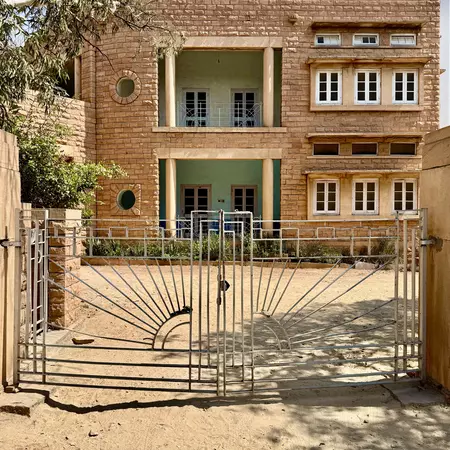
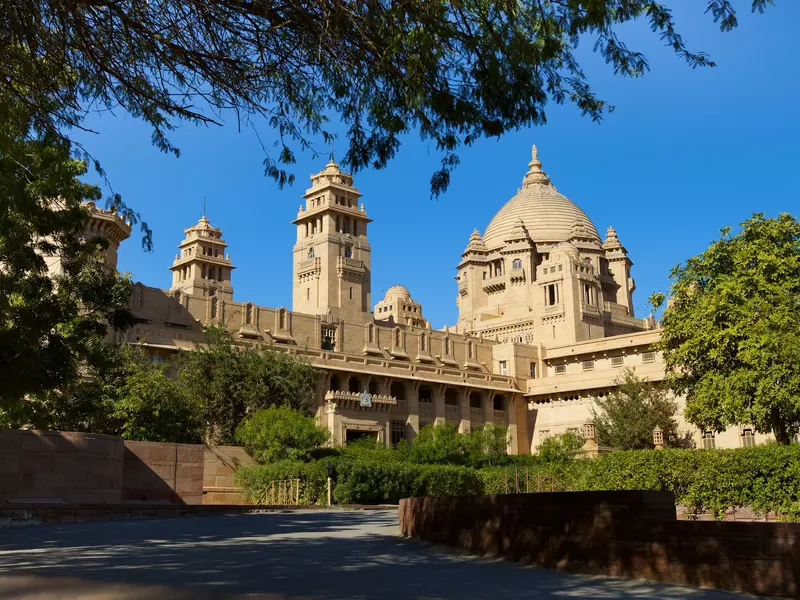
Bharat Singh of Art Deco Rajasthan is on a mission to raise the profile of Rajasthan’s art deco treasures. Masterpieces include Jodhpur’s Umaid Bhawan Palace, blending the aesthetic with Indo-Saracenic architecture; the gorgeous pastel palette of Jaipur’s Raj Mahal; the crescent of Ranthambore’s Sawai Madhopur Lodge, which belonged to a maharaja of Jaipur; and cinemas, including the salmon Golcha and the extraordinary Rajmandir, whose plush interiors and lighting are more palace than movie theater. Singh is interested in the details too: typography, animal motifs, jaalis (latticed screens) and hybrid havelis (homes that blend art deco with traditional Rajasthan style). Arrange tours via Jaipur Houses.
Conservation architect Nishant Upadhyay of atelier Dharatal has recorded more than 360 buildings in Lucknow over the past 5 years and turned his hand to fashion – embroidering deco motifs in zardozi threads on fabric. Lucknow’s most famed art deco building was the impressive Pioneer Press Office and Printing Works, now demolished, designed by Walter Burley Griffen, who planned Canberra, Australia. Griffen also designed the Tagore Library at Lucknow University. Striking deco examples are the renovated PVR Sahu cinema and the Hawai Jahaj Kothi, with a replica plane atop the building – its propellers used to move, and people once sat in it! Upadhyay guides walks via Art Deco Lucknow.
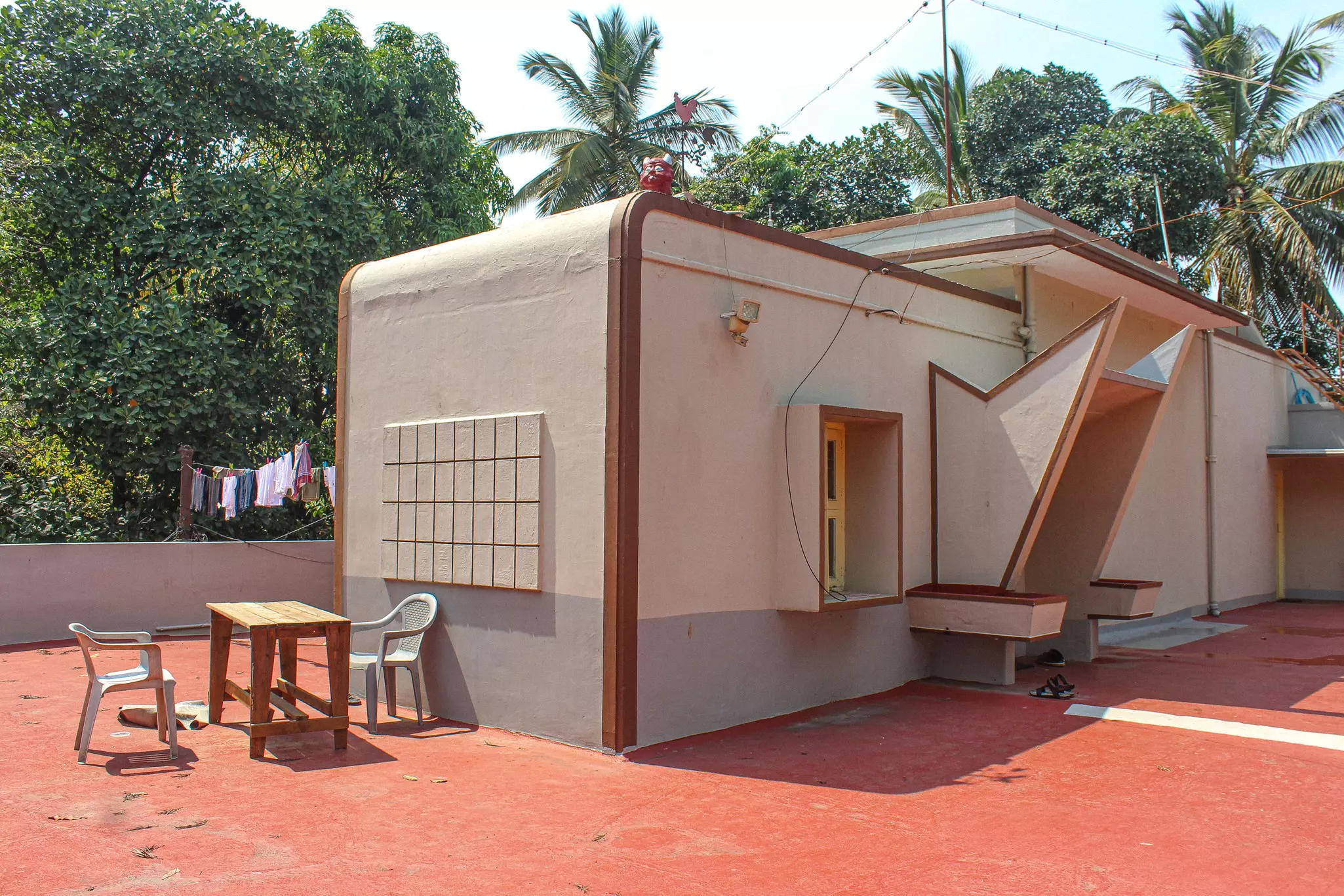
Architect Suchitra Deep has chronicled more than 100 deco buildings in the Bengaluru neighborhood of Malleswaram, featuring sunbursts on gates, decorative iron flowers, terrazzo floors, deeply curved balconies, pastel shades, ziggurat styling and jaalis. Deep offers occasional walks (follow her on Instagram for details) and maps local heritage, supported by the India Foundation for the Arts.
Chennai’s art deco heritage is celebrated by architect Prathyaksha Krishna Prasad, who gives talks and plans to launch guided walks. Many motifs reflect the city’s stage by the sea. The 1936 Oriental Insurance Building was the city’s first in the style. Other notable spots are the reimagined Taj Connemara hotel and the Raja Annamalai Mandram venue. In Chettinad, Tamil architecture meets art deco at the Visalam hotel.
Kerala’s more unusual spots include the Bindu Cinema in Thrissur, Ahmadiyya mosque in Kannur and Ernakulam Gymnasium in Kochi (Cochin). Austrian architect Karl Malte von Heinz introduced art deco to Hyderabad. Art Deco Hyderabad records the city’s architecture: the dazzling Arya Samaj mandir is a Hindu temple via deco masterpiece; the Sheesha Mahal Cinema, built for the army, looks like a popcorn bucket; and a graphic of the grand staircase at the Raj Bhavan was chosen by ADF India to commemorate art deco’s centenary. Look out for new architecture boat tours around Hyderabad’s Hussain Sagar lake.
Book your India trip with Lonely Planet Journeys
See India how it's meant to be seen
Planned by local experts and tailored to you, Lonely Planet Journeys handles the logistics so you can just enjoy the trip. Tell us what you want and we'll build your India itinerary from scratch, or browse our bookable trips to get inspired.

Explore related stories