
Sep 21, 202610 min read
A Guide to Gujarat, India: Palaces, Wildlife and Historic CitiesLonely Planet may earn a commission from affiliate links on our site. All recommendations and reviews reflect our own independent opinions.
The state of Gujarat isn’t a major stop on the Indian tourist trail. But anyone traveler who skips it is missing out.
Far less famous than Rajasthan, Kerala or Himachal Pradesh, this dynamic state is filled with historical and cultural treasures. A gamut of experiences awaits: sites from historic Indus Valley civilizations and Buddhist communities; medieval capitals and UNESCO-listed buildings; temple towns such as Dwarka and Palitana; craft hubs like Ajrakhpur and Sayla; and an exciting tapestry of culture, cuisine and dance.
After a childhood spent all over India, I have lived in Gujarat for almost 20 years, calling two of its largest cities, Ahmedabad and Vadodara, home. Here’s why I love the place.
Gujarat’s main cities, including Ahmedabad, Vadodara and Surat, rival any in India for hustle, bustle and sophistication. Yet it’s in the small towns, villages and countryside where Gujarat’s rich traditions and culture come alive.
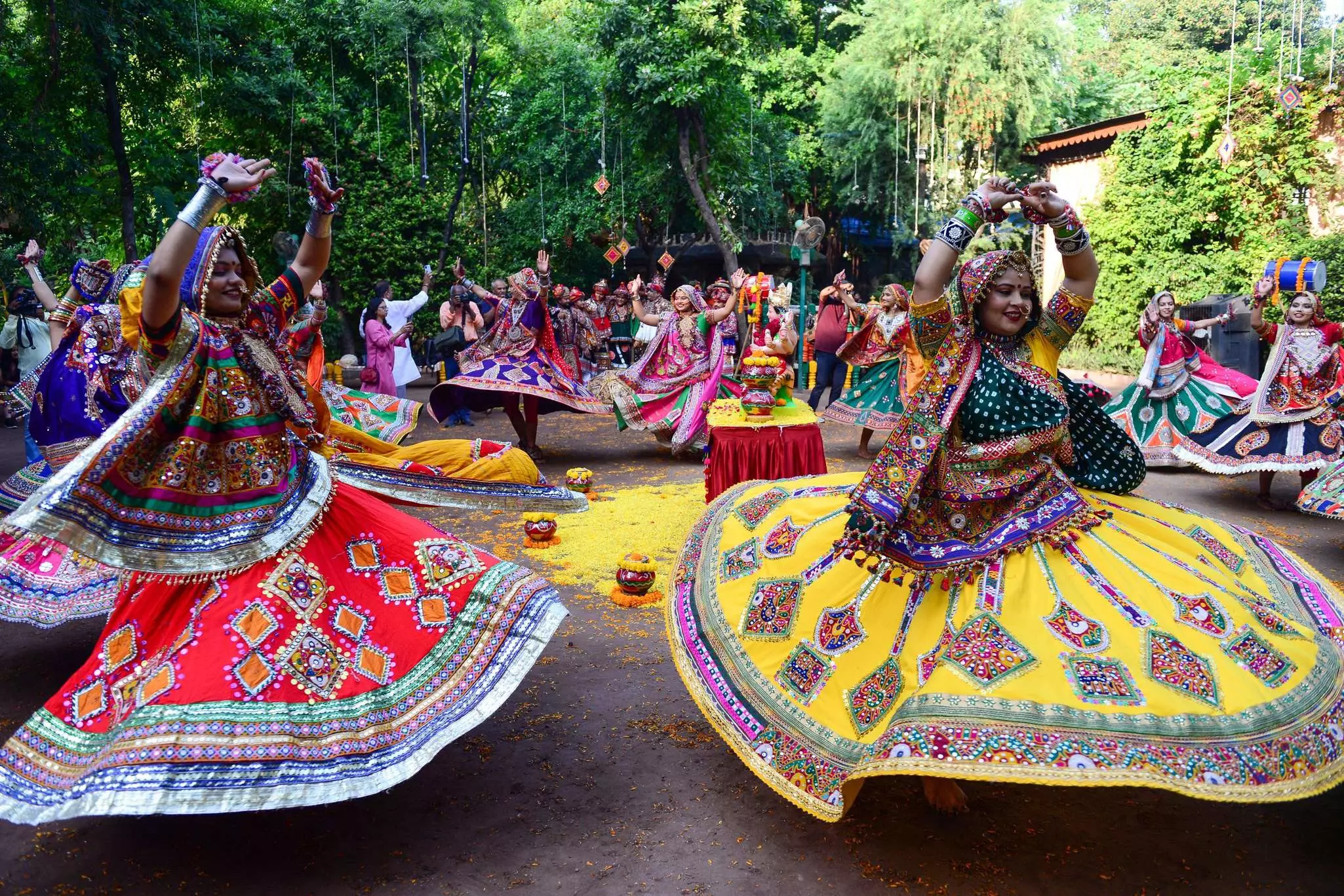
Artisans in craft villages create some of India’s most iconic textiles, such as patola, an ornate double-ikat creation, and Ajrakh, a printing-dyeing combination that results in multilayered designs. National parks such as Gir, Blackbuck and Kutch Bustard Sanctuary are home to a magnificent range of species. Jain and Hindu temples steeped in myth and legend stand tall, while delectable local flavors and foods delight palates. The state’s many vibrant festivals, including Rann Utsav, Navratri and the Tarnetar Fair, offer immersive insight into the state’s history, heritage and culture.
Here’s a guide to the best of what Gujarat has to offer.
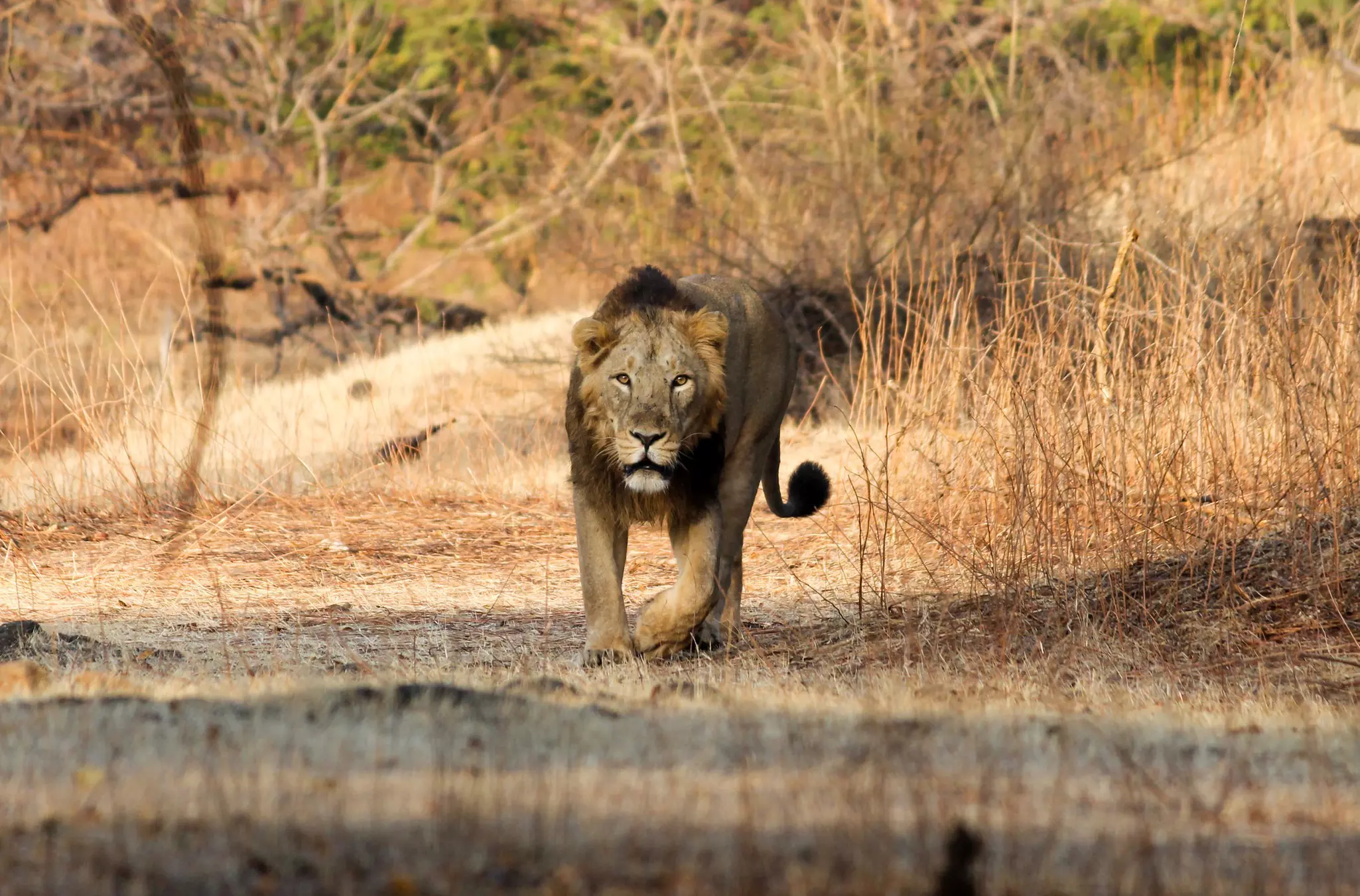
Gir National Park is the only place in the world outside of Africa where you might spot a lion in its natural habitat. You can explore the hilly sanctuary, spread over 1412 sq km, on a by-permit-only safari through the thicketed forest.
Apart from the Asiatic lion, the sanctuary is also home to spotted deer, sambar, nilgai, gazelles, crocodiles, leopards and more than 300 bird species. At Devalia, the fenced-in Gir Interpretation Zone is essentially a zoo – guaranteeing the chance of seeing the big cat.
The protected area is closed from June 16 to October 15 every year, which makes winter (November to February) the best time to visit. Per-person permit costs start at about 1000 rupees for nationals, and cost up to ₹9500 for foreigners.
Detour: The temple at Somnath, 58km from the park, is one of the 12 most sacred Shiva shrines in India.
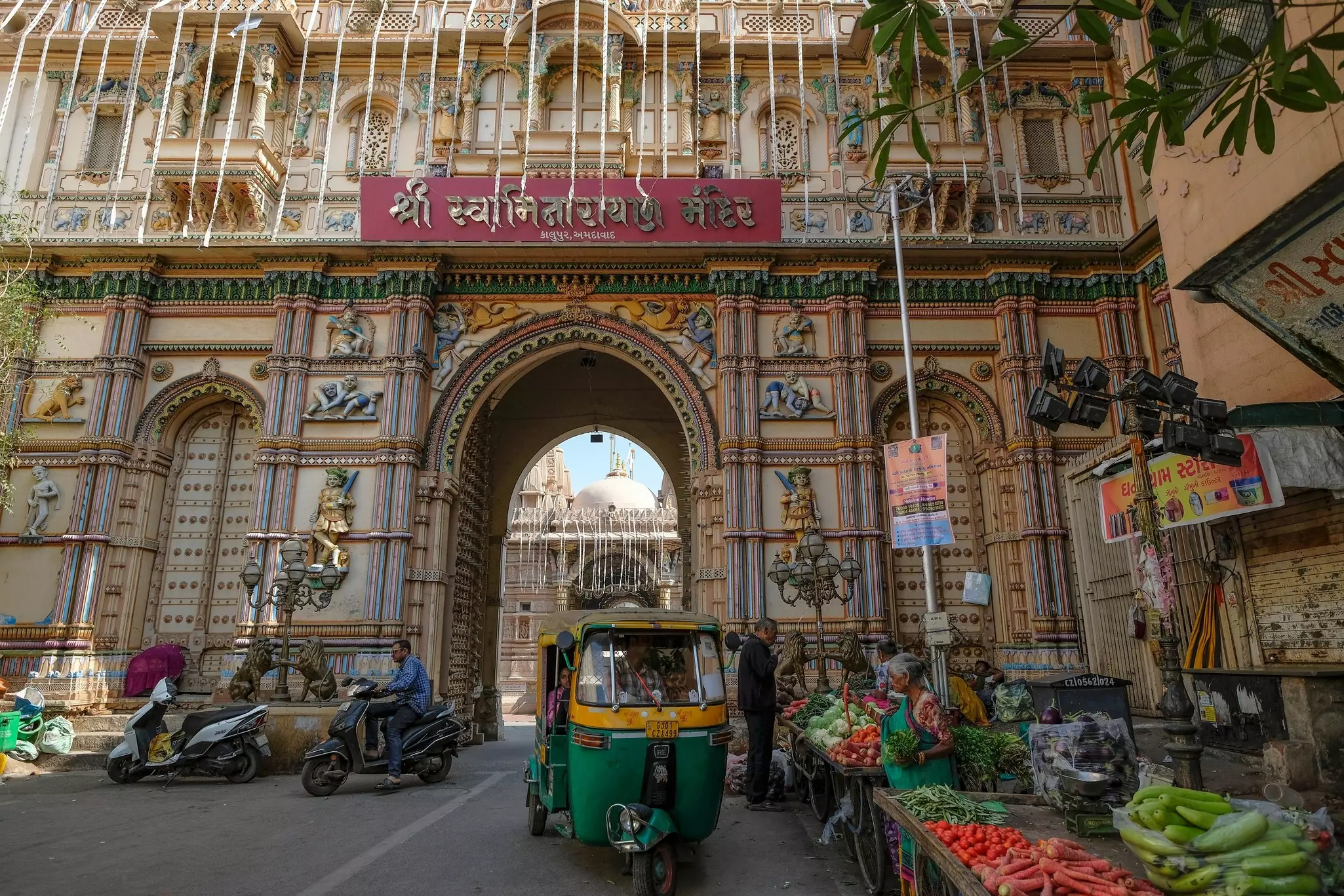
Founded in 1411 by Sultan Ahmed Shah, alluring Ahmedabad is made up of hundreds of micro-neighborhoods called pols. Much like the mohallas of North India and peths of Pune, these traditional residential clusters form the heart of the 600-year-old walled Old City.
The more than 300 pols are centered around interior courtyards (chowks), with gated entrances; elaborately carved wooden facades and columns; features like bird feeders (chabutara), wells and secret passages; frescoes on the walls or ceilings; and a strong sense of community. A heritage walk through the Old City will get you up close to these enchanting quarters.
Ahmedabad is also a hub of art, architecture and design. Other must-visit attractions here include the Sidi Bashir Mosque’s jhulta minar, swaying minarets flanking a spectacular arched central gateway. The Calico Museum spotlights the rich textile culture of the city, while the innovative Conflictorium is a participatory museum whose interactive exhibits enlighten visitors about Gujarat’s long history of conflict between its many communities.
Visit the outskirts of the city to take in the elaborately carved Adalaj Vav step-well. And the cave-like Amdavad ni Gufa showcases the art of MF Husain in an unforgettable space designed by architect BV Doshi.
Insider tip: Walk in the footsteps of Gujarat-born Mahatma Gandhi by exploring buildings and memorials built in his honor: Kochrab Ashram, Sabarmati Ashram, Gujarat Vidyapeeth and Dandi Kutir (in nearby Gandhinagar).
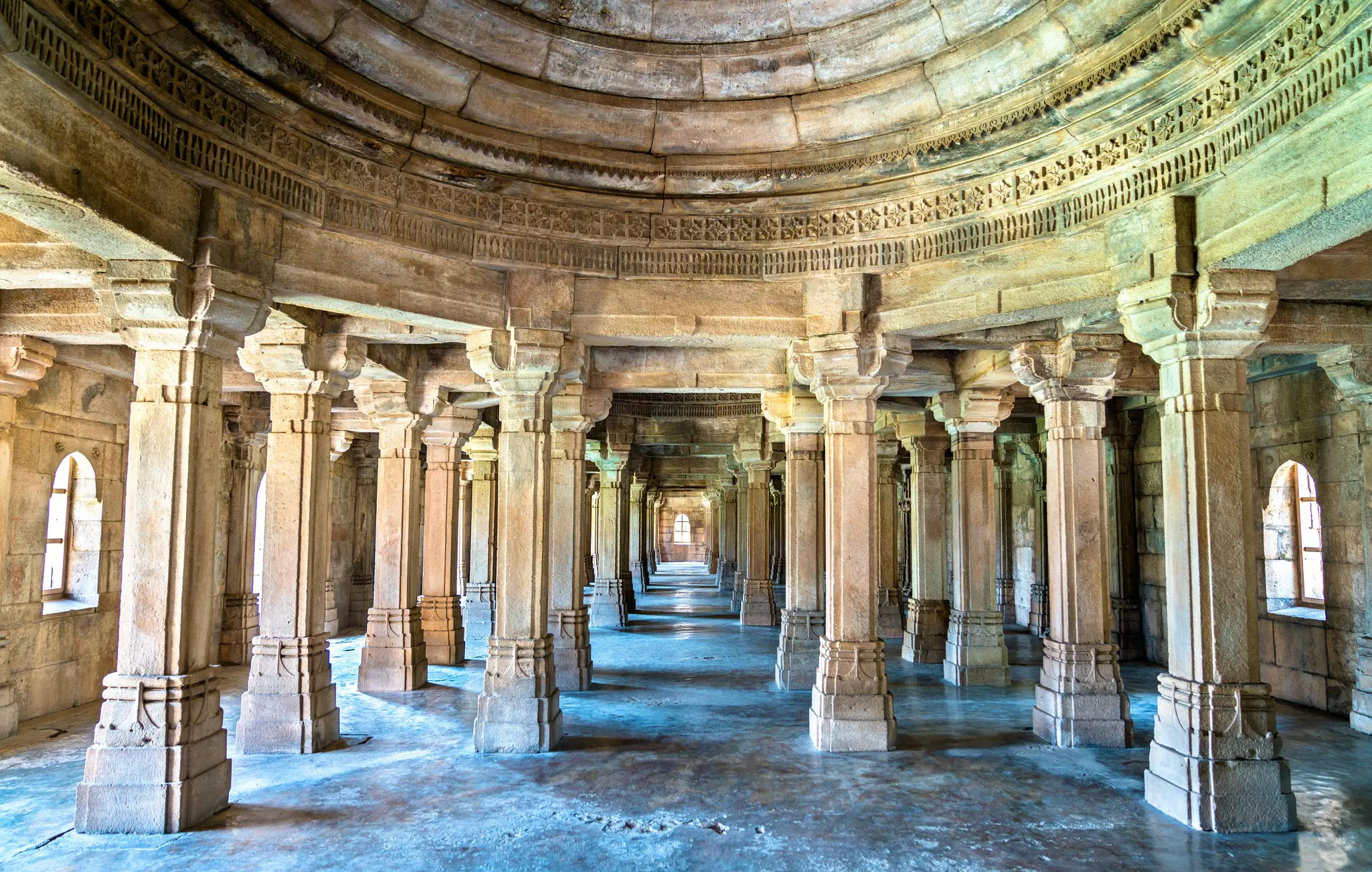
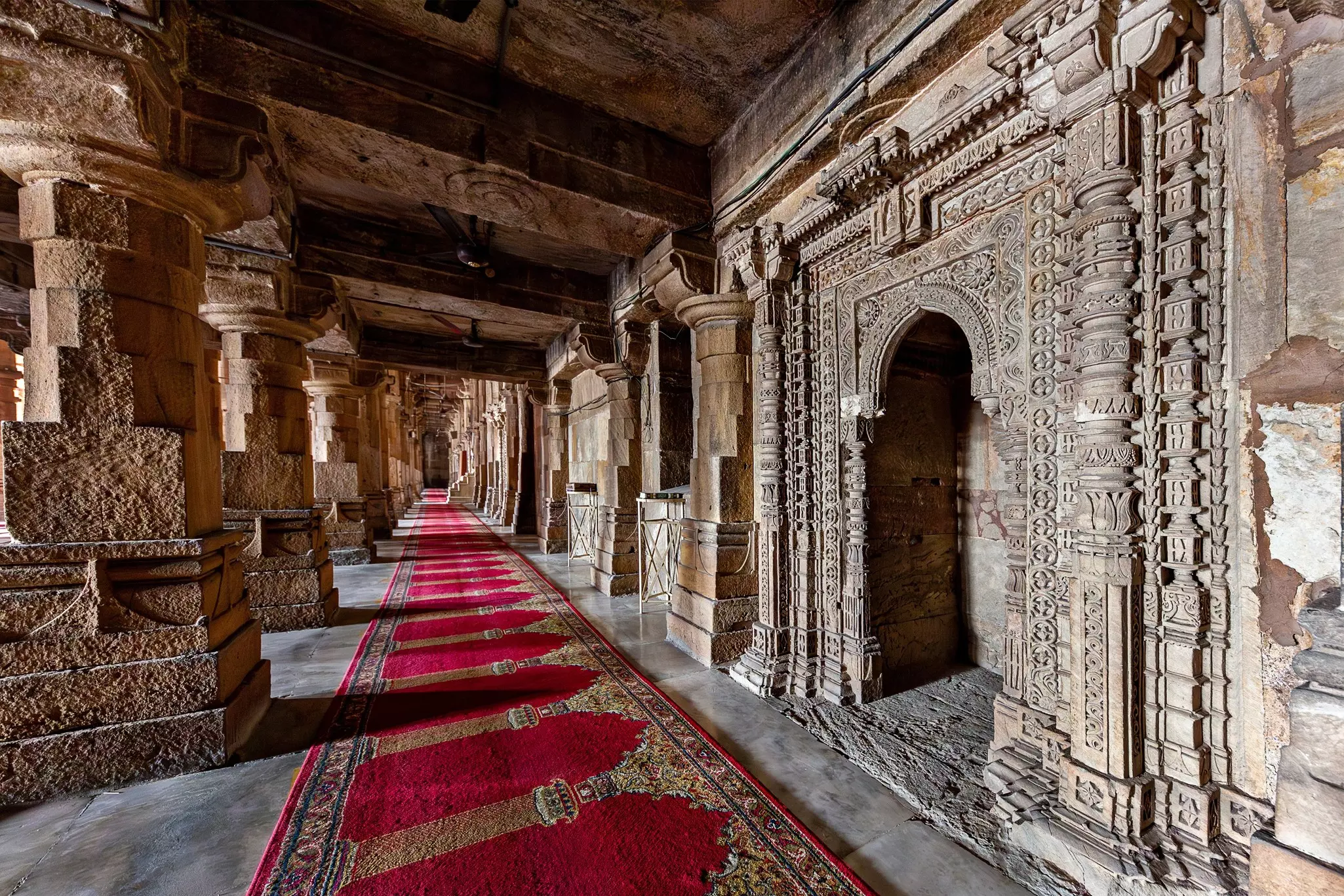
The stunning Jami Masjid in the stone city of Champaner has two tall central minarets and multiple domes, with a carved entrance porch leading into an expansive courtyard. Showcasing the artistry of their stoneworkers, the finely latticed windows are gorgeous works of art in themselves.
Champaner contains a clutch of architectural jewels spanning the 8th to 14th centuries CE. At the site’s heart is the citadel, home to an array of mosques no longer used for worship. Numerous tombs, arches, step-wells, tanks, cemeteries, gates, monuments and fortifications are scattered across the site.
Since the lack of signage and the vastness of Champaner pose challenges for visitors, let helpful locals guide you to monuments such as the imposing Sahar ki Masjid, Lila Gumbaj Ki Masjid, Nagina Masjid and Kevda Masjid.
Insider tip: Nearby Pavagadh Hill is home to a Mahakali temple older than the city of Champaner. Enjoy a 5km walk along a jungle footpath to get there, or a cable-car journey up.
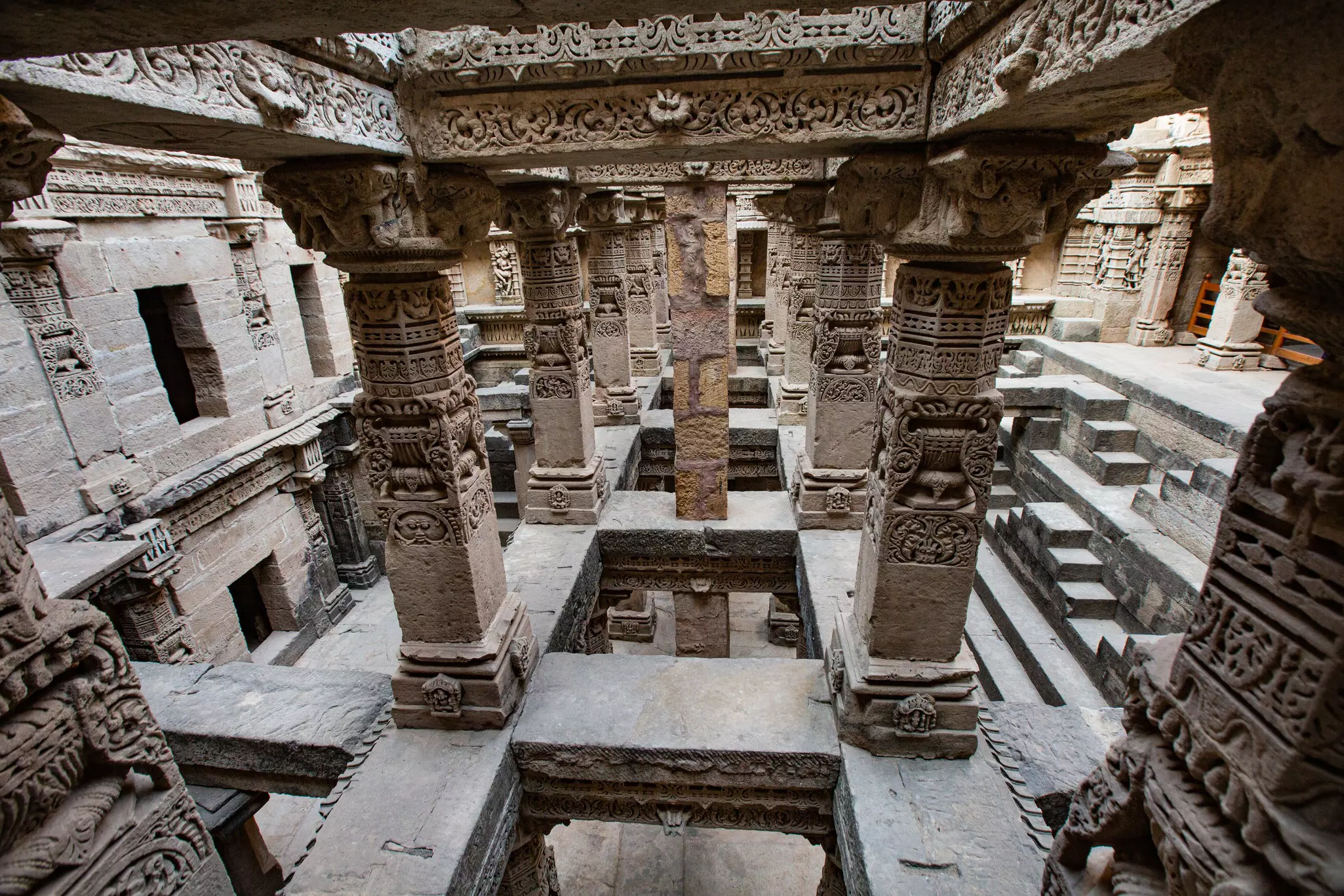
A tall flight of stairs leads down to the Rani ki Vav, an 11th-century step-well rich in architectural detail. Elaborately carved pillars, beams and pavilions enliven its underground spaces, with sculptural figures depicting gods and goddesses, priests and monks, men and women, animals, birds and trees.
Step-wells have long been used on the Indian subcontinent as reservoirs to store scarce water. Indeed, the design of Rani ki Vav – commissioned by a queen to commemorate her husband – is that of an inverted temple, highlighting the sanctity of the water it retained.
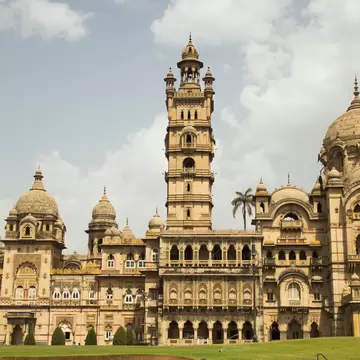
With its large central cupola, 90m-high tower, chhatris (dome-shaped pavilions) and sloping, dome-shaped roofs with drawn-down corners, Laxshmi Vilas Palace defines Vadodara’s skyline. Crafted from golden stone, the facade is peppered with interesting architectural elements such as chhatris with finials, jharokhas (windows), exquisitely carved brackets, bands of sculptures and vivid paintings.
Commissioned by Sayajirao Gaekwad III, the maharaja of Baroda State from 1875 to 1939, the palace is a high point of the Indo-Saracenic style of architecture, which combines traditional Indian and Indo-Islamic architectural elements with the Gothic Revival and neoclassical elements popular in 19th-century Britain. Occupying an estate of over 500 acres, the 170-room palace – the largest private dwelling of its time when it was constructed – is three times bigger than Buckingham Palace. The ornate Darbar Hall stands out with its lacquered ceiling, Moroccan mosaic floors, Belgian stained-glass windows and German glass murals.
The on-site Maharaja Fatehsingh Museum has a selection of European paintings, marble busts and some 25 works by Indian master Raja Ravi Varma. For me, the standouts are paintings that dramatically spotlight the stories I read in childhood – Shantanu and Ganga, for example, shows Ganga as a dark-haired, pink sari–draped woman floating away, as Shantanu, in royal blue, calls after her in the distance.
Detour: About 100km from Vadodara, Balasinor has an extensive museum and park dedicated to the dinosaur fossils discovered in the area, including fossils from dinosaur nests.
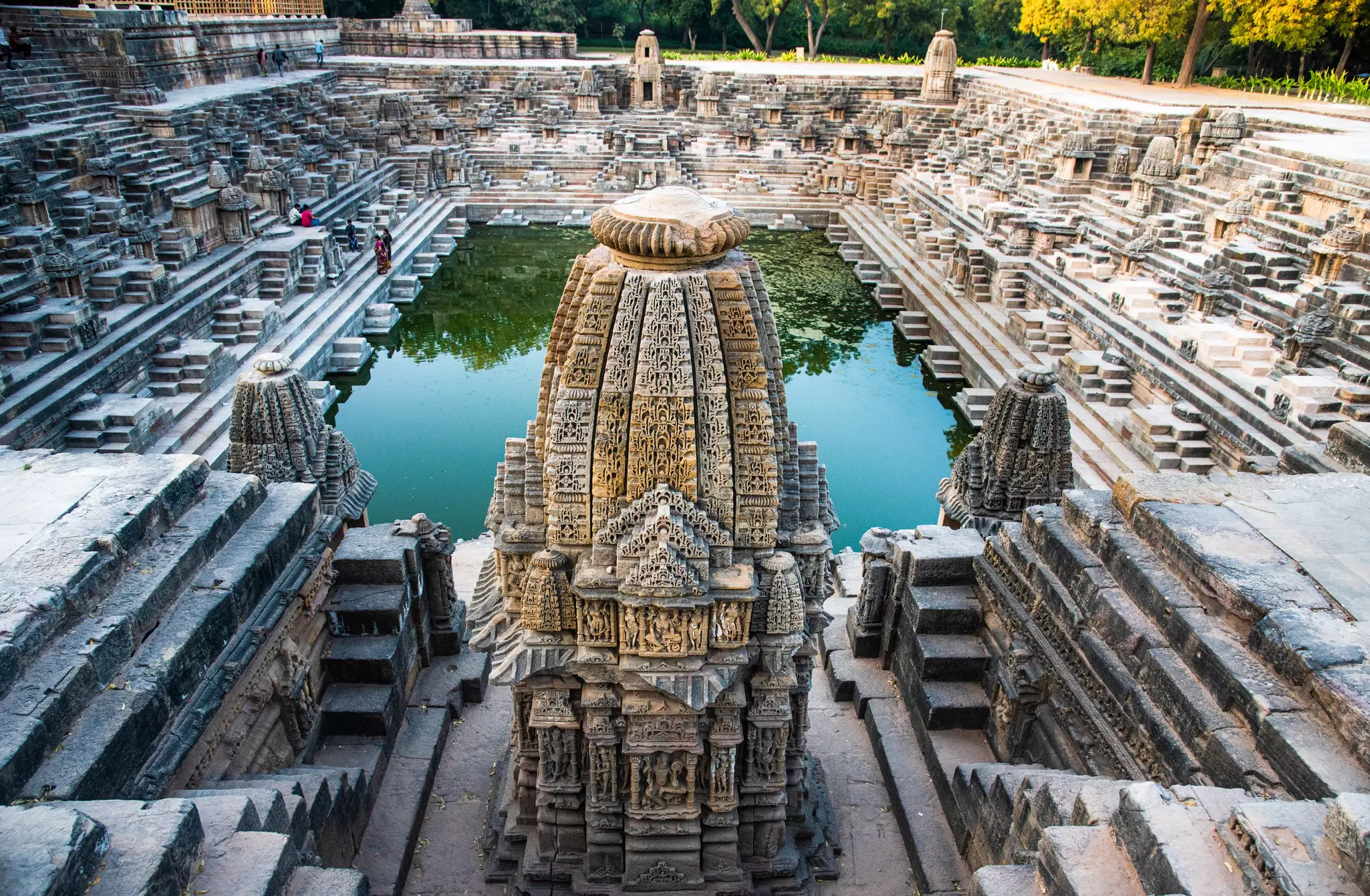
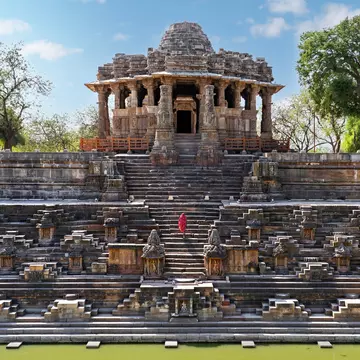
Modhera’s Sun Temple reveals the subcontinent’s ancient tradition of worshipping Surya, the sun god. The temple is designed to evoke the deity’s chariot, which is drawn by seven horses on 12 pairs of wheels. Intricate sculptures on the outer wall depict the 12 postures of Surya – which in turn represent the position of the sun over 12 months.
The 11th-century CE sandstone temple includes three east-facing structures: the sabha mandapa (assembly hall); the garbhagriha (sanctum sanctorum); and the kunda, a sacred reservoir.
The assembly hall stands on 52 pillars that symbolize the weeks in one year. On the equinoxes, the temple’s position on the Tropic of Cancer ensures that the first golden rays of the rising sun illuminate the idol in the garbhagriha, symbolizing life and light.
Detour: Continue 62km to Siddhpur, where you’ll find streets lined with large stately mansions in muted hues of salmon, beige, green and blue.
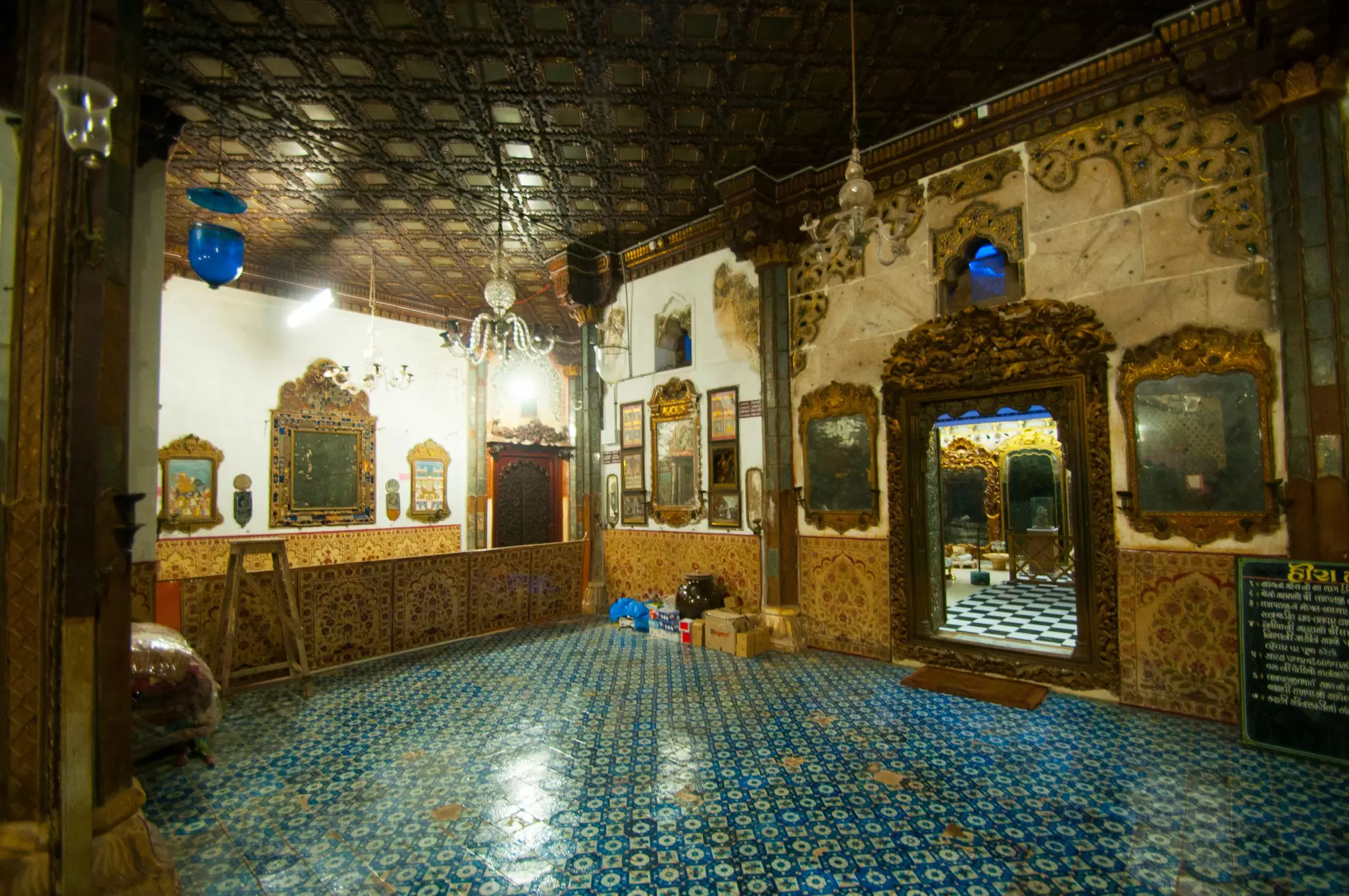
The desert city of Bhuj serves as the gateway to the region of Kachchh (Kutch), Gujarat’s (and India’s) westernmost point. In the historic city’s Darbargadh (palace complex), the elaborate 18th-century Aina Mahal stands out for its extensively mirrored rooms, blue-and-white Delft-style tiling and lithograph series by William Hogarth. Two other palaces have graced the city over the centuries: the 17th-century Rani Mahal, which was sadly destroyed in a 2001 earthquake; and the 19th-century Prag Mahal, designed in the Italian Gothic style and still open to visitors today.
Not far from the palaces, umbrella-shaped chhatri canopies seem to stand guard over the royal cenotaphs at the center of Hamirsar Lake.
Detour: The port city of Mandvi – 60km away – served as the former summer retreat for the local ruler, and today offers a pristine beach and the chance to visit the stunning if crumbling Vijay Vilas Palace.
Make commercial capital Ahmedabad or cultural capital Vadodara your base from which to explore the state’s many architectural, cultural and historic landmarks.
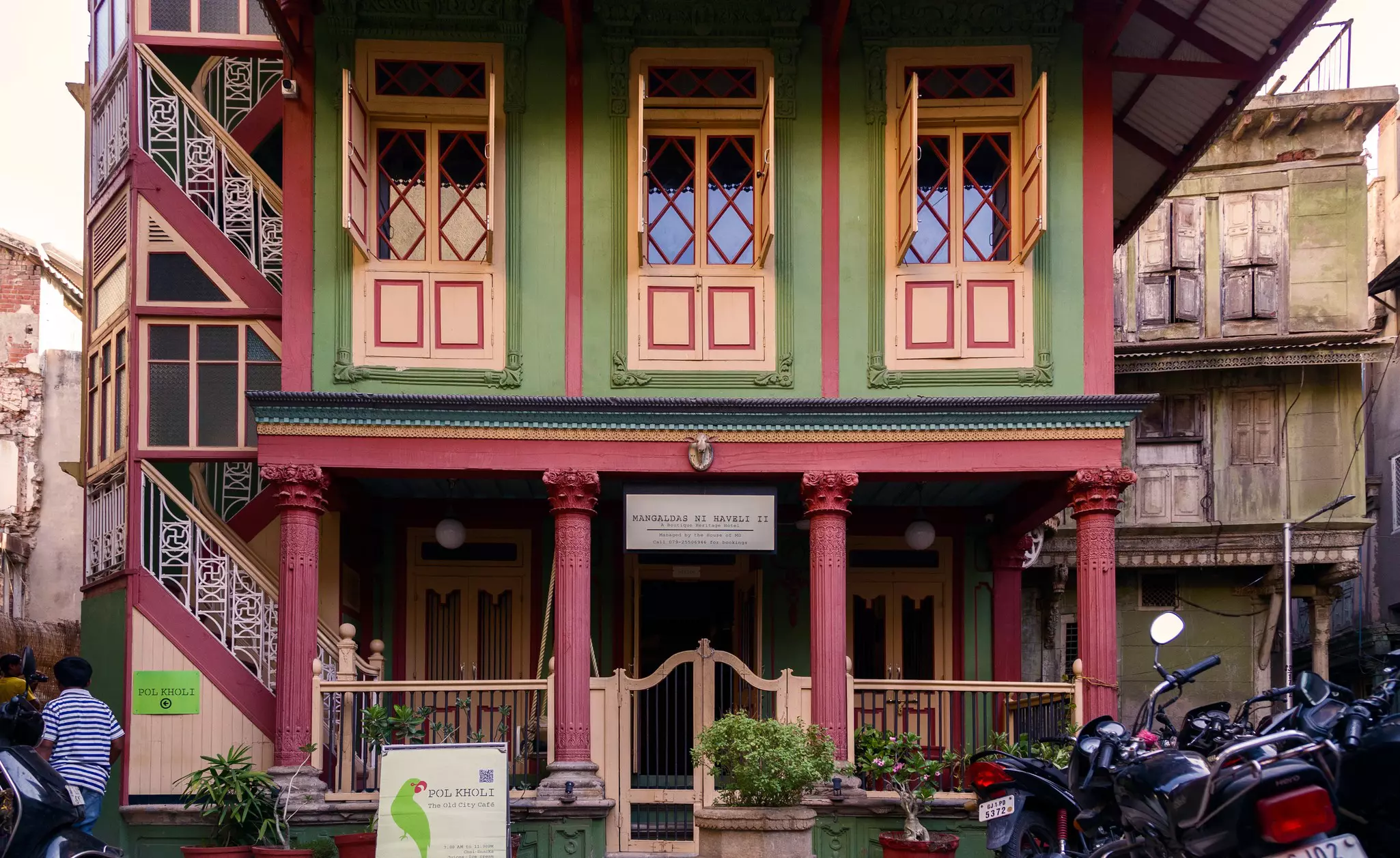
Spread out on both banks of the Sabarmati River, Ahmedabad has many lodging options. In the Old City, the House of Mangaldas Girdhardas – locally known as House of MG – is a stately haveli that once was the home of a textile baron (as its canopied beds, antique furniture and old paintings testify). The Cama Hotel is located in the heart of the city and offers a view of the Sabarmati riverfront.
Check into ITC Narmada if you’re looking for a five-star experience. A room at WelcomHeritage’s Mani Mansion combines an old-style environment with modern amenities. If you’re looking for a place filled with character, Divan’s Bungalow, which dates to the 1860s, also offers a vintage feel. French Haveli, a 150-year-old, artistically restored Gujarati home, offers an elegant homestay option. Other B&B options include Dodhia Haveli and Uteliaa Homestay.
Vadodara offers all the big-hotel options: Marriott, Hyatt, Taj Vivanta, Grand Mercure, Fortune and WelcomHotel. Budget travelers have plenty of options, too, including Sayaji, Baroda Residency, Express and Royal Orchid. Housed in a striking red-and-white building built by Maratha rulers in the 1900s, Madhav Bagh is a charming homestay run by descendants of the prominent Gaekwad family.
Ahmedabad has numerous flight connections with Delhi, Mumbai and Jaipur. Taking the train is also an appealing (not to mention environmentally friendly) option: Jaipur to Ahmedabad takes about 12 hours, with numerous services offered throughout the day (these include the Sabarmati Express, Sabarmati SF Express, Ashram Express, Yoga Express, Asarva SF Express and Swarna Jayanti Rajdhani Express). Udaipur to Ahmedabad, an approximately 6-hour journey, is a breeze on the Veer Bhumi Express, Asarva Intercity SF Express, Asarva Express or Kota Asarva Express.
Winter is the perfect time to plan a road trip, with Ahmedabad an 11-hour drive from Jaipur and 4.5 hours from Udaipur. The roads are excellent, with plenty of small eateries and dhabas along the way. Ahmedabad and Vadodara are 110km apart – or barely 2 hours by car on the ultra-modern expressway. Taxis are also available and easy to book. A one-way journey from Udaipur to Ahmedabad costs about ₹4000; a cab between Ahmedabad and Vadodara costs ₹1500.
Yes, but it’s hard. With alcohol sales strongly curbed in the state, Gujarat is the perfect choice for those seeking sober-friendly travel. Alcohol is available at hotels and special events to those visiting the state (from within India or abroad) – with a permit. You’ll need to apply online.
Explore related stories