Oct 22, 20204 min read
Festive Fervour in MysuruOct 22, 2020
4 MIN READ
Writer
Sanket_Mishra / Shutterstock

Writer
Lonely Planet may earn a commission from affiliate links on our site. All recommendations and reviews reflect our own independent opinions.
Come October and the royal city of Mysore decks itself up in festive fervour courtesy the annual Dasara celebrations
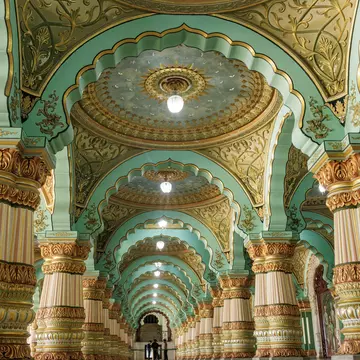
The sight of the illuminated Amba Vilas Palace (better known as the Mysore Palace) is a visual that is fueled by over 1 lakh bulbs that lend the surroundings a beautiful golden hue. The palace is illuminated every day as part of the ten-day-long Dasara celebrations a key event that has defined the city's ethos.
Locally called Nadahabba or state festival, the Mysore Dasara festivities will be low key this year due to the ongoing pandemic and will be held between 17th October and 27th October. The Dasara festivities have religious significance and in fact, the name of the city has its origins in Hindu Mythology and a story that is inextricably linked to the festival. Mysore is home to the famed Chamundi Hills that has a temple dedicated to Goddess Chamundeshwari (or Durga), patronized by the royal family. It is said that the Goddess battled for nine days with a demon Mahishasura and killed him on the tenth day which is celebrated as Vijaya Dashmi. The name Mysore is believed to have originated from Mahisur that later changed to Mysore or Mysuru as the city is now known. The Dasara festivities are a celebration of good over evil and the oldest evidence of the festivities go back to a Persian ambassador’s book written in the 14th century.
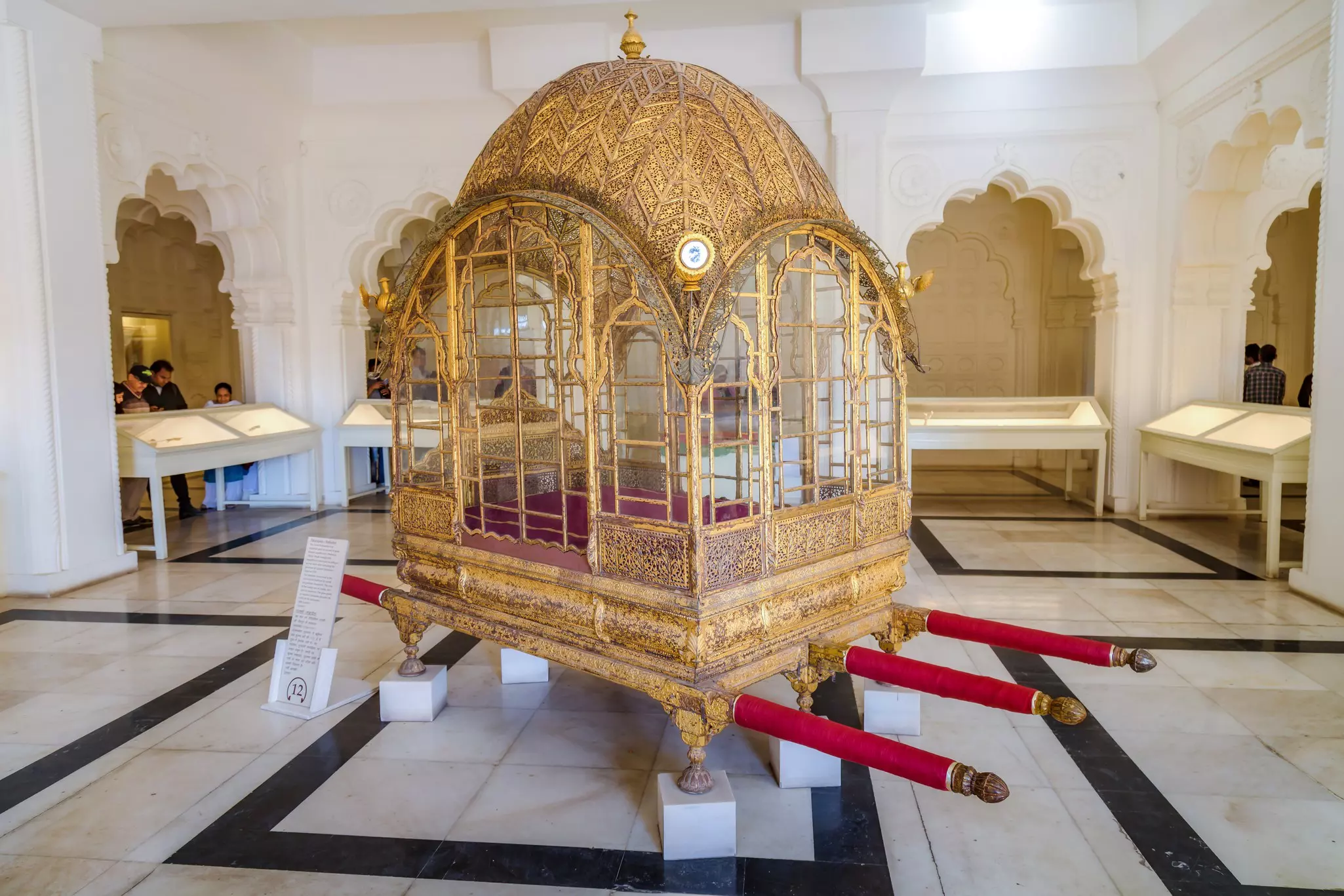
The current tradition of the festivities which is continued by the royal family to date is believed to have been started in the year 1610 by King Raja Wadiyar I who performed a special puja to worship Goddess Chamundeshwari. In 1805, Krishnaraja Wadiyar III began the custom of holding a special durbar or royal assembly at Mysore Palace during Navratri. The palace has a stunning golden throne that is part of the festivities and is kept in the Durbar Hall for public viewing. The main event is called Jumboo Savari and is a traditional procession where caparisoned elephants march from the Mysore Palace to a place called Bannimantap in the city. The main elephant is entrusted with carrying a 750 kg golden howdah with the golden idol of the Goddess Chamundeshwari placed inside. The elephants are specially trained for this procession and an elephant named Abhimanyu has been given the responsibility of carrying the howdah in the procession. The city wears a festive look and comes to life with events like Yuva Dasara, music concerts, food festival, cultural programs, sound and light shows, sporting events, shopping festivals, flower show, vintage car rally, film festival and more. A torch-light parade called Panjina Kavayatthu is held to conclude the festivities.
Mysore is known for several eponymous food items like Mysore Pak, Mysore Bonda and Mysore Masala Dosa among others and food naturally is an important part of the Dasara festivities. While food courts spring up around the palace premises, this year things are different. Festivities are likely to be at home and celebrations with traditional food items is as important as the other activities. Some of the must-have food items include kosambri (a salad made with lentils, cucumber, coconut and simple spices) palya (parboiled vegetable chopped fine with grated fresh coconut and seasoning), gojju (a gravy dish made using jaggery and tamarind juice), tovve (plain cooked tuvar dal seasoned with coriander and green chilli), huli (sambhar), saaru (rasam) and papad. Chitranna (lemon rice), vangibath (spiced rice with brinjal) and pulliogare (tamrind rice) are usually part of all traditional meals. At times bisibelebath (a one pot lentil, rice and vegetable dish) is also part of the festivities. Traditional desserts like chiroti (a flat flaky pastry eaten with powdered sugar and almond milk), Mysore Pak (made with ghee, sugar and gram flour), holige (sweet chappati filled with a mixture of cooked lentils or dried coconut) and shavige payasa (a kheer with milk, vermicelli, sugar and dried fruits) is a must. Arguably one of the best times to visit Mysore is during the Dasara festival. It is the sheer charm of the city at this time steeped in traditions and culture that makes a visit here worthwhile. After all, it is the happy memories that will continue to make you smile much after you have gone back home.
You might also like:
City of Ahmedabad as India’s first World Heritage City
Relish the distinctive cuisine of Mangaluru & Udupi
Calcutta: A 330-year-old love story
Explore related stories