May 29, 20265 min read
Connecting to a distant home through photographyMar 23, 2026
7 MIN READ

Writer
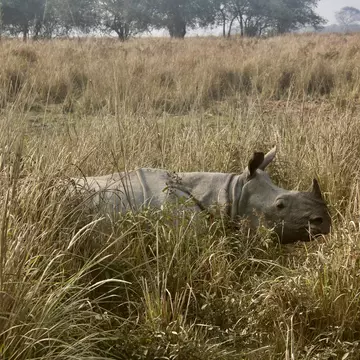
A one-horned rhino in Pobitora Wildlife Sanctuary, Assam. Akanksha Singh/Lonely Planet

Writer
Lonely Planet may earn a commission from affiliate links on our site. All recommendations and reviews reflect our own independent opinions.
People who don’t know the northeastern Indian state of Assam only know of its tea. People who think they know the state, know of its one-horned rhinos. But local people will tell you that within the state’s borders, lies crammed a panoply of experiences: Indigenous cultures, outstanding biodiversity, and magic and mysticism, to name a few.
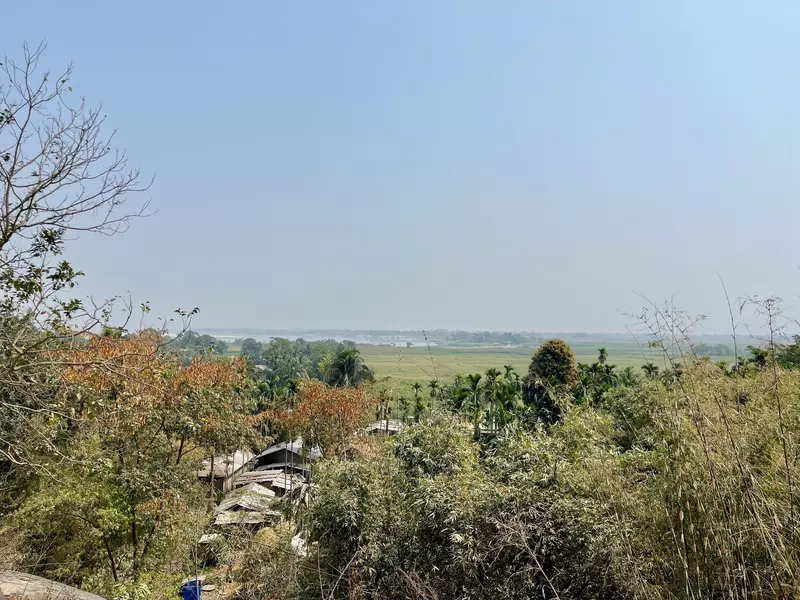
The village of Mayong is home to the latter. Villagers will warn you that “black magic” is now illegal. Some will say it has anyway fallen out of vogue with the younger generation. But there’s still the “white magic”. The “bez” – healers and practitioners of this white magic – will cure you of your ailments or rid you of blocks in your prosperity. It’s this white magic that hangs in the air in Assam, drifting through tea garden corridors, along the banks of the Brahmaputra river and across the rice paddies and besides the rhinos.
When to arrive: Arrive on a Friday to get the most out of your weekend. You can get away with staying 2 days here, but depending on where you’re flying from, I’d recommend at least 3 days.
The best time to visit: The region still practices jhum (slash-and-burn agriculture), so expect smog in mid- to late-February through March. December through early February is great weather-wise (temperatures drop as low as 12°C/54°F) and best for spotting migratory birds.
How to get from the airport: Uber Intercity is available from Guwahati Airport, but I’d recommend arranging a ride through your hotel or camp as these parts can be difficult to maneuver without local assistance.
Getting around town: Unless you speak Assamese, booking a car and driver (or guide) is the way to go.
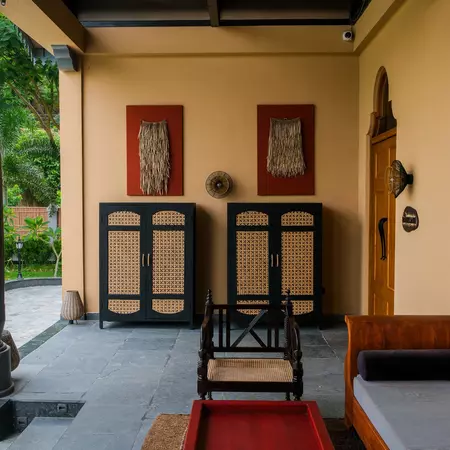
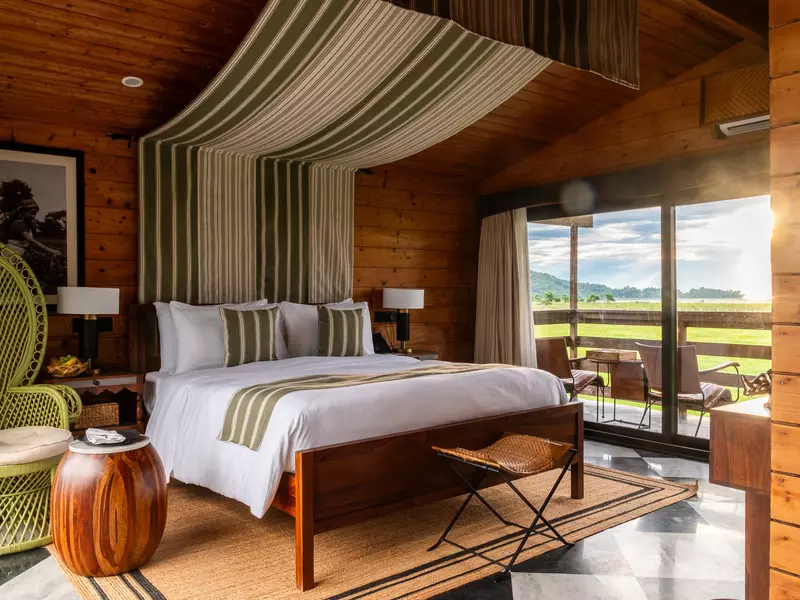
Where to stay: I stayed at the Rhino & River Wildlife Retreat & Spa, which was locally-staffed, had river views and was 10 minutes away from Pobitora Wildlife Sanctuary (note: the link is geo-restricted, so have your hotel or tour company make arrangements on your behalf). There are several budget-friendly stays in the area, but it’s worth noting you’ll eat most of your meals at your hotel or camp. If you’re coming in from Guwahati city, there are several options for every price point.
What to pack: Pack muted colors for safari days plus a few warm layers. If you’re especially enthusiastic about birds, pack binoculars.
Few cities have direct flights to Guwahati, so you’ll likely arrive late in the afternoon to late in the evening. If you’re flying from Delhi or Mumbai, you may want to consider breaking your journey in Guwahati city itself. If you’re headed over from Kolkata (Calcutta), however, you’re probably fine to brace for the 2- to 3-hour drive from Guwahati to Mayang. Aim for an early night to prepare for the early start the following day.
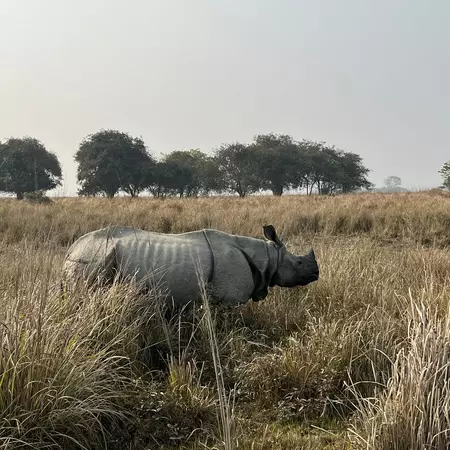
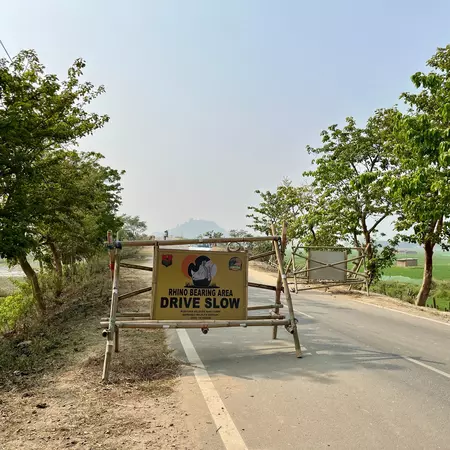
Drive to Pobitora Wildlife Sanctuary, home to the one-horned rhino. Since the sanctuary is unfenced, people from the neighboring village appear to have made their peace with the odd rhino encounter. In fact, unlike Kaziranga National Park – which has expanded over time, evicting Indigenous residents – Pobitora is often cited as an example of coexistence between humans and rhinos in the area. As a bonus, at under 40 km sq with an estimated 107 resident rhinos, Pobitora is believed to have the highest density of one-horned rhinos globally. Be there before 7:30am (which is when 4WD safaris depart; fares start at ₹1800 plus ₹365 for one person) and can be booked online, provided you have a SIM card for SMS verification, alongside government ID. In addition to a guide and driver, you will be accompanied by a ranger (who carries a rifle).
You’ll spend roughly 2 hours on the safari. If you’re lucky, you’ll get a guide like mine - Amarjyoti Boro, from Rhino & River - who was born and raised in the area and holds nothing but admiration for the region's wildlife. As soon as you enter the park and see an elusive golden jackal, he’ll say: “We believe this is very lucky, the golden jackal.” You’ll match his enthusiasm (even though superstitions are not your thing), but when you see the first one-horned rhino rise majestically above the thick morning smog, you’ll think back to that lucky golden jackal. Like their African and Southeast Asian counterparts, this subspecies of rhino is solitary and herbivorous. And similar to their African counterparts, they use middens (communal dung heaps) to communicate - much like graffiti scribbled on bathroom stalls.
Safari etiquette: Ensure your phone is on silent and turn your camera flash off to avoid disturbing the wildlife. Sometimes your guide, driver or the ranger might throw pebbles at rhinos in an effort to draw their attention; it is fine to discourage this disruptive behavior.
Planning tips: If you’re taking a camera into the park, you will need to pay an additional fee through this portal (again, the link is geo-restricted and you’ll need a text message for verification). The sanctuary also offers government-run elephant safaris (which local guides will tell you allows you to get closest to rhinos). However, these are largely deemed unethical by animal welfare groups and conservationists alike.
Head to the Mayong Village Museum and Research Centre for a peek into the village’s past. It’s a modest museum with some cartoony dioramas, but it summarizes the history of Mayong and its ties to magic well. Once you’re done, head to the village of Kasashila (literally “turtle rock”). You can tour the village – and it’s certainly interesting to see how everything here is grown locally and bartered among local people – but no proceeds from this tour directly benefit local people. So, instead consider heading into the village to meet with local weavers at their home workshops. I met with 34-year-old craftswoman, Momi Sakia, who said she’d been weaving since she was 14 and whose loomwork was so fine, I’d have assumed it was made in a factory had I not seen her at work. I purchased a few gamosa (red and white woven cloths) from her, which she sliced straight off her loom with a razor blade.
If you’re interested, you can take a boat out to watch river dolphins in the Brahmaputra (most here run on diesel). Unfortunately, state infrastructure is especially neglected here, so getting to the boat isn’t suitable for people with restricted mobility as you’ll be hopscotching over sandbags, ropes and planks.
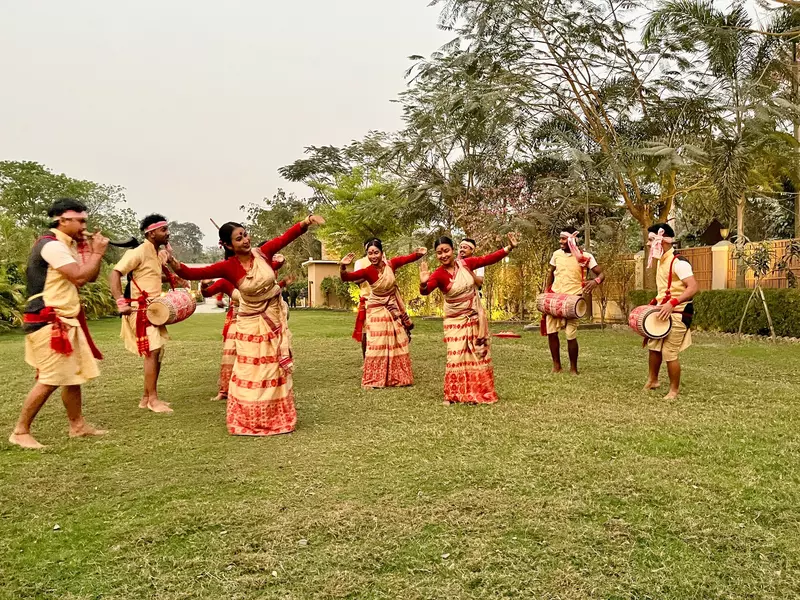
As an eco-friendly alternative, take in a sunset Bihu (Assamese Indigenous folk dance) performance over tea instead. Bihu dances are usually performed during festive seasons, symbolizing courtship and harvest celebrations, but Rhino & River engages a local village troupe from time to time (call ahead and ask about the schedule).
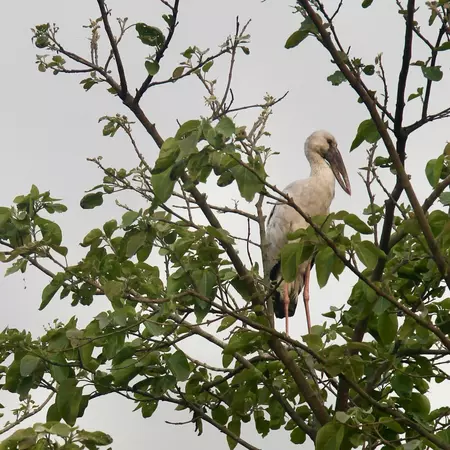
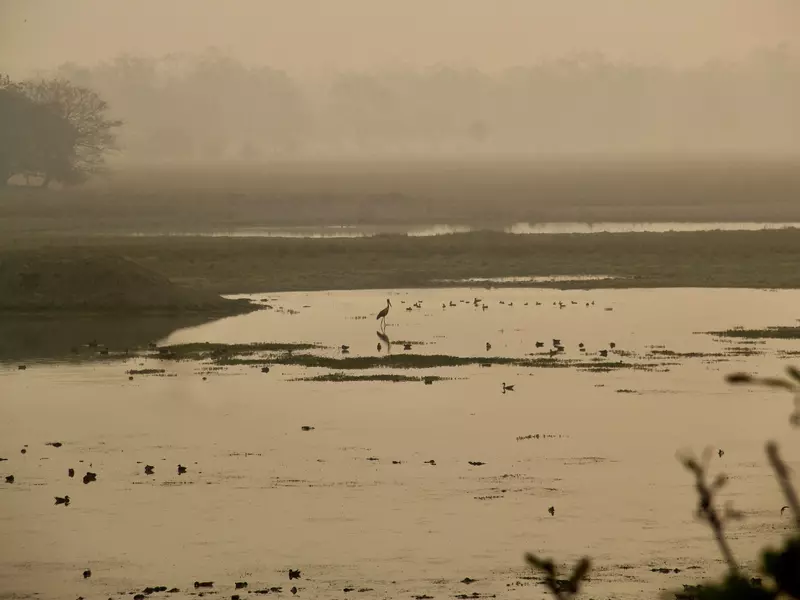
As someone who is neither a morning person or a birder, I’m told you do have to plan well to see birds in this region. However, Pobitora Wildlife Sanctuary was identified as an Important Bird and Biodiversity Areas (IBA) by Birdlife International in 2004 for harboring globally threatened species and range-restricted species, so in theory, bird-watchers have a lot to see. (Post-migratory bird season, all I saw were herons, ibises, cormorants, bar-headed geese, swamphen and painted storks.)
If birding is not your thing, the region also has several well-known temples – the Shiv Temple is considered a must-do, but is altogether skippable though it does have an affectionate resident Indie dog. If time allows, book a massage at Rhino & River’s Nirban spa (Ayurvedic options are available).
Wind down with some river views and Assamese tea – aromatic and full-bodied – and best had black with some local honey and chunky wedges of kaji nemu (aromatic Assamese lime) before heading to Guwahati.
Akanksha Singh traveled to Assam on the invitation of Rhino & River Wildlife Retreat and Spa. Lonely Planet staff do not accept freebies in exchange for positive coverage.
Take your India trip with Lonely Planet Journeys
Time to book that trip to India
Lonely Planet Journeys takes you there with fully customizable trips to top destinations – all crafted by our local experts.

Explore related stories