Sep 22, 202613 min read
20 Things to Know Before Visiting French Polynesia

Writer
Highlights
Writer Jennifer Korn guides you through Andorra's ski slopes, trails and duty-free shops.
Ski Grandvalira's slopes in winter; in summer, hike glacial lakes or bike former smuggler trails.
Visit Barri Antic for a Romanesque church, a Dalí statue and the Casa de la Vall.
Korn loves Caldea Spa's thermal baths and the world's longest alpine slide, a 5.3km descent.
Lonely Planet may earn a commission from affiliate links on our site. All recommendations and reviews reflect our own independent opinions.
A landlocked country sitting right at the French-Spanish border, tiny Andorra packs an outsized punch for its 468 sq km. Europe’s sixth-smallest state is nestled deep in the Pyrenees, rich in centuries of history, dramatic mountain scenery and blood-pumping adventure.
First established as a kind of buffer area between Moorish Spain and Catholic France under Charlemagne, the country evolved into a unique co-principality ruled by both powers in the late 1200s. While an elected prime minister now governs day-to-day affairs under a modern constitution adopted in 1993, the medieval framework remains intact. A largely agrarian and neutral enclave until the 1990s, Andorra remains home to fewer than 90,000 people today.
Altitude defines the country, with Andorra la Vella earning the title of the highest capital in Europe. Its location in the mountains of the northern tip of the Iberian Peninsula means it has no shortage of striking natural beauty to take in.
Commonly folded into larger trips through southern France or Catalonia, Andorra’s appeal shifts with the seasons. Endless biking adventures in the summer, popular ski resorts in the winter and year-round duty-free shopping await.
The ideal time to head to Andorra depends entirely on the activity. December to March is peak ski season in the country, while May to September enjoys mild European summer weather and highs reach the 80s. This is the best time for outdoor adventures like biking, hiking and exploring the glacial lakes dotted across the area.
But the shoulder seasons are when Andorra really shines. The usual summer activities are often still an option, with the added benefit of nature’s changes unfolding in front of you. Springtime is host to blooming rhododendrons poking through the snow, while autumn offers vibrant fall foliage and mushroom foraging opportunities.
If you are looking for a quick break, Andorra’s highlights can easily be compacted into a weekend trip, while staying longer for an extended ski or hiking holiday is a popular option.
Many visitors squeeze Andorra into a journey through the Pyrenees, with the country sitting a mere 2.5-hour drive from both Barcelona and Toulouse. As such, some travelers opt to tackle the country as a day trip. I worked it into a stop at the end of a road trip through the Costa Brava, looking to cap off my beach-hopping adventure with some snow-peaked hikes.
Andorra has no train station or commercial airport, but visitors can easily come in via France or Spain. Many bring their own cars, allowing for easy and fast movement to more remote trails and the possibility of a larger road trip. There are also many bus companies servicing numerous routes into and from the country, including Andbus, Alsa, FlixBus, Monbus and Andorra Direct Bus. Estació Nacional de Autobusos is the central bus station in Andorra la Vella.
Visitors can also take trains to the nearest stations on either side of the border, with Andorre-l'Hospitalet in France and Lleida in Spain. From there, buses and taxis are available into Andorra.
Despite the closest airport being Andorra-La Seu d'Urgell Airport, this is only an option if you’re coming from within specific cities in Spain. As such, Barcelona is the most popular choice to land in, but other nearby landing zones include Reus (240km), Girona (260km), Lleida (150km), Toulouse (195km) and Carcassonne (176km).
Once inside Andorra, the best mode of transportation (aside from a car) is an extensive bus network connecting the main towns and ski spots. There are also taxis throughout the country.
During the summer, Andorra operates a tourist bus service with set itineraries, offering a chance to see parts of the country at a slower pace for cheaper than an official tour. Numerous routes take riders up into the mountains, with tickets on sale closer to the warm season.
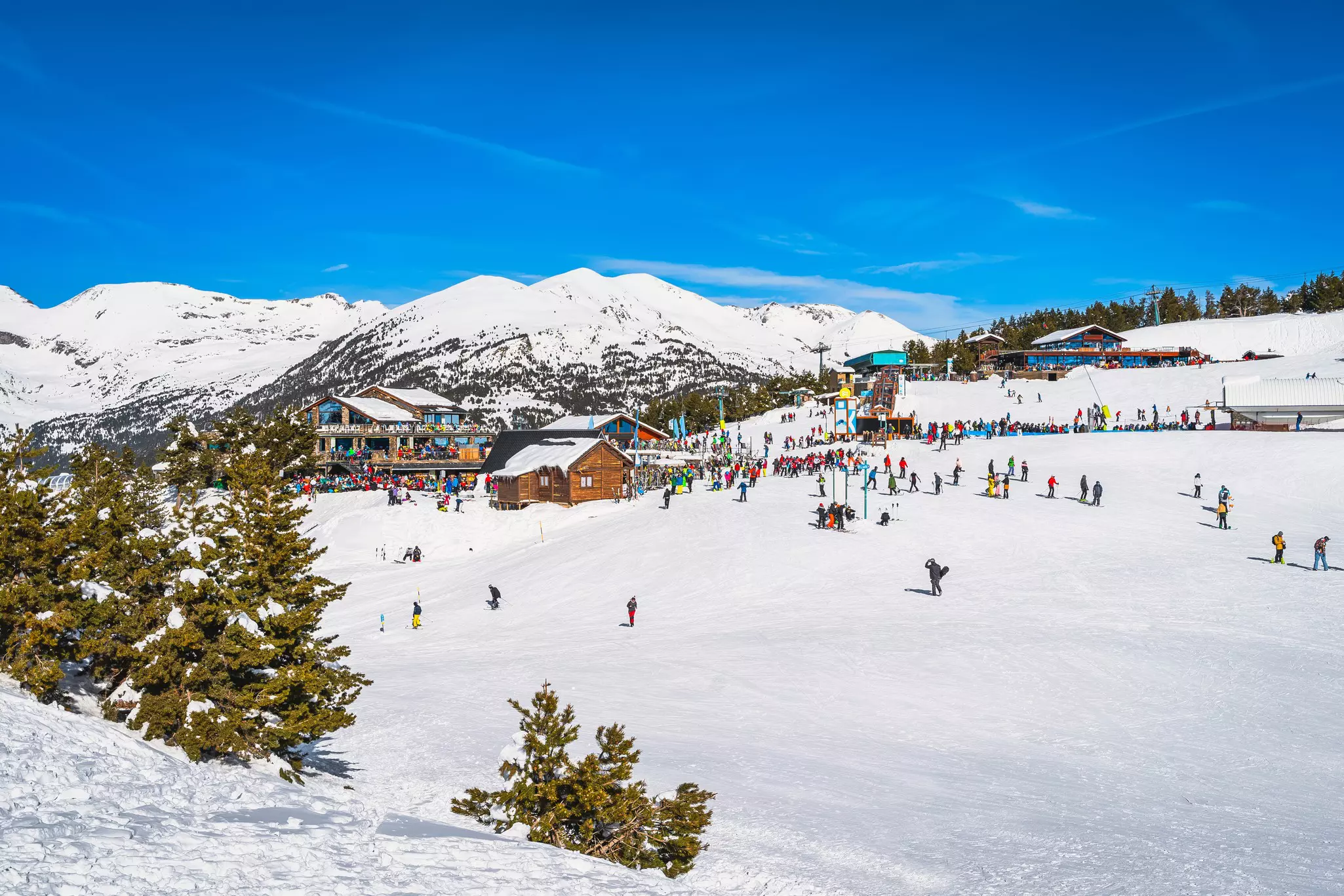
Andorra has no shortage of premier skiing and snowboarding, offering three main, modernized resorts with over 300km of piste trails and plenty of free-ride terrain. It is generally considered cheaper than the more popular Alps.
Snow bunnies can choose between the Grandvalira, Ordino Arcalis and Pal-Arinsal ski areas, enjoying an average elevation of 1900m (though some peaks surpass 2500m), dependable snowfall and plenty of snowmaking. Pistes satisfying all levels are aplenty.
Grandvalira is the largest of the three and in the whole of the Pyrenees, connecting Pas de la Casa, Soldeu, El Tarter, Grau Roig, Canillo and Encamp resorts. It is also home to the country’s most lively après-ski offerings, with the town of Pas de la Casa famous for its bars and clubs. Some hotspots include Paddy’s Bar, The Dubliner and Bilbord, and low taxes on alcohol mean cheap drinks. For more family-friendly spots, head to Soldeu or Arinsal.
Home to 100s of marked hiking and biking routes, Andorra is a renowned outdoor destination. Prime spots include the Sorteny Valley, Comapedrose and the Madriu-Perafita-Claror Valley. Thanks to the large number of options, hiking trails can remain relatively quiet. When I visited in June, I was the only one on the trails. Before long, you will find yourself also secluded and in the midst of jaw-dropping glacial lakes, unique rock formations and rolling, flower-dotted hills.
Many hiking trails are accessible without a car, serviced by buses from Andorra la Vella. For beginner routes, try Ruta Del Ferro, which takes you on a tour of the metal history in Andorra or Llac d’Engolasters and Circuit de les Fonts for a lazy stroll around one of the country’s most famous lakes. A more intermediate trek is the well-known Estanys de Juclar, popular for good reason. Hikers climb through lush greenery before arriving at two crystal alpine lakes. You can camp around there or stay at the mountain hut on the trail. Another option is Alt del Griu, a 2879m tall peak with incredible views, or Coma Pedrosa, Andorra’s highest peak at 2942m.
To be truly challenged, Pic de Medacorba stands at the meeting point of Andorra, Spain and France. Considered the hardest peak to reach, Pic de Medacorba is a border-straddling feat that will take you up 1300m and out 12.4km.
Andorra is synonymous with biking, known as a world-class, high-altitude destination for road and mountain lovers alike. In fact, several famous cyclists live and train in the small country, and the bike-loving culture means there are all the amenities you need to enjoy a ride: plenty of on-road lanes, bike hire shops, dedicated hotels and restaurants, and repair spots.
For street riders, two main roads stretch through the valleys of the country, and from there, countless smaller winding paths jut out. Meanwhile, there are several former smuggler trails in the mountains that provide a perfect off-road adventure. These paths were used by those fleeing the Spanish Civil War and World War II, as well as for the transport of tobacco and other items. Other options feature rocky terrain, forest paths and exhilarating drops.
The country has 21 mountain passes and more than 600km of mountain bike routes, meaning you are bloated with options. Some of the top spots include Coll de Galina (known for its tough climbs and gorgeous views) and Ordino-Arcalís (a Tour de France climb). For more moderate biking, try Els Cortals d'Encamp or Pal Arinsal Bike Park.
And for those seeking a more effortless bike tour experience, there are 94km of e-bike trails.
If you’re looking for a dose of culture, Andorra has plenty to offer. Barri Antic, Andorra La Vella’s old town, is the historical heart of the country. There, you can ramble through cobblestone streets, visit the Romanesque Sant Esteve Church from the 12th century (one of the most important buildings in the Catalan Romanesque style), visit the Casa de la Vall old parliament building and even enjoy Salvador Dalí's "Nobility of Time" statue.
Some of the most beloved museums in Andorra include the National Automobile Museum, Bici Lab Andorra and the Casa d'Areny-Plandolit museum, which offers a glimpse into a local noble family’s home from the 17th to 19th centuries.
Because Andorra is not in the European Union, it does not have the bloc’s VAT obligations. This means the country has all of the same shopping as across Europe’s major cities but with a hefty discount. Most EU member states have about 20% VAT. Meanwhile, Andorra’s equivalent is only 4.5%.
With everything from small local boutiques to international fashion brands, Andorra is stuffed with shopping options. Some common goods known to be cheaper than in other places include electronics, luxury clothes, cosmetics, tobacco and alcohol. And if you forgot any gear at home, winter sport clothing can be significantly more affordable in Andorra.
Popular shopping areas include Avinguda Carlemany street, the Illa Carlemany center and the famous Avinguda Meritxell path.
I love a good thermal bath. The steaming water and surrounding nature always guarantee a trip highlight, and the baths in Andorra are no exception.
Caldea Spa is the largest and most popular in the country, offering amazing views of the mountains and city. While it can get quite full, it is possible to dodge crowds by avoiding peak weekend times and school holidays. There is an area for everyone at Caldea, with kids’ areas, adult-only relaxation zones and various treatment room styles. Other, quieter options just outside Andorra include Dorres’ baths and the hot springs at Mérens-les-Vals, France.
Another favorite of mine: the longest alpine slide in the world. Yes, it is as fun as it sounds. Ride down 5.3km in a two-seater sled at 1600m elevation through some of the most beautiful nature in Europe, and you will not be sorry. Riders have control over their speed during the descent, with the entire ride (both up and down) lasting approximately 20 minutes. It is a real one-of-a-kind experience that the whole family can enjoy.
Andorra is widely considered to be an affordable destination, although the winter and summer high seasons can get crowded and pricier. Compared to other European spots, Andorra’s prices lean towards Spain and Portugal more than France or Switzerland.
Night in shared dorm at Font Andorra Hostel: from €17
Night at the 5-star Andorra Park Hotel: €190
One-way bus pass: €1.90
Americano at Karving cafe: from €2
Burger from Midtown lunch spot: €13.50
Day ski pass at Grandvalira: from €58
Small beer at Dubliner Pub: from €2.50
Andorra is not part of the Schengen Zone or European Union. It does share open borders with its neighbors, but you are crossing an international border when entering from France or Spain. You most likely will not be stopped when driving in, but make sure you have a double or multi-entry Schengen visa when visiting.
Tipping culture is much the same in Andorra as in its neighbors, with extra cash on top of your bill being entirely optional but appreciated. Many leave 5-10% at bars and restaurants.
Explore related stories