Mar 31, 20269 min read
The 8 Best Things to Do in Hakone, JapanMar 31, 2026
9 MIN READ

Writer
Ashi-no-ko in Hakone, Japan. kitzcorner/Shutterstock

Writer
Lonely Planet may earn a commission from affiliate links on our site. All recommendations and reviews reflect our own independent opinions.
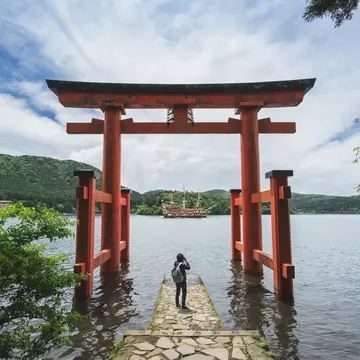
Spilling inland from the coast southwest of Tokyo, Hakone serves up unreal scenery on all sides. The vermilion torii (gate) of the Hakone-jinja (shrine) seems to levitate out of Ashi-no-ko, a scenic lake born of a volcano. In the volcanic Ōwakudani valley, sulfurous steam gushes into the air as you float over its primordial scenery in a cable car.
History is written large on this landscape. Feel time bend as you walk in the footsteps of samurai who wore down the pebble pathways of the Tōkaidō road, then sink into an outdoor onsen (hot springs) in Hakone-Yumoto, taking part in centuries-old ceremonies harking back to the heyday of dynastic Japan.
Life in the Hakone region has long been immortalized in ukiyo-e (woodblock prints), and you’ll still see art everywhere here today, in museums full of Japanese and international treasures, as well as dotted around the forests of Fuji-Hakone-Izu National Park.
For visitors with limited time, Hakone is conveniently close to Tokyo for a day trip, with connections by train taking as little as 90 minutes. Many travelers prioritize trips to the volcanic vents of Ōwakudani and the red Hakone-jinja gateway on the shores of Ashi-no-ko. If these are points on your itinerary, base your trip around the Hakone Ropeway, which runs from the summit of Sōun-zan to Tōgendai, via Ōwakudani.
Whatever draws you to this intriguing corner of Japan – onsens, cruises on the lake, hiking or art – here are the best things to do in Hakone.
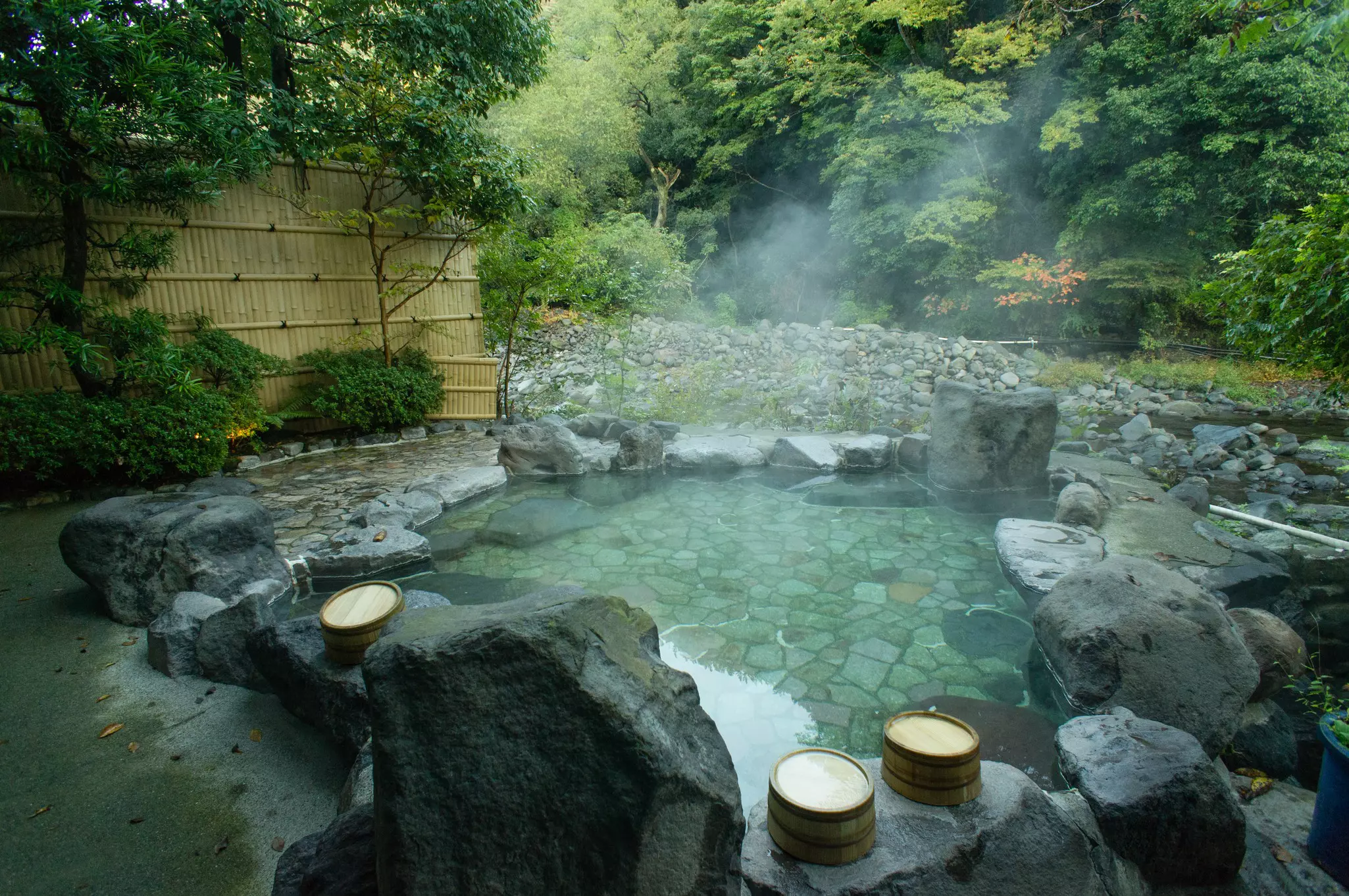
The Hakone region is home to scattered villages and small towns such as Hakone-Yumoto, an onsen resort that dates back to the 8th century. Bathing at a spa complex such as Tenzan Tōji-kyō is imbued with prestige, and a soak in the rotemburo (outdoor onsen) will remind you that you are participating in a tradition as old as the ancient trees around you.
Similarly luxurious Hakone Yuryo provides a memorable rotemburo experience deeper in the forest, with the option of a meal package so you never have to leave this idyllic setting. However, at these more traditional spas, bathing is single sex and nude, and there are restrictions on bathers with tattoos.
If you’re traveling with children, family-friendly Hakone Kowaki-en Yunessun has mixed bathing, so you’ll need a swimsuit. It resembles a water theme park more than a traditional onsen, with water slides, artificial waterfalls and a themed pool where red “wine” pours from a giant wine bottle. Come for laughter, not tranquillity.
Planning tip: Shuttle buses run to major spas from Hakone-Yumoto Station, on the Hakone Tozan Railway line, linking Odawara to Gōra.
In Hakone, nature is a key part of the artist’s canvas. At Hakone Open-Air Museum near Gōra, you can wander across a verdant hillside dotted with towering sculptures and installations by the likes of Henry Moore, Rodin and Miró.
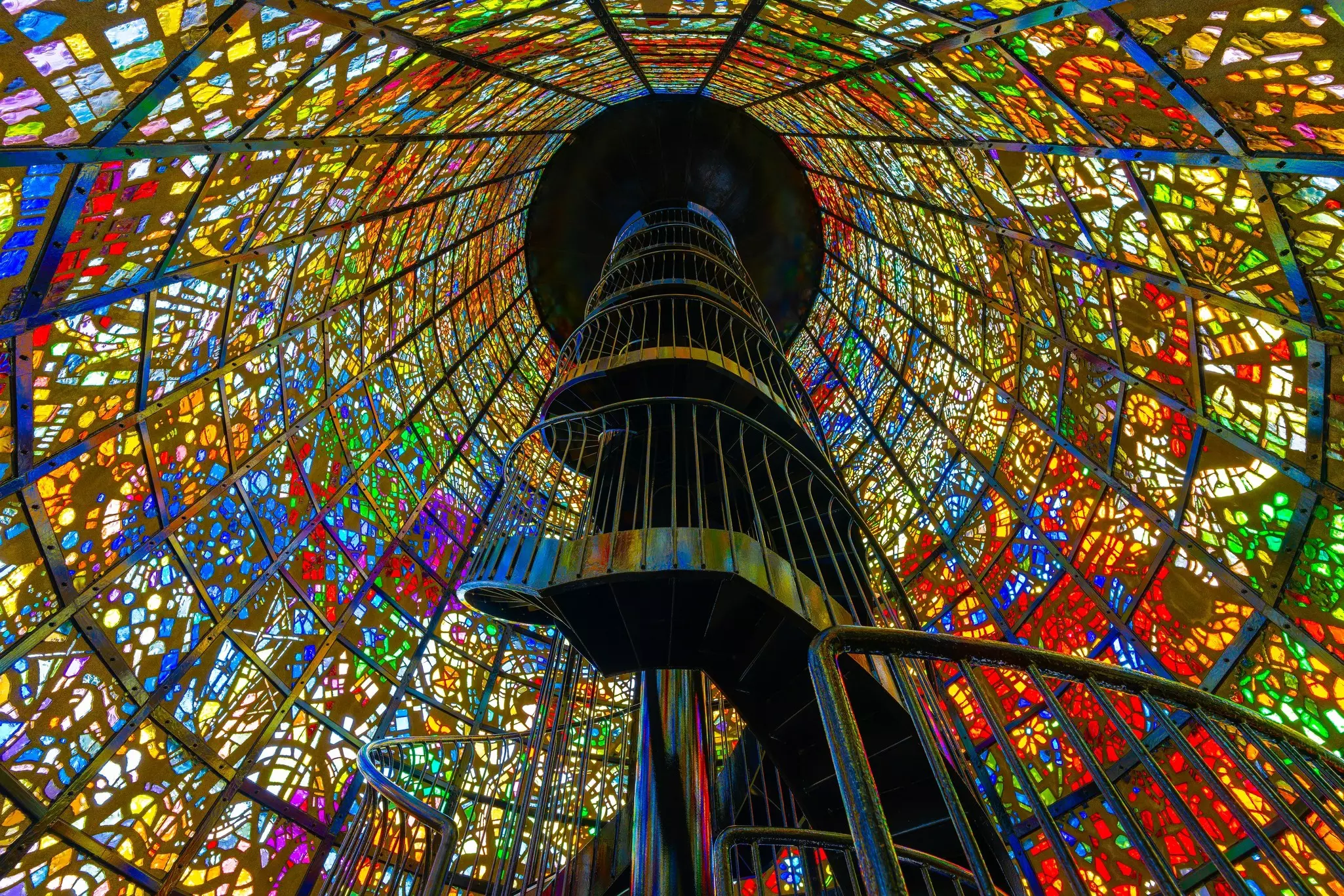
If it’s raining, head inside the Picasso Pavilion, displaying over 300 works by the legendary Spanish artist. Be sure to ascend Gabriel Loire’s Symphonic Sculpture, a spiral staircase encased in vibrant stained glass, which offers breathtaking views of the park and the surrounding mountains.
Next, take a short walk to the Okada Museum of Art; its Japanese, Chinese and Korean art was collected by industrialist Okada Kazuo. Nearby, in the village of Gōra, you can pop into the Hakone Museum of Art and take part in a matcha tea ceremony, or browse the photos in the Hakone Museum of Photography.
Take a bus to reach the Pola Museum of Art, an architectural marvel of soft turquoise glass that displays works by Van Gogh, Cézanne, Renoir and Matisse alongside Japanese artists; it’s a few kilometers northeast of Gōra.
Your last stop should be either the Narukawa Art Museum, at the southeast end of Ashi-no-ko, or the Enoura Observatory, a fantastical complex on the coast overlooking Sagami Bay combining seascape vistas, ancient stones, fossils and modern architecture that riffs on traditional Japanese themes.
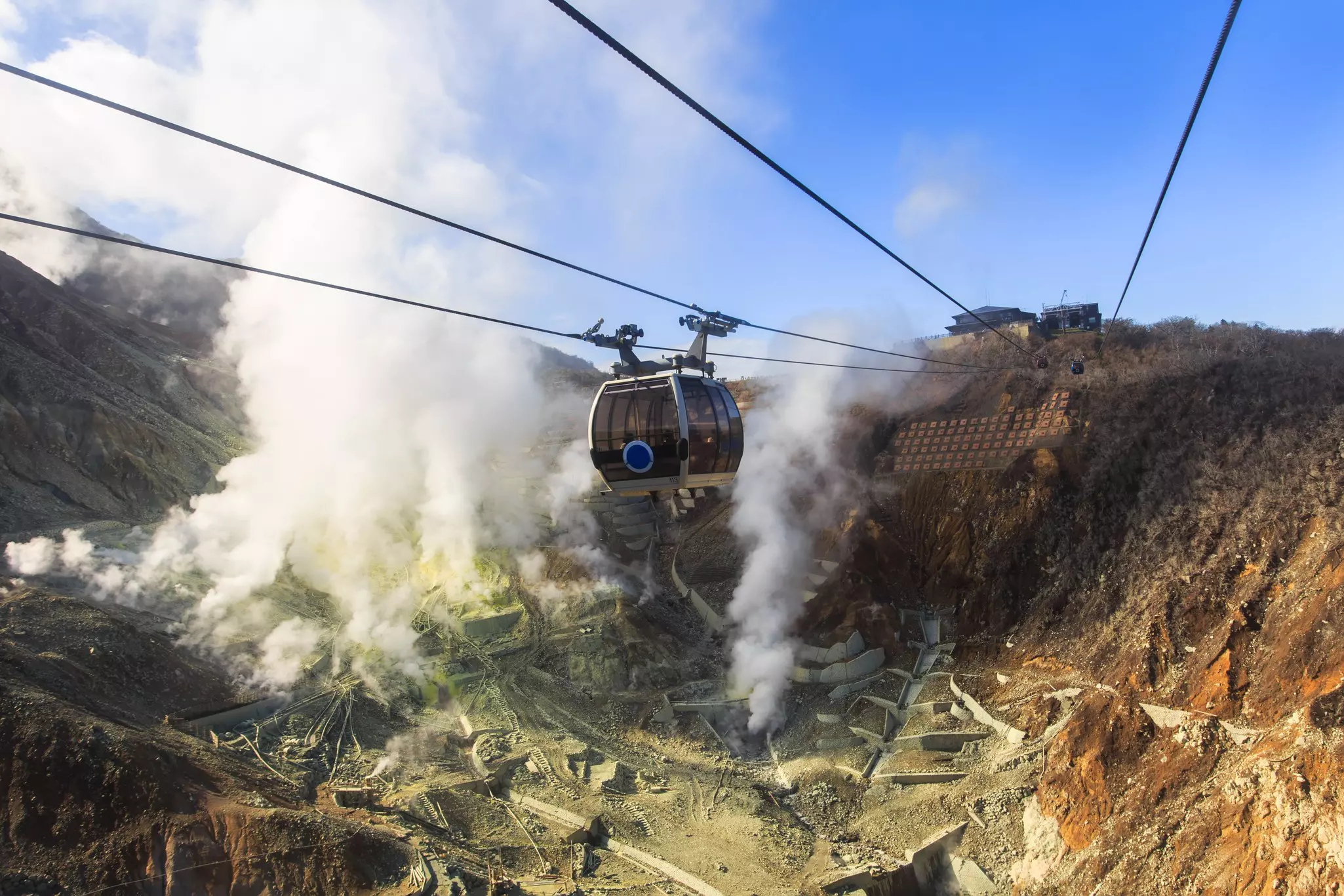
To get the best aerial views of the volcanic caldera lake of Ashi-no-ko, the fuming Ōwakudani valley and Mt Fuji (weather permitting), take the Hakone Tozan Cable Car from Gōra to the top of Sōun-zan, then hop on the Hakone Ropeway for stunning vistas over Hakone’s surreal volcanic landscapes.
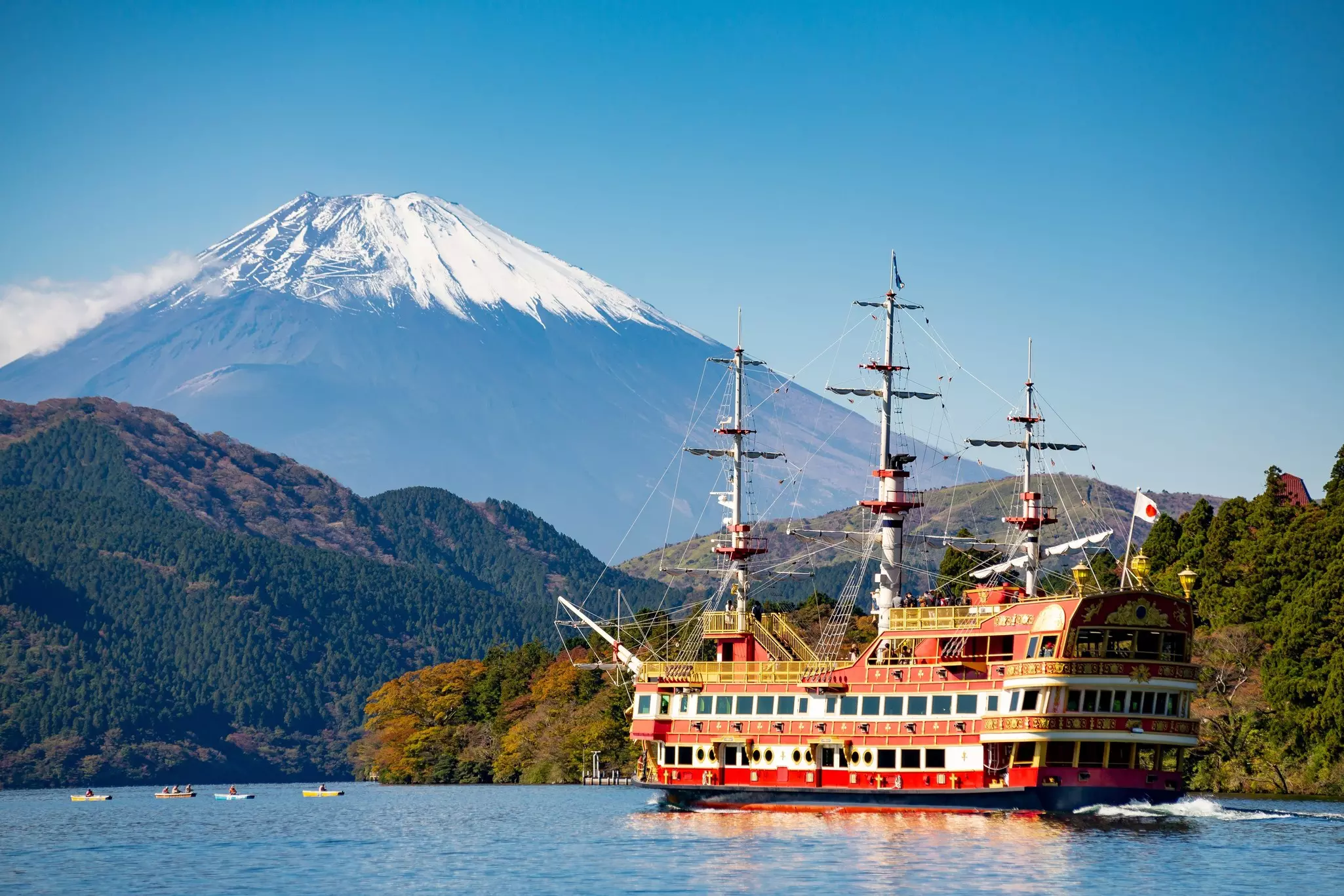
Connecting Sōun-zan Station with Tōgendai Station on the shores of Ashi-no-ko, the ropeway ride takes about 30 minutes. At Tōgendai, you can board a galleon-styled sightseeing boat at Moto-Hakone pier to reach the lake's best viewing points.
On your way to the lake, you’ll soar above Ōwakudani, Hakone's “Great Boiling Valley” – created 3000 years ago when the Kami-yama volcano erupted and collapsed. The eruption also formed the lake of Ashi-no-ko, one of Hakone’s most iconic sights.
This stunning cobalt crater lake offers breathtaking views of Mt Fuji from its shores, especially on still days, when the mountain is reflected perfectly in the calm waters. Winter mornings provide the clearest views.
For the perfect Hakone photo, capture the red torii of the Hakone-jinja, which can be viewed from land or the water on a boat tour. You can reach the shrine on foot from Moto-Hakone, walking around the edge of the lake.
Planning tip: The volcanically heated waters of the Hakone area are used to boil kuro tamago – literally “black eggs.” The sulphur reacts with the eggshells, turning them black and giving them a distinctive flavor. Some say that eating kuro tamago can extend your life by 7 years. The black eggs are on sale at tourist stores if you wish to extend your expiration date.
If you’re looking for a next-level Japanese-style hamburger, steak or premium wagyū beef cooked right in front of you, grab a bite at Kinosuke in Hakone-Yumoto. Another great option in this onsen town is 808 Monsmare, serving wood-fired pizzas with mozzarella, fresh basil and excellent tomato puree; its matcha gelato is a must-try.
For a lakeside meal near the Tōgendai Ropeway station, try Kotei for either seafood curry or spicy spinach and mushrooms on a terrace with lake views. At Amimoto Ooba, you can try crispy tempura wakasagi (a whitebait-like fish), caught in Ashi-no-ko and served with matcha salt.
If you want something more traditional, try the mild katsu curry (pork cutlet with a spicy sauce) or omurice (omelet and fried rice) at the Tōgendai View Restaurant, with elevated views of the lake and its sightseeing pirate ships.
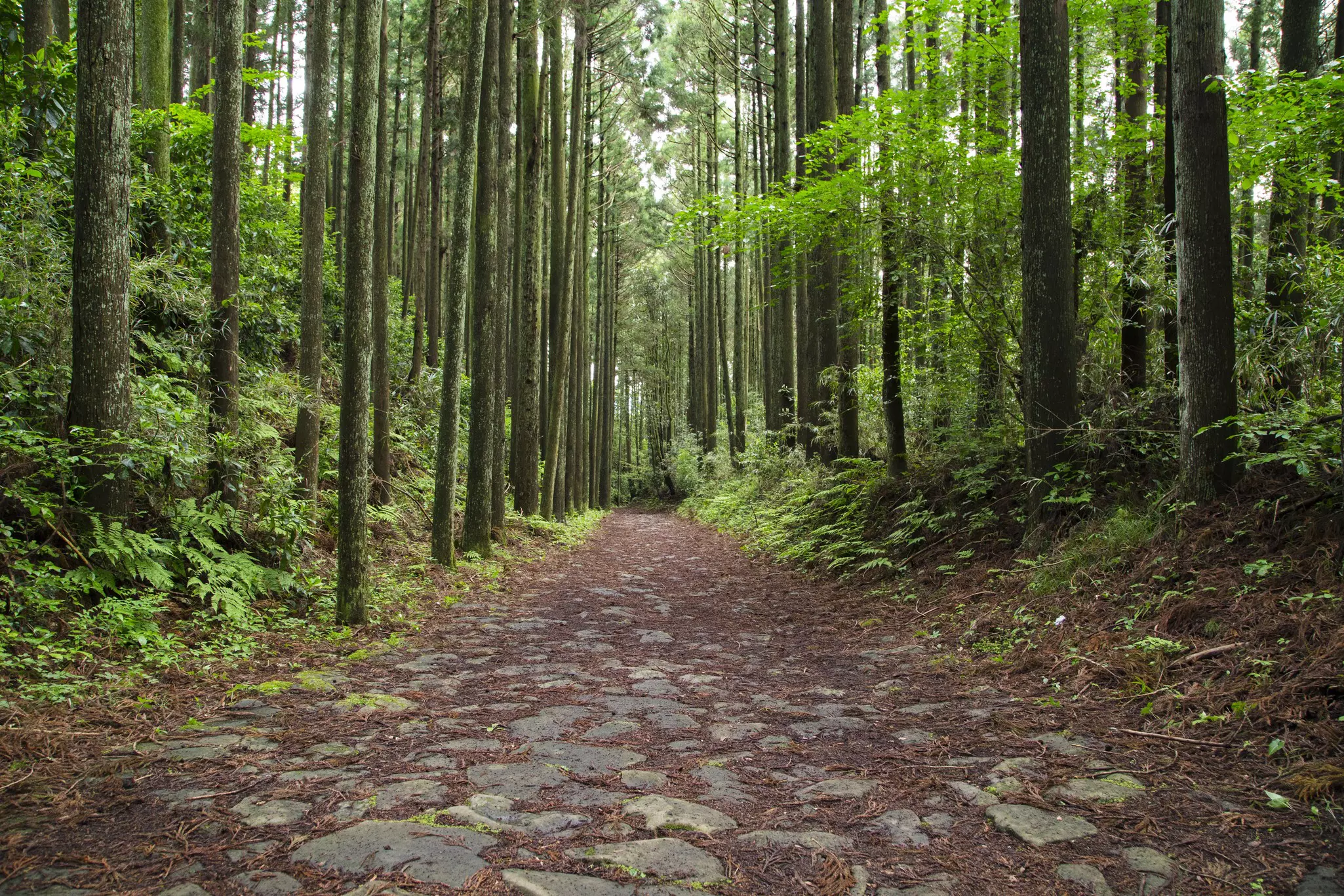
Trace the footsteps of the shogun and samurai who journeyed along the Tōkaidō, one of the Five Routes of the Edo period. Its smooth cobblestones have been polished by centuries of foot traffic (vehicles with wheels were forbidden by decree).
The best way to enjoy the serene forest scenery is on the 4km hike from Moto-Hakone to Hatajuku, a quaint village that preserves a hint of the feudal era. Take a bus to Hakone-jinja-iriguchi, one stop before Moto-Hakone, then walk up a short road to the wooden sign marking the trail entrance. From here, the hike is mostly downhill and easy to follow, with signs in English.
At the midway point, you’ll find a teahouse, Amazake-chaya, where you can take a break and sip amazake (sweet rice wine) or green tea. At the hike’s end, it’s worth exploring the shops selling traditional woodwork, such as Hatajuku Yosegi Kaikan. To return to Hakone-Yumoto, hop on a bus from Hatajuku.
Planning tip: For another easy but rewarding walk in the area, stroll around Ashi-no-ko. The western bank's trail offers good views of Hakone-jinja, while on the eastern side, the path presents stunning Mt Fuji views from Onshi Hakone Kōen.
Early starts are rewarded in Hakone. Start a morning in Gōra with a pick-me-up at Coffee Camp, where English-speaking baristas brew single-origin coffee and mix up affogato in a hip, polished-concrete space.
After a day exploring the forest or museums, pause for afternoon tea, apple pie or French toast while you take in stunning Ashi-no-ko views from the terrace at Salon de thé Rosage, close to Hakone-jinja. Wrap up your evening at the Indigo Hotel’s Riverside Kitchen & Bar over whisky, gin and cocktails beside the Haya River.
Planning tip: It is considered rude in Japan to drink or eat while walking or on public transportation, and this also applies to takeaway coffee. Do as locals do and settle in to enjoy your breakfast cup before you set off to explore.
If you're looking for a budget-friendly way to explore Japan's Hakone region, the popular Hakone Free Pass is a fantastic choice. It gives you unlimited access to all the Odakyu-affiliated buses, trains, boats, cable cars and ropeways in the area, plus discounts on select attractions over 2 or 3 consecutive days.
Pass holders get round-trip travel on the Odakyu Line from Tokyo, as well as unlimited use of eight modes of transportation, including the mountain-climbing Hakone Tozan Railway, the Hakone Tozan Cable Car and the Hakone Ropeway. The pass also includes sightseeing cruises on Ashi-no-ko lake and free travel on the Kanko Shisetsu-Meguri Bus, which connects popular spots to visit in the region.
The Hakone Pass provides discounted entry to attractions such as the Hakone Yuryo and Hakone Kowaki-en Yunessun onsens, Hakone Gōra Park, and the Hakone Open-Air Museum.
An onsen town, Hakone-Yuomoto has plenty of lodgings that include an on-site spa. Fukuzumirō is a traditional ryokan (inn) from 1890, serving seasonal meals that you can take in your room as well as shared stone and pine onsen baths.
If you prefer a gender-separated onsen experience, book a stay at Yoshiike Ryokan, a 7-minute walk from Hakone-Yumoto Station, which offers spacious rooms with single-sex outdoor onsen baths amid lush Japanese gardens.
For an inexpensive, old-style Japanese experience, K’s House Hakone has futon dorms, capsules, bunks and neat tatami-style doubles, plus both indoor and outdoor onsen pools. For a luxe stay, head to Hoshino Resorts Kai Hakone, a minimalist hotel with partly outdoor infinity-style onsen pools, English-speaking staff and exceptional kaiseki (multicourse Japanese meals).
This article was adapted from Lonely Planet’s Japan guidebook.
Explore related stories