Apr 1, 202614 min read
The Best Things to Do in India’s Andaman IslandsApr 1, 2026
14 MIN READ

Writer
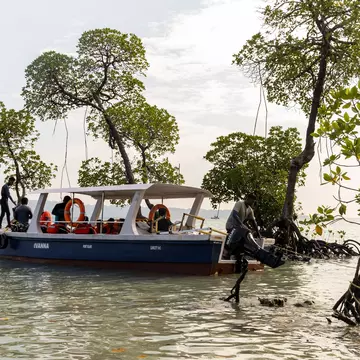
Exploring the mangroves of the Andaman Islands, India. explorewithinfo/Shutterstock

Writer
Highlights
Writer Lucie Grace picks 16 things to do across India's remote Andaman Islands.
Visit Port Blair's Cellular Jail, then take the boat to eerie Ross Island.
The reefs off Swaraj Dweep dazzle serious divers, while Shaheed Dweep offers rare dugong encounters.
Wildlife lovers will find nesting turtles at Kalipur Beach and meditative kayaking in Flat Bay.
Lonely Planet may earn a commission from affiliate links on our site. All recommendations and reviews reflect our own independent opinions.
India’s tropical jewels, the little-visited Andaman Islands lie nearly 1370km from the mainland. And one of remotest corners of this vast nation rewards anyone who makes the journey. Astounding crystal-clear waters lap the coast of this forested archipelago, where travelers rave about pristine beaches, exceptional diving sites and glorious sunsets.
Most of the Andamans’ landmass lies on Great Andaman, which is divided by narrow channels into seven major constituent islands. North Andaman is known for its rugged landscapes and remote charm: sleepy Diglipur township is the island’s biggest settlement, Ross Island and Smith Island are linked by sandbars, and Kalipur Beach is famous for nesting turtles. By contrast, South Andaman is the Andamans’ administrative and cultural hub, home to the capital Port Blair and several historic landmarks. Popular tourist destinations here include Swaraj Dweep (Havelock Island) and Shaheed Dweep (Neil Island) – two of the Andamans’ top places for diving and relaxation.
While talk of the Andamans’ appeal has grown among savvy travelers, the islands still lie well off the beaten track. Which means the longer you can stay to absorb their undeveloped vibe, the better. And although doing nothing but enjoying the sun and the views of this slice of unspoiled paradise is perfectly acceptable, if you’re going to travel all this way, you might want to explore – even just a little.
Here are the best things to do in the Andaman Islands.

A symbol of India’s long struggle for independence from the British Empire, the Cellular Jail in Port Blair is a sobering national monument that draws visitors from across the country. The complex has a panopticon plan, which was designed to allow warders to keep a constant eye on the prisoners held here. Today, three lengthy wings remain intact.
Names of imprisoned Indian freedom fighters line the walls of the observation tower. They’re listed by the state where they were arrested before arriving here to be incarcerated – or in some cases, tortured and executed, as the gallows here will remind you. The popular Cellular Jail Sound & Light Show brings these tragic stories alive in the prison’s courtyard.
Planning tip: Grab tickets from the entrance booth for the English-language show at 6:50pm (only in peak season).
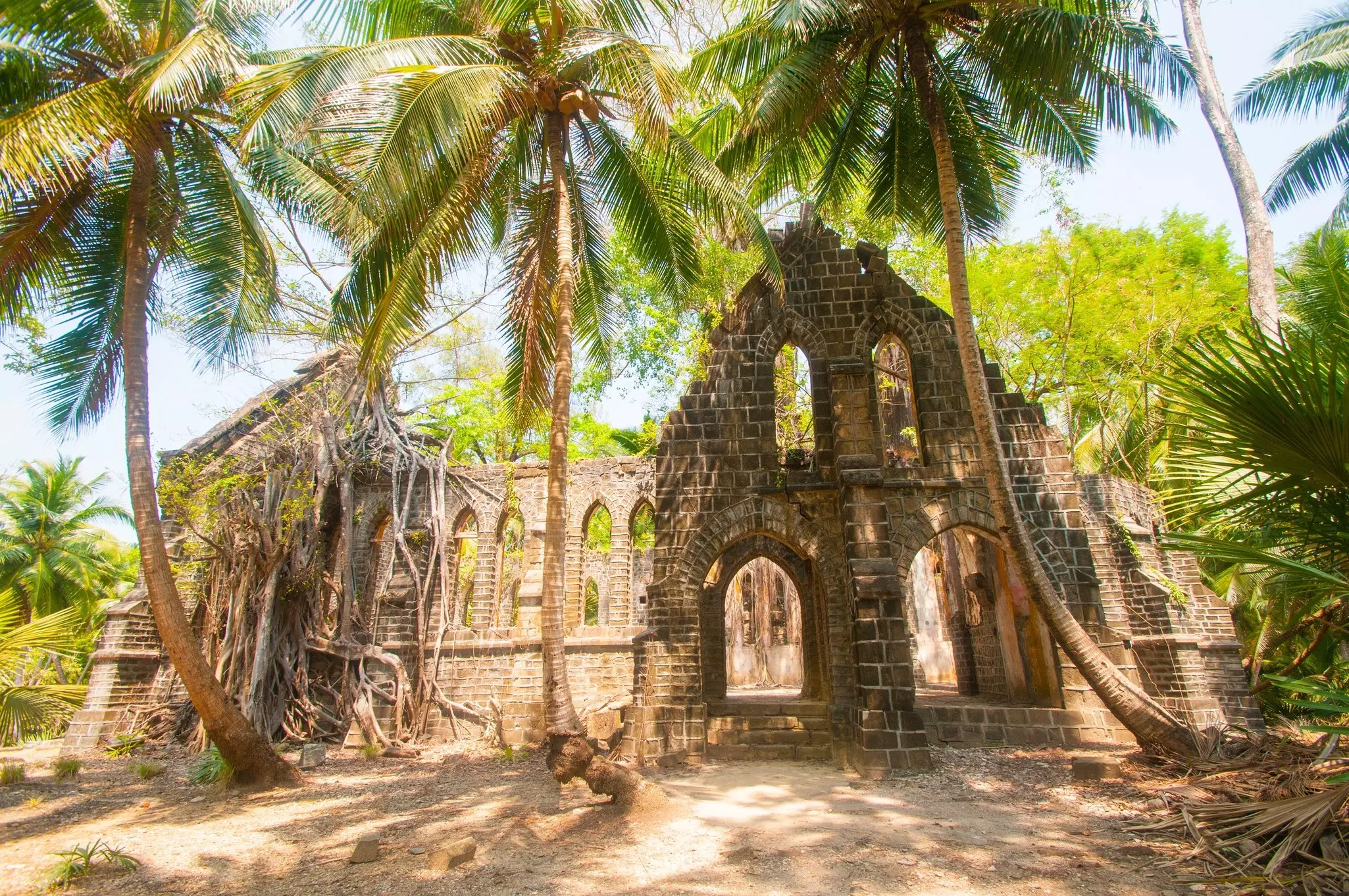
A 10-minute boat ride from Port Blair’s Aberdeen Jetty, Netaji Subhash Chandra Bose Dweep (formerly known as Ross Island) is as picturesque as it is eerie. The British officers in charge of the Cellular Jail and responsible for the horrors that occurred there lived on this island – which they left abruptly when the Japanese occupied the Andamans in 1942.
Today, it’s an eerie time capsule. The colonial settlement’s church, houses, ballroom, power station and swimming pool are now overgrown, choked by the twisting roots of ficus trees. The only residents here are hundreds of deer, first introduced by the hunt-loving British military.
Planning tip: Hire a guide to better understand the island’s serious historical significance, and arrive early in the day to explore before the afternoon heat builds.
Locals know that you don’t have to travel far to enjoy the best paddling experience in the Andaman Islands. Join a guided kayak tour with the Noble family at Andaman Homestay for a truly peaceful and unique experience of the waterways in the lush, dense mangroves of Flat Bay, to the west of Port Blair’s old center.
The serenity of the waterways contributes to an almost meditative experience. During 90 blissful minutes, you’ll absorb the sounds of birdsong and the sea lapping the tree roots and sandbanks as you paddle gently along.
Something you’ll remember forever is the opportunity to do some seed planting. If your guide spots pods of floating seeds as you glide past, they’ll scoop them up so you can sow them in the mangrove forest – and add new life to the dense vegetation.
Planning tip: If you’re a more experienced kayaker, book a night trip to witness the bay’s magnificent bioluminescence, created by neon-blue plankton growing under the surface.
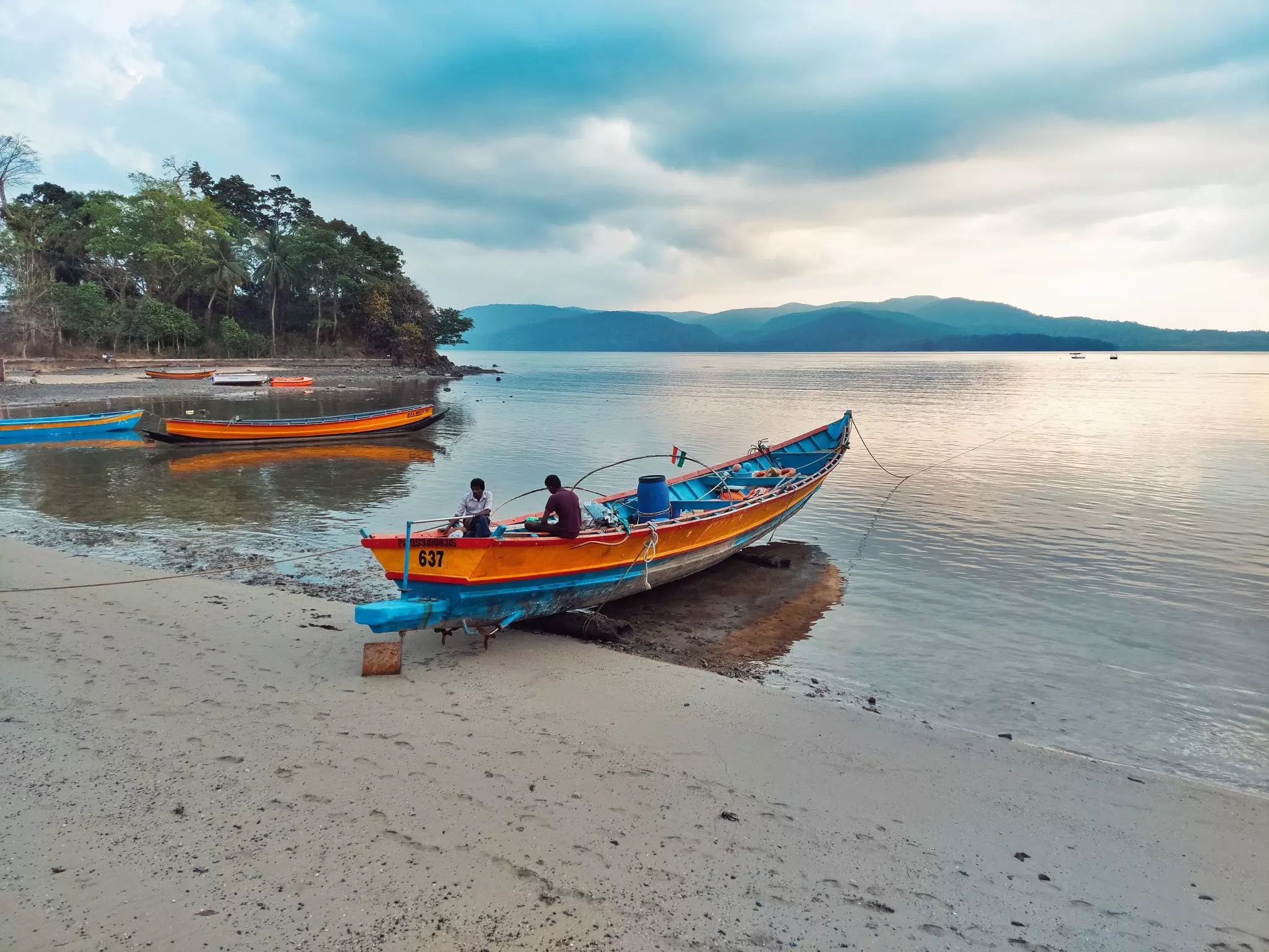
About 25km south of Port Blair, the tiny hamlet of Chidiya Tapu draws day trippers from the capital for good reason. One of the most idyllic corners of South Andaman, Chidiya Tapu is popular for bird-watching and vibrant sunsets – and a great place to immerse yourself in the islands’ diving scene. Two highly reputable dive centers, Lacadives and Infinity Scuba, run trips to top dive sites such as Corruption Rock and to the wreck of a WWII British minesweeper.
Planning tip: Chidiya Tapu’s neighbor to the east, Munda Pahar offers a peaceful slice of unspoiled nature beside a silver-sand beach. Just note that swimming here is banned due to the presence of saltwater crocodiles.
Little Andaman, 8 hours south of Port Blair, has a very small tourism scene – not surprising given the commitment to get here. The island does, however, have an under-the-radar, nascent surfing culture for a few months of the year.
The swell here isn’t blocked by the Nicobar Islands, which sit a little to the southeast. So if you are an experienced surfer, Little Andaman offers the best waves in the archipelago, with powerful swells brewing from the southwest.
Why is the surf scene here low-key? Mostly because surfers want to keep it that way. The local government does little to promote surfing here, either – probably due to the scattered presence of saltwater crocodiles.
Planning tip: Ferries to Little Andaman dock in Hut Bay, which is dotted with small homestays, most of which rent out surfboards (long, short and bodyboards). The surf season runs from February to late April, when the monsoon rains roll in.
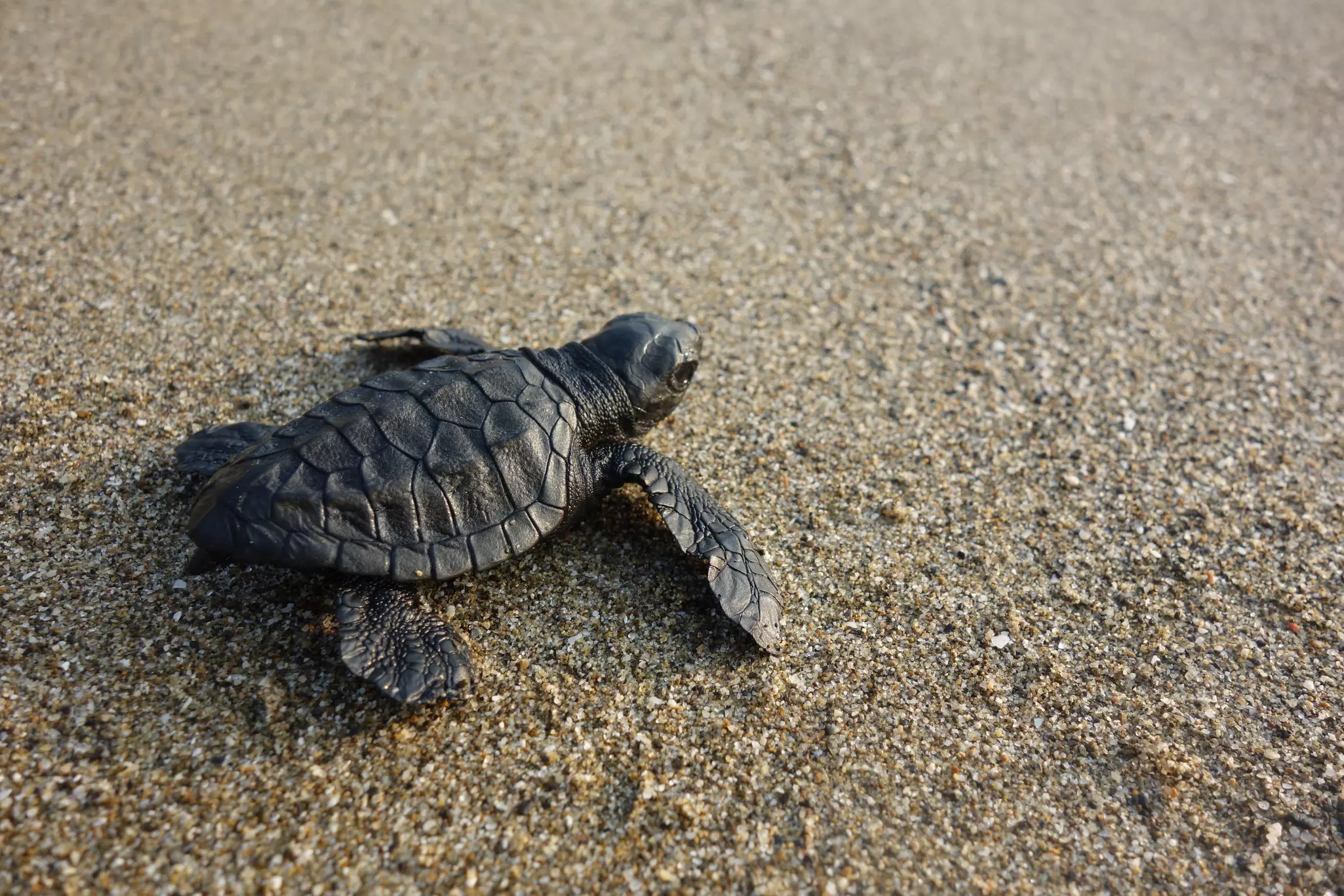
On North Andaman, you’ll likely want to base yourself in Kalipur Beach, 18km southeast of Diglipur. This white-sand beach is home to a world-famous turtle-nesting site, where olive ridley, leatherback, hawksbill and green turtles gather to breed and lay eggs between November and February, under the watchful eye of the local Forestry Department. During the laying season, forestry officials lead midnight tours along the starlit beach to see these incredible creatures laying their eggs – an experience that will stay with you long after leaving these tropical islands.
Planning tip: It’s quite a trek to reach the nesting site at Kalipur Beach. Since only infrared lights are permitted, be sure to go with the official government officers.
Diglipur’s other star attractions are nearby Ross Island and Smith Island, linked by an idyllic tropical sandbar. Hop on a speedy vessel that takes just 25 minutes to whizz from Diglipur’s Arial Bay Jetty to the famous twin islands. The sandbar linking these wildly picturesque islets appears at low tide. Home to stretches of incredible, vibrant coral reefs, both are brilliant places to wade in for a spot of snorkeling.
Planning tip: To visit the islands, you’ll need a special pass, which can be obtained from the local Forestry Department. You can also ask your driver or guide to sort it for you.
Getting to North Andaman from Port Blair is no mean feat. Government-run ferries are irregular and at the whim of the weather – so islanders will tell you the road is the way to go. Charter a vehicle and head north along the Andaman Trunk Road (ATR) for 2 hours, then take the ferry to the island of Baratang. Here, you can pop inside dramatic limestone caves. Then, take a mangrove boat ride and stop by the so-called “mud volcano” – worth a look if you’re passing by.
A further 3 hours north, stop at Moricedera Beach, a great place to admire the blue tones of the ocean and enjoy a prepacked picnic. A 10-minute drive further along the coast takes you to the Dhani Nallah walkway, which leads through dense green mangroves to a beach famous as a hatching ground for sea turtles.
Planning tip: All tourists have to hire a driver to accompany them on the ATR. For the safety of the Indigenous Jarawa people who live in the region, it is illegal to stop and communicate with anyone along the route.
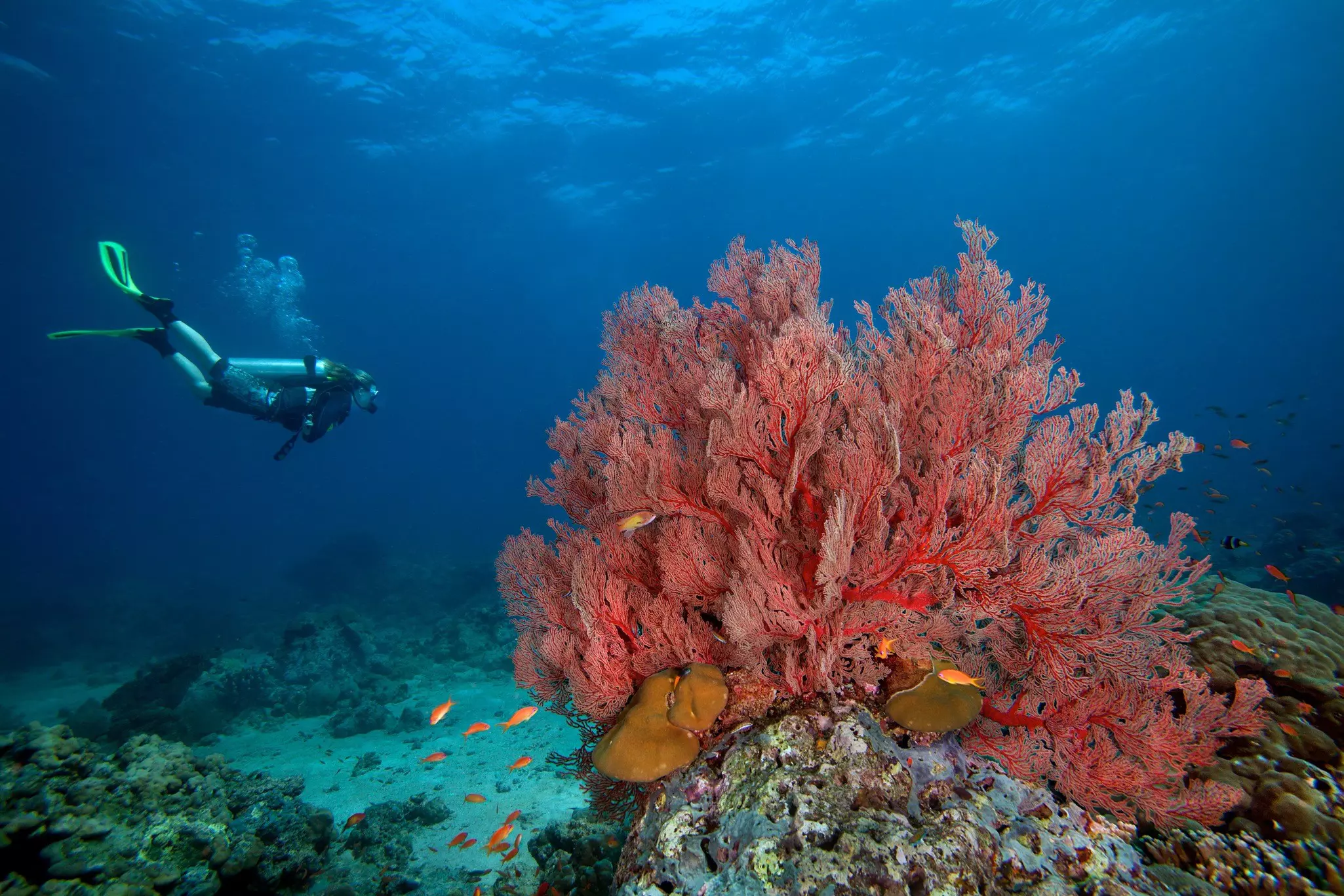
While it’s not the only island known for diving in the Andamans – or even the best one – Swaraj Dweep (formerly Havelock Island) is undeniably the most popular. It first landed on the map of famous diving destinations thanks to the internationally renowned marine biologist Jacques Cousteau.
Cousteau visited the island in 1989, then made a TV documentary, Invisible Island, about the Andamans’ underwater wonders. While here, he discovered the dive site known as the Ledge, the edges of which lead down into deeper waters where large fish such as tuna, barracuda and marbled stingrays live. If you’re an experienced diver, the currents at the Ledge site allow for drift diving.
The site is too large to tackle on one dive, so dive centers will invite you to choose one of several locations. Options include flat coral gardens populated by schools of fusilier, surgeonfish and snappers, with the occasional turtle, moray eel or giant grouper making an appearance. You could also choose Dixon’s Pinnacle or Pilot Reef, both colorful soft coral.
Other options include South Button, for macro dives and rock formations; the Wall, for soft coral and night dives; and Jackson’s Bar or Johnny’s Gorge, for deeper dives with schools of snappers, sharks, rays and turtles.
Planning tip: It’s always important to select a top-quality dive center that is a member of PADI or SSI member; Barefoot Scuba is one reliable operator. Bring reef-safe, biodegradable sunscreen with you, as it’s hard to come by in the islands.
There’s a host of thrilling nature tours to enjoy on Swaraj Dweep, from family-friendly rock-pooling walks to more intrepid night walks, where guides lead you through the rainforest to look for nocturnal animals. While you can always hire a guide through your hotel, you’ll find none more knowledgeable than Nariman Vazifdar, the island’s resident reptile conservationist and wildlife consultant. He will happily share the island’s animal secrets with you – just be sure to message him in advance.
One of the most popular activities on Swaraj Dweep is kayaking in search of bioluminescent plankton, the ocean’s answer to the northern lights. The bright electric blues of this natural phenomenon will blow your mind.
Just don’t expect serenity: with 25 kayaking companies operating on Swaraj Dweep and only one small mangrove area, peak season can resemble gridlock on the narrow waterways. Aim for the shoulder season – or seek out bioluminescence on your own in Port Blair, where the mangroves are more private and peaceful.
Planning tip: Trips are currently banned late in the evening due to potential crocodile encounters in the mangroves. Stick with one of the four PADI/SSI dive centers, whose professional staff will take you out at a safe time.
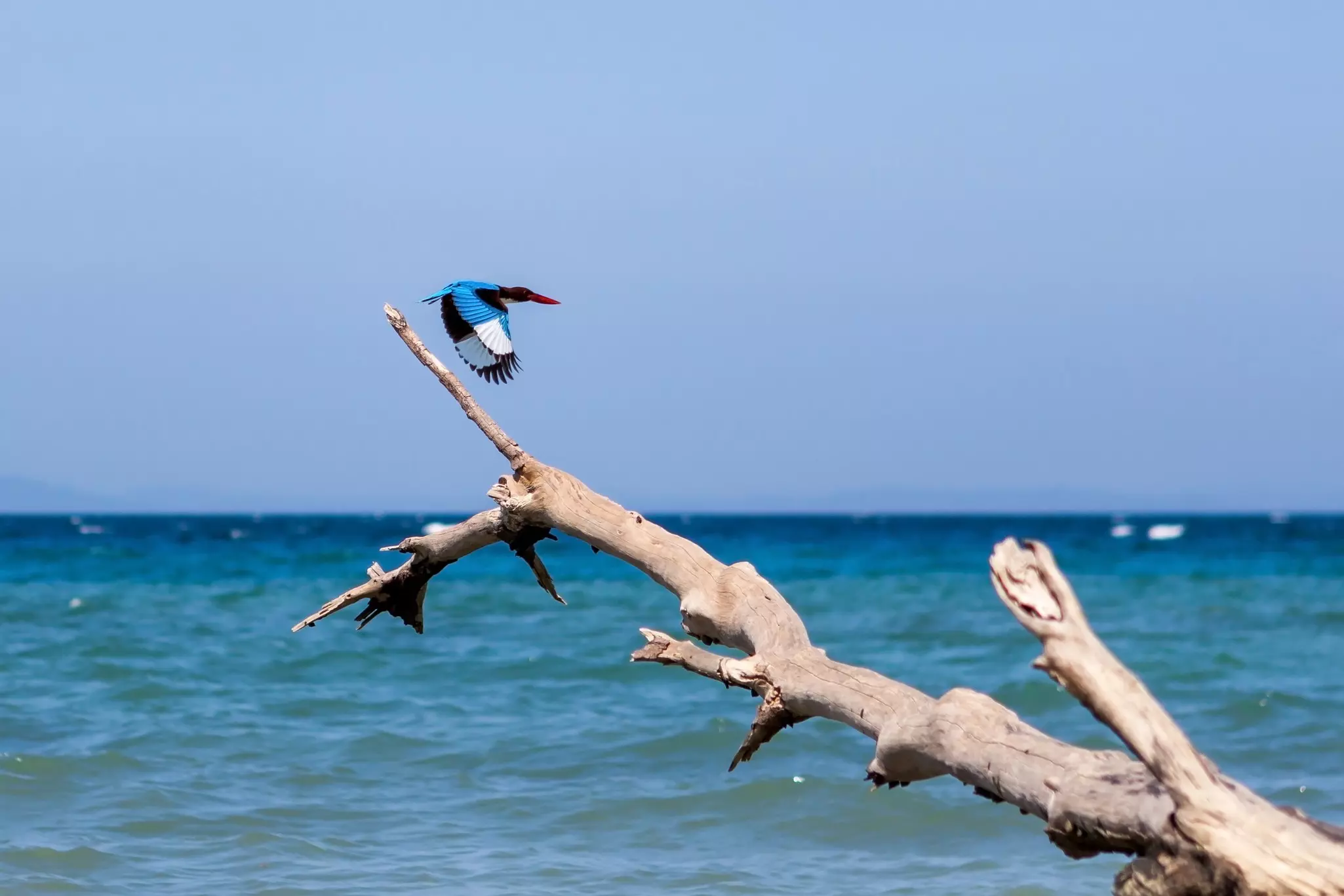
Whether you’re an experienced twitcher or a novice with a casual interest in all things avian, Swaraj Dweep is a great spot to embrace your inner bird-watcher. Over 270 species live on the island, approximately 100 of which are endemic.
As it’s such a peaceful and relatively undeveloped island, you’ll see colorful plumage whizzing by wherever you turn. Hold your binoculars steady and hope for sightings of white-throated kingfishers, white-bellied sea eagles, Andaman serpent eagles and Eurasian curlews. In the evening, look out for Andaman scops owls, oriental scops owls, Andaman boobook owls and Hume’s boobook owls.
Planning tip: To learn more about these winged wonders, join one of the excellent bird-watching tours run by resorts and naturalists on the island. These usually start at 5:30am or 6:30pm; ask where you’re staying for recommendations.
An hour from Havelock, charming Shaheed Dweep (since 2018 the new name of British-named Neil Island, it’s not catching on locally) is among the more laid-back of the Andamans, and popular with long-stay travelers.
Here, one of the rarest mammals in the ocean, the dugong (also known as the sea cow), can be seen grazing on marine grass. Around 200 of them live in the waters around the Andamans’ southern specks.
Your best chance of seeing one – locals put the chance at 30% – is by joining Dive Tribe, India Scuba or Dive India for a diving or snorkeling trip off Shaheed Dweep’s northern shores, where seagrass flourishes.
Similar to manatees, these slow-moving, strangely built and utterly captivating creatures are something behold. Should you encounter one, slow your movements to the same pace as theirs – and savor the moment. Some divers even say you can feel your heart beat in time with the peaceful dugongs.
Planning tip: Book dives well in advance, as just a few dive centers operate here.
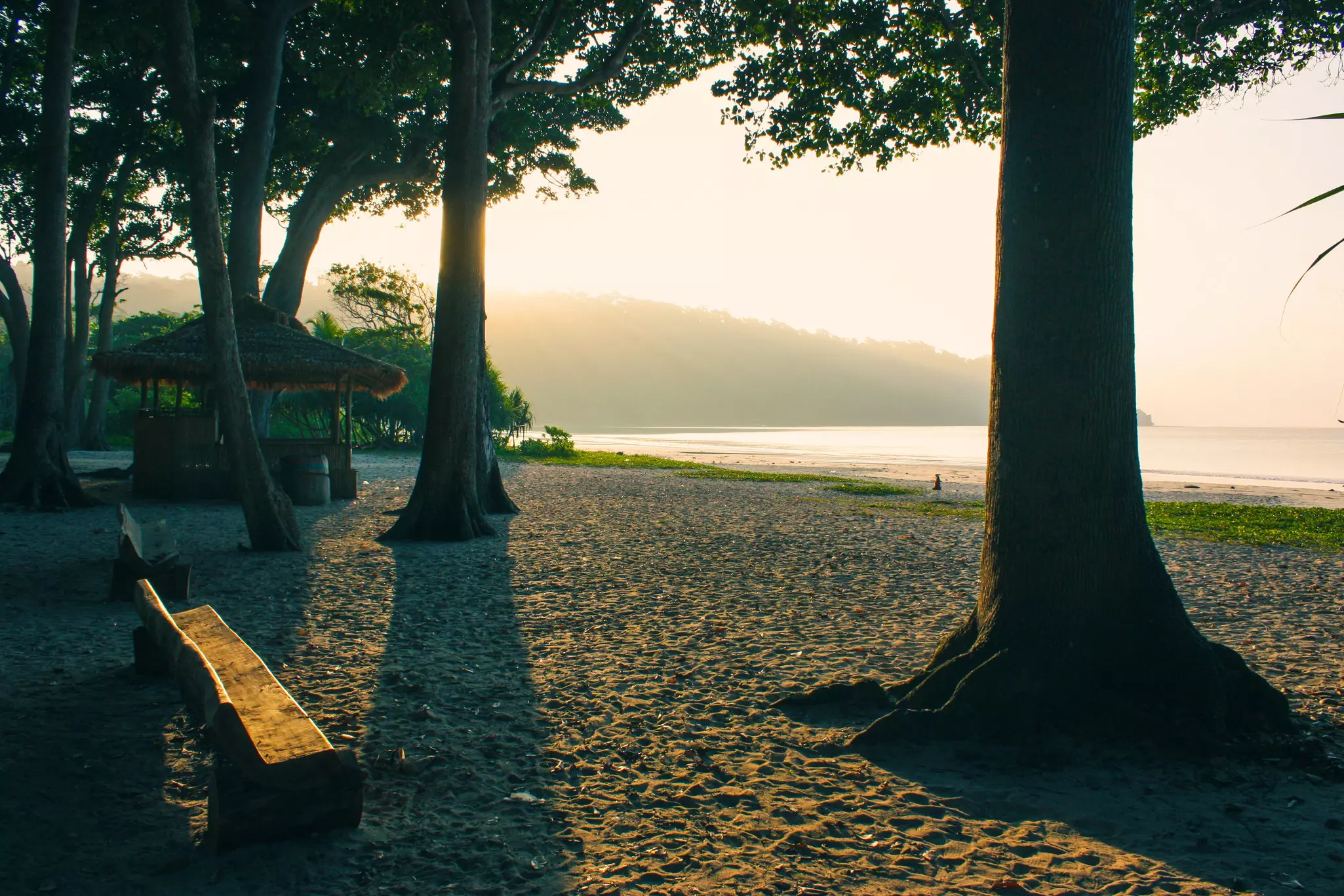
Havelock is home to some of the most stunning beaches in India – including Radhanagar Beach, with its sprawling white sands lapped by bright blue water. Radhanagar gets busy come sunset, so head to the east end of the sand to snorkel with turtles away from the crowds. At the northwest end of the beach, Neil’s Cove is stunning and secluded – a sandy nook that is utterly idyllic and quiet all day long. Check with locals if it’s a good day to swim here, as sea swells can whip up and the occasional croc can make an appearance in the area.
Head to the beach at Kalapathar, on the opposite side of the island, for sunrise. Afterward, it’s an ideal stretch for serene walks all day, with fallen trees dotting the length of the sand. Note that since the lagoon has a very rocky floor, you should only swim at high tide.
Lastly, there’s action-packed Elephant Beach, once famous for its swimming elephants. While the pachyderms have gone, the rumpus certainly has not: this is the only beach on the island where Jet Ski–ing, paddle boating and other water sports are allowed.
Planning tip: Check the timing of the tides at Neil’s Cove and Kalapathar before swimming, and avoid entering the water if crocodiles have been sighted.
You can go stargazing on Shaheed Dweep, led by expert astronomers from the Habitat Institute, the in-house activity center at the SeaShell Samssara resort. You don’t have to be a guest to join this dazzling experience on the island’s helipad field, where you can take in a wide and unobstructed view of the night sky.
A reflecting Newtonian telescope is wheeled over as staff explain the wonders of the southern hemisphere, from Saturn, with its moons and rings, to the constellations and our own moon. Most interestingly, astronomers will tell you about the different uses of the stars in this hemisphere, where mariners adopt Orion rather than the North Star to navigate at night.
Planning tip: Bring a blanket or reclining chair for added comfort during the stargazing sessions.
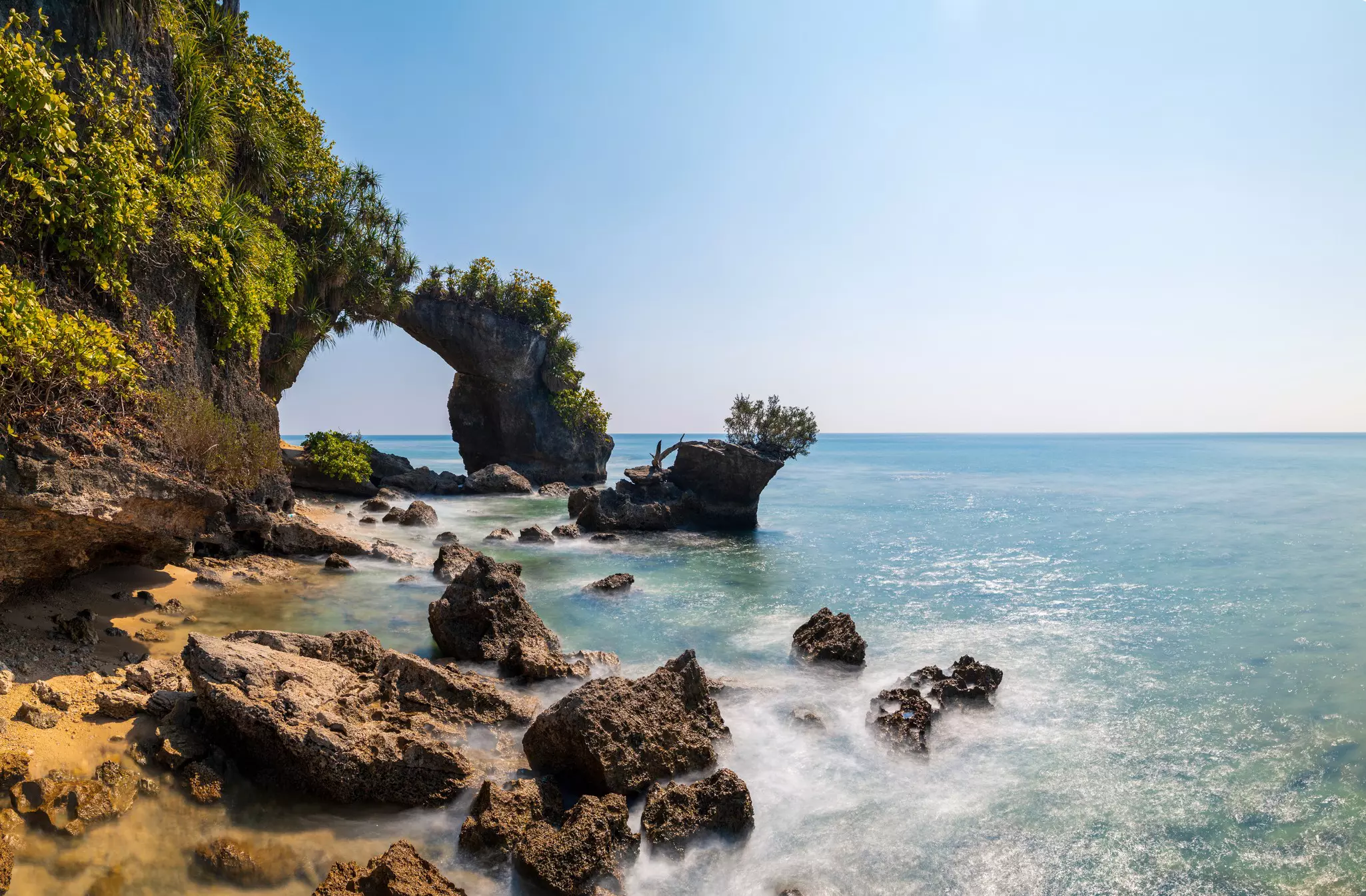
Wandering down the limestone steps leading to Lakshmanpur Beach 2 on Shaheed Dweep (Neil Island) won't prepare you for the “wow” factor of the two breathtaking rock formations that come into view as you turn the corner. Lush green vegetation that gives off seaside Jurassic Park vibes tops the first natural rock arch, the busier of the two. Crowds here pose for selfies and marvel at the sea life in the rock pools. Venture a couple hundred feet further along the beach to the second natural bridge, which you’ll likely have to yourself.
Planning tip: Both arches are only accessible at low tide. Hiring a guide is advisable to learn about the intertidal flora and fauna.
This article was adapted from Lonely Planet’s India guidebook, published in November 2024.
Explore related stories