Sep 24, 202610 min read
A Book Lover’s Guide to IndiaFeb 9, 2021
4 MIN READ
Writer
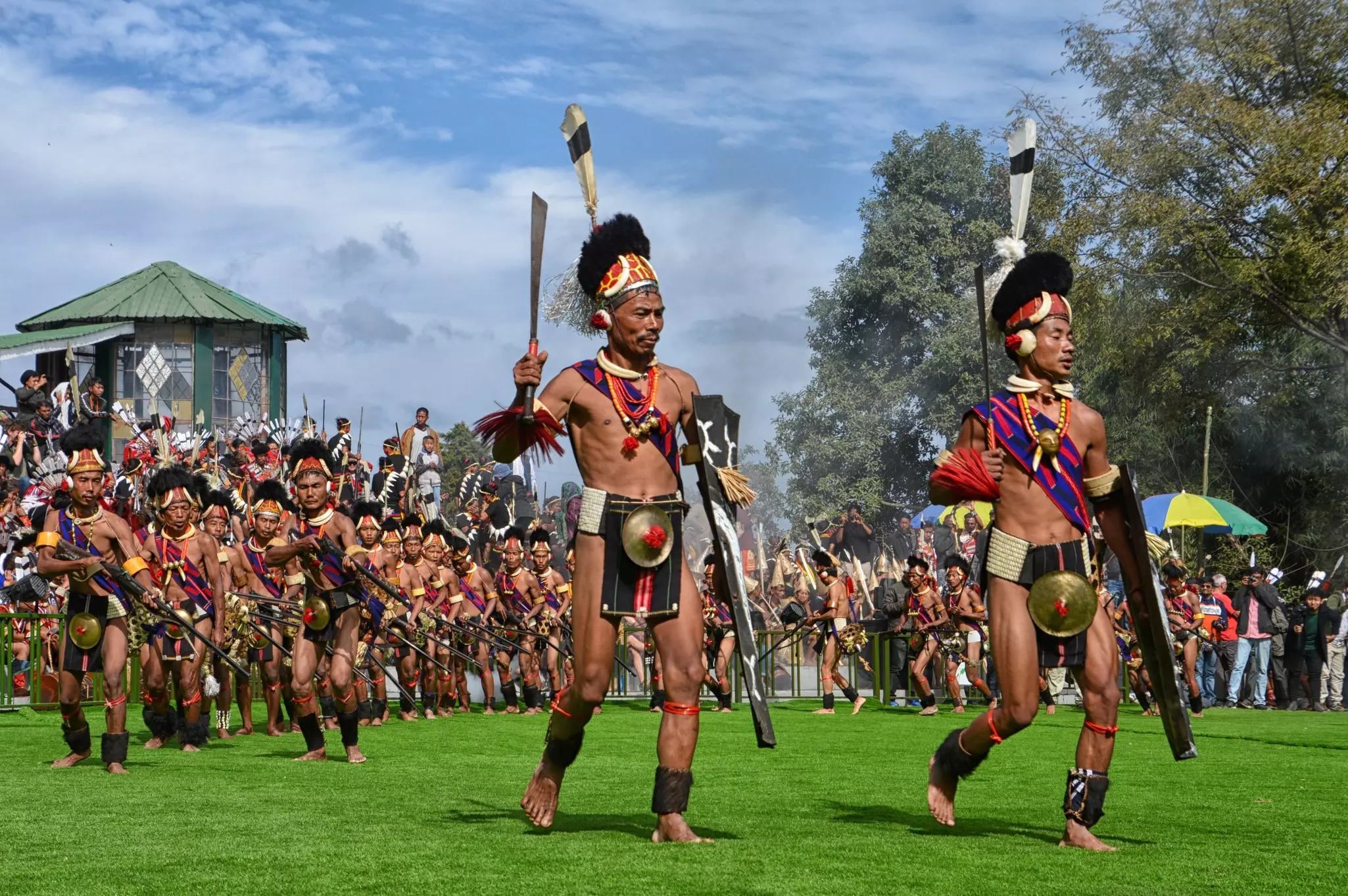
Indigenous villages perform traditional dances at the Hornbill Festival in Kohima, Nagaland. Anita in travel/Shutterstock
Writer
Lonely Planet may earn a commission from affiliate links on our site. All recommendations and reviews reflect our own independent opinions.
Asia’s first green village was created on the sheer grit and determination of the residents of the region, who simply wanted to restore the verdant beauty of their home. Khonoma is a wonderful example of a community coming together to restore the bounty of their environment and is a place that the world can take inspiration from.
When a group of people set their mind to it, nothing is impossible. Khonoma – Asia’s first ‘Green Village’, located 20kms away from Nagaland’s capital Kohima in India, is the perfect example of this. Once close to ecological destruction thanks to timber logging, hunting, and rampant commercialization of foraging, it took the heart-breaking killing of 300 Blyth Tragopan, the state bird of Nagaland in a 1993 hunting competition, to awaken the people of Khonoma to saving their natural resources and habitat.
With the desire to restore Khonoma’s lush greenery from its then brown façade, the Angami tribe, ancient residents of the region formed the Khonoma Nature Conservation and Tragopan Sanctuary (KNCTS) in 1995, designating a fixed area as a sanctuary. Since then, hunting and timber logging have been completely banned. Residents were educated on the importance of sustainable practices and were encouraged to return to agriculture. It was, and in some small ways continues to be, a challenge to ensure people adhere to conservation practices in force. Most of the approximately 3000 villagers of Khonoma have understood the importance of conservation and benefitted from self-sufficient agricultural practices. There are a very few though who remain undeterred even in the face of fines for littering that can go up to Rs 3000 per offence and up to Rs 10,000 for hunting.
In 2005, the village was awarded the Green Village tag by the Government of India.
When the ban on timber logging was introduced, the rule stated that if a tree was to be cut for construction purposes, it had to be done in a way that allowed the tree to grow again. Commercial timber logging remains completely banned, though 125sqkms of the forest has been allocated for it. Besides fines, these rules were enforced with the help of hired vigilantes who would report such activities and prevent them. Monetary incentives were also given to those who reported these illegal acts.
The ban on hunting was first implemented on the Dzukuo Range and soon birds and animals began to find their way back. The ban meant looking for newer avenues of income. Community spirit and the desire to preserve and protect ancestral land and the eco-system that goes with it, led to people actively looking for these opportunities. This led to eco-tourism rising in the region, home stays, and sustainable trout fishing among other avenues.
From the agricultural perspective, Khonoma uses the Jhoom (shifting) cultivation method where the land for farming is changed every two years. Nepal Alder trees are interspersed with the current crop sown. As these trees grow, the smaller branches are trimmed down to allow the larger ones to grow and ensure they don’t have to be uprooted during the farming process. These trees are known for their ability to return nitrogen to the soil ensure that its fertility remains high and soil erosion is prevented. Rice is cultivated in the terrace farming format without the use of any chemical pesticides. Instead organic manure is used. Every home in Khonoma has a garden encouraging self-sufficiency with daily use vegetables and medicinal plants growing along with ornamental plants.
Strong processes for solid waste management that is community driven and water management enables this little village to remain an oasis.
Khonoma is located on the outskirts of Kohima, which makes it an ideal spot for a day trip. You can enlist local guides to take you around and show you first-hand how the little village takes care of itself. You could choose from a few homestays to get an even closer taste of the Khonoma life. There are a few British memorials that you can visit, along with a little fort atop a hill.
You may also like:
February: the month of celebrating sustainability
Want to reduce your carbon footprint while traveling? Try switching to e-bikes
Book your India trip with Lonely Planet Journeys
See India how it's meant to be seen
Accommodations, activities and ground transportation all taken care of, so you can focus on the fun part. Tell us what your dream trip to India looks like, and our local experts will build it from scratch. Or start with one of our itineraries and make it your own.

Explore related stories