Jan 14, 20269 min read
10 of the Best Things to Do in Algiers, Algeria's Capital CityJan 14, 2026
9 MIN READ

Writer
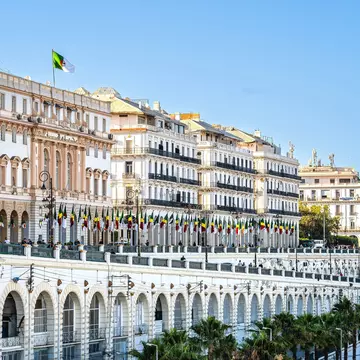
The Haussmannian historical center of Algiers. mehdi33300/Shutterstock
Writer
Lonely Planet may earn a commission from affiliate links on our site. All recommendations and reviews reflect our own independent opinions.
Long overlooked, Algeria has slowly been climbing many travelers’ wishlists, and with good reason. Home to the largest stretch of the Sahara Desert, over 1000km of Mediterranean coastline, and some of the world’s best-preserved Roman ruins, Africa’s largest country has been seeing a record number of tourists in recent years. Regardless of what brings you to Algeria, chances are that the capital city, Algiers, will be your point of entry.
While many make the mistake of treating Algiers as a mere layover, skipping its historic whitewashed Casbah, wide Haussmannian boulevards, and hospitable local culture is a missed opportunity. Our pick of the best experiences will help you make the most of your time in Algiers.
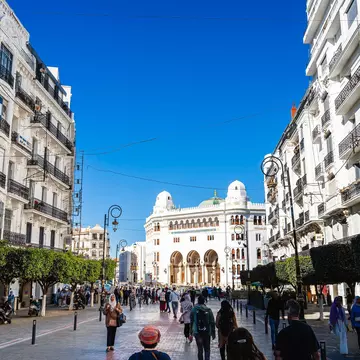
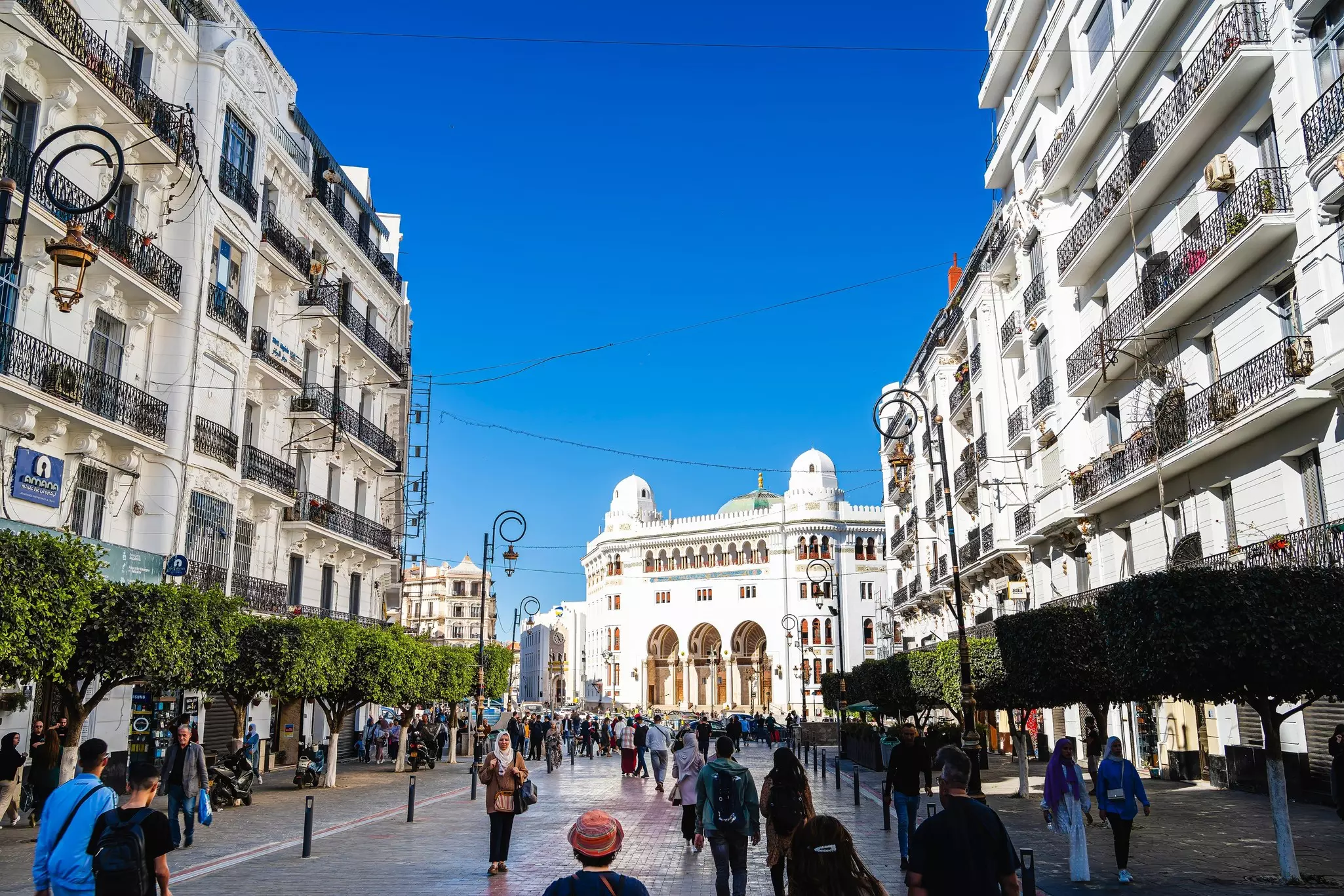
Any trip to Algiers should begin in the city’s core, Alger Centre. Start your day at one of the city's most emblematic landmarks, La Grande Poste, a former post office built in the Neo-Moorish style that now serves as a main gathering point for locals. While the building itself isn’t open to the public, it is the perfect place to get a feel for Algiers. Continue along rue Didouche Mourad, passing the University of Algiers and the city’s many terraced cafes and restaurants where locals stop for a café presse or a pizza.
Detour: Just off of rue Didouche Mourad you’ll find the thrumming Meissonier Market. Follow rue Ferhat Boussad, where vendors sell colorful djebbet – traditional house dresses – and football jerseys, until you reach Marché Meissonier, brimming with fresh produce, olive oil, dates and spices.
No matter where you go in Algiers, reminders of the city’s past linger in its murals depicting martyrs, French-built boulevards renamed after resistance leaders, and buildings titled after historic events in the revolution. There is no place where that history is felt more than in the Casbah.
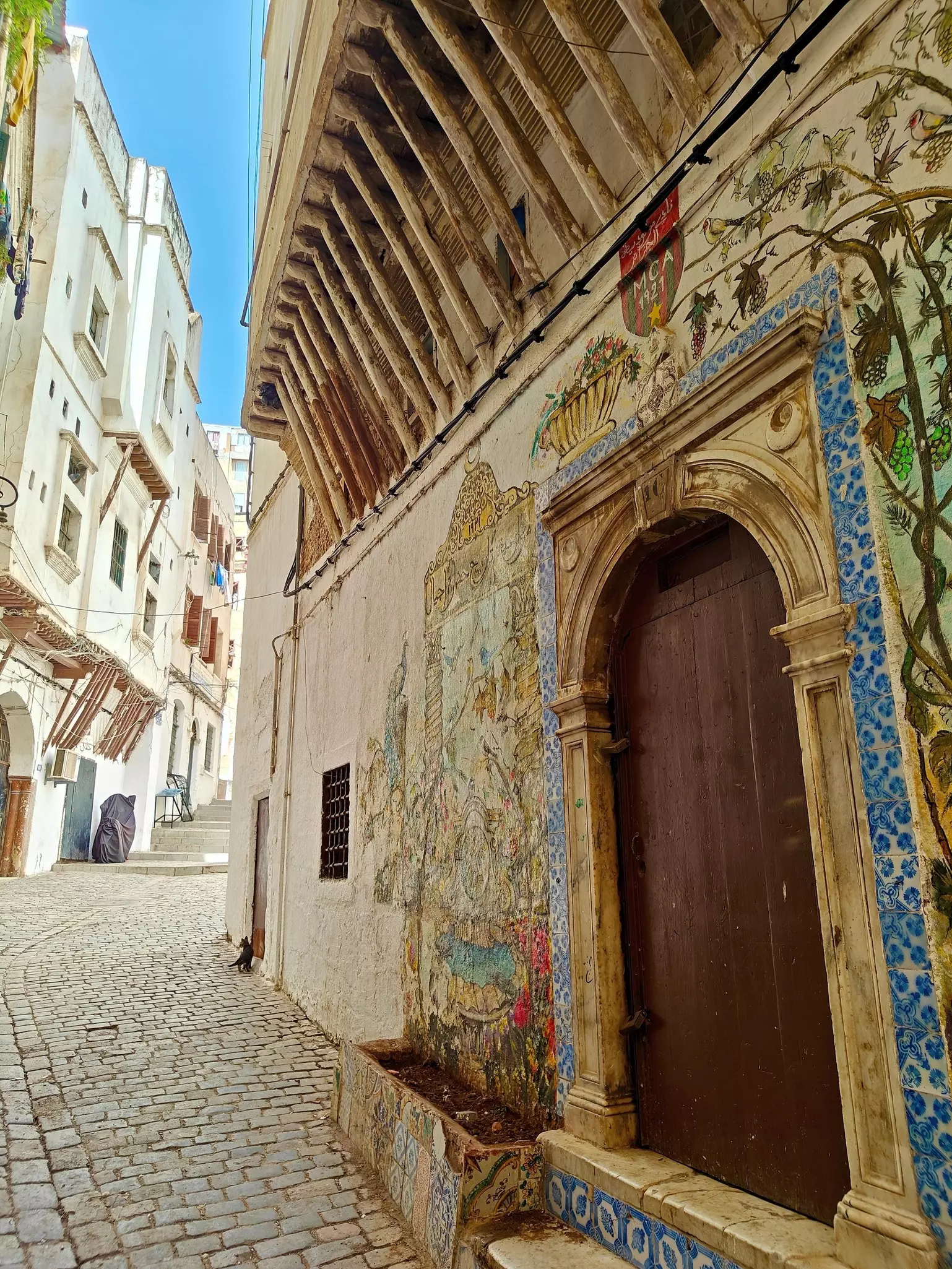
Perched atop a hill overlooking the Mediterranean Sea, the UNESCO-listed citadel is a labyrinth of narrow, maze-like alleyways and traditional homes that once served as a refuge and stronghold for resistance fighters who used its complex layout to their advantage when evading French colonial forces during the Battle of Algiers.
Aside from its revolutionary history, the Casbah is also full of museums, most of which are housed in Ottoman-era palaces that were once home to Algiers’ leaders and influential families. The Palace of the Dey, Bastion 23, Dar Mustapha Pacha, Dar Es Souf, and the National Museum of Arts and Popular Traditions are all essential stops.
If you haven’t seen the 1966 Gillo Pontecorvo film, The Battle of Algiers, be sure to give it a watch before visiting the Casbah, as many of the places depicted in the film can be explored today. The Ali La Pointe Museum is housed in the home where Ali La Pointe, a prominent resistance leader and the film’s protagonist, was killed in a bombing by French forces.
Local tip: The Casbah is best explored with a guide, as its winding ruelles (narrow streets)and densely packed buildings can make it difficult to find its many points of interest. Ask for recommendations from your accommodations, search for guides through Google, or check Instagram where many guides advertise their services.
At one end of rue Didouche Mourad is the Bardo National Museum of Prehistory and Ethnography. Housed in the 18th-century villa of a wealthy exile from Tunisia, the museum first takes you through its prehistoric and ethnographic collections, with artifacts ranging from Paleolithic and Neolithic tools to musical instruments. At the end of the exhibitions, a staircase leads out onto the courtyard of the palace, where you can admire its zellige (tile) mosaics and ornately painted domed ceilings.
Around the corner and across the street, you’ll find the oldest museum in Algeria, the National Museum of Antiquities and Islamic Arts. Founded in 1897, it is divided into two pavilions: one displaying an extensive collection of Punic, Roman, and Byzantine artifacts; the other featuring a rich array of items from the Muslim world, ranging from clothing to furniture.
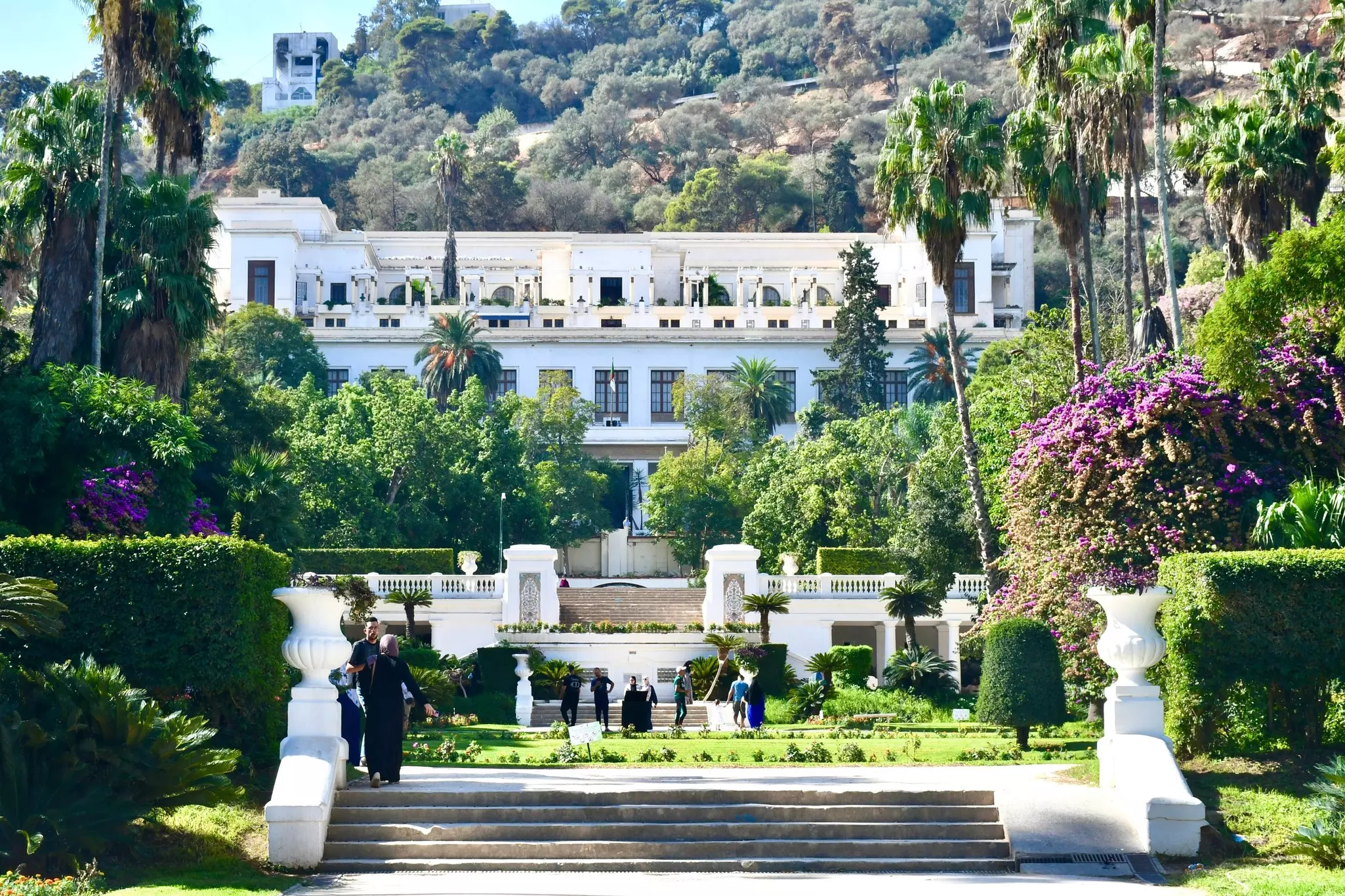
Take a trip on the metro to the El Hamma neighborhood, where you can escape the sun in the shady Jardin d’Essai. Established in 1832, the botanical gardens and experimental site stretches 32 hectares and boast thousands of plant species, most famously the ficus macrophylla. Its fountain-lined view of the French garden from the terrasse is one of the most iconic in all of Algeria. While the garden still operates as a research center, it’s also a local favorite for spending weekends exploring its pathways and admiring the famous Tarzan Tree, featured in the 1932 film Tarzan the Ape Man.
Overlooking the botanical gardens is the National Museum of Fine Arts, offering not only the best view of the Jardin d'Essai but also a collection of over 8000 artworks, including paintings, sculptures, drawings and prints. The museum features work from some of history’s most influential artists, such as Matisse, Delacroix and Renoir, as well as the work of Algeria’s greats like Baya Mahedienne, Mohammed Racim and Bachir Yellès.
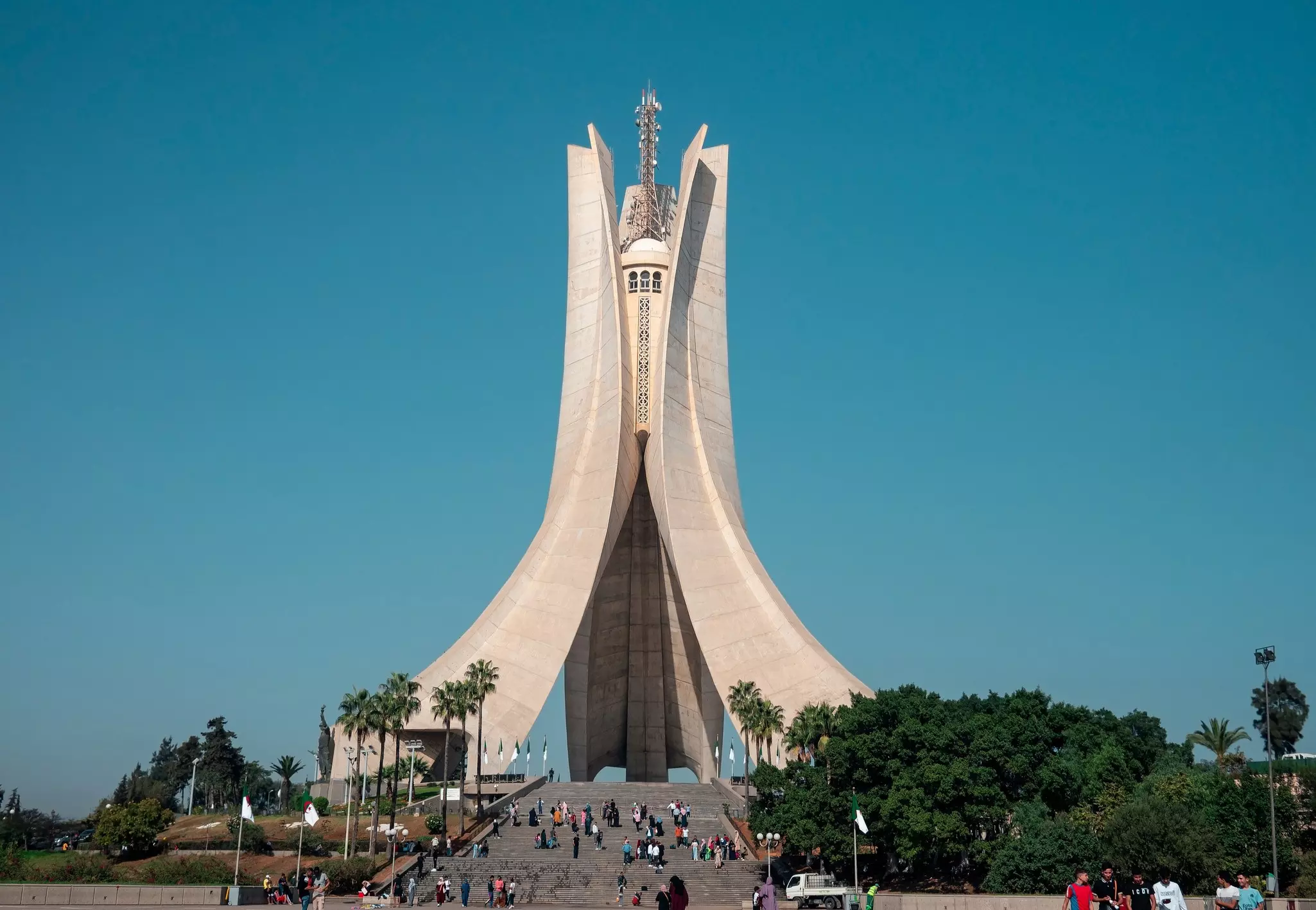
Ever present in Algiers' skyline, the Makam Echahid, or Martyr’s Memorial, stands as a powerful reminder of those whose lives were lost under French occupation. Inaugurated in 1982 to mark the 20th anniversary of independence, the monument is shaped like three palm branches, each with a statue of a freedom fighter at its base. Together the branches shelter an eternal flame, paying tribute to the martyrs killed by French colonial authorities and during the War of Independence.
From Jardin d’Essai, ride the cable car up to the monument and take in its striking presence. Beneath the monument is the Museum of Moudjahid, easy to miss if you don’t know it’s there, but well worth the visit. The somber exhibits provide the necessary context about Algeria’s past to fully appreciate your time in the country.
Across Algeria, food is the centerpiece for every gathering, daily conversation and celebration. Simple yet flavorful, Algerian cuisine incorporates fresh, local ingredients from all over the country.
In Algiers, street food staples like pizza carrée, mhadjeb and coca – all of which are variations of a pastry or bread with tomato sauce – are affordable and found throughout the city. Summer is the perfect time to savor fresh watermelon, prickly pears and juicy figs, while winter is ideal for citrus fruits, pomegranates and persimmons. In Ramadan, families break their fast with the famous deglet nour dates before tucking into chorba (soup) and bourek, similar to spring rolls but filled with ingredients ranging from ground beef to spinach.
When Algerians dine out, tables often feature fries, hmiss (a roasted pepper salad), baguette, and either chwa, a variety of grilled skewered meats, sautéed liver, or fried sardines. While the Casbah’s Le Repere offers stunning views of the bay and is well known for its sardines, the restaurants in rue Sidi Driss Hamidouche are packed with locals enjoying authentic food in a lively atmosphere.
To taste traditional staples in a historic setting, restaurants such as Dar El Mahroussa and Dar El Baraka serve homestyle couscous, chakhchoukha (torn flatbread pieces served with lamb and vegetable sauce), and rechta (thin noodles in a white broth with vegetables and chicken). Don’t forget to wash it all down with Algeria’s most iconic refreshing soft drink, Selecto.
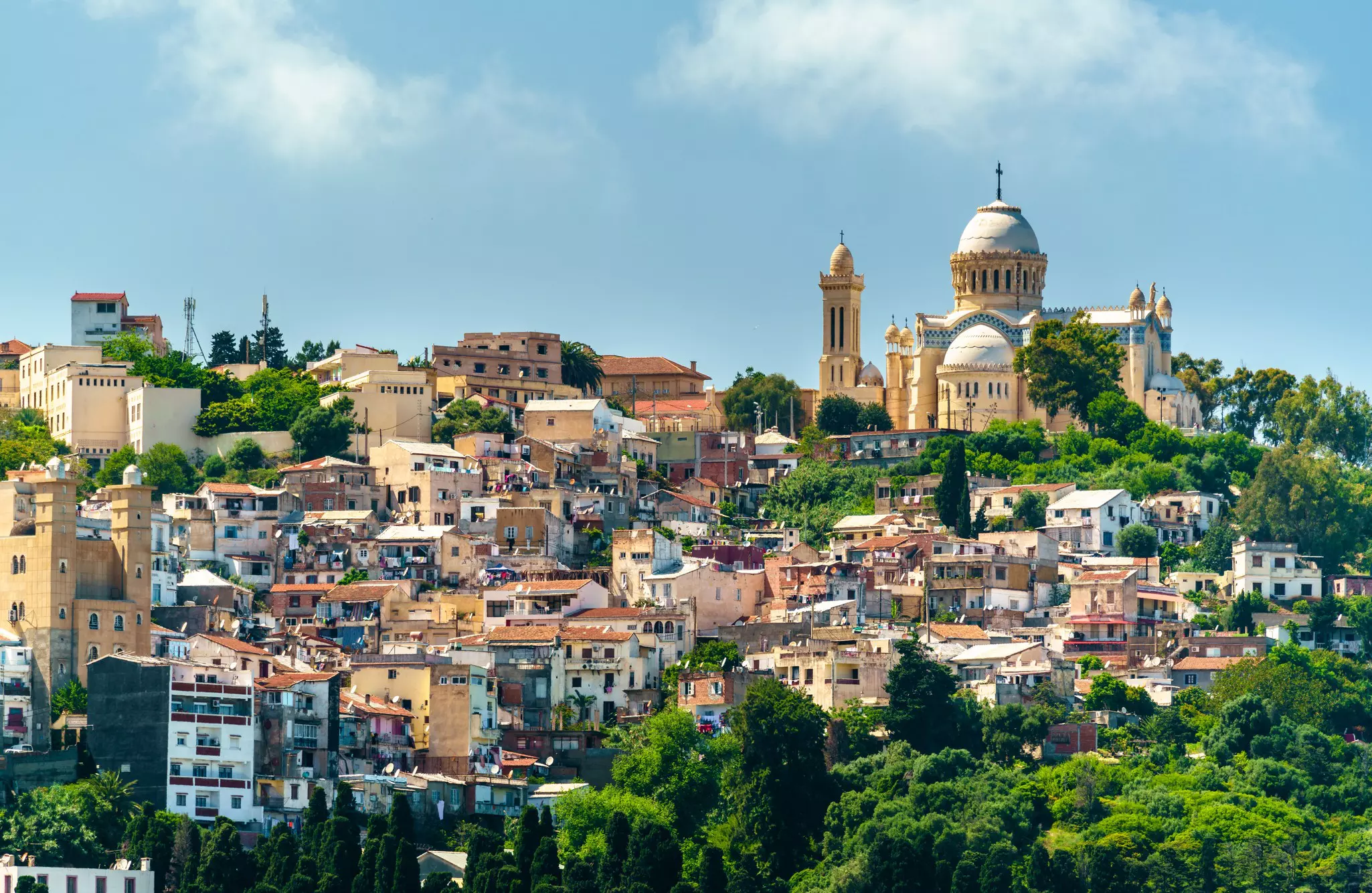
Stretching from the sea up into the hills, Algiers isn’t short on sweeping panoramic views. Set atop a cliff above the historic neighborhood of Bologhine, the Basilique Notre Dame d’Afrique has been an iconic fixture in Algiers since 1872. Built in the Neo-Byzantine style, it has long been a symbol of religious harmony in the city, which is represented in the inscription above the altar calling for prayers for Christians and Muslims alike. Visiting at sunset allows you to experience that coexistence firsthand. After popping in to view the basilica before it closes at 5:30pm, walk out onto the facade where local families gather to watch the sunset and children play soccer as the call to prayer rings out across the city from the surrounding mosques.
The newest addition to Algiers’s cityscape, Djamaa El Djazaïr is the largest mosque in Africa and the third largest mosque in the world. Its minaret is the tallest in the world, standing at 265m high. Inaugurated in 2019, the complex spans nearly 28 hectares and includes a 2-hectare prayer hall that accommodates 120,000 worshippers, as well as a museum of Islamic art and history, a library, cultural and research centers, and an Imam school. A modern interpretation of Andalusian architecture, the mosque was previously only open to worshippers, but since mid-2025, it now offers daily cultural tours for visitors.
Planning tip: While many mosques require women to wear clothing that covers them fully, Djamaa El Djazaïr’s dress code only permits loose-fitting clothing. The mosque does not provide robes for visitors, so it is essential women bring their own to avoid being turned away at the door. Men must also ensure they cover their knees and shoulders.
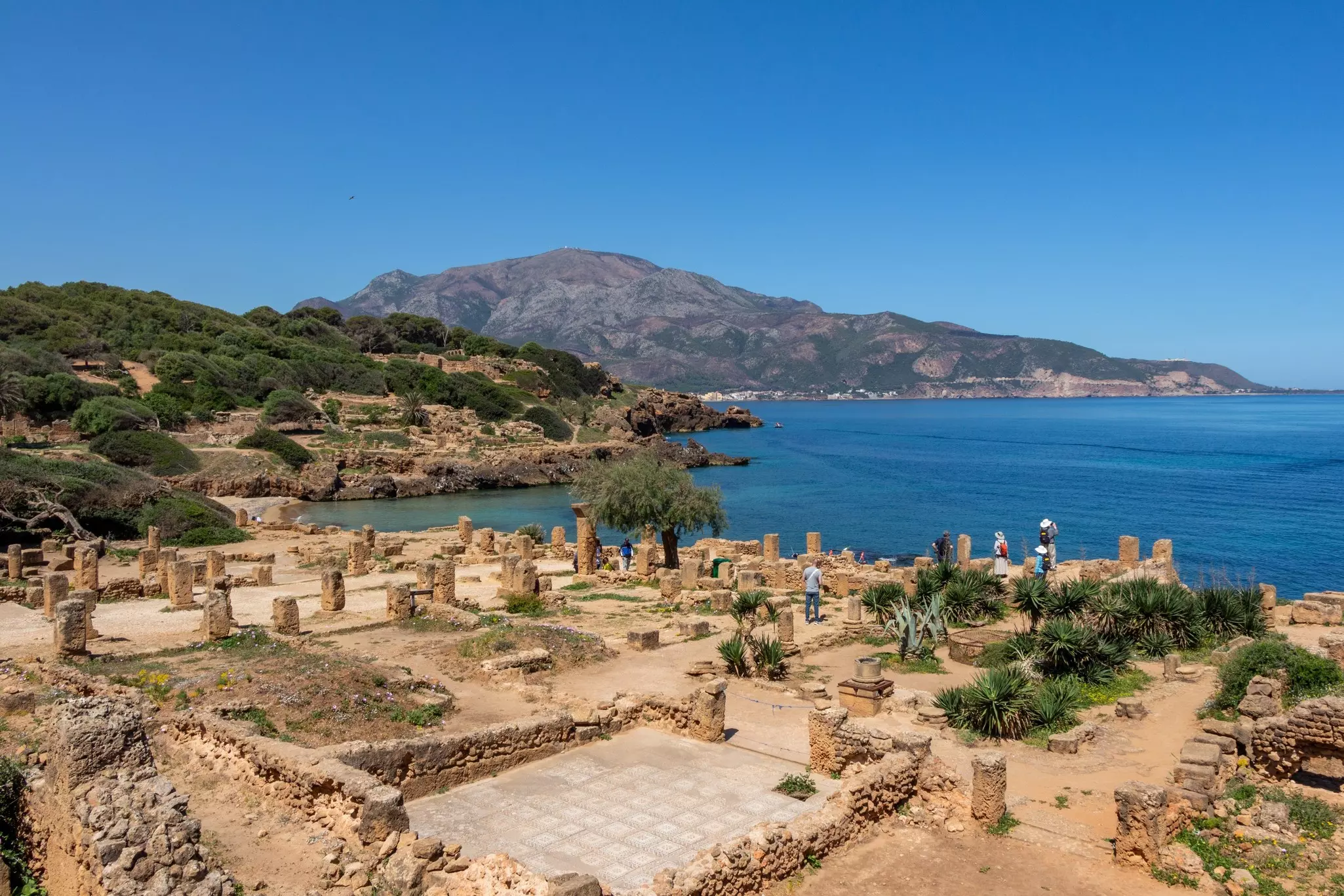
If time permits, you won’t regret taking a trip out west to visit the seaside Roman cities of Tipasa and Cherchell. Algeria is home to some of the world’s best-preserved Roman ruins, and Tipasa’s are the most accessible from Algiers, roughly 1 hour by car away from the capital.
Stop first at the Royal Mausoleum of Mauretania, where Cleopatra Selene II (daughter of Cleopatra) and her husband, King Juba II, are buried. Continue onto Tipasa proper, where you can explore the ruins of what was once one of Mauretania’s most important cities. Next, the ancient province’s former capital of Cherchell hosts an impressive collection of Roman sculptures and mosaics in its archaeological museum.
Detour: You can’t visit Algeria’s coast without indulging in some fresh-caught seafood. Tipasa’s Le Dauphin is easily the city’s most popular restaurant, with views of the port and delicious prawns, squid and countless fish options to choose from. Just past Cherchell is Restaurant Gounini in Hadjret Nos. It's less busy and built into the cliffside, serving fresh, simple seafood dishes and even better views.
Explore related stories