Sep 29, 20268 min read
Palawan Paradise: Top Things to See and DoSep 7, 2025
9 MIN READ
Writer
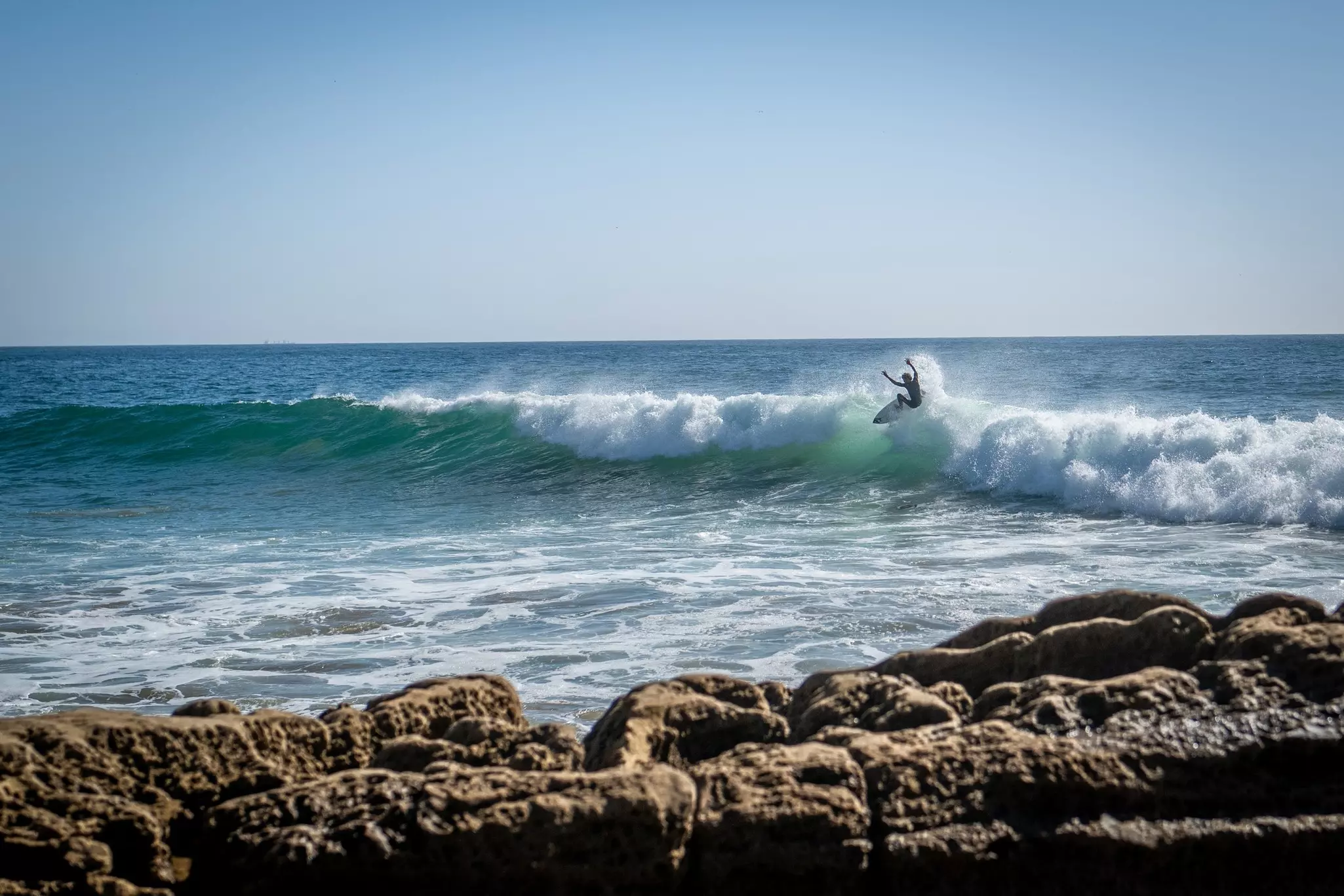
A surfer in Essaouria. cdrin/Shutterstock

Writer
Lonely Planet may earn a commission from affiliate links on our site. All recommendations and reviews reflect our own independent opinions.
I moved to Taghazout, Morocco, in 2018, primarily to surf. Back then, the village was small; its surf spots were accessible across dunes. Nowadays, the dunes are five-star resorts, and the surf spots are crowded. While unsettling, it has been a privilege to witness how quickly surf tourism has expanded. I believe there’s a place for busy surf hubs like Taghazout, where surfers of all levels can enjoy the surf vibe and benefit from an industry that creates jobs and facilities for both local and international communities.
Having surfed on other continents, I’ve realized what sets surfing in Africa apart. It’s the daily reminder of the simple joy of surfing and being part of a surf community that, due to limited supply, shares everything from surf equipment to tips, supporting those less fortunate in learning valuable life skills in the ocean.
Africa’s Atlantic coast is vast and home to empty line-ups, quality waves, diverse wildlife and lush landscapes. In West Africa, you’ll find tropical beaches, warm waves - hello boardies and rash vests. In southern and northern Africa, you’ll find desert landscapes, unique species and sand as far as the eye can see. While some areas lack infrastructure and luxury, the authenticity and the search for undiscovered waves are real. If you’re a surfer seeking quieter waves, maybe it’s time to consider a surf adventure along Africa’s Atlantic coastline. Read on for an overview of some of the continent’s rising stars.
Best for a variety of breaks in the northern hemisphere Winter
The Almadies Peninsula is Africa’s westernmost point. Jutting out into the Atlantic, it offers a variety of surf spots depending on the swell direction, all easily accessible from Senegal’s vibrant capital, Dakar. The surf season generally runs from October to April, during the northern hemisphere’s winter months, when the average swell height reaches about 4 feet.
Senegal has a fast-growing surf scene and some of the continent’s most talented surfers. Two of them, Cherif Fall and Ibra Samb, opened Anda Surf Club in 2025 to elevate the country’s talent. The club launch was marked by the distribution of 250 surfboards donated by a surf community in Western Australia.
Plage de Virage is one of Dakar’s most popular surf beaches. At Copacabana Surf Village, rent boards, find a local surf guide or just enjoy a fantastic sunset with a cool drink in hand while watching the waves. Île de N'Gor is a tiny island, 800m long, just off Dakar’s mainland. Take a traditional boat across to experience the vibe and be first in line for the island’s legendary left and right-handers. The island’s Philippes surf spot is featured in our Lesser-Known Surf Spots Around the World.
Planning tip: Water pollution is often talked about in Dakar; it's best to book a local guide to help you navigate the shores. lanning tip:
Best for surf, sand, and desert wildlife adventures
Namibia is one of the world’s most sparsely populated countries, with about 3 million residents and over 1500km of Atlantic coastline. There is plenty of space and a wide range of consistent, empty waves and cold-water surfing options. The most accessible surfing spots are near Swakopmund, with Tiger Reef and Vineta Point being two popular locations to check out. While researching a surf trip to Namibia, you will likely come across Donkey Bay, known as one of the fastest and longest left-hander barrels in the world. It’s best suited for advanced surfers, but everyone can enjoy this long ride thanks to Koa Smith’s GoPro footage.
The summer months, from November to May, are ideal for beginner to intermediate surfers, and the winters, when the most powerful waves roll in, are more suited to advanced surfers. Namibia is renowned for its breathtaking scenery, vast desert landscapes, indigenous tribes and abundant wildlife. If you’re not lucky with the swell, going on safari or surfing down giant dunes is always an option.
Planning tip: Temperatures on land can soar, Namibia’s Atlantic waters are surprisingly cold due to the influence of the Benguela Current.
Best for uncrowded head-high waves
Ghana’s 539km of coastline in the Gulf of Guinea receives uninterrupted swells from the South Atlantic, particularly during the southern hemisphere’s winter months. May to October is the main surfing season in Ghana. Get ready for lush beaches, tropical weather, coconuts galore and year-round shorts or shortie surfing.
Accra, the country’s capital, is served by numerous international flights. The easiest place to reach from Accra is Kokrobite, 30km west of the city. Kokrobite offers beginner-friendly surfing, yoga and surf-centric accommodations, along with a lively nightlife scene. Mr. Brights Surf School can assist with surf inquiries in Kokrobite.
Further from the capital, about a 6-hour drive west of Accra, Busua Beach is Ghana’s surfing hub, a remote fishing village that offers some of the country's best surfing on left- and right-hander beach breaks. The Justice Brothers provide surf coaching and week-long surf camps at Busua Beach. Nearby Ahanta Waves Lodge features 10 stylish bungalows and an in-house surf school, offering surf adventures at their local spots.
Planning tip: Plan to surf early in the day before the sea breeze picks up.
Best for ease of accessibility to popular surf spots
Morocco’s surf tourism has been steadily growing in recent years, mainly because of the many beginner to intermediate spots, affordable flights from Europe, great weather and waves and a rich culture. Popular surf towns in the south, such as Tamraght, Taghazout, Imsouane and Mirleft, offer a wide variety of surf camp options, from budget to luxury, including learn-to-surf weeks. This popularity has a downside; the spots get crowded, especially when the conditions are good for beginners and intermediates.
That said, Morocco’s Atlantic coast is vast, and intermediate and advanced surfers wanting to escape the crowds can explore some of the lesser-known, secret spots. Consider hiring a local surf guide, such as Snoopy, to support your mission.
Planning tip: While anyone can rent a softboard these days, having a local instructor provide you with basic safety information, spot details, and etiquette guidance is a worthwhile investment that will be appreciated.
Best for adventure and searching for remote point breaks
Côte d'Ivoire has a 590km coastline facing south, and like its neighboring country, Ghana, it experiences the South Atlantic swells, especially during the Southern Hemisphere winter (April to September). The coast is lined with tall palm trees, golden sands, and welcomes warm waves, which provide empty, quality rides.
Having shed its politically unstable past, Côte d'Ivoire is stepping into its future as a top surfing destination. In February 2025, it hosted a leg of the African Surf Tour for the first time, bringing together African surfers and allowing local pros, such as Soulayman Sidibe, to compete on their home turf and inspire future generations.
International flights arrive in Abidjan, the country's largest city, home to a population of around 6 million. The closest spot to the capital is Assine-Mafia, 80km east of Abidjan. It’s a quick beach break and one of the country's most popular surf spots. Another spot, Drewin Beach, is near the town of Sassandra, 300km west of Abidjan, featuring a long right-hander that local surfers love.
Planning tip: Take plenty of surf equipment, as it can be hard to source locally. That said, The West Factory is carving a new path as one of West Africa’s first surfboard shapers based in the Côte d'Ivoire.
It’s still pretty out there on the mainstream surf tourism trail, but if you’re up for a real surf adventure, Angola’s 1600km of coastline could be it. A Portuguese colony until 1975, it endured years of civil war. Nowadays, as Angola regains a balance of power, it’s shifting its focus from oil and diamonds to tourism, and surfing is high up on its agenda. The main surf season is May to October.
International flights arrive in the country’s capital, Luanda. From here, it’s a 2-hour drive south to Cabo Ledo, a left point break that’s becoming known for its photogenic lines created by the South Atlantic groundswell. Cabo Ledo recently hosted a leg of the Africa Surf Tour in August 2025, highlighting its growing popularity as a surf destination on the continent.
Planning tip: Angola's tourism infrastructure is relatively underdeveloped, for surf-centric itineraries, Angola Waves is paving the way.
Best for warm, empty waves and adventure
Liberia’s recent history tested the country’s resilience, with years of civil war followed by the Ebola epidemic. Nowadays, Liberia is shedding its past and rebuilding with a strong foundation. Tourism is a key industry for the future, with a focus on ecolodges, nature and surfing. English is widely spoken.
International flights land in Monrovia, the country’s energetic capital. From here, it’s an 80km drive to Robertsport, a world-class surf spot and growing surf community. Robertsport was a stop on the 2024 Africa Surf Tour, an event that has helped raise awareness of Liberia’s wave quality among professional surfers.
The best time to surf in Liberia is between April and October. Two popular spots are Cassava Point and Cotton Tree. From Philip’s Guesthouse, it’s possible to walk to five different surf breaks in Robertsport. Read more about surfing this little-visited country in our guide to Liberia.
Planning tip: Liberia’s surf season, from May to October, also coincides with the country’s rainy season. Be prepared to get wet in and out of the water. Watch Water Get No Enemy for an insightful Netflix documentary on Liberia’s surf movement.
Best for beginner surfing with epic backdrops
Surfing is well-established in South Africa. The country’s Atlantic Coast stretches from Cape Agulhas to the Namibian border. The easiest accessible surf spots on South Africa’s Atlantic coastline are around Cape Town, which have some of the most picturesque mountain backdrops for surfing on the continent.
Beginner surfers can head to Muizenberg, where there are several surf schools, rental shops, and surf-centric hostels. Or, Big Bay, a beach break with iconic views of Robben Island and Table Mountain. More advanced surfers may want to check out Noordhoek. The Hoek is a powerful break that works best in winter (June to August).
Planning tip: the Atlantic Ocean is cold here; pack a 4/3 wetsuit. Read our first-time guide to Cape Town for the full low-down on the city.
For more surf inspiration, check out our Epic Surf Breaks of the World book.
Explore related stories