Aug 17, 20267 min read
Sydney to Perth by Train: What to Expect on One of the World’s Longest Train Trips Jan 24, 2026
9 MIN READ
Writer
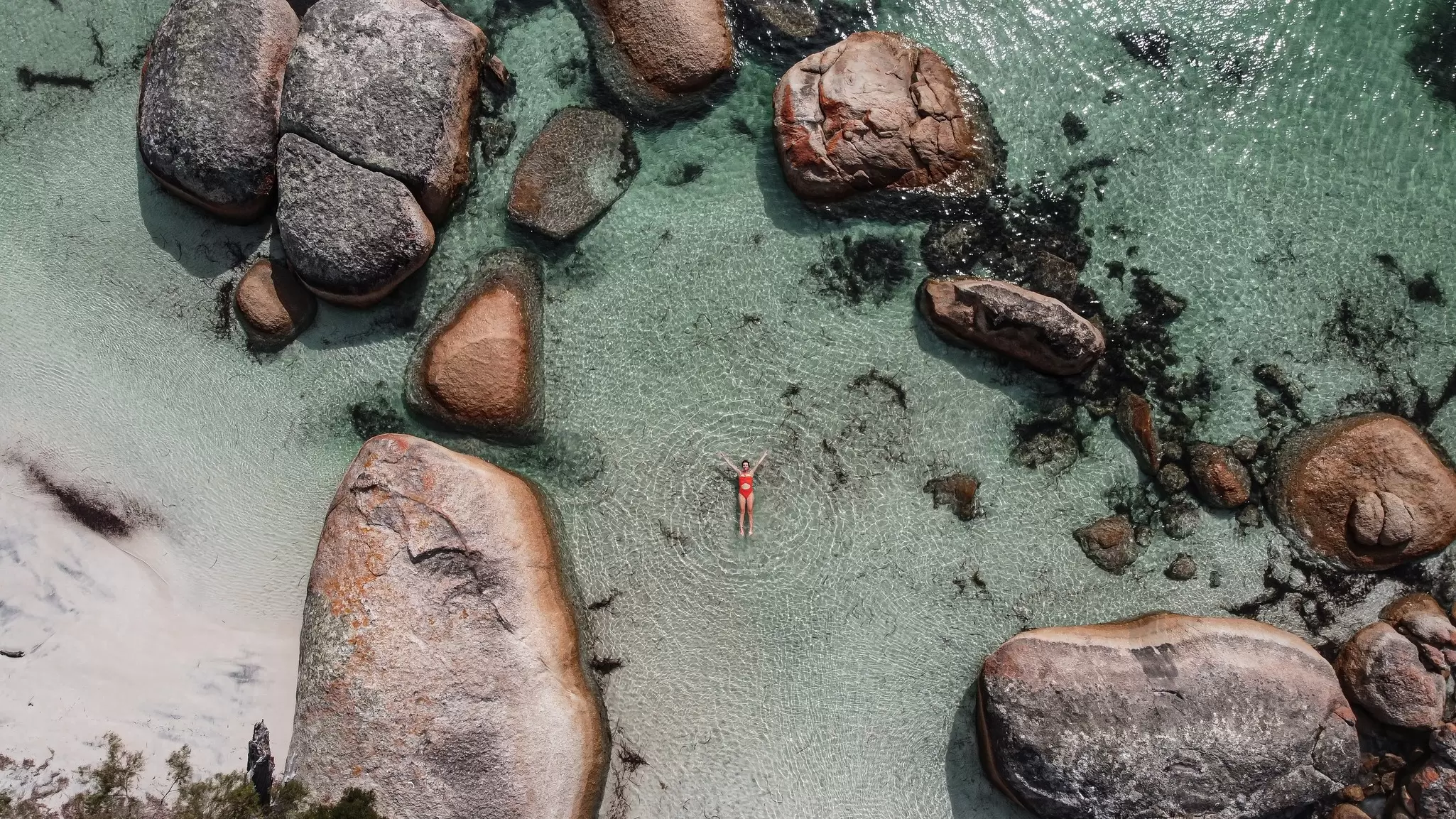
Swimming in the fairy pool in Albany, Western Australia. Elsalass/Shutterstock
Writer
Lonely Planet may earn a commission from affiliate links on our site. All recommendations and reviews reflect our own independent opinions.
Fall – that's March to May down under – is possibly the best time to visit Australia. This is when you'll find plenty of sunshine but cooler evenings in this nation famous for beaches and the great outdoors, which you can enjoy without the heat (or the crowds) in the autumn months.
That said, Australia is a very large country with varied climatic conditions. In fact, there aren't just four seasons here at all. Australia’s Aboriginal people have their own local seasonal definitions, with nature denoting each unique short season.
Around the southern regions (think Sydney, Melbourne, Adelaide, Perth) autumn sees relatively calm weather, although as winter approaches you might catch more gray skies and windy afternoons. There can even be early dustings of snow on the mountains in late autumn.
Further north, in Queensland you’re in the tropics and the autumn months mean the wet season ends and the dry season begins. City parks, rainforests and waterfalls are still lush while monsoonal rains ease off. In the outback, milder temperatures (we’re talking 25–30℃/77–86°F) make daytime exploring easier than in the scorching summer months.
Plan your autumn trip to Australia with this guide to the best places to visit in each month of fall.
Best for arts, music and culture
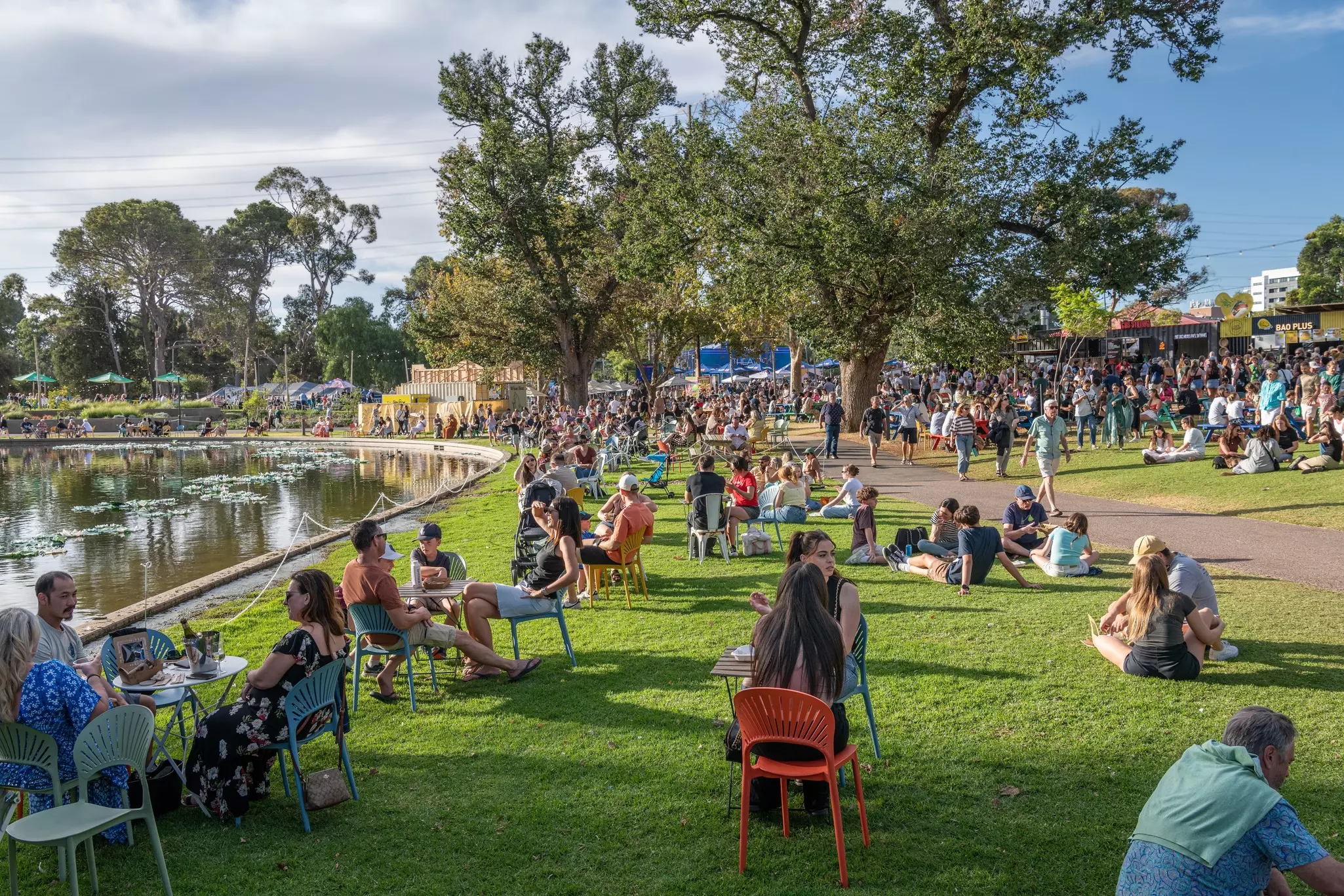
There’s no beating a visit to Adelaide in March for culture, with a trifecta of events that has this historic Australian city vibing in early autumn (think Edinburgh Festival but without the rain!).
Even if you’re not into theater, dance, circus, cabaret, art, talks and live music (really?), you won’t be able to help but soak up the energy. The Adelaide Festival and Adelaide Fringe run concurrently from late Febuary through March with performers from across Australia and the globe bringing an eclectic calendar of entertainment to Adelaide. And from March 6 to 9 there’s also WOMADelaide, the Australian chapter of this international music festival. Festival-goers don’t camp onsite but turn up daily to the centrally located Botanic Park/Tainmuntilla.
Put a city beach on your itinerary, as it’ll still be warm and sunny in March. You can also easily acess a bunch of fabulous wine regions nearby. McLaren Vale is about 45 minutes' south of Adelaide’s city center where you’ll find cellar doors, fine dining and more beaches. The Adelaide Hills are 15 minutes' north of the city, and the Barossa Valley, home to internationally recognized labels like Penfolds and Wolf Blass, is just over an hour away. If you have time, add on an overnight stay in the Clare Valley for wine touring and off-road cycling in a semi-outback region dotted with historic homes.
Planning tip: WOMADelaide tickets are on sale from September of the year before. Tickets for the Adelaide Festival usually go on sale in late October. And the Adelaide Fringe tickets are available from December.
Best for autumn colors, cider and wine
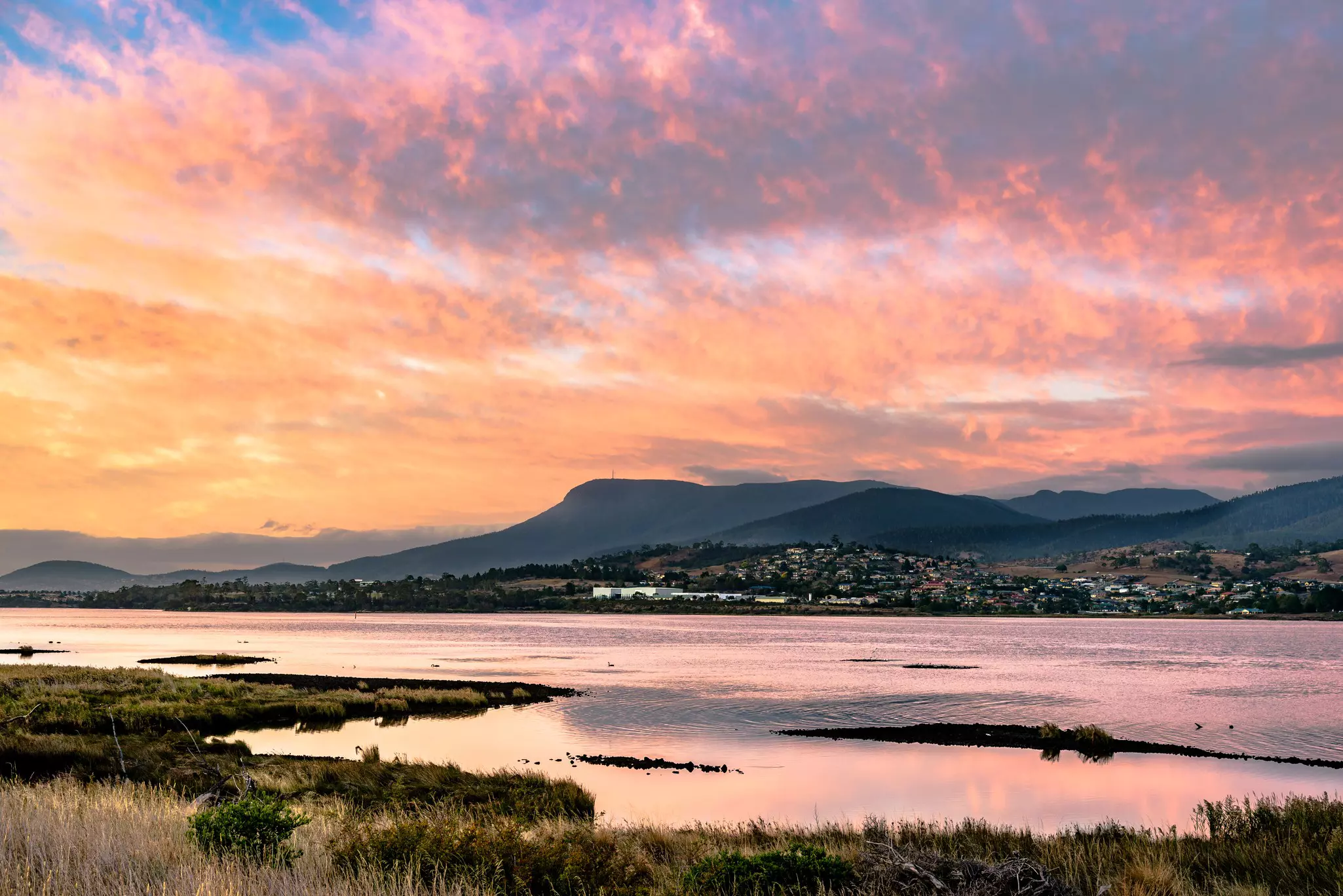
Less than an hour south of the pocket-sized capital city of Hobart, you will find the epicenter of Tasmania’s apple cider scene in the Huon Valley (Tasmania is known as the “apple isle”). While touring around this sleepy valley you’ll get sweeping views of the Huon River, native forest of eucalypts and ferns, and stands of European trees turning shades of red, amber and gold as the temperatures start to drop.
Alternative lifestylers have made towns like Cygnet their home, meaning you’ll find local crafts for sale as well as seasonal produce (kale, rhubarb, parsnips and pumpkin), but Huon Valley’s wine and cider trail (Tassie is well known for its cold climate pinot noir) are a top reason to visit.
Once done indulging, head out for some mountain walking, waterfall viewing and wild swimming in the easily accessible Hartz Mountain National Park, part of the Tasmanian Wilderness World Heritage Area. Look out for the wombats!
Planning tip: You can take an unsealed road to a parking lot from where well-marked hiking trails depart to Lake Osborne, Lake Esperance, Hartz Pass and the Hartz Peak summit.
Best for surfing and diving
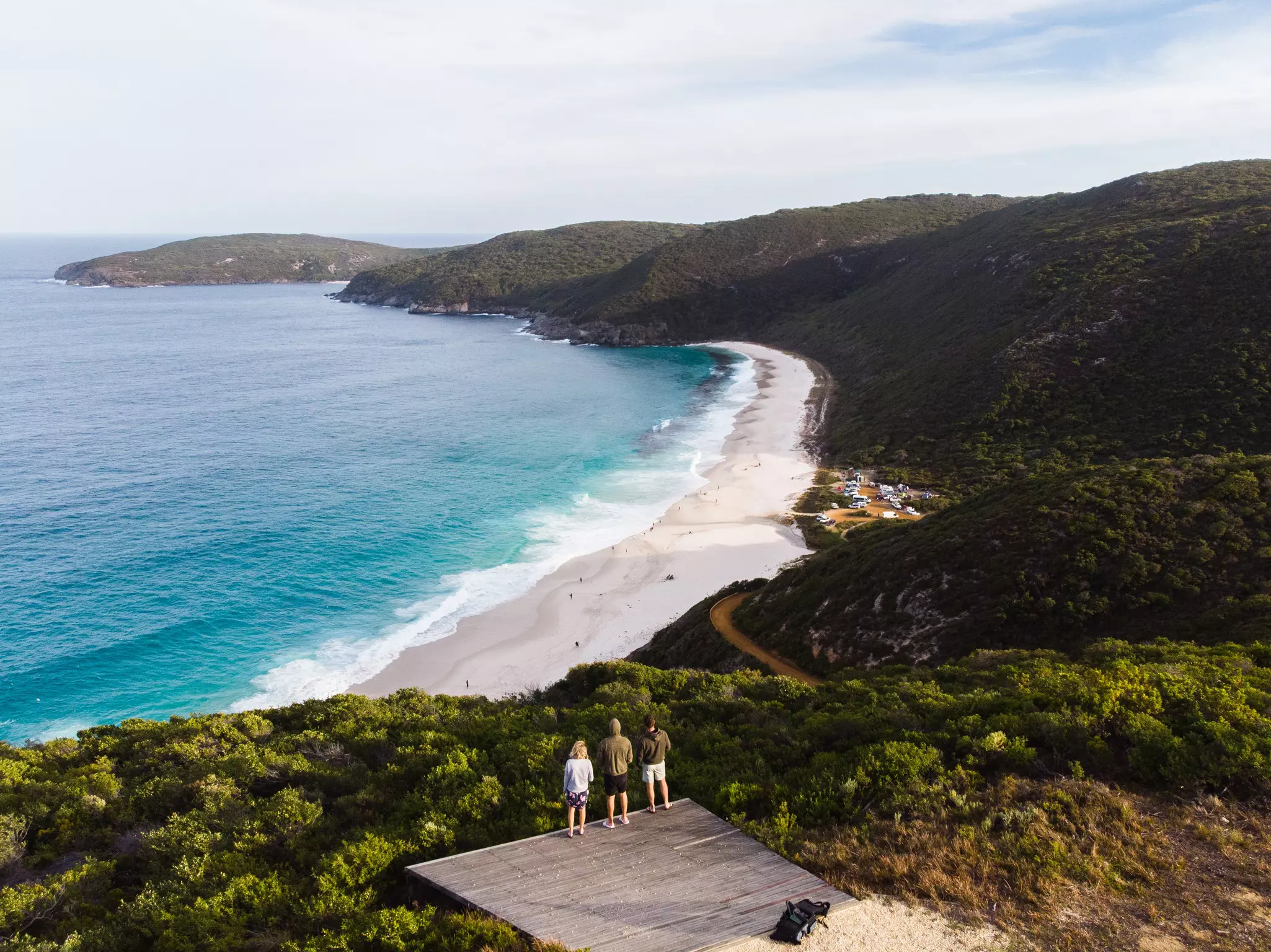
While for Western Australian locals Albany might be “just down the road”, it’s a good 4- to 5-hour drive from Perth to this idylic coastal city overlooking the Indian Ocean. Formerly a whaling center, coal mining despatch spot and the launching place for many young Australian men heading to Europe to fight in WWI, Albany has a storied past. But that history stretches back millennia as the land of the Minang Noongar people before the British turned up 200 years ago (in 1826). You can learn more at the Albany Heritage Park, which includes the National ANZAC Centre.
Historic Albany may be, but today it’s a hub for surfing, diving (at the wreck of the warship HMAS Perth II), alternative lifestylers, plus foodies, brewers and distillers. In March the white sands of Middleton and Emu beaches are blessed with the absence of summer crowds, but the sea is still reasonably warm (around 20℃/68°F). For families, Oyster Harbour is the spot for swimming in calm water, or taking a bird-watching cruise up the Kagland River.
Planning tip: In 2026, the town is hosting events to mark its bicentenary including a free drone lights show that will illuminate ancient stories shared by Minang Elders.
Best for comedy and photography
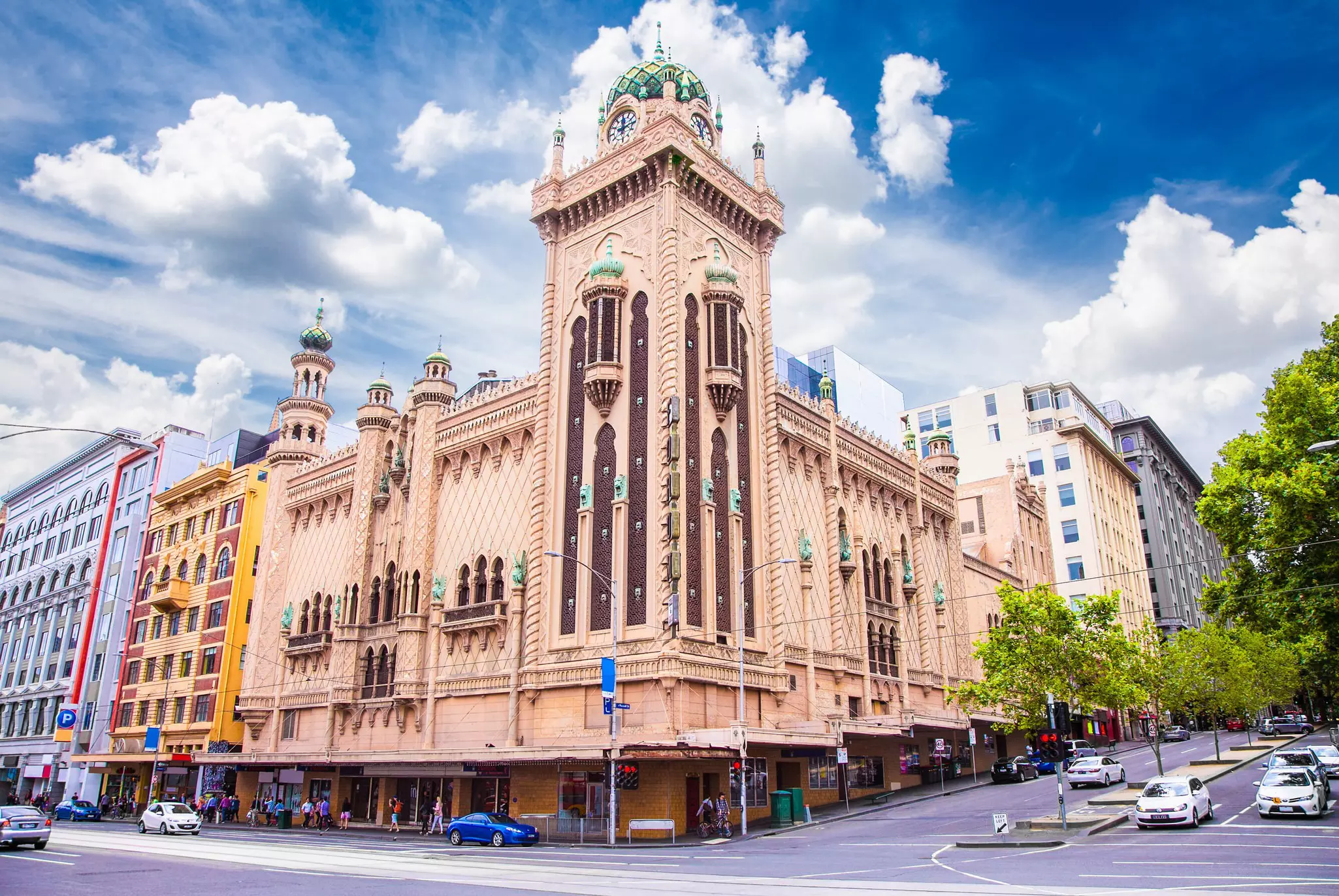
Melbourne is one of Australia’s best known cities for food, culture and live music. There are plenty of cultural activities to wow you here, including free art galleries dotted around the city. But the reason to visit Melbourne in April: the city explodes with merriment during the annual Melbourne International Comedy Festival. Melbourne has been the stomping ground for many an internationally recognized comedian, including Ronny Chieng, Hannah Gadsby and Sam Campbell. There must be something about the timing – after summer has departed and autumn descends with shorter, colder days – because Melburnians embrace this festival like their lives depend on it.
If you like deciduous trees in fall, Melbourne’s city streets and public parks are ablaze with fall colors in autumn: the perfect complement to heritage streetscapes, but with big blue skies and plenty of sunshine.
Planning tip: Look out for the Melbourne International Comedy Festival festival program from December the year before.
Best for frontier vibes
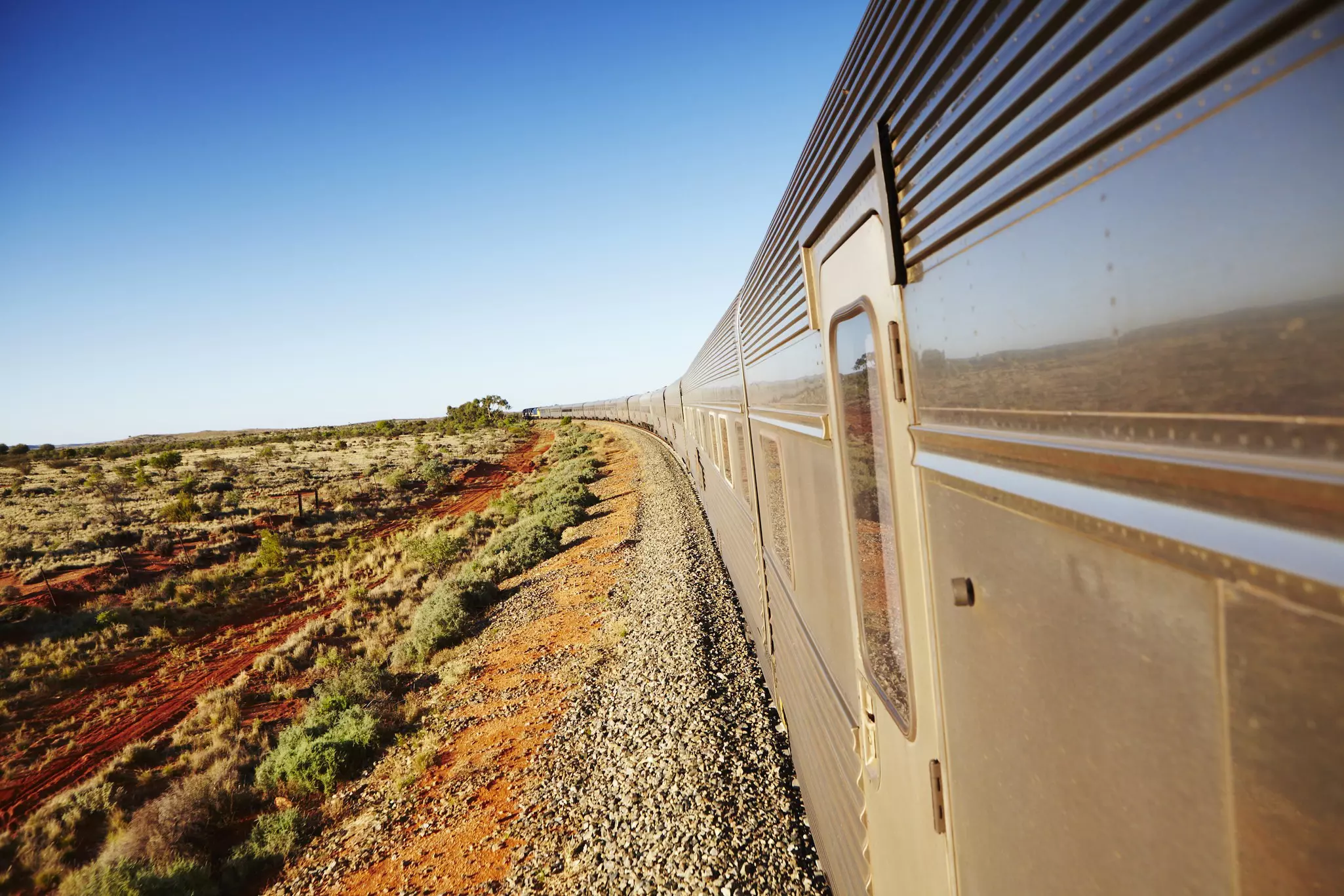
The mining town of Broken Hill is the desert frontier region of Outback New South Wales is nothing like what you’re probably expecting. In fact this entire town, which is on the traditional lands of the Wilyakali people, is included on Australia’s National Heritage List – alongside globally renowned sites like the Sydney Opera House and the Great Barrier Reef – for its excellent arts and culture as well as heritage.
For all its remoteness, its facilities and high-quality attractions make Broken Hill feel like an oasis somewhere close to the end of the earth. Some of the state's most impressive national parks are nearby (mind you, we’re talking about vast outback distances here), as is an intriguing near-ghost town at Silvertown (famous for its Mad Max connections), and there is an impressive spirit of community and creativity everywhere you go.
April is the best time to visit Broken Hill and Outback NSW for milder temperatures and to experience Australia’s unique outback culture at the White Cliffs Gymkhana and Rodeo, which has been held annually for more than 130 years. Expect horse events, motorcycling and things you’ve never heard of before like “yabby races.”
Planning tip: Broken Hill is a 1000km-drive (12 hours) from Sydney. For a more luxurious experience, you can book the Sydney to Adelaide Indian Pacific train with excursions at Broken Hill.
Best for an island idyll
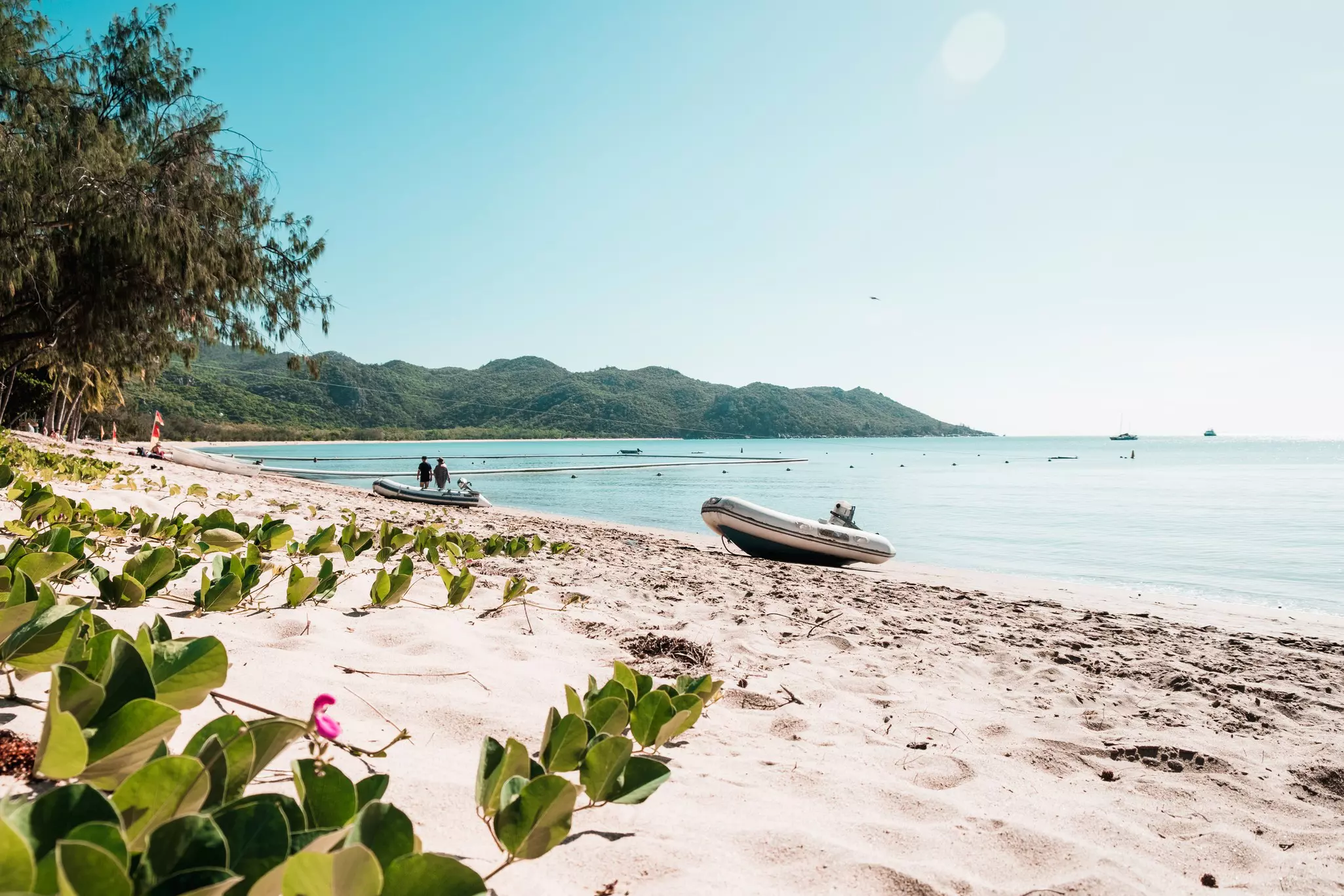
Almost swimming distance from Townsville, Magnetic Island (Maggie to her friends) is one of Queensland's most laid-back destinations. Known as Yunbenun by the traditional custodians, the Wulgarukaba people, over half of this triangular-shaped island is now a national park. The few towns connected by one road along the coast, and the low-rise accommodation, plus a handful of excellent restaurants, galleries and shops, all add to a stepped-back-in-time-to-a-gentler-era vibe. You wouldn’t be surprised to find out that the locals don’t own house keys.
Spend your days at the beach or exploring one of the stunning coastal walking trails surrounded by bright turquoise seas. The granite boulders, pines and eucalyptus trees dotted with dozing koalas are a fresh change from your typical tropical island paradise.
Daytime temperatures are mild in May (around 23–28℃/73–82°F) – warm enough to make the most of Maggie’s pristine beaches, or get out on a yacht, sea kayak or watercraft for some coast crawling. As it’s the beginning of the dry season, the island is lush and green from the rainy season, but Queensland’s tropical humidity has dropped away. And it’s not yet the “winter” school holiday period (when Aussies from the southern states head up for some winter sun) so you’ll have the pick of places to lay your towel on the beach.
Planning tip: It’s a short ferry ride from mainland Queensland to Magnetic Island. You can get around the island by public transport, but even better – hire an open-top 4WD and fully immerse yourself in Maggie life.
Best for a bucket list wildlife experience
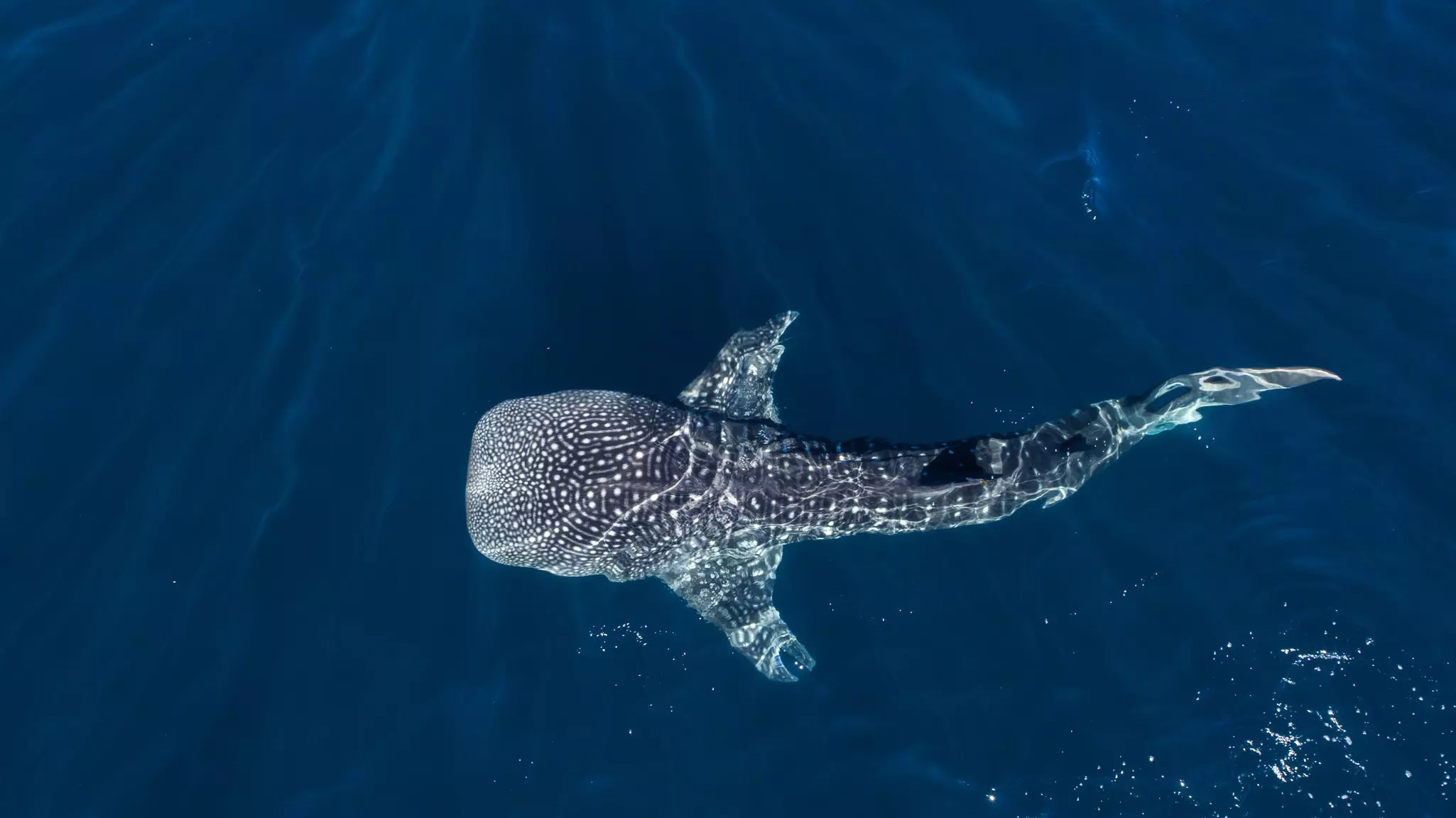
Visiting the World Heritage-listed Ningaloo Reef (Nyinggulu) is one of those bucket list experiences many Australians dream about. A fringing reef on the opposite coast to the Great Barrier Reef, Ningaloo can be accessed from the shore so you can combine an afternoon of sea kayaking with snorkeling over a colorful coral reef.
However, one of the top reasons people come here is to swim with whale sharks during their migration. Spotting these gentle giants, the world’s largest living shark, off the coast of Western Australia is possible from mid-March to the end of July, making May a prime time to go. Getting to swim with these wild creatures can never be guaranteed of course, and tour companies in Australia are well regulated so they won’t be chasing down these beautiful beasts. If you’re determined to get to swim with them, plan to stay a few days for the best possible chance.
There is plenty to see and do on land too near Exmouth: pack your hiking boots to see the ancient rocks and unique wildlife at Cape Range National Park and rare black-footed wallabies at Yardie Creek.
Planning tip: In May, the Easter school holidays have passed, giving you the pick of accommodations and tour slots, but book well ahead as places to stay, beyond camping sites, are limited.
Book your Australia trip with Lonely Planet Journeys
See Australia how it's meant to be seen
Accommodations, activities and ground transportation all taken care of, so you can focus on the fun part. Tell us what your dream trip to Australia looks like, and our local experts will build it from scratch. Or start with one of our itineraries and make it your own.

Explore related stories