Jan 7, 20267 min read
Local Flavor: Where to Eat and Drink in Thessaloniki, GreeceJan 7, 2026
7 MIN READ
Writer
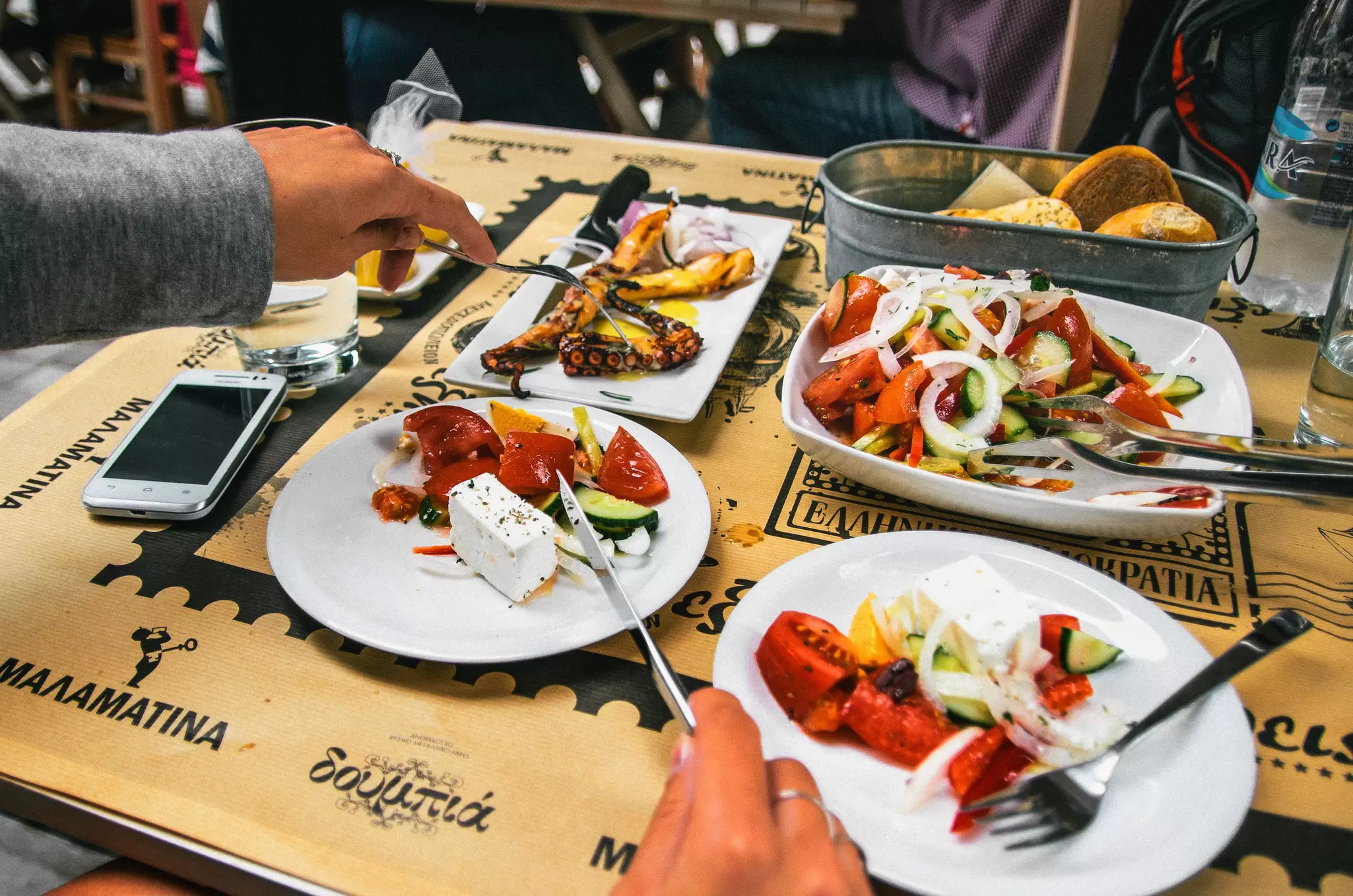
Malamatina Cafe in Thessaloniki, Greece. Andrei Bortnikau/Shutterstock
Writer
Lonely Planet may earn a commission from affiliate links on our site. All recommendations and reviews reflect our own independent opinions.
I was just stabbing my fork into a piece of grilled lamb souvlaki at Ambrosia, an elegant restaurant in the Hyatt Regency hotel in Thessaloniki, when a fight broke out – a row that I unsuspectingly started. The brawl began when I asked my server where I could find the best bougatsa, a multilayered phyllo pie that is a speciality of this northern Greek metropolis. When another server heard him utter “Bougatsa Nigrita,” he interrupted: “No, no, no, my friend, Serraikon is the best in the world.” Within a minute, a chef had come out of the kitchen to give his opinion, and the verbal gloves were off.
Just an average night in Greece’s second-largest city, the country’s capital of gastronomy, renowned for all things edible. Since 2021, Thessaloniki has been a UNESCO City of Gastronomy (the first and only in Greece). In addition to its dynamic food markets – like the century-old Modiano and the 200-year-old, open-air Kapani – the city of 400,000 denizens has excellent street food and great restaurants (casual to upscale and everything in between).
The cuisine of Thessaloniki blends Greek, Ottoman and Balkan influences, a result of the larger forces of history. Add to that the fact that 100 years ago, Muslim, Christian, Sephardic Jewish, Armenian and Italian communities all lived in the city at one time. Many of the dishes associated with Thessaloniki today are considered politiki kouzina, meaning "Constantinople cuisine," because they were originally conceived in Constantinople or Asia Minor (modern day Istanbul and Türkiye, respectively) before politics forced pockets of the population to emigrate.
Outside Thessaloniki, finding regional Greek restaurants faithfully serving dishes associated with this city may be a challenge. In many cases, instead of it coming to you, you have to go to northeastern Greece. And even if you do find Thessaloniki's typical dishes at a restaurant elsewhere, they’re superlatively better in their home city.
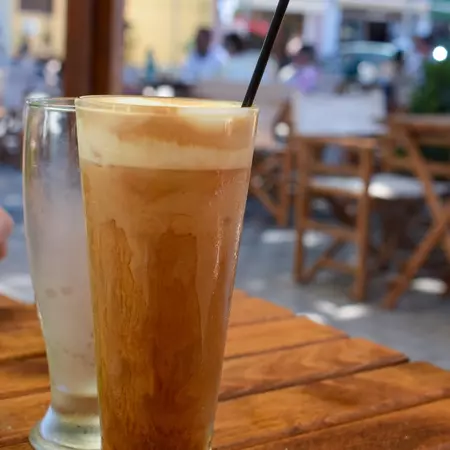
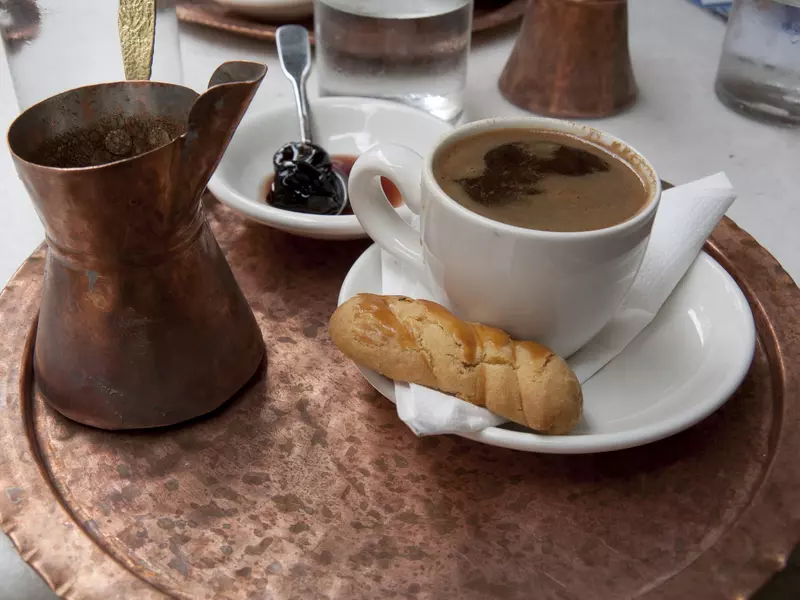
Greeks are among the biggest coffee drinkers on the planet. You can sip traditional Greek coffee (similar to Turkish coffee, with the grounds lingering the cup) as well as freddo espresso and freddo cappuccino (iced versions of the classic Italian drinks). But the most quintessential Greek coffee drink is one that was accidentally invented in Thessaloniki: frappé.
Some time during the first week of September in 1957 at the annual Thessaloniki International Fair, Nestlé employee Dimitris Vakondios desperately needed a coffee. The rub was that he didn’t have access to hot water. So he improvised, mixing some instant Nescafé coffee granules with cold water using a shaker; he rattled the concoction for half a minute before pouring it over ice. And with that, the frappé was born.
This cold, frothy coffee drink is now ubiquitous all over Greece and is basically the unofficial national beverage. In its birthplace, you can’t walk 10 steps without finding a place that will shake up a frappé for you. At cafes all over town, people sit for hours nursing the foamy instant coffee libation. A local favorite to linger over a frappé is Thermaikos Bar on the waterfront.
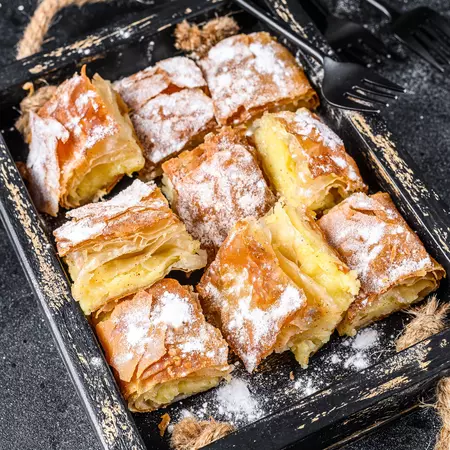
This stuffed pastry has been around for centuries in what is now Türkiye. It arrived in Thessaloniki and its neighbor, Serres, about 85km to the north, in the 1920s, when in the rubble of the Ottoman Empire, boatloads of Greeks from then-Asia Minor ended up in Thessaloniki and Serres. Today, you can find bougatsa sprinkled around Greece, but it’s most associated with Thessaloniki and Serres, where it is often eaten at breakfast.
While many people associate bougatsa with sweet flavors, particularly vanilla cream, there are savory versions, too, with ground beef, cheese and spinach varieties.
Ask a local where to eat bougatsa in Thessaloniki and you’ll get a variety of suggestions, but you can’t go wrong with Bougatsa Nigrita, where shoppers have been lining up for husband and wife Kleo and Akrivos’ near-perfect bougatsa in the Neapoli neighborhood since 1978. In the center of Thessaloniki and on the periphery of the Modiano Market, Serraikon has been making superlative bougatsa since 1952; take special note of the cheese version, made with feta and myzithra, a milky and slightly sweet raw sheep-and-goat cheese from Crete. At centrally located brunch favorite Estrella, you can get a "bougatsan," a bougatsa-croissant hybrid.
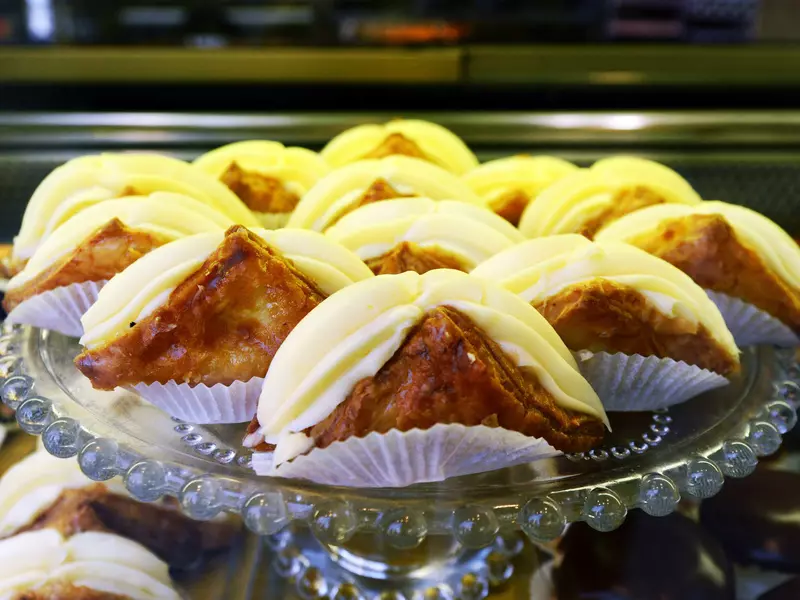
Pastry wiz Yiannis Elenidis birthed the trigona in the Panorama district of Thessaloniki in 1956 (or, depending on who you ask, 1960). You can still get this vanilla cream-filled triangle-shaped pastry at Trigona Elenidis. One of the best versions is at Terkenlis in the center of town. First-time visitors should go for classic vanilla, but if there’s stomach space, try the chocolate trigone too. The multilayered phyllo pastry is soaked in sweet syrup, giving it a baklava-like taste, until your taste buds hit the luscious cream inside.
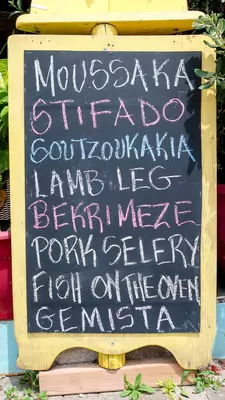
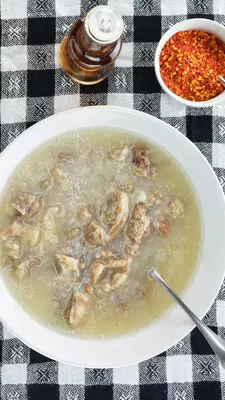
Mention to a Thessaloniki local that you just ate patsas and you’ll certainly be asked how much ouzo you drank the night before. That’s because patsas, a pungent tripe soup, is the northern Greek cure for a hangover. Cubes of tripe (the outer lining of cow stomach) are boiled and sautéed for hours – after you order, a server will ask if you want small or large bits. The earthy smell of bowl bobbing with chopped-up parts of tripe and spots of red-pepper-laced oil will hit your olfactory glands before you dip a spoon into this guts-and-glory meal. Patsas smells and tastes like offal in the most awfully offal way, so it’s best to arrive feeling adventurous, with a hangover or both.
If you’re not ready to give patsas a try, have no fear: not every local likes it either. When I told Giorgos Tsoleridis, a sous chef at the restaurant Ambrosia and the owner of the vegan spot rOOTS, he wagged his finger at me and said, “This is extreme food. I don’t like it.”
The most famous patsas spot in Thessaloniki is Tsarrouches, a no-frills joint that has been curing hangovers since 1952. The restaurant is open 24 hours per day, so if you need a pastas fix at 3am, point yourself here. You can get a less challenging version at Salonika, an upscale restaurant on the waterfront.
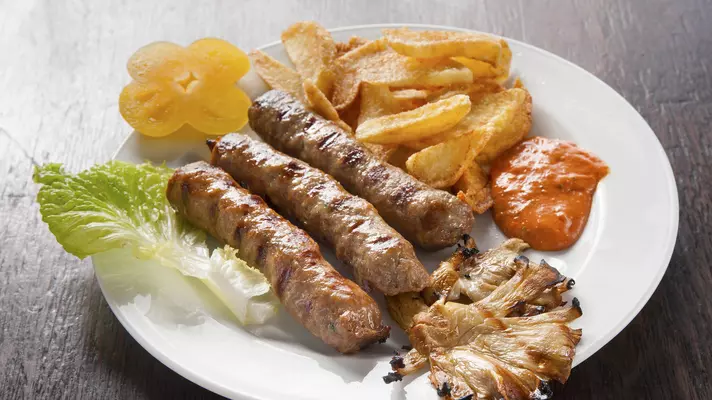
All the ouzo in town won't help you pronounce the name of this cigar-shaped minced meat delicacy. Soutzoukakia are oblong-shaped meatballs originally hailing from Izmir, on the Mediterranean coast of Türkiye. As with bougatsa, Greeks who relocated to Thessaloniki also brought their recipes for soutzoukakia.
If you’ve traveled elsewhere in the Balkans – say, Serbia or Bosnia and Hercegovina – soutzoukakia will be familiar, as it resembles čevapi in look and taste. In Thessaloniki, though, soutzoukakia are larger, laced with garlic and red wine, and sometimes come wading in a tomato sauce. And unlike other parts of the Balkans, the Thessaloniki version comes with mustard.
At Diagonios 1977, located smack in the center of town and a block from the bustling waterfront, thick soutzoukakia come out of the roaster crispy and charred on the outside and very juicy (and slightly pink) on the inside. Add a dab of mustard and a few pepper flakes (provided on the table) and you’re in for a luscious, meaty treat.
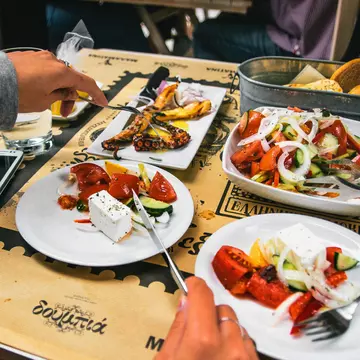
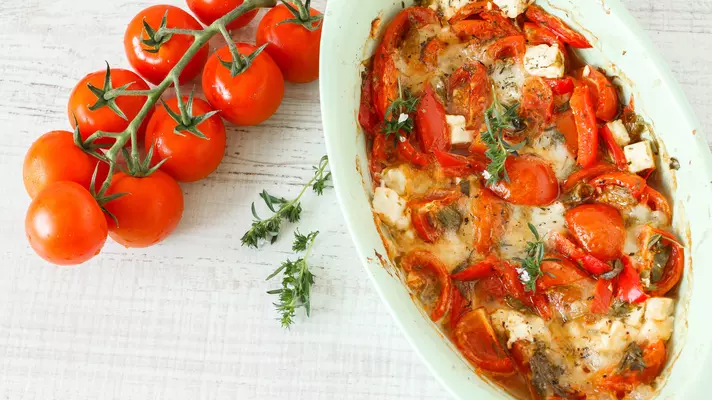
A slab of baked feta topped with tomatoes, peppers, oregano and red pepper flakes, then doused in olive oil, bouyourdi is comfort on a plate and in the belly. Think of it as an Aegean version of Mexican queso fundido or Swiss fondue.
Bouyardi, too, arrived when the Ottoman Empire crumbled, and there are no hard and fast rules as to its makeup – except that it always has melted feta. Go to one taverna and the tomatoes may take the form of a sauce; at another, they'll be freshly diced or sliced. There could be more oregano or less garlic. Sometimes the feta is mixed with kaseri, a goat-and-sheep cheese from Macedonia (the Greek region that Thessaloniki is the capital of).
At Ergon Agora, in the center of Thessaloniki, scoop up the feta and kaseri, as well as some tomato sauce, on freshly toasted sourdough and it almost feels like you’re eating a Greek pizza. At Salonika, the dish arrives in a cast iron pot with about 50 percent feta and 50 percent kaseri melted over sliced tomatoes and dried oregano.
Book your Greece trip with Lonely Planet Journeys
See Greece how it's meant to be seen
Accommodations, activities and ground transportation all taken care of, so you can focus on the fun part. Tell us what your dream trip to Greece looks like, and our local experts will build it from scratch. Or start with one of our itineraries and make it your own.
Explore related stories