Advertisement
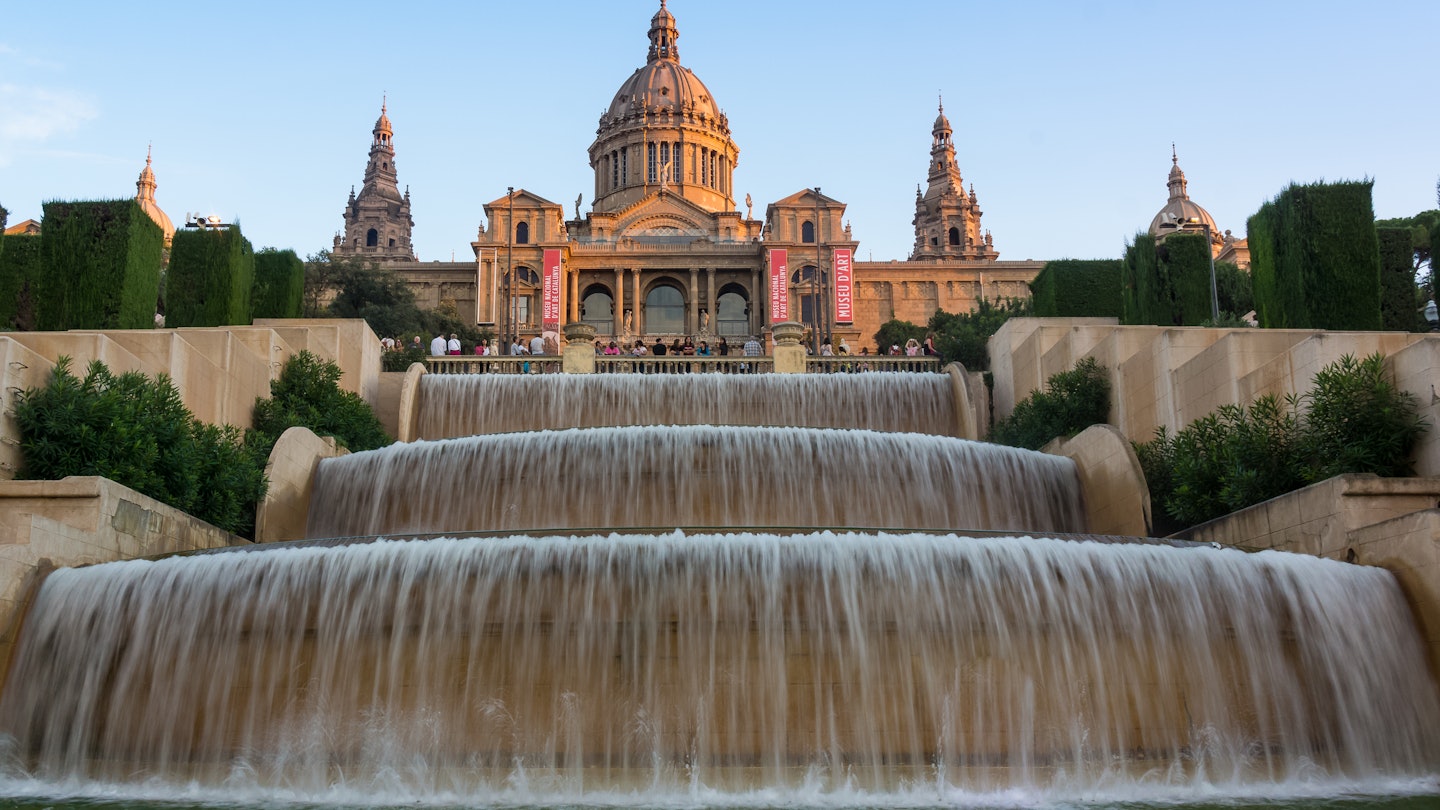
Museu Nacional d'Art de Catalunya. Erik Pronske/500px
Barcelona's many temptations – utterly unique Modernista mansions, forward-looking art galleries, some of Spain’s finest dining – need no introduction, but costs for all those fabulous restaurants, museums and clubs can quickly add up. The good news? The best things to do in Barcelona for free are some of the best things to do in the city at any price point.
Much of what makes Barcelona magical is budget-friendly, from highly walkable neighborhoods and glowing Mediterranean beaches to lively local parks. It’s also a city that revolves around outdoor living, making walking, running, cycling and other free outdoor activities a big part of the fun.
While you’re likely to want to experience at least a few of the major sights in depth, keep in mind that prices have risen in recent years, with adult entry fees at the top Gaudí monuments now costing well over 20 euros (€). Adding in some free-to-enjoy experiences will make your travel budget go further, particularly when prices peak during the busy summer season.
Whether you're backpacking on a shoestring or managing costs on a family break, not every view comes with a fee, and even the Gaudí architecture can be admired from outside without spending a cent. To help you get more from the Catalan capital for less, here are the best free things to do in Barcelona.
Advertisement
Daily life in Barcelona
People-watching and soaking up the atmosphere of Barcelona's varied neighborhoods is a great, cost-free way to enjoy the city.
1. Soak up Modernista architecture
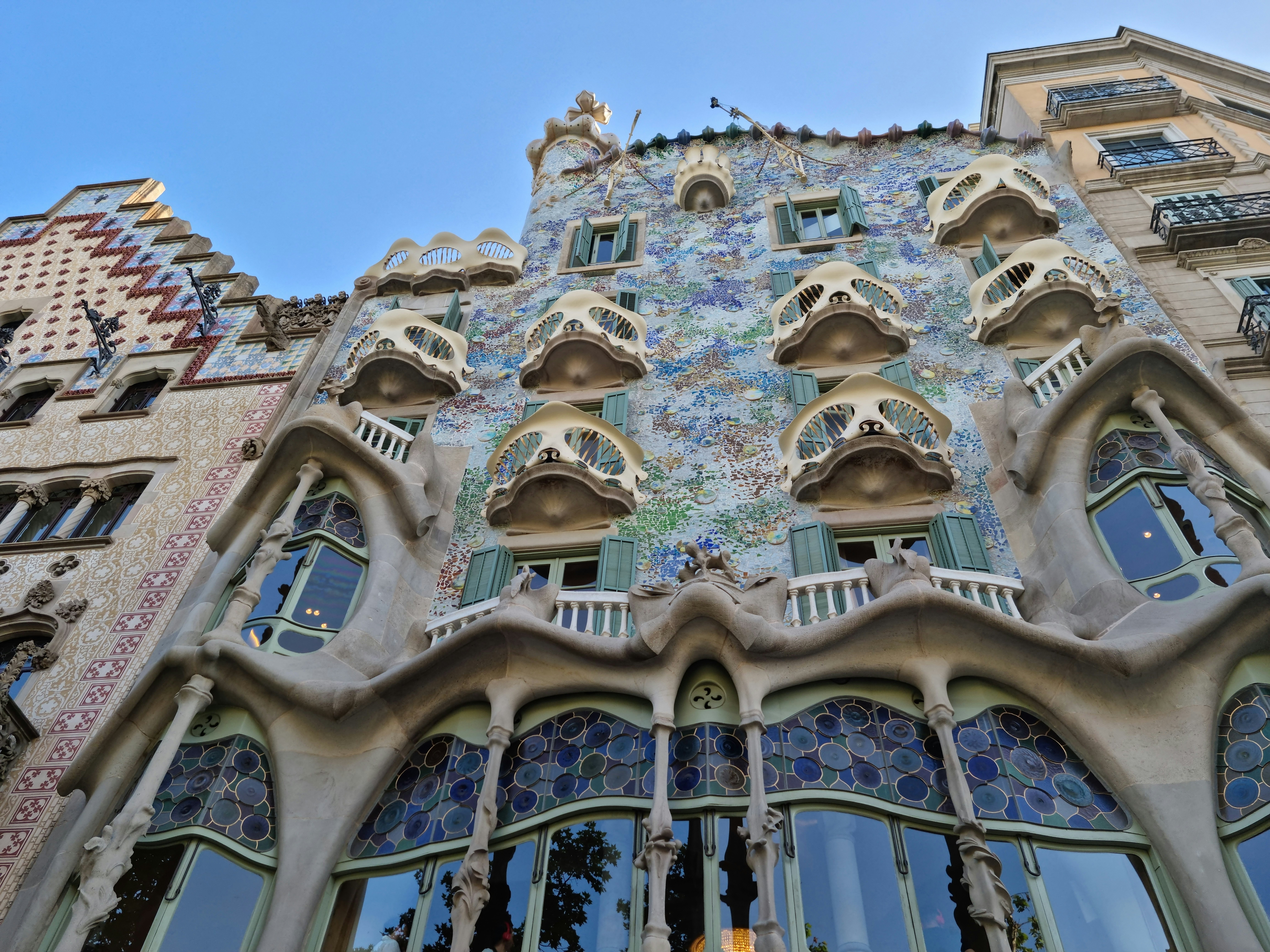
The shining stars of Barcelona’s architecture scene are its elaborately adorned Modernista buildings, the finest of which were dreamt up by Antoni Gaudí in the late 19th and early 20th centuries. While most charge pricey entry fees to view the interiors, these grand monuments were designed with deliberately opulent facades, and admiring from the outside is gratis.
Appreciating the architecture is a great activity for visitors traveling without kids in tow. You can marvel at the tile-covered, wavelike exterior of Casa Batlló and the flowing organic balconies of La Pedrera, two of Gaudí’s headline creations, from the sidewalk on Passeig de Gràcia.
The broad streets of the surrounding L'Eixample district are dotted with lesser-known Modernista buildings, such as the 1901 Casa Calvet (another by Gaudí) and the neo-Gothic Casa Serra, by Josep Puig i Cadafalch.
Planning tip: The Palau Güell – an early Gaudí masterpiece located just off La Rambla in El Raval – is free to enter on the first Sunday of every month. Book ahead.
2. Stroll through enchanting barris
One of Barcelona’s most captivating, defining features is its collection of distinctive barris (neighborhoods). Taking a leisurely wander through a few of them is a joy. La Ribera, the medieval district bordering the Barri Gòtic, is known for its tangle of pedestrianized stone streets and plazas and its rich artisanal heritage.
Head north to Gràcia and you’ll be immersed in a village-like neighborhood with interconnected squares, original craft boutiques and a buzzing Modernista market. Then there's El Born, a hip former hub for artisans with art galleries you can visit for free, and a lively buzz after dark. Cafes and coffee shops provide inexpensive rest-stops for travelers who enjoy exploring on foot.
Planning tip: While not completely free, relaxing at a plaza bar over a drink – perhaps a vermouth with some olives – is a beloved local pastime and a great way to enjoy barri life flowing by without too much cost.

3. Shop in neighborhood markets
Every district in Barcelona has at least one produce market, and the architecture is often as much of a draw as the stalls within, though foodie travelers will be in seventh heaven. Many visitors make a beeline to the busy, heavily touristed Mercat de la Boqueria, and the eye-catching Mercat de Santa Caterina, both bustling with vendors.
For a quieter experience, seek out some of the city's more offbeat markets. L’Eixample has two wonderfully renovated Modernista markets – Mercat de la Concepció and Mercat del Ninot. Other favorites include the 19th-century Mercat de Sant Antoni and Gràcia’s Mercat de la Llibertat.
Planning tip: Markets are fantastic places to pick up snacks for a picnic at one of the city's beaches or parks. Many of them also have laid-back counter bars serving reasonably priced tapas and drinks.
4. Study up on the Universitat de Barcelona
After a few hours ambling around L’Eixample, the 19th-century Universitat de Barcelona campus on Gran Via de les Corts Catalanes makes for a blissfully refreshing oasis. Everyone from students to retirees can explore the moody cloisters and grand entrance hall, beyond which the Jardins Ferran Soldevila tucks away benches amid palm-shaded greenery.
Planning tip: Renovations have brought several traffic-free streets to L’Eixample as part of Barcelona’s Superilles (Superblocks) project. Take full advantage by planning walking routes via green boulevards such as Carrer del Consell de Cent and Carrer de Girona.

Outdoor experiences
Some of Barcelona's best free activities are outdoors in parks and nature reserves.
5. Explore hillside gardens and viewpoints on Montjuïc
Looming over the Port Vell marina, lushly shaded Montjuïc hill is best known for its respected museums, including the Museu Nacional d’Art de Catalunya and the Fundació Joan Miró, all charging entry fees. But this elevated area is also sprinkled with refreshing gardens, pine-fringed pathways and elevated viewpoints gazing across the city – all great for families and entirely free to explore.
Advertisement
Make your way through the Moorish-inspired, wisteria-clad Jardins de Laribal and around the pretty lily ponds at Jardins de Mossèn Cinto Verdaguer. Right at the top sits the Castell de Montjuïc, a centuries-old fortress and former prison with a dark history; paths and gardens ring its sea-facing exterior, offering rolling views.
Planning tip: The cable car is the most popular way to access Montjuïc, but it’s more budget-friendly to hop on bus 150 or catch the funicular (part of the Barcelona metro system) to get here. Or if you’re feeling active, head up on foot.
6. Hike in the Parc Natural de Collserola
If you're active and outdoorsy, few Barcelona views can rival the sweeping panorama from the lofty Carretera de les Aigües walking trail. Popular with runners, cyclists and hikers, this dusty 10km track stretches across the city-facing side of the Parc Natural de Collserola, a haven covering 80 sq km of pine-forested hills rising just north of central Barcelona.
This protected nature reserve has many other rewarding hiking trails. Several paths lead to the top of 512m-high Tibidabo hill, where you can take a free peek into the towering Basílica del Sagrat Cor de Jesús, designed by Enric Sagnier (there's a small charge to go up the towers).
Planning tip: Getting to the Parc Natural de Collserola is a breeze; the visitor center is a 10-minute walk from Baixador de Vallvidrera train station, which has frequent rail links to the city center.
7. Relax on golden beaches
Barcelona’s Mediterranean setting means that lazing away on a beach is always within easy reach, whether you have half an hour or an entire day to spare. Closest to the center is busy Barceloneta beach, but walk northeast along the palm-studded seafront promenade (or hop on metro line 4) for a more local atmosphere at Bogatell, Nova Icària and Nova Mar Bella.
On a city-focused family trip to Barcelona, the city beaches are a great way to keep kids entertained for little outlay (beyond drinks and ice-creams). For a quieter scene, catch a quick train to gorgeous out-of-town sands like the beaches at Castelldefels and Garraf.
Planning tip: Barcelona's seafront promenade is a favorite place to go walking, running, in-line skating and cycling. It also has an intriguing collection of open-air art installations, like Frank Gehry’s Peix (a shimmering metallic fish) and Rebecca Horn’s L’Estel Ferit (which recalls the simple snack shacks that once lined the shoreline here).

8. Escape to Parc de la Ciutadella
Barcelona’s finest and most easily accessible green space, Parc de la Ciutadella is a sprawling expanse dotted with palm trees and curious buildings. Among these are the 18th-century Palau del Parlament de Catalunya, a monumental golden fountain that Gaudí is believed to have had a hand in, and the 1880s Hivernacle (Greenhouse), with intricate floral motifs.
It's a great place for travelers of all ages to find some respite from the crowds. Stroll past the Mudéjar-inspired Arc de Triomf and down Passeig de Lluís Companys on your way into the park.
Planning tip: Another park to pause in is the newly created Parc de les Glòries, on the border of L'Eixample and Poblenou. Deck chairs are set out in the sun, and there are games for kids and views of La Sagrada Família in the distance.
9. Drink in the views at Bunkers del Carmel
High above the city, near Park Güell, the Bunkers del Carmel platforms have spectacular 360-degree views taking in the sparkling coastline and Barcelona’s monument-studded skyline on one side and the green Collserola hills on the other – well worth the hike up from the center.
Free to explore, the hilltop is part of an anti-aircraft battery built during the Spanish Civil War, and a small (and free) museum is devoted to the area’s backstory. It's a good way to get a view over the city without paying the pricey Park Güell entry fee.
Planning tip: Following complaints from residents about antisocial behavior and sunset crowds, the Barcelona authorities have introduced strict opening hours for Bunkers del Carmel, and the site now closes at 7:30pm in summer and 5:30pm in winter.
Art and history
Barcelona has a packed cultural calendar and many of the top festivals can be enjoyed for free.
10. Catch a festival
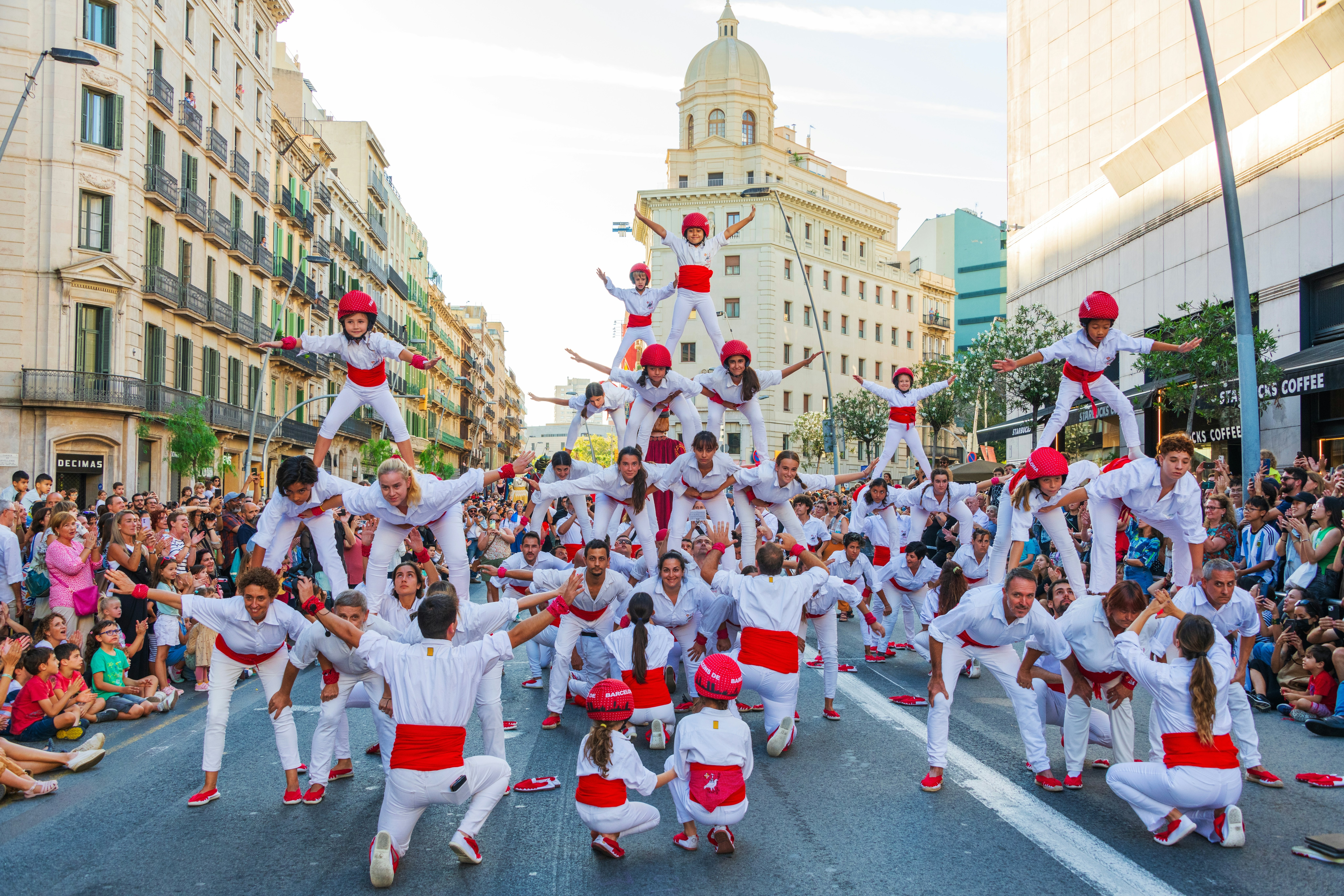
Events bring Catalonia’s traditions to Barcelona’s streets year-round, and the city's festivals offer plenty of free fun for both families and party-oriented young folks. During major festivals such as La Mercè in September and the Festes de Santa Eulàlia in winter, there are dazzling parades of gegants (papier-mâché giants), lively correfoc (fire-running with drumming) and displays of castells (human towers) in landmark spaces all over town.
Don't overlook the city's many neighborhood festivals. The Festa Major de Gràcia in August sees lavishly creative decorations on the streets of Gràcia. Just remember to book accommodation and flights well ahead to keep costs down at festival time.
Planning tip: Several annual events provide free entry to museums and other high-profile buildings, such as La Nit dels Museus (May) and 48h Open House Barcelona (October).
11. Get in for free at the Museu Picasso and other headline museums
Barcelona’s stash of top-tier museums ranks among its key draws. Happily, many of them offer free entry on particular days, or at particular times, including after normal opening hours during the La Nit dels Museus every May.
While most galleries are busier than normal at these times, you’ll quickly forget about everyone else when you’re gazing at astonishing early works by Pablo Picasso hanging between Gothic arches at the Museu Picasso, which has free admission on Thursday, Friday and Saturday evenings from the end of March to the end of September and on Thursday afternoons the rest of the year, as well as on the first Sunday of the month.
Other museums with free hours include El Raval’s cutting-edge Museu d'Art Contemporani de Barcelona (MACBA) and the Museu Nacional d’Art de Catalunya on Montjuïc, famous for its vivid Catalan Romanesque frescoes.
Planning tip: Most museums offering free entry still require visitors to book a free ticket in advance; reservations typically open 4 days ahead.
12. Learn about Barcelona's history at the Born Centre de Cultura i Memòria
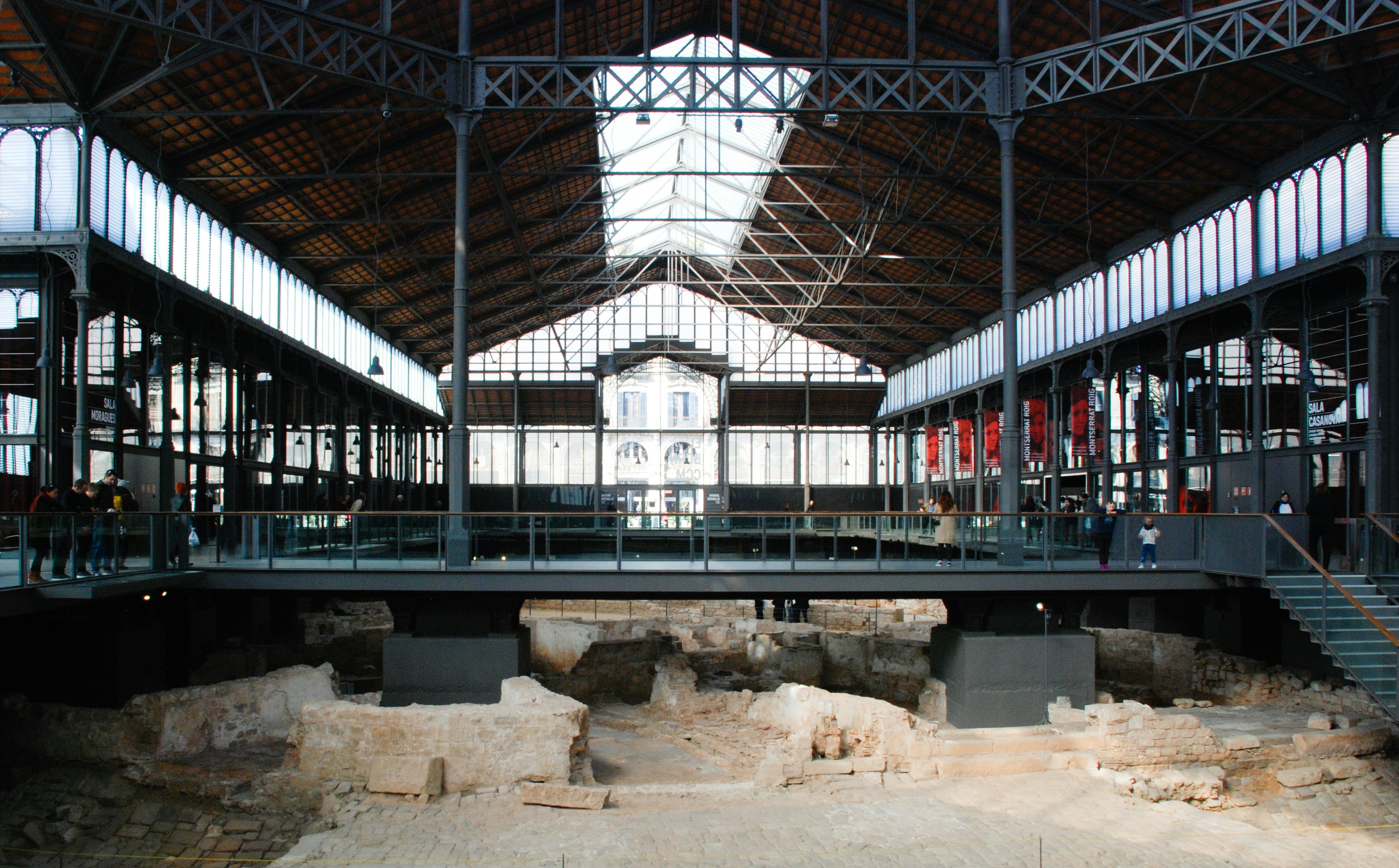
History fans take note – the 19th-century iron-and-brick Mercat del Born, in the lively El Born neighborhood, has been transformed into an evocative and free-to-see archaeological site. Inside, below elevated metal walkways, sit the excavated ruins of streets and homes destroyed following the War of the Spanish Succession in 1714, when the Ciutadella fortress was built, sparking the beginnings of the Catalan independence movement.
Planning tip: While there is a small charge for guided tours, the building itself is free to enter and has detailed panels describing the significance of this space.
13. Search for Roman relics in the Barri Gòtic
Today’s Barri Gòtic sits on what was once the Roman city of Barcino, and it’s still possible to catch glimpses of this ancient settlement while roaming the neighborhood’s maze-like streets. Hidden down an alley behind the cathedral, the free-to-view Temple d’August dates from the 1st century BCE.
Also nearby is the Porta de Mar, with ruins of a 1st-century CE bathhouse and a section of Roman wall. More of the old Roman walls are visible at the neighboring Plaça de Ramon Berenguer el Gran.
Planning tip: The Barri Gòtic is one of Barcelona’s most heavily touristed areas, so get an early morning start to sidestep some of the crowds.
14. Watch a free film at the beach
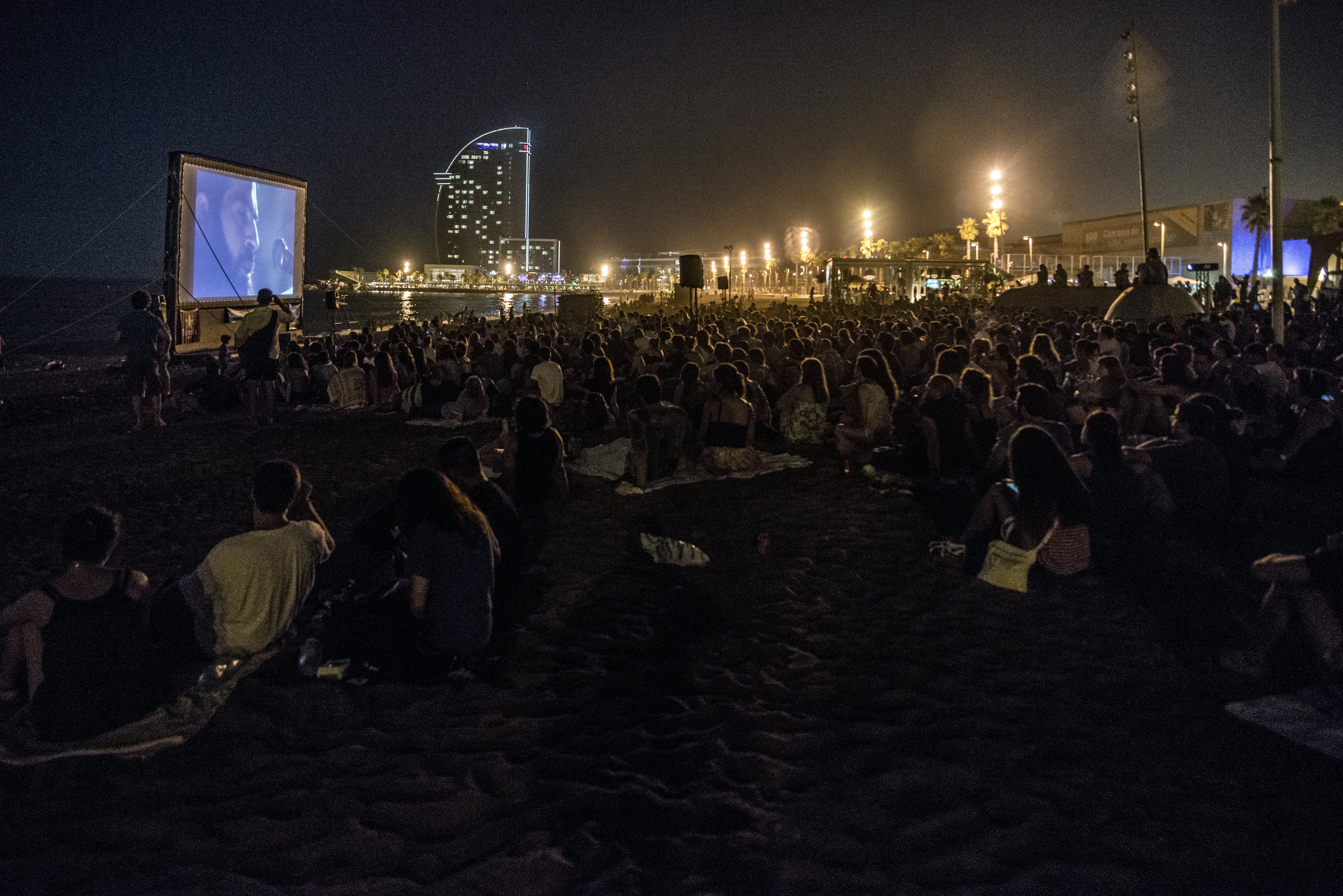
If watching an indie film on Barcelona’s Platja de Sant Sebastiá sounds like fun, pop down to the seafront for the summer-only Cinema Lliure a la Platja series, which sees screens spring into action just after sunset in July and August. There are movies for grown-ups and families; bring a blanket, drinks and snacks.
Planning tip: Check schedules to see what is on when. The organizers also arrange screenings at other locations in Catalonia, including in nearby Sitges.
15. See superb street art in El Raval
No tickets are needed to enjoy the vibrant open-air art on view across the creative, multicultural El Raval district. Barcelona has grown into one of Europe’s street-art capitals since the scene emerged from the 1980s onward, and this area is the epicenter, attracting both local and international artists.
The formerly industrial neighborhood of El Poblenou, east of the center, is another hub for Barcelona street art. Take a wander through the streets running northeast from Parc del Centre del Poblenou and see what is currently adorning the walls.
Planning tip: Wandering between murals is always free, but joining a guided tour (such as those offered by Barcelona Street Style Tour and Artspace Tours) is a great investment if you’re keen to learn about some of the key artists involved.
Advertisement
Take your Spain trip with Lonely Planet Journeys
Time to book that trip to Spain
Lonely Planet Journeys takes you there with fully customizable trips to top destinations – all crafted by our local experts.