Sep 11, 20268 min read
How to See Barcelona by BicycleFeb 24, 2026
9 MIN READ

Writer
La Sagrada Família has a completion date © Getty Images

Writer
Lonely Planet may earn a commission from affiliate links on our site. All recommendations and reviews reflect our own independent opinions.
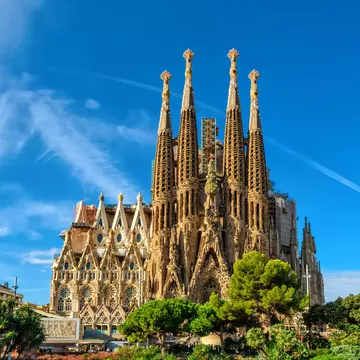
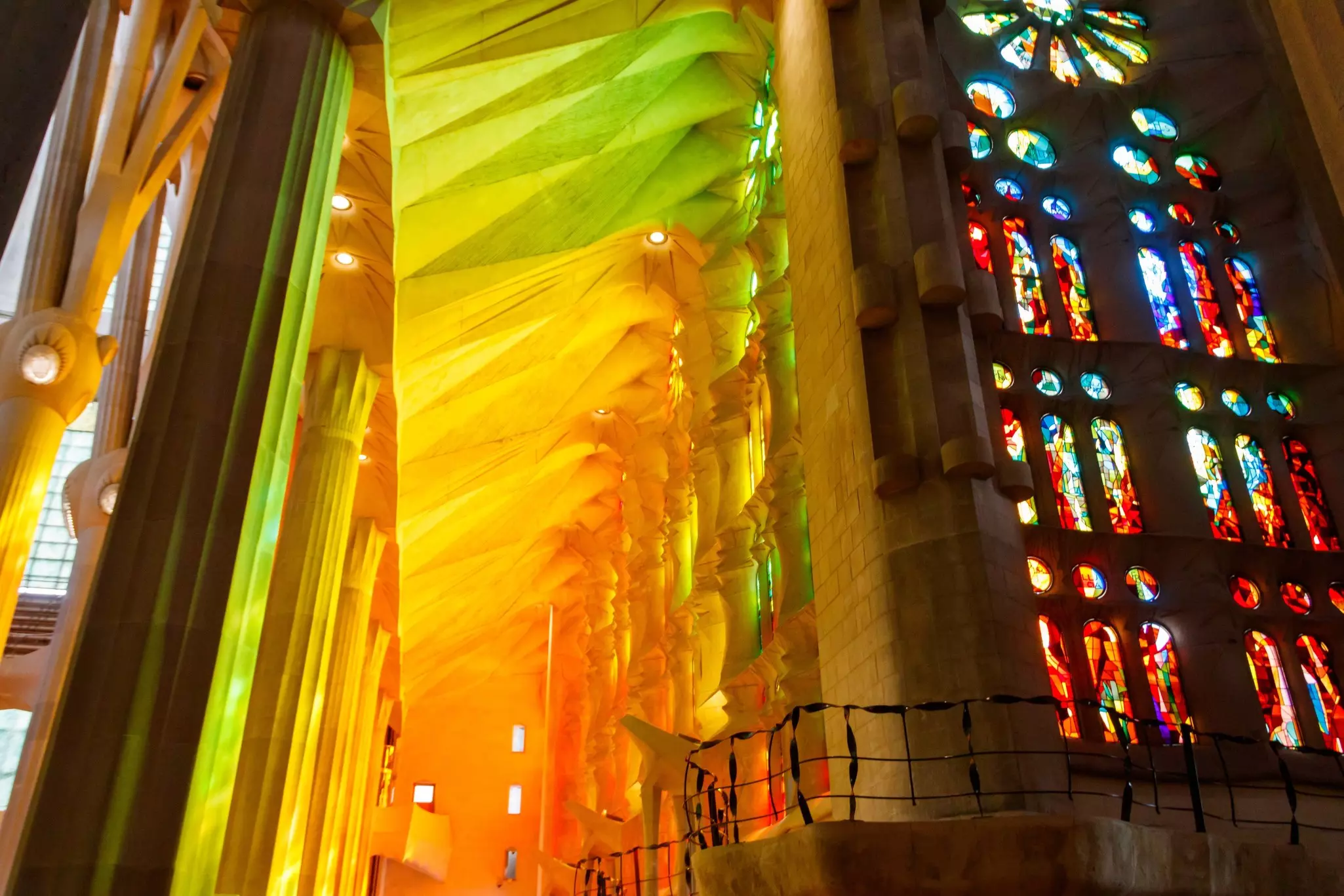
Antoni Gaudí’s unfinished masterpiece, Barcelona’s UNESCO World Heritage La Sagrada Família is proof that some of the greatest works of art and architecture are inspired by nature and wrought for the glory of a very patient god. One glimpse of its fantasy spires, drip-candle-like stonework and soaring forest of double-twist columns immediately lifts gazes and spirits. And religious or not, you can’t help but be moved if you visit the nave in the late afternoon – as light streams through the stained-glass windows, it’s like walking through a rainbow. You’ll treasure the moment forever.
Started in 1882 and completed in 2026, in time for the 100th anniversary of Gaudí’s death, this Catholic basilica is one of Spain’s big-hitter sights, welcoming nearly 5 million visitors a year. With those numbers, you’ll never have this wonder all to yourself. Still, there are ways to truly get under the skin of Gaudí’s tour de force.
It has been more than 140 years in the making but, as the Catalan architect once quipped, “My client is not in a hurry.”
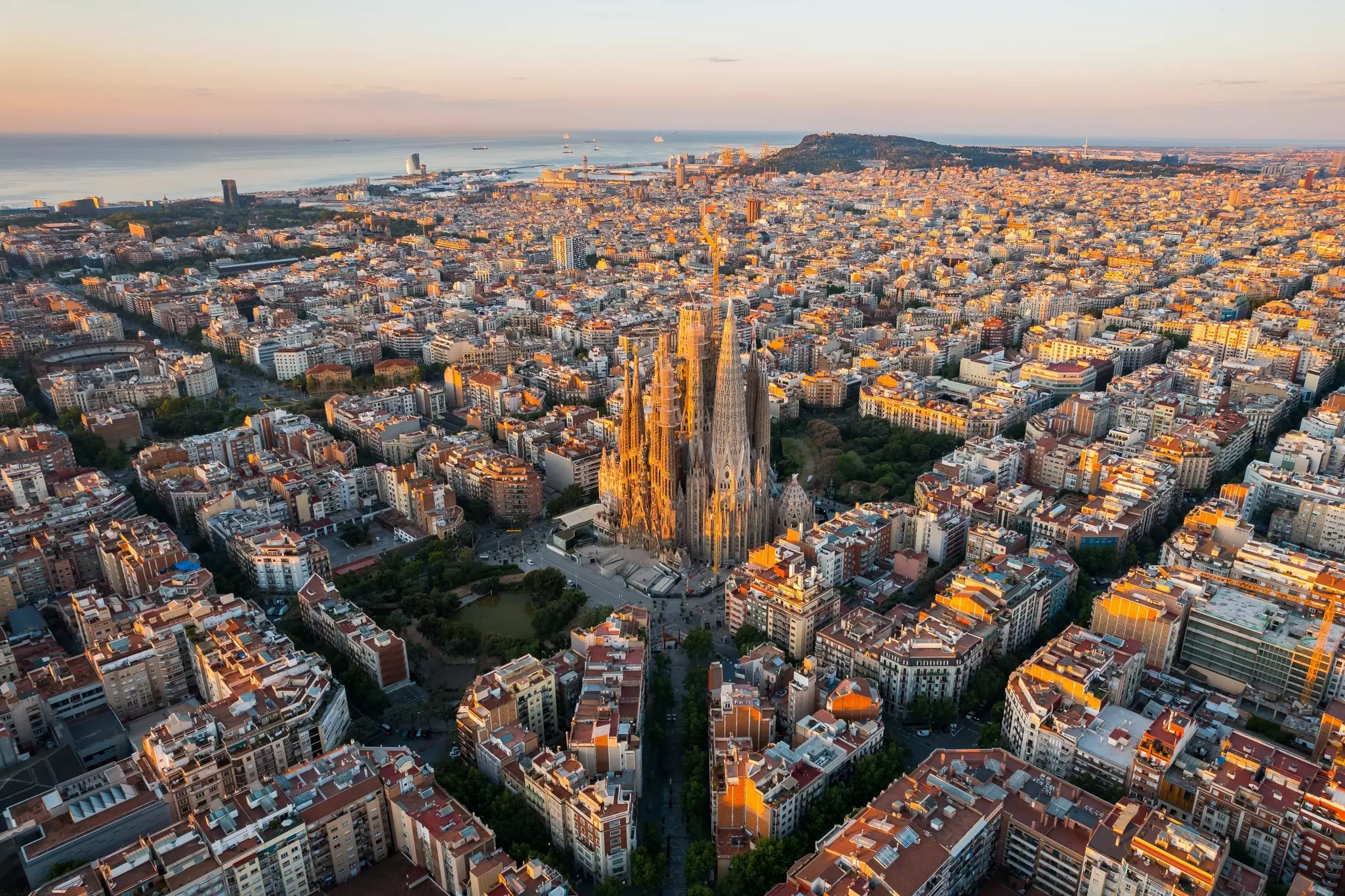
Inspired by a visit to the Vatican in Italy, Barcelonian bookseller and philanthropist Josep Maria Bocabella envisioned the building of La Sagrada Família. Bocabella originally enlisted architect Francisco de Paula del Villar in 1882, who designed a lavish basilica consecrated to the Holy Family in neo-Gothic style. But after several disagreements, he resigned and Gaudí seized the reins in 1883.
Weaving in Gothic, Moorish and organic designs that nodded to patterns in nature, Gaudí’s design was revolutionary – pushing the boundaries of architectural norms and raising eyebrows from the outset. Gaudí dreamed big of building a church with not one but three facades, each illuminating a phase in the life of Jesus: Nativity, Passion and Glory. Gaudí wanted to let organic symbolism shine in the stonework and stained glass, recounting Jesus’s story as it had never been told before and bringing the Bible vividly to life. With no straight lines or sharp corners, this was architecture that moved and twisted like nature, true to Gaudí’s mantra that: “Nothing is art if it does not come from nature.”
In 1891, when development of the Nativity facade began, it dawned on Gaudí that La Sagrada Família was so ambitious he would never see it completed in his lifetime. Worried that the project would come to a halt after his death and once the church acquired its worship function, Gaudí decided to begin work on the exterior rather than building the central nave.
Gaudí was simultaneously working on La Pedrera (Casa Milà). When that was completed in 1912, he poured all his energy into La Sagrada Família, working on it obsessively until he was killed by a tram in 1926. He is buried inside the crypt. This had truly been a labor of love: When the funds from the original commission dried up, Gaudí invested his own money. This temple wasn’t just another project; it was his lifelong, all-consuming passion.
After Gaudi’s death, architect Domènec Sugrañes i Gras headed up the construction. Progress was slow as it relied upon private donations, and the temple was heavily damaged during the Spanish Civil War (1936–39), when anarchists set it on fire, destroying a significant part of Gaudí’s workshop. Fortunately, part of his material could be restored.
Work resumed in 1954 and it’s been under construction ever since, with a stream of architects painstakingly bringing to life his geometric designs over the years. Money was tight for many years, but more recently the construction has received substantial donations from across the globe, as well as funding from ticket sales.
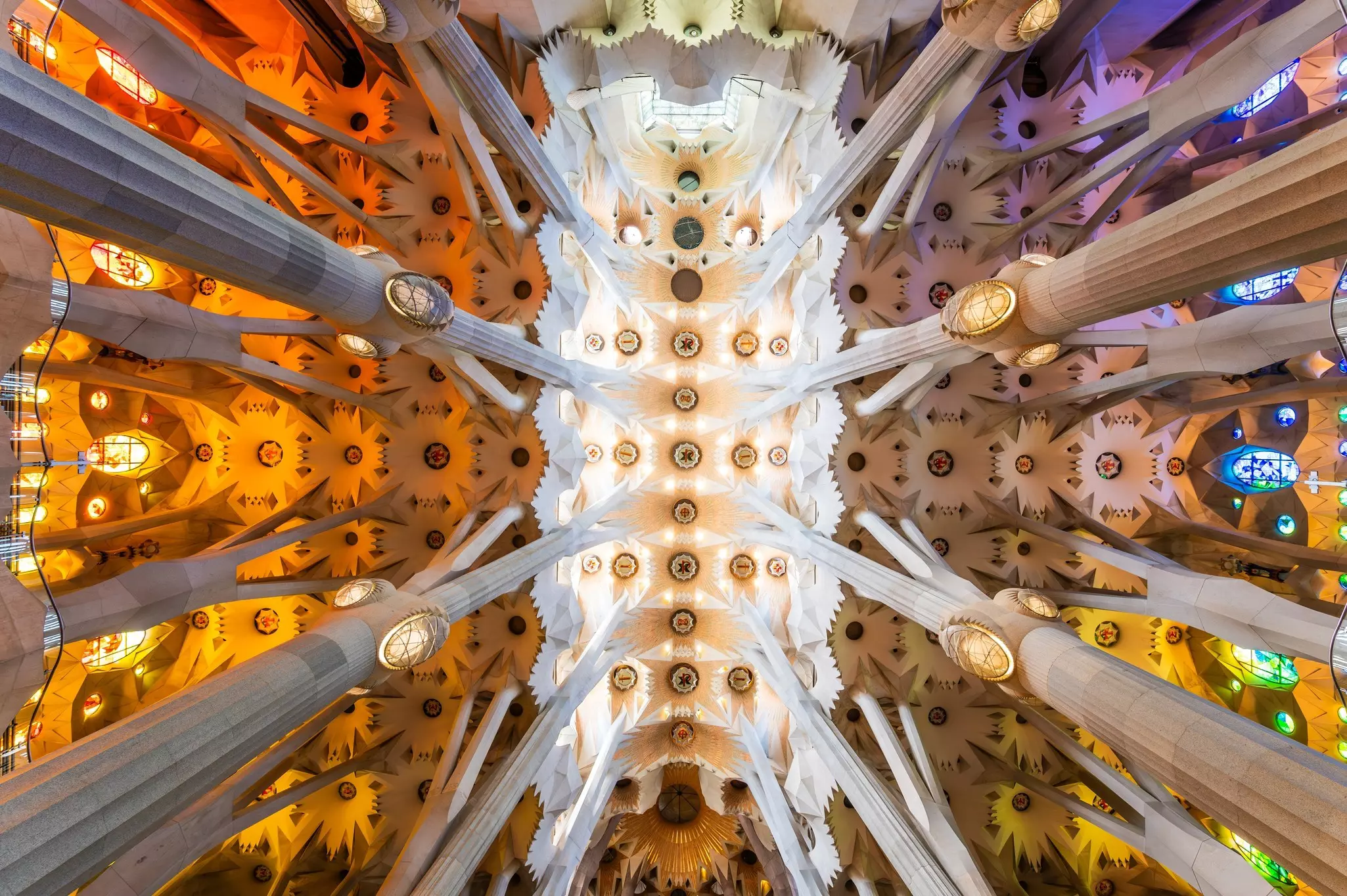
The final tower of La Sagrada Família was completed in early 2026, 144 years after the first stone was laid. When the cross was added, the 172.5m (565.9ft) tower of La Sagrada Família made it the world's tallest church. A ceremony to mark this momentous task is planned for on the centenary of Gaudí’s death in 1926 on June 10.
However, work on the controversial stairway leading to the main entrance is expected to continue until 2034. A key element of Gaudí’s original design, the entranceway has fired debate as its construction would mean demolishing two blocks, uprooting businesses, flattening homes and impacting around 3000 people.
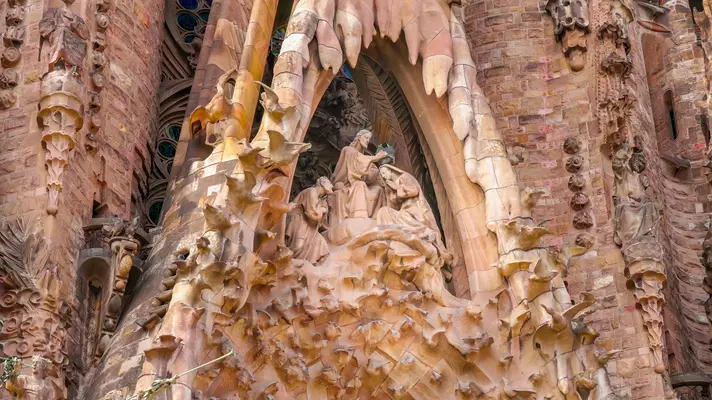
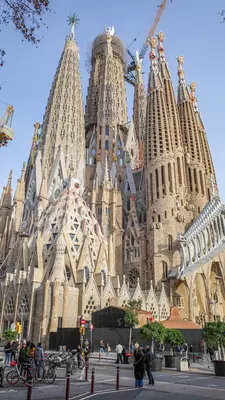
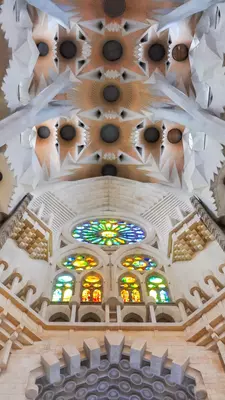

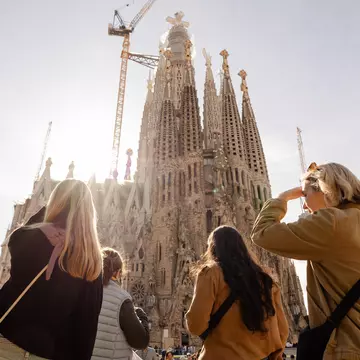
So surreal and staggeringly detailed that you could stand and gawp at it for hours in the changing light, La Sagrada Família’s multi-layered facade looks like something plucked from a fairytale. Gaudí's dislike of straight lines is evident across the the stonework that echoes naturalistic shapes. Word has it he took inspiration from the rock formations of the holy mountain Montserrat outside Barcelona, draping over them an intricate web of sculpture that appears to grow straight out of the stone.
La Sagrada Família is encrusted with 18 towers designed to represent the twelve apostles, Virgin Mary, four evangelists, and Jesus Christ. Adorned with colourful ceramic and Murano glass mosaics, the pinnacles of the evangelists are phenomenally ornate. When Gaudí was asked why he had invested so much detail in a part of the church far beyond eye level, he replied “because the angels will see them”.
The basilica has five naves and a three-sided transept, shaped like a Latin cross. Flooded with light, its interior mesmerizes with angled pillars and double twist columns that rise like branches to support hyperbolic domes and Catalan vaults.
Peering up to the colorful patterns and geometric forms in the vaults is like looking into a kaleidoscope. This was Gaudí’s intention – a church that brought in the light, shapes and majesty of nature – a great forest canopy built of stone. The pillars vary – from soft Montjuïc columns along the lateral aisles to granite, dark basalt and reddish Iranian porphyry for the columns where the nave and transept intersect.
Best admired in the late afternoon or early evening light, the stained glass windows (including those designed by Catalan artist Joan Vila Grau in 1999) shimmer in jewel-like reds, blues, greens and yellows. As the sun slants in through them, the effect is hypnotic.
Below the apse, glass windows peer down to the simple neo-Gothic crypt, where Gaudí was buried on June 12, 1926. The late 19th-century crypt is the oldest part of the basilica and largely bears the hallmark of Gaudí's predecessor, Francisco de Paula del Villar y Lozano. Mass is now held here; it's open only during hours of worship.
Below ground level and next to the Passion facade, the Museu Gaudí provides some fascinating insight on Gaudí's life, work and inspiration, as well as giving the inside scoop on the history of the basilica and its architecture. Objects on display include plans, reconstructed models and sketches, which give you an inkling into the mind of the genius.
La Sagrada Família is open 9am to 8pm Monday to Friday, 9am to 6pm Saturday, and 10:30am to 8pm Sunday from April through September. Shave an hour or two off these times in the low season. Peak summer holiday times also see a spike in visitor numbers, so ideally come in the shoulder seasons for a calmer experience. Winter (November to February) is the most quiet.
The best time of the day to visit to dodge the crowds is first thing in the morning on weekdays. The best time to admire (and photograph) the stained glass windows is in the late afternoon or early evening light.
La Sagrada Família is in Barcelona’s Eixample district. Metro lines 2 (purple) and 5 (blue) stop at Sagrada Família station. From Barcelona’s historic center, plan on a 30 to 40-minute walk.
Tickets must be booked ahead online as you will be given a time slot. If you're coming at a busy time of the year, book at least a few days ahead to make sure you get a time that works for you. The standard ticket covers the basilica and museum, with a downloadable audioguide app that lasts 45 minutes and is available in 19 languages. Bring along earphones and make sure that your phone is fully charged.
Slightly pricier self-guided tickets let you either go up the tower on the Nativity or Passion facade for sweeping views over Barcelona. Alternatively, there are 50-minute guided tours of the basilica and museum.
It might be Barcelona’s big-hitter, but it is also a place of worship. Dress modestly as you would for any religious site. Low necklines and hemlines are a no, as is clothing that exposes the back, midriff or shoulders. Hats, beachwear and flip-flops are not permitted.
Security is pretty tight. No food or drinks are allowed and expect to have your bag checked at the entrance. You must present some form of photo ID (passport or similar) to enter the church.
You want to take photos? Of course you do. You can happily snap away but just make sure you don’t use any professional looking equipment (tripod or flash) as you need a special permit for that.
For the best photo ops, visit in the late afternoon or early evening, when the softening light makes the exterior glow gold and beautifully illuminates the stained glass windows.
La Sagrada Família is wheelchair accessible (except for the towers). You'll need to enter via Door B on Carrer de la Marina, where you'll be given priority access. And yes there are accessible restrooms at the site.
Travelers with mobility issues (including using crutches) cannot access the towers as you need to be able to descend the stairs. For anyone with vertigo, it is also recommended that you don't head up the towers.
The restaurants and cafes right on the doorstep of La Sagrada Família are touristy and packed, but a short stroll takes you to less-crowded corners of L’Eixample. It’s just a few minutes’ walk to Hasta Los Andares, a brilliant little tapas bar where you can dig into the likes of jamón ibérico de Bellota (wafer-thin cured ham from acorn-fed pigs), regional goat’s cheese and fuet (Catalan thin, dry-cured pork sausage) with Spanish wines. Buzzy, brick-walled La Granota, roughly equidistant, is an excellent pick for tapas and tortillas.
If you fancy a delicious pastry and coffee or breakfast before an early morning visit, check out the Forn de pa Puiggròs, a 10-minute walk north of La Sagrada Família. It has been in business since 1922 when Gaudí was in the hood.
Explore related stories