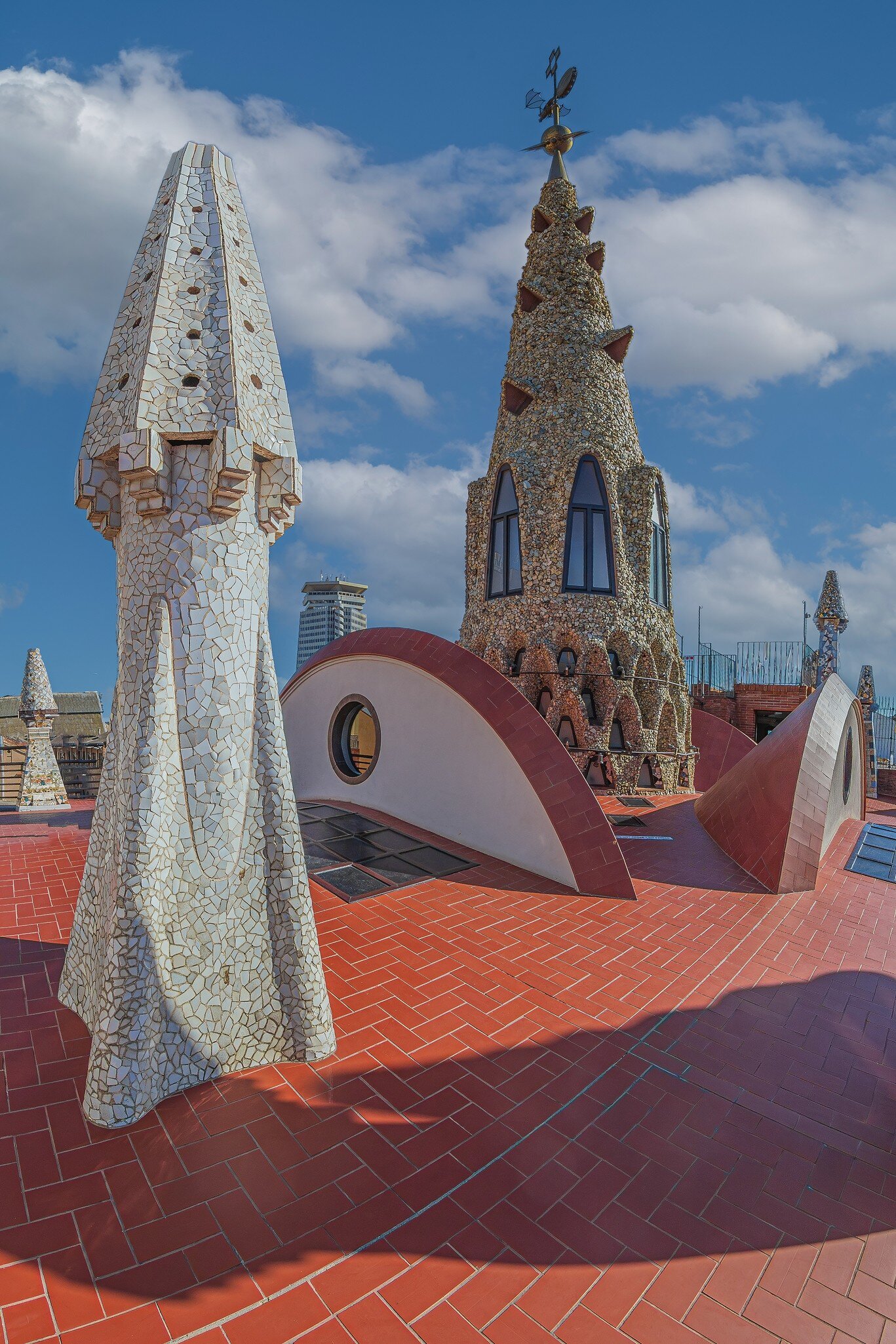
Sitting right at the southern edge of Raval, just off La Rambla, lies one of the neighborhood’s premier attractions – the palatial home Gaudí designed for his patron Eusebi Güell. The palace was the first commission Gaudí received from the industrial tycoon and is considered by many to be one of the world's first art nouveau buildings.
Get to Know the Palace
Raval may seem like an odd spot to build one of the city’s most luxurious homes, and it was at the time too, but Eusebi Güell wanted it to be close to the home he’d inherited from his father. Another of Barcelona’s countless UNESCO World Heritage sites, it was built between 1885 and 1890 as the main residence of the Güell family. Güell and his wife Luisa Isabel López y Bru wanted a sumptuous home fit for both themselves and their 10 children, as well as entertaining some of the most important and wealthiest people in the city.
Gaudí's Style
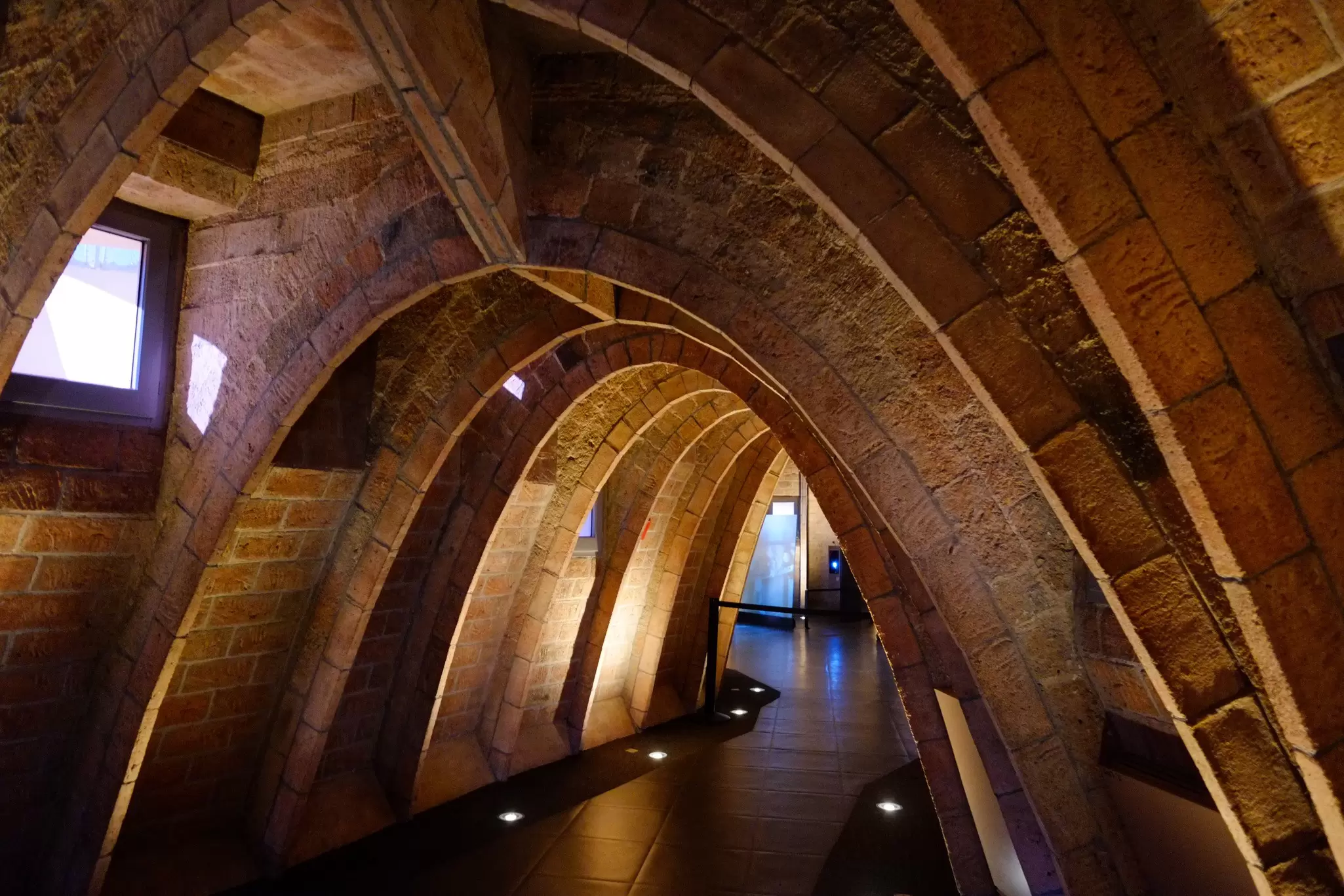
The finishing result is an opulent mansion, filled with exquisite detailing – elegant marble, sprinkles of Moorish influences, beautifully carved wood-coffered ceilings, parabolic arches and colorful stained glass, creating patterns and shapes reflected onto the floors. It was here that Gaudí experimented with parabolic arches for the first time, an element he would go on to use time and time again and one which you’ll see many times during your Gaudí journey throughout the city.
The Vestibule & Stables
Don’t immediately rush upstairs to see the main parts of the house – the vestibule and the stables are, in fact, some of the most impressive parts. Before you admire the intricate detailing on the twisted metalwork gates or the magnificent staircase made from snake-eye stone brought down from the Pyrenees, look down at your feet to appreciate the ingenious cobblestones made from wood to muffle the sound of the horses' hooves. Gaudí thought of everything down to the very last detail, and nowhere is this more evident than the gorgeous stables, located in the basement down a spiral ramp. It's complete with elegant mushroom-shaped capitals and vaulted ceilings, and is perfectly ventilated with air coming in from the courtyard.
The Central Hall & the Rooftop
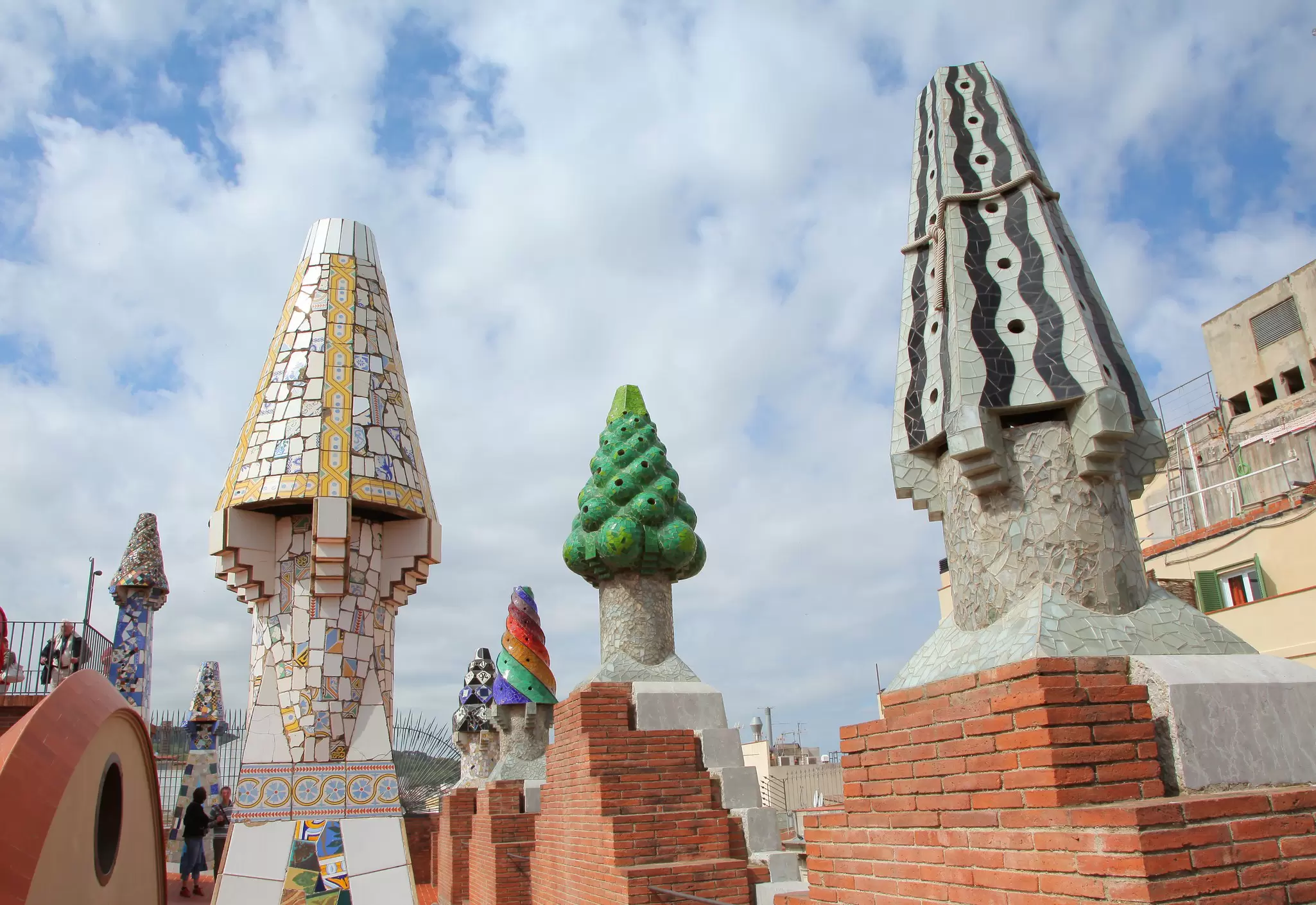
The Central Hall is the heart of Palau Güell and the family home. It was used as a chapel, a performance space and a place for entertaining guests. Crowned by a parabolic dome at 17m high, it’s a magnificent, lofty space that lets in light from all angles. If you wait here for long enough, you may be lucky to hear the family organ begin to play. The music fills the entire space and gives you somewhat of an idea of what the Güell family concerts here must have been like. Your tour ends on the rooftop, via a path through the family bedrooms and the servants' quarters at the very top of the house. The unique undulating rooftop is one of the most whimsical spaces of the palace, topped with several fantastical chimneys, decorated in Gaudí’s signature brightly colored mosaics. It also offers a fabulous view over the Barcelona skyline from the Torre Glòries all the way to the Olympic Ring on Montjuïc.