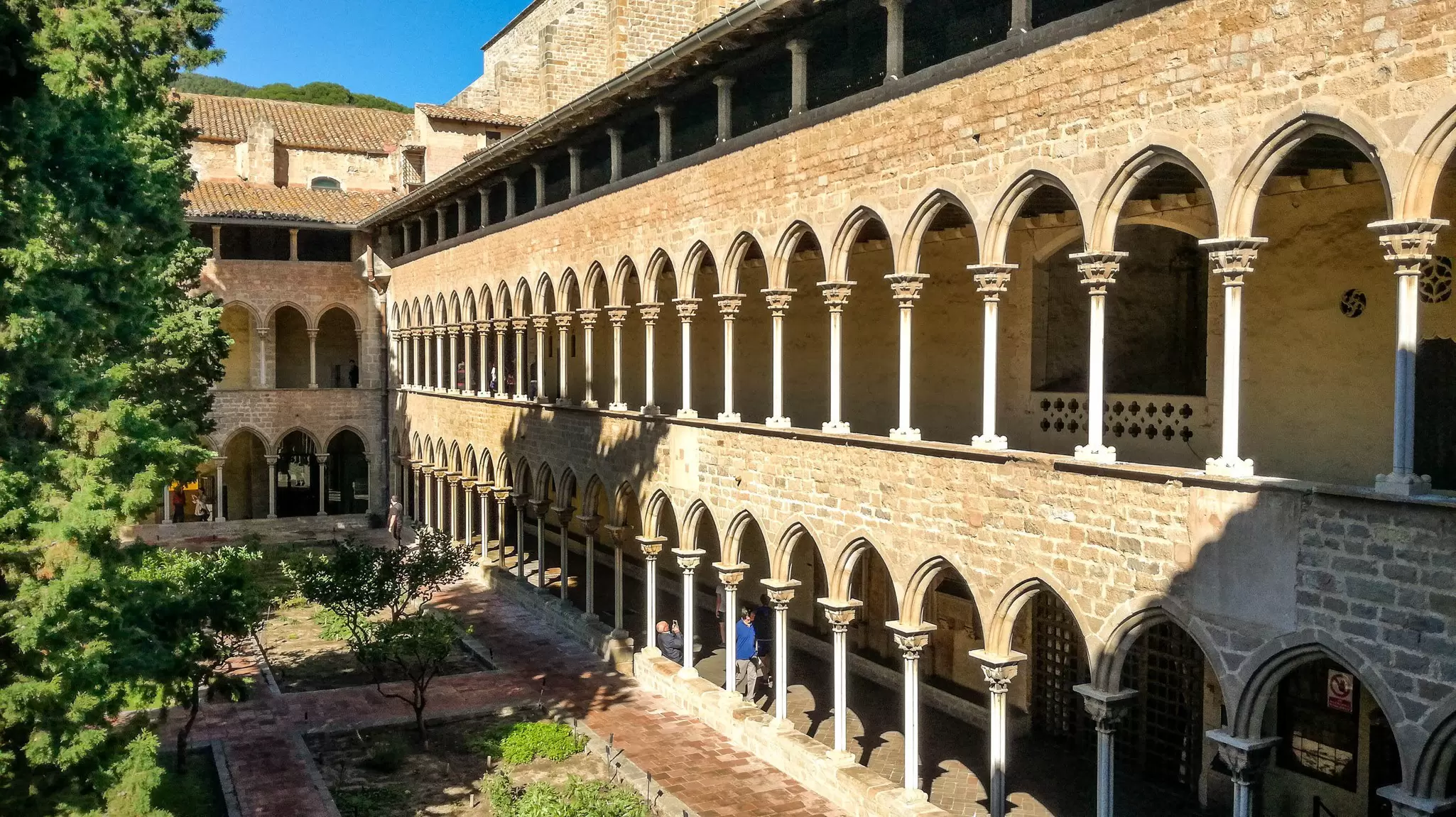
The Monastery of Pedralbes is set in a leafy and quiet corner of the city in the foothills of the Collserola. It was founded by Queen Elisenda de Montcada in 1327 and was occupied for six centuries by Franciscan Order nuns. This huge complex is one of the best examples of Catalan Gothic architecture, particularly its majestic three-story cloister.
La Capella de Sant Miquel
On your journey around the Reial Monestir de Santa Maria de Pedralbes, the first room you’ll come to is also one of the most spectacular. The tiny chapel of Sant Miquel is covered from floor to ceiling in an incredible showcase of brightly colored frescoes. The murals were created in 1341 by the artist Jaume Ferrer Bassa, painter and miniaturist for the Crown of Aragón. The abbess at the time, Sister Francesca ça Portella, commissioned the work in order to decorate her private place of prayer. The entire chapel was restored to its former glory in a series of works from 2013 to 2018.
Tomb of Queen Elisenda
Near the chapel stands the decorative 14th-century tomb of Queen Elisenda, founder of the convent. Unusually, the marble sculpture of the queen is divided into two. The cloister side shows her dressed as a repenting widow, while the other part, inside the adjacent church, depicts her dressed in her royal garb.
The Cloisters
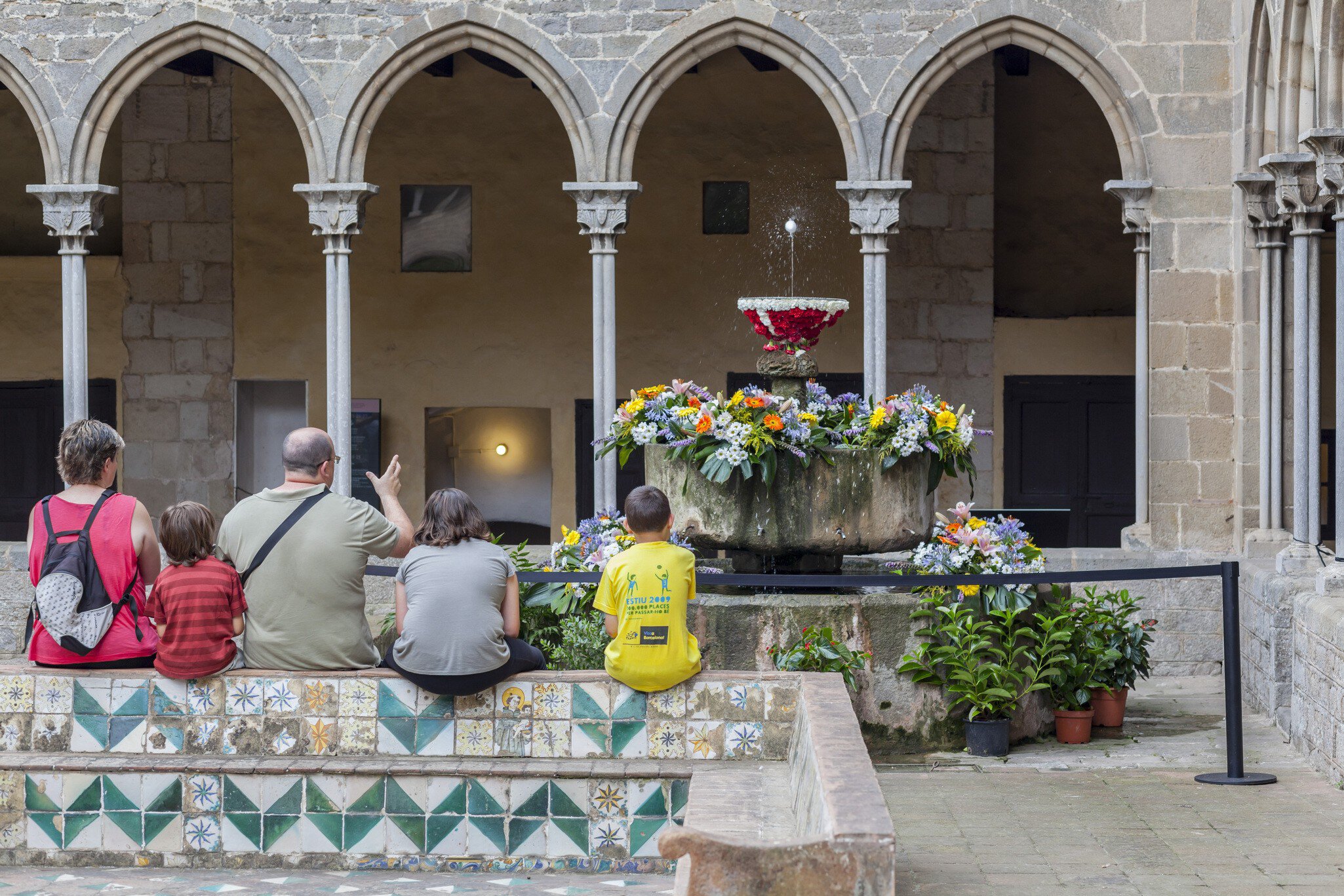
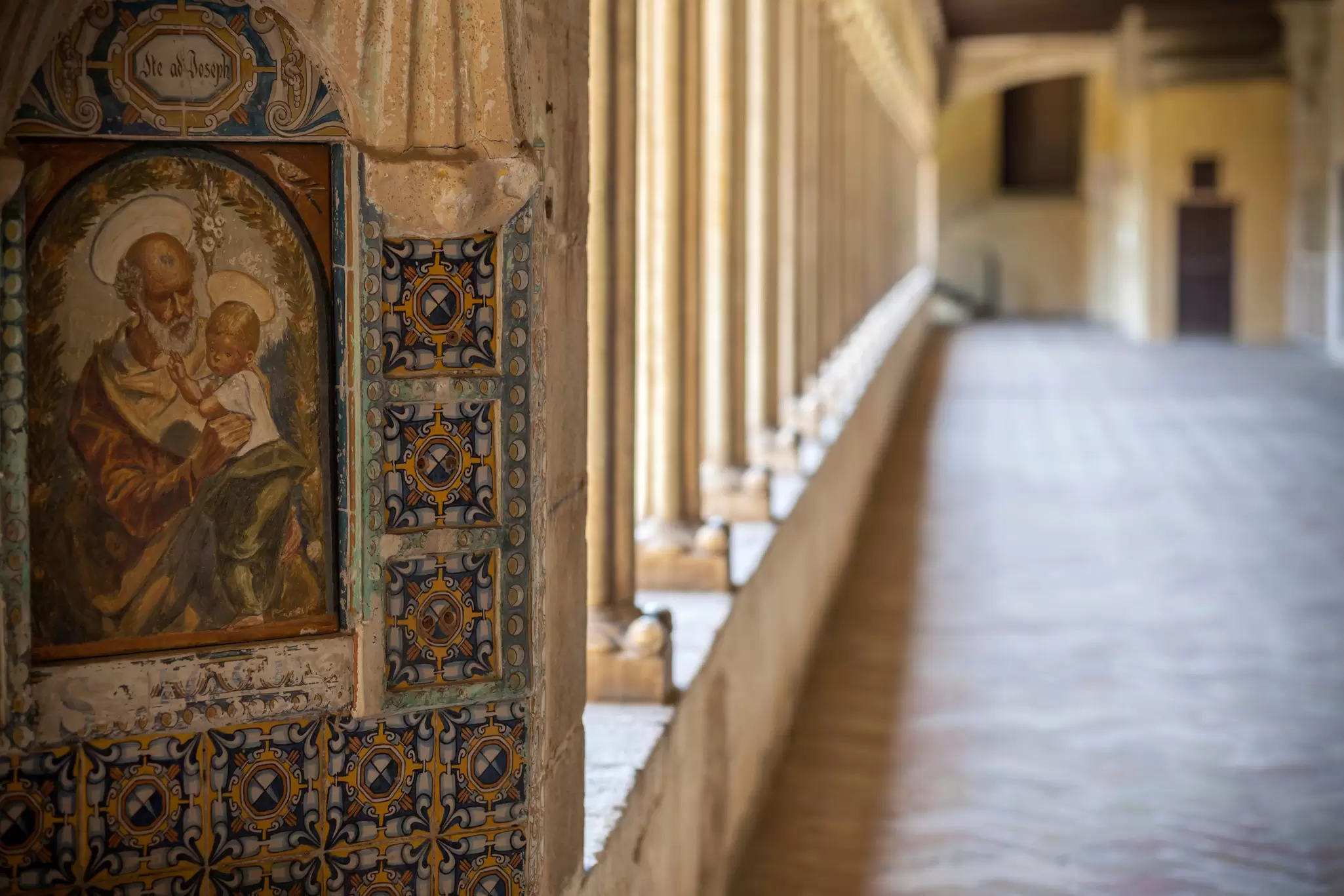
As you move from room to room and peer in the various cells and other spaces used by the nuns, one view is constant, that of the elegant cloisters. Considered to be the largest Gothic cloister in world, it has a total of 26 columns on each side. In the center is a fountain and medieval medicinal herb garden, grown the same way it was many years ago.
Monastery Treasures
Upstairs, the old monastery dormitories have been transformed into a magnificent open-plan exhibition space, housing some of its historical treasures, as well as religious paintings from the Thyssen-Bornemisza collection. The space is divided into different sections according to the historical period. Among the exhibits are intricate altarpieces, gold and silver work, and ornate wood-carved furniture.
Refectory, Kitchens & Storeroom
The cathedral-like refectory room is where the nuns ate their meals together all in silence, and it was refurbished in the 19th century. Behind this are the kitchens, used from the 14th century all the way up until 1983. The fittings date from a range of eras, including stone sinks from 1520 and bread ovens from the 19th century. A set of stairs leads down into the storeroom, used to store produce and house the wine cellar. The main highlight here, however, is the small room off the side featuring 24 beautifully intricate dioramas. They depict the life of Jesus, from his birth in Bethlehem up to his death on the cross.