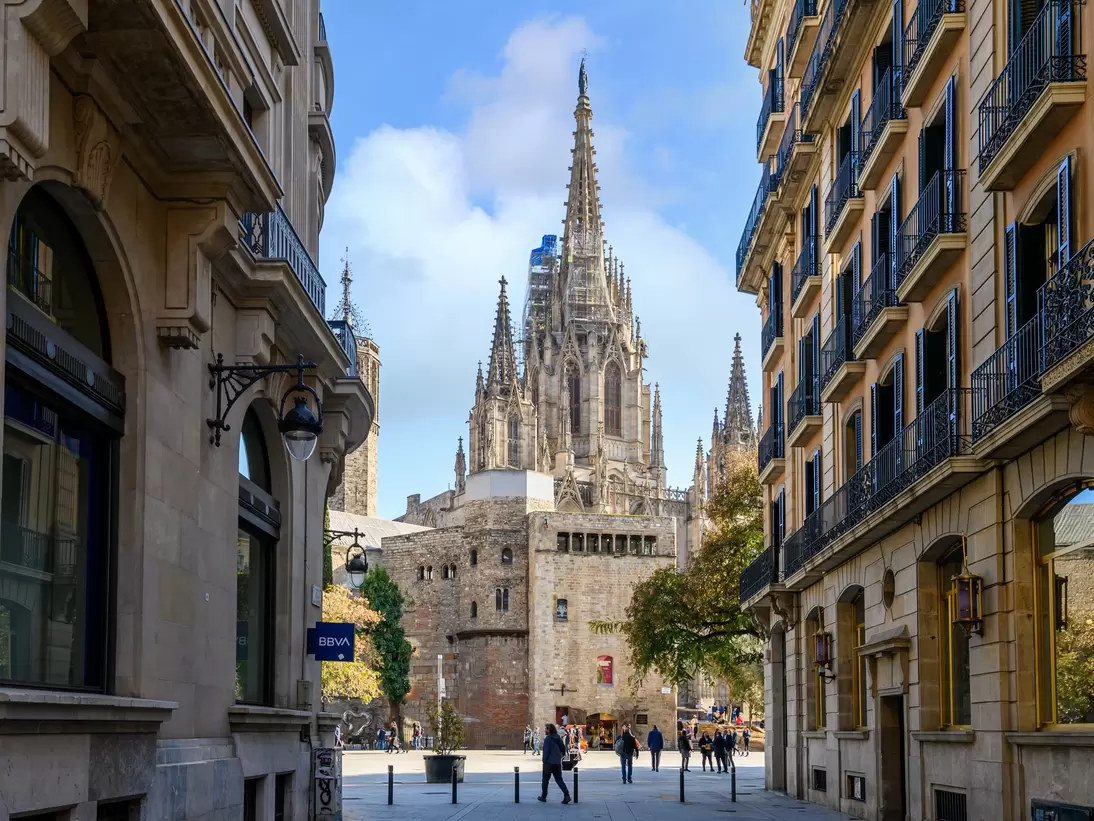
The Catedral de Barcelona is considered the most important place of worship in the city. Elaborate towers rise from the dense streets of the old town and a neo-Gothic facade looks out over the spacious plaza. Its interior was spared by the arsonists of the Spanish Civil War, preserving a sacred crypt and an enchanting cloister that echoes with the honking of 13 white geese.
The Facade
Before 1887, the Catedral de Barcelona had a completely different look. Today, concentric arches frame the large wooden doors and three tall spires rise above the surrounding buildings, and although it all appears very medieval, it is less than 200 years old. Walk around the back to understand the original plain appearance, where the only adornments are charismatic gargoyles.
The Interior & Crypt
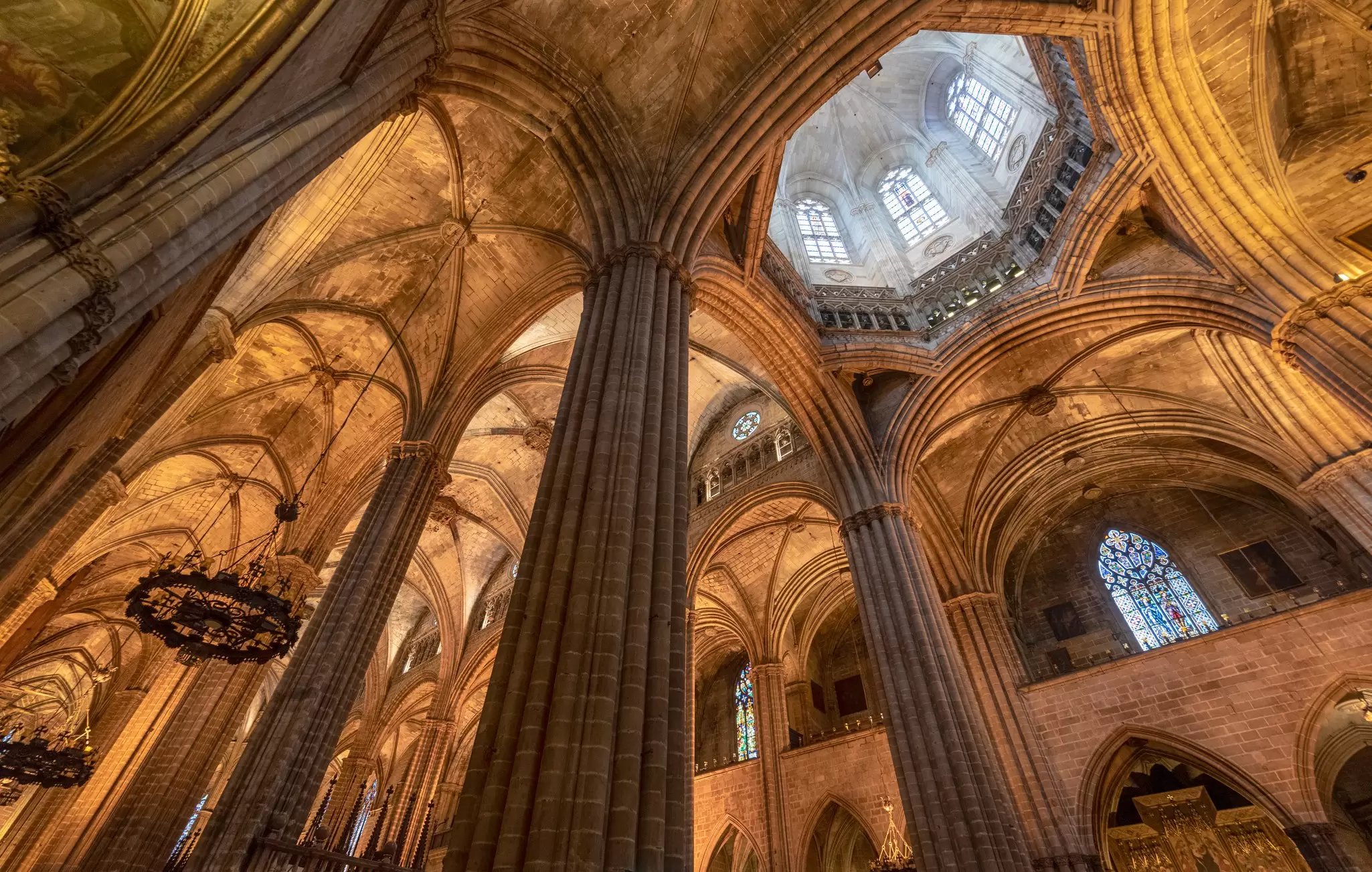
Inside, the mood contrasts the activity of people and flamboyant street performers outside in the plaza. Divided by two rows of slender pillars, there is a central nave with two chandelier-lit aisles on either side.
Sliding glass doors mark the entrance of the coro (choir stalls). Pay an additional fee or purchase the full ticket to access this, but note that it will be closed during worshiping hours even if you pay full price. Before entering, admire the detailed marble reliefs that tell the story of Santa Eulàlia.
The 14th-century timber stalls are carved with glittering coats of arms representing the Order of the Golden Fleece. The Holy Roman Emperor Carlos V presided over a meeting of this noble knighthood in 1519. Follow the staircase down to the Crypt of Santa Eulàlia where a sculpted marble sarcophagus recounts the saint’s journey of martyrdom to canonization and the search for her burial place.
The Rooftop
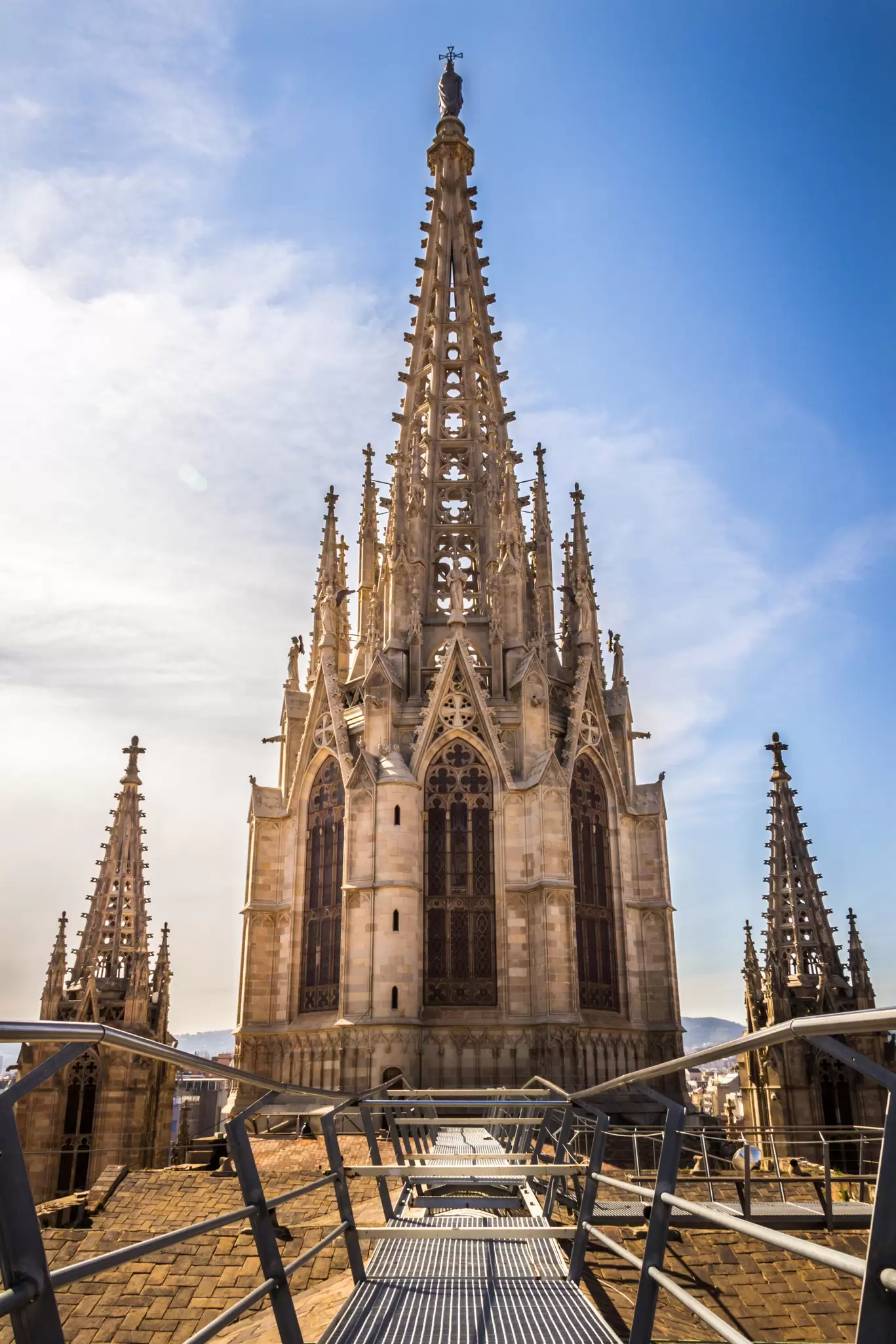
Take the elevator up to the rooftop for a panoramic view of the Barcelona skyline and to get an up-close look at the cathedral’s three towers. A central platform runs the entire length of the cathedral from which you can look for La Sagrada Família on the horizon.
The Cloister
To exit the church, pass through the Romanesque door to the right of the altar to the Gothic cloister. In the shady courtyard, meet the cathedral's long-term tenants, a flock of 13 white geese that represent the age of Santa Eulàlia at the time of her death. Their keeping has been a tradition since the Middle Ages. At the time of visiting, parts of the cloister were closed due to an ongoing archaeological project, and the Capella de Santa Llúcia, a reminder of Romanesque Barcelona, was also closed. However, with a full ticket you can also visit the small museum in the Chapter Hall and try the virtual-reality experience, which plays a short 360-degree video (available in English and other languages).
The Legend of Santa Eulàlia
During the 4th century BC, Eulàlia, a 13-year-old noble girl, marched into the city to speak out against the persecution of Christians under the Roman Empire. According to the legend, her arguments were too eloquent for the governor to debate and as punishment, she was forced to suffer 13 tortures. A shrine on Baixada de Eulàlia near the cathedral marks the site of one of the worst abuses, during which she was placed in a barrel full of knives and rolled down a hill.