Feb 23, 202614 min read
The 10 Best Things to Do in Jaisalmer, IndiaFeb 23, 2026
14 MIN READ

Writer
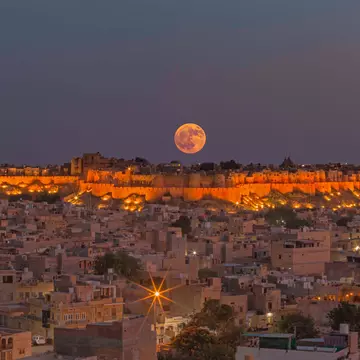
The moon rises over the walls of Jaisalmer Fort. Sayan Nath/Shutterstock

Writer
Highlights
Writer Prachi Joshi picks 10 Jaisalmer activities, from fort tours to desert safaris.
Walk Jaisalmer Fort's living lanes and seek out its seven Jain temples within.
For a spectacular desert sunrise, book an overnight camel safari to lesser-known dunes.
Admire Patwa-ki-Haveli's ornate carvings, then wander haunted Kuldhara village 18km away.
Lonely Planet may earn a commission from affiliate links on our site. All recommendations and reviews reflect our own independent opinions.
As you take the train across the Thar Desert in Rajasthan in northwestern India, the shimmering golden city of Jaisalmer rises up like a mirage, its massive, sandcastle-like fort looming large on the horizon. But having crossed the empty desert to get here, what are the best things to do in Jaisalmer?
Perhaps Rajasthan's most enchanting city, Jaisalmer swims with desert magic. Its 12th-century fort has stood the test of time, as have the many temples, family homes and businesses that still thrive within its thick walls. Beyond its sandstone battlements lie palaces, grand haveli homes and the ancient cenotaphs of Jaisalmer's medieval rulers, while camel safaris roam deep into the desert, offering a taste of the city's Silk Road heyday.
Jaisalmer continues to enchant visitors today, and its fort and old city are chock-a-block with shops selling local handicrafts and souvenirs. Yet beyond this raucous commercialism, Jaisalmer rewards anyone who travels here with enduring memories, thanks to its unique location, fairy-tale architecture and exciting range of desert activities.
This fascinating outpost is rightly regarded as one of the best places to visit in India, with plenty to keep visitors busy for days. Intrigued? Here is our pick of the best things to do in Jaisalmer, from touring historic buildings and temples to foodie experiences and riding into the dunes on camelback.
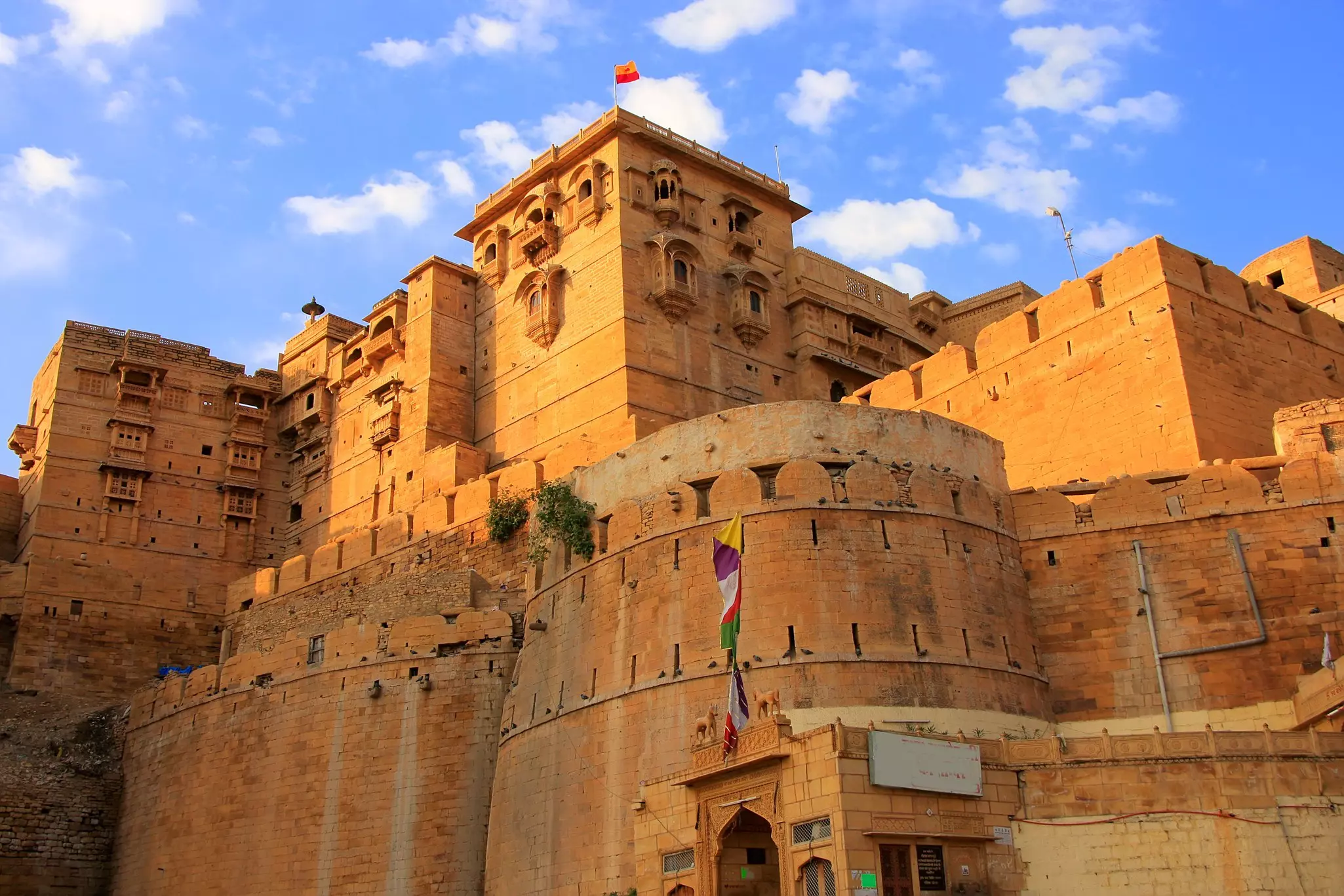
Jaisalmer is scorching hot during the pre-monsoon months of April and May, and often cloudy or rainy from June to August. Most visitors find that the cooler winter season from October to March is the best time to visit Jaisalmer. Daytime temperatures are pleasant and rain is rare, though evenings can be quite cold. Remember to pack warm layers, particularly for a Jaisalmer desert safari.
At any time of year, bring sunscreen and mosquito repellent for early mornings and evenings. Book well ahead to secure accommodation during the Jaisalmer Desert Festival in January or February, and during the Diwali celebrations in October or November, when large numbers of holidaymakers arrive from Gujarat.
If you are wondering how to plan a trip to Jaisalmer, the city sits far out in the Thar Desert, so getting here can take some time. The nearest major cities are Jodhpur, 270km southeast, and Bikaner, 330km northeast. Trains run daily to Jaisalmer's impressive new train station from Delhi, Jaipur, Jodhpur and Bikaner, but journeys can be slow, and some services arrive early in the morning, before hotels are ready to receive guests. Staff can usually provide you with tea while you wait for your room.
Overnight buses take as long as the trains, with less space to move about. Expect to take 12 hours or more to reach Jaisalmer from Jaipur by either bus or train. Many travelers choose to fly into Jaisalmer's small airport from Delhi, Mumbai or Jaipur to avoid a long journey by road – this is worth considering if you plan to fit a multiday camel safari into your Jaisalmer itinerary.
When deciding where to stay in Jaisalmer, you have several options. The old city is packed with hotels, most set in handsomely carved sandstone buildings. However, staying inside the fort is discouraged because of the impact on water supplies and the physical structure of the fortress; stick to the hotels in the lanes outside the walls. Jaisalmer's most luxurious hotels and tented desert camps lie outside the center, surrounded by peaceful desert scenery, but are less convenient for exploring the old city.
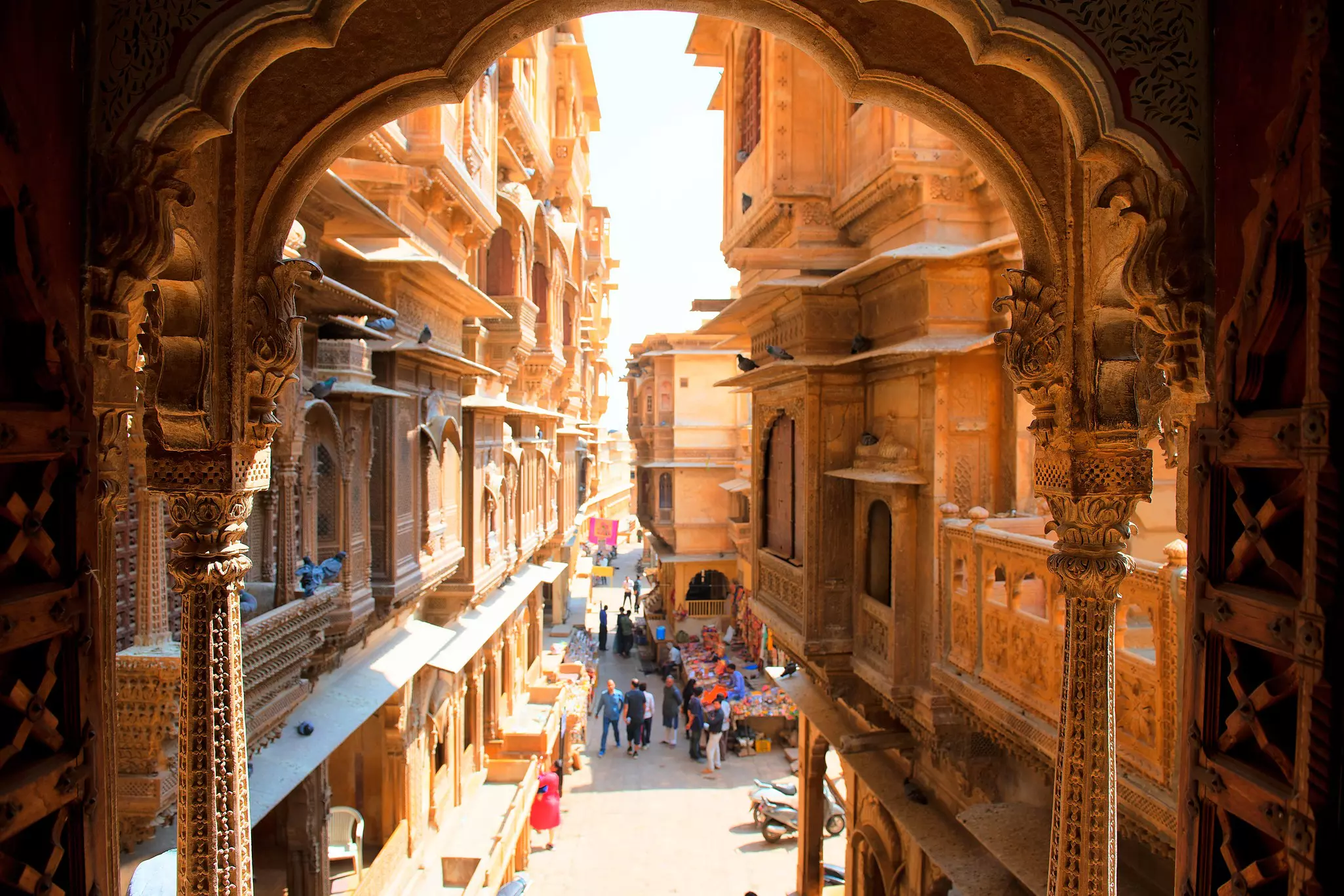
Built in 1156 by Rawal Jaisal Singh, Jaisalmer Fort is the second-oldest fortress in Rajasthan. With a dominant hilltop location and 99 fortified bastions, this golden sandstone citadel is visible from many miles around. Its honey-gold color gave it the name Sonar Qila (Golden Fort) – a moniker popularized in the 1970s, when filmmaker Satyajit Ray shot a Bengali film of the same name on location in the city.
Unlike other forts that are today used as hotels or museums, Jaisalmer Fort is very much a living space, with a quarter of the old city’s population still residing and working inside its walls. Walk in through its four huge gateways and you’ll encounter a flurry of activity along its labyrinthine alleys.
There are palaces, temples and havelis (mansions) to admire, souvenir shops to check out, restaurants and cafes to dine at and – yes – cows to dodge. At its heart is the Fort Palace, the royal residence of the ruler of Jaisalmer, combining elements of Rajput and Mughal architecture. After sunset, the lit-up fort makes for an impressive sight, best enjoyed from one of the rooftop restaurants nearby.
Planning tip: Within the fort, the Fort Palace Museum lets you delve into the city's cultural and historical heritage. The maze-like chambers display a vast range of weaponry and armor, royal costumes, paintings and sculptures, plus an impressive collection of Rajasthani turbans.
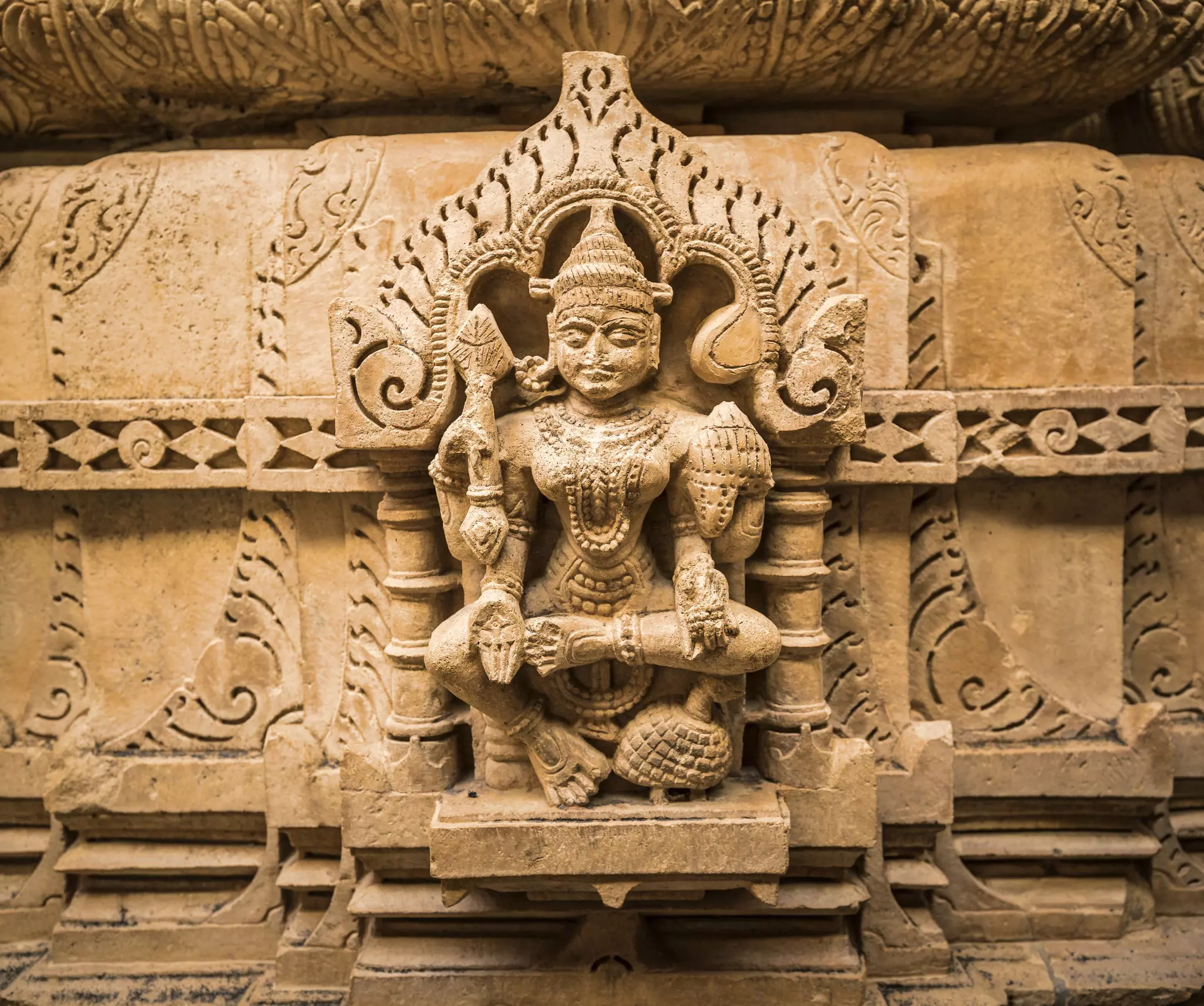
A highlight of any trip to Jaisalmer is a visit to the seven interconnected Jain temples in Jaisalmer Fort. Dating from between the 12th and 15th centuries, and carved out of local sandstone, these stunning structures have soaring spires, scalloped arches and intricate filigree work on their walls, with each temple dedicated to a different tirthankar (Jain spiritual teacher).
Rishabhdev Temple – dedicated to the first tirthankar – is one of the oldest, dating back some 900 years. Parshvanath Temple, dedicated to the 23rd tirthankar, is particularly interesting; look up at the ornate ceiling, with a sculpture of a demon-like head with four bodies arranged in a circle, representing the five negative attachments that keep humans from achieving liberation.
The temple complex also houses the Gyan Bhandar library, which has a large collection of rare Sanskrit and Prakrit manuscripts written on palm leaf, with painted wooden covers. However, it opens erratically, so ask when you visit.
Planning tip: The temples are open to visitors from 8am to around 2pm. You will need to remove your shoes and all leather items like belts before entering. A single entry fee covers all seven temples; you can photograph the architecture but not the deity images inside the temples.
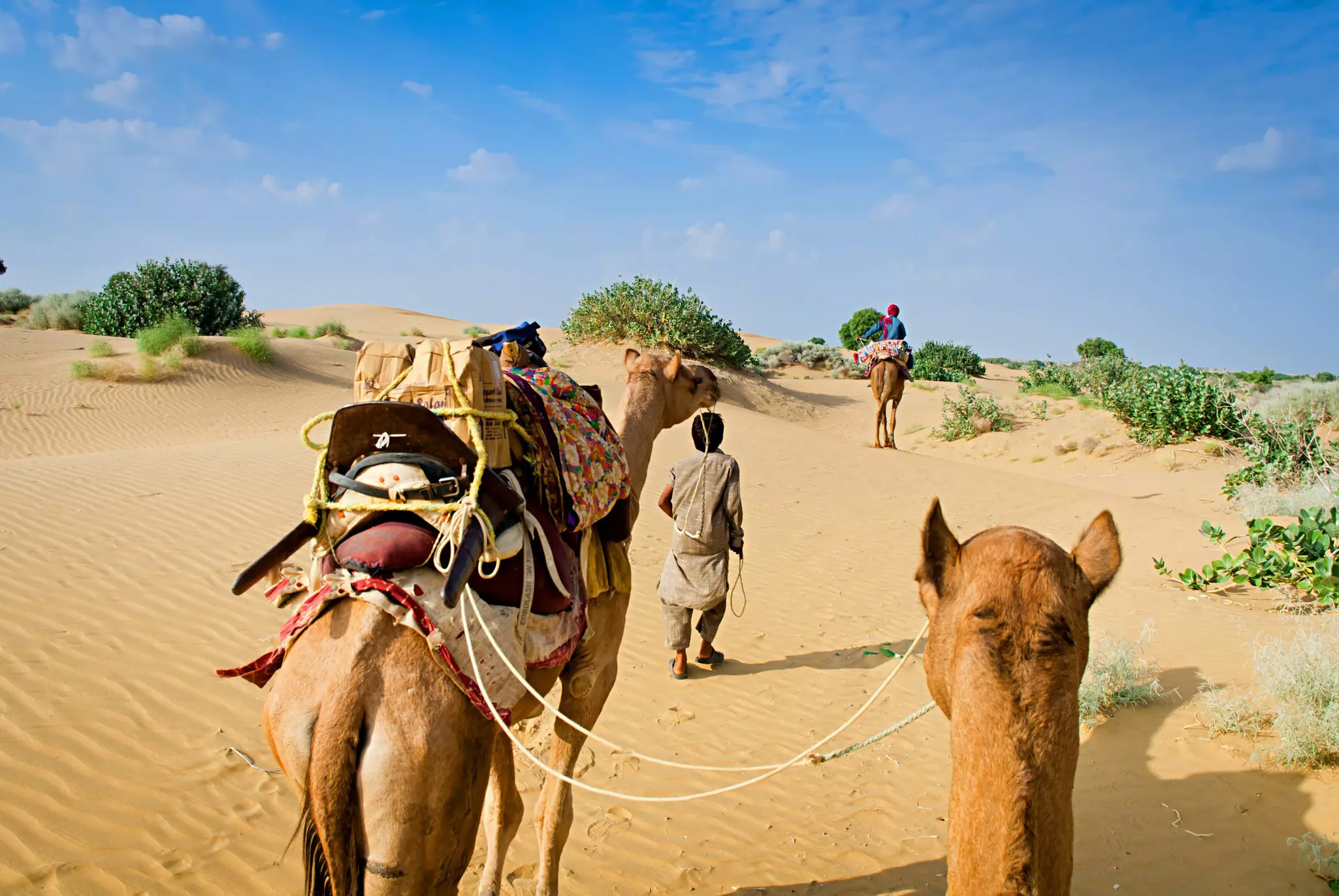
About 40km from the city, the Sam Sand Dunes are one of the top attractions near Jaisalmer. These towering dunes make for a majestic sight, one that’s particularly evocative around sunset when they are bathed in hues of gold and orange. However, this is a very touristy spot, luring big crowds of people, and you will be accosted by locals performing folk music and dances, selling trinkets and offering camel rides around the dunes.
To get a true taste of the vast desert, head out on a longer overnight camel safari – many operators run so-called "non-touristic" safaris to lesser-known corners. Here, alongside the captivating landscape and shape-shifting sand dunes, you may spot desert animals such as vultures, blackbuck and desert foxes. You'll also encounter desert culture in the dry, dusty villages you pass through.
While you can get a taste of the desert in half a day, the best option is to choose an overnight camping package. These typically include a traditional meal, a cultural performance, a stay in a desert camp or in a camp bed erected under the stars, and – best of all – the chance to wake up to a spectacular sunrise. Trotters and Sahara Travels are trusted, responsible desert safari operators.
Local tip: If you’re the adventurous sort, other adrenaline-pumping activities include dune bashing, quad biking and parasailing in the dunes.
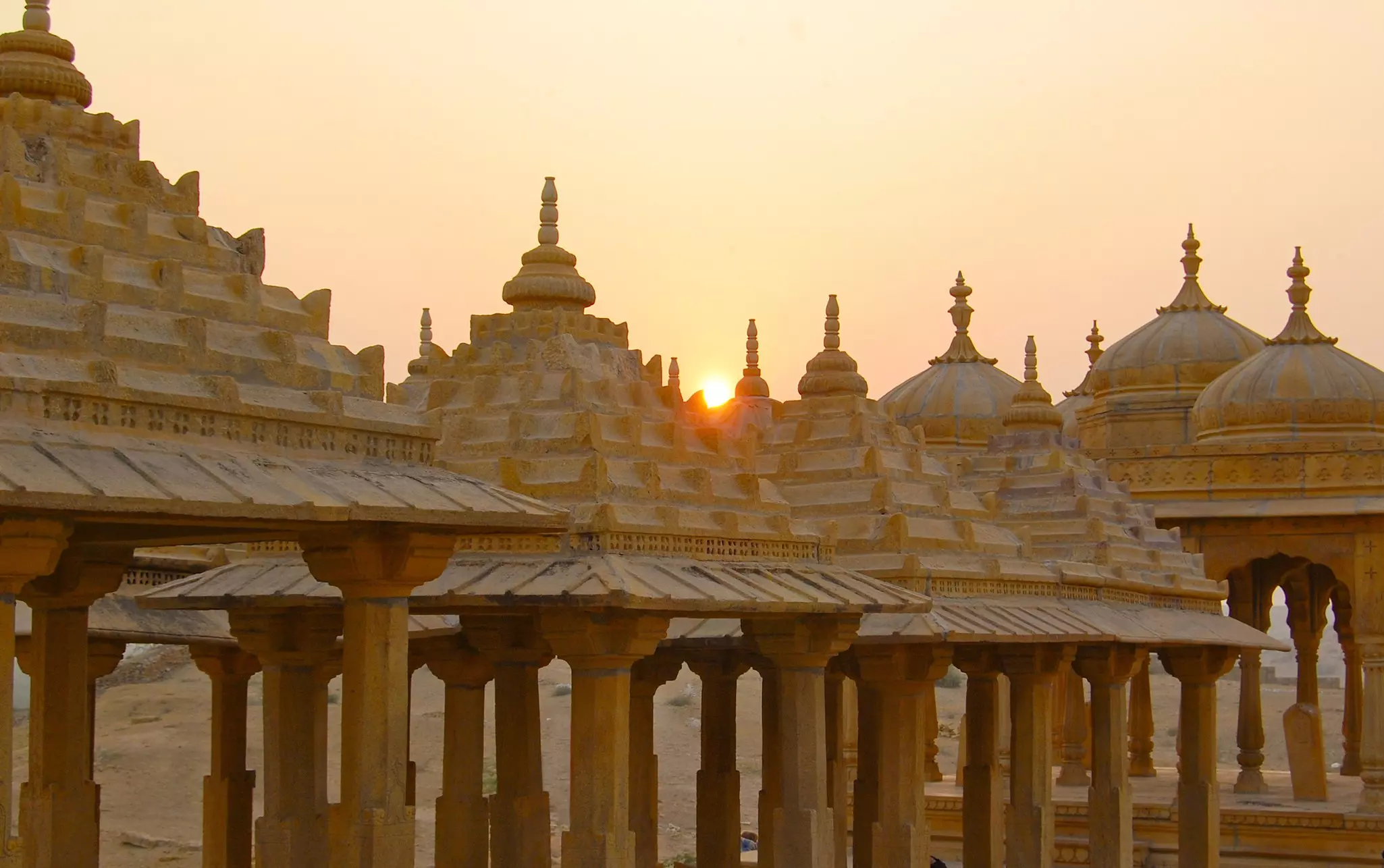
On a small hill on the outskirts of the city, Bada Bagh is a huge complex of sandstone chhatris (cenotaphs) topped by domed roofs. Erected between the 16th and 20th centuries, these memorials honor the maharajas of Jaisalmer and other royal family members.
Each cenotaph has a beautifully carved ceiling and a marble slab with inscriptions about the deceased, along with a corresponding symbolic image. The cenotaphs are scattered all around Bada Bagh, their domes rising in a variety of shapes – square, circular and pyramid-shaped.
This is a popular photography spot and offers a dramatic backdrop (albeit one slightly marred by the wind turbines that have popped up behind the monuments). Bada Bagh can get quite crowded in the evenings, so arrive early in the morning for peaceful views of the sunrise.
Detour: About 6km from Bada Bagh stand the Vyas Chhatris, another impressive collection of sandstone cenotaphs, erected as memorials by a clan associated with the sage Vyasa, the purported author of the epic Mahabharata. Perched on a hilltop, the complex offers panoramic views of Jaisalmer and the surrounding desert; sunrise and sunset views are particularly breathtaking.
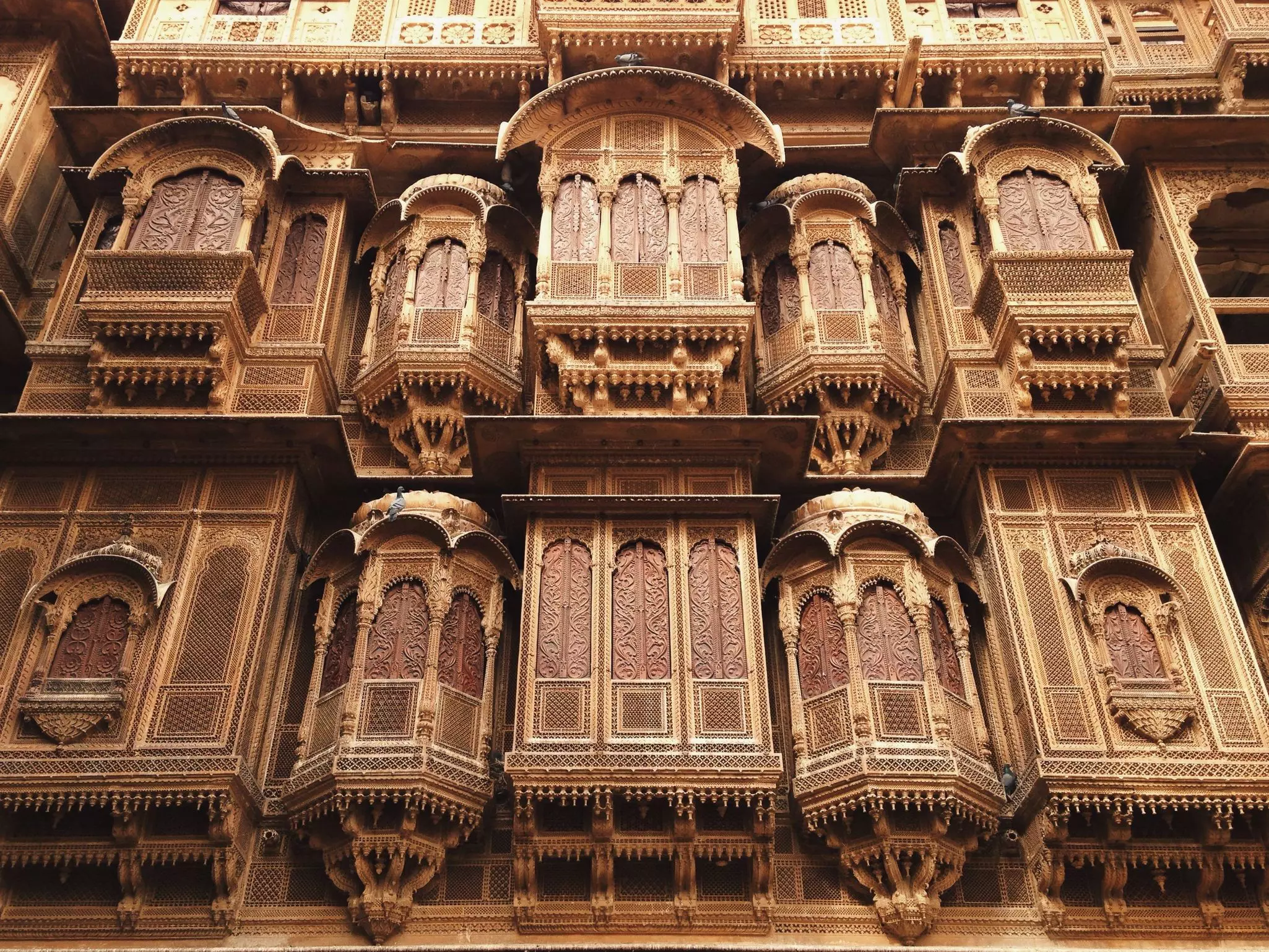
The old city is awash with handsome havelis – mansions that belonged to wealthy merchants. These lavish homes were built both inside and outside the fort, and are adorned with intricate carvings, ornamental arches and beautiful jharokhas (balconies).
The largest and grandest of them is the 19th-century Patwa-ki-Haveli, a cluster of five mansions built by five Jain brothers who traded in gold and silver brocade. Two of the houses have been converted into museums; Kothari’s Patwa-ki-Haveli Museum is a treasure box of family heirlooms and murals, while the nearby Department of Archaeology Museums features empty rooms full of intricate stone carving. Head to the rooftops for old city views.
Some 500m away, the distinctively shaped Salim Singh-ki-Haveli has an arched roof and carved brackets in the form of peacocks. Closer to the fort, don’t miss the Nathmal-ki-Haveli with its exquisite blend of Rajput and Mughal architectural influences. Majestic sandstone elephants stand outside its carved door, with exquisite frescoes and mirror work inside; ask the resident souvenir vendors if you can view the interior.
Planning tip: Inside the fort, the Baa Ri Haveli is packed with family treasures, with sweeping city views from its rooftop. You can pose for photos in a fabric-filled living room downstairs.
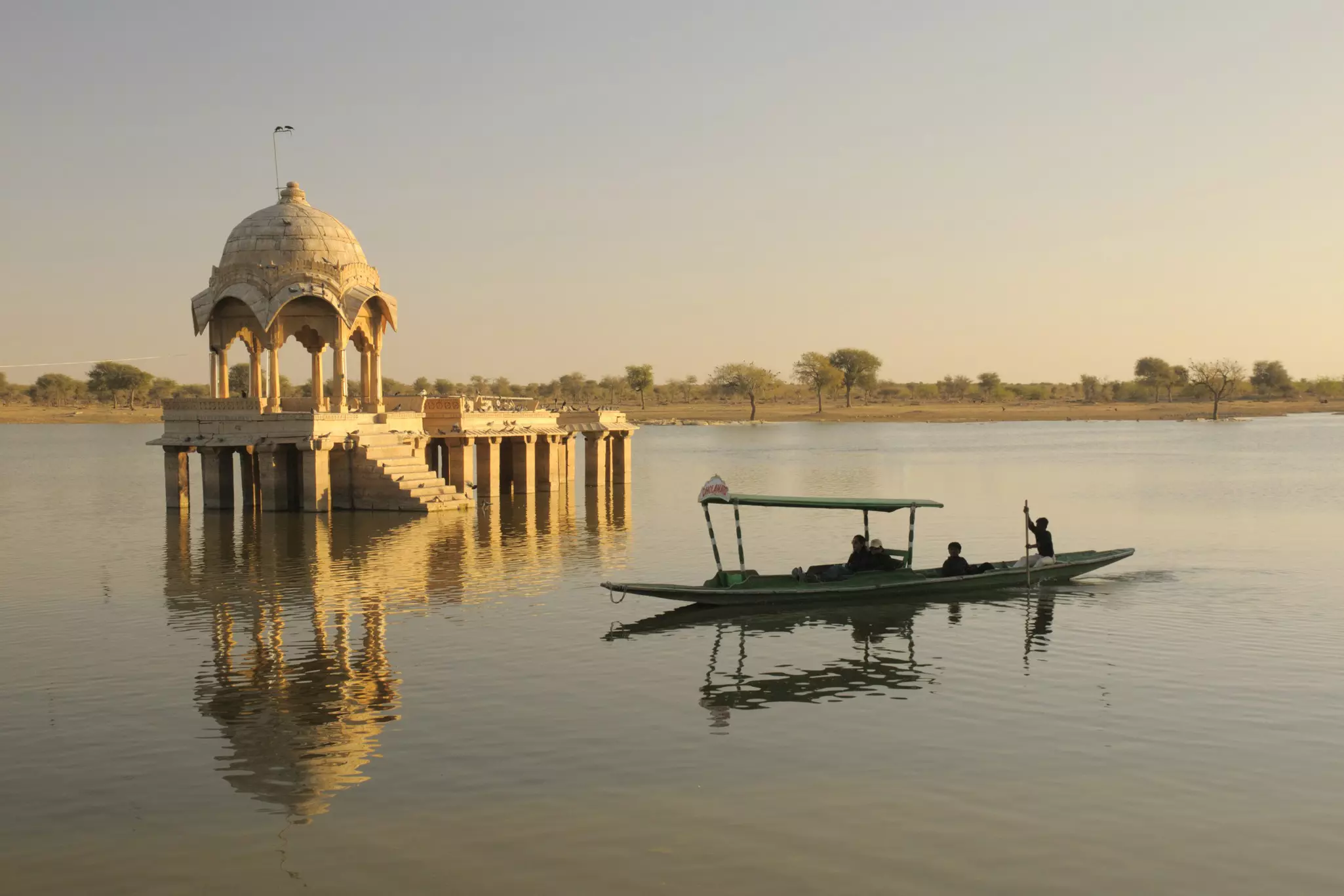
Located on the southeastern edge of the city, Gadi Sagar (Gadisar) Lake was constructed by Rawal Jaisal in 1156, and later rebuilt in the 14th century by Rawal Gadsi Singh Bhati. Until 1965, the lake was the city’s only source of water – and, indeed, it never runs dry as it is fed by the Indira Gandhi Canal, which runs from Punjab to Rajasthan.
Fringed by temples, cenotaphs and ghats, and fronted by a memorial gateway, the picturesque lake provides a lovely setting for a tranquil stroll. If you fancy, rent a paddleboat for a spin across the water. In winter, you may spot wedding photographers snapping newlyweds in the pavilions out on the water, along with migratory birds, which stop here en route to the bird sanctuary at Keoladeo National Park near Bharatpur.
Local tip: A few minutes from the lake, the Desert Culture Centre and Museum showcases regional musical instruments, traditional jewelry and textiles, medieval coins and Rajasthani crafts. It also puts on puppet shows in the evening.
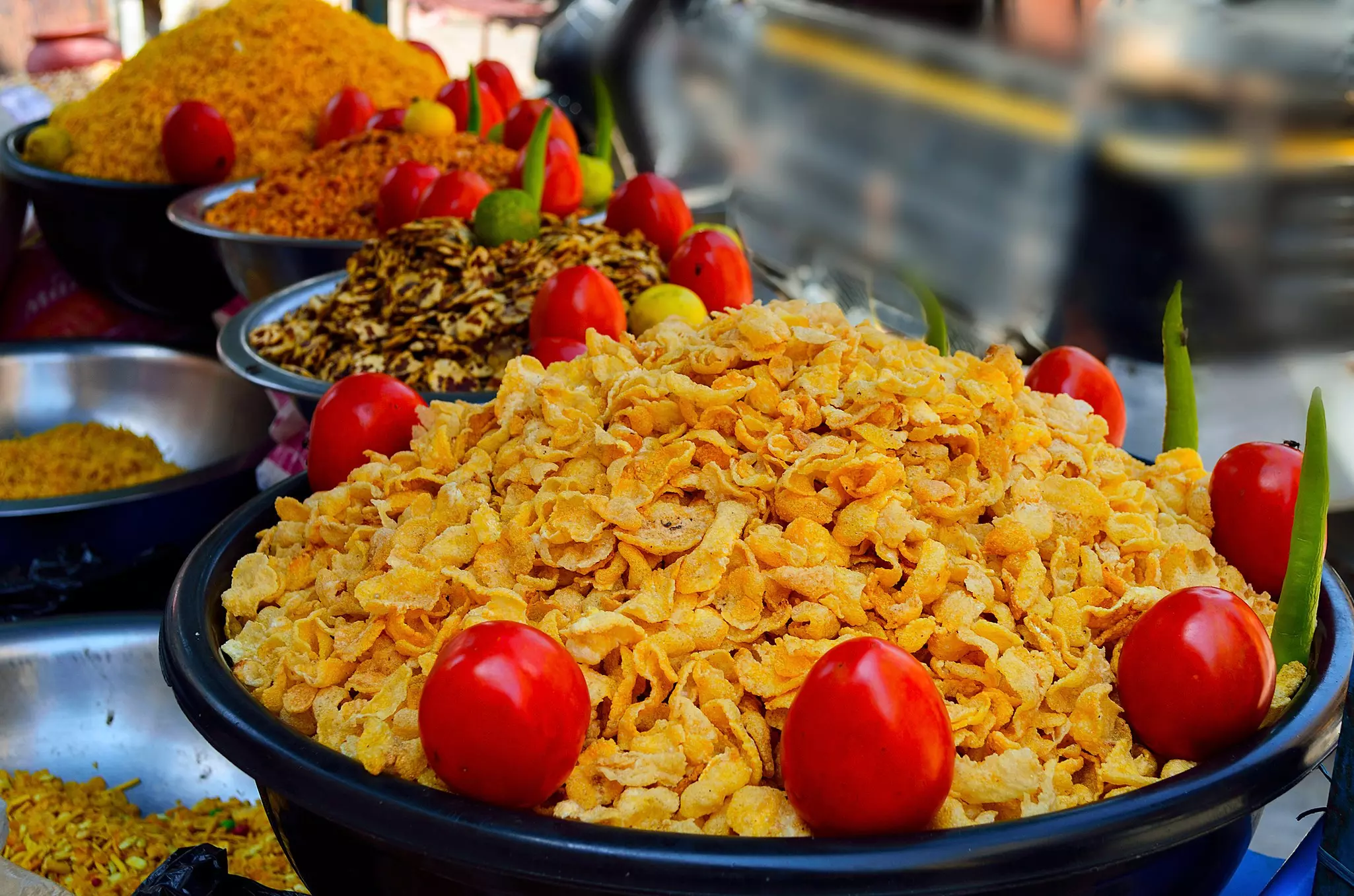
Jaisalmer cuisine is influenced by the scarcity of water and fresh vegetables. Distinctive local dishes to look out for include ker sangri, a tangy preparation of desert beans and capers, and gatte ki sabzi – chickpea dumplings in a yogurt-based gravy.
Another Rajasthani staple is dhal bhatti churma, a combination of spicy lentils, deep-fried dough balls and sweetened crushed wheat. Don’t miss sampling some laal maas, a Rajasthani delicacy of goat meat cooked with spicy red chilis.
Some of the best Rajasthani-style thalis (plate meals with rice or chapati bread and multiple sauces) can be had at The Trio Restaurant on Gandhi Chowk Rd, the rooftop Saffron Restaurant at Nachna Haveli, the cozy KB Cafe opposite Patwa-ki-Haveli, and The Legend of Marwad at the luxury Suryagarh hotel, located 13km west of the city.
Planning tip: If you want a break from rich Rajasthani food, Jaisalmer is dotted with charming rooftop restaurants where you can find a mix of Indian, European and Asian cuisines. Try Jaisal Italy for quality pizzas and pasta, Cafe The Kaku for global cuisine, and the restaurant at the Gaji Hotel for Korean food.
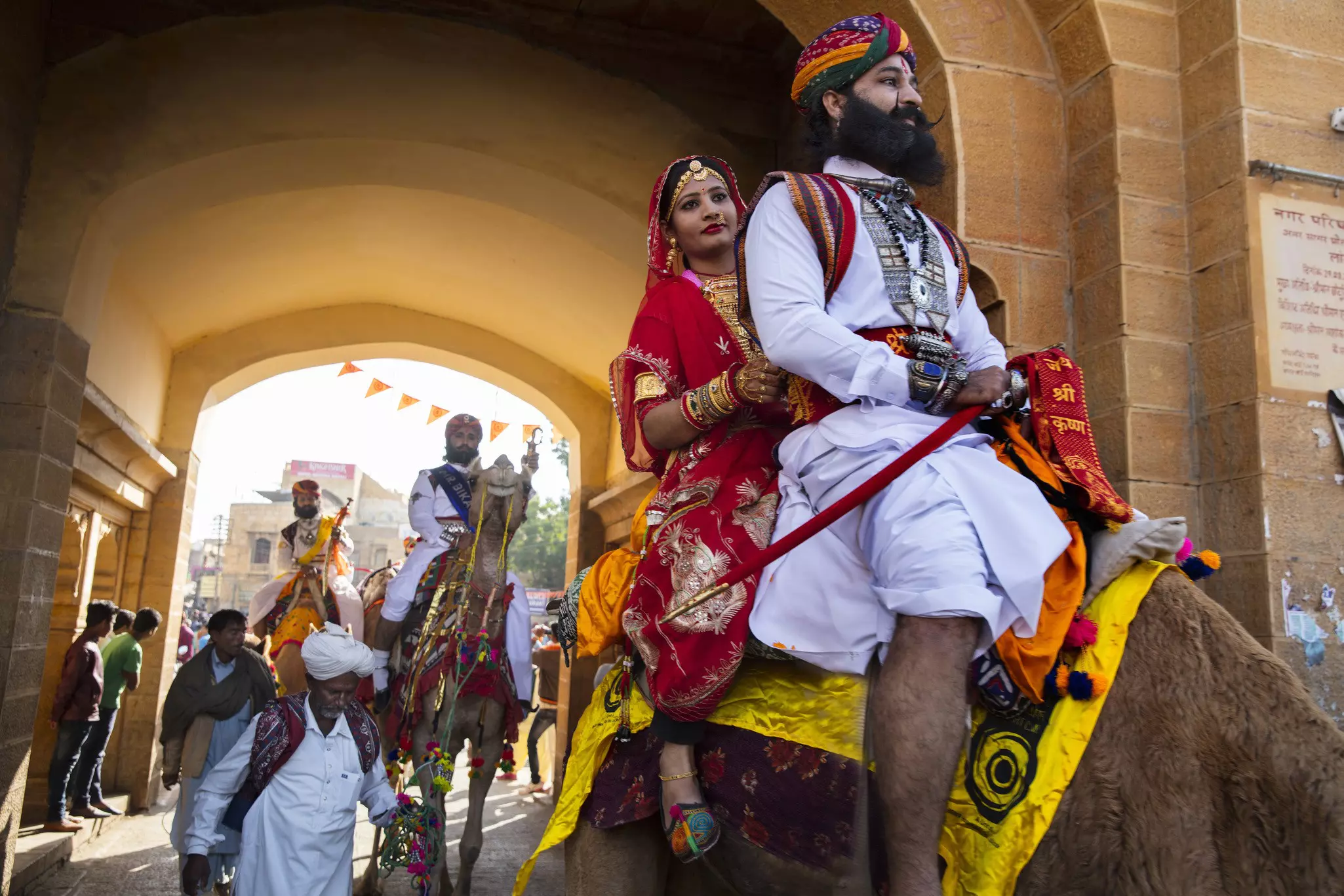
The annual Jaisalmer Desert Festival is a great reason to visit the city. Held over three days at the end of January or in early February (check ahead, as dates vary), the event showcases the rich heritage of the region. Expect traditional Rajasthani folk music and performances of spellbinding ghoomar and Kalbelia dances. The latter dance is particularly impressive as it is performed by members of the snake-charmer tribe, mimicking the movements of a serpent.
Another highlight is the camel parade, when camels adorned in colorful livery are led through the city streets. You can also watch unique competitions such as turban-tying contests, longest-moustache competitions and juggling events, as well as camel races and even camel polo. The evenings end with fireworks displays – a great way to celebrate this rich immersion in desert culture.
Planning tip: If you feel like getting more hands-on, join in the tug-of-war competition between visitors and local residents.
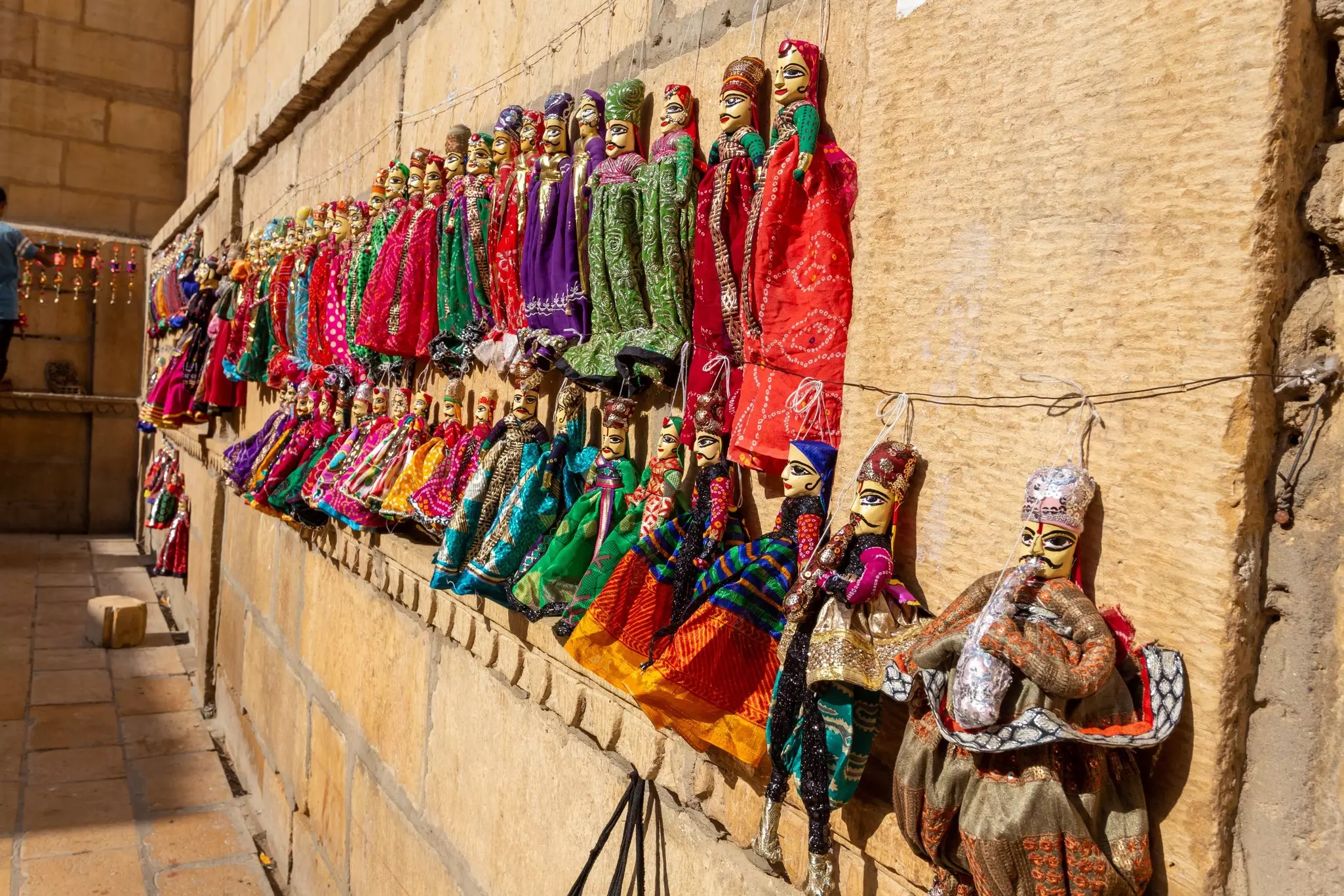
You’ll see examples of Rajasthan’s splendid craftsmanship in Jaisalmer’s many bazaars. Shops and stalls sell everything from embroidered fabrics and traditional silver jewelry to handcrafted leather items, traditional Rajasthani puppets, and gifts made from buttery yellow Jaisalmer stone.
The narrow streets of Sadar Bazaar to the northwest of the fort should be your first stop, to peruse beautifully made leather bags and footwear and traditional paintings and textiles. The bazaar inside the fort's first gate is good for earrings, necklaces and bangles as well as colorful puppets, embroidered wall-hangings and other crafts.
If you want to play dress-up in traditional attire, Manak Chowk has a plethora of clothing shops; you can also stock up on spices and sample local snacks and sweets in this popular market. A couple of minutes from Salim Singh-ki-Haveli is Pansari Bazaar, one of the oldest street markets in the city, known for traditional souvenirs such as block-printed fabrics, wooden toys and unique jewelry.
Planning tip: While exploring Sadar Bazaar, stop into Chandan Shree Restaurant near Hanuman Circle for tasty veg fast food, from filling thali plate meals to tasty chaat (snacks).
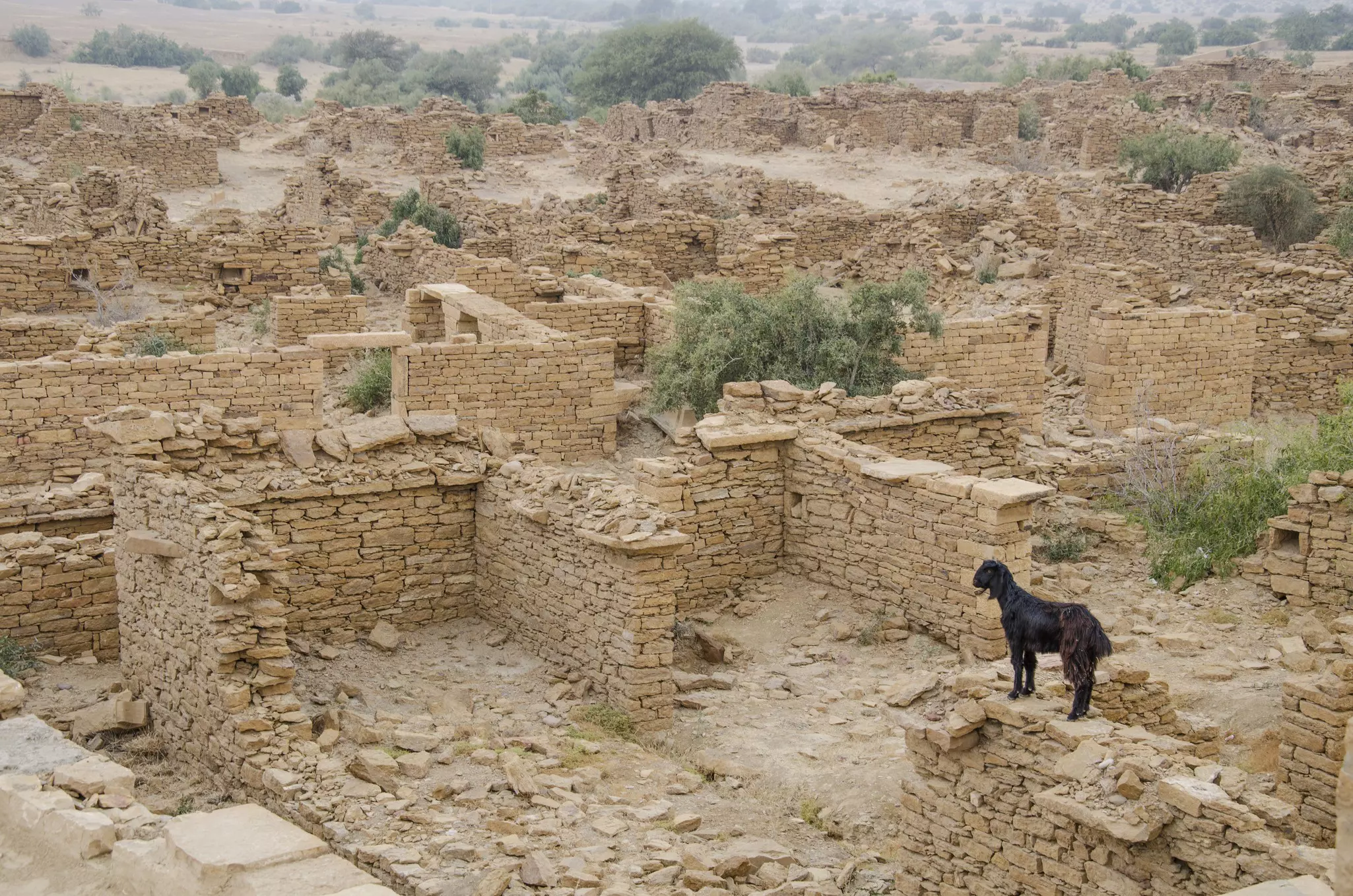
Established in the 13th century, the ghost village of Kuldhara, 18km from Jaisalmer, was once a thriving and prosperous village of farmers, traders and artisans – before it was abruptly abandoned in the 19th century. The reason for this sudden departure remains unknown: perhaps the water supply was dwindling, or the village was hit by an earthquake?
However, local legend tells a different story. As the tale goes, a Jaisalmer minister was determined to marry the daughter of the village chief, who was threatened with dire consequences if the marriage did not happen. To protect the daughter’s honor, the townspeople abandoned the village overnight, placing a curse on it for good measure.
Today, Kuldhara stands in ruins, and visitors can explore the remains of village houses, temples and community structures. Given the legend and the creepy vibe of the ruins, the place has acquired a reputation for being haunted, with visitors reporting apparitions, eerie noises and other paranormal activity.
Planning tip: Combine a day trip to Kuldhara with a detour to nearby Khaba Fort, a restored medieval fortress backed by its own evocative abandoned village.
Explore related stories