History
To really understand the Munich of today, you have to delve into the city of the past, a past reflected in the city's very fabric – every ruler and period has left a mark – from the medieval gates of the Bavarian dukes to the Olympic stadium and Hitler's austere additions to Ludwig I's grand Königsplatz. Often turbulent, the phrase 'all's well that ends well' certainly applies to Munich, today one of the most affluent places on the planet.
In the Beginning
As far as European cities are concerned, Munich is a relative newcomer. It was Benedictine monks, drawn by fertile farmland along the flood plain of the Isar River and the closeness to Catholic Italy, who settled in what is now the Munich area. This may have been as early as the 8th century, but no records have survived. The city derives its name from the medieval Munichen meaning ‘monks’. So the official year zero in Munich is 1158 when the Imperial Diet in Augsburg sanctioned the rule of Heinrich der Löwe, and Munich the city was born. However, Munich had to wait another two decades to gain city status, after which it was permitted to erect defensive fortifications.
Wittelsbachs & the Salt Trade
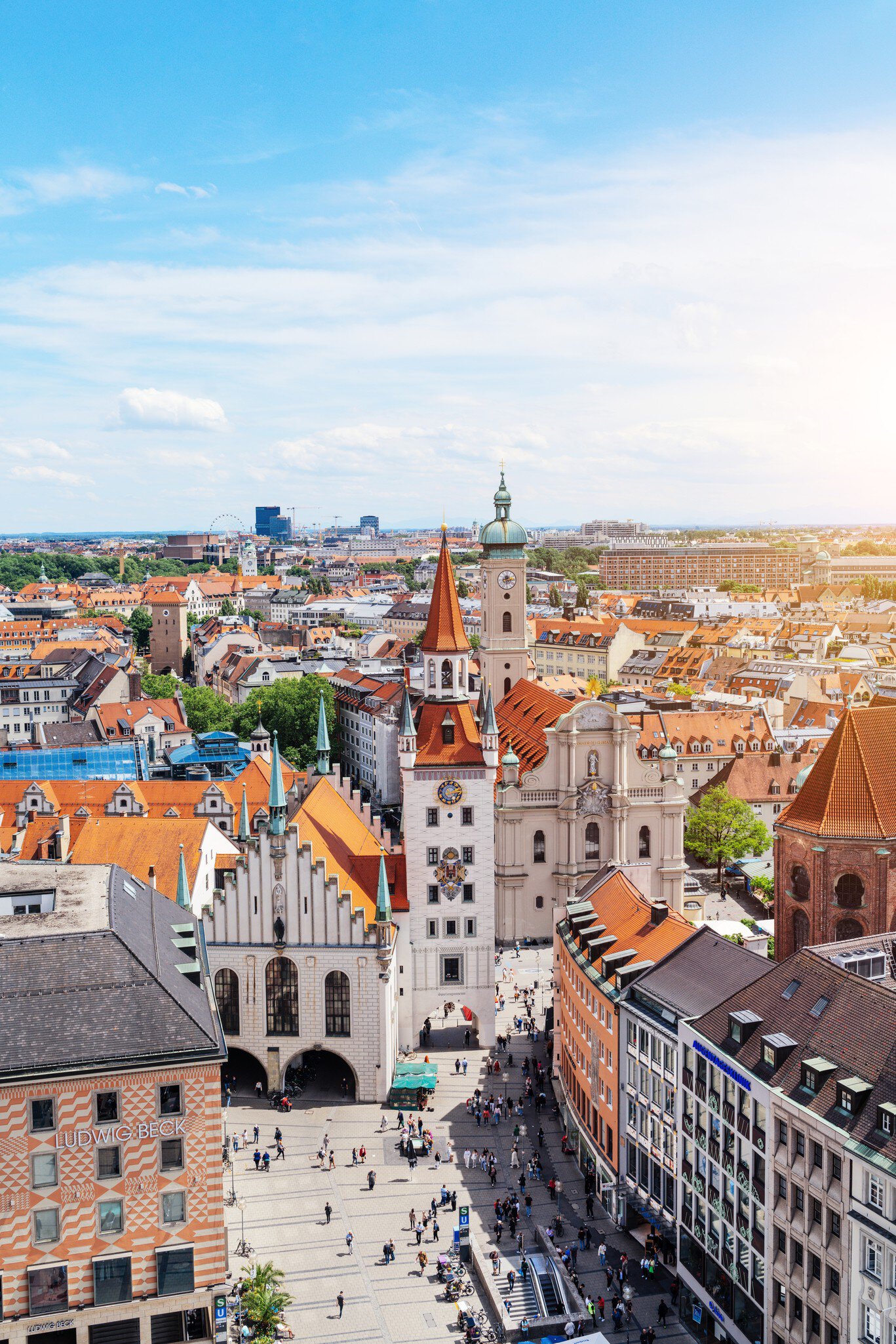
In 1240 the city passed to Otto I Wittelsbach, who became Duke of Bavaria. Otto I was the first ruler from the House of Wittelsbach, Bavaria’s first family which, somewhat incredibly, would govern Munich (and Bavaria) until the 20th century, an unprecedented innings in turbulent central Europe. The year 1327 saw the entire timber city destroyed by fire, but it was soon rebuilt. By the 1330s Munich had recovered enough to be granted a monopoly on the salt trade by German king Louis IV – salt was the white gold of its time – and the city prospered from merchant activity. This came to an abrupt end in 1349 when the plague arrived at the city gates. The epidemic subsided only after 150 years, whereupon the relieved Schäffler (coopers) initiated a ritualistic dance to remind burghers of their good fortune. The Schäfflertanz is performed every seven years but is re-enacted daily by the little figures on the city’s Glockenspiel (carillon) on the central Marienplatz.
Capital of Bavaria
Since 1255 Bavaria had been split into two with Munich serving as the capital of Upper Bavaria. In 1506 the two halves were reunited and Munich took on the role of Bavarian capital, a position it still holds to this day. Munich was not immune to the religious strife that plagued central Europe from the 15th century until the end of the Thirty Years’ War. Bavaria’s rulers were active in the counter-reformation, inviting the Jesuits to build the Michaelskirche and their huge college next door. During the Thirty Years’ War the city was occupied by King Gustav II Adolph of Sweden whose forces swept through all of central Europe. To make matters worse, the bubonic plague hit the area in the mid- 1630s, wiping out around a third of the population. The effects of the war and the plague made economic recovery following the Peace of Westphalia in 1648 a long journey.
Baroque & the Habsburgs
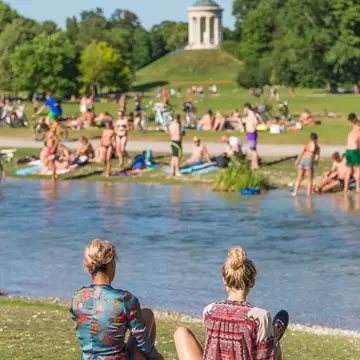
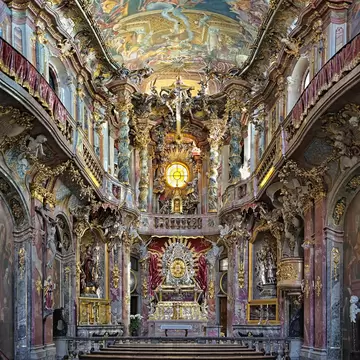
It took decades for Munich to find its feet again, but soon the city was buzzing once more, and the new trend in staunchly Catholic Munich was Baroque, brought from Italy by locals educated there and Italian architects and artists. In the early 18th century, during the War of Spanish Succession, Munich came under Habsburg occupation, as it did again in 1742. The Austrians were never popular, and revolts and riots broke out in protest. In 1759 Maximilian III Joseph made peace and set about making the city prosperous again. In the late 18th century the old medieval fortifications were torn down and it was at this time that the English Garden, one of the world’s largest city parks, was established on what was then the eastern outskirts. With the walls gone, Munich grew into one of the continent’s largest settlements.
Kingdom of Bavaria & the 19th Century
It was a strategic pact with Napoleon that allowed Bavaria’s rulers, Maximilian I Joseph and his powerful prime minister Montgelas, to raise Bavaria’s status from Dukedom to Kingdom in 1806. The duke was promoted to king overnight and the Kingdom of Bavaria was born. The move created new and important institutions in the city – the university was moved from Landshut, the archdiocese of Freising and Munich was formed, and a new parliament was elected. Serfdom was abolished in 1808, and that same year Bavaria acquired its first written constitution (the reforming second constitution came in 1818).
In 1810 crown prince Ludwig invited the city to celebrate his marriage to Princess Therese of Saxe-Hildburghausen. The huge bash on the Theresienwiese to the west of the city became the famous Oktoberfest, held annually ever since.
The 19th century was a confident period in Munich’s development with an explosion of monument building giving the Bavarian capital its spectacular architecture and wide Italianate avenues. Many of the city’s grandest facades were added by court architects working for Ludwig I and his son Maximilian II, most notably the Königsplatz. Things got out of hand after King Ludwig II ascended the throne in 1864, as spending for his grandiose projects, such as Schloss Neuschwanstein south of Munich, bankrupted the royal house and threatened the government’s coffers (though contrary to myth, the king only spent his own money, not the state’s). Ironically, today they are the biggest money-spinners of Bavaria’s tourism industry.
By mid-century the industrial revolution was in full swing – the first train trundled into Munich bang on time in 1839 (though Nuremberg trumped the capital by four years) and the lights came on in 1882. Arrivals from the countryside pushed the population from around 100,000 in the mid-19th century to half a million by the the first decade of the 20th century. Leisure arrived in the form of zoos, sports clubs, soccer and hiking, and the museums began to appear. There was also an explosion in the arts, with expressionists such as Kandinsky, writers such as Thomas Mann and, of course, Richard Wagner, active in the city. Kandinsky formed Der Blaue Reiter (The Blue Rider) group of artists in 1911.
The Nazi Era & WWII
Munich has seen turbulent times, but the first half of the 20th century was a particularly bumpy patch. The allied blockade of WWI practically starved the city to death, though Munich suffered little actual physical damage. When Ludwig III fled the city in November 1918, 700 years of Wittelsbach rule came to an end, but political unrest filled the power vacuum. One of the oddest periods in Munich’s history came in April 1919 when, inspired by the Bolshevik Revolution in Russia, the Bayerische Räterepublik (the Bavarian Soviet Republic) was declared following the murder of Prime Minister Kurt Eisner. The Republic sought independence from the new Weimar Republic but was stamped out by German troops in May 1919. These events may explain the Bavarians’ hatred of left-wing rule, which continues to this day. The Free State of Bavaria was established in August 1919.
In May 1913 an anonymous failed Austrian artist arrived to take up residence in Munich. Returning after Germany’s defeat in WWI, Adolf Hitler entered politics, joining the German Workers’ Party. As a charismatic rabble rouser, Hitler soon rose to the top of the party, giving his famously vitriolic beer hall speeches. In 1923 the failed Beer Hall Putsch landed Hitler in Landsberg prison, though he used his sentence to good effect, writing Mein Kampf during his year of incarceration. The Wall Street Crash and economic woes in Germany provided fertile ground for Hitler’s anti-Jewish rhetoric, and millions began to follow him. In 1933 the first concentration camp opened in Dachau. In 1934 Hitler became Germany's head of state, and in 1938 Chamberlain famously signed the Munich Agreement with Hitler, handing over the German-speaking areas of Czechoslovakia – the Sudetenland – to Nazi Germany. Hitler had big plans to rebuild Munich, but managed only the Haus der Kunst and a few buildings around the Königsplatz.
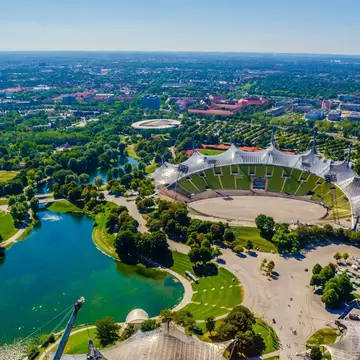
During WWII, Munich suffered over 70 air raids, which transformed countless historical buildings in the city centre into landfill (the rubble was used to create the Olympiaberg in the Olympiapark). Resistance to the Nazis was minimal, though the Weisse Rose group of students at Munich University is rare case of bravery in the face of a killing machine. Munich was liberated by the US Army on 30 April 1945, the day Hitler committed suicide in his Berlin bunker.
Postwar Bavaria & the Economic Miracle
Munich had to rebuild after WWII, though the damage to the city wasn’t anything like that inflicted by the Allies on Dresden, Berlin or Würzburg. The pre-war street plan was preserved, historic buildings reconstructed and new tenements shot up, many built by Gastarbeiter (foreign workers) from southern Europe (Italy and Turkey in particular). Many of these immigrants stayed on afterwards, many opening businesses around the Hauptbahnhof.
The 1972 Olympic Games began as a celebration of a new democratic Germany and a reconstituted Munich but ended in tragedy when 17 people were killed in a terrorist hostage-taking incident. Much of the city’s infrastructure dates from the early 1970s, including the vital S-Bahn. Two years after the Olympics, the Olympic stadium hosted the final of the FIFA World Cup, with the host nation, led by legendary local Franz Beckenbauer, defeating the Netherlands in a memorable final. In 2006 the opening game of the World Cup was hosted by the newly built Allianz Arena.
Today, Munich’s claim to being the ‘secret capital’ of Germany is well founded. The city is recognised for its high living standards – with more millionaires per capita than any other German city except Hamburg – and for haute couture that rivals that of Paris and Milan. Having celebrated its 860th birthday in 2018, this great metropolis is striding affluently forward into the 21st century, top dog in a country that’s at the top of the pile in Europe.