May 13, 202613 min read
The 10 best beaches in CorsicaMar 4, 2026
15 MIN READ
Writer
Highlights
Writer Christina Mackenzie picks 11 Corsica highlights, from mountain trails to sea cliffs.
Hike the legendary GR20 or try the Sentiers des Douaniers along Cap Corse.
Visit Cargèse's Greek Orthodox church, then follow Napoléon's trail through Ajaccio.
Head through the Calanques de Piana, then see Bonifacio's white cliffs from the sea.
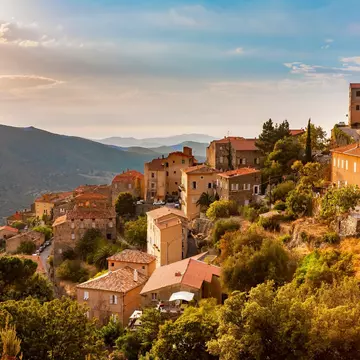
From honey coloured traditional villages to breathtaking hillwalks, there is so much to experience in Corsica. Pi-R photos/Shutterstock

Writer
Highlights
Writer Christina Mackenzie picks 11 Corsica highlights, from mountain trails to sea cliffs.
Hike the legendary GR20 or try the Sentiers des Douaniers along Cap Corse.
Visit Cargèse's Greek Orthodox church, then follow Napoléon's trail through Ajaccio.
Head through the Calanques de Piana, then see Bonifacio's white cliffs from the sea.
Lonely Planet may earn a commission from affiliate links on our site. All recommendations and reviews reflect our own independent opinions.
Close your right fist, with your thumb over your fingers. Now, point your index finger, and you have an almost perfect representation of the island of Corsica – essentially a mountain range jutting out of the Mediterranean, whose highest peaks remain snowcapped well into the spring.
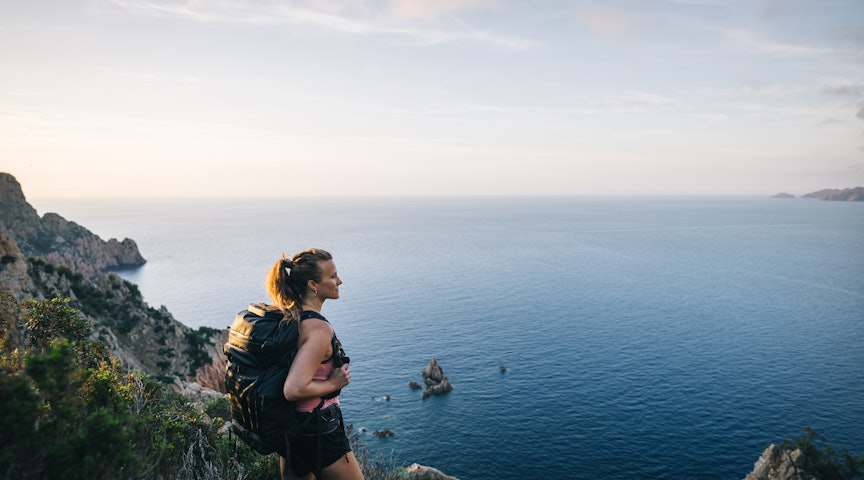
Now close your eyes and picture a stone chapel perched atop a small hill, with sheep-studded fields at its feet and jagged mountains behind, or a fast-running river cutting through a steep ravine of pink granite – essentially any jaw-dropping landscape you can conjure – and you have an almost perfect understanding of why Corsica is a destination for those who love the outdoors.
With few museums, art galleries, cinemas or theaters to frequent, visitors pack itineraries with hiking, swimming, sailing, kayaking, diving and great food that's more mountain than maritime. (Chestnut trees and wild pigs abound, and you’ll find both in many a hearty Corsican dish, such as wild boar stew.)
Many residents consider themselves Corsican first and (reluctantly) French second, even though the island’s most famous son, Napoléon Bonaparte, became emperor of France. Graffiti – usually in Corsican, which is closer to Italian than French – calling for independence crops up in unexpected places, and the Corsican flag (a black profile facing left with a white bandana knotted at the back) is displayed everywhere.
If you want to dive deep into the wonders of Corsica, here are the top things to do on this stunning island.
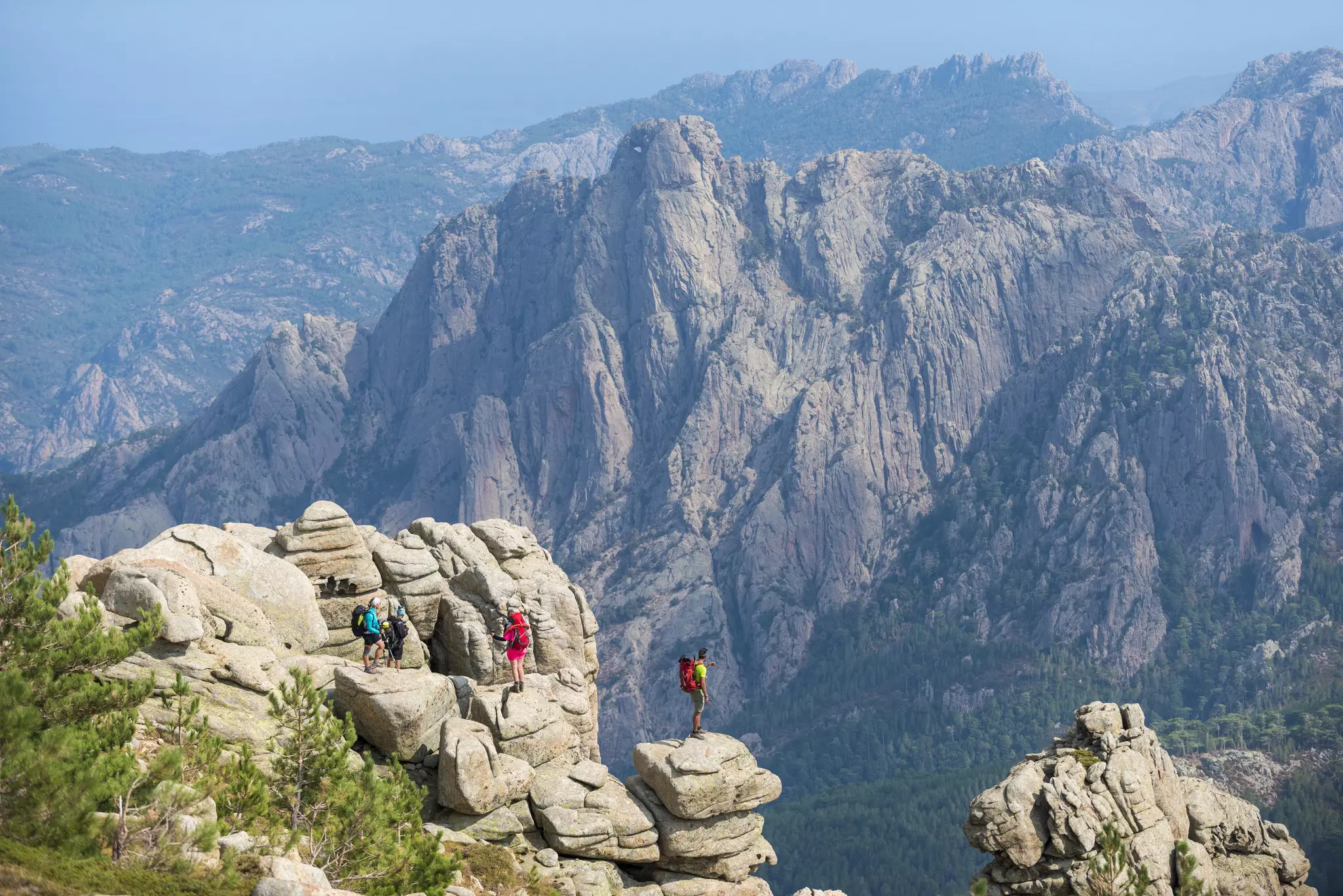
This mythical 200km (124-mile) hiking route, primarily along mountain ridges, from Calenzana in the north to Conca in the south, is what most people in France associate with Corsica (along with the beaches, naturally).
One of the top hikes in the world, and reputed to be one of Europe's toughest, the GR20 will take an experienced hiker 16 days to complete, with every night spent in a refuge. Of course, you don’t need to hike the whole length. You can do a small segment in a day and get a taxi to pick you up, or end (or start) your hike at Vizzavona, where you can get a train. The northern section is the hardest, as the path can be steep and rocky; in the south, the path is smoother and a bit flatter.
Planning tip: It's unwise to do this hike unless you are well prepared, and it should not be attempted by any child under 12. You should undertake the GR20 only between June and the end of August. Any earlier in the year, and you may find sections blocked by snow, and the refuges, although open, will have no guardians. Later on, the streams you can drink from might be dry. Find detailed information and instructions at this dedicated website.
This village, south of the village of Porto, is home to one of Corsica’s most beautiful churches, which also happens to be the only Greek Orthodox church on the island. The Église St-Spyridon was built by the Greek descendants of the 600 who fled the Ottomans in the 17th century and settled in this coastal village.
The community originally built a small church, but by the mid-19th century, they'd outgrown their place of worship and began the new construction in a neo-Gothic style. In accordance with Byzantine rites, the altar is hidden from the nave by a wooden partition (an iconostasis). This one is decorated with icons (some of which were brought by the first Greek inhabitants and date back to the 13th century) of saints and angels on a gold background. The church walls are covered with frescoes, and the dark blue ceiling is dotted with gold stars – all illuminated by several multilayered brass chandeliers.
What makes Cargèse remarkable is that across a small gully from the Église St-Spyridon is the pale yellow façade of a neo-baroque Roman Catholic church, Assumption, built in the 1800s. The richly decorated interior was recently restored.
Local tip: From the shaded square in front of this church, there are lovely views of the sea. Take the path that leads down to the port and enjoy lunch at one of the restaurants that are crowded with locals even during the low season.
The narrow D84 road from Francardo to Porto is only 78.6km (48.8 miles) long, but driving it nonstop takes two hours – "twisty" doesn’t even begin to describe it. You’ll feel compelled to make multiple stops, not only to admire the landscape of giant granite fingers, deep gorges, alpine meadows and lakes but to compete for road space with Corsica’s wild black pigs, cows and other vehicles, particularly in the summer months.
Detour: The road climbs up past the village of Calacuccia and its eponymous lake – a hydroelectric reservoir – to the Col de Vergio (Vergio Pass) at 1467m (4812ft), where you’ll see an abandoned ski lift, the only remains of the island’s biggest ski resort before it was shut in 2007. As you head toward the sea through the Forêt d’Aïtone (the pine forest of Aïtone), stop before you reach the village of Évisa and walk about 600m (1968ft) to some small waterfalls and natural pools that are safe to swim in.
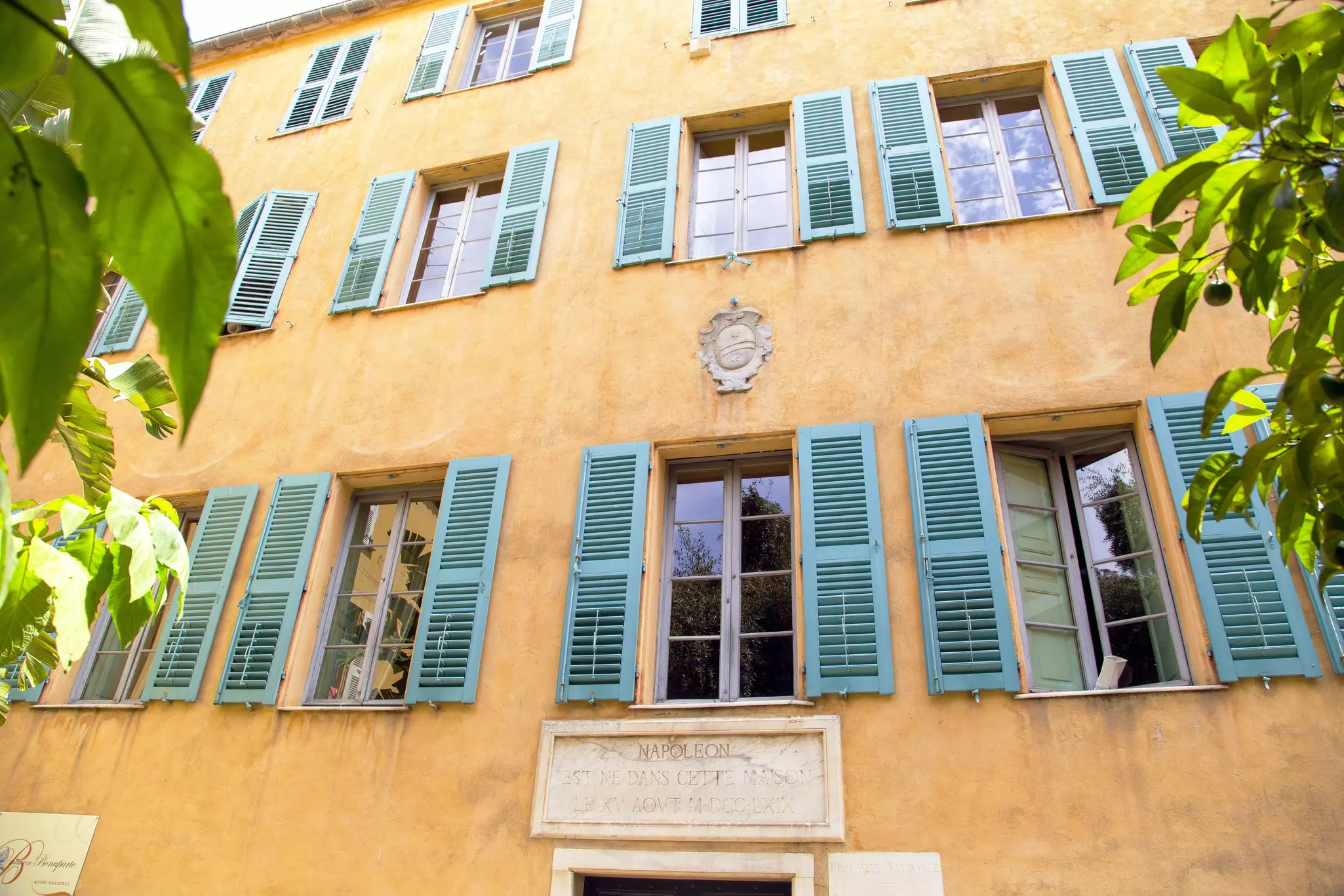
You cannot escape Napoléon Bonaparte in his birthplace. Ajaccio is the capital of Corsica because he decided it should be, switching it from Bastia in 1811. He’s everywhere, in street names and museums and watching mournfully over the pétanque players from atop his pedestal in the Place d’Austerlitz.
Lonely planet’s trusted travel insurance provider
Travel with confidence. Protect your trip and your wallet.
We don’t represent World Nomads, we receive a fee from quotes using this link. This is not a recommendation to buy travel insurance.
The Palais Fesch, so named because it exhibits the art collection of Cardinal Joseph Fesch, Napoléon's maternal uncle, is the island’s major art museum. Fesch began his collection while accompanying his nephew on the two-week Italian campaign in 1796. By the time the cardinal died in 1839, he had accumulated more than 16,000 works of art. They’re not all on view, but the permanent exhibition has some exceptional works by Renaissance artists such as Bellini, Botticelli, Titian and Veronese, as well as 17th-century artists Poussin and Van Dyck.
Napoléon’s parents, Charles and Letizia Bonaparte, are buried in the imperial chapel in the right wing of the palace.
Detour: A five-minute walk from the art museum will take you to Maison Bonaparte, where Napoléon was born on August 15, 1769, and resided until he was nine years old. The house has undergone multiple changes since then and only became a museum in 1967. Written explanations are in French – use the audio guide for English descriptions.
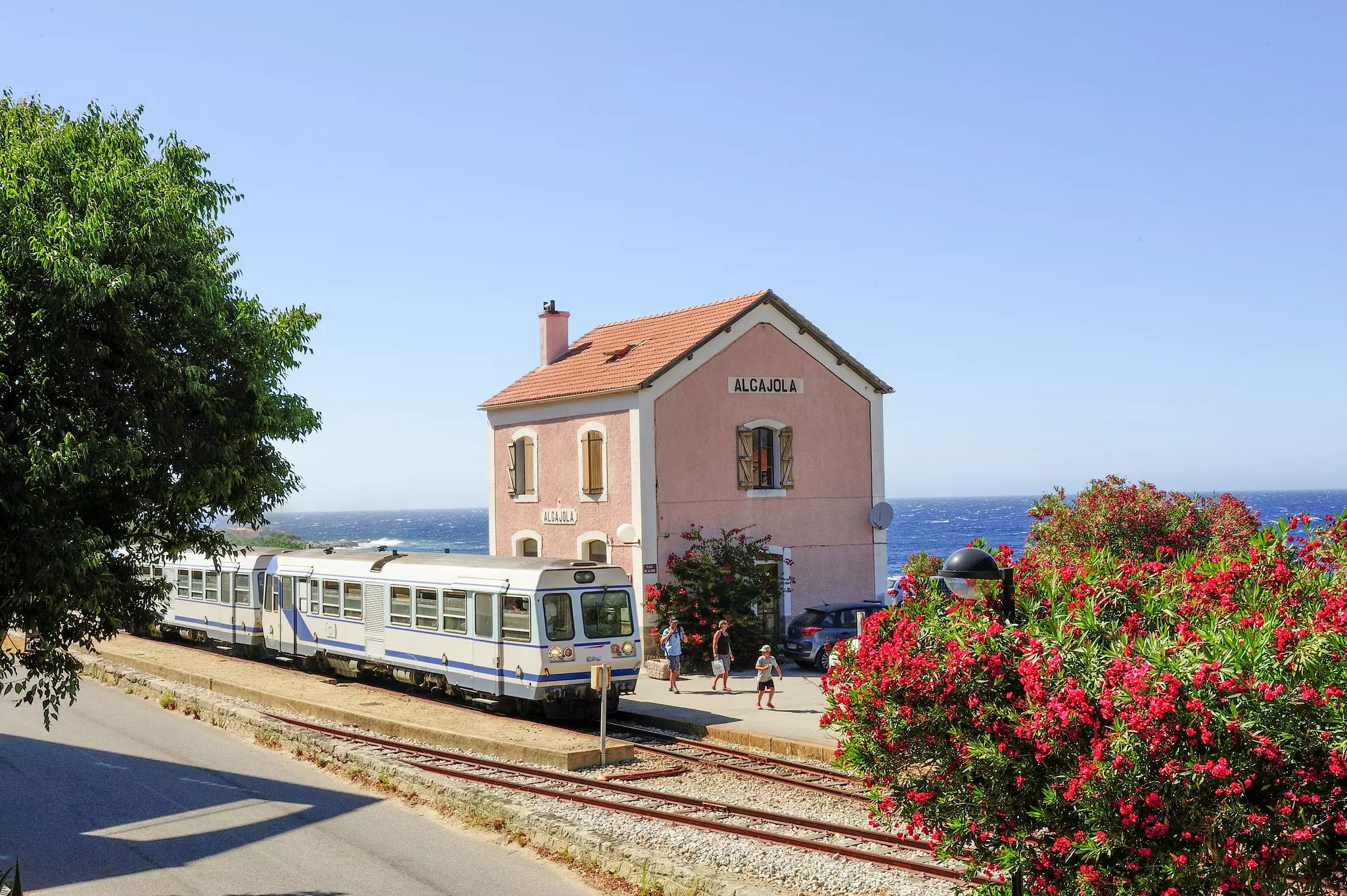
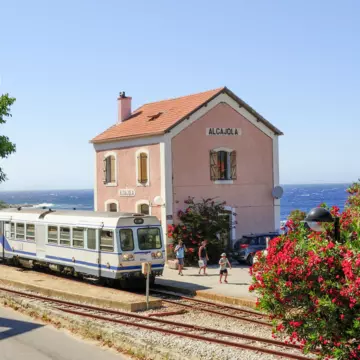
If the thought of driving along Corsica’s vertiginous roads or hiking the GR20 doesn’t appeal, then the train is the answer. The line heads north from Ajaccio to the central Corsican town of Ponte Leccia (2 hours 40 minutes), where it branches west to Calvi (1 hour 50 minutes) or east to Bastia (1 hour 45 minutes).
The train arcs through the mountains, giving you wonderful views of stone villages seemingly grown out of granite, fields dotted with the sheep and goats whose milk is turned into pungent Corsican cheeses and Corsica’s highest peak, the 2706m (8878ft) Monte Cinto. The track sometimes turns back on itself so you can look down on the rivers and gorges and see the railway line below you.
Amusingly, some of the stops are optional, so if you want to get off the train at any of these, push the button next to the train door. If you’re at an optional station and want to get on the train, wave at the train driver.
Planning tip: You can buy a €50 (US$52) Pass Libertà, which allows you to travel wherever and whenever you want for seven consecutive days. Timetables and fares can be found on the official website (in French and Corsican).
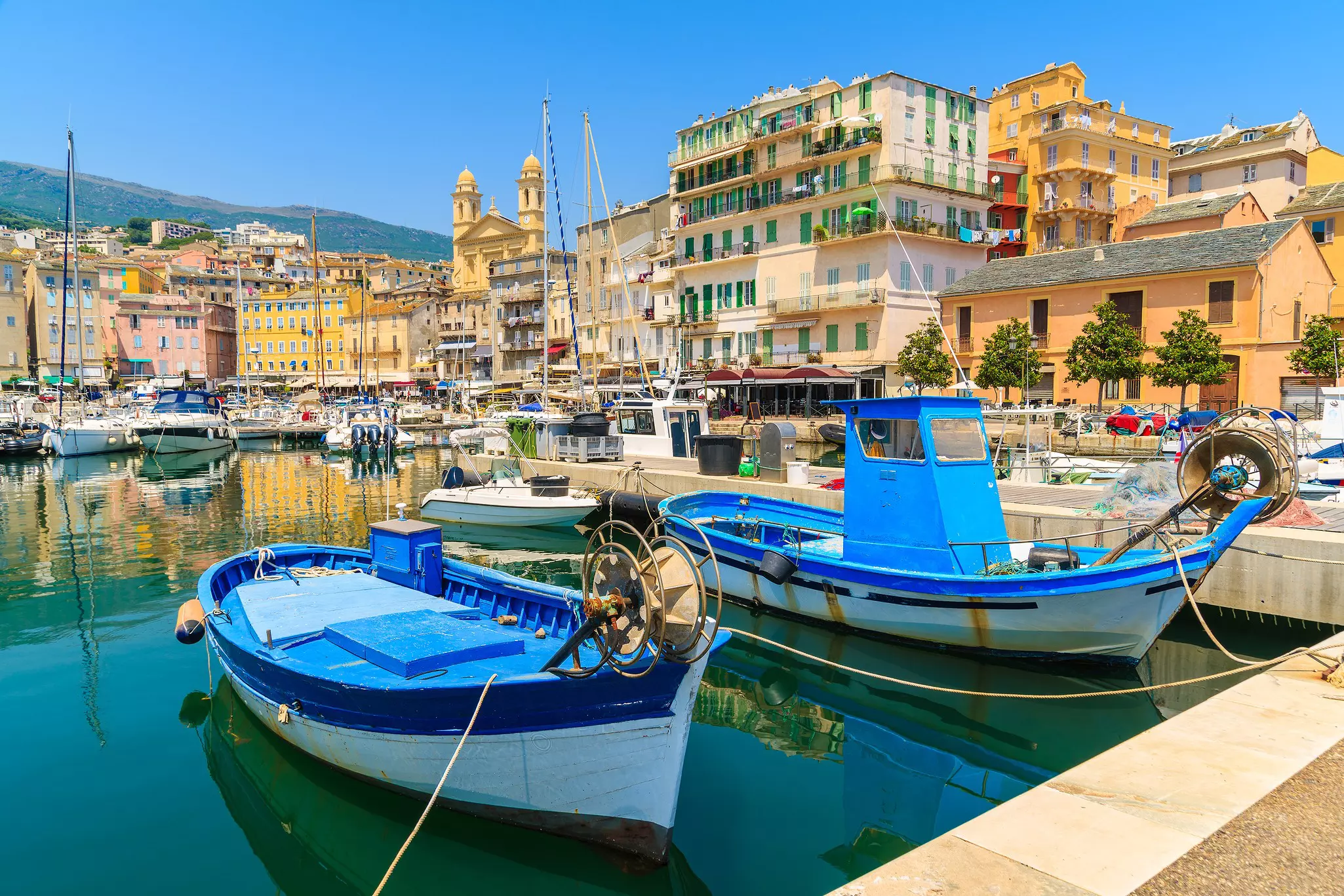
Bastia, Corsica’s economic capital, tends to get overlooked by tourists. And that’s a shame because it is designed for its 52,000 inhabitants rather than visitors and has plenty to keep you entertained for at least a day.
Terra Vecchia, the historic heart of the city, brackets the old port. Its landmark building is the Église St-Jean Baptiste, built in the 1600s, although the façade and identical bell towers were added in the 1860s. This part of town is small, so don’t hesitate to turn into the narrow streets to explore and wonder how some of the crumbling gray and beige buildings that crowd in on one another are still standing. Look for the small niches that hold a painted statue of a saint and question the safety of a tangle of electrical wires as you make your way past the vast church to the southern side of town, then up the imperial staircase known as Falata à a Gabella into the Terra Nova. There’s also an elevator about 150m (492ft) beyond the staircase.
Planning tip: The market the locals call u mercà is just north of the old port on the Place de l’Hôtel de Ville; it is open from 8am to 1pm every day except Monday and gets particularly animated on weekends, with many residents meeting at cafes for a chat and a drink after shopping.
The upper part of Bastia, or Terra Nova, with its straight streets and well-kept colored façades, clusters around the Genoese citadel, or bastiglia, which is how the town got its name. The Governors’ Palace, built in 1530, hosts the Musée de Bastia, covering seven centuries of the city and the island’s history. There’s enough here to keep you busy for about two hours. On a clear day in the terraced gardens, you can see the Italian island of Elba, 57km (35 miles) away, where Napoléon spent his first exile, and the old port and the city spread out below you like a map.
Planning tip: If you’re in Bastia on the second or third Saturday of July, don’t miss a Notte di a Memoria (a Night of Memory), a historical reconstruction of the Middle Ages ceremony signaling a change of Genoese governor. It involves a lot of drums and flag throwing, and some 200 or so Bastiais in period costume parade from the citadel down to the old port, so you can stand anywhere along the route and watch.
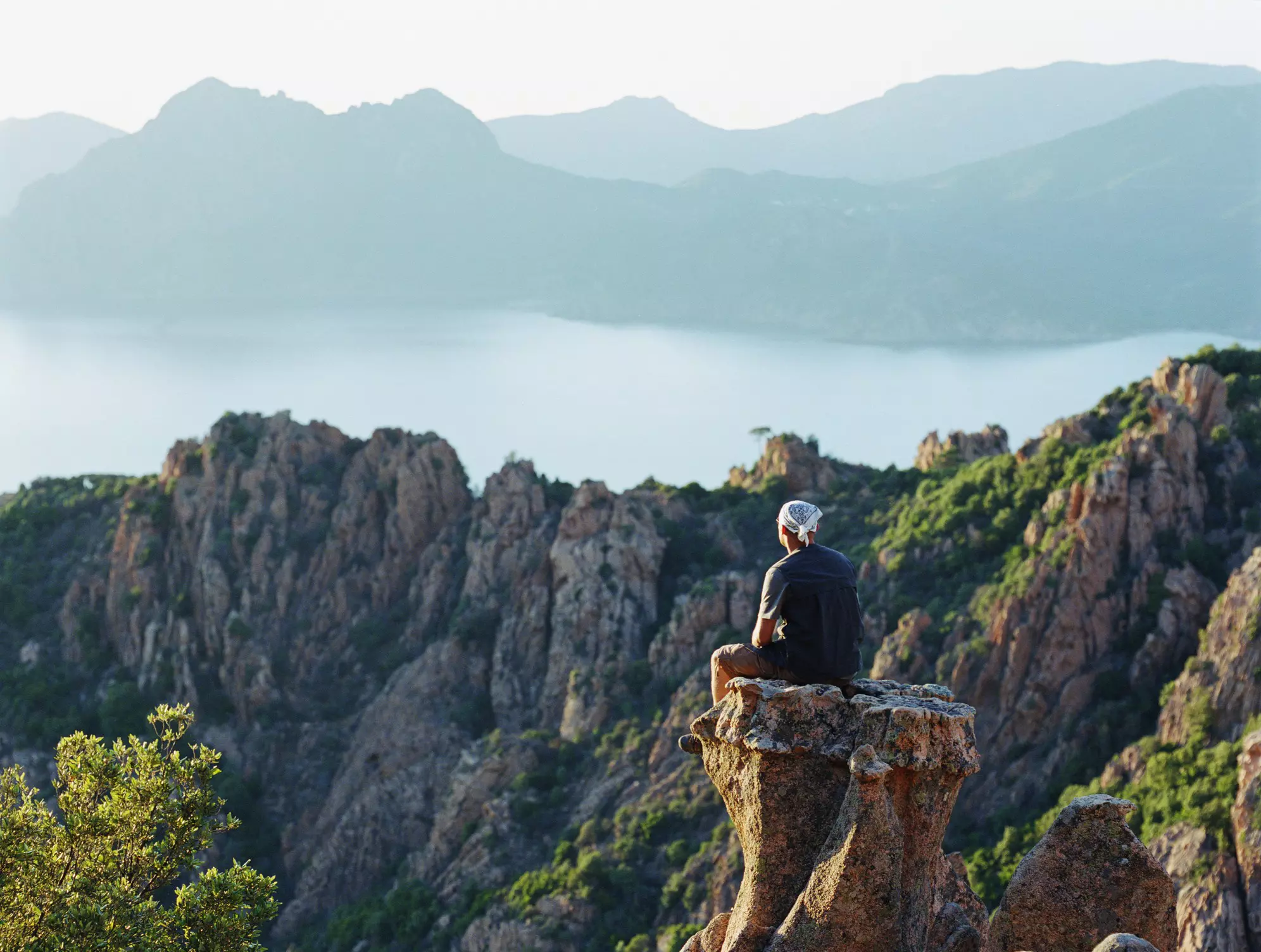
The red-pink calanques (narrow, steep-sided granite valleys or inlets) on the west coast between Calvi and Ajaccio are unmissable. The best approach is from Piana. As you drive carefully north along the narrow road curling around rocks and scrub bushes, the rocks start getting bigger, fashioned into fantastic shapes that every person interprets in their own way: where one will see a lion, another will see a human or yet another a strange gargoyle. You’ll get tantalizing glimpses of the sea far below. In the summer, the road gets quite busy, so don’t stop on a bend to admire the view.
Detour: There are a few spots to park along the route, notably at La Tête du Chien (Dog’s Head), from which there is an easy 1.2km (0.7-mile) path to a rocky platform that provides a prodigious view of the calanques and the Golfe de Porto. There are four other hiking paths through the Calanques – ask the Piana tourist offic e for a map.
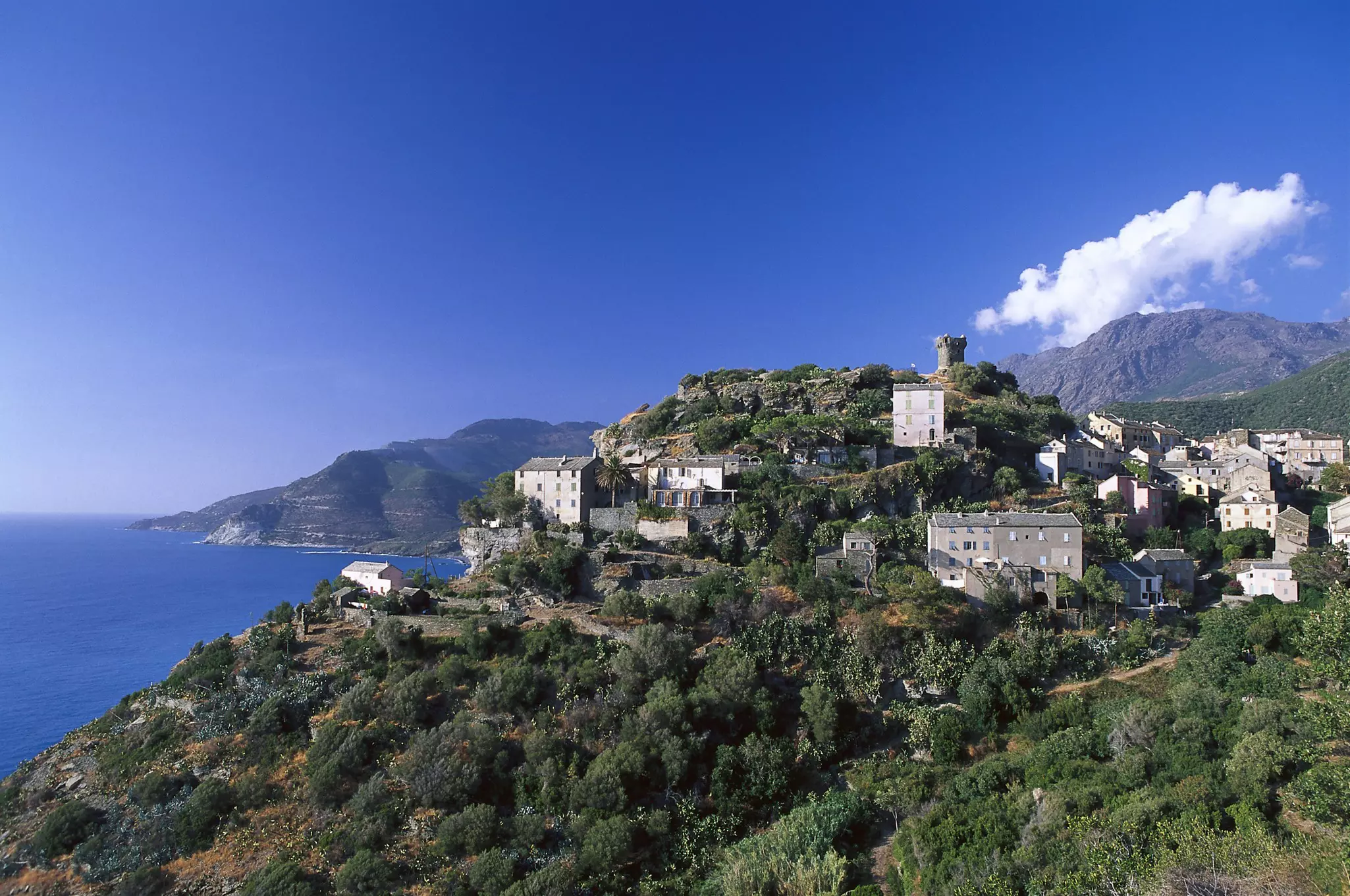
About a third of the way up the western coast of the Cap Corse lies the village of Nonza, planted on the northern edge of a sheer cliff. There are dramatic views of the 150m (492ft) drop to the black beach below, one of the few in Corsica that is never crowded in the summer – probably because there are more than 500 steps to reach it! A few hardy souls make the descent and create patterns with the light gray pebbles on the black sand, which you can admire from the top.
There’s a delightful little village square, where you can sit under the shade of the plane trees and unwind to the tinkling sound of a fountain, a cool drink in hand as you nibble some delicious Corsican charcuterie.
Planning tip: If you visit Nonza in the summer, it'll be almost impossible to park within the village – leave your car on either side and walk in.
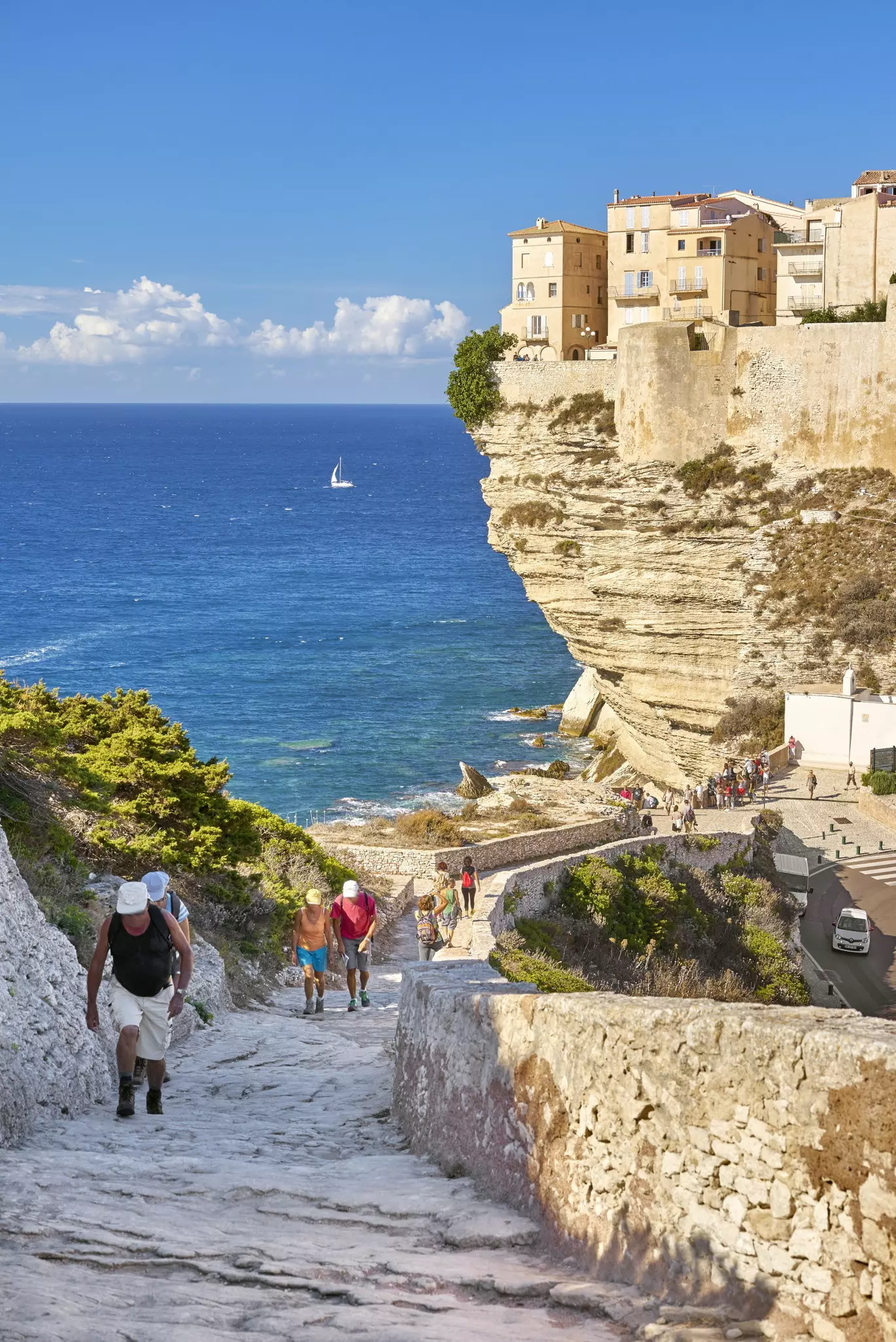
Bonifacio is not only the oldest town in Corsica (founded in about 830 CE), it's also the most spectacular. Perched atop layered white limestone and sandstone cliffs 100m (328ft) high, it exhibits phenomenal views across to Sardinia, only 13km (8 miles) south.
For first-time visitors, the element of surprise is huge. When you arrive by road, all you can see of Bonifacio are the enormous, imposing ramparts and fortifications on a hill to the west of an inlet. The only way to observe the imposing cliffs and the town's tall houses tethered at the very edge of the escarpments is from the sea – boat tours depart regularly from the port at the end of the inlet.
When you return from your maritime expedition, wind past the restaurants, cafes and souvenir shops that line the port and go up the Rastello ramp ending at the foot of the citadel. There you'll find a roofless white chapel; its single bell cut out against the blue of the Mediterranean Sea, with Sardinia glistening on the horizon.
You can then turn into the old town through the labyrinth of tight, paved streets lined with ancient, narrow six- or seven-story buildings nestled against each other. Note the aqueducts above the streets connecting the houses and look out for the stone plaque on 7 rue des Deux Empereurs detailing that Napoléon Bonaparte (who else?) lived there from January 22 to March 3, 1793, and that it belonged to his ancestors until May 1721.
If you don’t feel like walking from the port to the old town, you can join the families (it's free for kids under five) on the little tourist train.
Planning tip: In summer, Bonifacio gets extremely crowded – you should plan to arrive before 10am or you won’t be able to park. Park at the port for about €20 (US$21) for the day or in one of the two lots (Monte Leone and Valli) on the outskirts of town for about €5 (US$5). A free shuttle operates between the port and the Monte Leone parking. If you have a camper van, you can only park at the Monte Leone or Valli lots, and note that the latter is only open in summer.
Don’t be tempted to try your luck parking at the top of the town – in summer, the population rises from just over 3000 to 15,000, so walking will be quicker. In any case, the old town is mostly pedestrianized. A little road train goes from the port to the old town, departing every 30 minutes from 9: 30am to 9: 45pm July to August, 5: 45pm in September. Tickets are €6 (US$7) return, free for children under five.
If you’d like to hike but find the GR20 intimidating, try the 25km (15.5-mile) Sentiers des Douaniers (Customs Officers’ Path), which runs around the very tip of Corsica’s index finger (Cap Corse) from Macinaggio on the east coast to Centuri on the west. During this daylong hike (or you can break it up and do it over two days), you’ll go from sandy beaches and dunes on the eastern coast to the wilder, rockier landscapes of the western coast. Along the way, you’ll see marks of human habitation: old limestone ovens, windmills and the ruins of 16th-century Genoese towers.
The section between Macinaggio and Barcaggio tends to be more crowded than the section between Barcaggio and Centuri. From Macinaggio, you’ll go across Plage de Tamarone and have a view of the dust-speck islands of Finocchiarola topped by a ruined Genoese tower. A bit further along, you’ll see the picturesque ruin of a tower right on the beach, sometimes surrounded by the sea. When you reach Barcaggio, climb the dunes for a fabulous view – on a clear day, you can see the coastline of Italy. Come back down for a swim off the lovely beach, possibly sharing the sand with some wild cows. The fully automated lighthouse on the island of Giraglia just off the coast is one of the most powerful in the Mediterranean.
You can either return to Macinaggio by boat or stay overnight in Barcaggio and carry on the next day to Centuri. This next section is wilder and windier, since it's along the very northernmost tip of Corsica, and some parts are quite steep and rocky. Look out for the wide variety of seabirds, and you may very well spot some dolphins swimming nearby. This part of the hike goes through a lot of maquis shrubland and can be a bit scratchy on your legs. Best to wear trousers rather than shorts.
The hike from Macinaggio to Barcaggio is shorter and easier, and many casual hikers generally find it more pleasant than the second section to Centuri, which is more suited to serious hikers.
Planning tip: This is not a particularly difficult hike, and it’s mostly clearly posted, but you do need a decent level of fitness, and there isn't much shade. Don’t attempt it in the height of summer or on very windy days, when there's a greater risk of fires. Spring is the optimum time because the maquis is in full flower and its colors and very particular perfume are at their best. Napoléon Bonaparte used to say that he could recognize Corsica just by the smell of its maquis.
Book your Corsica trip with Lonely Planet Journeys
See Corsica how it's meant to be seen
Planned by local experts and tailored to you, Lonely Planet Journeys handles the logistics so you can just enjoy the trip. Tell us what you want and we'll build your Corsica itinerary from scratch, or browse our bookable trips to get inspired.

Explore related stories