Sep 15, 20267 min read
10 Top Things to Eat in Montréal Right NowJul 31, 2026
15 MIN READ
Contributors
A bike tour through Cartegena's Getsemaní neighborhood in Colombia. Juan Tapias for Lonely Planet

Contributors


Sarah Stocking, Lonely Planet Editors
Lonely Planet may earn a commission from affiliate links on our site. All recommendations and reviews reflect our own independent opinions.
I'm not the type A planner with a spreadsheet for all the group trips. It's just not my way. What I do have is a PhD in emotional infrastructure and a minor in anticipating everyone's needs. I don't know why this labor chose me and asked me to organize everything, but it did. If you knew me, you'd be spilling your secrets to me in 7 seconds, and I would be able to tell you exactly what you need so that you feel like the best version of yourself that day.
Because I work at Lonely Planet and so many inspirational trips and experiences cross my desk every day, I decided to use my what-does-everyone-need skills with my vast destination knowledge to come up with the best trips for all those complicated groups we want to travel with.
The logistics are never easy when you travel with a group, but if you get it just right, the payoff is immense. Shared experiences, creating traditions and creating space for everyone to be more accepting and flexible with each other are the fodder of great relationships. So get your people together and go on an adventure.
Plan this trip with Pocket Algarve
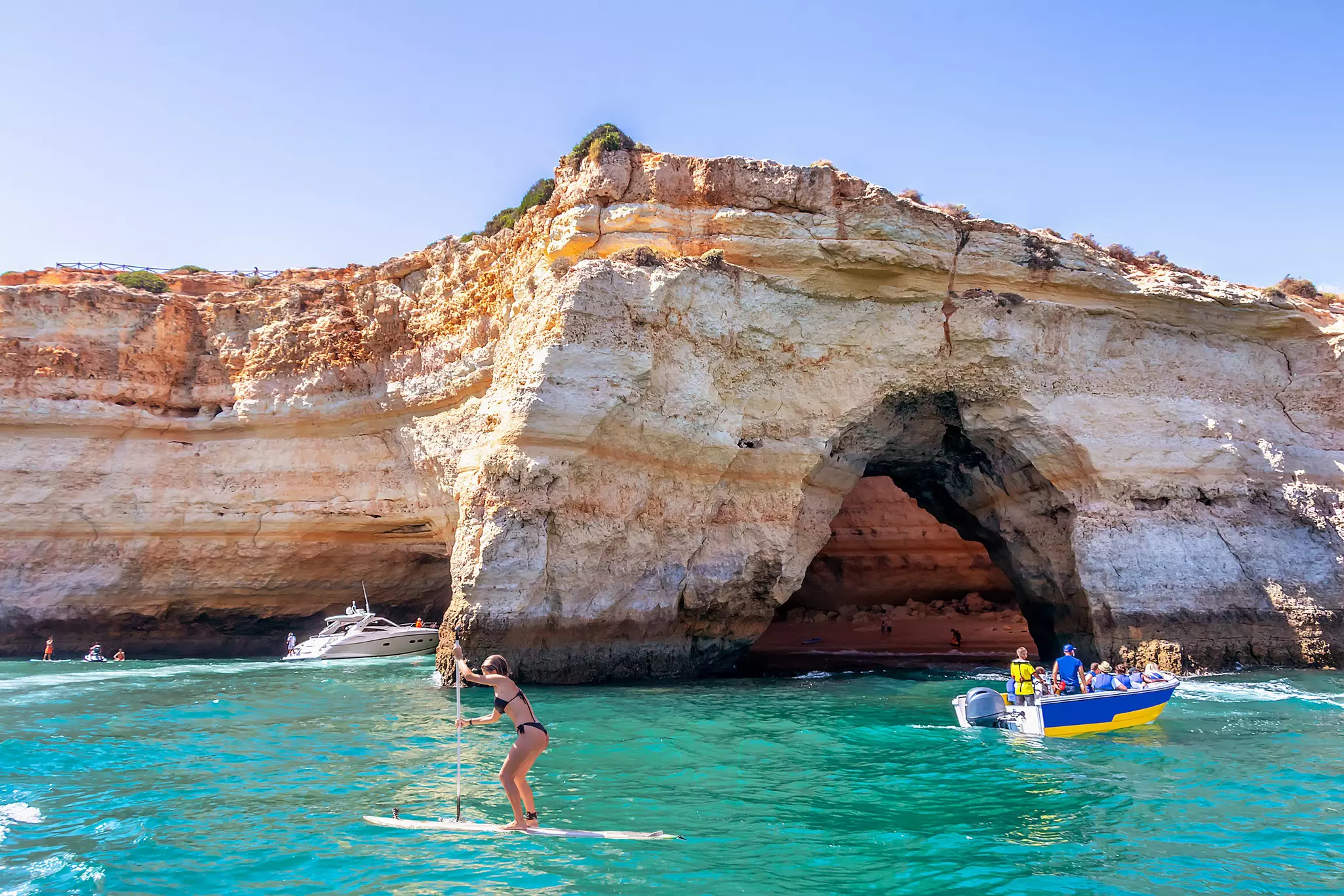
For a trip that spans grandparents to the newest family member, Portugal's Algarve satisfies everyone in between. It has sun-kissed beaches, whitewashed artisan villages, and a home base built for big, easy family living.
Base yourselves in Carvoeiro and Ferragudo, towns Lonely Planet writer Daniel James Clarke calls "cinema worthy." Carvoeiro's coastline outgrew its fishing-village origins but kept its charm, with a cliff-top boardwalk, craggy rock pools, and breathtaking caves – and, crucially for this group, the best homeshare rentals in the Algarve. Laid-back nightlife, sheltered beaches and kid-friendly activities round it out.
Book a tile-painting class at Arti Arte Azulejar, where artist Carla guides everyone, of any age, through painting their own azulejo design to take home. Add a dolphin-watching tour with Wildwatch; the marine biologist team is confident enough in sightings that they guarantee a second trip if the first comes up empty.
For dinner, don't miss Tapas da Vila, an affordable seaside eatery that specializes in small plates that are perfect for sharing and vibes that are ideal for toasting – the kind of no-fuss meal a big group needs. Their covered outdoor terrace is not large, so be sure to book ahead for the best seats in the house.
Good to know: Book your villa at least three months out, especially for summer travel – the large ones sell out. Carry cash, too; plenty of places in the Algarve don't take cards.
The wow moment: The Carvoeiro Boardwalk, a cliff-top walk nearly anyone in the group can manage. Take the staircase down to Algar Seco's natural pools or don't; either way, duck into Restaurante Boneca Bar to see the cave window framing the ocean.
Insider swap: The island of Hawai'i has accessible lodging, activities for every kind of traveler, and family-style dinners built for a crowd.
Plan this trip with the England guidebook
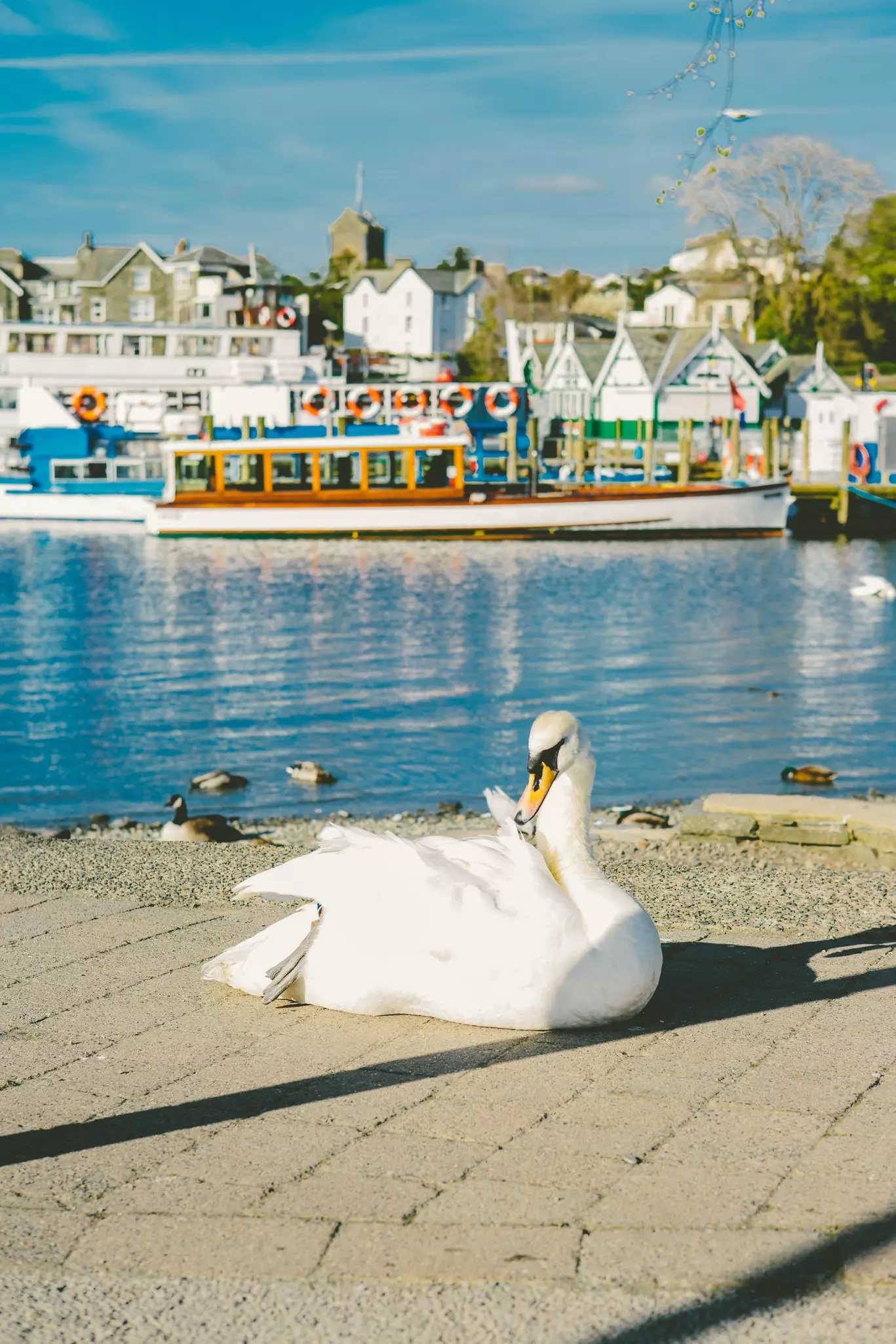
These are your people that you created community with and now you’re ready to take the relationship to the next step. A mix of families, singles and couples, its a diverse group but you have a shared culture. You love to be active together, to hike, swim and play hard (varying degrees of difficulty) and still make it back in time for a proper pub dinner. Head to Keswick in England's Lake District – a base built for a group that doesn't need to agree on how hard the day should be.
Keswick is the gateway to the northern Lakes, a walker's town through and through, with a twisting medieval layout that makes getting lost feel like part of the plan. The best thing about this trip is that nobody has to agree on how hard the day should be. Catbells is an easy ramble, the kind of climb you can do in the wrong shoes and still enjoy. Skiddaw and Blencathra are not that – steep, long and exactly what the more ambitious half of your group will be hoping for. Everyone starts the day in the same town, and nobody has to pretend they wanted the same hike.
If swimming's more your speed, head to Rosthwaite in Borrowdale, where the pools range from shallow and family-friendly to genuinely intimidating cliff dives. Bring the whole chosen family and let everyone select their own level of bravery.
For dinner, Fellpack is a smart bistro doing jerked local goat as well as a vegetarian mushroom haché, so nobody's stuck picking around a menu that wasn't built for them. For something a little more indulgent, Casa Bella does a lasagna made with local beef that's worth the walk back down the fell.
Good to know: Keswick has no train station, so you'll need a car, and parking fills up fast in peak season. Staying more than three nights? It's worth applying for a monthly permit rather than fighting for a space every morning.
The wow moment: Take Keswick Launch's 50-minute circuit of Derwentwater. It's the easiest, laziest way to end a day where half your group summited a fell and the other half didn't leave the water – and somehow everyone ends up with the same view.
Insider swap: Craving the same mix of hiking and lake life without the flight? Try Vermont's Green Mountains, home to the same "climb hard, swim harder" energy, minus the jet lag.
Plan this trip with the Sweden guidebook
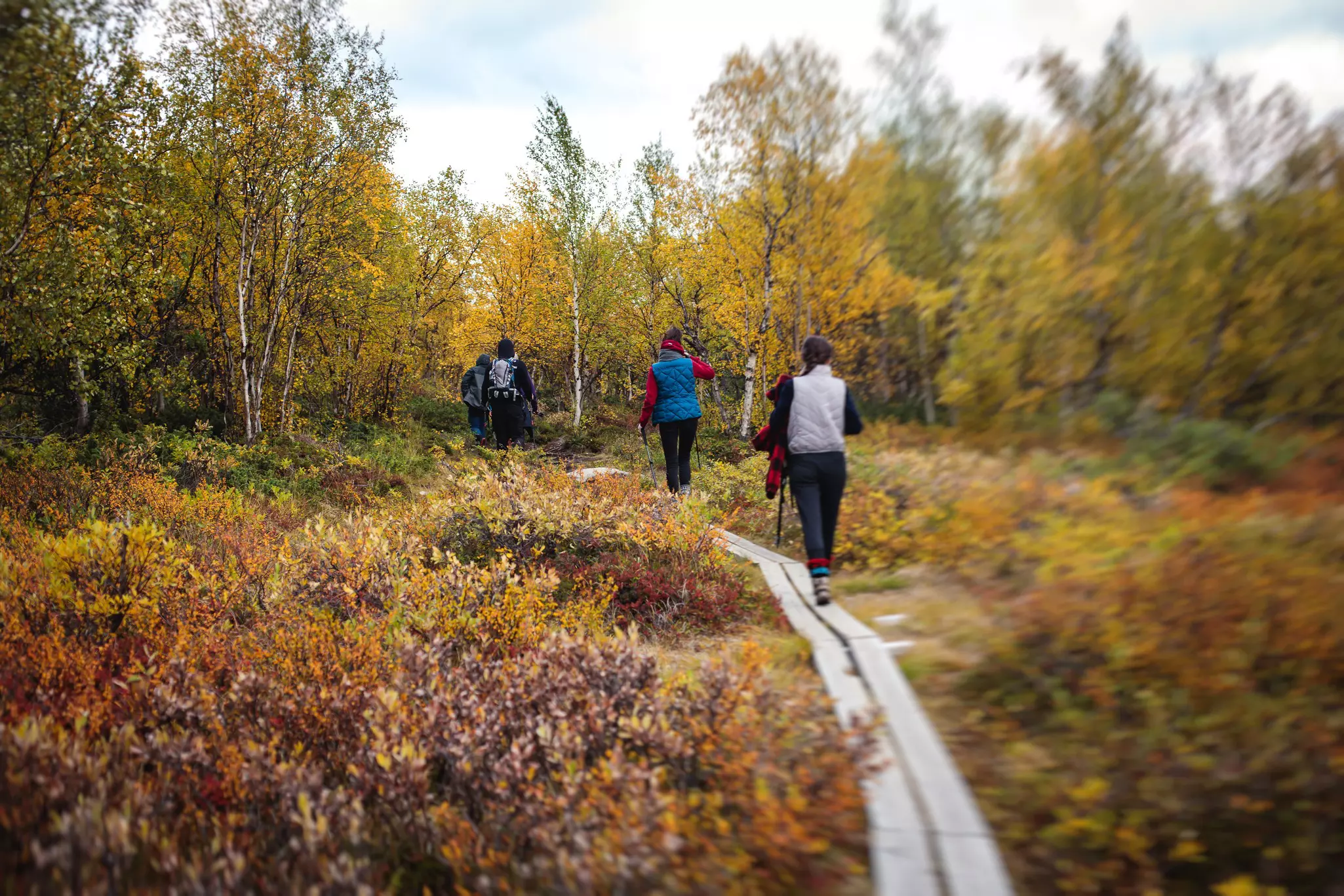
For siblings who don't want a spa day but a finish line, Sweden's Kungsleden trail turns old rivalries into days of shared suffering and bragging rights.
The six-day stretch from Abisko to Kebnekaise is the one worth pushing your siblings along: 105km through Abisko National Park, mostly along the valley floor, with boardwalks over the boggy stretches and bridges strung across the streams. The high point – literally – is Tjäkta Pass, a brutal, glorious 1105m climb that opens onto the Tjäktavagge valley below. Groups with the legs and the days for it can add a side trek up Mt Kebnekaise, Sweden's highest peak, as the actual finale.
You're not roughing it completely. Swedish Tourist Association huts line the route – Abiskojaure by the lake, Alesjaure with its sauna and ridge views, then Tjäkta, Sälka, and Singi before the lodges at Abisko and Kebnekaise.
Not every sibling has to do all six days. Kebnekaise is also reachable via an easy 19km day hike from Nikkaluokta, so the one who "isn't really a hiker" can fly in, meet the group at the summit push, and still say they climbed Sweden's highest mountain. Nobody has to know it took one day instead of six.
Between hikes, Jukkasjärvi's Nutti Sámi Siida is a reason to slow down: an open-air museum of lávvu and goahti tents where you can hand-feed reindeer, then eat at Restaurant Ovttas. Time it right and Abisko's rare "blue hole" microclimate makes it one of the most reliable places on Earth to see the northern lights – or, in summer, hike at 10pm under the midnight sun, just to prove you still can.
Best time to go: Hiking season runs June through August. June means melting snow and thinner crowds; August is cooler, quieter, and considered ideal for the Kungsleden.
The wow moment: Cresting Tjäkta Pass and watching the whole Tjäktavagge valley open up beneath you. The view that makes the six days feel like nothing.
Insider swap: Not every sibling group needs six days of bog and boardwalk. The Nikkaluokta day hike gets the same summit story in a fraction of the time.
Plan this trip with the Mexico guidebook
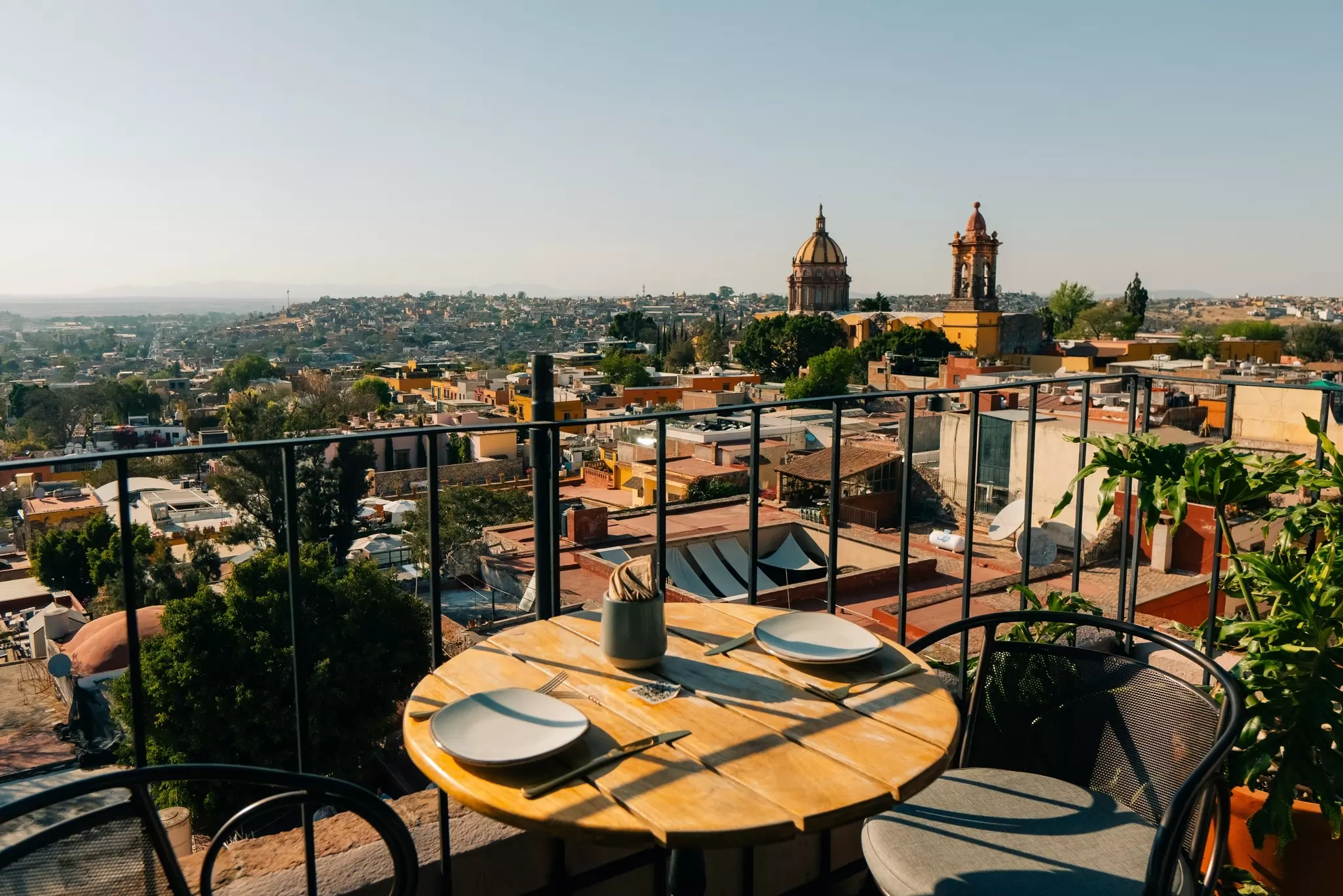
Gather the crew you tell everything to and rent a casa with a rooftop, split a hot-air balloon at sunrise, and let one mezcal tasting turn into the story you tell for the next 12 months.
Once-a-year trips run on a tight clock and an even tighter budget of goodwill – everyone's flying in from somewhere, everyone's got 72 hours. San Miguel de Allende solves for all of it: walkable, stunning at every turn, and built for a group that wants a little of everything – art, wine, a splurge dinner, a lot of rooftop time – without anyone needing to drive.
Base yourselves somewhere with a view: the Rosewood San Miguel de Allende has its own rooftop bar, Luna, so you can toast to making it happen year after year. Spend a morning wandering Fábrica la Aurora, a former cotton factory turned gallery complex, and everyone can get a custom hat at Suki Palomina – made to order with a few days' notice.
Globo San Miguel runs sunrise balloon flights over Los Picachos mountain and the historic center, catching the town's famous pink-and-gold light from above – a wonderful, slightly absurd splurge that becomes the trip's whole personality. Come back down for café de olla lattes on a rooftop at Inside, then spend one night getting properly into it at Octágono, where a full mezcal-and-natural-wine tasting comes with a snack platter big enough to count as dinner.
Good to know: San Miguel sits at 1900m, so nights get cold fast – pack layers even if the days are warm. The cobblestones are no joke, either; skip any shoe without a real sole.
The wow moment: Sunrise, a balloon basket, and the whole town lighting up pink below you. Globo San Miguel's flights are the one splurge worth building the whole trip around.
Insider swap: Guanajuato, an hour away, has the same energy with underground tunnel streets and a funicular up to the miner's monument – more room to spread out, less of the expat crowd.
Plan this trip with the Colombia guidebook
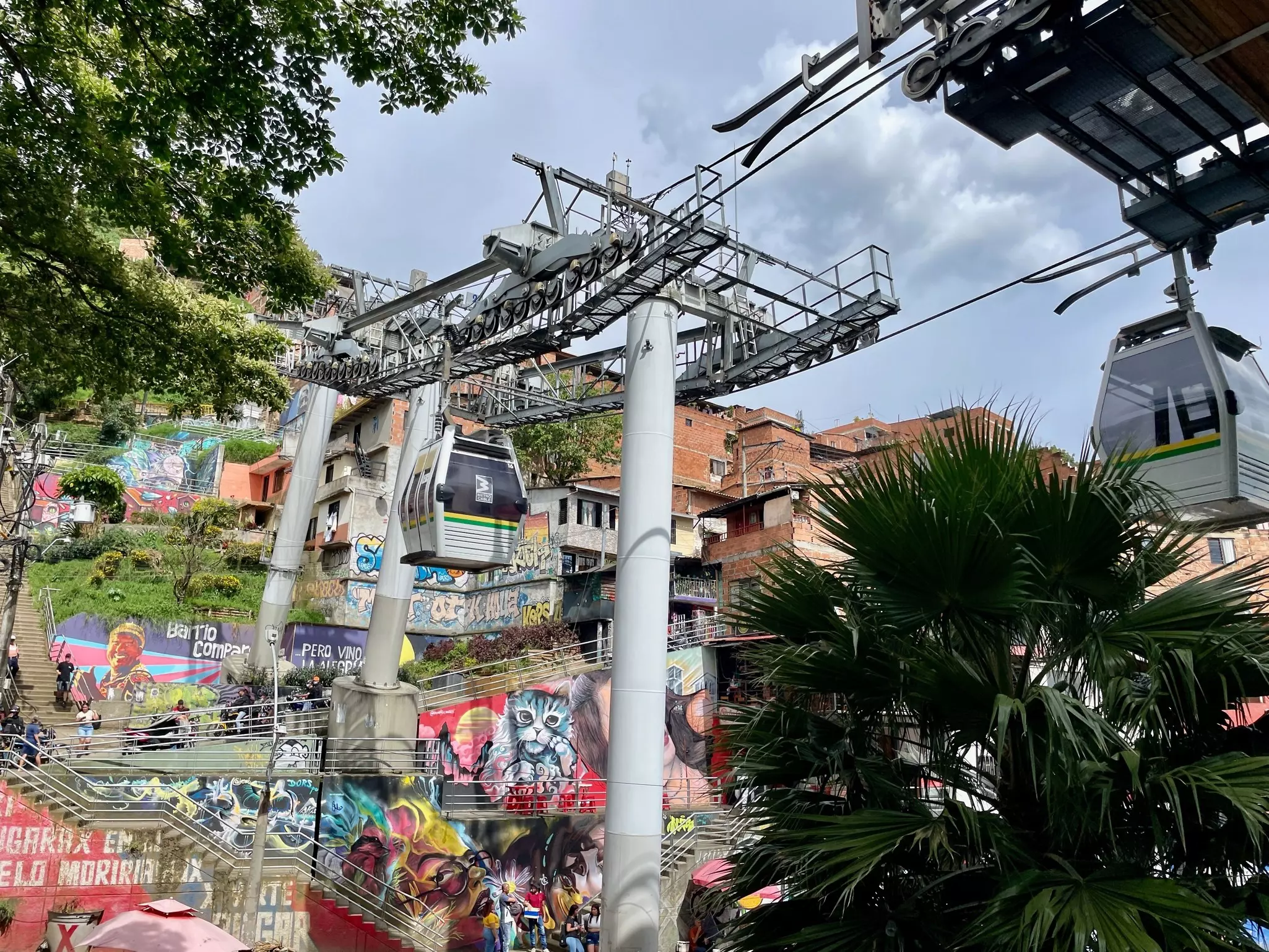
For friends who want nightlife, great food and a city that rewards curiosity, Medellín delivers – cable cars over the valley, rooftop bars in El Poblado, and a comeback story you'll rehash for ages.
Base yourselves in El Poblado, the city's cosmopolitan heart, where tree-lined streets are stacked with boutique hotels, luxury shopping, and glitzy rooftop bars that don't get going until well after dark. Spend a morning riding the metro cable cars – Medellín's mass transit system climbs above the city's mountainside neighborhoods, and a 20-minute ride offers some of the best bird's-eye views in town.
Take a guided walk through Comuna 13, with a carnival-like main boulevard of street art, outdoor escalators, and local hip-hop performers. Balance the history with the color: Plaza Botero packs together 23 sculptures by Antioquian artist Fernando Botero in one lively square, and the Museo de Antioquia right behind it houses the Colección Botero for a deeper look.
When night falls, Parque Lleras is Medellín's zona rosa – a neon-lit stretch of reggaeton-blasting bars and small discos, all walkable from venue to venue, which makes bar-hopping with a group effortless. For something a little more polished, splurge at Carmen, a world-renowned restaurant serving experimental dishes inspired by Colombia's regional biodiversity in a lush, airy space.
Take a day trip to Guatapé, a colorful lakeside town two hours east: climb the 740 steps up Piedra del Peñol, a 200m granite monolith, for 360-degree views over the reservoir, then wander the zócalos – three-dimensional folk-art friezes decorating the bottom of the town's houses along Calle del Recuerdo.
Good to know: Medellín's nightlife runs Thursday to Sunday, with bars and clubs open until around 4am. Dress to impress, since trendy jeans, sky-high heels, and flashy jewelry are the norm. Also worth knowing: booking hotels and tours in Medellín almost always requires a passport number.
The wow moment: Ride Line K or Line J of the metrocable over Comuna 13 and La Candelaria at golden hour – the whole valley lights up beneath you, no tour required, just a metro ticket.
Insider swap: Want more small-town charm and less big-city buzz? Jardín, a few hours southwest, has the same colorful colonial architecture and mountain views, with waterfall hikes and coffee farms instead of nightclubs.
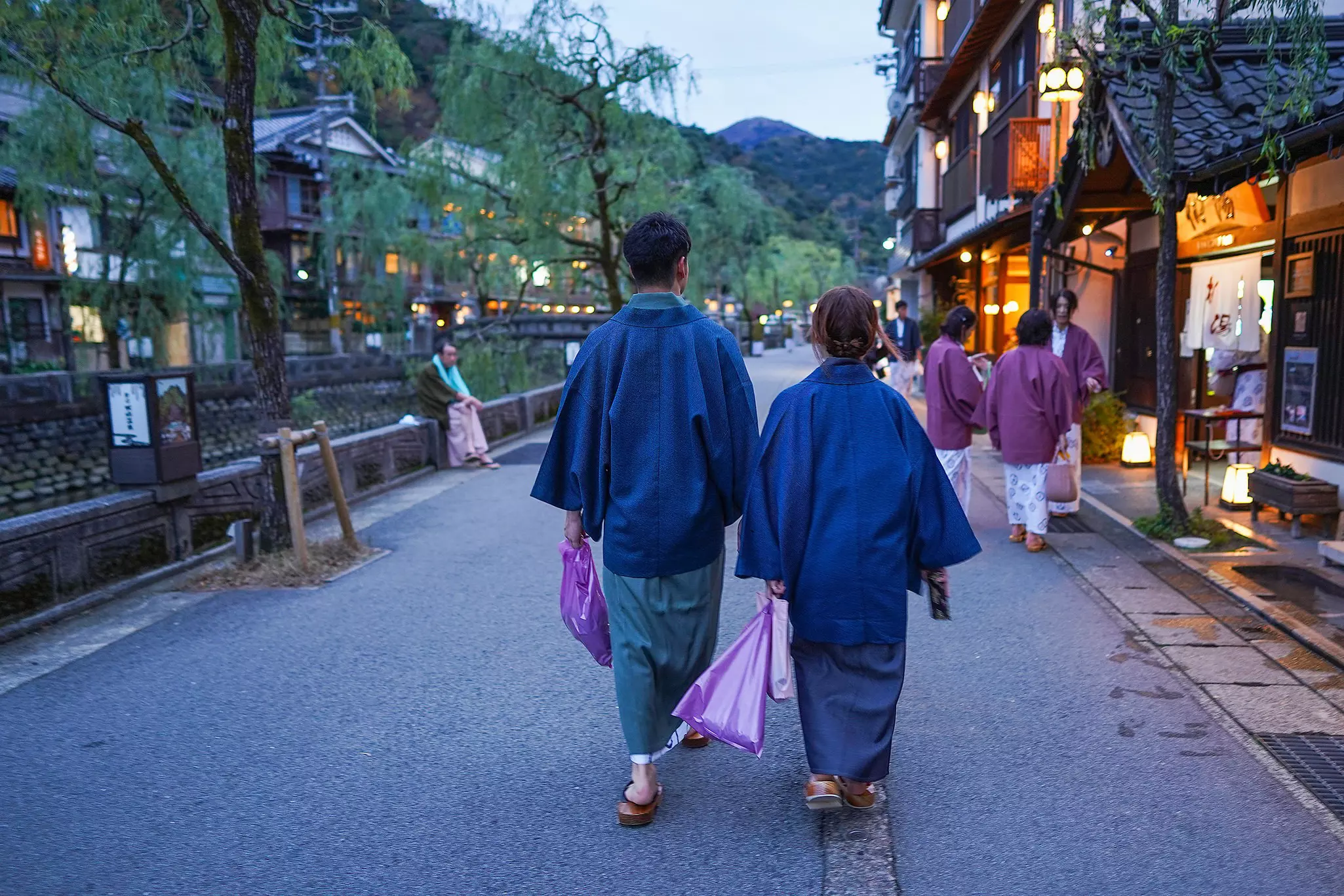
With no one left to keep track of, trade sightseeing for slippers – Kinosaki Onsen is a willow-lined hot-spring town built entirely around wandering between seven public bathhouses in matching yukata.
Base yourselves at a ryokan (Japanese inn) with its own uchi-yu (private bath) – Nishimuraya Honkan, Tsukimotoya Ryokan, and Tsuruya are all classic choices in town – you will be handed yukata and wooden geta sandals on arrival in accordance with dress code. The whole town operates like a cooperative extension of the various inns, and most ryokan include a free pass covering all seven public baths over two days. If you'd rather upgrade from the standard-issue yukata, Iroha Yukata Shop & Rental has more sophisticated designs and will do your hair to match, before you clip-clop over to Bar Seven for a cocktail – still in yukata, for an evening martini.
The onsen-hopping is the whole point, and each bathhouse has its own personality worth checking out. Gosho-no-yu is the grandest, with an entrance modeled on the Kyoto Imperial Palace and a rotemburo (outdoor bath) backing onto the mountainside – magical at dusk when the cicadas start up. Kō-no-yu is the furthest from the station but has the best mountain backdrop. Mandara-yu is quieter, tucked away from the main strip, with single-person outdoor baths and a statue of the monk credited with discovering the springs through prayer. Because the baths rotate which gender uses which building daily, and at least one closes for cleaning every day of the week, completing the full crawl really does take two unhurried days – which is the appeal.
Between soaks, take the seven-minute ropeway up Mt Daishi, stopping halfway at Onsen-ji – a 600-year-old temple, the oldest wooden building in Hyōgo, founded by the same monk whose legend explains the hot springs in the first place. At the summit, throw a set of clay discs through a metal hoop for luck, then warm up with a boiled egg from the geothermic pool at Chaya on the way down. For dinner, Hibiki does excellent Tajima wagyū teppanyaki right by the station – or if you're visiting November through March, lean into matsuba-gani (snow crab) season, when ryokan across town build entire kaiseki courses around it.
Good to know: Kinosaki is reached by direct limited express train from Kyoto (2½ hours) or Osaka (3 hours), with a free shuttle bus timed to arrivals. Tattoos aren't an issue here, unlike at many traditional onsen.
The wow moment: Gosho-no-yu's outdoor rotemburo at dusk, mountainside at your back, frogs and cicadas striking up as the light fades.
Insider swap: Don't want the train ride? Funaoka Onsen in central Kyoto has the same old-school bathhouse charm – original floral tiles, an electric bath – in a fraction of the travel time.
Plan this trip using Pocket Marrakesh .
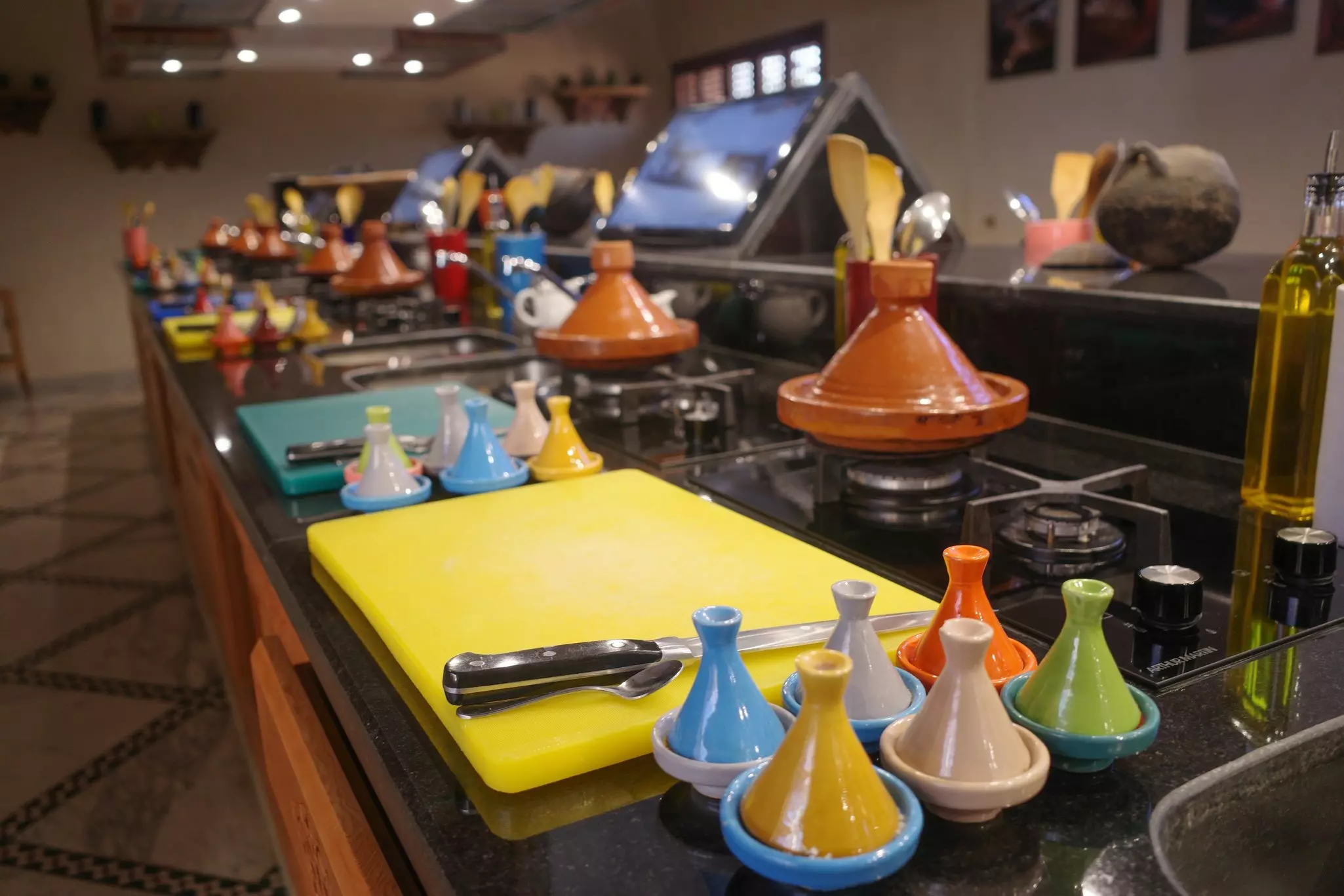
For old friends or family scattered by time zones and life stages, the group you love but haven’t seen for ages, Marrakesh trades nostalgia for a shared first – a hands-on cooking class, a souq scavenger hunt, a hammam ritual. New memories, not rehashed ones.
Marrakesh doesn't let the reunion slide into the past because it's too busy dazzling you into the present tense. A former trading hub for gold, salt, and Saharan caravans, the city is a tangle of narrow streets, souqs full of treasures, and historical monuments.
Base the group at El Fenn, a cluster of riads joined into one property decorated in saturated jewel tones in the Mouassine neighborhood. Several riads joined together solves the real math of a reunion trip – enough rooms for everyone, no one draws the short straw – and the rooftop bar gives the trip a built-in nightly gathering point complete with medina views and a cocktail menu.
Sign everyone up for a group cooking class that turns "let's catch up" into "let's actually do something together." One good option: a farm outside the city, starting with a market trip for fresh produce, then a bilingual lesson on Moroccan spices (including how to spot real saffron), followed by cooking a full three-course meal together and eating it at a garden table under orange, lemon and olive trees. It's unhurried by design – lunch won't be ready until around 2pm, so eat a good breakfast first.
From there, let the days build around wandering together. Visit Djemaa El Fna, pulsating from morning through night. Or share a hammam session – its own kind of bonding once everyone's equally embarrassed and equally relaxed.
Good to know: Group cooking classes need advance booking. Options range from a countryside farm day (Faim d'Epices) to medina cooking schools, which also offer a one-hour express class or a Jewish-cooking course. Pick based on how much of the day you want to give over to it.
The wow moment: At the Moroccan Culinary Arts Museum, watch couscous rolled by hand, argan oil pressed, and mint tea made properly, giving you a shared vocabulary for the rest of the trip. ("Properly," everyone will say, doing the pour wrong on purpose for laughs.)
Insider swap: Not a cooking group? Cafe Clock's Moroccan Culture 101 workshop teaches phrases, gestures, and essential customs. You'll still learn something new side by side, but you'll deal with fewer measuring cups.
Explore related stories