Sep 2, 202610 min read
The 17 Best Things to Do in Birmingham, EnglandSep 2, 2026
10 MIN READ
Contributors
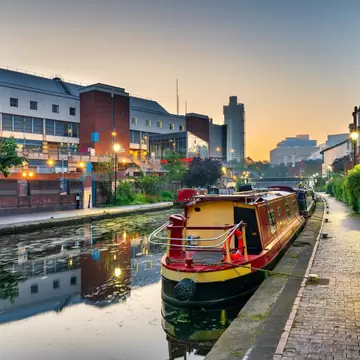
A canal in Birmingham at sunrise. Pajor Pawel/Shutterstock

Contributors


Lonely Planet Editors, James March
Highlights
Birmingham writer James March picks 17 things, from the Grand Hotel to Cadbury World.
Stroll Gas Street Basin's canal past Brindley Place, then seek Digbeth's vivid street art.
Try a fiery balti at the Balti Triangle, Birmingham's spiritual home of the dish.
Peaky Blinders fans will love the canal-side sets at Black Country Living Museum.
Lonely Planet may earn a commission from affiliate links on our site. All recommendations and reviews reflect our own independent opinions.
Once a smoky center of industry known as the “City of a Thousand Trades,” Birmingham in the 21st century is a vibrant, diverse and creative city that’s home to a numerous standout attractions.
As you take in the vivid street art in Digbeth, sample some of the England’s most original food and stroll the city’s atmospheric canals, it’s easy to feel the creative vibe that permeates this place. The warmth and good cheer of Brummies only makes visitors feel even more welcome.
Located smack-dab in the center of the UK, this is a city that’s easy to reach – but much harder to leave. Here’s how to make the most of your time in Britain’s second city.

Digbeth extends southwest from the city center, and is crammed with some of Birmingham’s liveliest bars. As you wander the formerly industrial quarter, it’s impossible not to be struck by the quality and volume of the neighborhood’s extensive street art and graffiti. The rough-and-ready streets around the Custard Factory provide a one-of-a-kind canvas for the city’s talented creatives to display their work. The scene is driven by such superb local artists as Annatomix and gent48; make sure to head to Floodgate St, Gibb St and Lower Trinity St for some of the boldest works.
Detour: Just above a bench next to the train station on Vyse St is a festive work by Banksy. Highlighting the issue of homelessness, the piece depicts a sleeping man and two reindeer riding into a starry sky.
The most opulent of Victorian Birmingham’s hotels, the Grand Hotel once welcomed such illustrious guests as Winston Churchill and Charlie Chaplin. It eventually fell into disrepair before closing in 2000 – and after a 20-year slumber, the local institution re-opened in 2021 following a £45m facelift.
First opened in 1879, this Grade II–listed building on Colmore Row still retains some of its wonderful period features, including a famous grand staircase supported by gilded marble columns, and the extraordinary Louis XIV–style grand ballroom. The hotel’s stylish rooms also offer impressive views of the St Philip’s Cathedral grounds (known locally as Pigeon Park).

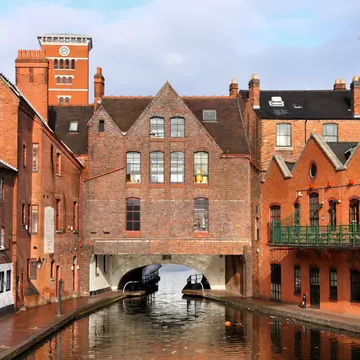
Birmingham developed around a vast network of canals that powered the industries of the 18th and 19th centuries. If you want to see these waterways at their finest, set out for a stroll along the meandering 45-minute stretch between Gas Street Basin and the University of Birmingham.
The redeveloped, mixed-use areas of Brindleyplace and the Mailbox offer lively waterside bars, bistros and restaurants. Yet continuing down the Old Line canal past Five Ways, the towpath turns into a bucolic scene of overhanging foliage and sudden tranquility, smack in the middle of the city.
Detour: The elegant grounds of the university are a treat to explore, too, as is the underrated Barber Institute of Fine Arts.
Talking in dramatic terms about Birmingham’s industrial past is easy; conjuring the feel of daily life from this era is hard. Except, that is, at one corner of the city center, where you can get a vivid sense of the living conditions faced by working-class Brummies over 100 years ago.
Located on lively Hurst St, the Birmingham Back to Backs are the last remaining example of the city’s 19th-century attached, terraced houses. Today, you can take guided tours led by passionate locals who will evoke the challenges – and joys – of life in these densely populated blocks.
Planning tip: Make sure to book ahead of time – and don’t miss the 1930s-era sweets shop on the corner.

With curvaceous oddities like the Bullring and the Rotunda giving Birmingham one of the UK’s more distinct skylines, it’s worth finding a spot to take it all in from above. The best viewing platform in the city isn’t at the top of a skyscraper, but rather on the 7th floor of the Library of Birmingham in Centenary Sq.
What the library’s Secret Garden lacks in towering height, it more than makes up for in genuinely panoramic outdoor views and plenty of room to wander. Elevated in every sense of the word, this green space is ideal for summertime relaxation above the hum of the city.
From the reggae beats of UB40 to Black Sabbath’s pioneering heavy-metal sound and Duran Duran’s bouncy new-wave pop, Birmingham has nurtured the full gamut of British musicians; few other cities even come close.
Whether locals know it or not, every neighborhood has contributed to the richness of the city’s music heritage – and Musical Routes by National Rail aims to bring that to life. Find out more about Birmingham's special contribution to British culture by downloading one of their guides.
Staying in a city famous for its music culture, naturally you're going to want to go out and hear some live shows. Victorian pub Hare & Hounds in Kings Heath has a lively upstairs room (it’s famous as the site of UB40’s first gig). In a tiny downstairs space in the city center, the Sunflower Lounge is perfect for intimate gigs that showcase up-and-coming new bands. And the iconic, must-visit canal-side rock pub The Flapper has a massive beer garden and an intimate gig venue downstairs.
For big-name acts, check out what’s on at Utilita Arena at Brindleyplace – it’s in a great location surrounded by bars and restaurants for before and after the show. The atmospheric 02 Institute is a historic venue in Digbeth that used to be a church; these days, the sacred music here consists of guitar solos.

With more than 8000 acres of parks and areas for recreation, Birmingham is one of the greenest cities in Europe. If you want to combine some leafiness with gorgeous panoramic views and charming woodland trails, head out to Lickey Hills Country Park.
Just 10 miles southwest of Birmingham’s city center, the hills are easily reached by train, bus or car, and offer marvelous walks at any time of year. Make sure to head up to the almost 984ft-high summit of Beacon Hill, where you’ll be treated to views of Birmingham’s skyline to the north and the distant Malvern Hills to the south.
Suburban Stirchley’s rise as craft-beer haven has been both pleasant and unexpected. Thanks to several splendid pubs and taprooms at conveniently spaced intervals, intrepid craft-beer aficionados can take on the Stirchley Beer Mile and sample the finest this south Birmingham neighborhood has to offer.
From Cork and Cage at the north end to GlassHouse to the south – with such vibrant taprooms as Attic Brew Co and Birmingham Brewing Company (to name but a few) along the way – you’ll have no problem comparing and contrasting IPAs to your heart’s content.

Free to enter, Birmingham Museum & Art Gallery has some 40 traditional galleries in a grand old Victorian building. The museum’s greatest strength is its program of innovative pop-up exhibitions that display the creativity and passion of its curators. The museum is also home to the world’s largest collection of Pre-Raphaelite works.
Detour: Don’t miss Edward Burne-Jones’ stunning Pre-Raphaelite stained-glass windows in nearby St Phillip’s Cathedral.
A manufacturing powerhouse during the Industrial Revolution, Birmingham produced countless types of goods – and had a particular specialty in jewelry. The trade was concentrated in the Jewellery Quarter, a handsome neighborhood that to this day produces 40% of the UK’s jewelry output.
With its immaculately preserved workshops and live demonstrations, the Museum of the Jewellery Quarter offers a fascinating time capsule into Birmingham’s heritage. Make sure to explore the quirky bars and restaurants in the area too, including the aptly titled 1000 Trades and enigmatic The Wilderness.

If you want to spark an always-feisty debate in Birmingham, ask a local their opinion of the now-demolished Central Library. But whether you thought that famous brutalist inverted ziggurat was an icon or a monstrosity, what took its place at Chamberlain Sq sure makes an impression, too: Paradise Birmingham.
Amid gleaming new office towers, the cleaned-up square boasts a pleasant white sheen and has attracted quality restaurants such as Dishoom and Rosa’s Thai. The volume and color have now been turned up further with the addition of Albert’s Schloss, a boisterous Bavarian-style bar and restaurant set across two floors.
Birmingham has more Michelin-star restaurants than any other city in the UK outside of London, yet the dish at the heart of the city’s culinary character is a humble one-pot stew: balti. Devised by Birmingham’s Pakistani community in the early 1970s, balti is a fiery curry cooked quickly with the freshest ingredients over a searing hot flame.
While you can now find balti on menus across the city, the Balti Triangle neighborhood a couple of miles south of the city center is the dish’s spiritual home. Sadly, the pioneering restaurant Adil’s closed in 2023 after 43 years, leaving just a handful of establishments where you can tuck into a balti in the streets where the dish took shape.
Local tip: Try modern favorite Shababs on the Ladypool Rd for a taste of balti at its best.
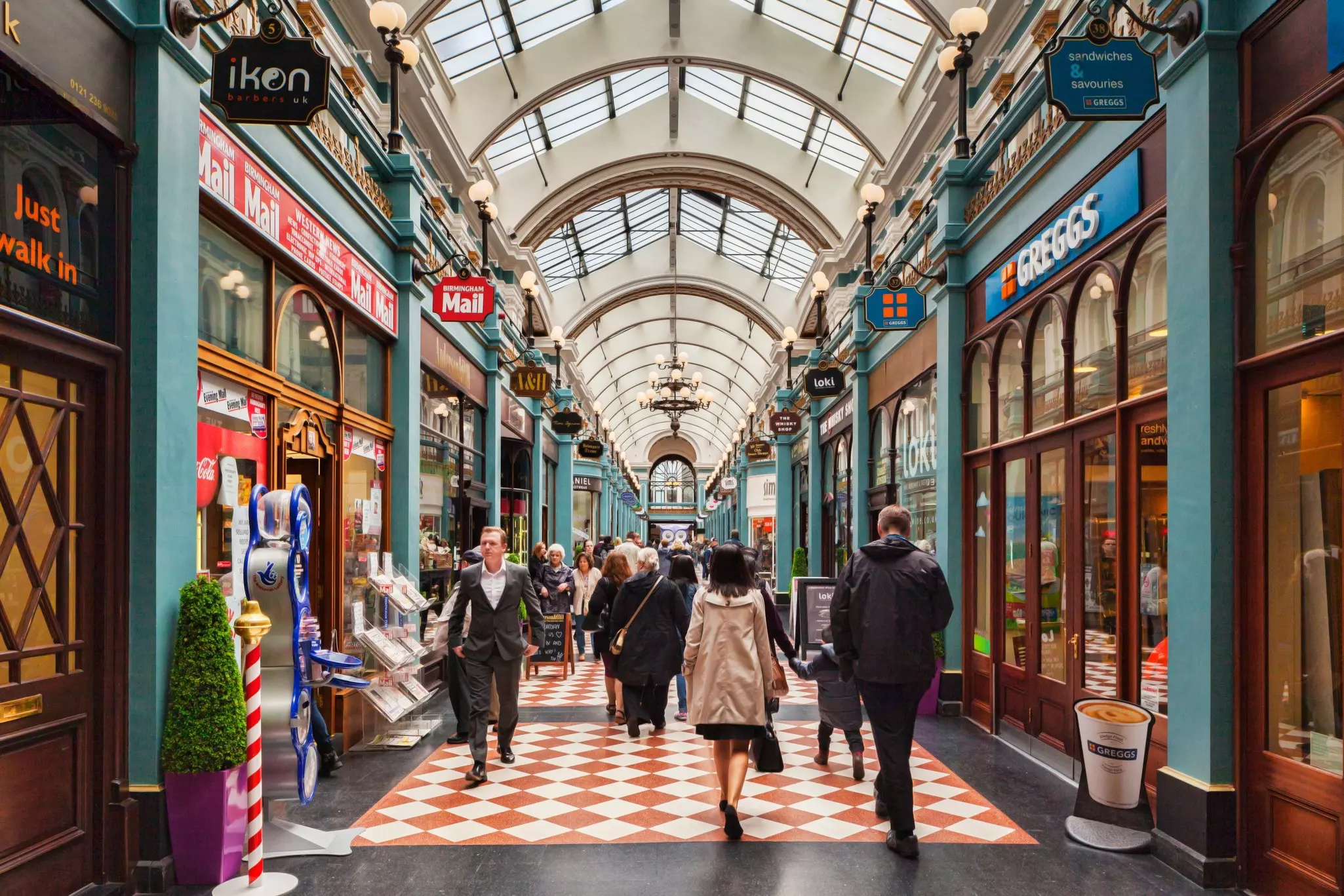
Birmingham isn’t a city short on shops, with the Bullring, Grand Central and the Mailbox offering all the top brands and boutiques. Yet for a more evocative shopping experience, set out on a stroll through the city’s historic arcades.
Located across from Snow Hill Station, the Great Western Arcade is an ornate Victorian delight filled with independent vendors. Across from New St Station, the Piccadilly Arcade dates to 1925 and contains a lavishly painted ceiling fresco. In the Edwardian era, the space was a cinema – which explains the sloping floor.
Just a couple of miles south of Birmingham is the next best thing to Willy Wonka’s chocolate factory. Cadbury World educates visitors about the history of cocoa and the Cadbury family – sweetening the deal with free samples, displays of chocolate-making machines and chocolate-themed attractions. There’s even a “4D” cinema with motion-sensor seats.
Planning tip: Opening hours vary substantially; bookings are essential at peak times. Trains run from Birmingham New St to Bournville, from where it's a well-signed 10-minute walk.

The popular BBC crime drama Peaky Blinders (and its indomitable main character Tommy Shelby, played by Cillian Murphy) brought Birmingham and its memorable local accent to a global audience. Even though the show and subsequent movies weren’t shot on location in the city, you can what inspired the Peaky Blinders team at the Black Country Living Museum. As well as seeing the famous canal-side and yard filming locations, visitors can explore a painstakingly recreated 19th-century industrial landscape.
Planning tip: Fans of the show should try to time their visits with the regular Peaky Blinders Nights. Reserve well ahead.
A 14-mile train ride north of the city, the nearby town of Lichfield is home one of the most superb cathedrals in the entire country. Dating to the 14th century and soaring over 250ft above the town’s skyline, Lichfield Cathedral is one of only three three-spired cathedrals in the UK, and the only one dating to the Middle Ages. Spend time touring the charming cathedral grounds – then finish your excursion at Tom Shepherd’s sublime, Michelin-starred restaurant Upstairs, a 5-minute walk away.
Explore related stories