Sep 11, 20268 min read
How to See Barcelona by BicycleFeb 16, 2026
12 MIN READ
Writer
City views from a rooftop bar in Barcelona. Artur Debat/Getty Images

Writer
Highlights
Writer Esme Fox picks 21 things to do in Barcelona, from Gaudí to the beaches.
Book La Sagrada Família early and visit Gaudí's Casa Batlló and La Pedrera.
Try tapas at dusk and order Catalan classics like suquet de peix for dinner.
For views, head to Montjuïc; for history, wander the Gothic Quarter's small alleyways.
Lonely Planet may earn a commission from affiliate links on our site. All recommendations and reviews reflect our own independent opinions.
Barcelona is Spain's most visited city, and it's not hard to see why – the historic capital of Catalonia is packed with galleries, museums, attractions and an incredible food scene. Set between the mountains and sea, the city is celebrated for its unique architecture, thriving nightlife and urban beaches. Start planning your visit with our guide to the best things to do in Barcelona.
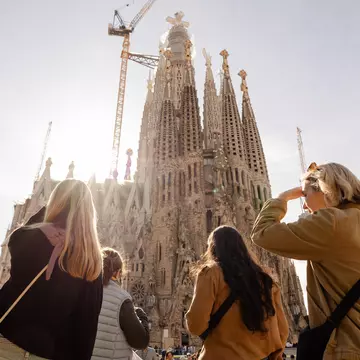
Almost every city has at least one landmark that you simply can’t miss, and La Sagrada Família is Barcelona’s. Antoni Gaudí’s magnificent masterpiece has been under construction for more than 130 years, with the current anticipated completion date in late 2026, marking the 100th anniversary of Gaudí’s death.
Far from a construction site, however, the church features two grand facades studded with intricate stone carvings, towers that gleam with gem-like tiles and an interior filled with tree-like columns soaring up toward the canopy ceiling.
Planning tip: La Sagrada Família is one of the most popular tourist attractions in Spain. Tickets can sometimes be bought on the day, but to guarantee entry, book your ticket online in advance, bring official ID and show up within your time slot.
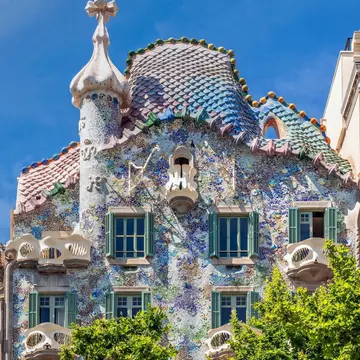
La Sagrada Família may be the most famous of Gaudí’s buildings, but all his wonderful, whimsical designs are worth visiting. The most well known are Casa Batlló, with its iridescent dragon-like scales and skull-and-bone-effect balconies, and La Pedrera, with its undulating stone facade and fanciful chimneys. Some of his lesser-known but equally beautiful buildings include Casa Vicens, the first house he ever designed; Palau Güell, which he designed for his patron Eusebi Güell; and the Torre Bellesguard.
Planning tip: Tickets are often cheaper if booked online in advance for Casa Batlló and La Pedrera.
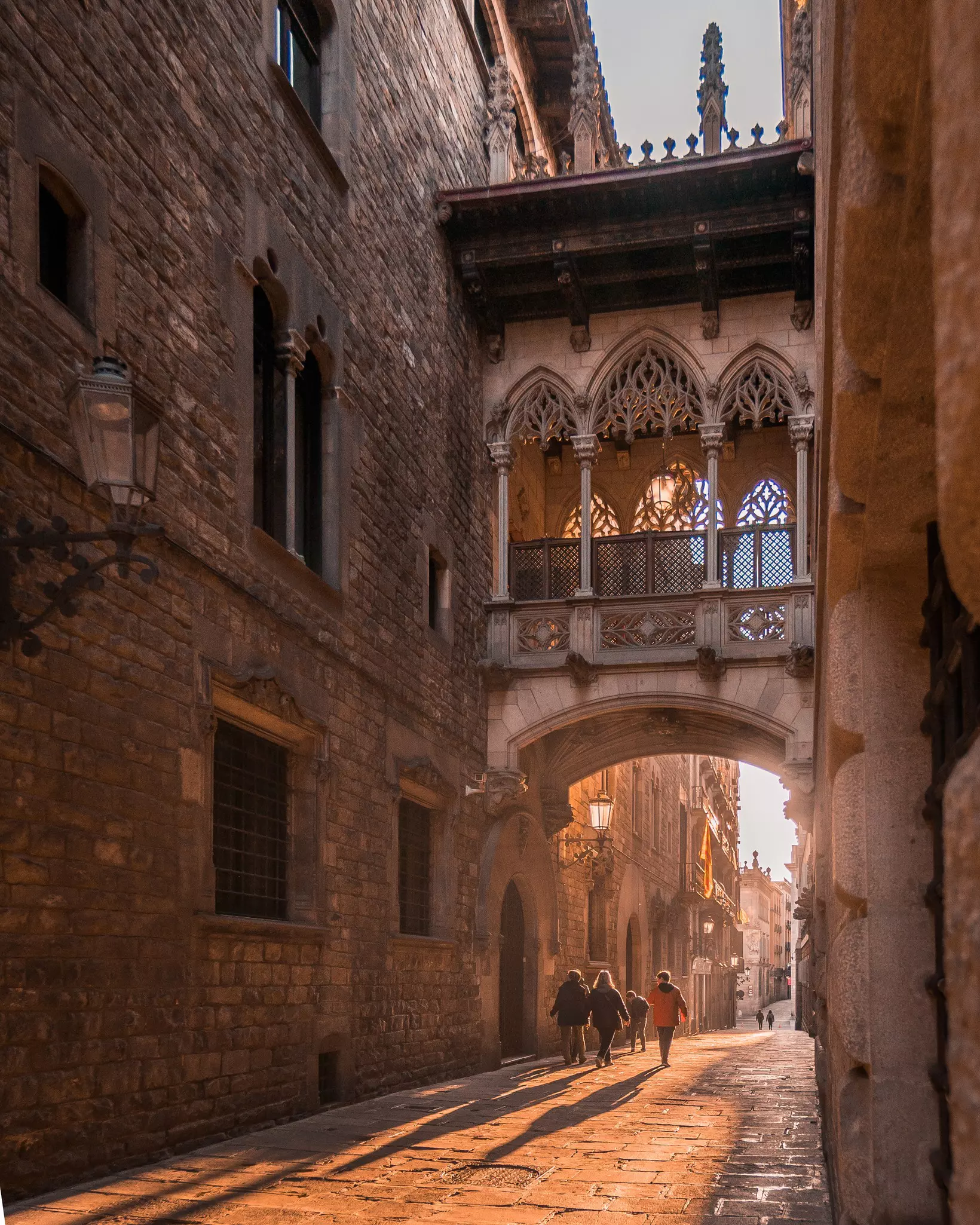
Barcelona’s Gothic Quarter (Barri Gòtic) is the oldest and most atmospheric part of the city. Characterized by small alleyways, hidden plazas and historic buildings, it lies to the east of La Rambla, the famous pedestrian street that runs through the center of the old town.
The neighborhood is scattered with century-old shops, small bars and charming cafes. Some highlights include the striking Plaça Reial, fringed by cafes and palm trees; Plaça Sant Jaume, home to the grand Palau de la Generalitat; and the impressive La Catedral.
Planning tip: Many parts of the Gothic Quarter are known for late-night bars and clubs that are still going well into the morning. It's perfect if you want to dance until dawn, but not the best neighborhood to stay in if you're traveling with young kids or those who appreciate an early night.
La Boqueria might be the most famous of Barcelona’s food markets, but each neighborhood has its own, and there are several excellent ones to choose from. La Boqueria is the oldest and one of the most atmospheric, but in recent years, more stalls have given over to things such as tropical fruit shakes and novelty candy rather than traditional produce.
For a more authentic vibe, visit the modern Mercat de Santa Caterina with its multicolored wavy roof or the grand Mercat de Sant Antoni with 250 stalls.
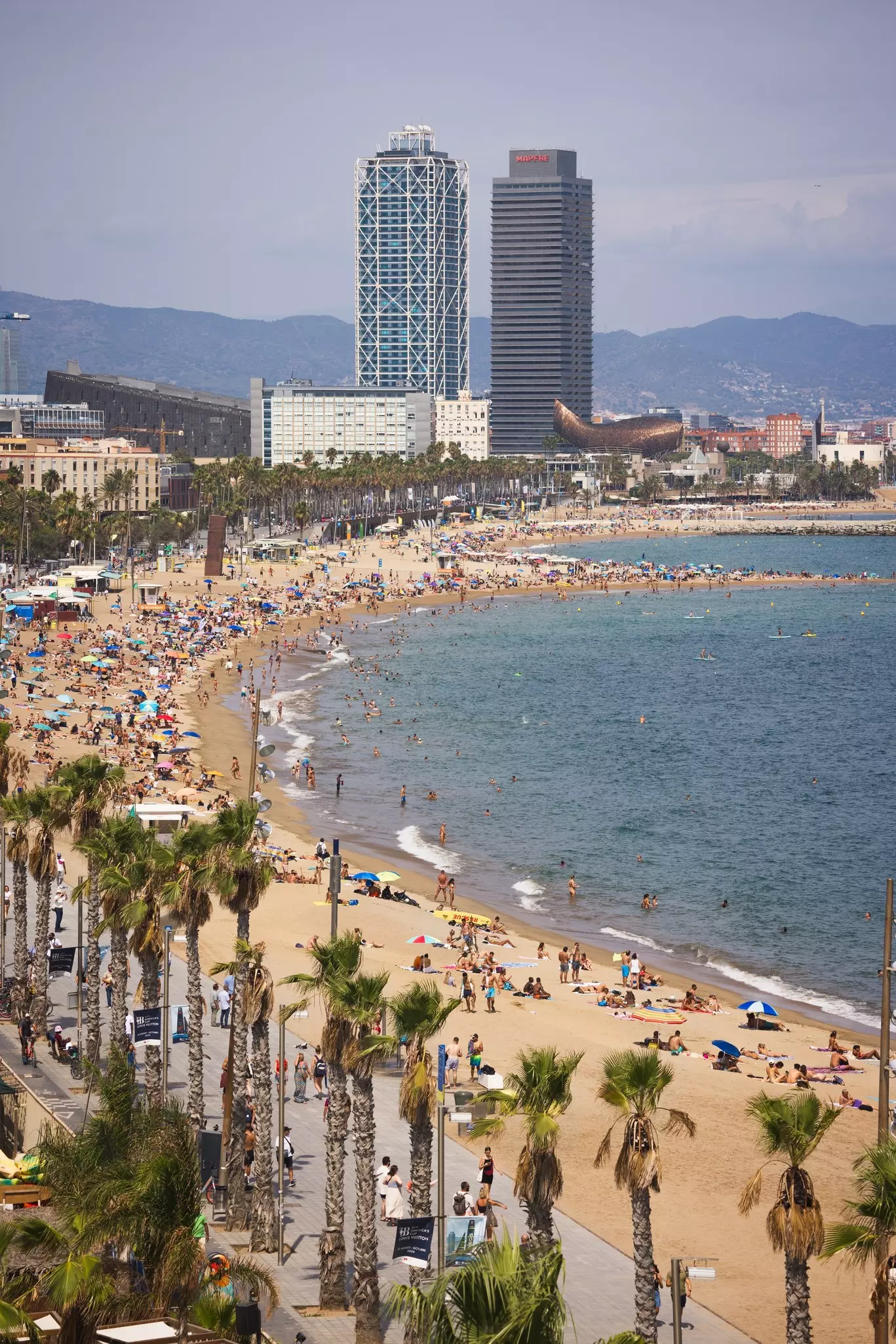
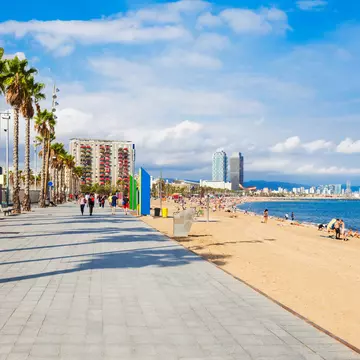
Whatever time of year you visit Barcelona, the beaches won’t disappoint. Even in winter, it can be sunny enough to sit outside and enjoy a meal at one of the seaside restaurants, while summer offers everything from sunbathing and swimming to water sports. The city boasts a 5km stretch of coastline, home to nine beaches. There’s Sant Sebastià with its range of upscale restaurants, Somorrostro lined with hip nightclubs and Nova Icària with a watersports center and beach volleyball.
Detour: Further afield, the beach town of El Masnou is a 30-minute train ride from Barcelona, where you'll find a long curl of burnished bronze sand. Around 20km southwest of the city center, Castelldefels is another idyllic beach; the pink-and-apricot sunsets are exquisite.
When hunger pangs arrive in the afternoon or early evening, take advantage of pre-dinner tapas. This means heading to a local favorite tapas bar for a bite of anchovies, sausage, squid, wild mushrooms, roasted peppers or dozens of other tempting morsels. Wine, cava and beer all make fine accompaniments.

Stay connected abroad with an eSIM
Holafly eSIM provides unlimited mobile data with no hidden fees, giving you peace of mind wherever you travel. Stay connected even after your plan ends with Always On. Use code LONELYPLANET for an exclusive discount.
Lonely Planet may earn a commission from affiliate links on our site. All recommendations and reviews reflect our own independent opinions.
Planning tip: Many tapas spots are lively stand-around-the-bar affairs. When it's time for a change of scenery, barcelonins make their way to dinner or just head to another tapas bar and skip the sit-down formality altogether.
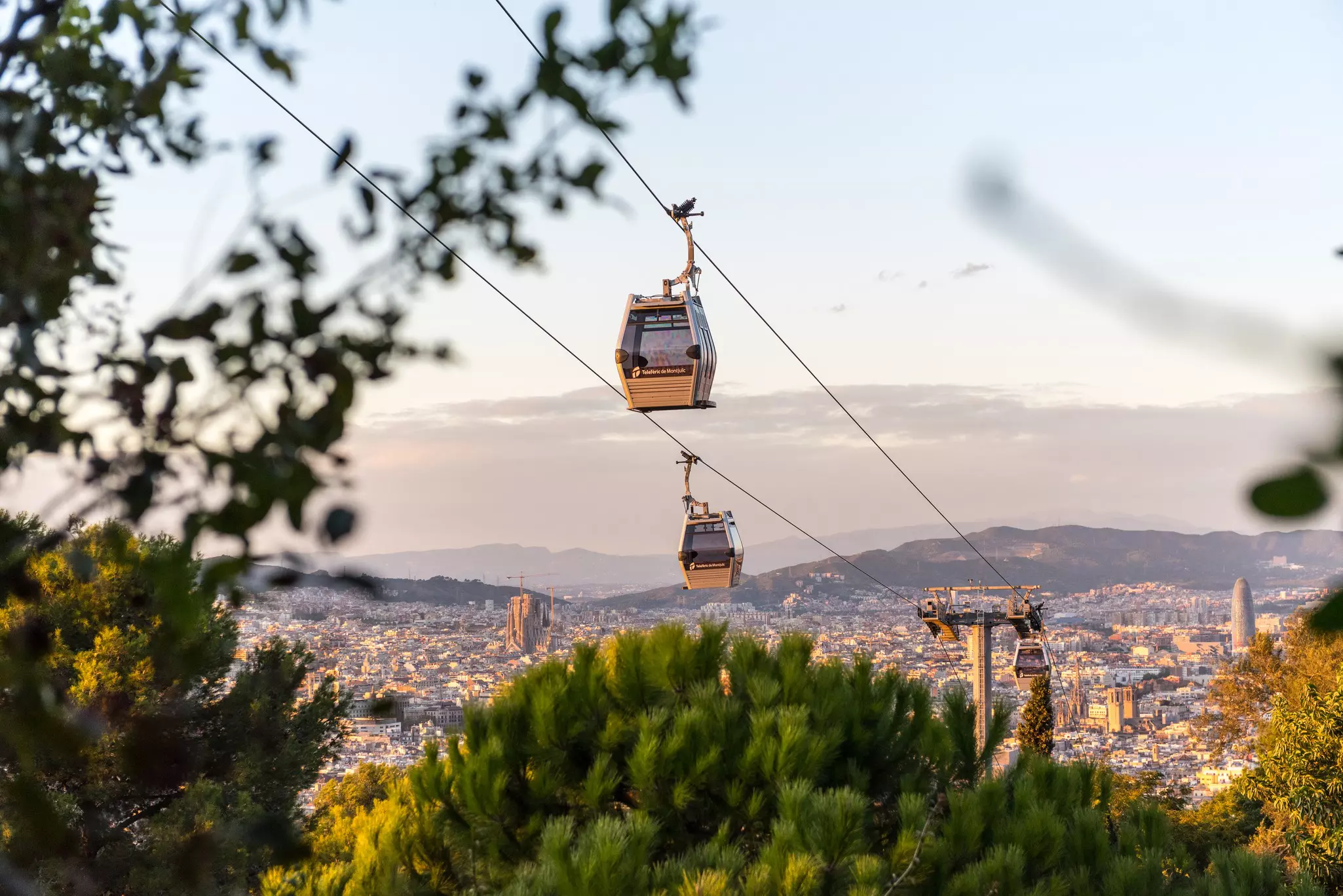
Montjuïc is the green hill south of the city, home to the Olympic Park, as well as numerous museums and gardens. Rising from Plaza d’Espanya, you'll first see the grand sets of stairs and fountains cascading down from the magnificent palace housing the Museu Nacional d'Art de Catalunya. Behind that is the huge Olympic Stadium and the rest of the Olympic Park. While you're up there, you can take the Montjuïc cable car and enjoy views over Barcelona that take in landmarks like La Sagrada Família and the Camp Nou.
Planning tip: The Museu Nacional d'Art de Catalunya has a terrace that offers spectacular views of the city and is a popular spot to watch the sunset. The open-air bar means you can enjoy a few drinks while taking in the view. There is free entrance every Saturday after 3pm and the first Sunday of the month, but visitors must register on the website for General Admission in advance.
Picasso lived in Barcelona between the ages of 15 and 23, and elements of the city undoubtedly influenced his pieces, from the colorful but simply painted frescoes hanging in the Museu Nacional d'Art de Catalunya to the imaginative trencadís-style mosaics (pre-Cubist some say) of Gaudí. The Museu Picasso's setting adds to the appeal, as do the buzzy, history-rich surrounding streets of El Born.
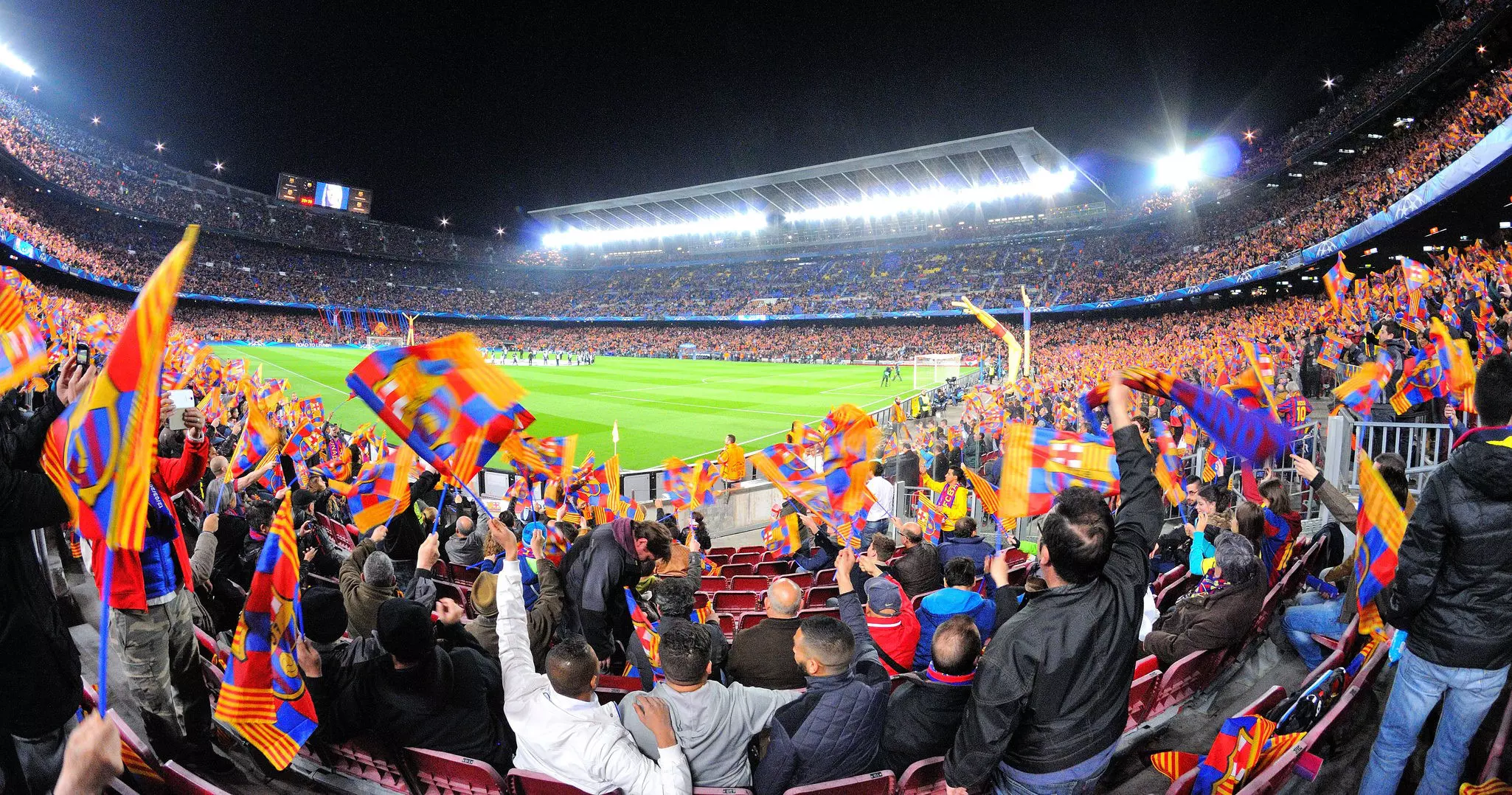
FC Barcelona plays a prominent role in the city's imagination. Heading to a football match at Camp Nou between September and May is the best way to catch a bit of Barcelona fever, but watching it on screen in a bar can be just as much fun, depending on the crowd.
The stadium has been going through a series of renovations that will significantly increase capacity, making it one of the largest stadiums in the world. Completion has been pushed back several times and is now expected in 2027, but FC Barcelona have started playing there again.
Planning tip: Even if you can't make it to a game, the interactive Barça Stadium Tour and Museum experience takes you through the locker rooms and onto the field, hallowed ground for many Catalans. Tickets bought online in advance are slightly cheaper than those bought on the day.
A night in Barcelona holds limitless possibilities. Start with sunset drinks on a rooftop terrace or sink your heels into the sand at a rustic-chic beachside xiringuito. As darkness falls, the city transforms with lively squares and live music, and around midnight the bars fill up.
Pick from old-school taverns, plush lounges in lamp-lit medieval chambers, sleek cocktail dens, boisterous cava bars, basements churning out brassy jazz and more. If you're still standing at 3am, hit the clubs like Sala Razzmatazz and Apolo, and and keep going until dawn.
Barcelona is a great foodie city, known throughout the world for its innovative chefs and creative cuisine. While you’ll find tapas bars everywhere, be sure to sample some local Catalan dishes, too.
Before you dine, join in l’hora del vermut at a typical vermouth bar, which pairs the fortified wine with bites of pickled anchovies and olives to whet the appetite. Follow it up with traditional Catalan dishes, such as botifarra amb mongetes (sausage with white beans), suquet de peix (fish stew), escalivada (roasted red peppers, onions and eggplant) and crema catalana (similar to crème brûlée). Sample the cuisine at Casa Delfín.
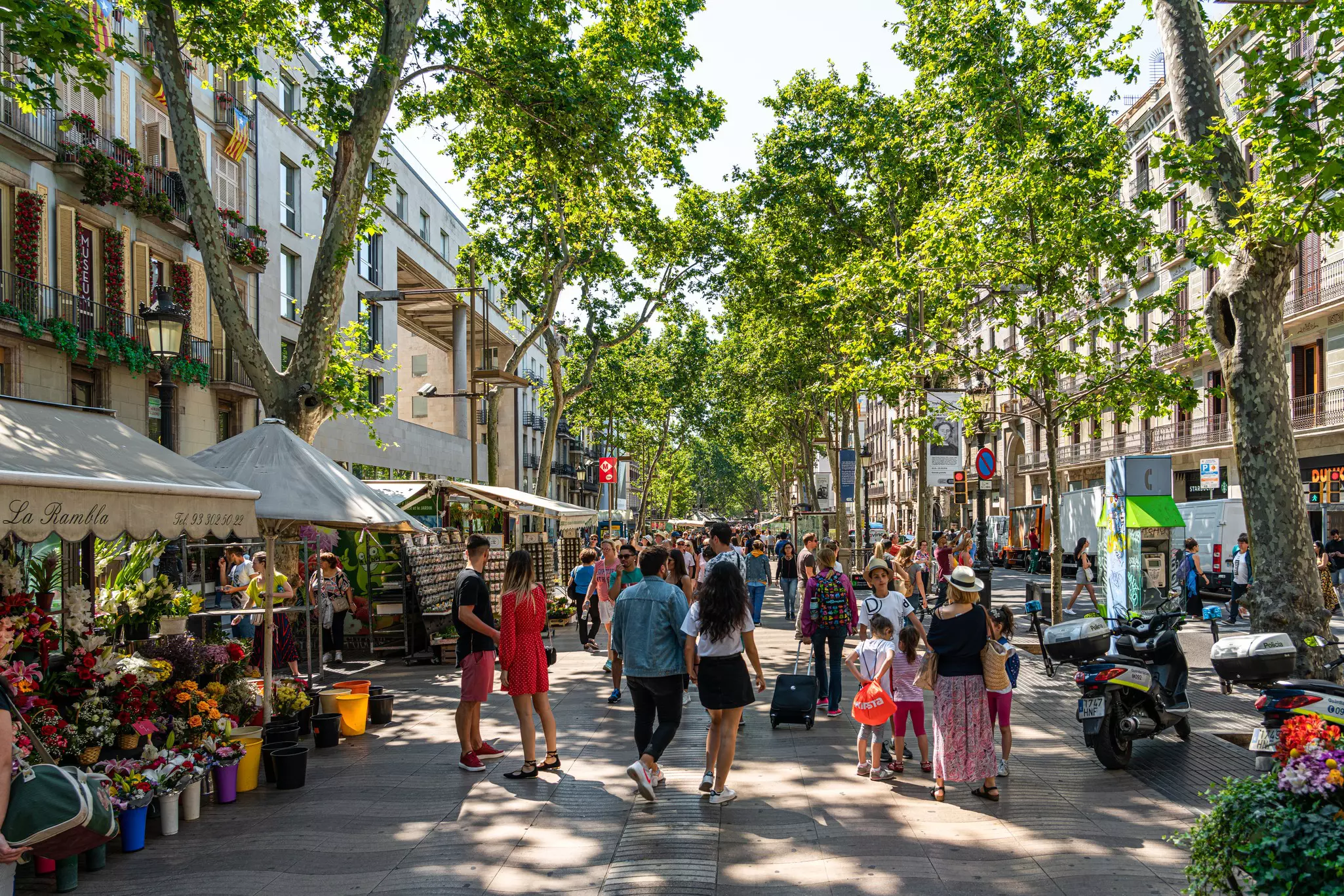
Sure, the leafy 1.2km pedestrian boulevard of La Rambla that stretches toward the sea is the most tourist-dense spot in town – at times, you can barely push through the crowds. But pay a visit first thing in the morning and you'll see that beyond the souvenir shops and craft sellers, it's a pure sensory overload.
Open-air cafes, fragrant flower stands and a much-overlooked mosaic by Miró dot the pavement, while key venues line both sides of the street, including the elegant Gran Teatre del Liceu, the sprawling Mercat de la Boqueria and numerous galleries. Several other barris, such as El Poblenou, have their own attractive rambles, too.
Because Barcelona has a festival almost every other month, it won’t be hard to make your trip to the city coincide with one. There are the patron-saint festivals of Santa Eulalia in February and La Mercé in September, La Diada de Sant Jordi in April (when people give each other gifts of books and roses to celebrate St George) and the fire festival of St Joan in mid-June.
Some of the main features of Catalan festivals include the castellers (human towers), huge parading giants and correfocs, where firework-wielding devils dance through the streets.
Joan Miró, the city’s best-known 20th-century native son, bequeathed this art foundation to his hometown in 1971. The light-filled buildings are crammed with seminal works, from Miró’s timid early sketches to paintings from his last years.
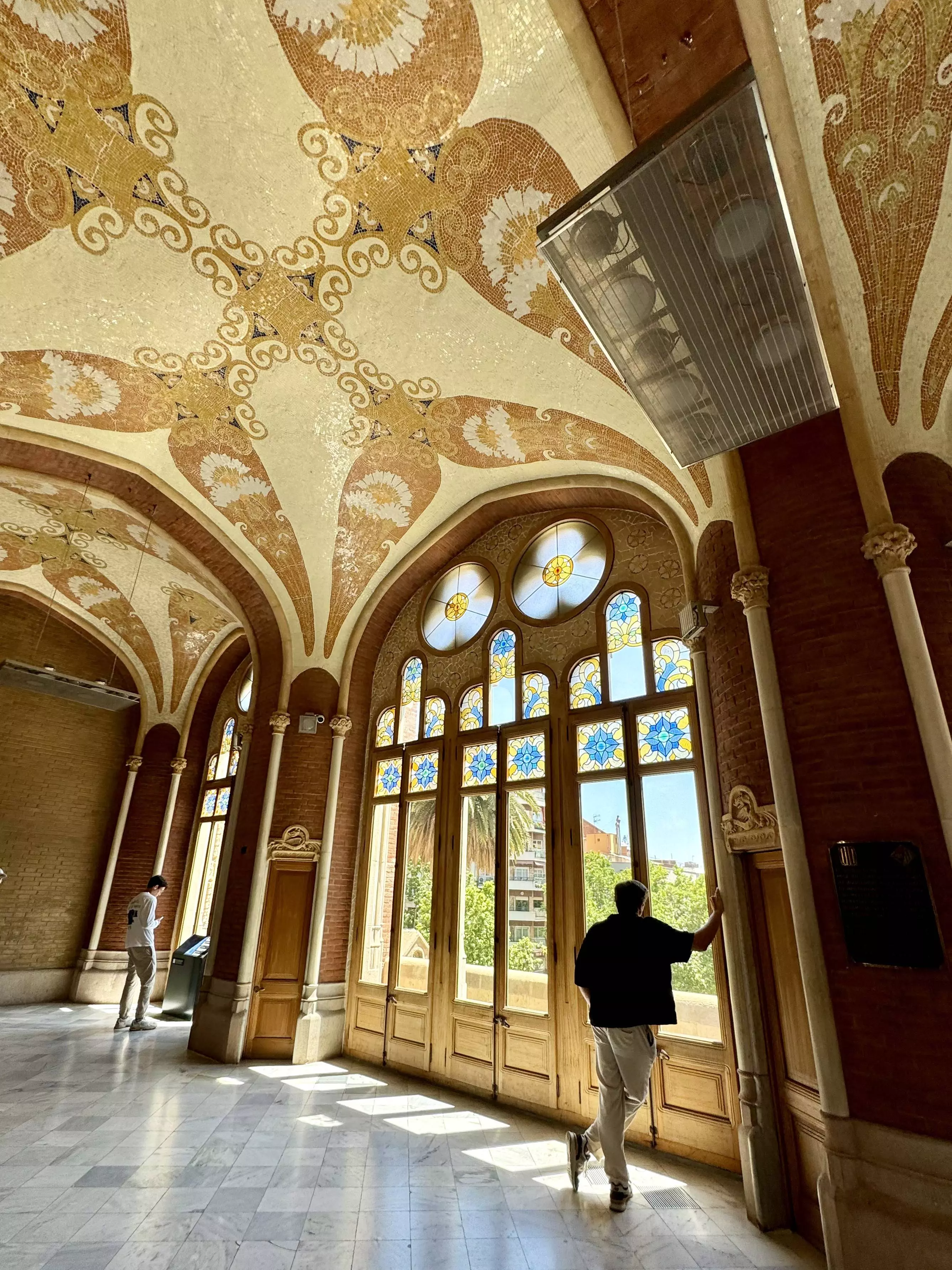
One of the things that makes Barcelona so charming is its Modernista architecture. An artistic movement that affected everything from literature and art to architecture, the Modernisme era lasted from the late 19th to the early 20th centuries.
You can identify these buildings by their bright colors, floral or botanical motifs, patterned tiles and curvy lines. Some of the best examples can be seen around the L'Eixample area, but you can also find them dotted all over the city. Besides Gaudí’s Modernista works, some of the best examples in the city are the Palau de la Música Catalana and Recinte Modernista de Sant Pau, both designed by the architect Lluís Domènech i Montaner, plus Casa Vicens and Casa Amatller to name a few.
This impressive complex of auditoriums, exhibition spaces and conference halls opened in 1994 in what was formerly an 18th-century hospice, the Casa de la Caritat. The courtyard, with a vast glass wall on one side, is spectacular. As well as a constantly changing arts-and-culture program with multimedia installations, VR art, and cultural experiments, there is a packed calendar of talks and debates.
Planning tip: Most talks and events are in Catalan or Spanish, but for big-name speakers or international events real-time English translation is available. Check online for the schedule.
Over in Esquerra de L’Eixample, the grid between Aragó, Gran Via, Balmes and Comte Urgell streets is popularly known as the "Gaixample." With its many bars, clubs, restaurants, bookshops and rainbow flags, this is the epicenter of Barcelona’s LGBTQ+ scene. Some of the most popular nightspots include Punto BCN for drinks from around 6pm or catching a drag show, and relaxed bar La Chapelle next door. Weekends-only Carita Bonita is a hub for Barcelona’s lesbian community. Candy Darling has drag shows, art exhibitions and a cultural focus, while rooftop cocktails and dancing await at Axel Hotel’s Sky Bar (summer only). Away from the nightlife, Antinous is a lively neighborhood LGBTQ+ bookshop.
Mark your calendar: In late June or early July, Barcelona hosts its packed 2-week Pride festival, with a Pride march.
Follow the barcelonins looking for an escape from the city seek out this protected pine-scented 80-sq-km park. As well as views of the Barcelona skyline, coastline, and mountains, there are hiking and cycling trails to explore (look out for the wild boars that live here). The park also has a ruined 14th-century Castellciuro castle in the west and a grand 15th-century Can Coll farmhouse which is now an environmental education center. Kids will want to visit the pocket-sized Tibidabo Amusement Park.
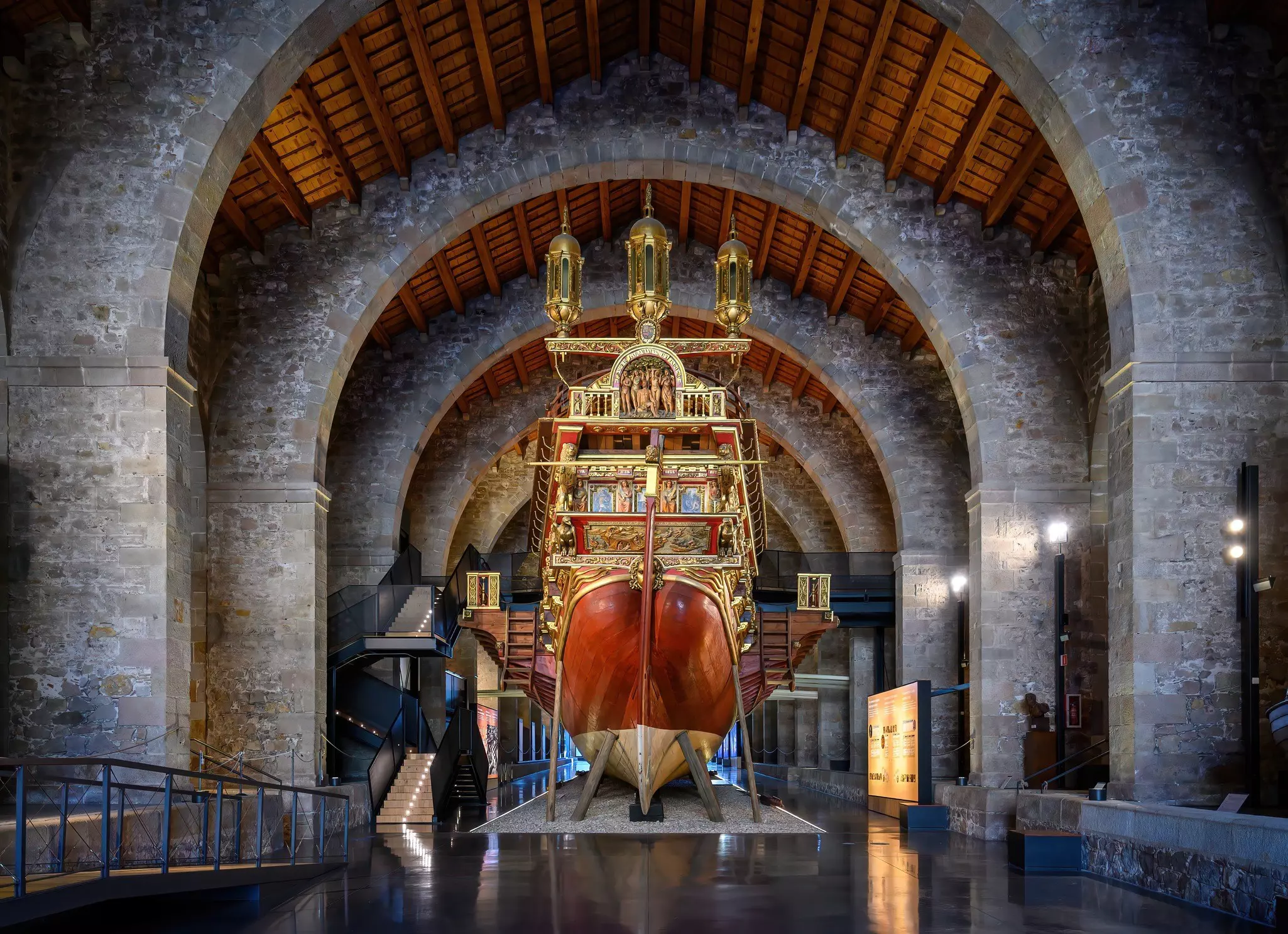
Head to the Museu Marítim de Barcelona (MMB) in the Gothic Drassanes Reials (Royal Shipyards), a relic from Barcelona's shipbuilding glory days between the 13th and 18th centuries. Highlights include a full-scale 1970s replica of Don Juan de Austria’s 16th-century flagship, fishing vessels, antique navigation charts, dioramas of the Barcelona waterfront, and a life-size replica of the Ictíneo I, one of the world's first submarines, invented in 1858 by Catalan polymath Narcís Monturiol.
Admire Modernista marvels over a cocktail or vermouth. L'Eixample's elegant streets conceal an array of hidden-away, view-laden open-air bars and cafes that are beloved by barcelonins. Many of them are within elegant hotels but open to all.
This peaceful oasis is a beautifully preserved medieval convent that was founded in 1327 and is now a museum of monastic life. (The few remaining nuns live nearby.) The highlight is the large, elegant, three-story cloister built in the early 14th century. In the nuns' former sleeping quarters you can admire the monastery’s collection of art, especially Gothic devotional works. The Pedralbes neighborhood is a tranquil residential area with leafy streets and impressive modernist mansions to also stroll and enjoy a local life vibe.
Explore related stories