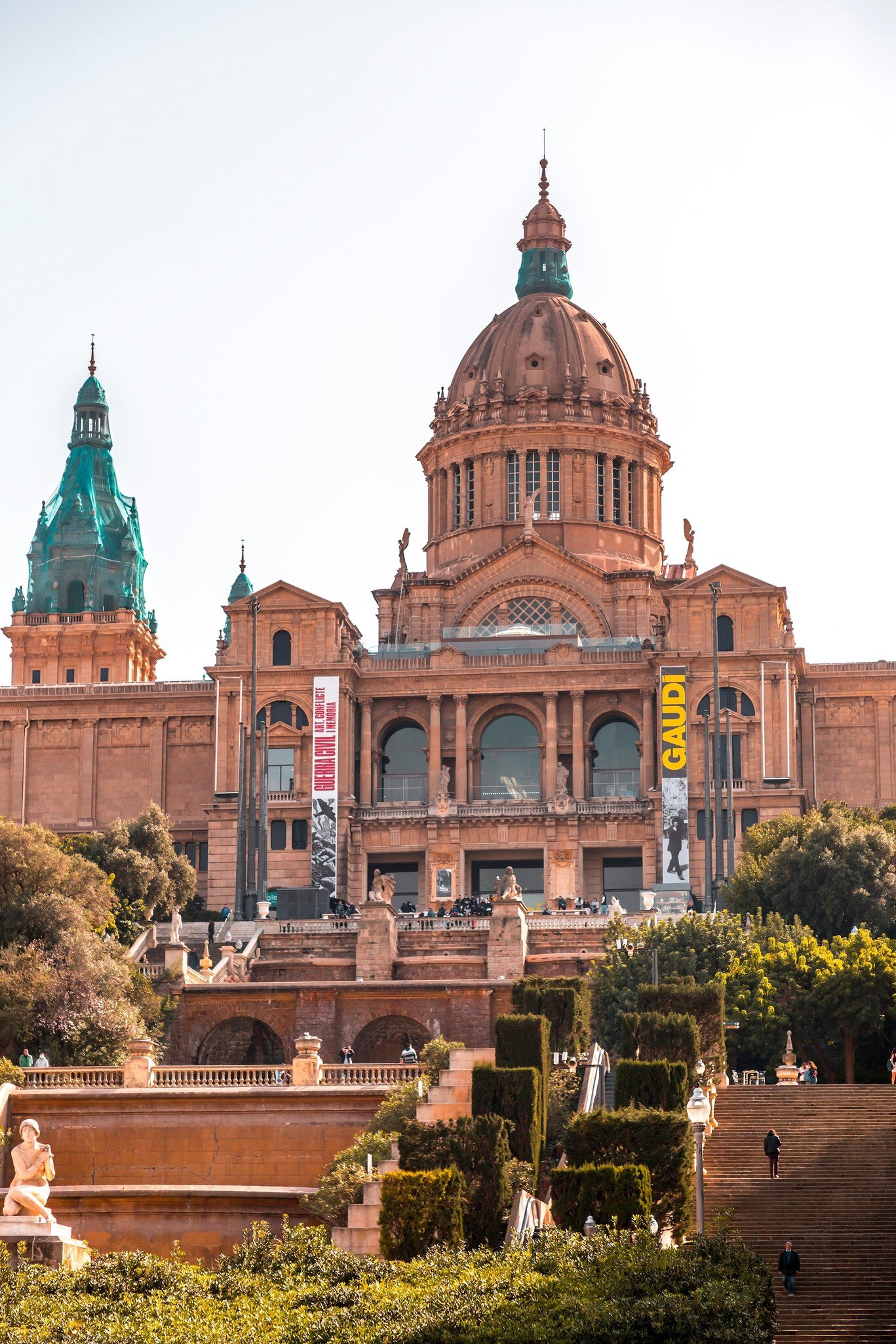
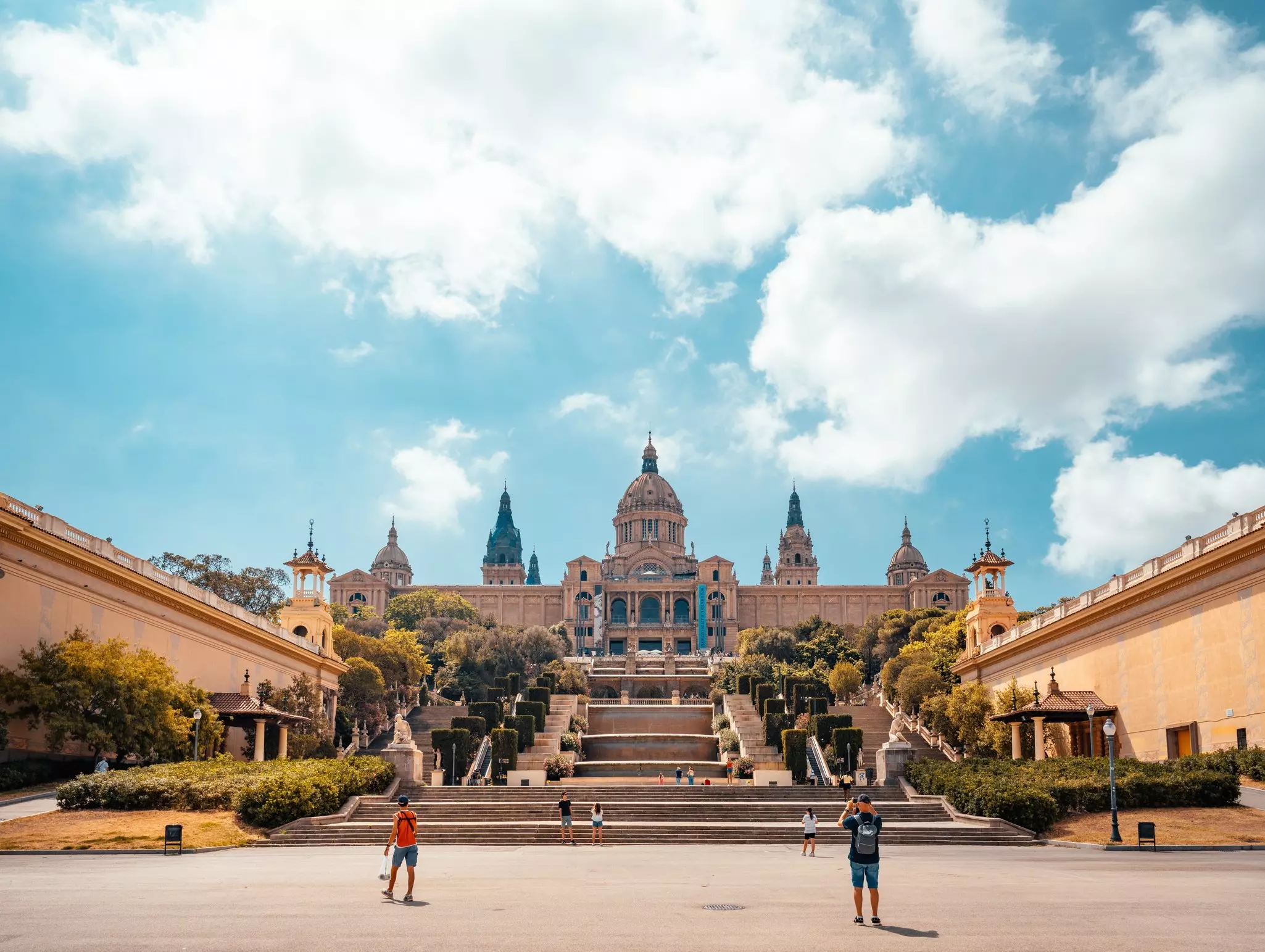
The spectacular neo-baroque silhouette of the Palau Nacional, housing the Museu Nacional d’Art de Catalunya (MNAC), can be seen on Montjuïc’s slopes from across the city. Built for the 1929 World Exhibition and restored in 2005, it houses a vast collection of mostly Catalan art spanning the early Middle Ages to the early 20th century.
Romanesque Masterpieces
The MNAC’s Romanesque art collection is considered one of the most important concentrations of early medieval art in the world. Rescued from neglected country churches across northern Catalonia (particularly the Pyrenees) in the early 20th century, the collection consists of 21 frescoes, wood-carvings and painted altar frontals (low-relief wooden panels that were the forerunners of the elaborate altar-pieces of later churches). The insides of several churches have been re-created and the frescoes – in some cases fragmentary, in others extraordinarily complete and alive with color – have been placed as they were when in situ. The first of the two most striking frescoes, in Sala 7, is a magnificent image of Christ in Majesty done around 1123. Based on the text of the Apocalypse, the images were taken from the apse of the Església de Sant Climent de Taüll in the Vall de Boí in northwest Catalonia. Nearby in Sala 9 are frescoes done around the same time in the nearby Església de Santa Maria de Taüll. This time the central image taken from the apse is of the Virgin Mary and Christ Child.
The Gothic Collection
Opposite the Romanesque collection on the ground floor is the museum’s Gothic-art section, with Catalan Gothic painting and works from other Spanish and Mediterranean regions. Look out for the work of Bernat Martorell in Sala 32 and Jaume Huguet in Sala 34. Among Martorell’s works are figure images of the martyrdom of St Vincent and Santa Eulàlia. Huguet’s Consagració de Sant Agustí, in which St Augustine is depicted as a bishop, is dazzling in its detail.
Renaissance & Baroque
The Renaissance & Baroque gallery, which exhibits some 300 Spanish and international pieces spanning the 16th to 18th centuries, includes works by Diego Velázquez, Francisco de Zurbarán, José (Jusepe) de Ribera, Goya, Tiepolo, Rubens, El Greco and Canaletto.
Modern Catalan Art
On the top floor, beyond a beautiful domed hall, the collection turns to modern art, mainly but not exclusively Catalan. These galleries are arranged thematically: Modernisme, Noucentisme, Art and the Civil War and so on. Among the many highlights: an early Salvador Dalí painting, Retrat del meu pare (Portrait of My Father), Juan Gris’ collage-like paintings, the brilliant portraits of Marià Fortuny and 1930s call-to-arms posters against the Francoist onslaught (nearby you’ll find photos of soldiers and bombed-out city centers). There are also works by Modernista painters Ramon Casas and Santiago Rusiñol, as well as Catalan luminary Antoni Tàpies. Also on show are items of Modernista furniture and decoration, which include chairs by Gaudí and a mural by Ramon Casas (the artist and Pere Romeu on a tandem bicycle) that once adorned the legendary bar and restaurant Els Quatre Gats.
The Sala Oval
Make sure to visit the spectacular Oval room, one of the largest halls for social events in Europe, at the back of the museum, past the shop. It’s topped by a magnificent dome, allowing natural light in from the sky, and looked over by a huge 34m-long and 11m-high organ sitting above the balconies. Today it’s still used for various ceremonies, gala dinners, concerts and parties. Admire the Sala de Oval better with a coffee at the Oval Café.