May 6, 202514 min read
The 15 Best Things to Do in LatviaMay 6, 2025
14 MIN READ

Writer
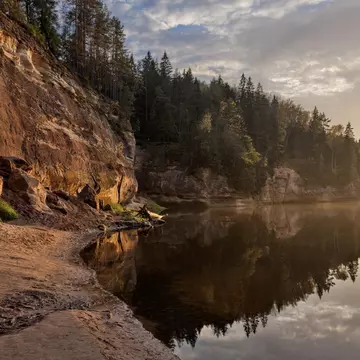
Sunset on the Gauja River in Gauja National Park, Latvia. Ilya Dubovsky/500px

Writer
Highlights
Editors round up 15 Latvia highlights, from Rīga to the Baltic coast.
Walk Rīga's cobbled Old Town and art nouveau district, with its garland-adorned facades.
For autumn color, hike Gauja National Park; for meditative quiet, follow Ķemeri's bog boardwalk.
History seekers should head to Rundāle Palace and Cēsis Castle's atmospheric dark ruins.
Lonely Planet may earn a commission from affiliate links on our site. All recommendations and reviews reflect our own independent opinions.
Latvia is a country with two distinct moods.
Cosmopolitan Rīga, the country’s capital and only major metropolis, accounts for more than half of the population. The rest of the country, thinly populated, showcases stunning landscapes and a gentler, more relaxed way of life.
Almost all visitors to Latvia start in Rīga, a wonderfully cozy and welcoming city that doesn’t go overboard with razzmatazz, rather displaying its understated charms quietly. Be sure to explore the city beyond the tourist-thronged Old Town, for there’s lots to see.
The countryside beyond the capital is surprisingly diverse, with four historical regions – agricultural Kurzeme in the west, hilly and forested Vidzeme in the north, history-rich Zemgale in the south, and the lakelands of Latgale in the east – presenting an intriguing interplay of farmland, natural landscapes, and idiosyncratic towns and villages. Yet Latvia’s the main treasure is its coastline, with 311 miles (500km) of stunning beaches and pine-covered dunes flanking the Gulf of Rīga and the open Baltic Sea beyond.
From the bird-filled marshlands of Ķemeri National Park to Rīga’s cultured museums, here are the best things to do in Latvia.
About 50 miles (80km) northeast of Rīga, Gauja National Park encompasses an enchanting landscape of forested hills that surround the white ribbon of the meandering Gauja River. Providing a vertical dimension to this lowland country, the hills serve as Latvia’s “Alps,” drawing hikers, downhill skiers and rafters (on fairly tame white water).
But Gauja’s main pull is its quiet, unmarred beauty – especially in autumn, when the hills turn yellow and bright red with fall foliage. While it’s possible (and popular) to visit on a day trip from Rīga, camping areas and plenty of places to stay near the park enable an extended visit.
Planning tip: The most memorable way of traversing Guaja National Park is hiking or cycling the Mēžtaka trail. Get here from Rīga by renting a car, or use a combination of train and buses.
Rīga has seen many eras and rulers over its 800-plus-year history. The tall spires and cobbled streets of Old Town (or Vecrīga), which compose a designated UNESCO World Heritage Site, are the legacy of the city’s Baltic German and Swedish rulers during the Middle Ages.
A canal and a chain of pretty parks form the Green Belt, which separates the more modern city center from Old Town. The latter is centered on Dome Sq, a vast cobblestone space in front of the enormous Rīgas Doms, the country’s most important cathedral.
Facing the Town Hall, Blackheads House was built in 1344 for the Blackheads guild of unmarried German merchants. The building is actually a modern reconstruction of the original house, which was ruined in 1941. (Fun fact: this was reputedly the spot where the first-ever Christmas tree was decorated.) Nearby, the three stone houses dubbed the “Three Brothers” exemplify old Rīga’s diverse collection of architectural styles. The house at No 17 is over 600 years old, making it the oldest dwelling in the city.
Detour: Head to the city’s Central Market to sample fried herring with cottage cheese, a favorite Latvian delicacy; Siļķītes un Dillītes is a good place to try it.
About 31 miles (50km) northeast of Rīga, Sigulda has loomed large since the 13th century, when the Livonian Brothers of the Sword built a castle here. In the 19th century, Russian prince Nikolay Kropotkin, a nephew of anarchist thinker Pyotr Kropotkin, reinvented Sigulda (then known as Segewold) as a resort town.
The Livonian Order Castle, constructed in 1207, and Kropotkin’s grand manor stand close together, with the latter‘s neo-Gothic architecture echoing the castle’s medieval features. Today, you can visit both with a single ticket to the Sigulda Castle Complex, perched on a hill above the forested Gauja Valley.
The medieval ruins are being restored; you can walk along the ramparts above them and ascend a tower for wonderful views over the Gauja. The restored Kropotkin manor house is a visual delight both inside and out; decorated by the best artists of the time, it’s a gem of the Latvian national revival style.
Planning tip: Since Sigulda’s attractions are quite spread out, the area is a cyclist’s paradise, with several rental shops dotted around town, including Veloriba by the train station. Bus 3112 connects Sigulda and Turaida; you can also get between them via Bolt taxi.
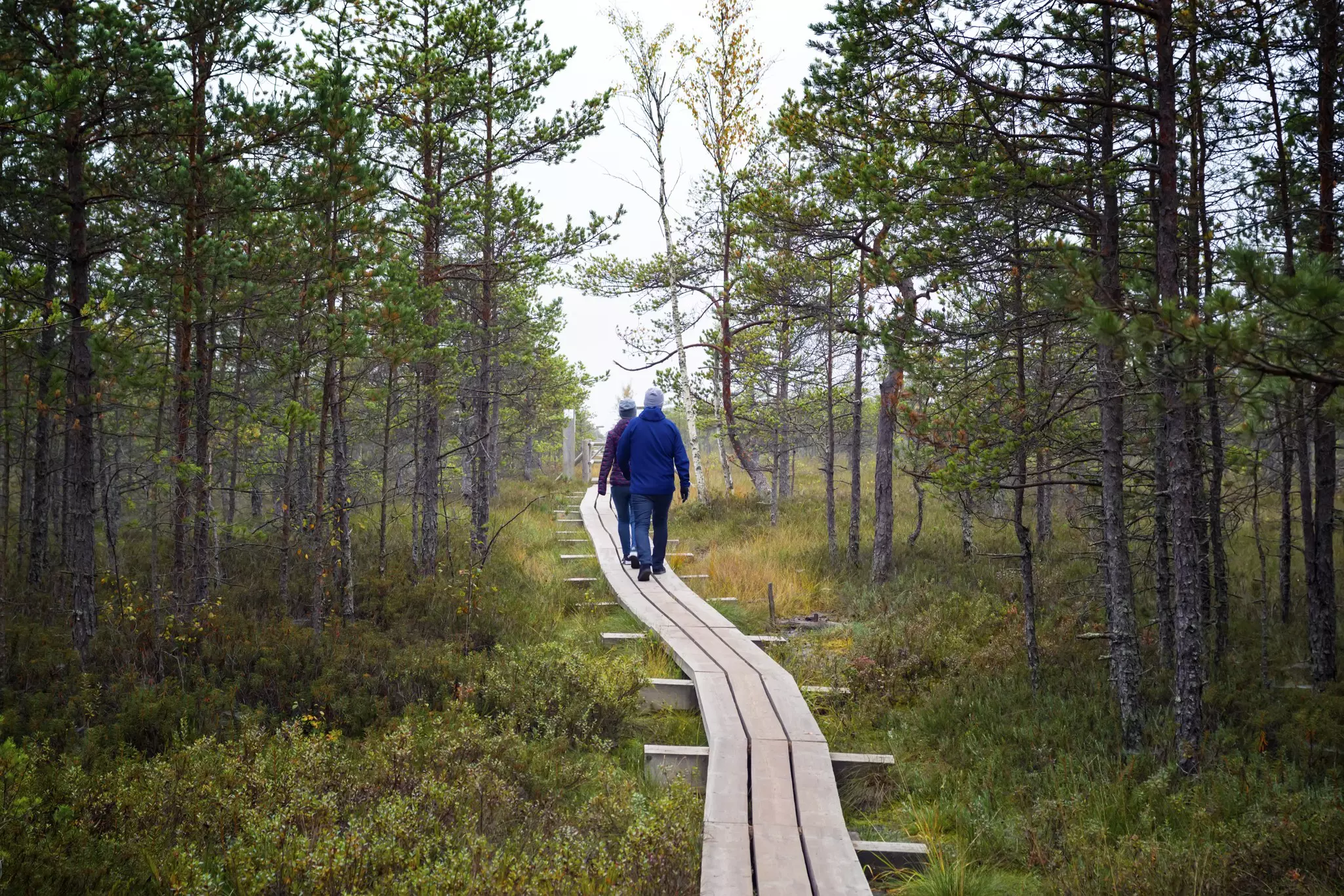
Inland from the gulf, about 22 miles (35km) west of Rīga, Ķemeri National Park might be the most meditative place in the whole of Latvia. To the southwest of Ķemeri train station, the 2-mile (3½km) Great Ķemeri Bog Boardwalk leads through an enormous area of multicolored marshland interspersed with round waterholes that reflect white clouds. There’s an observation tower for bird watching and plenty of benches along the way to sit and contemplate nature’s beauty.
Planning tip: The best season for bird-watching in Ķemeri National Park is spring, when white-tailed eagles and migratory birds gather on the wetlands.
The center of Rīga is best explored on foot. Start your tour by the rosarium at Vērmanes dārzs (Vērmanes Garden), and exit into Tērbatas iela to make a short detour to the Splendid Palace cinema, an art nouveau masterpiece hidden within a modernist Soviet-era structure.
Continue along Tērbatas iela, noting the brightly colored art nouveau facades. At the next crossing, you’ll reach an important cluster of bars; if you’re feeling thirsty, our top choice here is Gauja.
Once refreshed, turn into Stabu iela, one of Rīga’s most elegant streets, and cross Brīvības iela near the Stūra Māja – the former Soviet secret police headquarters, now open to the public for tours. Turn into Baznīcas iela, where you may be tempted to sip a gimlet at a much-lauded venue called, well, Gimlet.
You’ll find yourself near central Rīga’s top landmark, St Gertrude Church, the centerpiece of a beautiful oval-shaped square. Continue to the next crossing and turn into Lāčplēša iela to find the famous Kaņepes Kultūras Centrs, a former music school turned beer garden and concert venue.
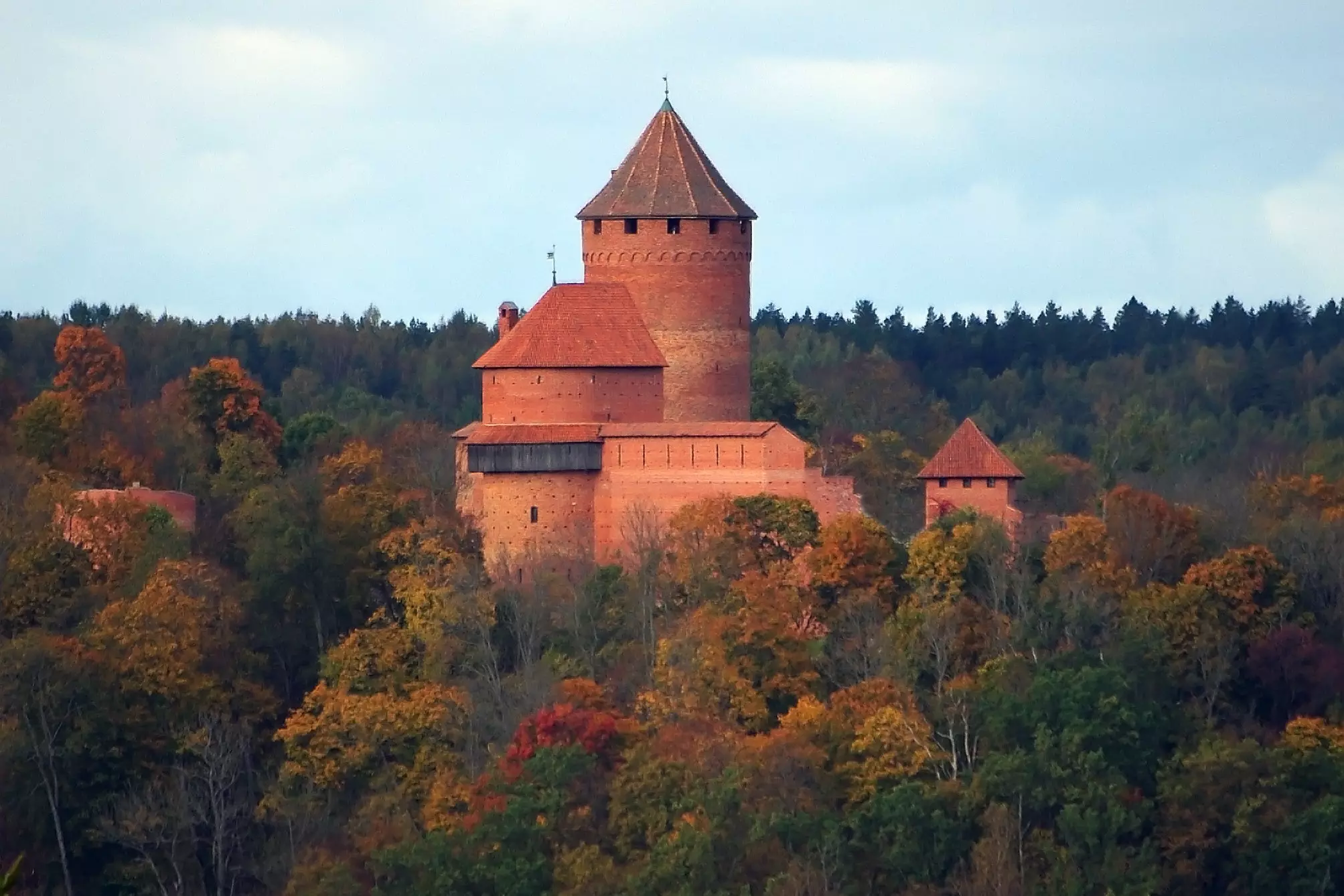
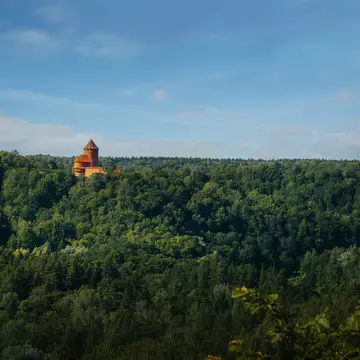
Turaida, about 2½ miles (4km) north of Sigulda, means “God’s Garden” in ancient Livonian – and indeed this green knoll capped with a fairy-tale castle is an enchanting place to explore. The red-brick fortress with its tall cylindrical tower was built in 1214 on the site of a former Livonian stronghold.
What you can see today is partly the result of a 1980s reconstruction. A museum inside the castle’s 15th-century granary offers an interesting account of the Livonian era, which lasted from 1319 to 1561. More exhibits can be viewed in the tall Donjon Tower and the castle’s western and southern towers.
The rest of the site features a variety of buildings housing small galleries and exhibits on local life. It’s worth stopping by the blacksmith’s house, where you can buy crafts and try your hand at pounding Liv pagan symbols into small chunks of iron.
The nearby Folk Song Garden is dotted with 26 sculptures dedicated to Latvian heroes immortalized in the dainas, poetic folk songs that are a major national tradition.
Vendors have touted their wares at Peter’s Market in Liepāja since the mid-17th century. Their offerings provide another reason to visit this Baltic Sea town about 124 miles (200km) west of Rīga, in addition to its broad and gently shelving white-sand, Blue Flag-rated beach.
The market expanded in 1910, when an art nouveau pavilion was constructed adjacent to the square. Today, you’ll find stalls inside and out selling everything from secondhand clothes and beautiful handicrafts to fresh, locally grown produce and baked goods. Venture to the underground floor to find the photogenic fish market.
Planning tip: While in Liepāja, don't miss the St Nicholas Maritime Cathedral, a gold-domed jewel-box built in the classic Russian Orthodox style.
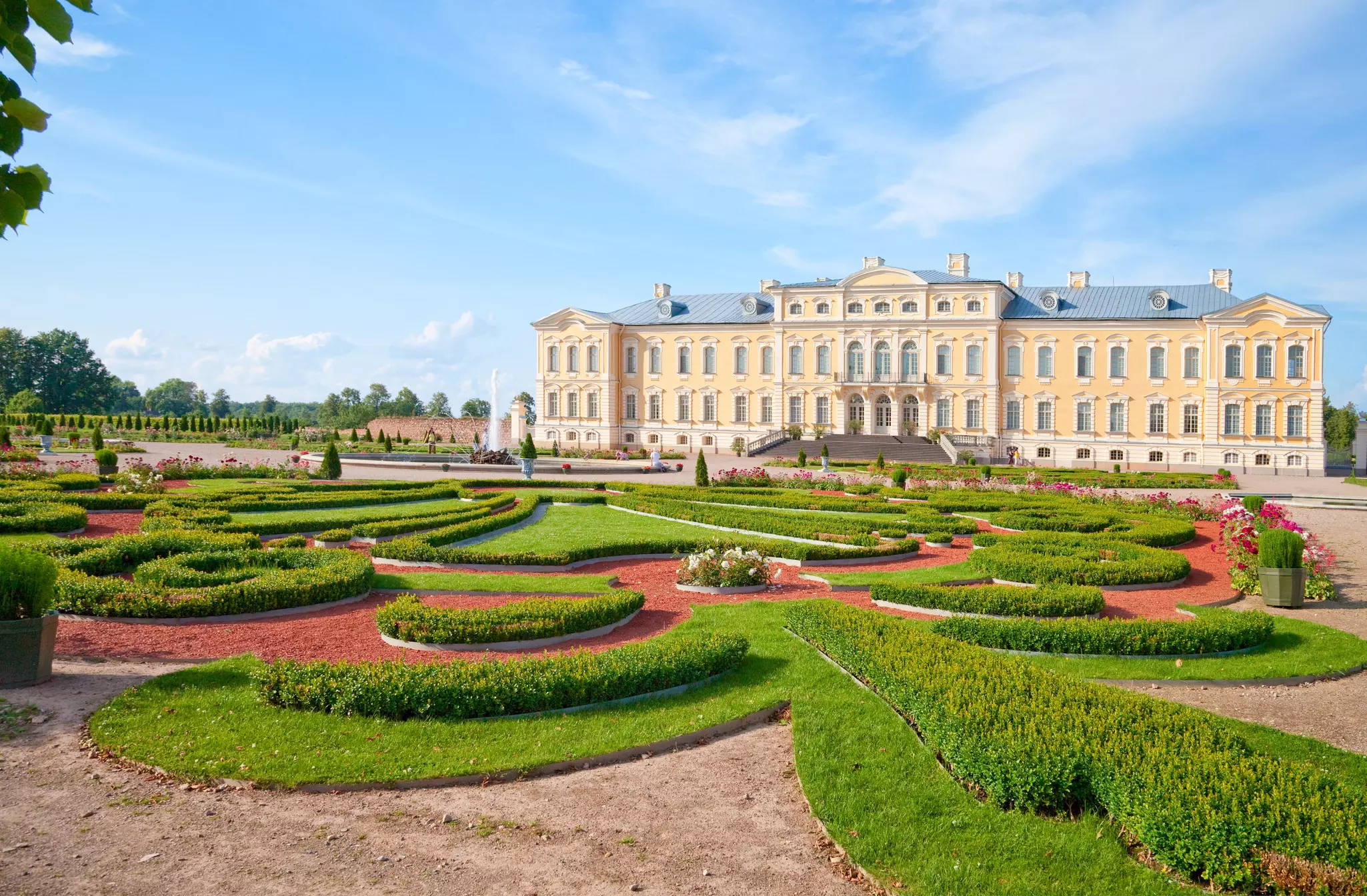
Built as a grand residence for the Duke of Courland, the magnificent Rundāle Palace, some 37 miles (60km) south of Rīga, is a monument to 18th-century aristocratic excess. It’s the architectural highlight of rural Latvia.
The palace was designed by Italian baroque genius Bartolomeo Rastrelli, best known for creating the Winter Palace in St Petersburg. About 40 of the palace’s 138 rooms are open to visitors, as are the wonderful formal gardens, inspired by Versailles in France.
The East Wing was devoted to formal occasions, while the West Wing was the private royal residence. The palace was badly damaged in the Franco-Russian War in 1812 and again during the Latvian War of Independence in 1919; what you see now is the result of a painstaking restoration that took place between 1972 and 2015.
Planning tip: It’s possible to get to Rundāle Palace from Rīga by bus, changing in Bauska – but it’s easier to come by rental car, following the A7 or A8.
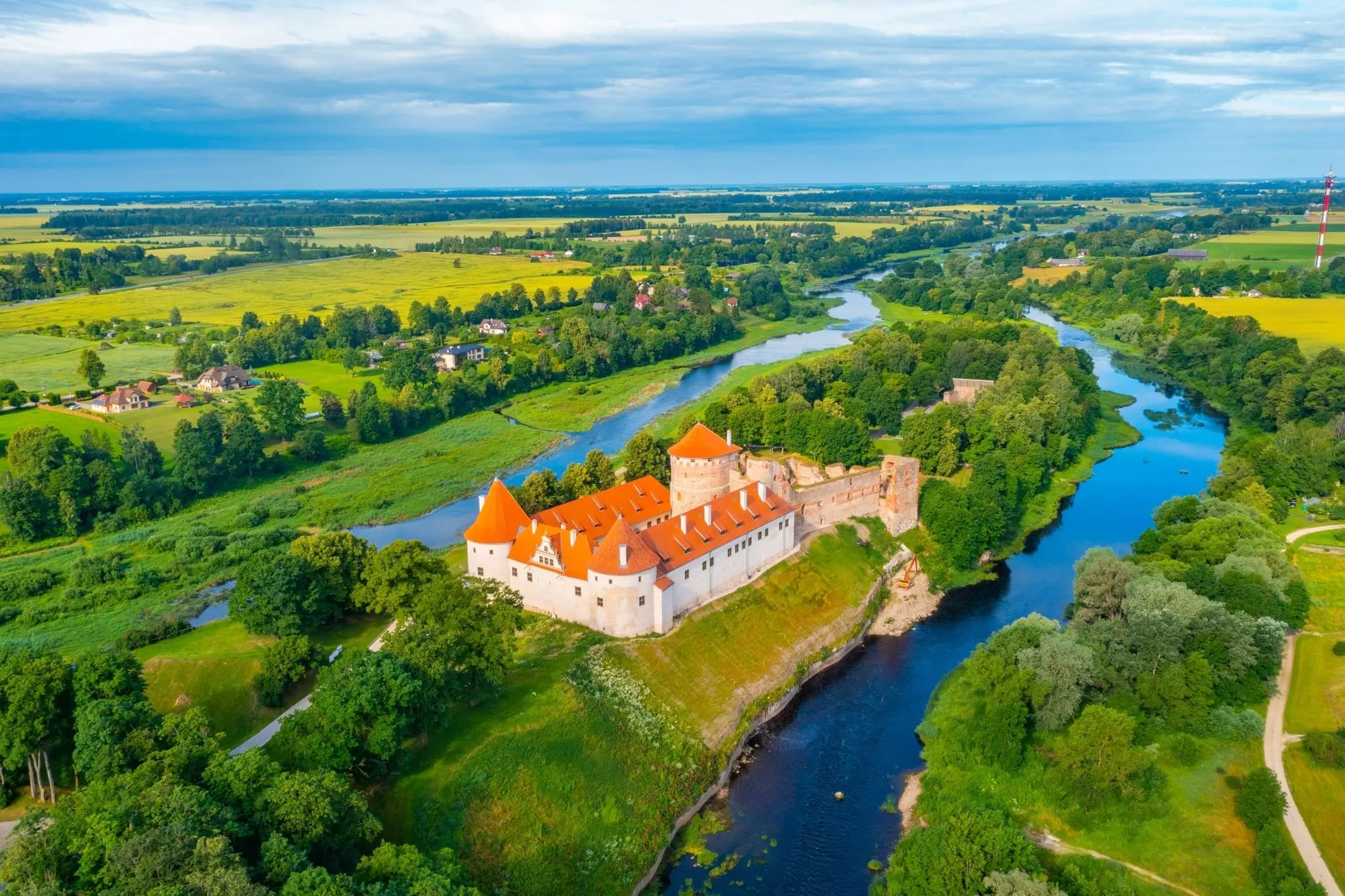
The nearest town to Rundāle Palace, Bauska was once an important seat in the Duchy of Courland. Today, it’s worth a brief stop to check out its most prominent attraction, Bauska Castle, which sits on a picturesque hillock squeezed between two rivers – the Mūsa and the Mēmele – that flow parallel to each other through the countryside.
As is often the case in Latvia, Bauska Castle is in fact two castles melded together. The older part is in ruins and dates back to the Livonian period in the 15th century; the newer portion is a fortified manor house built by the Duke of Courland in the 16th century and remains mostly intact. A museum covers the tangled history of the castle and the region.
Planning tip: Latvia and Lithuania are both in the Schengen Area, so it’s straightforward to continue south from Bauska to Vilnius on the Ecolines bus.
Before you leave Rīga, be sure to investigate the city’s artistic heritage. Housed in a palace-like building on Janis Rozentals Sq, the Latvian National Museum of Art is the country’s greatest art treasury, with a focus on a diverse range of Latvian artists from the 18th to late 20th centuries.
The most interesting part of the collection comes from the Latvian revival era of the early 20th century, when the nation’s artists started to experiment with more personal and expressive subjects and styles. Wander the galleries to follow the nation’s artistic journey, noting how historic – and traumatic – events (two World Wars, the Soviet occupation) shaped the nation’s artworks.
Detour: If you want more museum time, head to the excellent Zuzeum, a privately owned art center that stages top-notch exhibitions. Also, consider timing a visit to coincide with the annual Survival Kit festival, which fills crumbling and semi-abandoned buildings across Rīga with intelligently curated art displays each September.
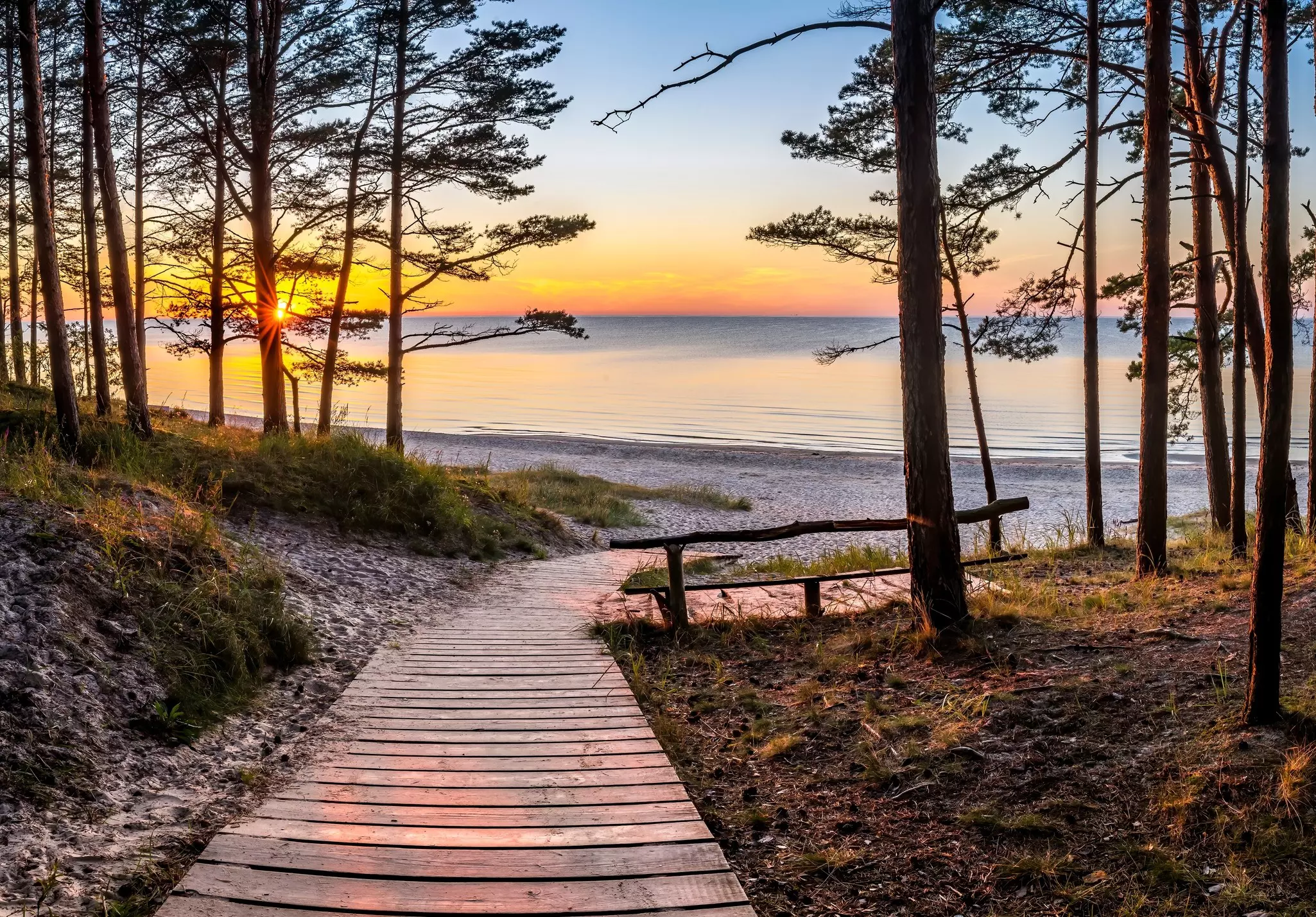
Latvia’s fifth largest town, Jūrmala is the setting for the country’s longest beach promenade. Stretching for a full 15 miles (24km), this beach is has hard-packed white sand that’s ideal for walking (though kids may prefer to pause and stack it up into sand castles). Come in any season and you’ll see promenading urbanites and cyclists – and even skiers in winter – moving along the seafront.
It’s worth exploring the rest of Jūrmala, too. The oldest part of town near Dzintari, Majori and Dubulti stations resembles Prussian resorts on the German Baltic coast. Start your explorations on pedestrian Jomas iela, which runs between Majori and Dzintari stations, and where you’ll find most restaurants and visitor-oriented things to see, including the well-funded Jūrmala City Museum.
Planning tip: A 30-minute train ride is an easy way to reach Jūrmala – yet you can also rent bicycles at BicycleRental.lv in Rīga and cycle the 15½ miles (25km) to Jūrmala along a path that parallels the railway line. Heading in the other direction, bikes can be rented at Velopark on Viestura iela in Jūrmala.
Livonian knights founded the settlement of Wenden, 50 miles (80km) northeast of Rīga, which was renamed Cēsis seven centuries later. Even though it was sacked a few times over the centuries, the beauty of the town’s hilltop castle town has long been celebrated across the nation.
Cēsis Castle actually consists of two castles that today form a single museum. The moody, dark-stone towers belong to the restored medieval castle; you’ll be handed a candle lamp to ensure that your exploration of the dark ruins is suitably atmospheric.
The newer castle is a stolid 18th-century manor house once inhabited by the von Sievers family, a dynasty of German counts. It now houses a museum that features original fin-de-siècle interiors; exhibitions lead to the owners’ library and study under the cupola at the top of the mansion.
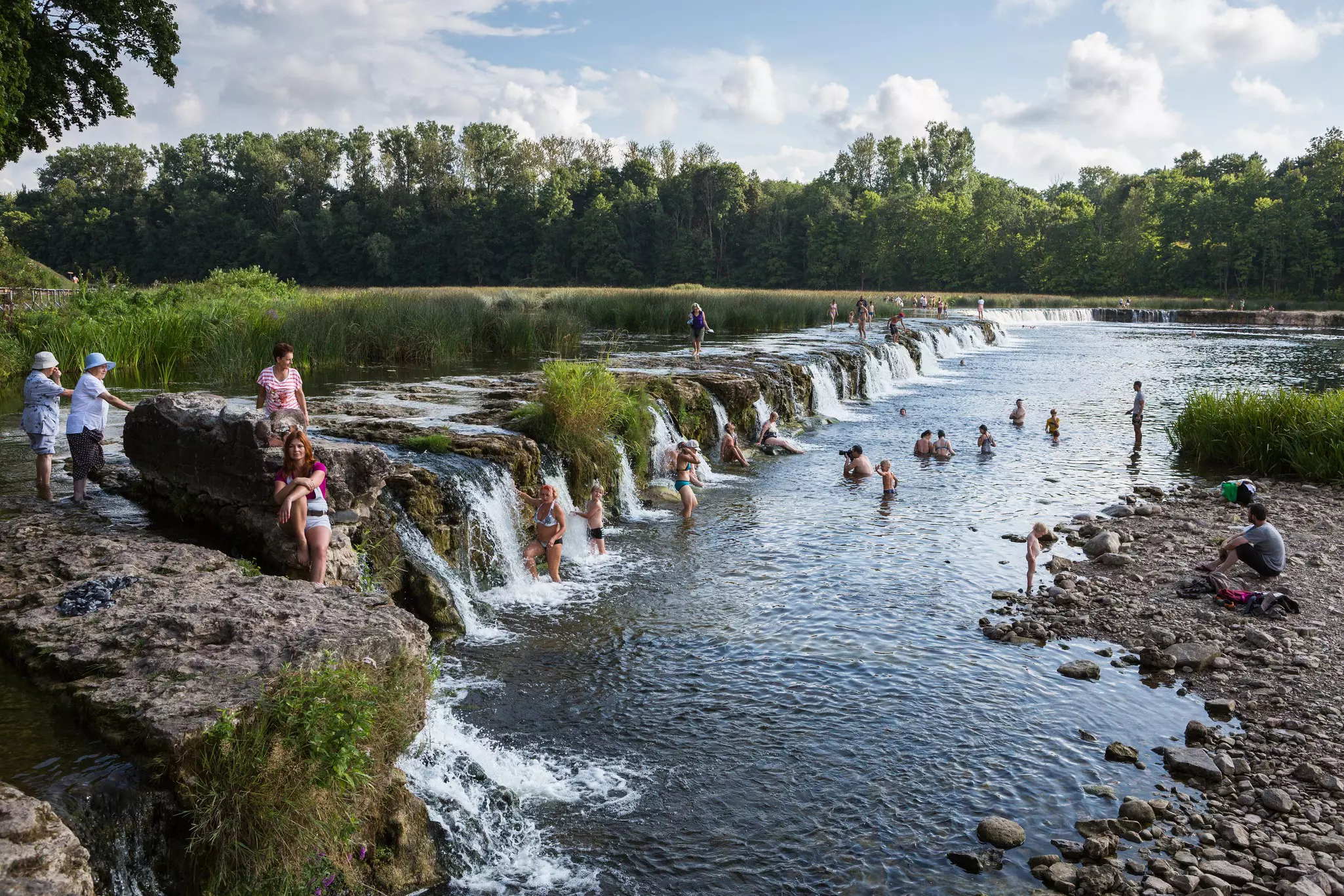
About 96 miles (154km) west of Rīga, Kuldīga’s most famous feature – Ventas Rumba – is known as “Europe’s widest waterfall.” Though this description feels a bit grand for this 7ft (2m) drop on the Venta River, this zigzagging ribbon of white water is an impressive sight indeed when seen from above.
This idyllic scene is best observed from the town’s castle hill, on which only few stones from the city’s medieval fortress remain. Today, the hill is home to a sculpture-filled park presided over by the stately Castle Watchman’s House from 1735.
Detour: Disappointed by the modest height of the Ventas Rumba? Just head over to Latvia’s tallest falls – the 13¾ft (4¼m) Alekšupīte Waterfall – part of an old Kuldīga mill at the confluence of its namesake stream and the Venta.
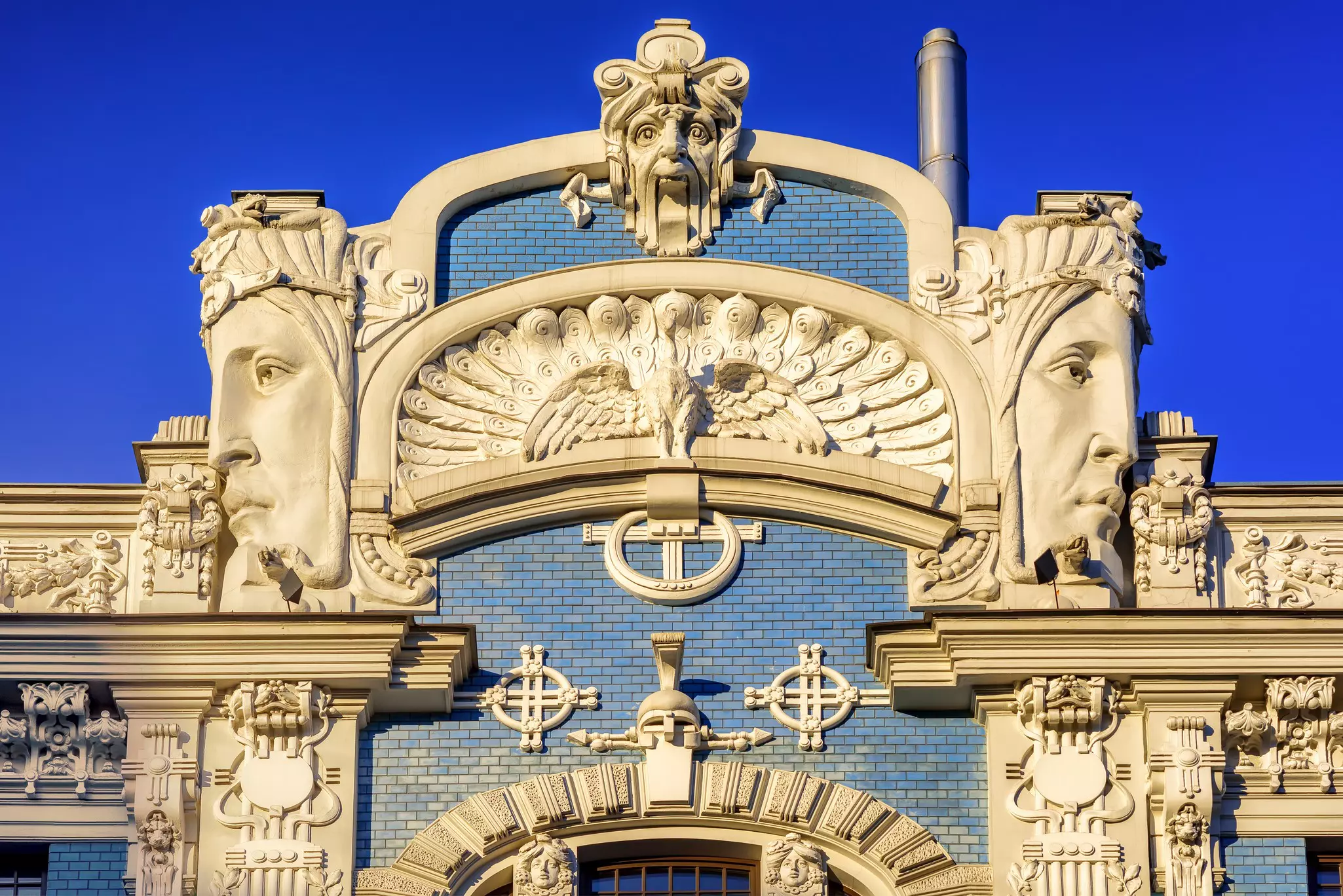
In 1901, Rīga celebrated its 700th anniversary by inaugurating a new street, Alberta iela, built in the revolutionary Jugendstil (art nouveau) style and named after the founder of Rīga, Bishop Albert von Buxhoeveden. Today, this street forms the heart of what is known as the Jugendstil quarter, an art nouveau gem of a district filled with eye-catching buildings adorned with garlands, Greek drama masks, sphinxes and other motifs. Wander northeast along Alberta iela from Kronvalda Park to admire the lavish decoration of the facades.
The town of Ventspils, 104 miles (167km) west of Rīga on the Baltic coast, is worth visiting for its attractive beach and the appealingly renovated market in the heart of Old Town. It’s a great place to stock up on such fresh produce such as vegetables, homemade cheeses, honey, forest mushrooms and berries.
Open until 3pm, the market is best visited in the early morning, especially on weekends. A bell tower on the side of the market square plays popular Latvian tunes on the hour. Across the square, the Courlander pub makes its own beer and has a menu largely based on fish from the Baltic. Nearby, Windau Wines sells fruity vintages from its namesake winery.
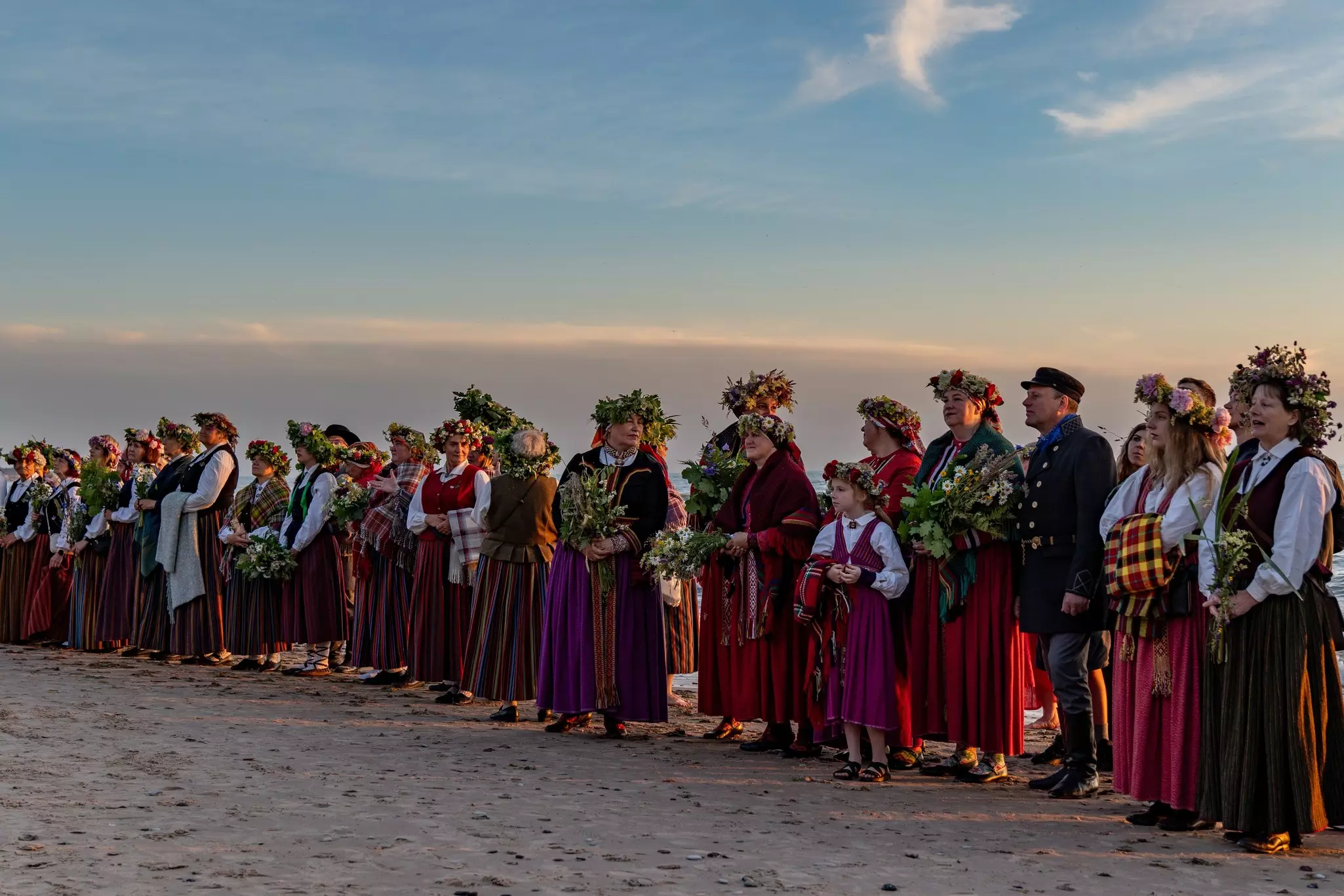
Detour: Just south along the coast, the village of Jūrkalne celebrates the summer solstice in June with a lively festival, complete with bonfires and dances by villagers in flower wreaths.
This article was adapted from Lonely Planet’s Estonia, Latvia & Lithuania guidebook, published in June 2024.
Book your Latvia trip with Lonely Planet Journeys
See Latvia how it's meant to be seen
Planned by local experts and tailored to you, Lonely Planet Journeys handles the logistics so you can just enjoy the trip. Tell us what you want and we'll build your Latvia itinerary from scratch, or browse our bookable trips to get inspired.


Explore related stories