Sep 21, 20269 min read
A Guide to Tahiti and French PolynesiaFeb 4, 2026
12 MIN READ

Writer
Papeʻetē, Tahiti, French Polynesia. Jessica Lockhart/Lonely Planet

Writer
Lonely Planet may earn a commission from affiliate links on our site. All recommendations and reviews reflect our own independent opinions.
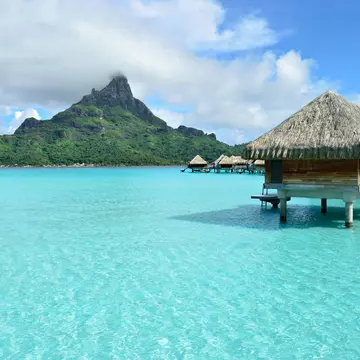
The sun warming my skin, I lay back and listen to the waves gently splashing below my overwater bungalow. Across the clear turquoise lagoon, jagged volcanic peaks sheathed in lush greenery spill down towards the sea. I feel far too lazy to move, but cooling off won’t take much effort; a ladder from my private patio leads directly into the ocean.
In any formulaic travel article, this is where I’d usually introduce my destination by name. But in the case of this South Pacific island paradise, it doesn’t feel necessary. You probably already know where I am. Scenes from French Polynesia – especially the islands of Tahiti, Bora Bora and Moʻorea – are just that iconic.
My longstanding interest in the destination, though, had little to do with romance and more to do with Polynesian culture and the lure of adventure. I’d wanted to visit ever since I read Norwegian explorer Thor Heyerdahl’s book Fatu Hiva: Back to Nature – a memoir of his 1937-38 journey to the remote Marquesa Islands, one of French Polynesia’s main five archipelagos. But it always seemed out of reach: A little too remote, a little too unaffordable and a little too geared to lovebirds.
So, when Tahiti Tourisme said they could convince me otherwise on all three counts, I had no shortage of questions: Is it possible to visit French Polynesia on a budget? Would I be lonely as a solo traveler? And is there anything to do other than lapping up luxury while the water laps at your overwater bungalow?
I decided that the only way to find out was by making like Goldilocks. Over the course of a week, I’d try out three different versions of French Polynesia, until I found one that seemed just right.
How to get to Tahiti and French Polynesia:
It’s less far-flung than you might think. Faaʻa International Airport (PPT) – just outside Papeʻetē on the island of Tahiti – is only an 8-hour direct flight from Los Angeles (LAX) or, in my case, a 5-hour flight from Auckland (AKL).
I traveled with the wonderfully on-theme flag carrier Air Tahiti Nui, but other airlines – including United, Air New Zealand, Air France – also offer service to the islands of Tahiti.
Getting around French Polynesia:
The vast majority of visitors fly into Papeʻetē and catch a ferry to Moʻorea, or an Air Tahiti flight onwards to Bora Bora. But don’t let what’s “usually” done limit you. Each of French Polynesia’s five archipelagos offers a decidedly different experience – from the Tuamotus’ famed scuba diving to the Marquesas’ rich Polynesian cultural traditions.
Roughly 25 of French Polynesia’s 118 islands have regional airports with regularly scheduled flights from Papeʻetē, so you don’t have to just flop and drop at one resort – instead, it’s possible to island hop. I personally managed to visit three different islands and two motu (islets) in just 1 week.
Where to stay:
Overwater bungalows were allegedly invented in French Polynesia in the late 1960s, so if your budget allows, staying in one is pretty much mandatory. They’re not only found in Bora Bora or Moʻorea, though. I stayed at Le Tahaʻa by Pearl Resorts on a private motu, which offered direct access to some of the lagoon’s best snorkeling.
Looking for something more budget-friendly? Staying in a family-owned pension (guesthouse) is just as quintessential of an experience. They’re frequently found on smaller islands such as Rurutu, where Vaitumu Village serves family-style meals and every guided excursion feels bespoke.
What to pack:
Stuff your suitcase with a sarong (called a “pareu” in Tahitian), a swimsuit, sandals and snorkeling gear. A cardigan or light sweater won’t go amiss, particularly if you plan to visit one of the Austral Islands, such as Rurutu. (Situated further south, the subtropical Austral Islands have a cool trade wind that’s a welcome reprieve after leaving the steamy Society Islands.)
Finally, if French isn’t your forte, don’t forget a good translation app – and take the time to learn a few words of te reo Māʻohi (the Tahitian language).
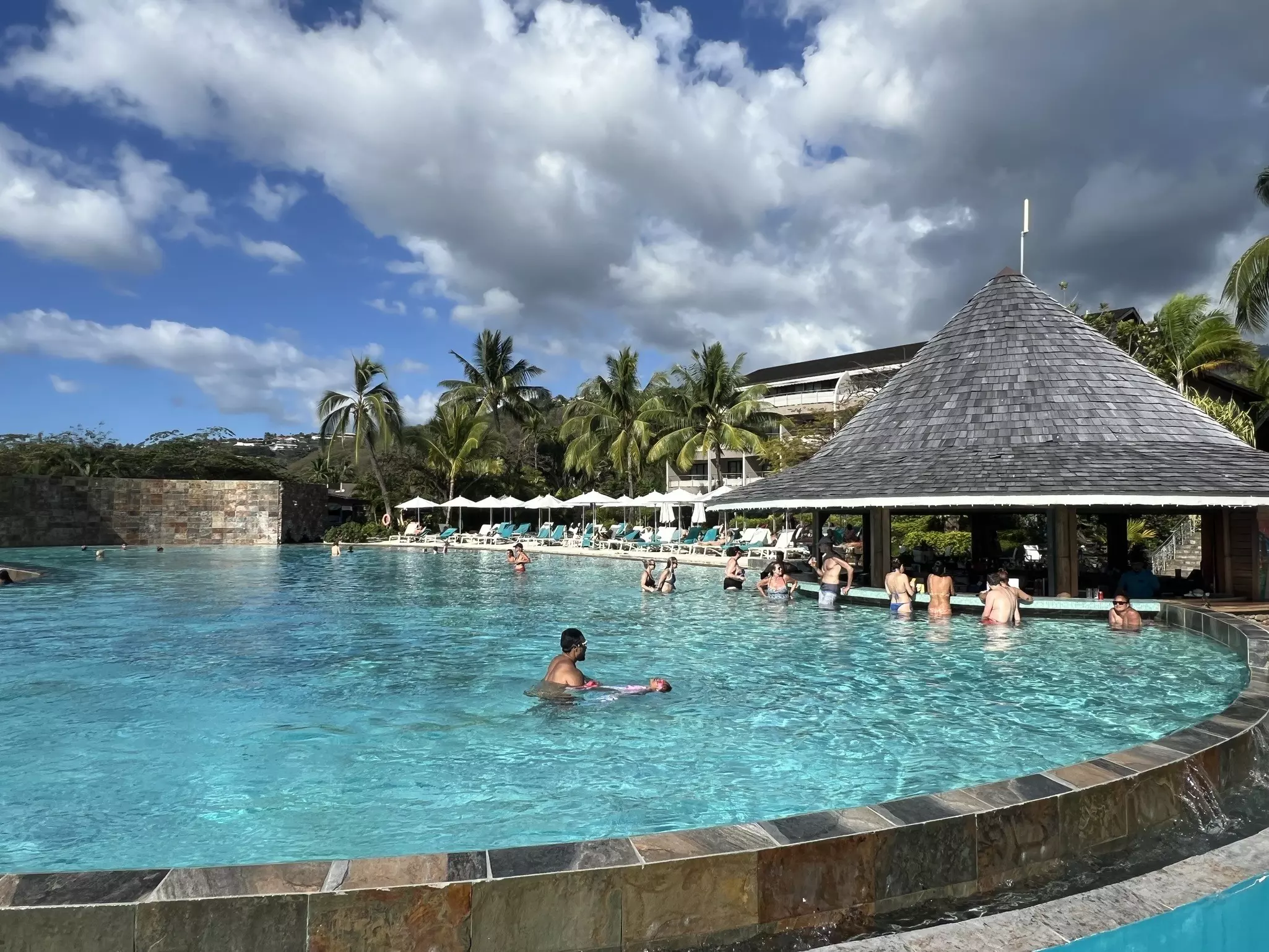
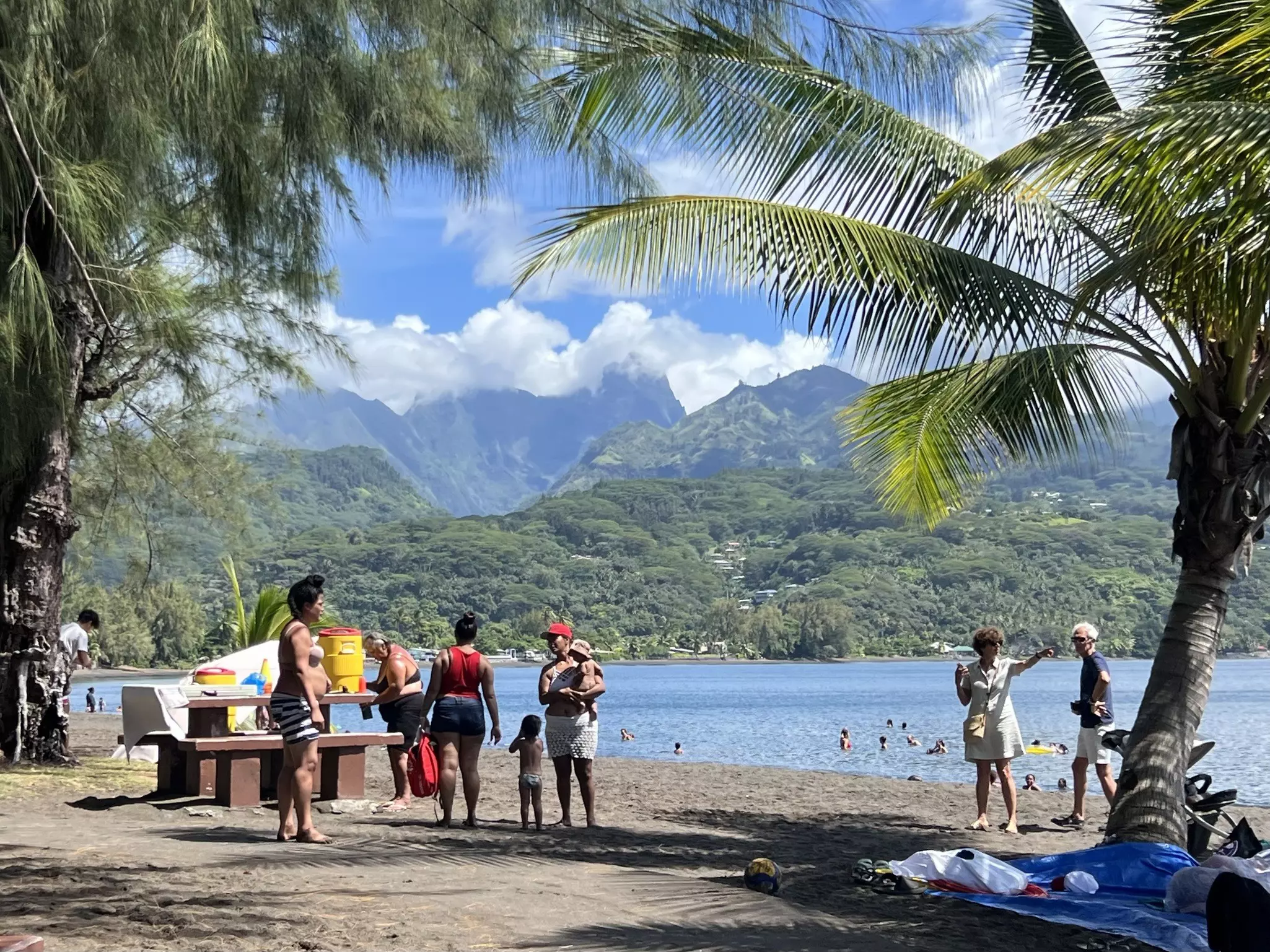
The first port of call for most visitors to French Polynesia is Tahiti. I’m no exception. I check in to Te Moana Tahiti Resort. Its infinity pool and oceanside beach bar beckon, but with Papeʻetē only a 15-minute drive away, I decide it’s time for a crash course in French Polynesia.
I spend the morning flying across the waters of the Baie de Matavai with Moana Explorer. The traditional vaʻa (outrigger sailing canoe) doesn’t have a fixed rudder – instead, Captain Max uses an oar to guide us through the waves. I vow to return in July when outrigger races are held as part of Heiva i Tahiti, alongside other traditional sports such as coconut tree climbing and fruit-carrying races.
Once I’m properly drenched in saltwater, it’s time to hop on Manava Tours’ van for a guided tour of the island. I wander through Papeʻetē’s two-storey market, a one-stop shop for souvenirs: Here, you can buy black pearls (choose your own from a bucket and they’ll mount it for you), carvings from the Marquesas, weavings from the Australs and local snacks like firi firi (beignets or Tahitian doughnuts). It’s relatively subdued on a weekday; locals typically visit on weekends when fishermen sell their catch.
However, I prefer the city gardens, where huge banyan trees and Marquesan palms provide reprieve from the surrounding traffic. Then, we drive as far north as the Papenoʻo Valley, home to jaw-droppingly beautiful waterfalls including the easily accessible Cascades de Faarumai.
By the end of the day, I’ve had a good introduction to the island that 70% of French Polynesians call home, but it feels like I’m just scratching the surface. It’s a good thing I still have two islands to go.
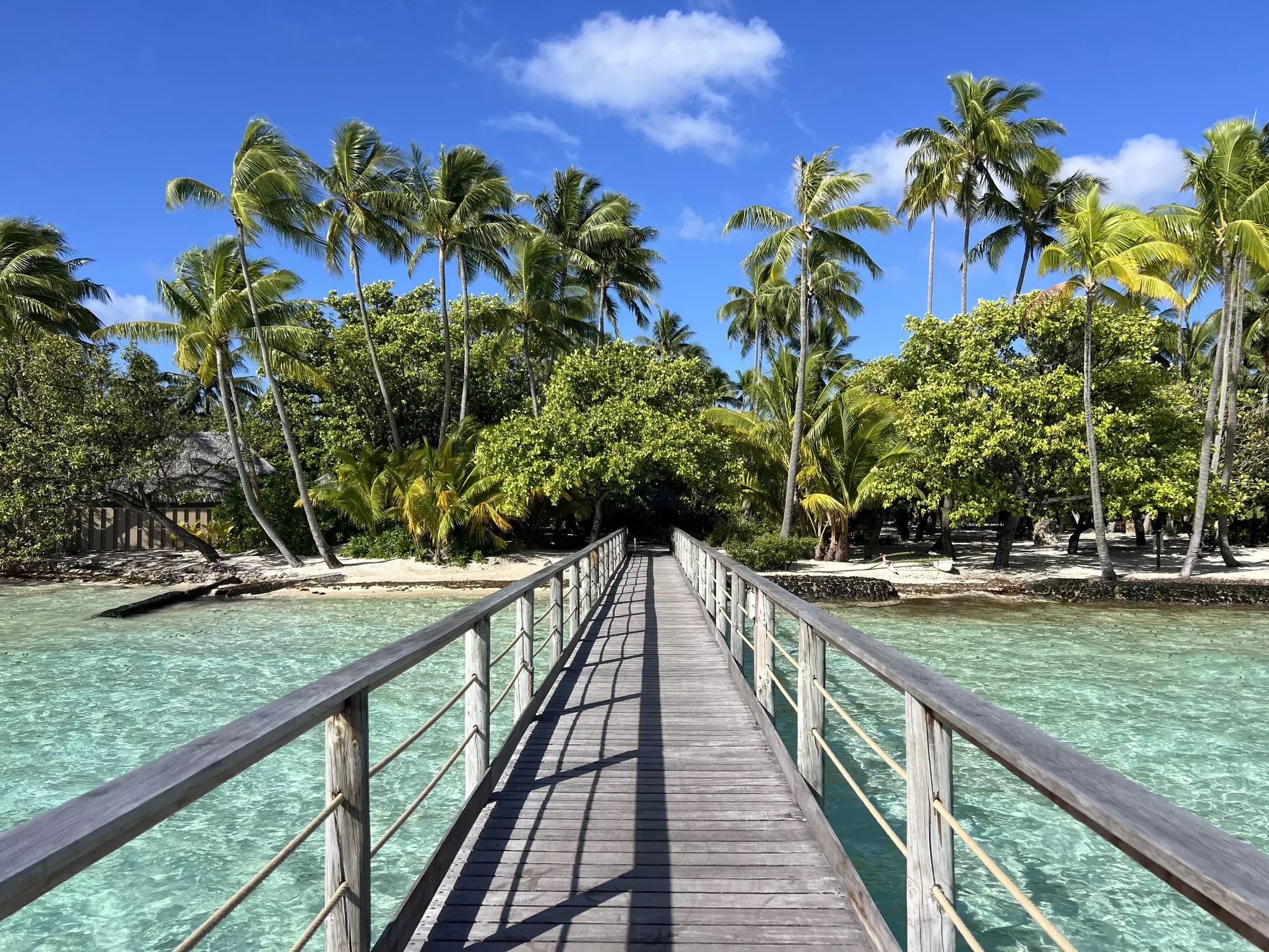
When I sit down for dinner at Hawaiki Nui – a treehouse-like restaurant at the center of Le Tahaʻa by Pearl Resorts – I suddenly become aware that all eyes are on me.
It’s not in my head. I’ve spent more time traveling alone than I have with other people (a byproduct of my job). I learned a long time ago that nobody cares or even notices when you’re sitting at a table by yourself. This time is different. And listen, I get it: Who doesn’t talk about the other resort guests? If the White Lotus franchise has taught us anything, it’s that they’re part of the entertainment.
I want to believe it’s the dress I bought for this trip – a pink linen number, pleated perfectly to allow for exactly two cocktails, a main and dessert – which I’ve paired with hot pink lipstick. But the reality is that I’m the Tanya McQuoid in the room; the only solo diner in a sea of couples. And they’re definitely talking about me. It’s as though Raye’s hit “Where Is My Husband!” suddenly started piping through the restaurant’s loudspeakers as the hostess led me to my table.
“I hope I’m giving off recent rich divorcée vibes,” I type to my group chat, sipping at the sweet dregs of cocktail number one (served, to my absolute delight, in a tiki glass).
I’d arrived at Le Tahaʻa after a short flight from Tahiti to Raiatea, followed by a 25-minute boat ride to the resort’s private motu. A hei upoʻo (flower crown) was placed on my head and a fruity drink in my hand. Palm trees waved in the breeze. Tiki torches burned. It felt like I’d entered someone’s fantasy of French Polynesia, except for one glitch in the matrix: I was alone.
I mentally vow to read my book slowly, lest I finish it too quickly. But I barely find time to crack the spine. The next day, I’m whisked away to nearby Tahaʻa, the “Vanilla Island,” which shares a lagoon with Bora Bora. It’s less touristy than its famous neighbor, but far from lacking in things to do (or things to spend money on). With Yvann Mama from Tahaa Tour Excursion as my guide, I hit up the highlights: Love Here Pearl Farm (where I learn about the black pearl cultivation process, from seeding to harvest), Vallée De La Vanille (a vanilla farm, where I buy vanilla-infused coffee), and Va ʻ eva ʻ e Distillery (where I watch sugarcane being mulched for rum).
That afternoon, I snorkel in the lagoon and enjoy a barbecue lunch on a private motu with my guide from O Taha ʻ a Lodge and Excursions. Watching the brightly colored fish below, I’m struck by the fact that I haven’t had enough time to feel even remotely lonely.
“With water that sparkles this brightly, who needs a fat diamond ring anyway?” I think. And honestly – I’d prefer a black pearl any day.
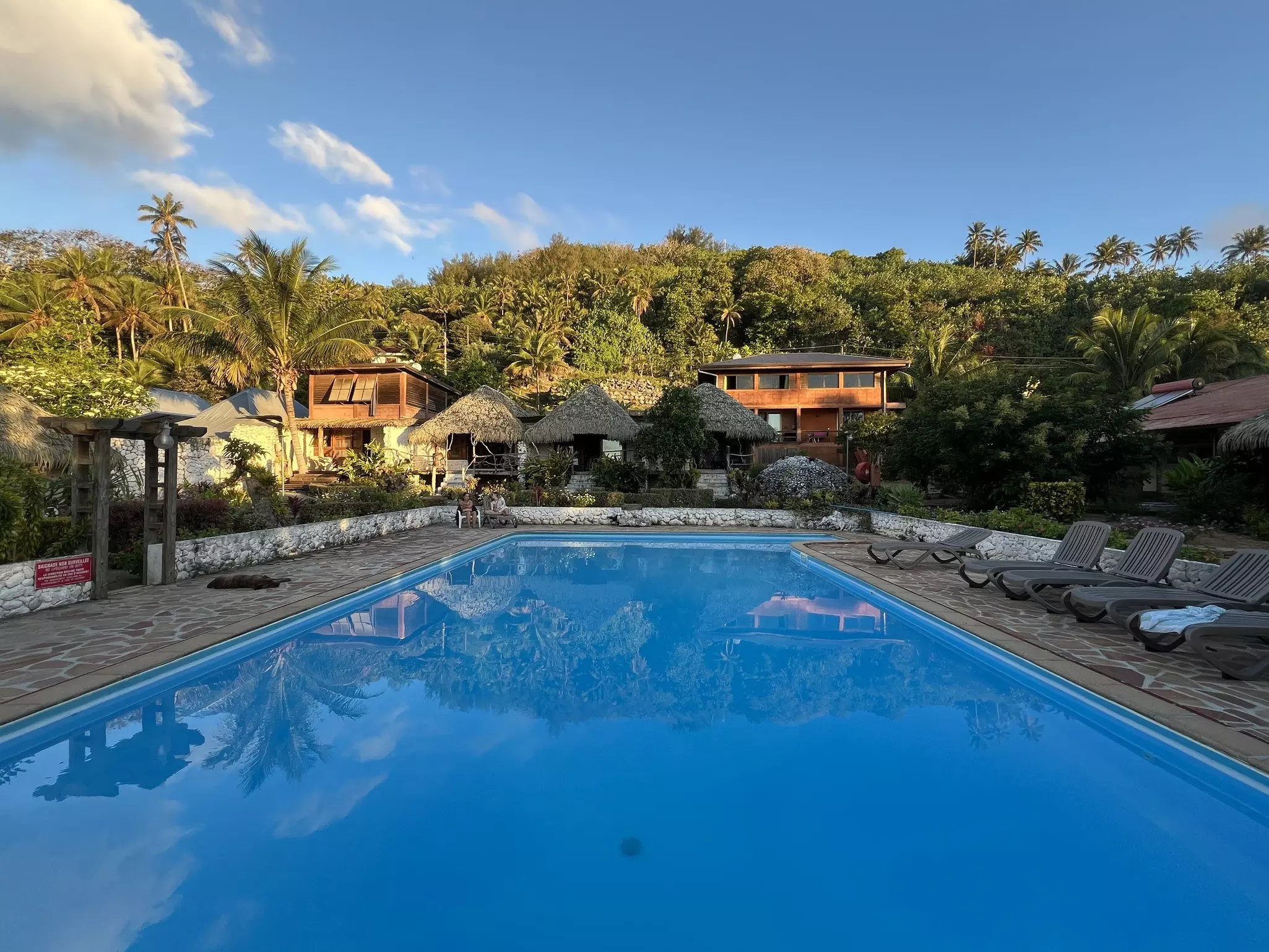
Every time I’d mentioned to anyone – from the cabana attendant at my Tahiti resort to resident Lonely Planet writer Celeste Brash, who has coauthored many editions of Lonely Planet’s Tahiti & French Polynesia guidebook – that Rurutu was my next destination, they’d get a wistful look in their eyes.
“It’s a really special place,” I was told by nearly every local.
Most were surprised that it was even on my itinerary. The island is only a quick 90-minute flight south of Tahiti, but it’s a spot that a fraction of international visitors visit. Those in the know, however, head here for humpback whales, which rest close to shore to give birth and nurse their calves between July and October.
By the time I arrive in late October, the whales have already departed for their summer feeding grounds in the Antarctic. My hosts at the family-owned Vaitumu Village (an affordable XPF16,300 for a half-pension, which includes accommodation, breakfast and dinner) are unbothered. There’s still plenty to do, they assure me – like climbing inside the mouth of a monster.
That’s how I find myself scrambling through la Guele du Monstre, a cave with natural pillars that look like the teeth of a giant creature. It’s one of the many caverns hidden along the island’s shores and in its interior. Unlike the extinct volcanic cones that have shaped much of French Polynesia, Rurutu is a raised coral atoll, resulting in its unique geology.
One wrong step and I could plummet into the sea below. My guide points to a sheer wall ahead and instructs me to scale it. Has something been lost in translation? I thought I was going on a hike and this is low-key rock climbing. But I’m all for it.
I knew French Polynesia was considered an adventure travel destination, renowned for its diving with spots like Fakarava’s Wall of Sharks, where hundreds of gray reef sharks congregate. Turns out, the adventures extend to the land, as well. By the time we’re done, the grin of my face is wider than the monster’s toothy sneer.
I also spend a full afternoon with one of Vaitumu Village’s staff, Soraya Mairau, who drives me around the 32km Africa-shaped island. We explore fern-filled caverns, stop to admire Rurutu’s legendary taro fields and gather the hard red seeds of an adenanthera pavonina tree, used as beads in jewelery.
“What do you think about Rurutu?” Soraya asks me, a glint in her eye. I tell her that I understand why everyone says it’s such a special place.
“The guests all feel that sense of repose,” she says, using the French word for rest and tranquility.
She tells me it’s not just visitors – the locals feel it, too. “Even when people go to Tahiti to give birth, they bring the placenta back here to Rurutu,” she says. “People here are very connected to the land. If you care for it, you get food. It’s the net for the people.”
This, to me, is the French Polynesia that feels just right – but it’s also something that I’ve heard and seen reflected on each of the islands I’ve visited.
There may be a French Polynesian island for every one and every budget. Yet, I can’t help but think that Goldilocks had it all wrong. Why choose one island when you can have all three?
Day 1-2: Tahiti
Where to stay: A short drive from both Papeʻetē’s center and the international airport, Te Moana Tahiti Resort has an infinity pool and its own mini lagoon for snorkeling.
What to eat: After shopping for souvenirs in Papeʻetē’s market, try local snacks like firi firi (Tahitian doughnuts) from one of the on-site vendors. Those with dietary needs can find vegan and gluten-free bowls nearby at Tahiti Smoothies.
Don't miss: Sailing in a traditional vaʻa(outrigger canoe) with Moana Explorer and visiting the Papenoʻo Valley’s hidden waterfalls with Manava Tours.
Day 3-5: Tahaʻa
Where to stay: It doesn’t get more opulent than the overwater bungalows at Le Tahaʻa by Pearl Resorts’ private motu. For a more budget-friendly option, choose one of the pensions (guesthouses) directly on Tahaʻa.
What to eat: Be sure to try French Polynesia’s national dish, poisson cru (a type of ceviche with raw tuna, citrus and fresh coconut). Time your visit for a Tuesday, and you’ll be able to enjoy your dinner with a side of Polynesian entertainment, including fire dancing.
Don't miss: Learning more about vanilla farming and black pearl cultivation on a guided tour with Tahaa Tour Excursion, followed by snorkeling in the lagoon.
Day 6-7: Rurutu
Where to stay: With its seaside swimming pool, Vaitumu Village is the closest thing you’ll find to a resort on the tiny island of Rurutu, but it’s actually an affordable pension.
What to eat: Rurutu’s taro is famed throughout French Polynesia, and you can bet it’ll be on the menu at Vaitumu, where a half-pension includes breakfast and dinner (lunch is an optional extra).
Don't miss: If you arrive between July and October, you’ll have the chance to watch humpback whales or even jump in the water with them. (Both activities are heavily regulated in French Polynesia and done in accordance with best practices.) Year-round, book a guided tour to explore the caverns of Rurutu, including the incredible Monster’s Mouth Cave.
Jessica Lockhart visited French Polynesia at the invitation of Tahiti Tourisme. Lonely Planet does not accept freebies for positive coverage.
Explore related stories