Sep 22, 202613 min read
20 Things to Know Before Visiting French PolynesiaJan 26, 2026
10 MIN READ
Writer
Nathan Cyprys

Writer
Lonely Planet may earn a commission from affiliate links on our site. All recommendations and reviews reflect our own independent opinions.
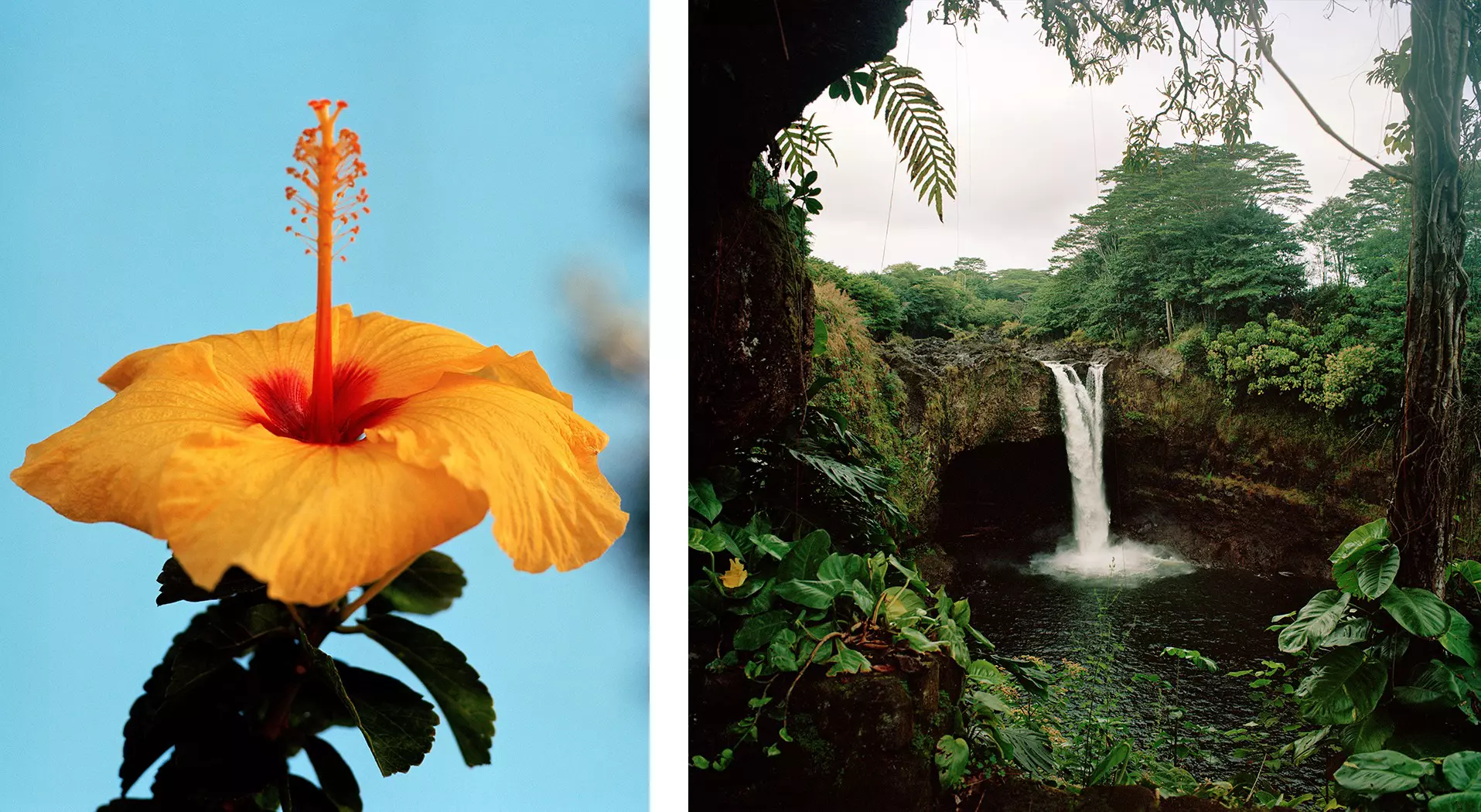
In January 2024, Toronto-based photographer Nathan Cyprys embarked on a 2-week road trip across Hawai‘i Island. It was his first time visiting and photographing Hawai‘i, and he chose to document the journey using a large-format 4x5 film camera.
While driving, camping, and recording the landscapes, he was constantly reminded of his 20-year friendship with Toronto- and Maui-based photographer Brendan George Ko. Raised in Ontario, New Mexico, Texas and Hawai‘i, Ko has dedicated much of his recent photography to telling the stories of the Hawaiian archipelago.
While Hawai’i remains a popular destination for travelers, 19th-century American imperialism resulted in a loss of sovereignty for the islands. Because of this, Hawai‘i has a complicated relationship with tourism. Lonely Planet sat in on the conversation as Cyprys, an outsider aiming to be intentional and respectful, and Ko, a resident with personal ties to Hawai‘i's culture and people, discussed their work, the beauty of the islands, and how to be a responsible traveler.
NC: "Brendan, your first project on Hawai‘i explores the word 'aloha.' What has aloha come to mean personally for you? And do you have any practical advice for how outsiders/tourists can embrace the spirit of aloha when visiting Hawai‘i?"
BGK: "Aloha is a very nuanced word. Even though it's directly translated into English as 'love,' the kaona, the deeper meaning behind that word, is often neglected in that translation. There are aspects of kindness, compassion, and responsibility applied to Aloha. So, in my head, it's kind of on a par with unconditional love.
"It's a responsibility if you say that you love someone. You're responsible for that person, and that relationship. The Hawaiian word kuleana comes to mind – it means a sense of responsibility, like a self-driven sense of responsibility. So when I think of aloha, it means considering other people around you, which is community-mindedness. It’s compassion.
"When people are coming to visit, there's a Hawaiian saying that says 'open your eyes, open your ears, shut your mouth.' It's about observing how things are being done here, and trying to follow suit. And never letting your hands be idle."
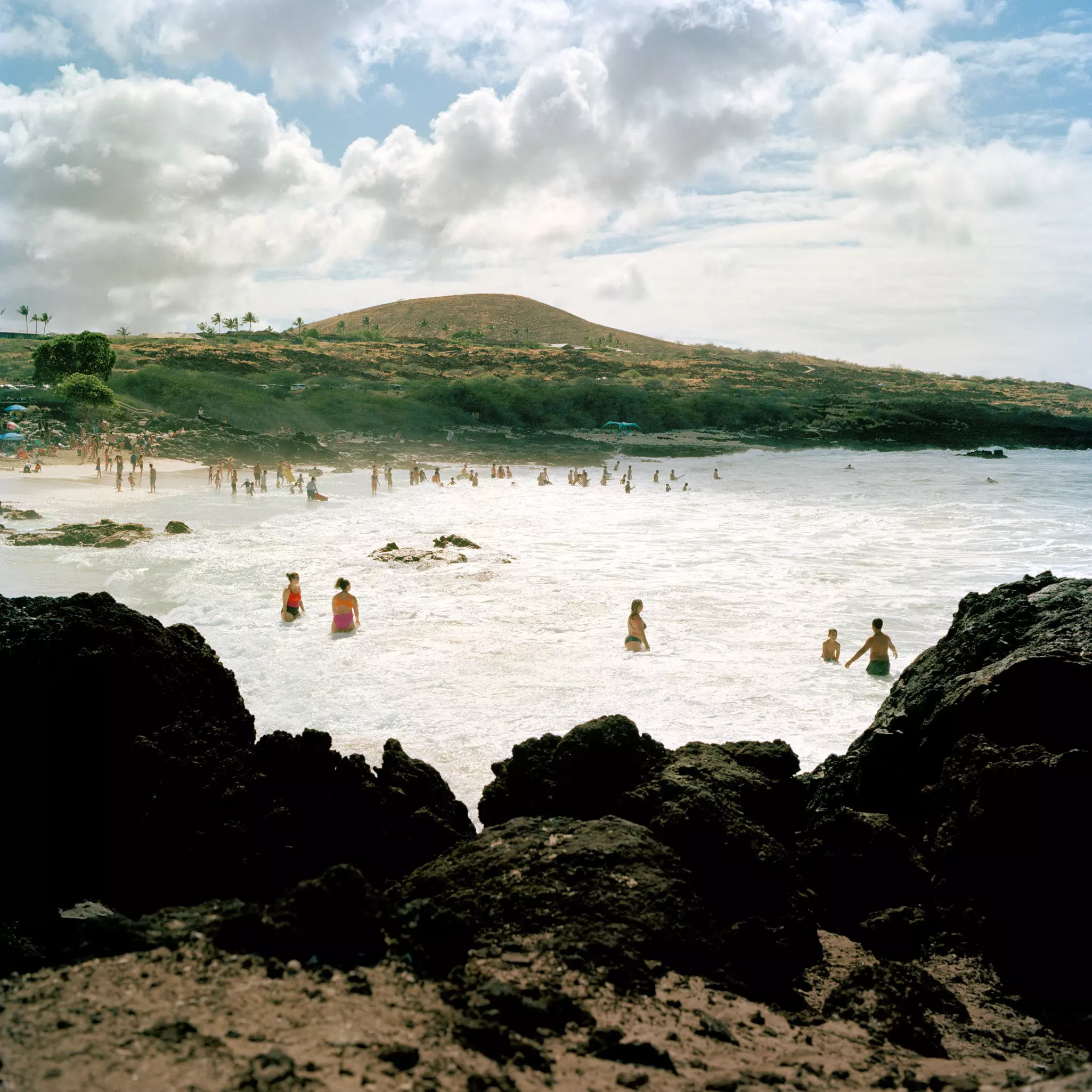
NC: "How has your relationship with Hawai‘i shaped your practice as an image maker?"
BGK: "Susan Sontag was probably one of the most influential theorists who helped construct my practice as a photographer as an undergrad. But Hawai‘i became the place where my ethics were tested and formed.
"I learned to take time, and create relationships and trust to produce work there. And I had the privilege of having a home to stay in. A researcher has to find funding to be able to stay in a place; they're taken away from their regular practice. I just wanted to find out what connected me to this place.
"Over time, the privileges I have been able to enjoy here, like traveling with Voyaging Canoe, a community where I have volunteered for countless hours over many years, made me feel a deep responsibility to Hawai‘i and its people, the Kanaka ʻŌiwi.
"Assisting with canoe restorations and community outreach and education, serving as a documentarian on voyages, and being part of ceremonies, I was able to see things that most locals don't get to experience."
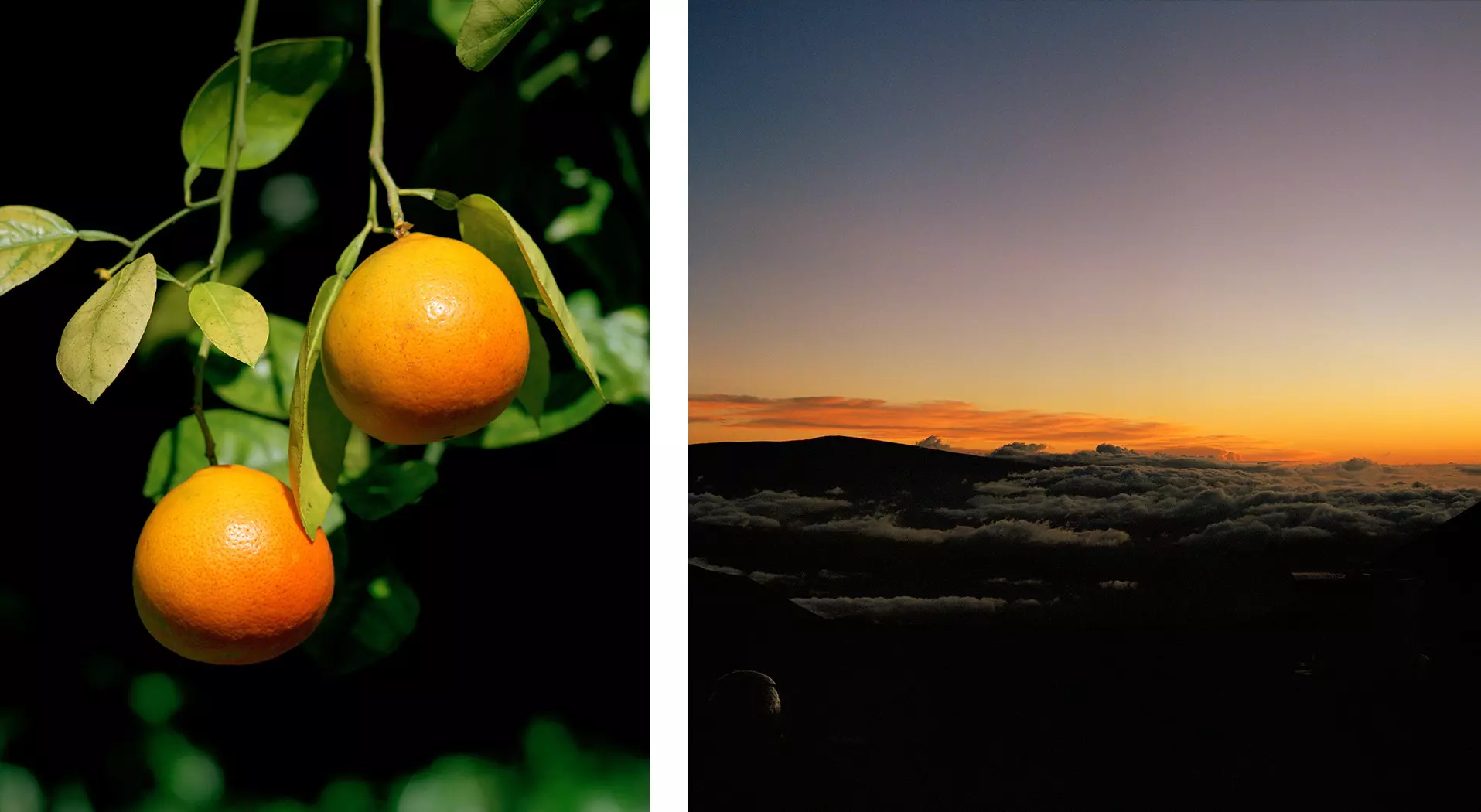
BGK: "I'm often curious about when someone goes to Hawai‘i, what image they had of the island before they arrived, and how it changed from actually being there. How did you feel being there for the first time?"
NC: "I think it really did live up to the images I had seen in terms of how beautiful it was. But aside from the natural beauty of the landscape, you can sense the American culture, and also sense the tourism industry there.
"That sense of American culture was present in large chain stores that stood in contrast to the landscape. And in all the conveniences and homogeneity of American consumerism, which has reached across the globe, as well as the swaths of mainland North American tourists, myself included, and a prioritization of cars over walkability in the urban design of places such as Kona.
"But I don't think that came as a shock to me, it was kind of to be expected, especially in a really popular travel destination like Hawai‘i."
BGK: "Yeah, which is an interesting thing because Hawai‘i Island kind of feels like the most old Hawai‘i. When friends visit, they're often shocked. This is a Polynesian place, but it does feel like a very American place as well. It's like a conflict that happens with locals as well."
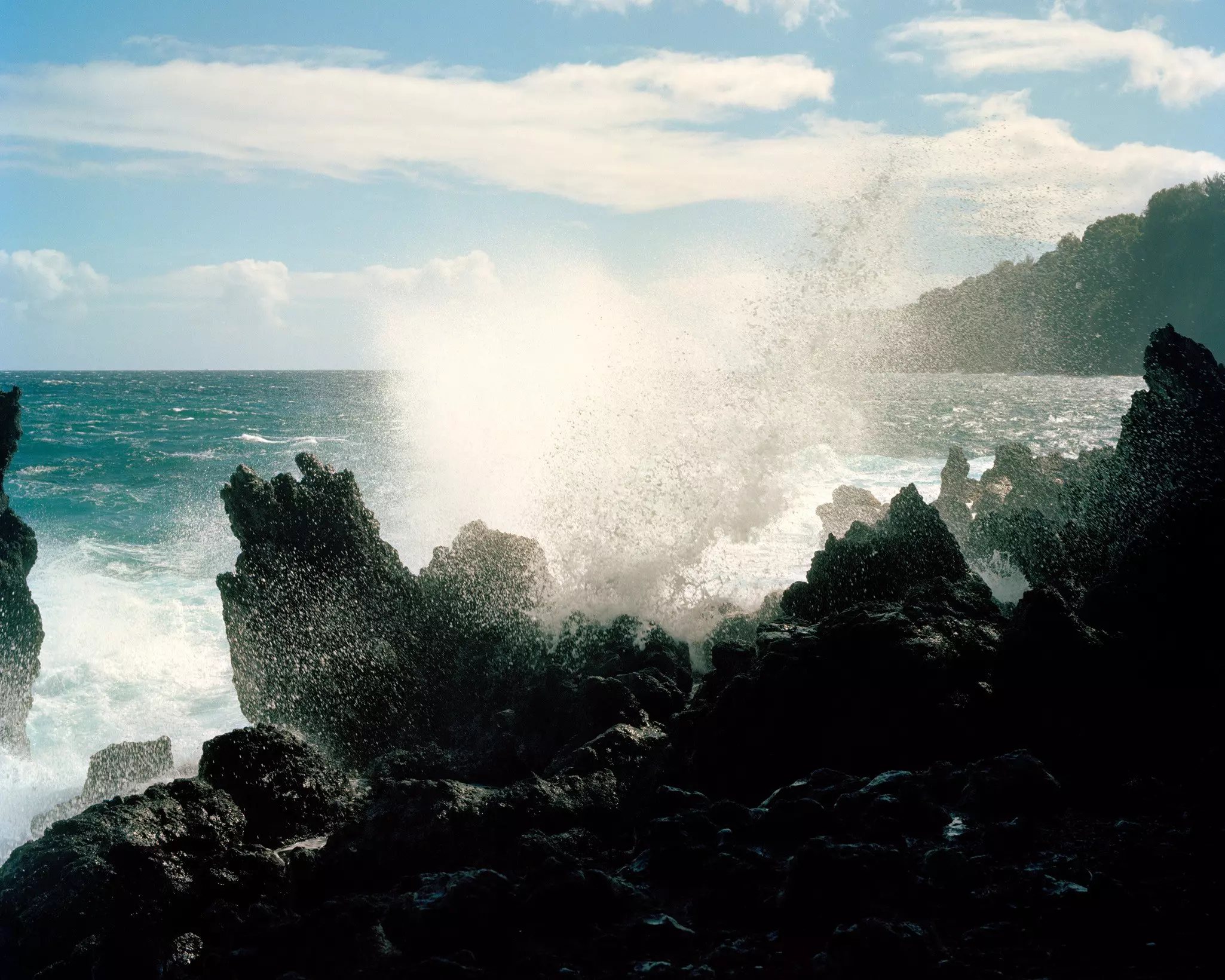
BGK: "Was there something in particular you were seeking to capture, or were you simply interested in record-keeping on your journey through Hawai‘i?"
NC: "The plan was to keep a diary of my time there and see what I came across. I was approaching it similarly to how I approached another series I'd shot in the US, Neighbour State, produced over road trips I did with Layla, my partner. As well as representing an extension of my projects Cosmichronos and Paatcha, which documented astronomical sites, seeing Mauna Kea was a big draw for traveling to Hawai‘i.
"Using the 4x5 camera was informative, in the sense that it really slows things down, and you're just looking out the car window all the time. You might pass something, and then 5 minutes later, you'll be like, no, turn around, we gotta go back, and I gotta take a picture of it.
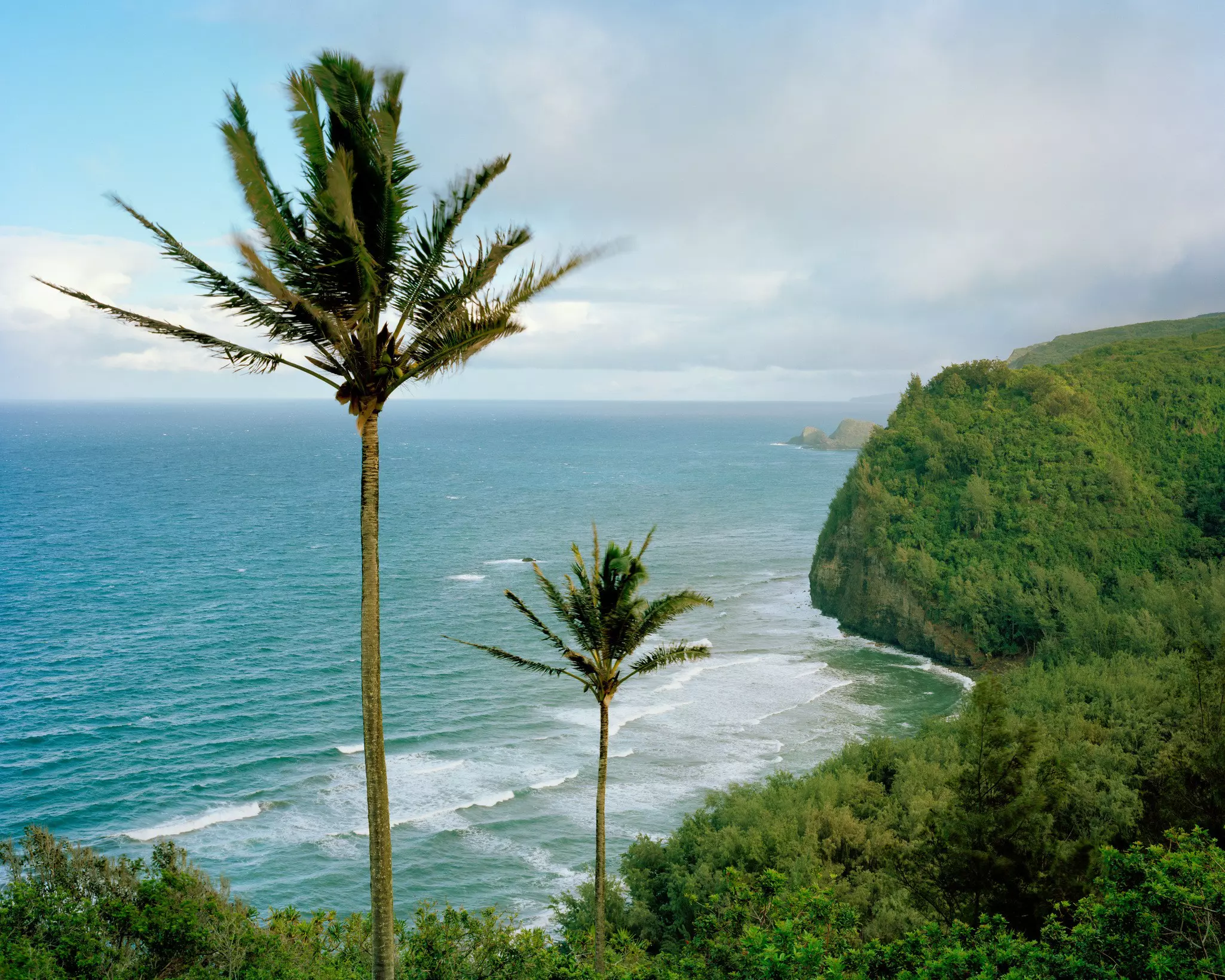
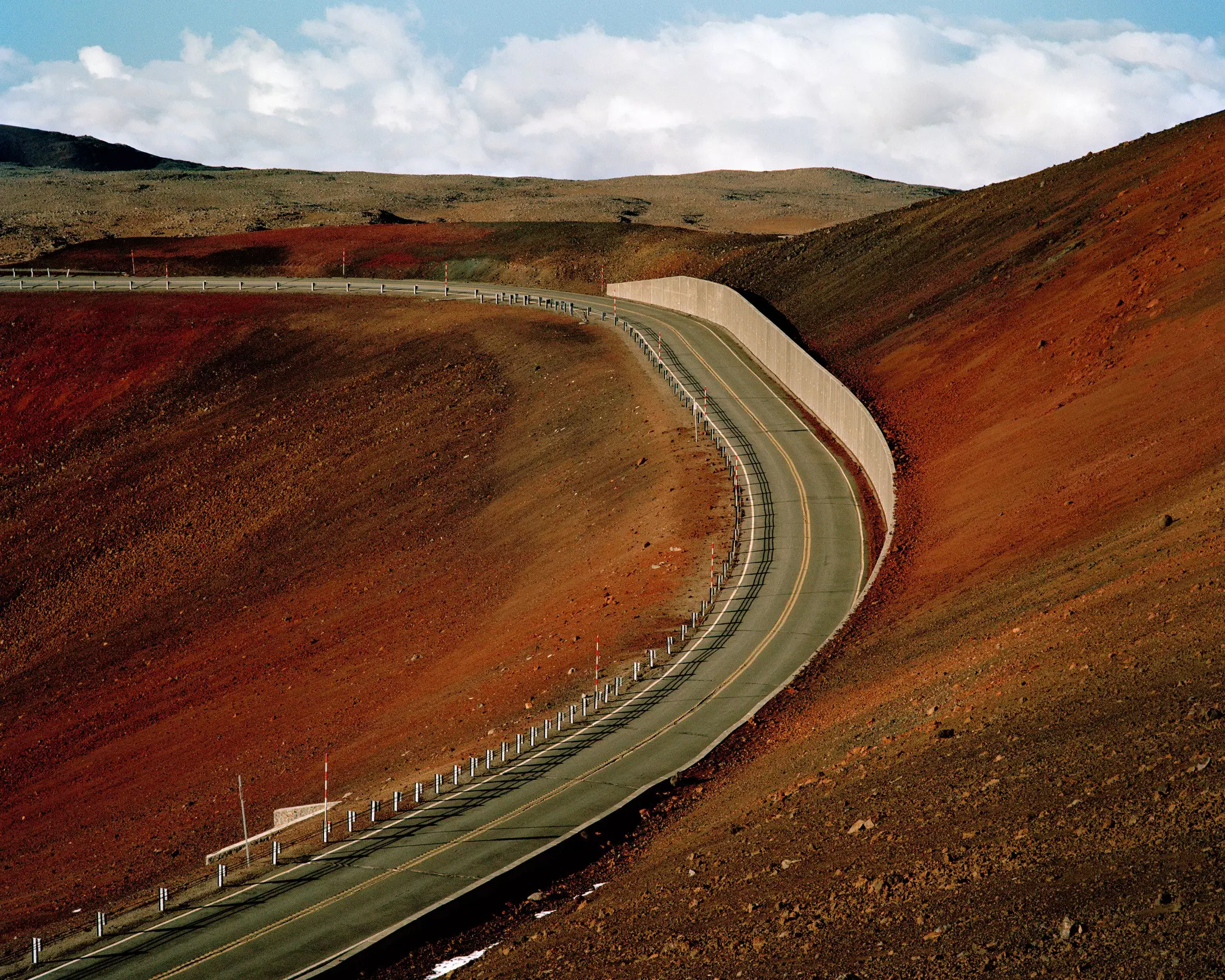
"I was mainly interested in the landscape. There are just so many different types of landscapes, which I discovered while driving around the island. It's just so different from anything I've seen or anywhere I’ve ever been before. The effects of volcanoes on the landscape were perhaps the most novel for me, having never been to an area where volcanic activity was recent enough to see the effects so clearly.
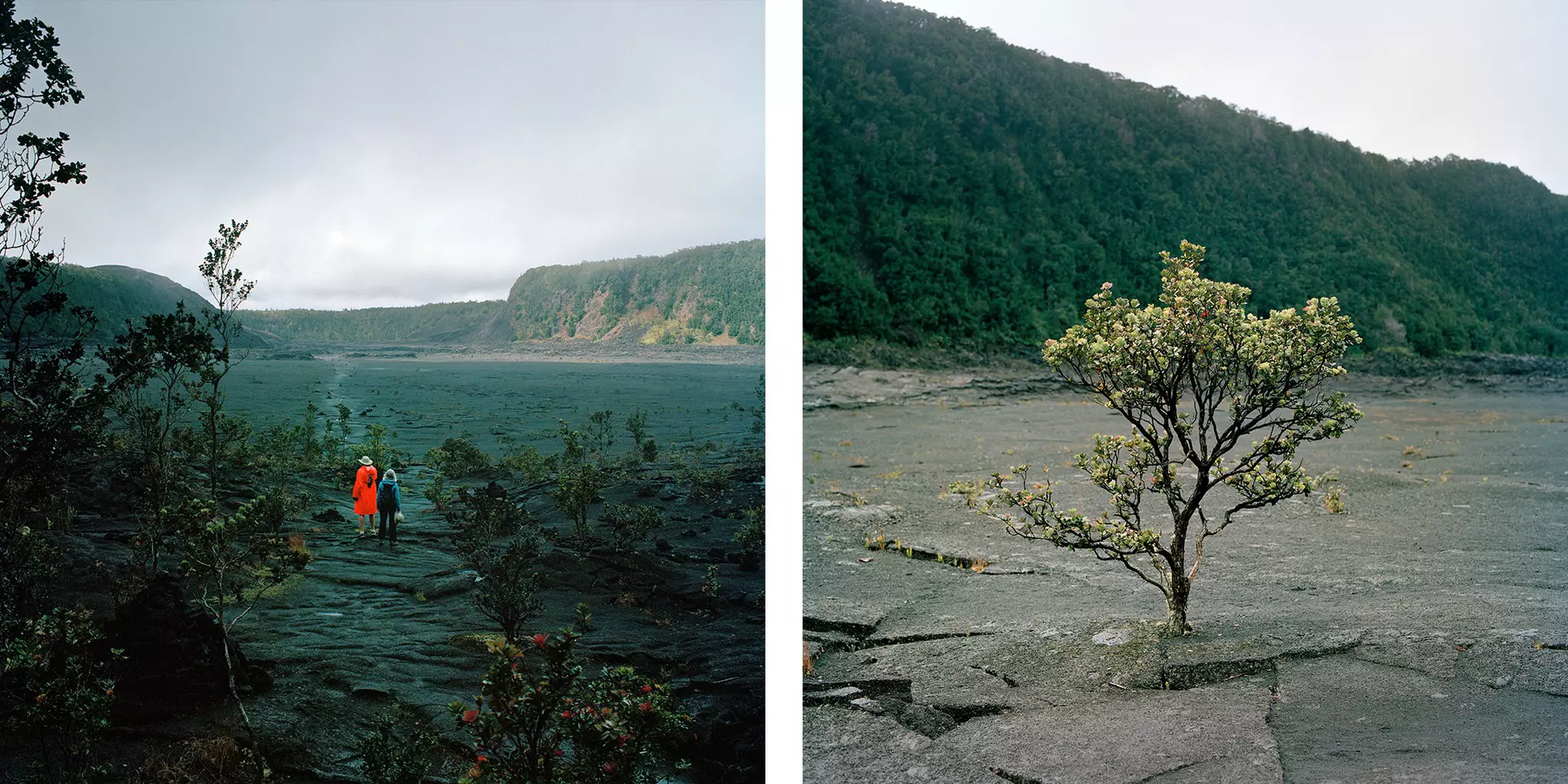
" Hawai‘i Volcanoes National Park was a site where we got to see a lot of that. It was extremely foggy when we went, in stark contrast to the previous week, which we spent lying in the sun on the beach. As we drove through the winding, foggy roads towards the coast, surrounded by rock that looked like liquid, the sky opened up to reveal a rainbow.
"The presence and abundance of life on the island were palpable in moments like this, being surrounded by igneous rock where a few persistent endemic shrubs pushed through cracks in the earth."
BGK: "You also brought up a reflection that there is such a negative connotation with the camera in Hawai‘i. The camera served as a tool for the exploitation of local people, and it was instrumental in creating the illusion of Hawai‘i as a paradise for visitors to escape to, instead of an illegally occupied sovereign nation that experienced a genocide of its native people.
"Even with my practice working there as a photojournalist, or my own personal projects, it's a heavy consideration having that camera out and it being seen. There needs to be so much trust when it comes to working with local people. A lot of people take photos of this beautiful place, but the camera almost ruins something about it in the process of documenting it.
"It's so much easier just to have a quiet place to yourself and be able to photograph it, and no one sees you doing it. It’s one thing I actually really enjoy about photographing Hawai‘i, knowing that the camera has done the place dirty. It's kind of nice to do something that's different from that."
NC: "I agree with you, it's comfortable to be completely alone in a secluded space, but then on the flip side, I find I can also be comfortable when I'm surrounded by thousands of tourists, because there's just so many people sometimes that they don't even care or notice.
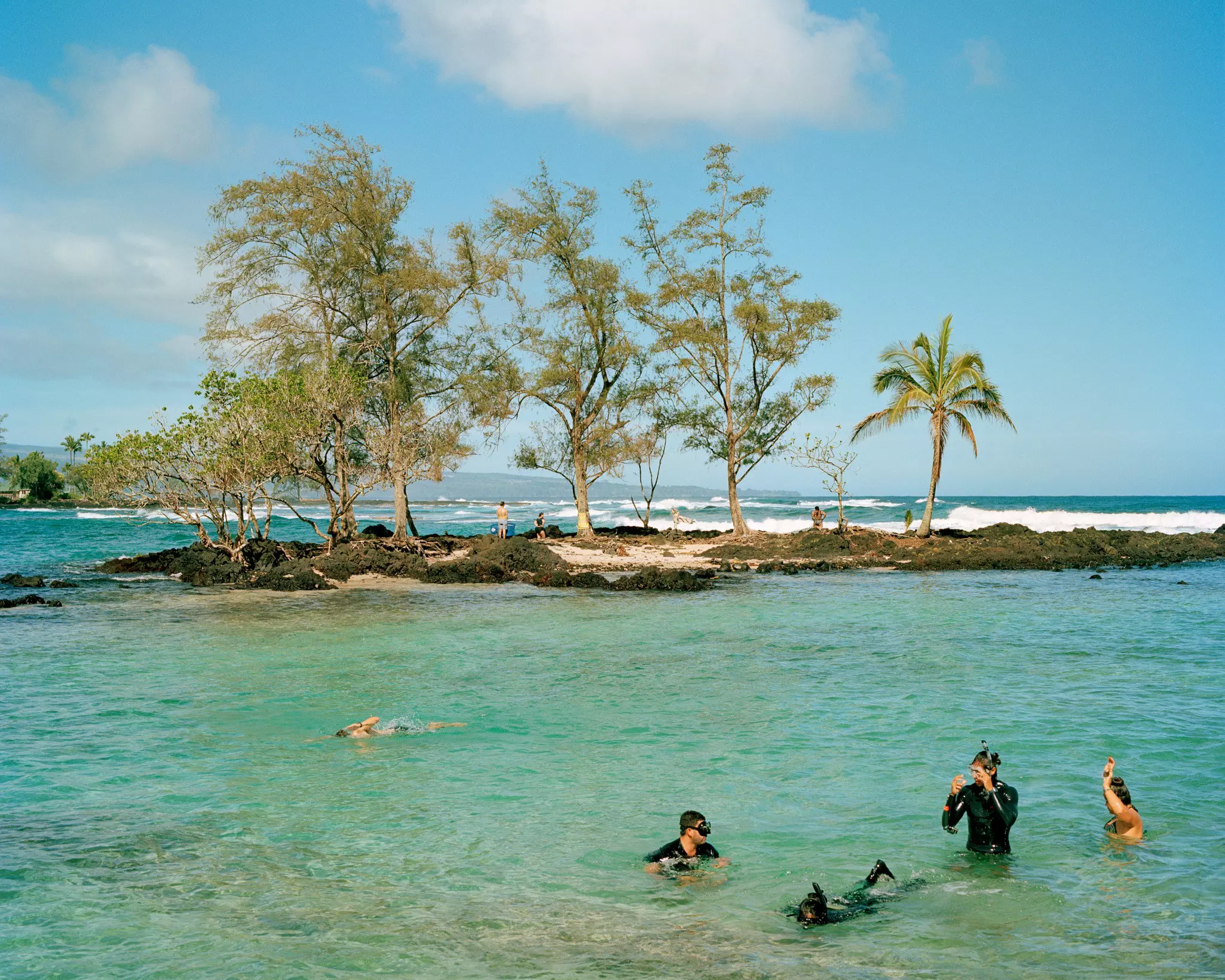
"Documenting the culture of tourism and the mass amounts of bodies and humans in space, I find it interesting, which is why I like photographing beaches. Just to see all of these people gathering next to the water on vacation and tour is kind of an interesting sight.
"I often felt trepidation photographing Hawai‘i as an outsider, especially after hearing you talk about how outsiders, other photographers and filmmakers, often struggle with respecting the local culture when working there.
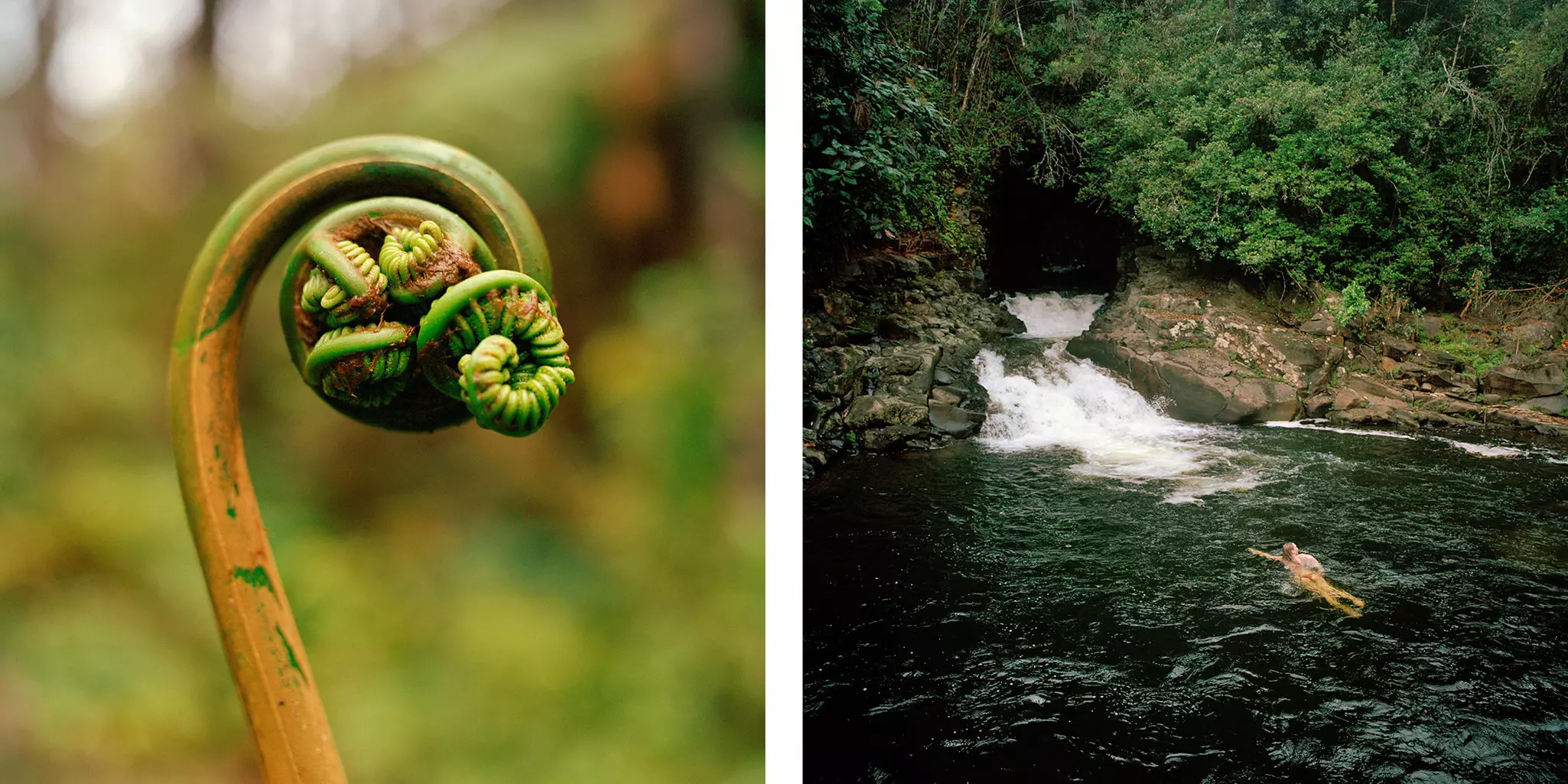
"I’m sure much of this came across, even subconsciously, in how I was shooting, leaning towards quieter images, either close-up details of flora and fauna, or pulled back wide shots of landscapes. I generally avoided photographing people up close or 'street style' photography that might have felt invasive, and I avoided trampling onto private property.
"Typically, when photographing a scene like a beach full of people, I would use my 4x5 on a tripod. It’s large, slow and awkward, requiring going under a dark cloth to frame and focus the image. People are usually amused by the sight and don’t feel threatened by it, which works to my advantage."
BGK: "I definitely think it shows reality. You take away the idealism of the landscape and you show it in its real context."
BGK: "When you close your eyes and think back on your time in Hawai‘i, what are the memories that come back to you right away?"
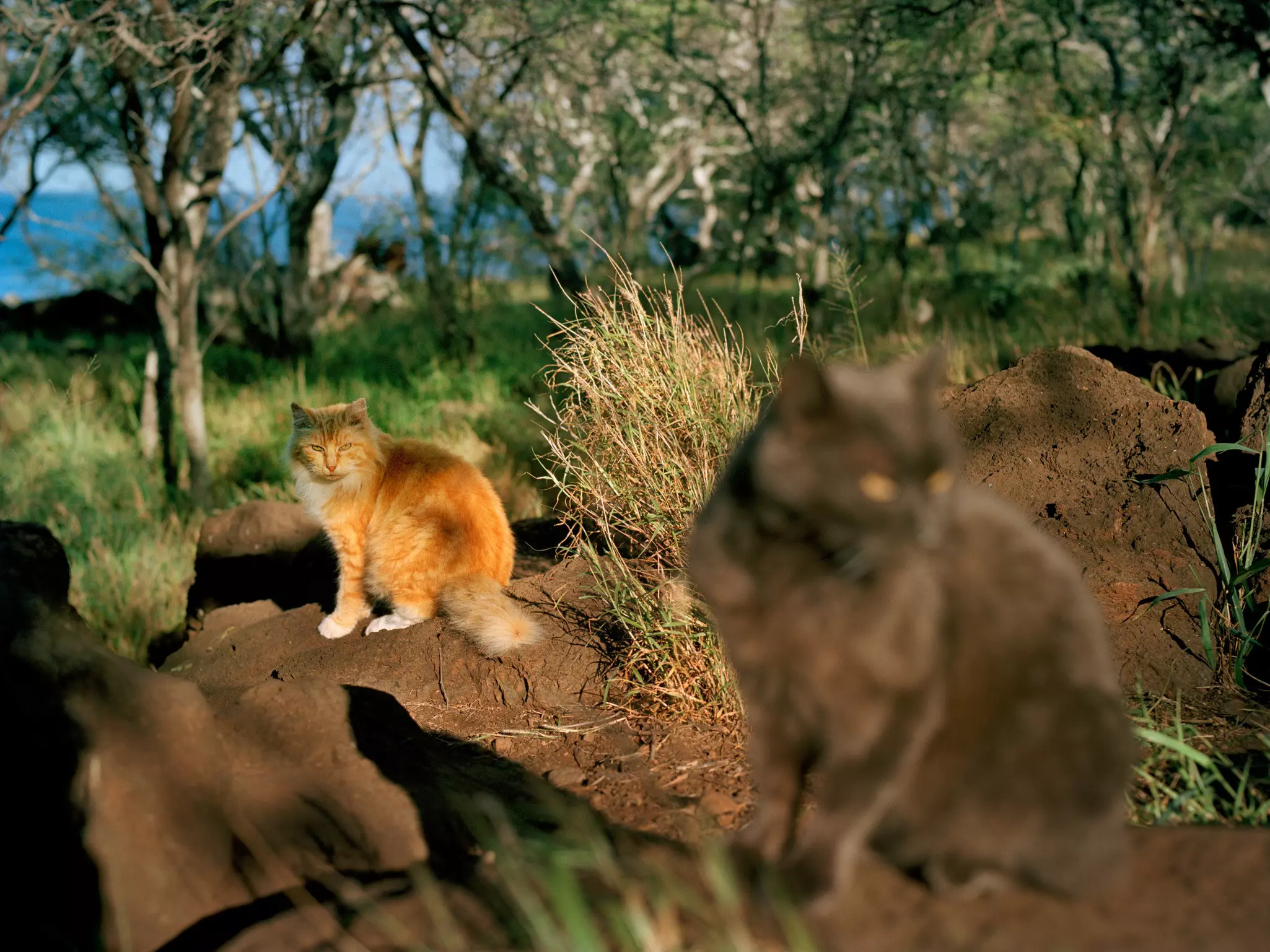
NC: "The cats! We stayed at a campsite that had feral cats living there. And when we were there at night, it was sort of like you turn on your flashlight and look out, and you'd see all these shining eyes looking back at you from the trees."
BGK: "What are some of your favorite images from the trip?"
NC: "Certain images reminded me of you or your work, Brendan, which even sometimes, maybe subconsciously, I get drawn to. Like, there's a tree that you photographed that I took a picture of. I didn't even really realize at the moment, but afterwards, Layla was like, that's the Brendan tree."
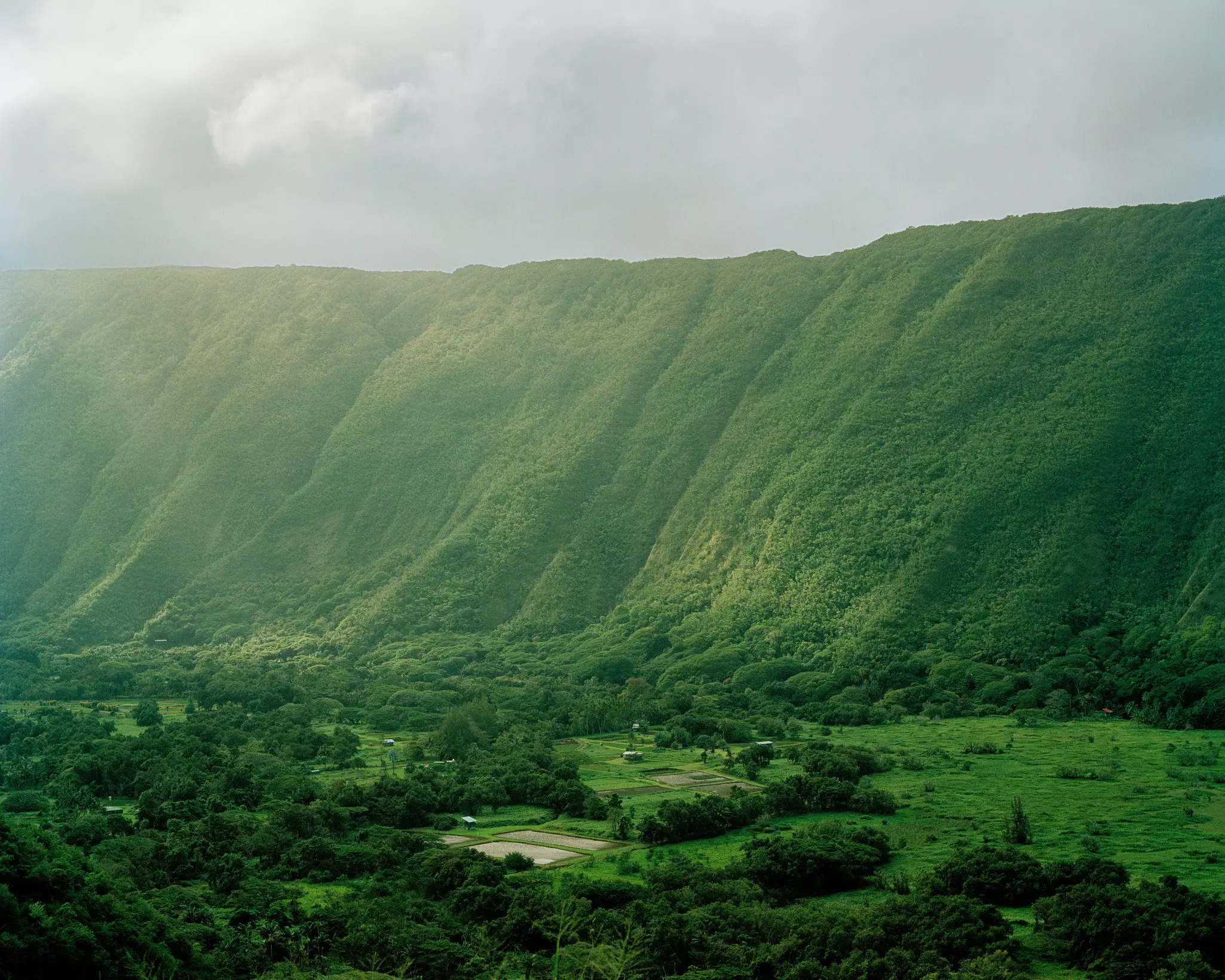
BGK: "Oh! You went to Pololu Valley and photographed the Hala tree."
NC: "Also, the image of the couple standing, standing in the valley, I just really liked that I caught these people sort of looking out into this huge expanse, and sort of embarking on this trip together."
BGK: "It's also perfect that you could kind of see this hint of a trail that leads to the background. I like this image because it captures the mood. There's a rawness to all of Hawai‘i, but Hawai‘i Island in particular is an island that is still forming, it's still expanding. And it's the island that pays tribute to Pele, the goddess of the volcano.
"You see the Ohi’a trees growing on the lava fields, and for locals, that's a very special thing because it's such a storied plant, it's an endemic species of plant, but it's also the thing that makes the forest happen. So, you have this destructive force, which is the lava flow. But Hawaiians don't see it as a destructive force; they see it as something that is gonna bring more life to the land."
All photographs are by Nathan Cyprys.
Explore related stories