Sep 20, 202618 min read
A Guide to Tsavo National Park, KenyaSep 20, 2026
18 MIN READ
Writer
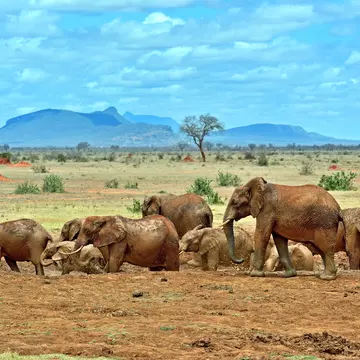
A herd of elephants by a watering hole in Tsavo East National Park in Kenya. kyslynskahal/Shutterstock

Writer
Lonely Planet may earn a commission from affiliate links on our site. All recommendations and reviews reflect our own independent opinions.
Kenya’s largest protected area, Tsavo National Park has provided a haven for the wildlife of East Africa since 1948. This guide to Tsavo National Park will introduce you to one of Kenya's most important wildlife habitats, sprawling across a gargantuan 21,000 sq km between Nairobi and the Kenyan coast.
This vast wilderness is divided in two by the Nairobi–Mombasa highway, and administered as two separate parks – 13,747-sq-km Tsavo East National Park, on the northeast side of the road, and 9065-sq-km Tsavo West National Park southwest of the highway. Visiting these unspoiled parks and having close encounters with their furry, feathered and scaly inhabitants has been one of my most rewarding experiences in Kenya, and I'd encourage anyone to visit and dive in.
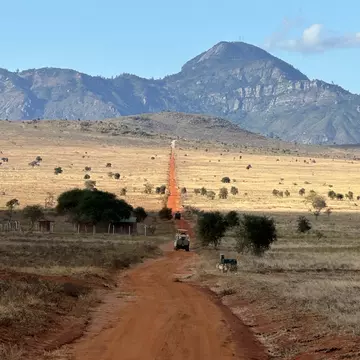
Both parks provide a home for Africa’s “Big Five” – lions, leopards, elephants, Cape buffalo and black rhinos – but Tsavo East is better for elephant sightings, while Tsavo West is known for its volcanic landscapes, natural springs and black rhinos. And the two parks offer strikingly different terrain – Tsavo West features dramatic hills and ancient lava flows, while Tsavo East is drier and flatter, with large areas of open grassland.
At the top of Tsavo’s roll-call of wildlife species are its maneless lions, genetically adapted to the area’s arid climate and thorny undergrowth. Just two of these fearsome big cats managed to kill some 135 workers on the Kenya-Uganda Railway during the colonial period, inspiring Lieutenant-Colonel John Henry Patterson’s 1907 book Man-Eaters of Tsavo. The lions themselves were eventually shot and displayed in the Field Museum in Chicago.
Today, Tsavo is sometimes overshadowed by the Masai Mara, but its wildlife riches and proximity to both Nairobi and Mombasa make it a must-visit safari destination. Discover more with our guide to Tsavo National Park, covering the top things to do, when to visit, transport tips and more.
Temperatures in Tsavo can reach 32ºC (90ºF) during Kenya’s twin dry seasons, from June to October and December to March, but the rain-free months are a great time for wildlife sightings. As water supplies dwindle, animals come out into the open and wildlife congregates around waterholes, larger bodies of water such as the Aruba Dam and Lake Jipe, and the Tsavo and Galana rivers.
During the long rains from March to May and the short rains from November to December, the vegetation becomes denser, providing more cover for animals to hide in. The humid heat can be draining and roads in the parks deteriorate into muddy quagmires. However, prices for lodges, tented camps and safaris fall, and many areas can still be accessed without too much difficulty if you visit right at the start of the rains.
Tsavo is the most magnificent national park between the capital and the coast, so take your time to enjoy it. Allow at least 2 days for a safari in Tsavo West or Tsavo East, or 4 days if you want to fit in extra activities such as guided walks as well as viewing wildlife from a 4WD.
Bear in mind that you also need to reach the parks, and distances between wildlife-viewing sites and lodges can be large, particularly in Tsavo East, so always factor the travel times into your plans. Traveling by road from Nairobi or Mombasa, it takes around 4 hours to reach Mtito Andei – the most popular entry point for Tsavo West, and also an entry point for Tsavo East. If you plan to enter Tsavo East at Voi, allow around 5 hours for the drive from Nairobi and 3 hours from Mombasa.
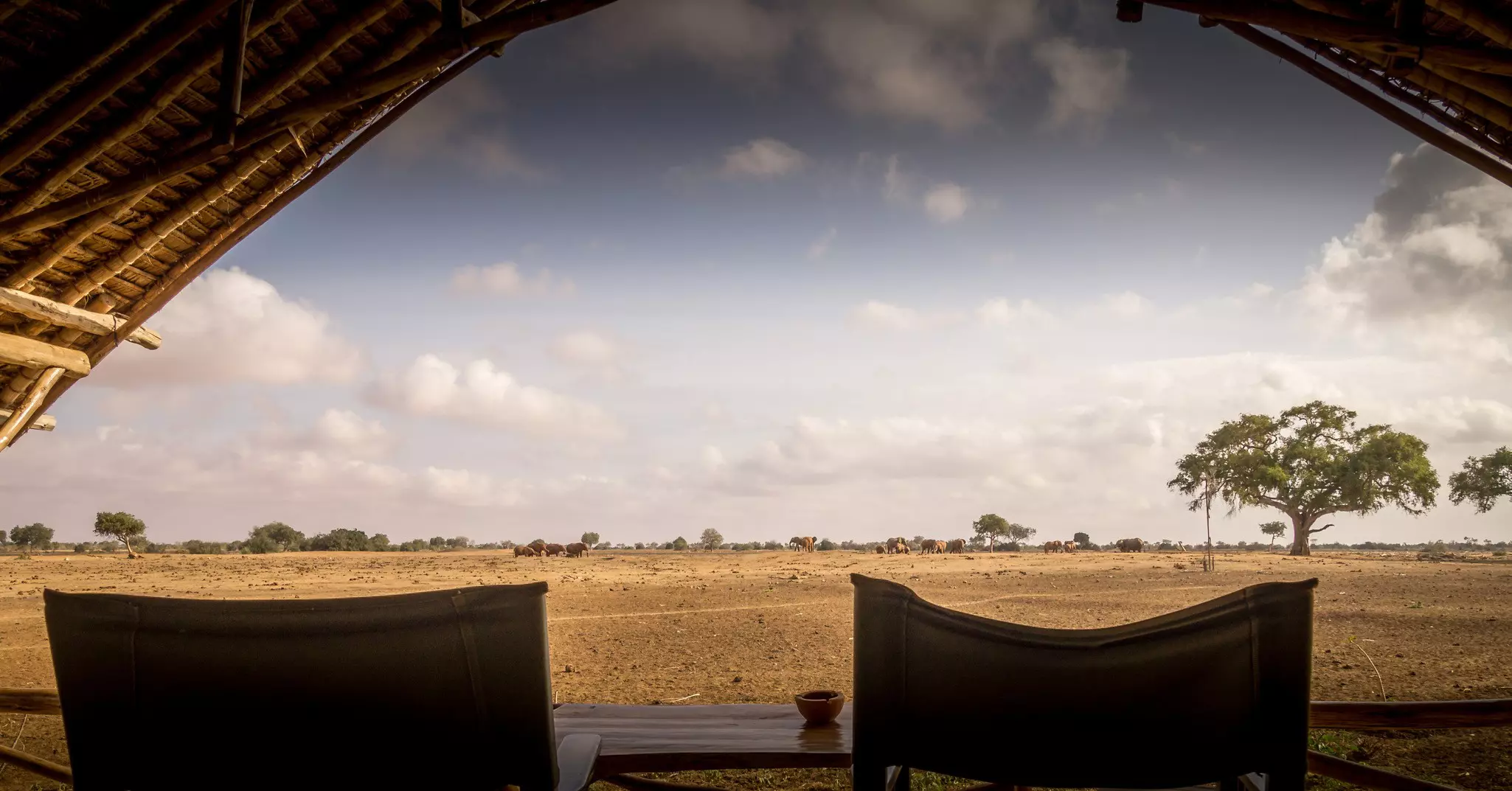
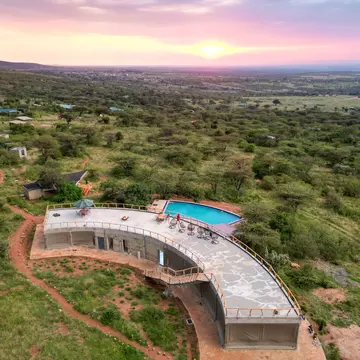
Both Tsavo West and Tsavo East have plenty of hotels, safari lodges and tented camps (where guests stay in semi-permanent safari tents), with Tsavo West having the largest selection of upmarket places to stay. There are also hotels and lodges dotted around the park fringes – often cheaper than lodgings inside the parks – and in private reserves such as the Taita Hills Wildlife Sanctuary to the south of Tsavo West. When you book a safari package, the operator can put together various options at different price points, so discuss your preferences.
The Tsavo area also has some highly memorable top-end accommodations, such as Finch Hatton’s Luxury Tented Camp in Tsavo West and the Salt Lick Safari Lodge in the Taita Hills. For a more economical trip, look at mid-range options such as the Taita Rocks Hotel in the Taita Hills, the Ngulia Safari Lodge near Ngulia Rhino Sanctuary, and the Kilaguni Serena Safari Lodge in Tsavo West.
If you’re self-sufficient and have your own vehicle, there are three public camping grounds in Tsavo West and one in Tsavo East, with low-cost spaces for tents and vans. However, facilities are simple, with a water supply, toilets and a basic camp kitchen. Make bookings through Kenya Wildlife Services, or at the park's headquarters (at Voi for Tsavo East, or at Mtito Andei for Tsavo West). Another way to save is to stay outside the parks in towns such as Voi and Mtito Andei.
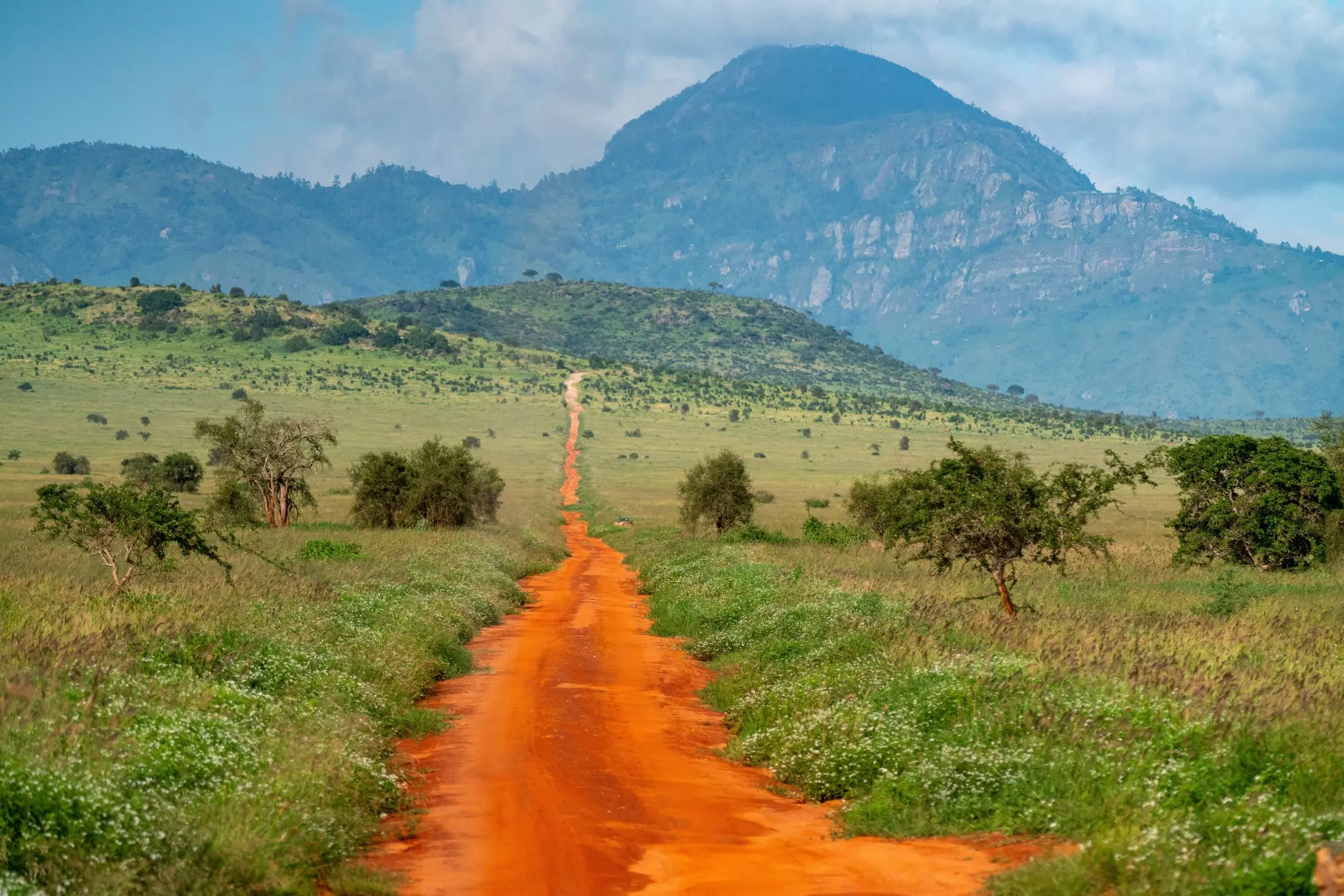
Divided by a major highway and railway line, Tsavo’s twin national parks are easy to reach by public transportation from both Nairobi and Mombasa, but you'll need to think about how you get around inside the parks. Most people visit on organized safaris that include either transfers from Nairobi or Mombasa, or a pick-up in Voi, the most convenient entry point for Tsavo East, or Mtito Andei, the nearest town to Tsavo West and the Taita Hills Wildlife Sanctuary.
Bus and matatu (minivan) companies offer shuttle services to both Voi and Mtito Andei from both ends of the highway, but you can also get there on the trains run by Madaraka Express from Nairobi or Mombasa, following the route of the historic Kenya-Uganda Railway, whose builders faced so many problems with hungry lions.
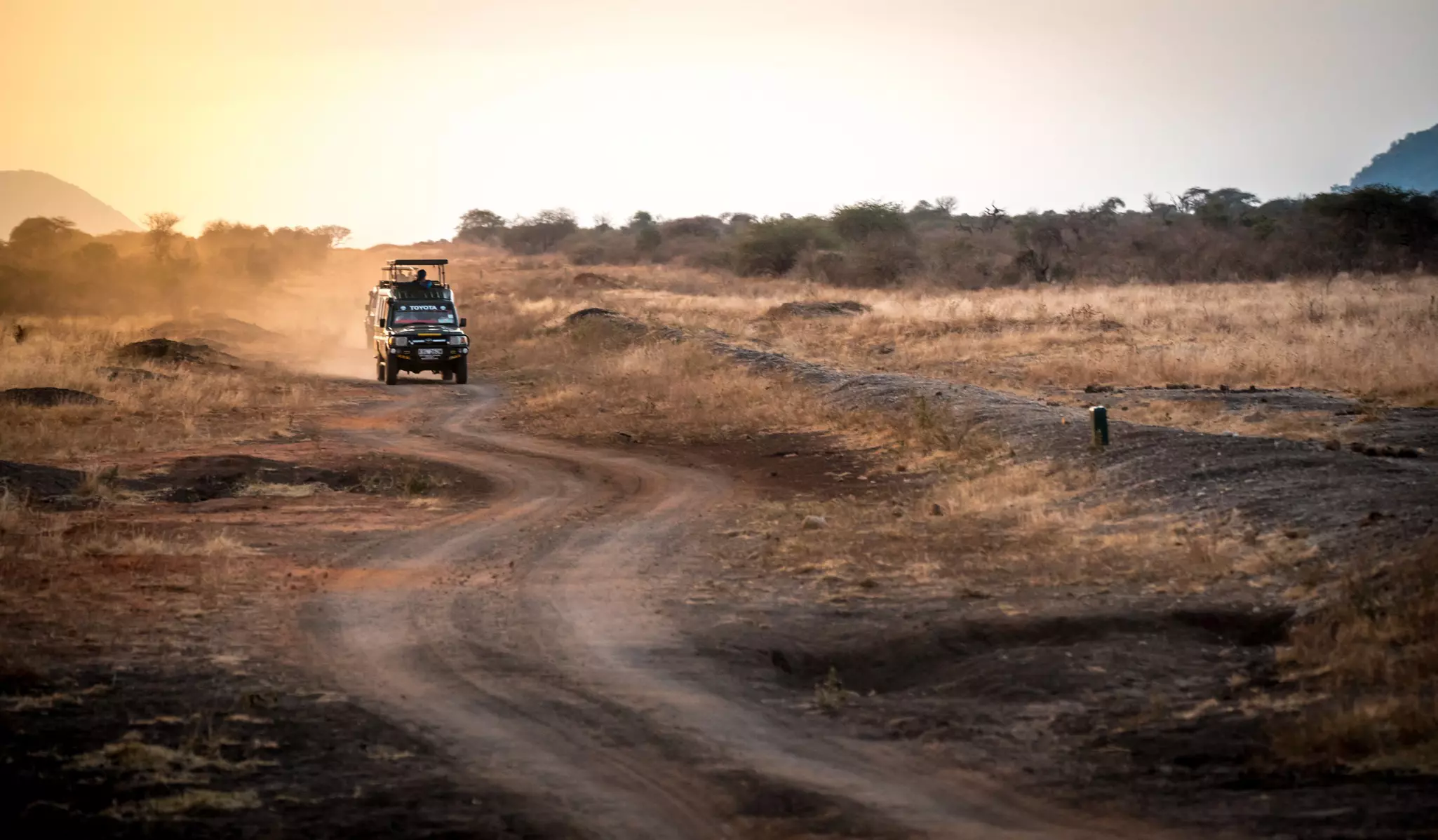
Both parks can also be visited on self-drive safaris with a rented 4WD, though you’ll need to be confident driving on poorly maintained dirt roads and alert to the dangers from wildlife (particularly elephants, which may charge vehicles that get too close). The nearest petrol (gas) pumps are at Voi, Mtito Andei and Makindu, so fill up before you enter the parks. Getting assistance inside the parks in the event of mechanical problems or an accident can be tricky, so make sure you have spare fuel and water, and a means of calling for help.
If you’re heading to Tsavo West, charter planes travel from Jomo Kenyatta International Airport and Wilson Airport to Kamboyo Airstrip, close to the park’s Mtito Andei gate, to Kilaguni Airstrip deeper inside the park, and to Finch Hatton’s Airstrip, on the northwest side of the park. For Tsavo East, most people fly into Voi or take charters to whichever unpaved airstrip inside the park is closest to their accommodation.
The top things to do in Tsavo are focused – unsurprisingly – on the park's natural wonders, but this isn’t limited to watching the wildlife from a 4WD. In Tsavo West, there are several spots where you can leave your vehicle and explore – cautiously – on foot.
Going on a safari is one of Kenya’s must-do experiences, and Tsavo West has some of the most incredible natural landscapes in the country. In the space of just one day, you can navigate sweeping areas of savannah, tropical forests, rocky ridges, bountiful bushlands and desolate lava landscapes.
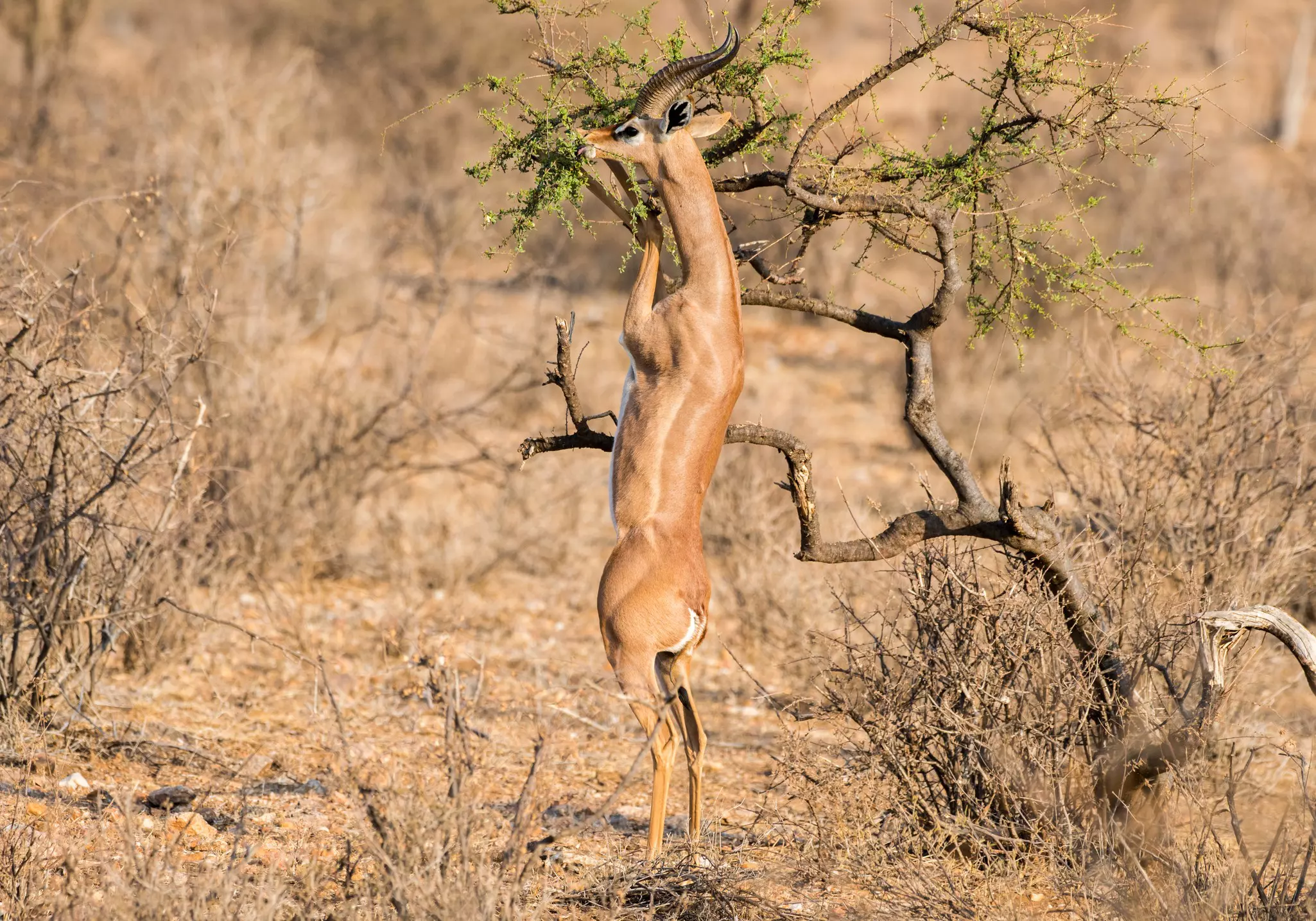
On a 4WD safari in Tsavo West, you have a good chance of spotting some or all of Kenya’s Big Five, with the park’s famed “red elephants” being a particular highlight. The red color comes from the iron-rich dust that the elephants apply to their skin as a sunscreen and insect repellent. Other resident species include cheetahs, hyenas, zebras, crocodiles, wildebeest, giraffes, hippos, lesser kudus, gerenuk and many other herbivores.
Birders can spot 400 species of birds, including weaver birds with their distinctive straw nests, hornbills, Basra reed warblers, corncrakes and secretary birds, alongside vultures and many other birds of prey. Encounters between predators and prey can be brutal to observe, but it’s a powerful reminder of the cycle of life that unfolds in the African bush.
This is a journey into the wild, so make sure you come prepared with insect repellent, water, sunscreen, a hat, binoculars and a camera with a long lens. On safari, you’ll be safe inside your vehicle – naturalists believe that predators regard vehicles and their inhabitants as a single object, and disregard them as prey – but don’t veer off the designated roads or exit your vehicle except on designated tracks where this is permitted, such as the paths at the Chaimu Crater and Mzima Springs.
There are several points in Tsavo West where it is possible to briefly – and carefully – leave your vehicle to look out across the landscape. The best spot for a clear view over Tsavo West’s incredible terrain is the so-called Poacher’s Lookout, just northwest of Severin Safari Camp. The viewpoint is set at 852m above sea level, and from here, you can gaze over sweeping plains running west towards Mt Kilimanjaro.
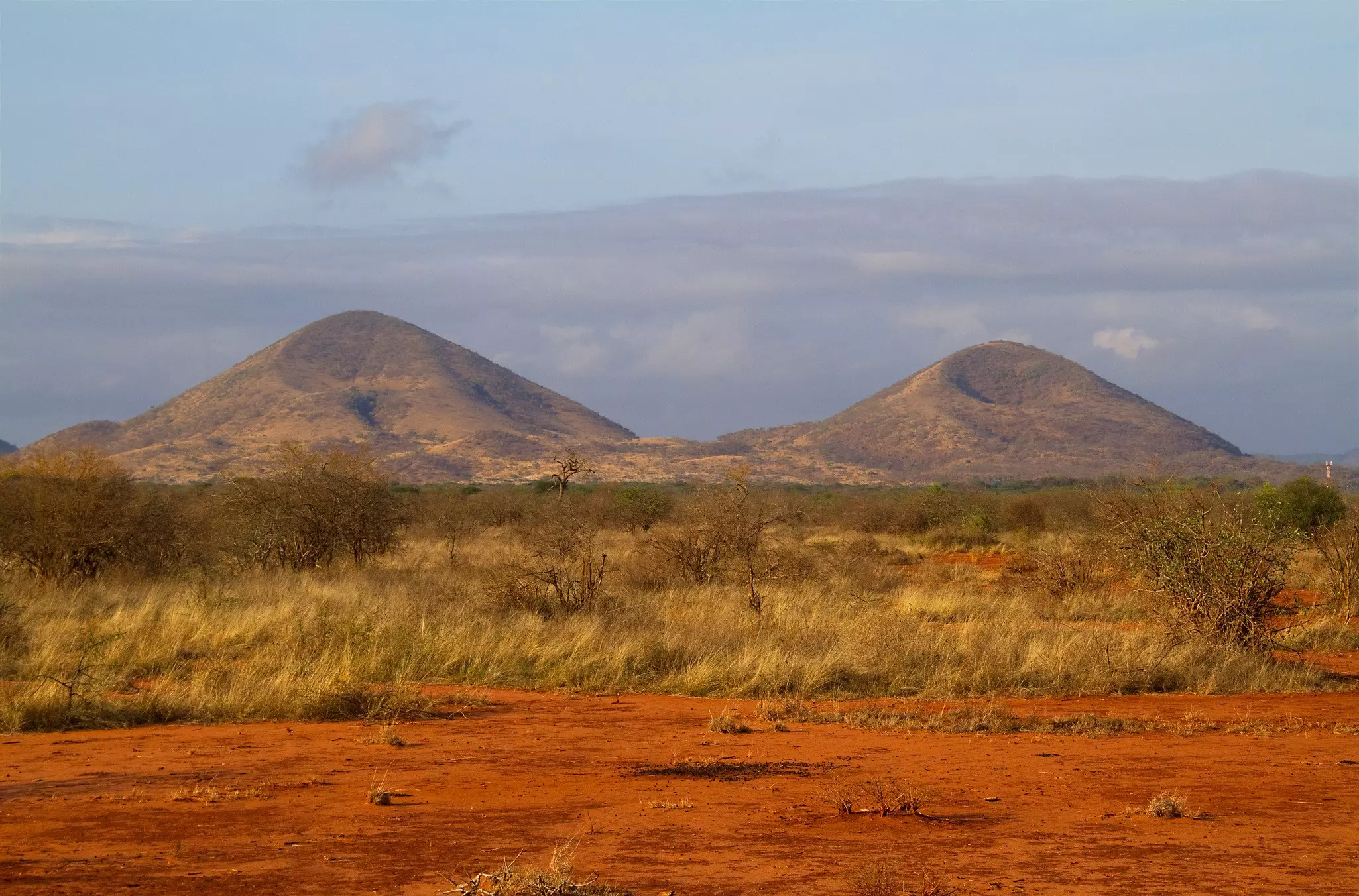
At the Chaimu Crater on the edge of the Chyulu Hills, you can step out of your 4WD and take a short trek up to the top of a cone-shaped volcanic hill to soak in views over the park’s lava-scarred western fringes. From the crater’s black cinder summit, you'll see other volcanic cones dotted across the dry landscape.
Located west of the Chyulu Gate that links Tsavo West to Amboseli National Park, the Shetani lava flow is a sea of solidified lava that stretches for 50 sq km across the savannah. Formed between 200 and 500 years ago, the lava deposits here are heavy with obsidian, and black cinders poke through the dry vegetation.
The word shetani means “devil” in Kiswahili; local folklore tells of the Akamba people interpreting the eruption as being caused by the devil emerging from hell. You can disembark from your vehicle to admire this dramatic landscape, but keep a cautious eye out for wildlife.
Nearby, you will find the Shetani Caves, also created by ancient volcanic activity. With care, the caves can be explored with a flashlight, but it’s best to visit with a guide as the rocks are razor sharp and snakes and hyenas sometimes frequent the area.
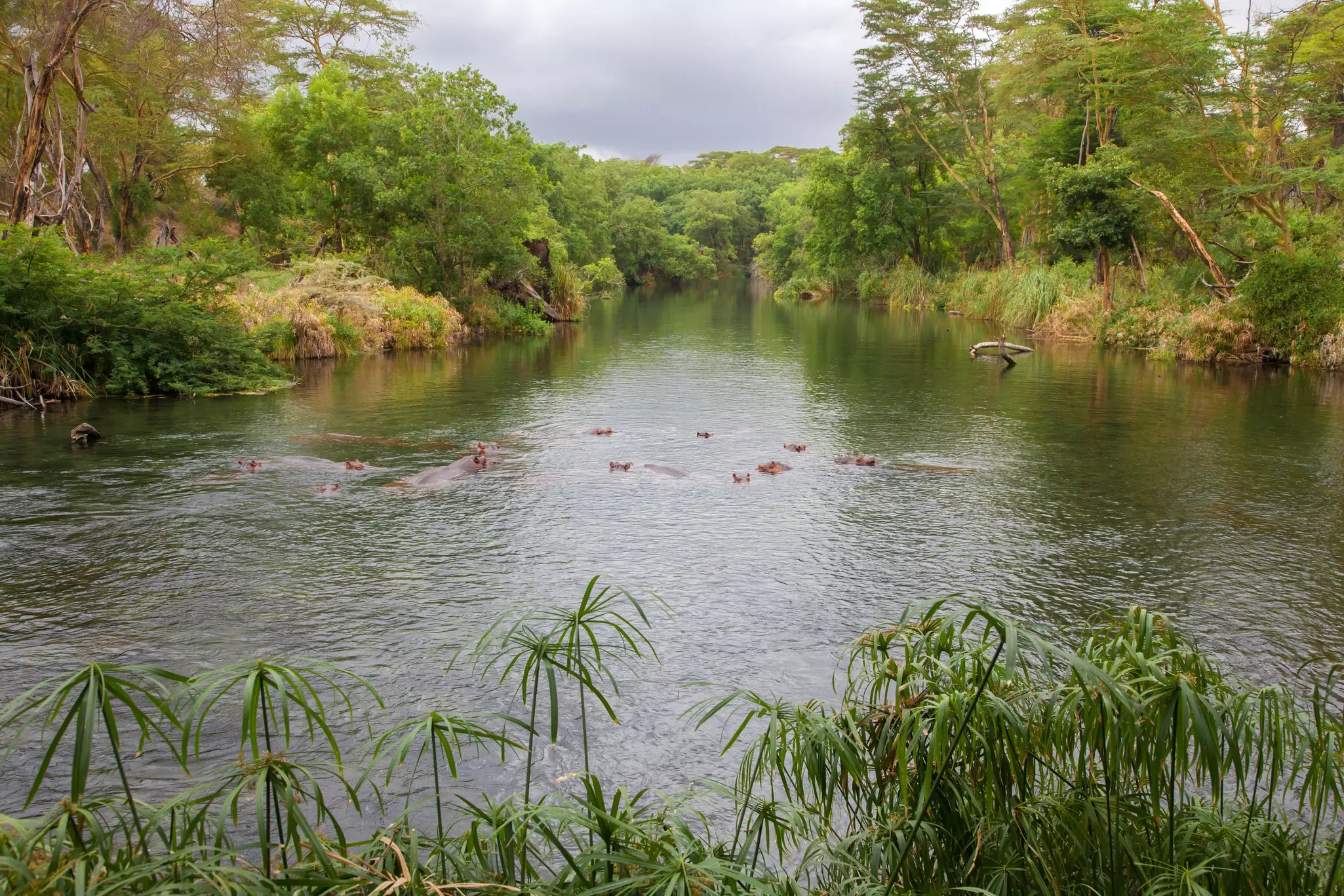
The word mzima means “life” in Kiswahili – an appropriate name for a collection of natural springs in the arid environment of Tsavo West. Located 48km from Mtito Andei, the springs release water that originally fell as rain on the Chyulu Hills, before percolating through the porous rock for as long as 25 years.
Today, you can park up and admire the clear stream emerging from the springs, which flows through several pools and rapids, before vanishing back underground 2km later. The waters are channelled to supply water to Voi and the coastal region, but hippos and Nile crocodiles haunt the above-ground sections, so keep a safe distance from wildlife.
In the company of a guide, you can stroll around the springs and taste the purest and clearest water you’ll encounter in southeastern Kenya. A nature trail follows the stream, passing a glass tank that offers a glimpse below the water – keep an eye out for slithering snakes and scuttling monkeys as you walk.
Avoid visiting very early in the morning or late in the afternoon, when larger animals gather, posing a potential hazard. Remember, hippos cause more human fatalities in Africa every year than all big cats combined. Lodges in the northern part of Tsavo West often arrange trips here for guests, or you can include a stop on your safari itinerary.
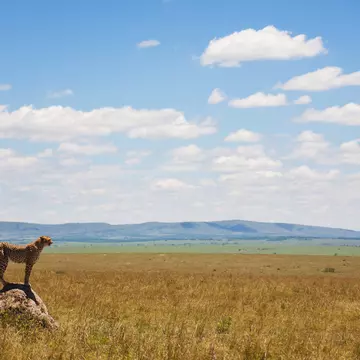
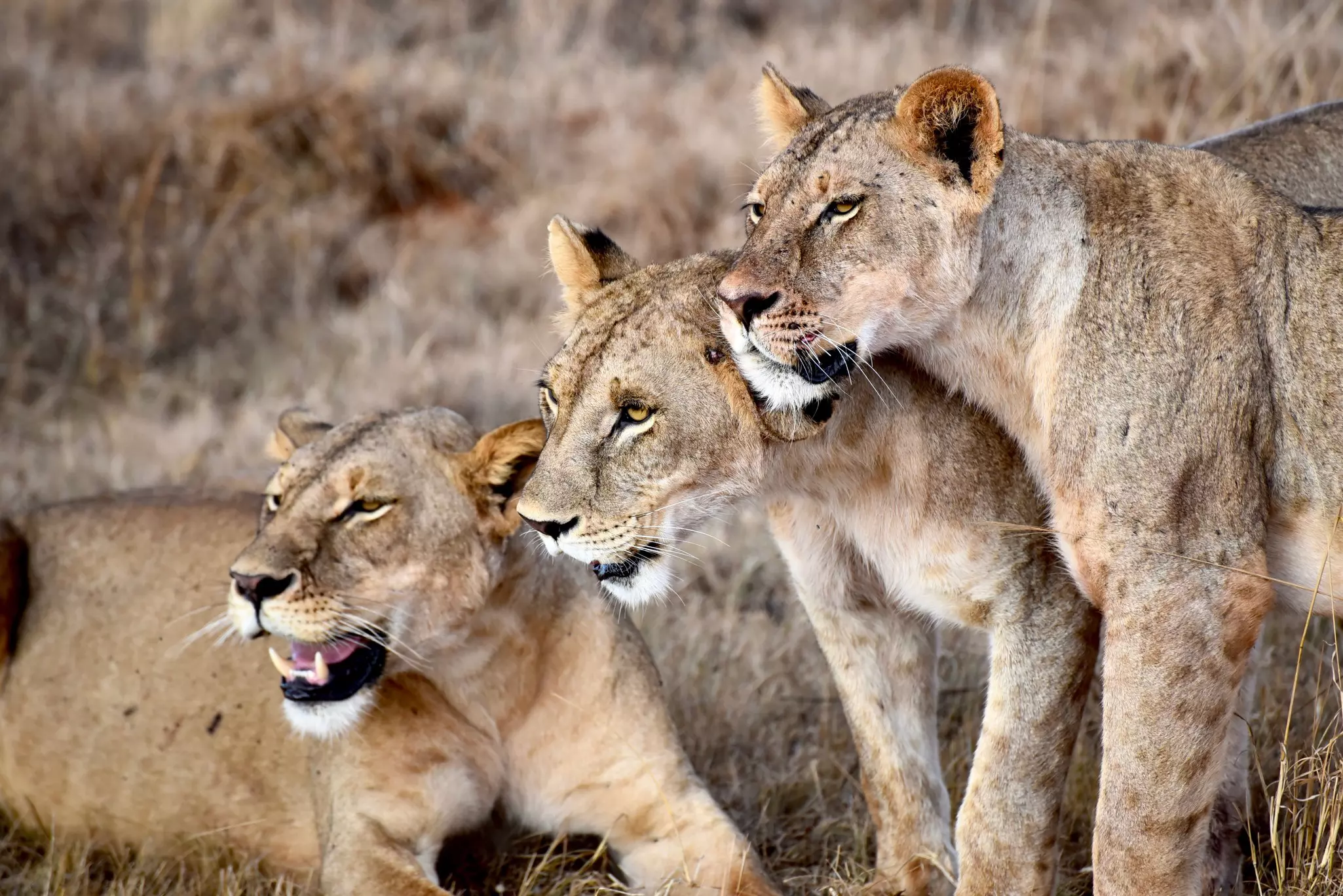
Some 675 lions roam across Tsavo and neighboring Amboseli, alongside leopards, cheetahs and several smaller species of African cats. Topping the must-see list are Tsavo's maneless lions – you have a good chance of spotting these graceful predators on early morning safaris, particularly around water sources such as the Galana River and the Aruba Dam in Tsavo East.
When not hunting, lions often rest on rocky outcrops such as Mudanda Rock in Tsavo East, or the Lion’s Rock and Roaring Rocks in the northern part of Tsavo West. Safaris often visit these outcrops for breakfast at sunrise or at sunset for a sundowner drink. While the evidence is patchy, Roaring Rocks is often said to be the inspiration for Pride Rock in the Disney movie The Lion King.
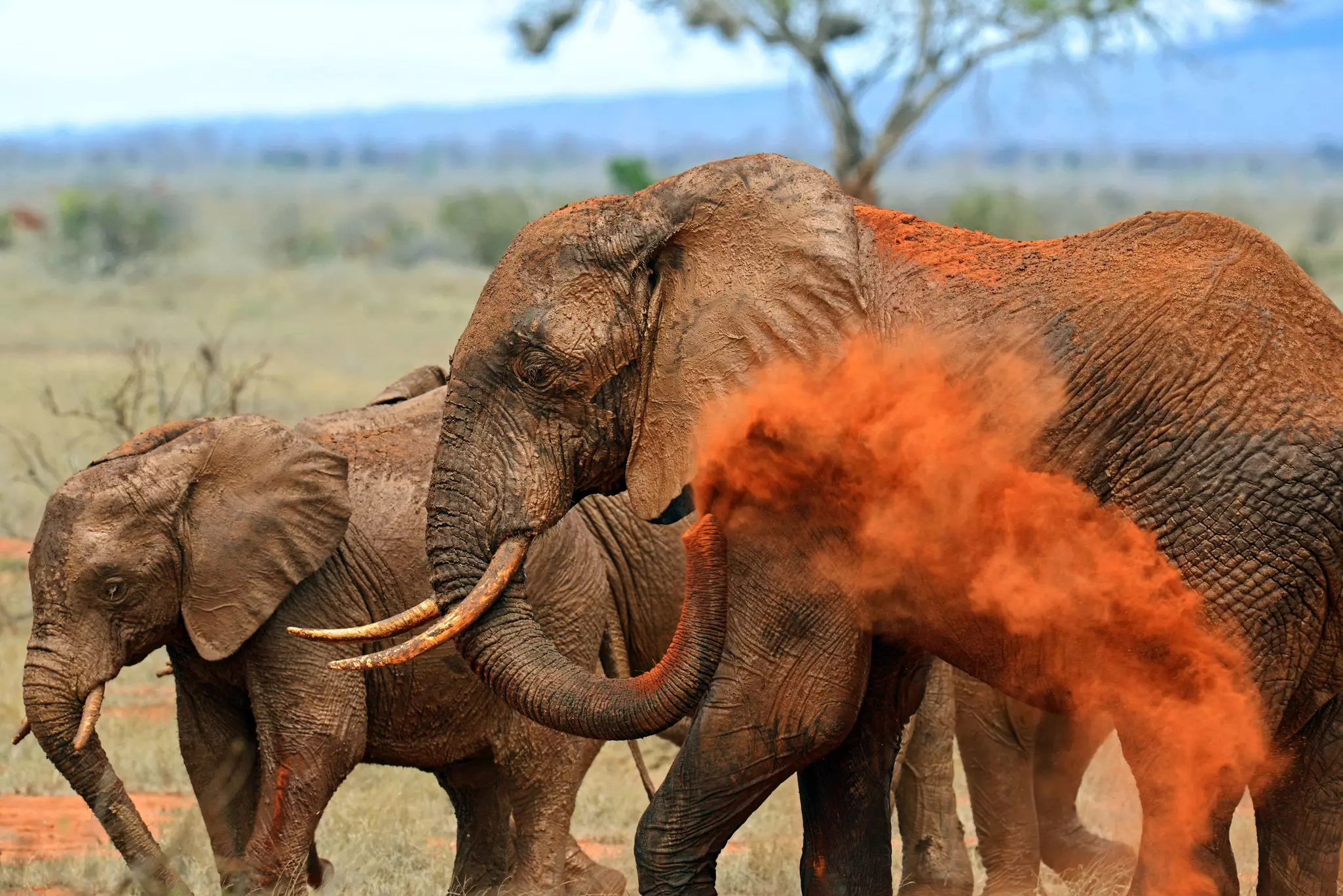
Some 16,000 African elephants roam across the two halves of Tsavo, and seeing these mighty pachyderms showering themselves with the park’s distinctive rust-red dust is a highly memorable experience. Good places to see elephant herds in Tsavo West include around the Mzima Springs and close to the Tsavo River.
Over in Tsavo East, elephants are often seen near the Aruba Dam and along the Galana River. Guests at the architecturally striking Salt Lick Safari Lodge in privately run Taita Hills Wildlife Sanctuary can see elephants wandering around from their bedrooms, which are raised high above the ground on elevated platforms.
When encountering elephants in Tsavo, keep a safe distance. Elephants can charge if they feel threatened, particularly if there are calves in the group, and solo males can be dangerous during the musth phase of their reproductive cycle, when they experience surges of testosterone.
Planning tip: If you encounter a group of elephants while driving in the park, stop at least 100m away and be ready to drive away if the elephants advance on your vehicle. I once gave a lift to some hitchhikers from a tribal village while traveling across Tsavo West to Amboseli and I stopped to take photos of a group of elephants – my passengers became agitated, then shouted, "Many danger!" as the dominant male suddenly charged. I quickly reversed away and the elephant abandoned his charge, but it was a valuable lesson in wildlife safety!
Black rhinos were once found in Tsavo in higher densities than anywhere else in the world, with some 20,000 individuals roaming the area in the 1940s. Due to shocking levels of poaching, the rhino population dwindled to just 20 in 1989, when the Ngulia Rhino Sanctuary was created as a fenced fortress to give the population a chance of recovery.
The project started with just nine rhinos, but today the sanctuary is home to more than 120 individuals, making this one of Kenya's most effective conservation projects. The sanctuary was named after the Ngulia Indigenous community, and guests can stay here overnight to observe the rhinos through binoculars or night-vision goggles from a rustic camp with a raised observation platform (a maximum of six guests are allowed at any one time).
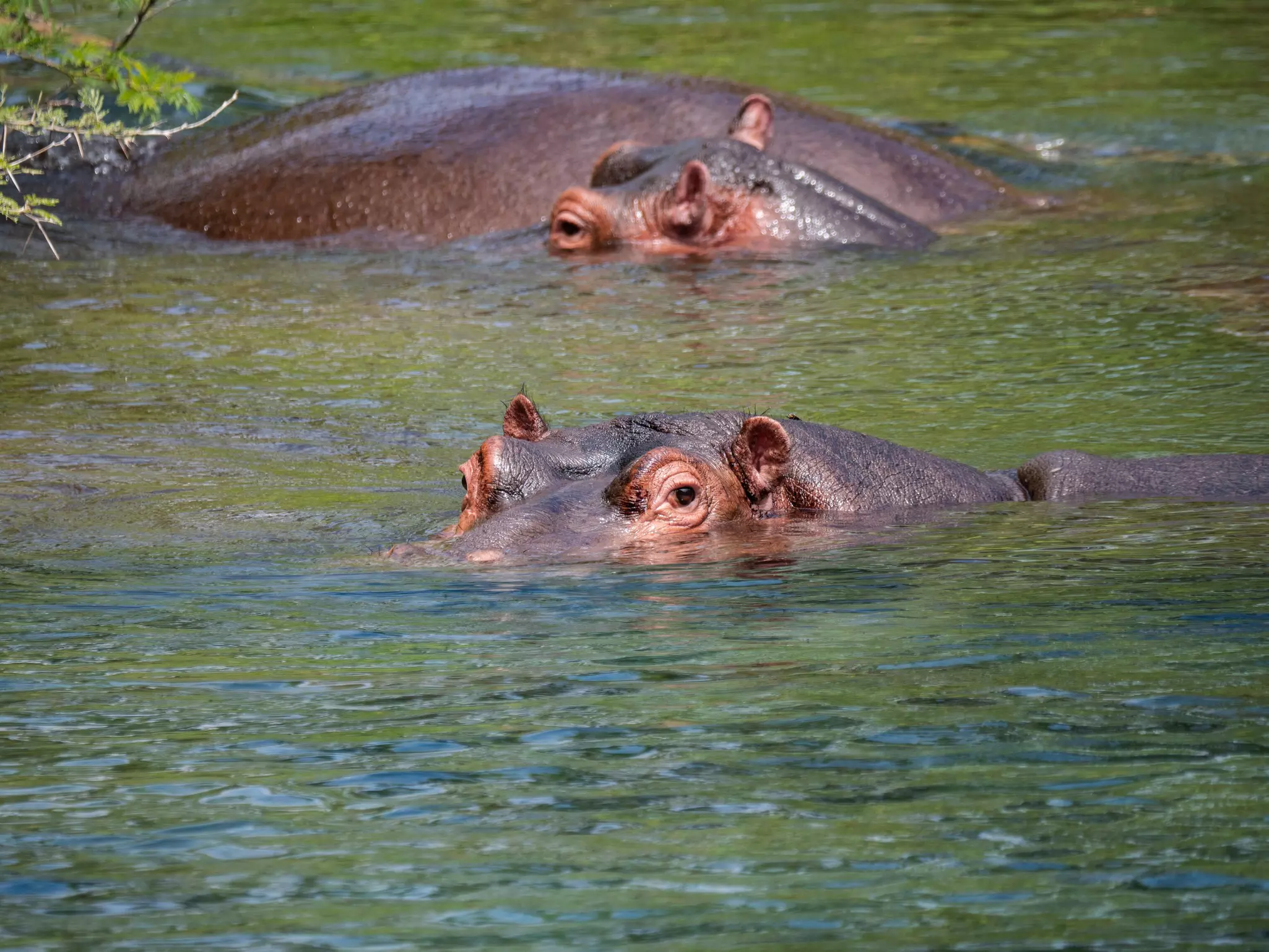
It's hard to choose between climbing up the Chiamu Crater and seeing the crocs and hippos at Mzima Springs. There’s a wonderfully exhilarating feeling of being out in nature as you exit your vehicle at either location, with the added frisson of knowing you need to be a little careful of the wildlife. That includes the hippos – they’re famously aggressive and territorial, and kill some 500 human beings across Africa every year. If you’re sensible and careful, though, it’s amazing to watch these huge mammals in their natural habitat from a safe distance.
Visitors to any of the parks and reserves at Tsavo must pay an entry and conservation fee. At Tsavo West and Tsavo East, non-residents pay US$80/40 per adult/child, while entry to Taita Hills costs US$40/20. Admission to the Ngulia Rhino Sanctuary is included in the entry cost for Tsavo West. You can pay in advance through the Kenya Wildlife Service (or through your accommodation if you visit Taita Hills), or pay on arrival at the park gates using a payment card (cash is not accepted).
Safaris in Tsavo are a little more expensive than the very cheapest safaris in the Masai Mara, but costs are broadly in line with other safari destinations in East Africa. Starting from either Nairobi or Mombasa, short trips lasting 2 days and 1 night are the least expensive option, with prices starting from around US$350, but costs vary depending on the standard of accommodation.
The most expensive safaris include transport by charter flight and accommodation at remote luxury lodges and tented camps, with lots of activities bundled into the package. Trips to Tsavo East tend to be a little cheaper than safaris in Tsavo West, primarily because the latter has the greater concentration of upmarket lodges and camps.
If this is your first visit to Tsavo, you may have additional questions – here are some of the key things you need to know.
You’re here for the wildlife, so bring binoculars and a good quality camera with a long lens (400mm is ideal), plus plenty of spare memory cards. Morning safaris can be chilly when you are traveling in a partly open safari vehicle, so bring a hat and some warm layers to keep off the cool breezes, and for eating and drinking alfresco in safari lodges at night.
As a general rule, loose-fitting, long-sleeved cotton shirts and pants are more practical in the bush than shorts and short sleeves. The best lodges have pools, so bring your swimsuit, and be sure to pack insect repellent to keep off biting bugs. Take anti-malarial medication, alongside getting the recommended vaccinations for travel to Kenya.
Sunscreen and sunglasses are also invaluable in the East African sun. When walking, wear sturdy boots as a first line of protection against sharp rocks, thorns, snakes and spiders. And bring a water bottle you can refill from hotel supplies to avoid generating extra plastic waste.
It’s best not to venture out into lion country entirely on your own. On an organized safari, wildlife guides will be included as part of the cost; this also applies to safaris arranged as part of an accommodation package at a park lodge.
If you are driving yourself, you can arrange private guides through tour agencies in Nairobi or Mombasa. If you prefer not to drive on the parks’ rutted and uneven dirt roads, 4WD rental companies can arrange a vehicle with a driver-guide for an extra daily fee.
While getting close to Tsavo's wildlife is an amazing experience, remember that Africa is not Jurassic Park – even mild-mannered herbivores can be dangerous, so try to stay at least 25m away from non-predatory species, and at least 100m away from predators and elephants, or from any animal with young.
While on a safari, animals may pass close to your vehicle, but giving them as much space as possible makes things safer for you and less stressful for the wildlife. Once you pass beyond the park gates, stay inside your vehicle, except in areas where walking is permitted, and keep alert for dangerous or aggressive wildlife, including snakes.
Never feed the wildlife – for their safety as well as your own. Thanks to passengers on buses and safari vehicles throwing out snacks, baboons and other monkeys have taken to mobbing vehicles in many parts of Kenya, and unhealthily overweight rock hyraxes (rodent-like mammals) loiter around many safari lodges begging for scraps.
When driving, stick to the dirt roads and don't drive off into the bush. If you have an accident or mechanical problem, assistance could take a long time to arrive, so carry plenty of drinking water and a means of signaling for help, such as a smartphone that allows emergency messaging via satellite (and a power bank to keep it charged). Fill up with petrol (gas) before entering the parks, and carry spare fuel in an appropriate container, as there are no service stations inside the parks.
Explore related stories