Sep 20, 202618 min read
A Guide to Tsavo National Park, KenyaDec 31, 2025
4 MIN READ
Writer
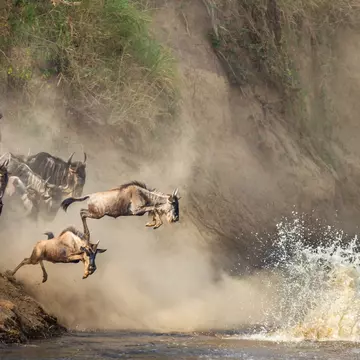
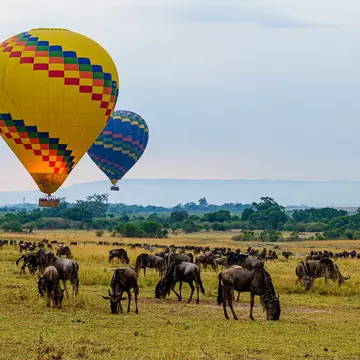
Wildebeest on migration through Maasai Mara National Park, Kenya. GUDKOV ANDREY/Shutterstock

Writer
Lonely Planet may earn a commission from affiliate links on our site. All recommendations and reviews reflect our own independent opinions.
From stunning wildlife to sandy beaches and lush highlands, Kenya offers incredible experiences for visitors. We’ve compiled a list of expert recommendations of films to watch, books to read and included a handy vocabulary and packing list, so you can get to know Kenya before you arrive.
Jonathan Scott’s Safari Guide to East African Animals(Jonathan Scott; 1997): One of the best books to bring on safari. It has been updated and has amazing pictures.
One Day I Will Write About This Place: A Memoir (Binyavanga Wainana; 2011): A portrait of a middle-class Kenyan upbringing by one of Kenya's rising literary stars.
Decolonising the Mind (Ngũgĩ wa Thiong’o; 1986): A collection of essays by one of East Africa's top authors looking at language and its use in culture, colonialism and identity.
Born Free(Joy Adamson; 1960): This book details Adamson's experiences raising Elsa, an orphaned lion cub.
The Constant Gardner(Fernando Meirelles; 2005): Filmed in Kenya and featuring striking images, this movie is about a British diplomat in Nairobi whose wife is murdered.
Out of Africa(Sydney Pollack; 1985): The film adaptation of Isak Dinesen's memoir was shot in the Ngong Hills outside Nairobi.
Nairobi Half Life (David Tosh Gitonga; 2012): This award-winning film profiles an aspiring Kenyan actor who joins a Nairobi gang to survive.
The Lion King(Roger Allers and Rob Minkoff; 1994): A classic film that will inspire year-round safari dreams for adults and children.
Mama Africa (Suzanna Owiyo; 2009): Afropop from the Tracy Chapman of Kenya, celebrating the strength, beauty and resilience of African women.
Yahweh (Esther Wahome; 2003): The hit "Kuna Dawa" from this album improbably crossed over from gospel song to nightclub hit.
Nairoberry (K South; 2002): The landmark hip-hop album that launched the careers of this popular band.
Amigo (Les Wanyika; 1998): Swahili rumba from one of Kenya’s most influential bands, with a blend of Congolese rumba and East African influences.
Boots: Even if you're not planning on hiking, having a sturdy pair of boots or shoes will mean you're ready for any impromptu bush hikes or long walks on Nairobi’s dilapidated pavements.
Layers: Kenya is warm and usually a T-shirt and board shorts will suffice. But the weather can drop quickly, particularly at night and in the north of the country, so pack some layers to make sure you are not left in the cold.
A hat: The sun can be intense as Kenya is at the equator, so be sure to pack a wide-brimmed hat.
Modest attire: Particularly if visiting the coast, which is majority Muslim, it's advisable to have a scarf or other modest clothing to cover your shoulders and knees.

Jambo:A pidgin Swahili word, used to greet tourists who are presumed not to understand the language. If people assume you can speak a little Swahili, they might use the following greetings:
habari (ha-ba-ree) hello
shikamoo(shee-ka-moh) is a more respectful way to say hello, particularly to those older than you
tutaonana(too-ta-oh-na-na) goodbye
Other useful words:
ndiyo(n-dee-yoh) yes
hapana (ha-pa-na) no
tafadhali (ta-fa-dha-lee) please
asante (sana) (a-san-tay sa-na) thank you (very much)
karibu (ka-ree-boo) you are welcome (a reply to asante)
pole(poh-lay) sorry
samahani(sa-ma-ha-nee) excuse me
habari(ha-ba-ree) how are you?
nzuri/salama/safi (n-zoo-ree/sa-la-ma/sa-fee) I'm fine
jina langu ni… (jee-na lan-goo nee…) my name is…
sielwei(see-ay-lay-wee) I don't understand
…iko wapi?(ee-koh wa-pee) where is the…?
nifikaje?(nee-fee-kay-jay) how do I get there?
unaweza?(oo-na-way-za) can you show me on the map?
bei gani…? (bay ga-nee) how much is…?
una…? (oo-na) do you have…?
nataka… (na-ta-ka) I'd like…
nina (nee-na) I have…
Greetings are important. Never enter a conversation without first greeting the person and asking how they are.
Interactions with children. Don’t give pens or candy to children, particularly if they are begging.
Bargaining. Hagglingis expected in markets and street stalls, especially those that sell handicrafts aimed at tourists.
Patience. Things don’t happen quickly here and you won’t make them faster by yelling. Take your time – hakuna matata.
Explore related stories