Oct 25, 20265 min read
5 Reasons to Visit ZanzibarJan 4, 2021
5 MIN READ
Writer
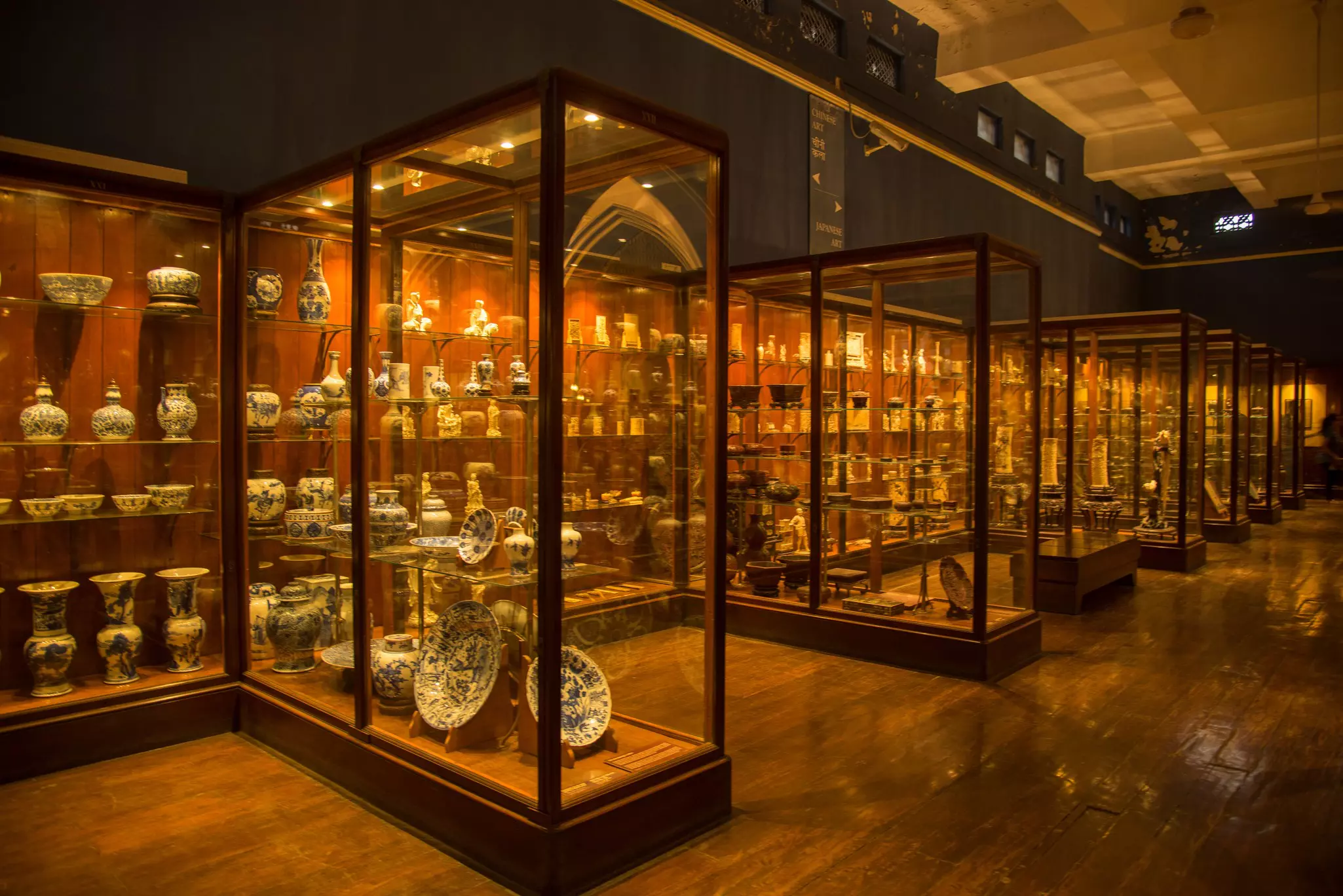
The Chhatrapati Shivaji Maharaj Vastu Sangrahalaya museum displays Mumbai's finest collection of historic artifacts. CRS PHOTO/Shutterstock
Writer
Lonely Planet may earn a commission from affiliate links on our site. All recommendations and reviews reflect our own independent opinions.
Spanning back to over 5,000 years, India boasts of a rich history that involves the diffusing of cultures and traditions through different ethnicities and religions, making it a diverse yet united nation today. The objects placed in museums across the country are apposite testimonies to this agelong tradition.
The vast number of antiquities housed in these museums elucidate the social, political and cultural genesis of the nation and its people. They have more than enough in store to satisfy history buffs and culture vultures. Curtailing them down to a list of nine was definitely not easy, however, read on to know about them and their permanent homes across India.
Currently placed at the Chattrapati Shivaji Maharaj Vastu Sanghralaya in Mumbai, this armour is the only known and dated personal armour of Emperor Akbar. An inscription on the collar of the armour reads: The personal garment of the emperor of lofty fortune, Akbar. Year A.H. 989 (equivalent to 1581 CE). The armour consists of a breastplate and a backplate. The breastplate is said to have been moulded to the shape of Akbar’s torso. Ain-i-Akbari, Akbar’s biography, states that Akbar personally inspected the manufacture of arms and armour.
A bronze sculpture dating back to the 3rd millennium BCE belongs to the Indus Valley Civilization. It is currently housed at the National Museum in New Delhi. Unearthed from the site of Mohenjo-Daro (now in Pakistan), this antiquity helped reveal the metallurgical expertise of the Harappans and their love for jewellery and other accoutrements. The artefact is made using the lost wax technique and the girl is seen adorned with a necklace and bangles.
An extinct elephant that is said to have died out around 24,000 years ago, Paleoloxodon namadicus is considered to be one of the largest land mammals that ever lived. This massive skull of the immediate ancestor of the Indian elephant was discovered from the Narmada alluvium and is placed at the Indian Museum, Kolkata.
Didargunj Yakshi, a 5’2” tall statue personifies a near-perfect standard of feminine beauty of ancient India. Besides it being voluptuous with a full bust, slender waist and wide hips, beauty norms such as the three-fold lines on the neck, and folds of flesh at the waist have been highlighted. Belonging to the Mauryan era, the statue dates back to the 3rd century BCE and is currently housed at Bihar Museum in Patna. It is made of Chunar sandstone and is polished to a mirror finish. She is also known as the Chauri-bearer owing to the fly-whisk she is seen holding. Her right leg is slightly bent as if due to the weight of the chauri.
Mathura Museum could easily be called the treasure trove of the Mathura School of art that flourished during the time of Kanishka - one of the most popular monarchs of the Kushana dynasty. Among the treasures stashed at the museum, the most fascinating is a headless stone sculpture of Kanishka - the only existing image of the ruler belonging to the period. The statue dates back to the 1st century CE. He is seen wearing a stiff coat and a pair of boots showcasing Central Asian characteristics. Besides, he is shown holding a sword and a mace. An inscription engraved on the lower edge of Kanishka’s coat reads - Maharaja Rajadhiraja Devaputra Kaniska (The great King, King of Kings, Son of God, Kanishka).
The Harappan site of Dholavira in Gujarat’s Kutch region, takes pride in what is called the Dholavira signboard that comprises the undeciphered Harappan inscriptions. The site is said to have been occupied from 2650 BCE to 1450 BCE. The symbols were made of white gypsum which was used like mosaic tiles and attached to a wooden background. The wood decayed over time but the letters survived. It is one of the longest Indus inscriptions known to us. It comprises ten symbols with one of them being repeated four times.
Salar Jung Museum in Hyderabad is home to a collection of over 9,000 manuscripts housed in its Arabic and Persian Manuscript division. It boasts of one of the earliest folios of the Holy Quran. Dating back to the 13th century CE, the Holy Quran on parchment represents a rare calligraphy work in Naksh script on a rich dark indigo background. Popularly known as Al Quran, it is printed in 31 folios and measures 2cm x 3cm.
One of the major finds from the Chalcolithic site of Inamgaon in Maharashtra, excavated between 1968 to 1983, was a unique urn burial of a 35-year-old man who is said to have lived in 1000 BCE. The peculiar aspect of this burial is that a man was inserted into the urn in a seated position and buried in the courtyard of a house. This particular urn is placed at the museum of Deccan College Post-graduate and Research Institute in Pune. Archaeologists suggest that the person may have been a chief, taking into consideration the house with a courtyard, and was hence given an elaborate farewell. The urn is shaped like a stout human body with a bulging belly and four legs. It is the only one of its kind in India.
An oil painting on canvas, Shakuntala’s impending calamity by Raja Ravi Varma - a harbinger artist of Modern India dates back to 1890 CE. An episode from Kalidasa’s popular play Shakuntala, the protagonist Shakuntala is seen lost in contemplation of Dushyanta - her lover. As she fails to see the hermit Durvasa who has been portrayed in the background, she has been cursed by him that whoever she is thinking of would lose all memory of her. This painting won Raja Ravi Varma the ‘His Highness the Late Martanda Varma, First Prince of Travancore Prize’ for the best landscape in oils.
Explore related stories