Sep 20, 20267 min read
Guide to the Route Napoléon in FranceAug 11, 2026
11 MIN READ
Writer
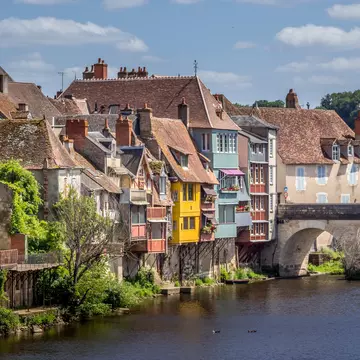
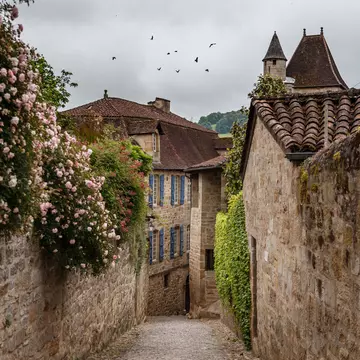
Medieval riverside houses in Argenton-sur-Creuse, central France. Serge Goujon/Shutterstock

Writer
Highlights
Writer Christina Mackenzie picks seven underrated towns across central France.
Base yourself in Bourges for Gothic grandeur, then find kilts in Aubigny-sur-Nère.
Follow the George Sand trail from Argenton-sur-Creuse to tapestry-weaving Aubusson.
For music head to Montluçon; for costumes, Moulins; and for Gothic splendor, Bourg-en-Bresse.
Lonely Planet may earn a commission from affiliate links on our site. All recommendations and reviews reflect our own independent opinions.
Visitors to France tend to flock to its major cities and its Atlantic and Mediterranean beaches. To reach their destinations they either drive down the well-kept motorways filling car tanks (or batteries) and stomachs at soulless motorway service stations or watch the countryside zip by from the comfortable seats of a high-speed train. But there is another way: take the by-ways and meander slowly by car or bicycle along the remarkably well-surfaced roads through underrated central France where small towns you may never have heard of will enchant you with their history and treasures.
North to south and west to east these are some of our favorites.
Best for Gothic architecture
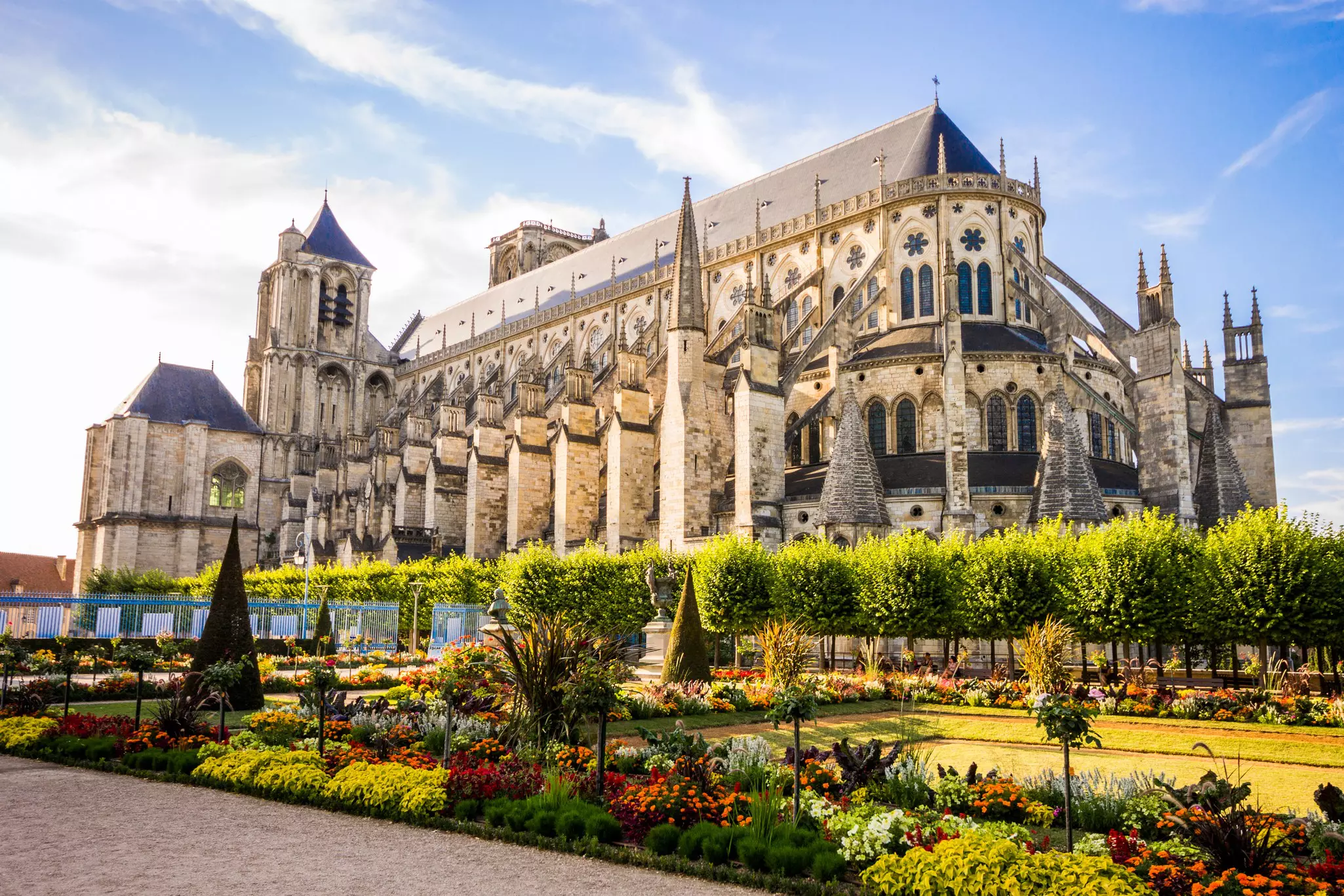
The 2028 European Capital of Culture, Bourges is the perfect base from which to explore the center of France. An important urban hub for over 2000 years, Bourges draws visitors today to its well-kept medieval streets lined with half-timbered houses, the skyline dominated by the UNESCO World Heritage-listed Cathédrale St-Étienne, a transept-free, rarely modified masterpiece of Gothic architecture, with truly striking 13th- and 14th-century stained glass windows.
A 10-minute walk brings you to the early 15th-century Palace of Jacques Coeur, a rare example of French civilian Gothic architecture still intact. It is sparsely furnished but exuberantly decorated with intricate and amusing stone sculptures surrounding the chimneys, windows, doors and staircases. On the main facade on either side of the main door you’ll see bas-reliefs of Jacques Coeur and his wife, each at their own balcony, turned away from each other. Had they argued?
A 20-minute walk will take you from these wonders into the 135 hectares of market gardens lovingly tended by their owners and criss-crossed by canals and streams that you can either walk along or take a boat trip down.
How to get there: Bourges is a 2-hour train journey from Paris, with four direct trains a day costing around €43 one way. There are 12 additional trains you can catch with a change in Orléans for about the same fare.
France’s most Scottish town
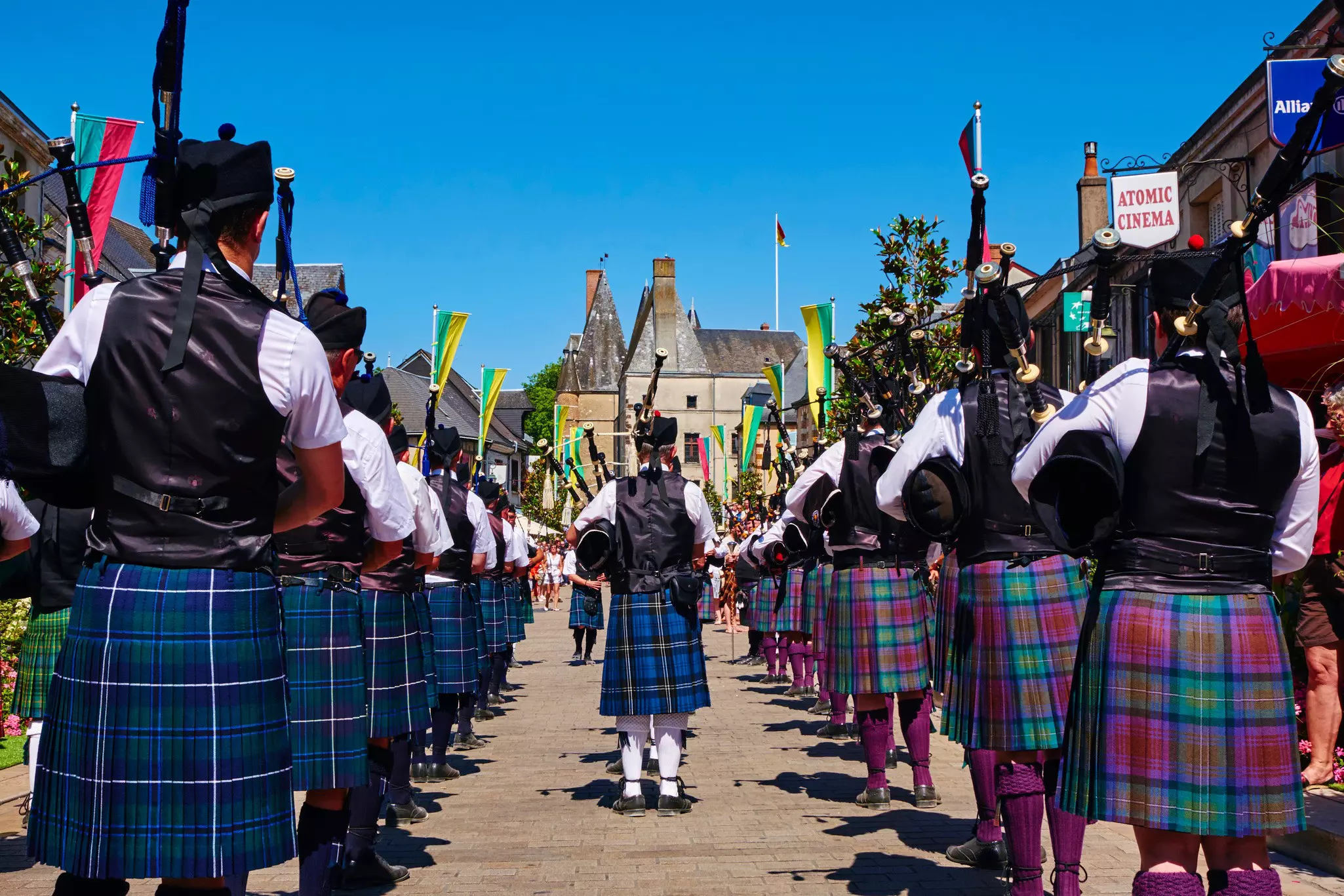
In the medieval town of Aubigny-sur-Nère whose motto is “la cité des Stewarts” you may hear the drone of Scottish bagpipes, see men wearing kilts, notice the Scottish flag floating from flag poles and be surprised that tartan decorates almost every shopfront.
That is because the town has a centuries-old link with Scotland which dates back to the Hundred Years War (1337–1453) when Scotland sent 15,000 soldiers to help the future Charles VII of France. Amongst these, 6000 were led by Sir John Stewart of Darnley, or Jean Stuart de Darnley as he’s known locally. By way of thanks, in 1423 he was granted the lordship of Aubigny-sur-Nère which remained in Scottish hands until 1672.
Today this thriving small town of 6000, whose stores often include the name “Stuart” or some reference to the Highlands such as “Les Bruyères” (heather), continues to celebrate its Scottish roots every year with a summer festival in early July.
Pick-up a map from the tourist office (just in front of the church) to guide you around the town’s lovely half-timbered houses and don’t forget to pop into the 12th-century Saint Martin church to admire its remarkable stained glass windows.
How to get there: Aubigny-sur-Nère is a 47km drive or cycle from Bourges, or take the bus (1 hour, €3).
Best for color, sewing machines and George Sand
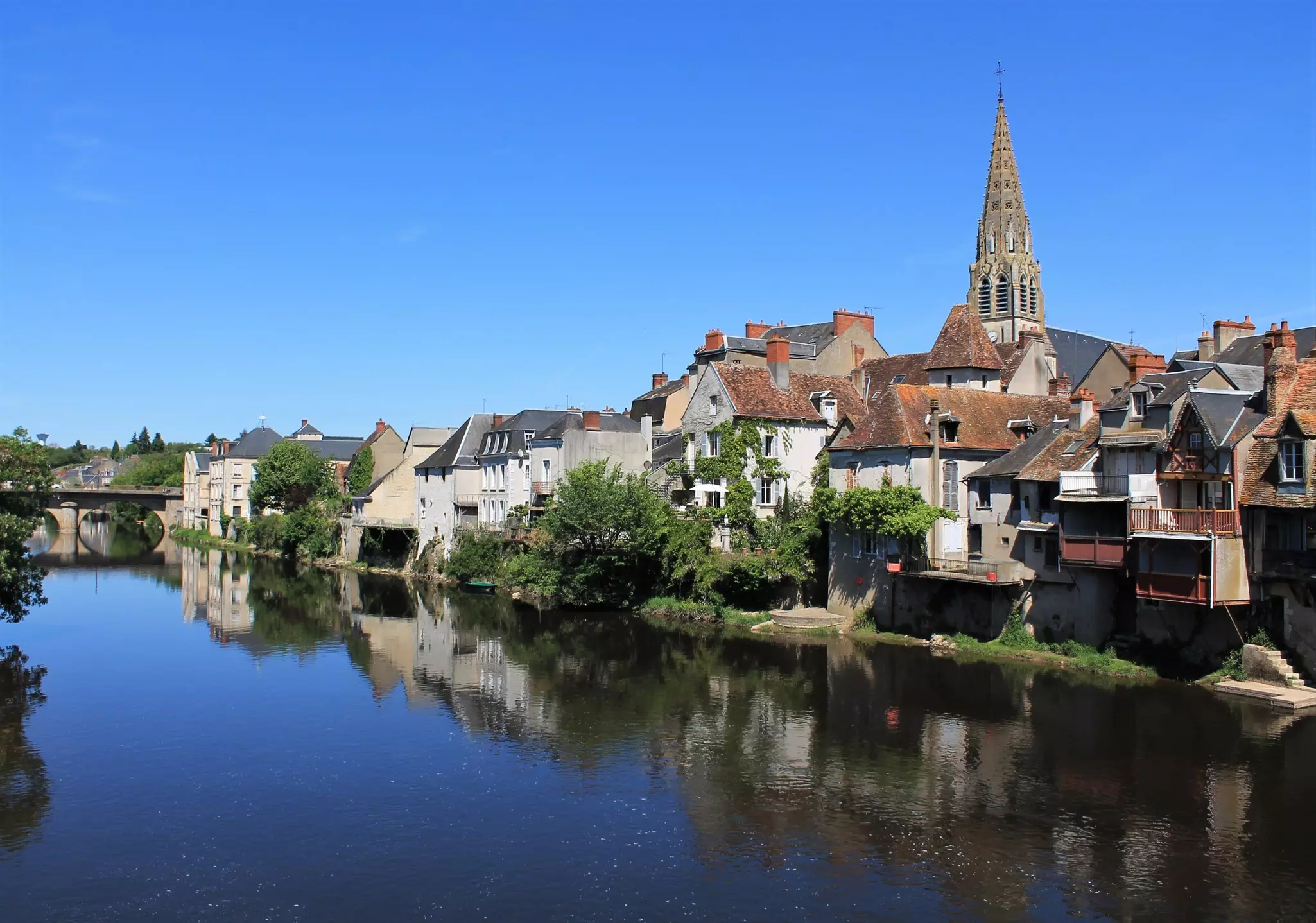
A 100km side-trip southwest of Bourges, this small town sits on both banks of the majestic Creuse river, reflecting the colorful facades of the medieval houses overhanging the east bank. Known as the “Venice of Berry” – Berry being the historic designation for the heart of France, a term still widely used although you won’t find it on any map – the town is dominated by a monumental golden statue of the Virgin and Child which sits atop a small chapel.
Argenton was a clothes-making center for centuries, the skills passed down the generations by women working in both mechanized urban workshops and countryside homes. By the early 21st century all these workshops had closed, but their memory is maintained in the Musée de la Chemiserie et de l’Élégance Masculine (Museum of Shirt-Tailoring and Masculine Elegance). Anyone interested in antique sewing-machines will be in seventh heaven as there is a remarkable collection of them here. My favorite? The one to turn collars right-side out!
From Argenton head 15km south to tiny Gargilesse, labeled one of the Most Beautiful Villages in France (Plus Beaux Villages de France) to visit the country retreat of French 19th-century author George Sand. And if, like me, this visit stirs your interest in this extraordinary writer, then pursue your journey 40km further northeast to Nohant where you can visit her main home.
How to get there: Argenton-sur-Creuse is 96km from Bourges and trains (with a change) cost from €27 one way. You’ll need your own vehicle to get to Gargilesse and Nohant.
Famed worldwide for its tapestries
On your way to Aubusson, 100km southeast from Argenton-sur-Creuse, stop at Fresselines where Impressionist artist Claude Monet came to paint, inspired by landscape descriptions in the novels of George Sand. The charming local museum, the Espace Monet Rollinot, has no works by him but exhibits other artists also inspired by the surrounding countryside.
From here make a little detour 8km west to Crozant to visit the Arboretum de la Sédelle, one of France’s remarkable gardens. And then visit the medieval fortress at Crozant set atop a rocky promontory in a sharp meander of the Creuse river and you’ll understand why artists were inspired by this region now known as the Vallée des Peintres (Valley of the Painters).
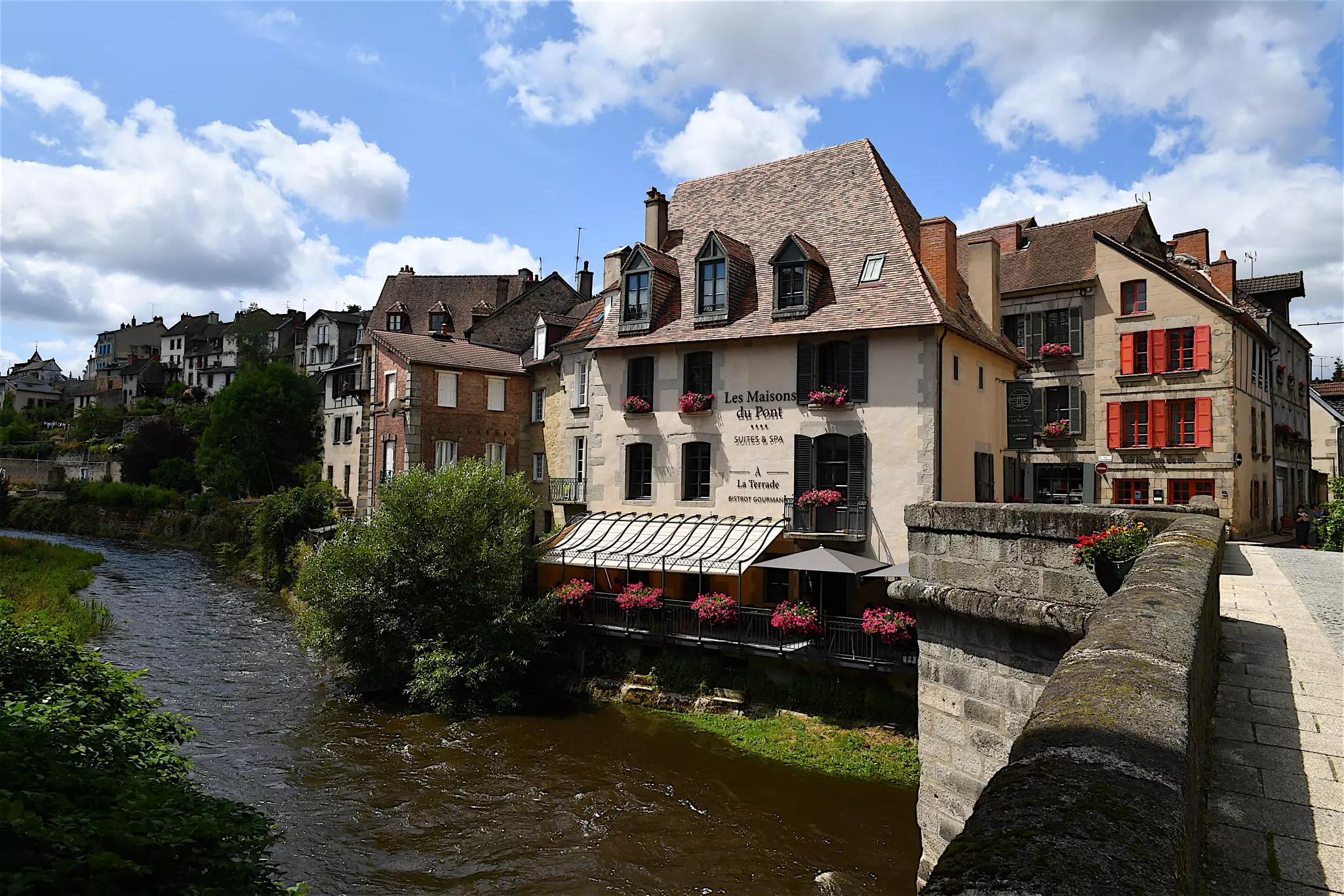
Aubusson, still one of the world’s foremost centers for tapestry weaving 600 years on from when the art was first recorded there, is a 75-minute drive southeast of Crozant (just under 5 hours if you’re cycling). Set along the banks of the Creuse at the bottom of a narrow valley, it’s a colorful town, the street bollards painted in bright hues to match the facade of the Cité internationale de la tapisserie inscribed in 2009 on UNESCO’s Representative List of the Intangible Cultural Heritage of Humanity. Here, you’ll get a fascinating insight into this centuries-old art. Each weaver completes 1m-sq of tapestry per month working 8 hours a day, 5 days a week.
The Cité opened in 2016 both as a museum, a school for between eight to 12 students a year, and to create contemporary tapestries. Its latest work, revealed on June 8, 2026, the 150th anniversary of George Sand’s death, is a 23m-long tapestry celebrating her life and work. Also visit the shop and museum founded by Chantal Chirac, the French expert in restoring the cartoons (templates) which guide tapestry weavers.
From Aubusson go 50km north to Boussac to visit the extraordinary château where Sand discovered the famous six Renaissance tapestries known as “The Lady and the Unicorn” (on display at the Cluny Museum in Paris). The château is owned by Bernadette Blondeau who, at 83, runs the vast place by herself with the help of just one gardener and the elderly guide who’s been working for her for decades. She and her husband bought the ruined castle 60 years ago and patiently restored it and filled it to the brim with eclectic collections of all sorts of things ranging from kitchen utensils in the vast kitchen to pin cushions in one of the bedrooms.
How to get there: Aubusson is 143km from Bourges but it can take up to 6 hours to reach by public transport so driving or cycling are the most sensible options.
Best for music
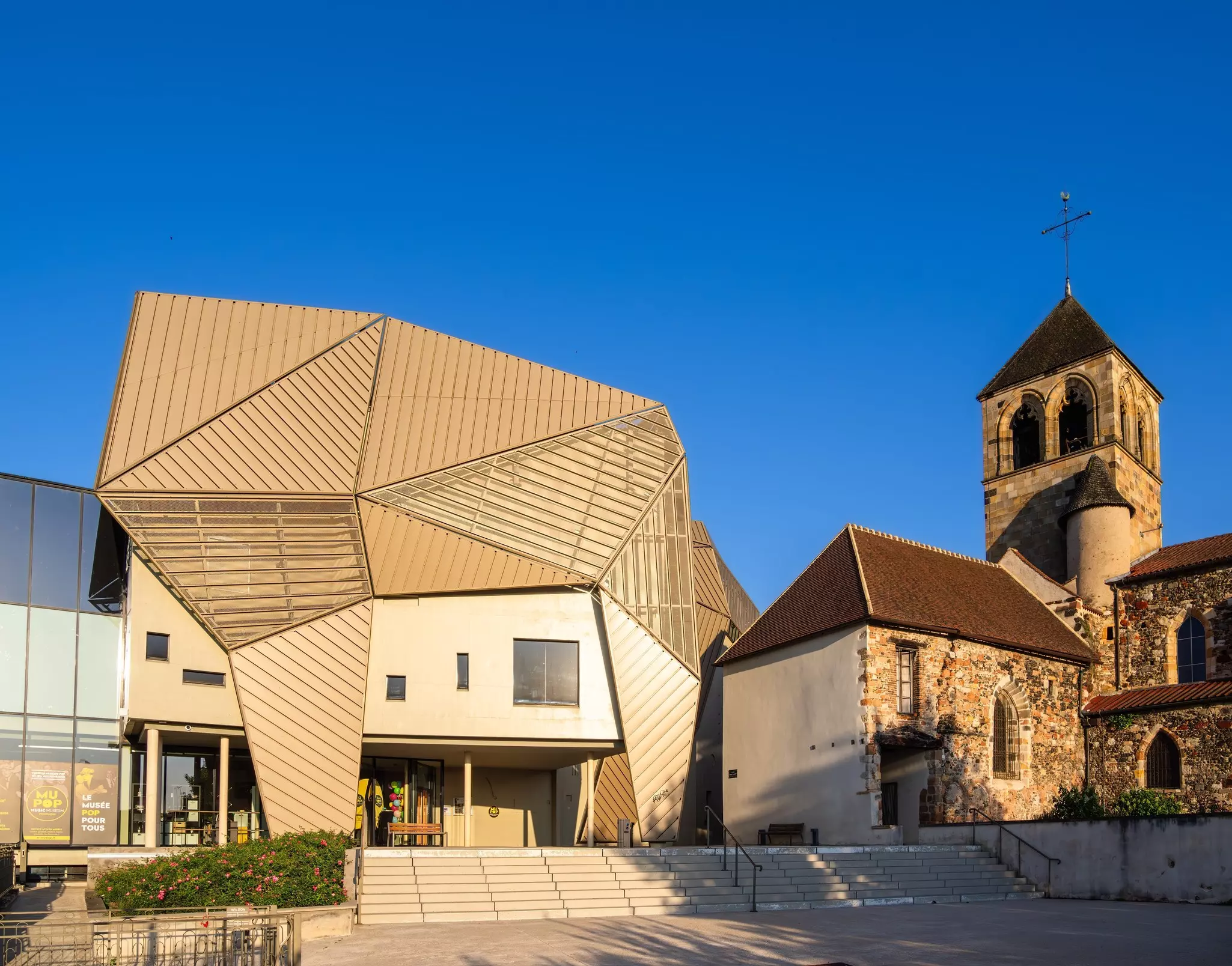
Montluçon, which sits in a shallow meander of the Cher river, dates back to the Romans. It was fortified by Louis II, Duke of Bourbon, in the Middle Ages but the city walls have disappeared, their horseshoe shape now marked by the 1km-long Boulevard de Courtais, which cups around the historic city center and castle of the Dukes of Bourbon (closed to the public). The pedestrianized cobbled streets in the center are lined with slightly dilapidated half-timbered and stone houses. Walk up to Notre-Dame de Montluçon church on the eponymous square and next to it you’ll see a building you either love or hate. The surprising MuPop Music Museum was designed by architect Philippe Tixier, who coiffed an 18th-century mansion and an old shop with what I can only describe as a bronze tea cozy.
This museum houses France’s largest collection of musical instruments from the 18th century on. Inventively curated, the museum will surprise and delight and, as long as you’ve not forgotten the audio guide – which is really mandatory (and available in English) – you can also listen to many of the instruments.
How to get there: Montluçon is around 100km from Bourges. There are eight trains a day five of which are direct (1 hour and 25 minutes) or 2 hours with a change.
Best for stage costumes
Moulins lies on the east bank of the unconstrained Allier river, the principal tributary of the Loire, but sadly the many windmills, watermills and boat mills once scattered on the hillsides and river banks giving the town its name have gone.
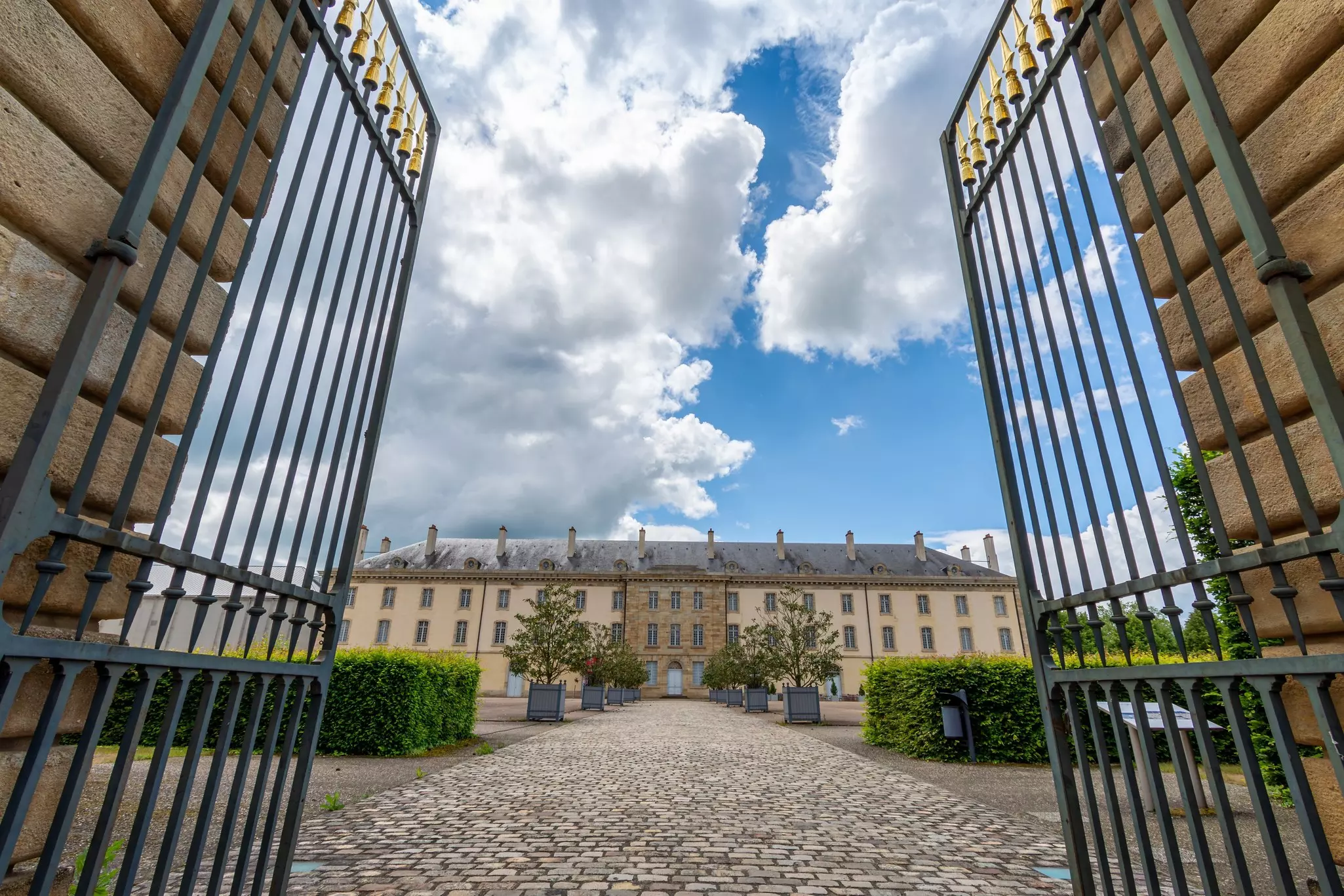
On the west bank just by the Régemortes bridge you’ll find the Quartier Villars, a late 18th-century barracks, now the National Center for Costume and Theatrical Design (Centre national du costume et de la scène or CNCS). This is where over 10,000 of the best costumes of the Paris Opera, the Comédie française and other major French theaters have been stored and a small portion of them exhibited since 2006. There are two permanent exhibitions, one dedicated to dancer Rudolf Nureyev, complemented by two temporary exhibitions a year.
In 2023 the CNCS inaugurated a large space where visitors can learn how scenery and props are designed and made, even trying a bit of hands-on painting themselves. A “backstage” has been built here so they can also discover what the lighting technicians, sound operators and stagehands do.
Moulins’ historic city center features four 19th-century soaring church spires: two belong to Notre-Dame-de-l'Annonciationcathedral and two to the Sacré-Coeur church. Your visit of the medieval city center will be punctuated every 15 minutes by automatons striking chimes on the Jacquemart Tower’s 4-ton bell, which they do 24-7.
How to get there: Moulins is 100km from Bourges and there are seven trains a day, four of which are direct.
Best for its Flamboyant Gothic monastery
A 2-hour drive almost due east from Moulins will bring you to Bourg-en-Bresse (pronounce the first word Bourk) or you could also make a 60km detour south and take in Vichy.
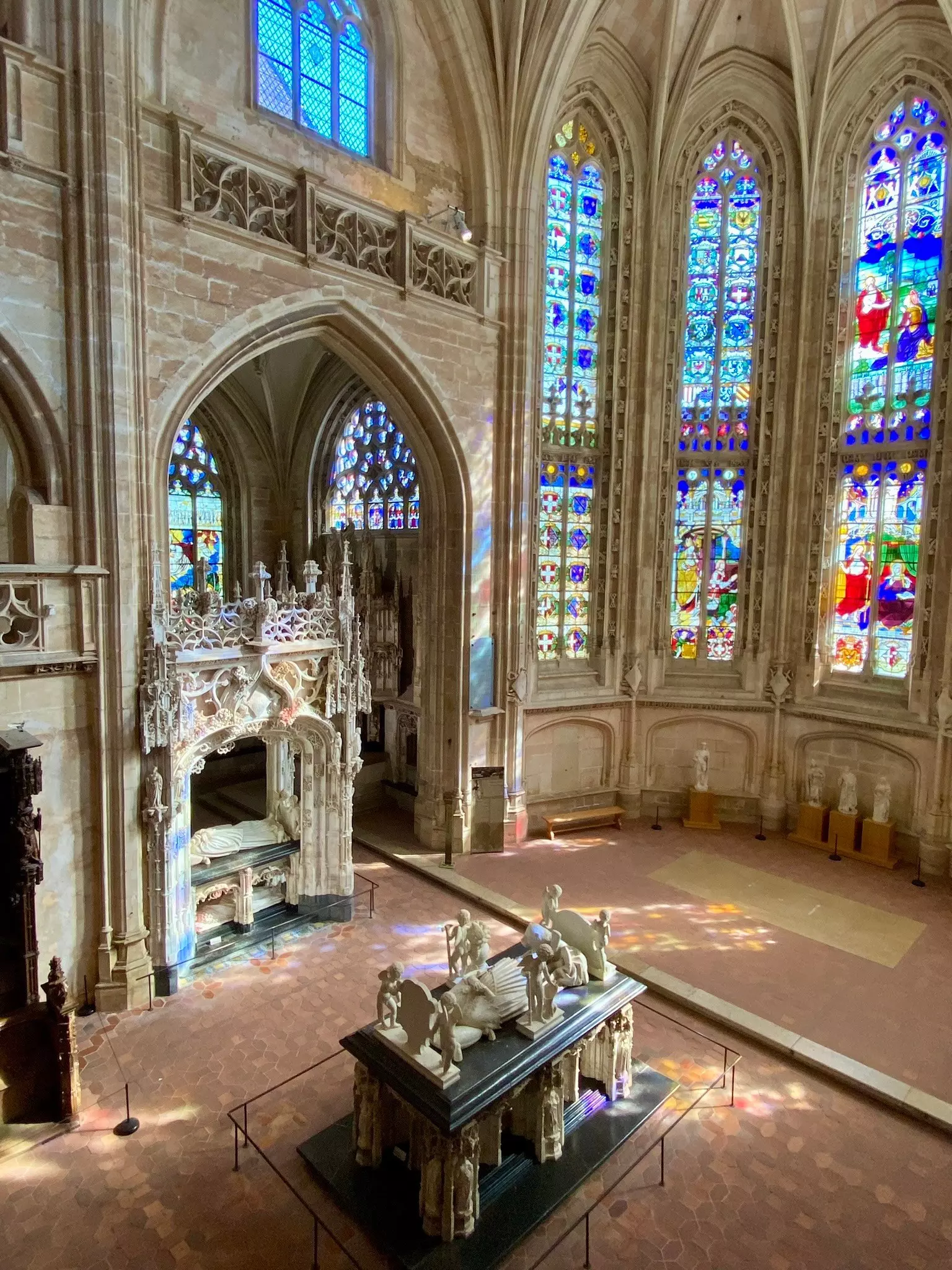
The major draw of Bourg-en-Bresse is the Royal Monastery of Brou, France’s answer to the Taj Mahal, a Flamboyant Gothic masterpiece built in the early 15th century in memory of Philibert le Beau, Duke of Savoy, by his inconsolable young widow, Margaret of Austria.
In 1501 she made a love match with Philibert, whom she’d known since childhood. She was 21 and it was her third marriage. She governed whilst he hunted, but during a hunt in September 1504 he drank from a cold stream and died hours later.
Grief-stricken, Margaret chose to transform the old Benedictine priory of Brou into a monastery, mausoleum and home for herself, but she died 2 years before building was completed in 1532. Few modifications have been made since then. The nave is separated from the choir by one of the few remaining stone rood screens in France, but the highlight lies in the choir: the three alabaster tombs with their Carrara marble recumbent statues. The monastery’s three cloisters are also a unique feature in France. Today they contain a very interesting fine-arts museum with works ranging from the 15th century right up to contemporary pieces.
A few meters up the road from the monastery is a 250-year-old hospital apothecary/pharmacy, in constant use from 1790 to 1963. Time your visit for a Saturday and book a guided visit. It is particularly special because of the 80 or so medieval apothecaries left in France, it is one of only two that has laboratories you can visit.
How to get there: The fastest and cheapest way to cover the 273km from Bourges to Bourg-en-Bresse is by car. You could also take a train to Lyon and change there, but it’s expensive and will take you over 6 hours.
Book your France trip with Lonely Planet Journeys
See France how it's meant to be seen
Planned by local experts and tailored to you, Lonely Planet Journeys handles the logistics so you can just enjoy the trip. Tell us what you want and we'll build your France itinerary from scratch, or browse our bookable trips to get inspired.


Explore related stories