Sep 24, 202610 min read
A Book Lover’s Guide to IndiaJan 27, 2021
5 MIN READ

Writer
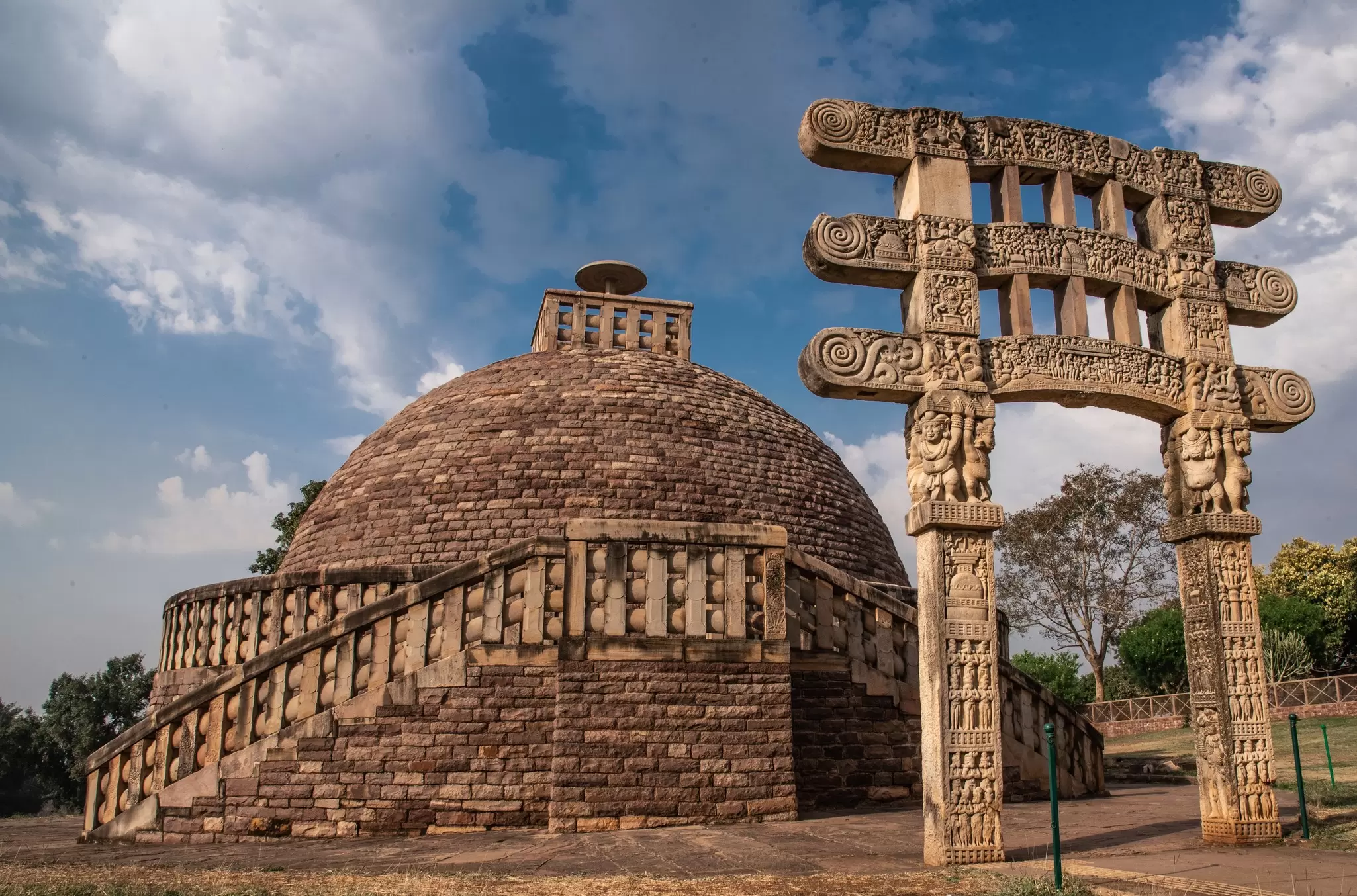
The Stupas at Sanchi, listed as a UNESCO World Heritage Site, are just off the city of Bhopal ©Dp__photography/Shutterstock
Writer
Lonely Planet may earn a commission from affiliate links on our site. All recommendations and reviews reflect our own independent opinions.
The Great Stupa is the centerpiece of Sanchi’s Buddhist monuments, a UNESCO World Heritage Site. Built in 262 BC by the great Mauryan King, Ashoka, who had embraced Buddhism post his bloody siege of Kalinga, these are some of the greatest Stupas in the world.
As travel opens up in India and travelers look at unusual places to visit this season, we bring to our readers places off the usual tourist trail. Sanchi, just off the Madhya Pradesh state capital, Bhopal, is one such.
Beautifully proportioned, Stupa 1 (Great Stupa) is the main structure on the hill. Originally constructed by Ashoka, it was later enlarged and the original brick stupa enclosed within a larger one made in stone. Encircling the stupa is a wall with four entrances through magnificently carved toranas (gateways) that are the finest Buddhist works of art in Sanchi.
Stupa 2 is halfway down the hill to the west (turn right at Stupa 1). It is simpler in design, adorned with flowers, animals and people. Instead of gateways, medallions (circular design) decorate the surrounding wall.
Stupa 3 is northeast of the Great Stupa and is similar in design, though smaller, with a single gateway. It once contained relics of two important disciples of Buddha: Sariputta and Maha Maudgalyayana.
Located behind Stupa 3, Stupa 4 eroded with time and only the base remains now. Between Stupas 1 and 3 is the small Stupa 5 that once contained a statue of the Buddha, now displayed in the museum.
The Great Stupa’s four torans (gateways), one in each direction, were erected around 35 BC. Scenes carved onto the pillars and their triple architraves are mainly tales from the Jatakas (episodes from Buddha’s various lives). The Buddha is represented through symbols here. The lotus stands for his birth, the bodhi tree for his enlightenment, the wheel for his teachings and the footprint and throne for his presence. The stupa itself symbolizes Lord Buddha. A panel here depicts the Miracle of Sravasti – one of several miracles represented here – in which the Buddha, in the form of a bodhi tree, ascends a road into the air. Elephants support the architraves above the columns, while there are delicately carved yakshis (maidens) on each side.
The beautifully carved figure of a yakshi hanging from an architrave on the Eastern Gateway is one of Sanchi’s best-known images. One of the pillars, supported by elephants, features scenes from the Buddha’s passage to nirvana. Another shows his mother Maya’s dream, which she had when he was conceived, of an elephant standing on the moon. Across the middle architrave is a representation of the Great Departure, when the Buddha renounced the sensual life and set out to find enlightenment.
The back-to-back lions supporting the Southern Gateway (the oldest one) form the state emblem of India, which can be seen on every banknote. The gateway narrates Ashoka’s life as a Buddhist, with scenes of the Buddha’s birth and another representation of the Great Departure. Also featured is the Chhaddanta Jataka, a story in which Bodhisattva (Buddha before he had reached enlightenment) took on the form of an elephant king who had six tusks.
Pot-bellied dwarfs support the architraves of the Western Gateway, which has some of the site’s most interesting scenes. The top architrave shows Lord Buddha in seven different incarnations, manifested three times as a stupa and four times as a tree. The rear of one pillar shows him resisting the Temptation of Mara (the Buddhist personification of evil, often called the Buddhist devil).
Temple 18, behind Stupa 1, is a chaitya (prayer room or assembly hall) similar in style to classical Greek columned buildings. It dates from around the 7th century AD, but traces of earlier wooden buildings have been discovered beneath it. To its left is the small, also Greek- like Temple 17. The large Temple 40 dates back to the Ashokan period. The rectangular Temple 31, beside Stupa 5, was built in the 6th or 7th Century, but reconstructed during the 10th or 11th century. It contains a well-executed image of Lord Buddha.
There is a central courtyard surrounded by monastic cells, but most of the monasteries are ruined and only the courtyard and stone foundations remain. Among the few that remain are Monastery 45 and Monastery 47 that date from the transition of Buddhism to Hinduism, with strong Hindu elements in their design. The former has two sitting Buddhas. The Great Bowl is carved from a boulder, into which food and offerings were placed for distribution to the monks.
This museum has a small collection of sculptures from the site. The centerpiece is the 3rd-century BC lion capital from the Ashoka Pillar 10. Other highlights include a yakshi hanging from a mango tree, and beautifully serene Buddha figures in red sandstone. There are also some interesting photos showing the site, pre-restoration.
Next-door is the preserved Gothic- style bungalow of Sir John Marshall, former director of the Archaeological Survey of India. Marshall stayed here from one year in 1912 and was the instrumental figure in excavations.
Sanchi is 48km from Bhopal. Buses run every hour to Sanchi. Taking a train is a decent option and it takes less than an hour. At least four daily trains (8am, 10am, 3.05pm, and 6.15pm) run between Sanchi and Bhopal. Best time to visit is between November to March.
You may also like:
History buffs will love these ancient churches of Mangalore
This Sankranti we bring you festive specials from the kitchens of India
Book your India trip with Lonely Planet Journeys
See India how it's meant to be seen
Accommodations, activities and ground transportation all taken care of, so you can focus on the fun part. Tell us what your dream trip to India looks like, and our local experts will build it from scratch. Or start with one of our itineraries and make it your own.

Explore related stories