Mar 27, 20268 min read
9 Best Things to Do in Vientiane, LaosLonely Planet may earn a commission from affiliate links on our site. All recommendations and reviews reflect our own independent opinions.
One of the smallest capital cities in Southeast Asia, what Vientiane lacks in size and stature, it makes up for in character and a certain charm. Strategically located on the banks of the mighty Mekong River, you’ll want to allow at least 2 days to explore the palpable French influence in the wining- and dining-scene, making this a top spot to indulge yourself on an overland journey through Laos. This city might be a springboard to poetic karst landscapes, jungle hideaways and upcountry adventures, but don’t rush through – there’s plenty to keep you entertained. Here’s our pick of the best things to do in Vientiane.
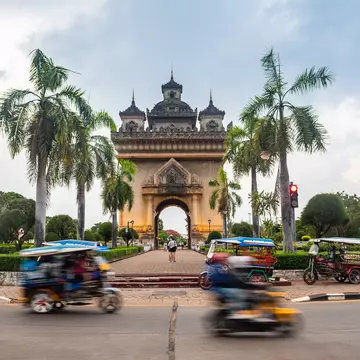
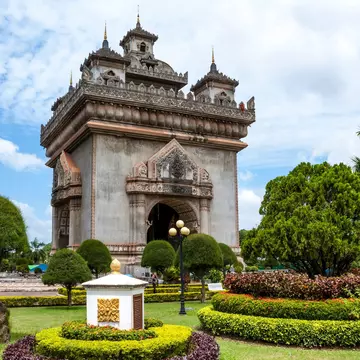
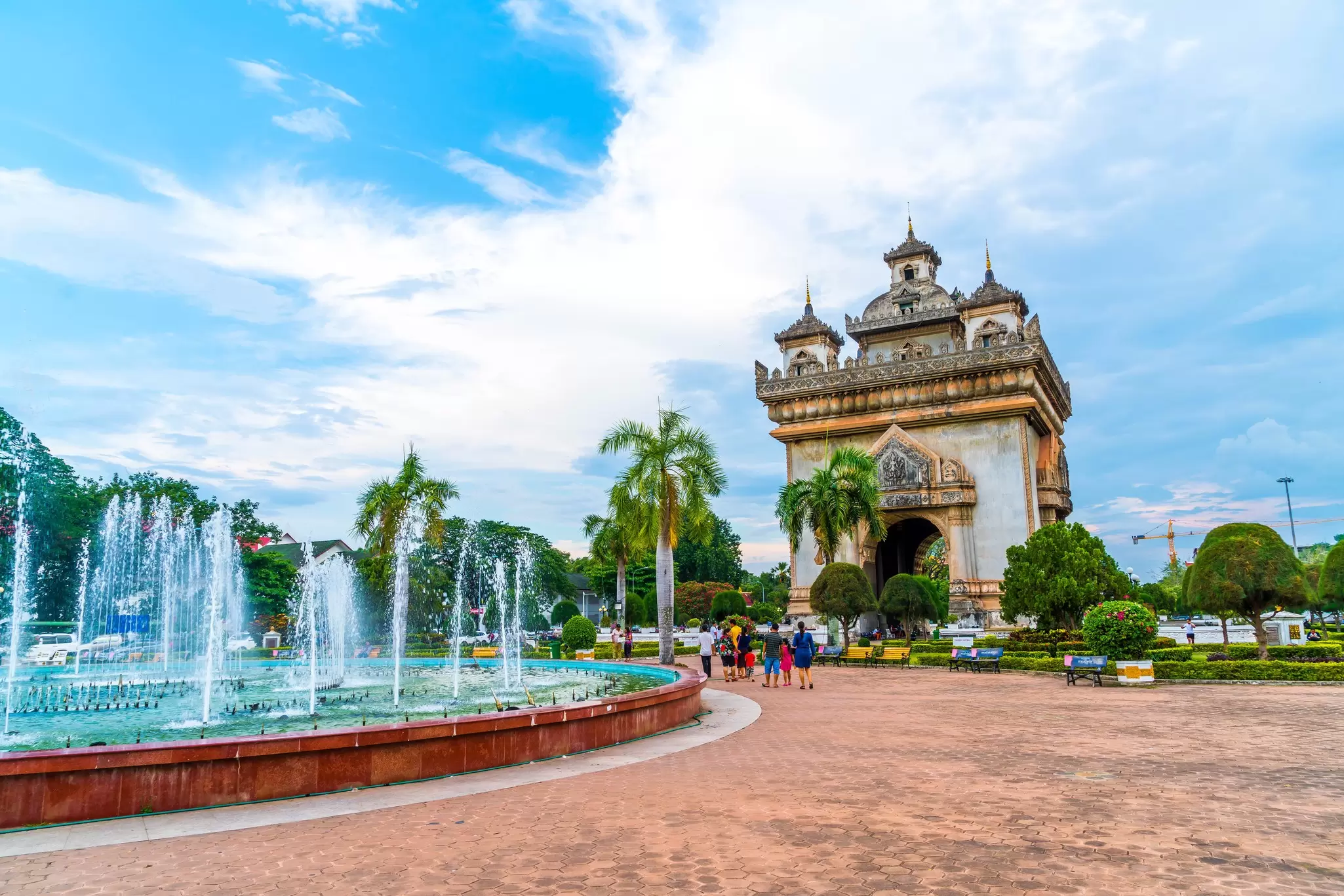
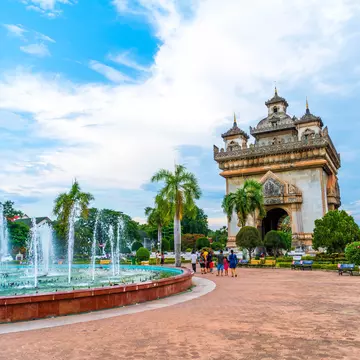
Nicknamed the Arc de Triomphe of Vientiane, Patuxai means “Victory Gate” and commemorates all the Lao who died in the pre-revolutionary wars. Originally designed in 1957 to be an independence monument, it took more than a decade to finish due to numerous changes in the government in Laos at that time. It was built with cement donated by the USA and intended for the construction of a new airport, and is a much more creative use of this “gift.” The upper levels of the monument feature Indian motifs and it dominates the commercial district around Avenue Lan Xang.
Planning tip: There are 197 steps to the 49m summit. It’s a gentle workout and offers good views over the growing yet still green capital.
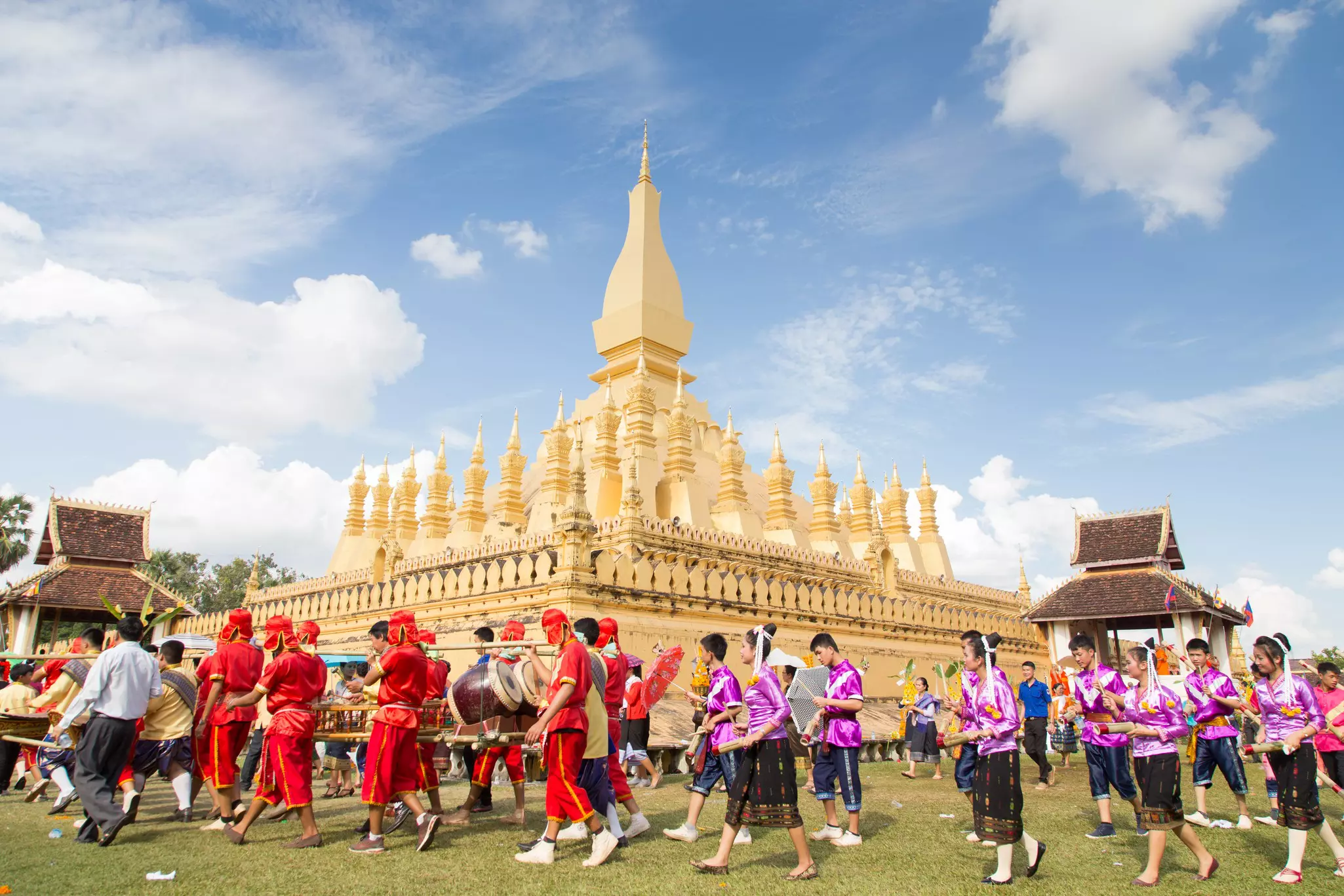
The golden spires of Pha That Luang, meaning Great Stupa, are the spiritual symbol of Lao Buddhism, the most important national monument in the country and a statement of Lao sovereignty. The cloister contains various Buddha images and a serene statue of Jayavarman VII, the great Angkor-era king who converted the state religion of the Khmer empire to Mahayana Buddhism in the late 12th century. Excavations around the stupa suggest that an Angkor-era Khmer monastery was located here between the 11th and 13th centuries.
Each level of Pha That Luang has different architectural features in which Buddhist doctrine is encoded. Contemplate the meaning of these features as you walk around looking out for the ordination stones, prayer halls, lotus petals and stupas.
Planning tip: It is best seen around sunrise or sunset when the soaring stupa is glimmering in the soft light of golden hour and contrasts dramatically with the bold blue skies. The wider temple grounds and adjacent wats are accessible at all hours if you want to see sunrise or sunset over the lotus-like golden stupa.
Come in April for Lao New Year, or Bun Pi Mai, the biggest event in the Laos festive calendar. Nowhere celebrates more than Vientiane, where businesses close from April 14 to 16 and a mass water fight erupts. Expect to get a soaking. The Rocket Festival or Bun Bang Fai is wildly celebrated all over the country in May, including with some very big bangs over the Mekong River in Vientiane as fireworks light up the night sky.
Centered on Vientiane’s golden temple, Bun Pha That Luang rumbles on for a week in November, including fireworks, music and copious drinking. Thousands of monks receive alms and there is a memorable candlelit procession. In December, Lao National Day commemorates the Communist victory over the monarchy and is enthusiastically celebrated in Vientiane where there are military parades and Communist speeches to rally the masses.
Understated like the country of his birth, the first Communist leader of Lao PDR, Kaysone Phomvihane, did not seek to create a cult of personality like Chairman Mao or Kim Il Sung. However, rather like his “big brother” in Vietnam, Ho Chi Minh, he was very much feted after his death.
There are two main sights associated with Kaysone, the “memorial” in his old residence and the “museum” that veers very much towards propaganda. The Kaysone Phomvihane Memorial is the more quirky and interesting of the two, as this was his home from 1975 to his death in 1992 and feels like a kitsch time warp back to the ’70s Americana meets ’80s Communist Bloc. The house is inside the former CIA/USAID compound, known as “Six Klicks City”’ because of its location 6km from central Vientiane. It once featured bars, restaurants, tennis courts, swimming pools, a commissary and assorted offices from where the Secret War (1964–73) was orchestrated. During the 1975 takeover of Vientiane, Pathet Lao forces ejected the Americans and occupied the compound. Kaysone chose to live in a small bungalow in relative simplicity until his death in 1992. Today, the house includes Kaysone’s half-empty bottles of scotch, tacky souvenirs from the Eastern bloc, running shoes, notepads and an exercise bike that time forgot. Even the winter coats he wore on visits to Moscow remain neatly hanging in the wardrobe.
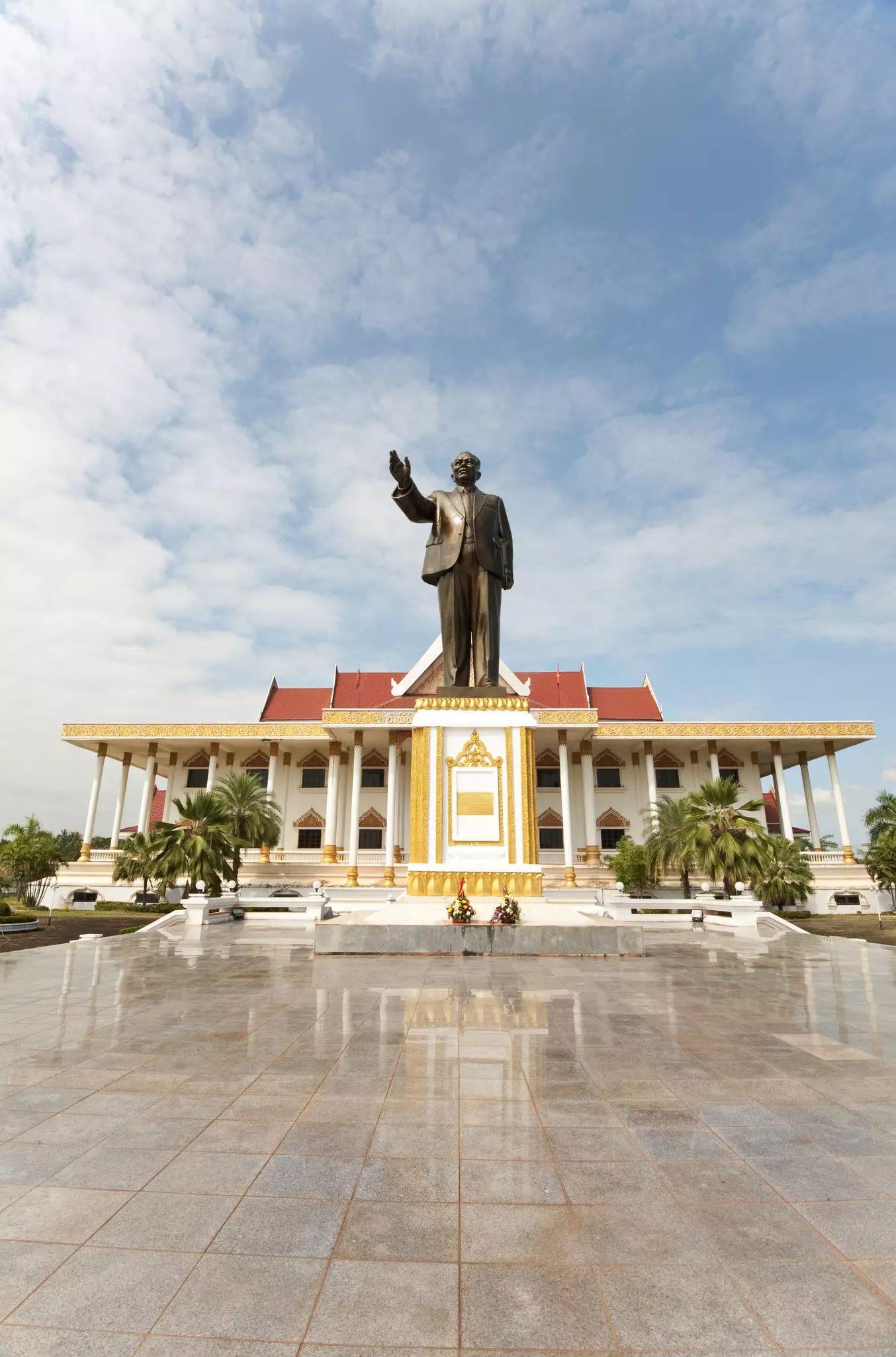
Opened in 1995 to celebrate the late president’s 75th birthday, the Kaysone Phomvihane Museum serves as a tribute to Indochina’s most pragmatic Communist leader. It is impossible to miss, with its mega-sized bronze statue of Kaysone out front flanked by large sculptures in the Heroes of Socialism style, complete with members of various ethnic groups and a sportsman looking like Superman. The building is filled with a remarkably complete collection of memorabilia of both Kaysone and the Party.
Planning tip: Kaysone’s house can be tricky to find, so it’s easiest to backtrack from the nearby Kaysone Phomvihane Museum. Head back towards the city centre and turn right at the first set of traffic lights, continuing about 1km until you see the sign on your right that says “Mémorial du Président Kaysone Phomvihane”. A taxi or tuk-tuk to either location will cost around 100,000K from the center, or bus 29 runs from the Central Bus Station.
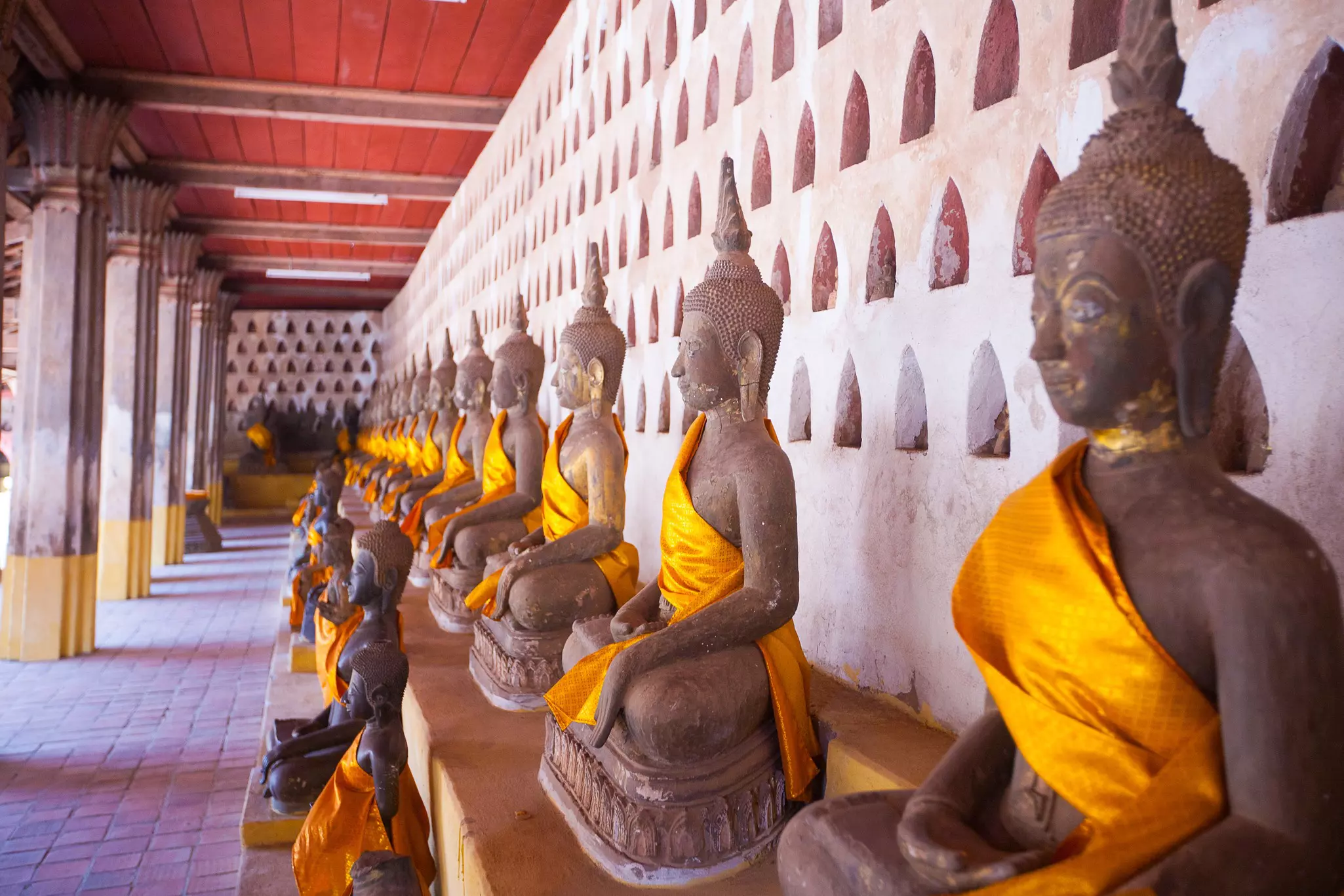
The historical name of Wat Si Saket was Wat Satasahatsaham, meaning “temple of 10,000 Buddha images,” and there are more than 2000 tiny Buddhas displayed in niches throughout the temple and 300 more seated and standing Buddhas. Locals have counted up to 6840 Buddha images in total, still somewhat short of the 10,000 claimed in the name.
This is the city’s oldest surviving wat, spared the Siamese sacking of Vientiane in 1828 due to its use as a base for their armies and its similar style to temples in Siam (Thailand). Look out for the Khmer-style Naga Buddha in the sǐm (ordination hall), which depicts the Buddha seated on a coiled cobra deity (naga) and sheltered by its hydra-like hood, on display just in front of the main seated Buddha.
Planning tip: No photographs are permitted inside the sǐm, but it is possible to take pictures outside in the cloisters and courtyard.
There is a lively music scene in Vientiane with lots of restaurants and bars supporting local artists, including a mix of homegrown Lao tunes and classic international covers. Hard Rock Cafe is popular for its cover bands and features memorabilia like Prince’s tambourine and Jimi Hendrix demo tapes. Wind West, a roadhouse-style bar and restaurant with a folksy atmosphere, has live Lao and Western rock music most nights. 7th Heaven is a rooftop bar overlooking the Mekong River with live music sets over dinner. Other live music options are the Tipsy Elephant rooftop bar with a fun, relaxed vibe, and Khop Chai Deu, a classic restaurant-bar with a buzzing atmosphere.
Planning tip: It’s worth reserving a spot in advance, particularly at 7th Heaven, which is very popular.
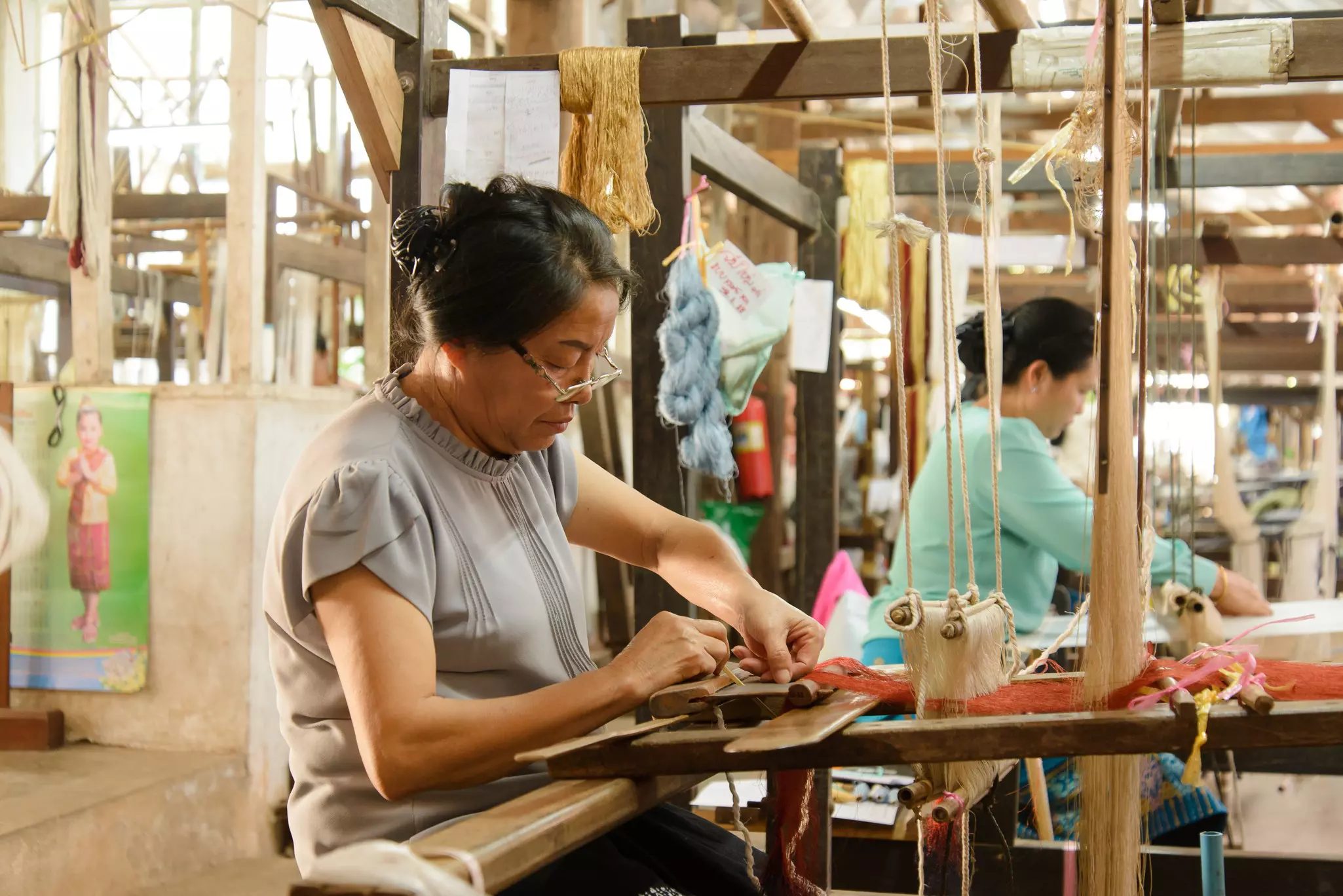
Laos is internationally renowned for the exquisite quality of its handwoven textiles and there are several places in Vientiane to learn with a local artisan. The Lao Textile Museum is something of a Lao cultural center, filled with looms and antique Lao textiles representing several ethnic groups from around the country. See various stages of weaving and dyeing in action, or try your hand at tie-dyeing a t-shirt in shades of indigo. For more hands-on experiences, visit Houey Hong Vocational Training Centre for Women, established to train disadvantaged rural women in the dying art of natural dyeing and traditional silk-weaving practices. Half- and full-day courses in dyeing and weaving are run here.
Planning tip: Both museums are located north of the city center. Take a taxi or tuk-tuk.
Laos has the dubious distinction of being the most bombed country on Earth per capita, and although the Second Indochina War (also known as the Vietnam War and the American War) in neighboring Vietnam ended 50 years ago, unexploded ordnance (UXO) continues to maim and kill people. COPE Visitor Centre is the main source of artificial limbs, walking aids and wheelchairs in Laos. Its excellent visitor center offers myriad interesting and informative multimedia exhibits about prosthetics and the UXO that sadly still make its work essential, even after five decades of peace.
Planning tip: For more information, visit the MAG Visitor Centre, which has been coordinating the clearance of UXO in Laos since 1994. Entry to both is by donation.
The unique Vientiane Museum of Contemporary Arts is a spectacular collection of original art carved into discarded trunks and fossilized wood salvaged from forests that were inundated by dam construction in earlier decades. The huge and sprawling complex is themed by history, beliefs, myths and peace. Designs include everything from Buddhas via Hindu deities to Hercules. Some of the most beautiful pieces are not carved by artists, but by nature, sinewy and muscular, shaped by earth, wind and fire over the centuries.
Planning tip: The museum is 6km from the center and the entry fee includes a guide who speaks English, Chinese, Thai or Korean.
Explore related stories