Jan 20, 20268 min read
16 Things to Know Before Traveling to ChileJan 9, 2026
13 MIN READ
Contributors
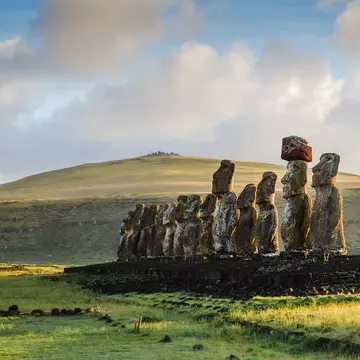
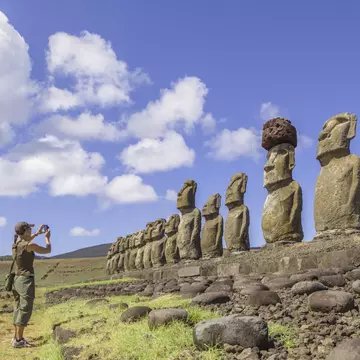
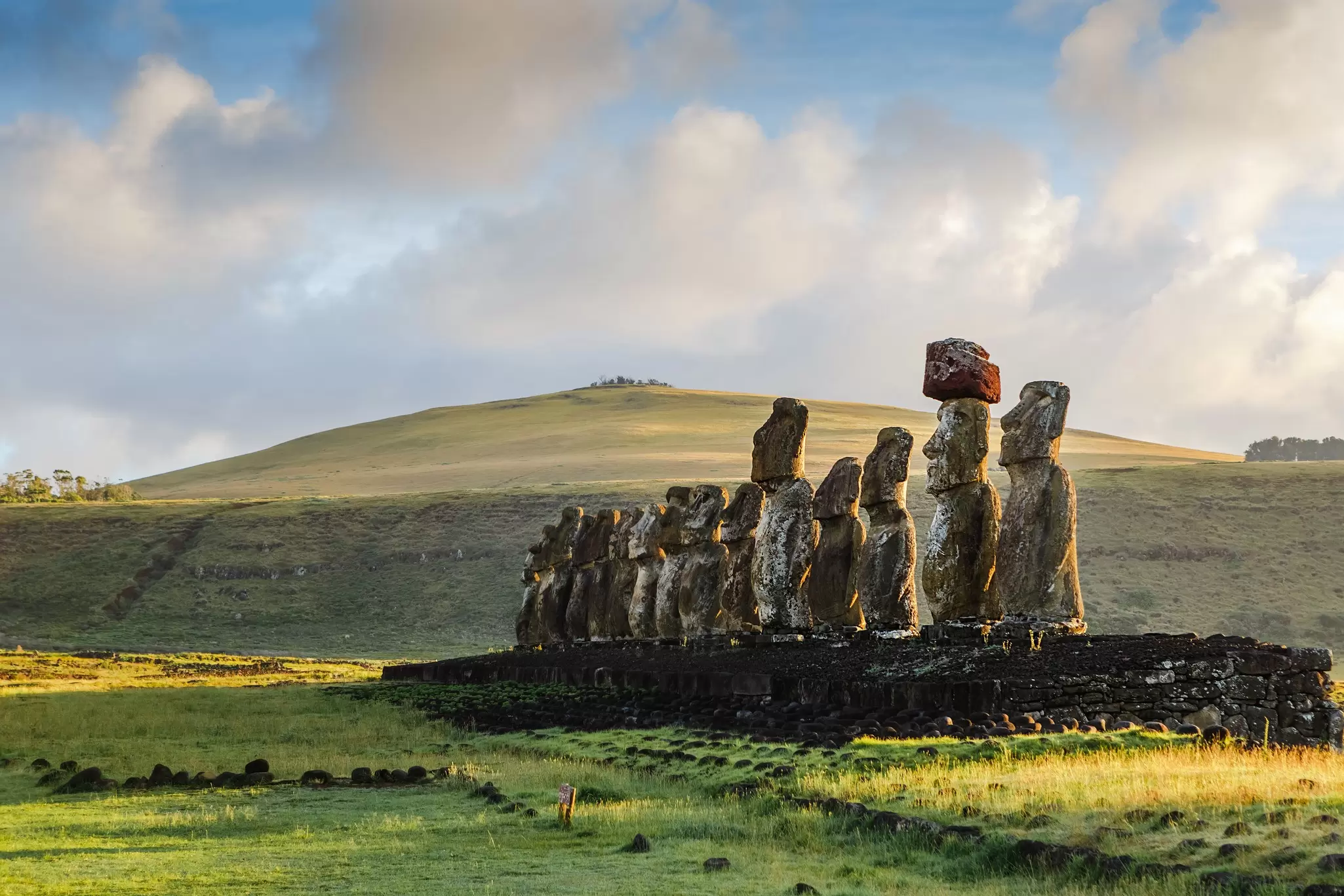
A line of moai statues at Ahu Tongariki on Rapa Nui (Eastern Island). Olga Danylenko/Shutterstock
Contributors


Isabel Albiston, Lonely Planet Editors
Lonely Planet may earn a commission from affiliate links on our site. All recommendations and reviews reflect our own independent opinions.
Nothing will fully prepare you for your first encounter with the moai (anthropomorphic statues) of Rapa Nui (Easter Island). Representing the ancient inhabitants of this remote isle, located far out in the Pacific Ocean off the coast of Chile, these enormous stone figures are steeped in mystery and legend.
What inspired the creation of these megalithic statues? How were they moved from the quarries where they were cut to the ahu (ceremonial platforms) lining the Rapa Nui coast? Why were they all toppled to the ground in past centuries, before being restored by modern archaeologists? We may never know the answers, but mulling over these questions is one of the draws of this enigmatic Pacific island.
The astounding isolation is another draw. Rapa Nui is one of the most remote inhabited places on Earth. Its nearest neighbors reside in the Pitcairn Islands, 2080km to the west. The closest point on any continent is the Pacific coast of Chile, 3700km to the east.
Does that mean hardship? Not at all! The horizon is so empty you can see the curvature of Earth, yet there are plenty of comfy hotels, hostels and campgrounds around Hanga Roa, the only town, and local restaurants plate up tuna and mahi-mahi (dolphin-fish) so fresh you can smell the sea spray.
If you’ve even fancied traveling to the edge of the map, it would be hard to pick a more iconic destination. Discover how to get to Rapa Nui and what to see when you get here with this handy guide.
Weather-wise, there’s not really a bad time to travel to Rapa Nui. Daytime temperatures fluctuate from 28ºC (82ºF) in summer (December to March), to 20ºC (68ºF) in winter (June to August). Strong winds and rain showers are common year-round, though summers are slightly drier.
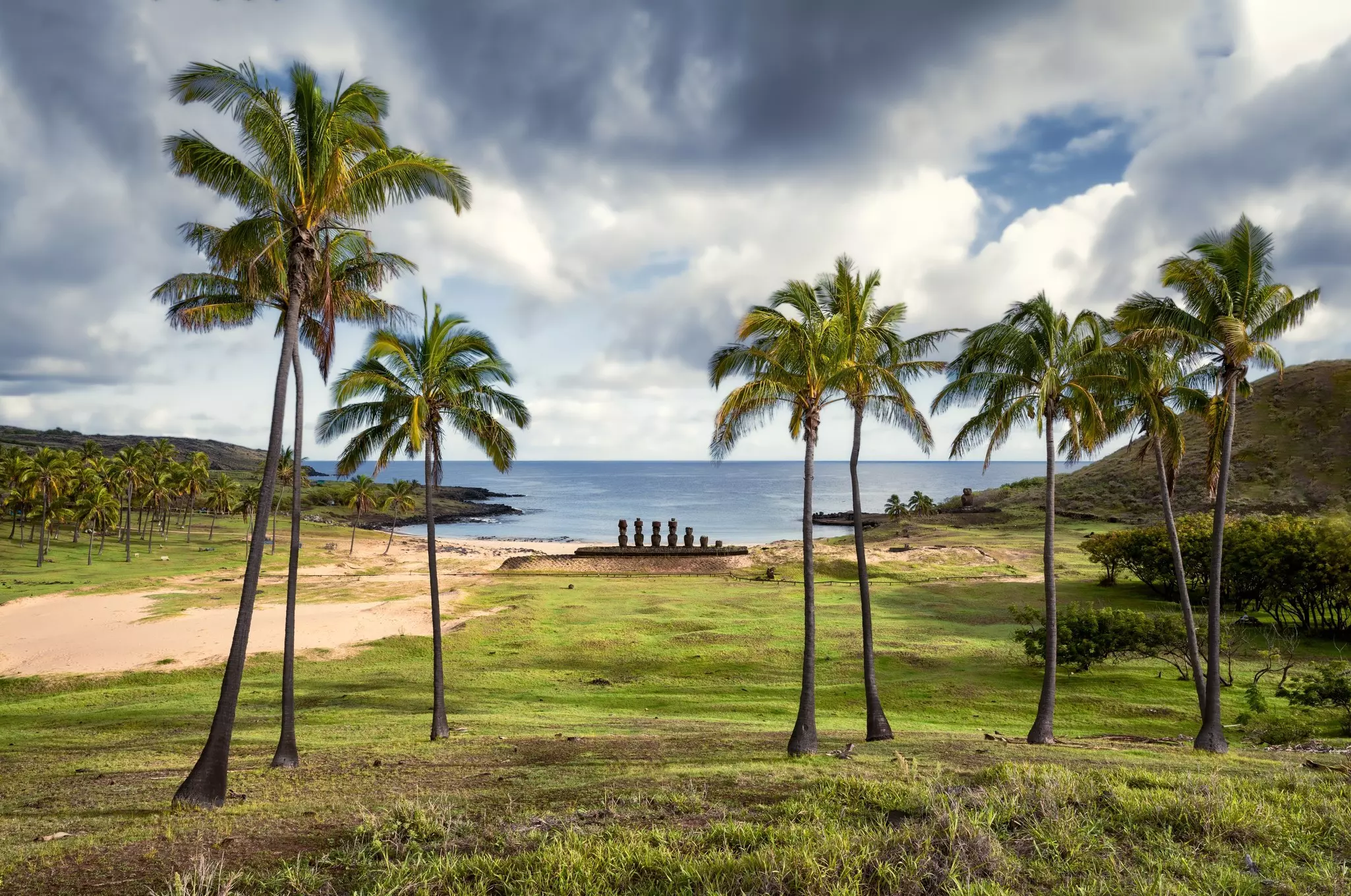
Predictably, the warm summer is the peak season, and the best time for swimming at Anakena, the island’s most beautiful beach. However, peak season means peak crowds and higher prices. To visit during the two-week-long Tapati Rapa Nui festival in February, you’ll need to book flights, accommodation and entry tickets up to a year in advance.
The March to May and September to November shoulder seasons are a calmer time to explore, with good weather for hiking, cycling and horseback riding. Colorful celebrations during Fiestas Patrias (National Holidays) make September a particularly good time to visit the island. In winter, things are calmer still, except in July, when islanders gather at Anakena to commemorate the arrival of Hotu Matu’a, the island’s legendary first settler.
Having come all this way, it would be a shame to rush the experience. With three days, you’ll have time to learn about island culture at Orongo Ceremonial Village, visit the moai quarry at Rano Raraku, and see towering stone figures returned to their original positions at Ahu Tongariki. There’ll also be time to hit the beach at Anakena, admire the dramatic coastline around Hanga Roa, and sample the island’s famous seafood.
With a week at your disposal, you’ll be able to dig deeper, hiking along the north coast or exploring the Poike Peninsula, and dropping in on less explored groups of moai. Factor in the time it takes to get here – you’ll first have to reach Santiago, Chile, then board a 5-hour flight to Rapa Nui.
There’s heavy demand for transport to Rapa Nui, so you’ll need to book well ahead. Some travelers visit by cruise ship, but the most popular way to reach Rapa Nui is to fly. All flights to the island are operated by LATAM Airlines, which has daily services between Santiago and Rapa Nui’s Mataveri International Airport at Hanga Roa.
As well as budgeting time and money for the 5-hour flight, you must book your accommodation in advance with a registered hotel, hostel or campsite – see the Sernatur website for listings (follow the links to “Alojamiento Turistico” then “Región de Valparaiso” then “Comuna de Rapa Nui”). You’ll also have to complete the online Rapa Nui Entry Form at least 48 hours before your flight, and show a return plane ticket on arrival, leaving no more than 30 days after your arrival date.
The island is known for its seafood, with freshly caught fish such as tuna, mahi-mahi and kana kana (jack-fish) appearing in Chilean-influenced dishes such as ceviche and empanadas (stuffed pastries). Lobsters and rape-rape (mitten lobsters) are also popular seafood treats. Look out for local dishes cooked with hot volcanic stones, including the traditional feast known as umu – consisting of meat, fish and vegetables slow-cooked in a traditional earth oven.
Rapa Nui is one of the most expensive destinations in South America. As well as the cost of flights, you’ll need to budget for accommodation (typically more expensive than on the Chilean mainland), a mandatory guide, local transport by taxi or rented 4WD or bicycle, and the Rapa Nui National Park ticket, which costs 95,000 Chilean pesos (CH$95,000) for up to 10 days. You’ll need this ticket to visit most of Rapa Nui’s archaeological sites.
One of the best national parks in Chile, Rapa Nui National Park contains nearly all of the awe-inspiring archaeological sites that give this small island such an outsized reputation. A UNESCO World Heritage Site, the park takes in most of the island beyond Hanga Roa, including the two most impressive moai sites, the Rano Raraku quarry and the Ahu Tongariki ceremonial platform.
Tickets can be purchased online via the national park website or at the park’s ticket office in Hanga Roa. To visit most sites – apart from the moai at Anakena beach and sites in the immediate vicinity of Hanga Roa – you must be accompanied by a mandatory guide. Expect to pay CH$44,000 to CH$71,000 per day. Most people arrange a guide as part of an organized tour – local agency Hahave specializes in group trips, while Kava Kava Tours organizes private tours.
To get the best from a trip to Rapa Nui, divide your time between the moai sites near the coast, the beach at Anakena, and historic sites inland.
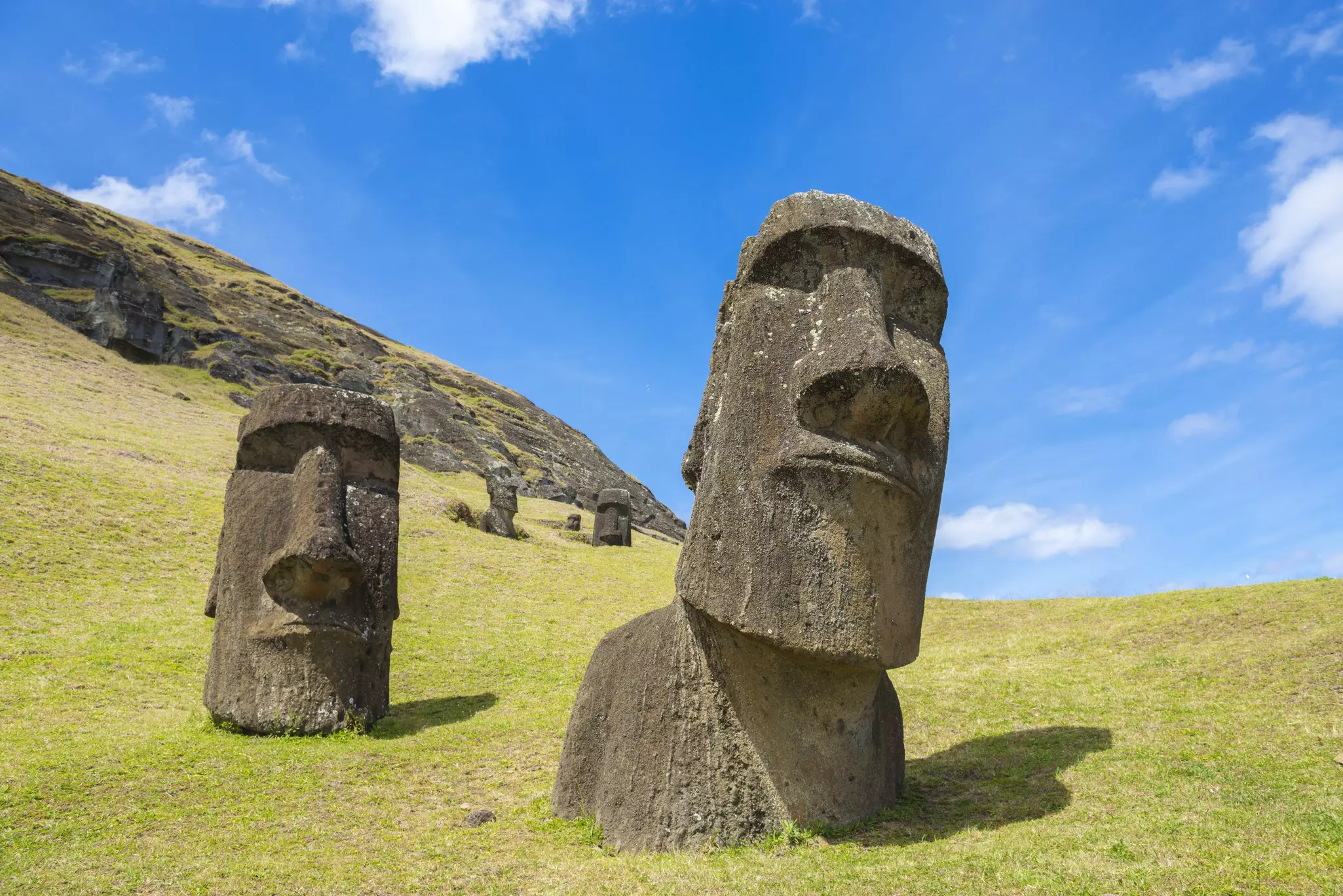
At Rano Raraku, inland from the coast in the east of the island, the heads and shoulders of incomplete moai emerge from the grassy slopes, their torsos still buried underground. The ancient people of Rapa Nui carved nearly all of their statues out of the volcanic tuff of this ancient quarry, and you can view statues in various states of completion.
The moai were carved directly from the rock and only removed when the statue was complete; look out for incomplete statues still attached to the rock face. Only when the statues were hauled to their final destination were their coral eyes added, bringing life to the moai and allowing them to “see” – only 20% of the moai carved at Rano Raraku made it to their final platforms intact.
Some statues were abandoned after the sculptors discovered tough inclusions in the rock, but others were simply left incomplete as the society that produced them went through violent changes due to environmental collapse. Don’t miss El Gigante, an ambitious attempt to create an oversized statue that was abandoned mid-construction.
A 1.5km walking trail leads around the slopes of the volcano to view the moai, but the statues inside the crater rim are no longer accessible following a fire in 2022. Follow the trail east to see the unique kneeling statue known as Tukuturi, which has confounded archaeologists for decades.
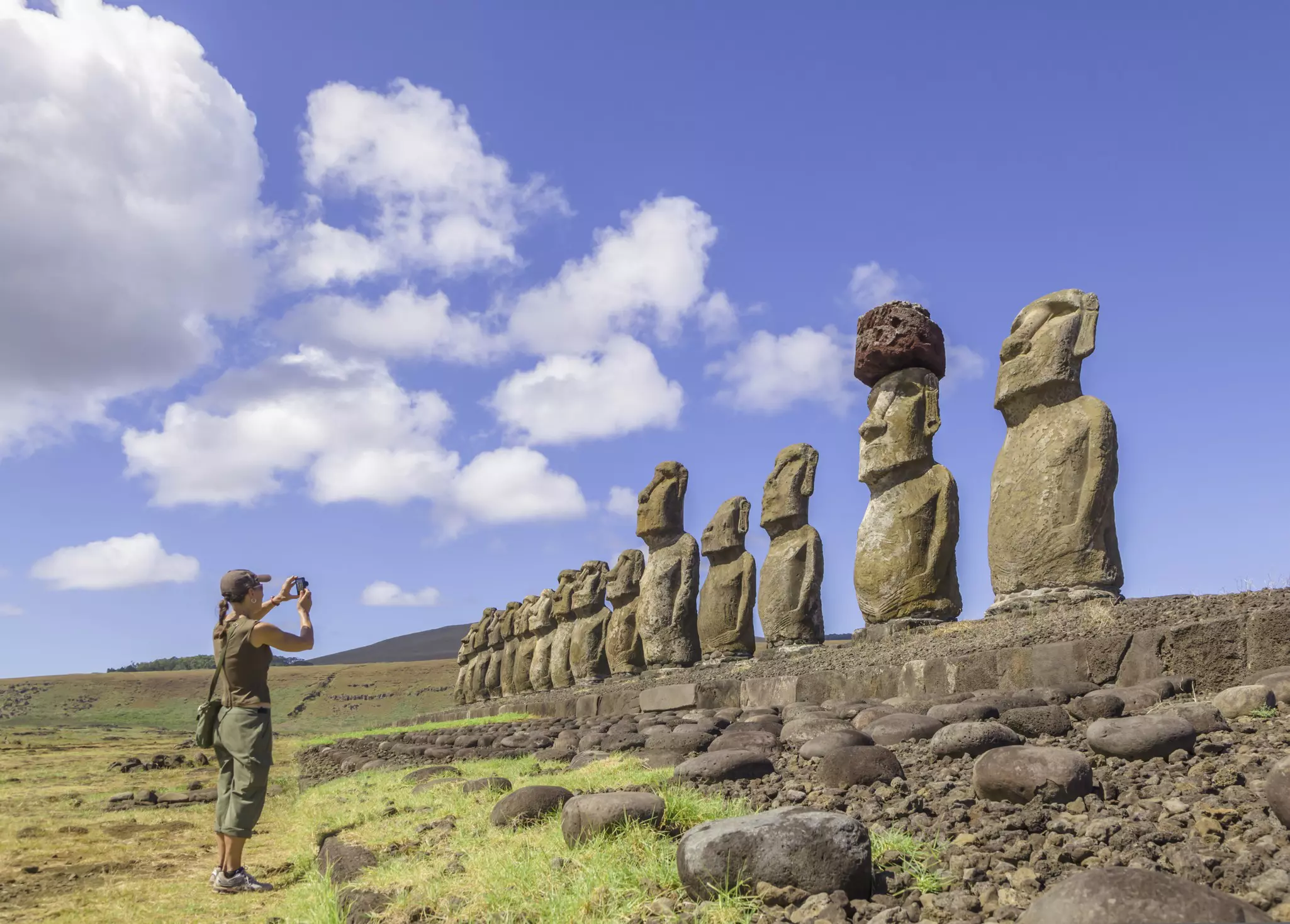
Ahu Tongariki, the largest ahu (ceremonial platform for moai) ever built, features 15 older moai with distinctively Polynesian features. With its statues restored to their original standing positions, this is one of the island’s most dramatic sites, particularly when viewed at sunrise. At the entrance to Tongariki is the so-called "Traveling Moai," which was transported to Japan on tour, then returned to Rapa Nui in the 1980s. The site also features petroglyphs and the remains of ancient boat houses.
Beside the Bahía La Pérouse on the north coast, Ahu Te Pito Kura is the site of a 10m-long moai that lies face down with its neck broken; it’s the largest statue moved from Rano Raraku and erected on an ahu. The statue’s oval pukao (topknot) lies nearby.
By the shore, look out for the magnetic stone that the moai is said to be guarding. According to oral history, the stone was brought here from Hiva, the legendary island from which King Hotu Matu’a set sail for Rapa Nui. Touching the stone is no longer permitted, but you can stand near it and absorb its vibes.
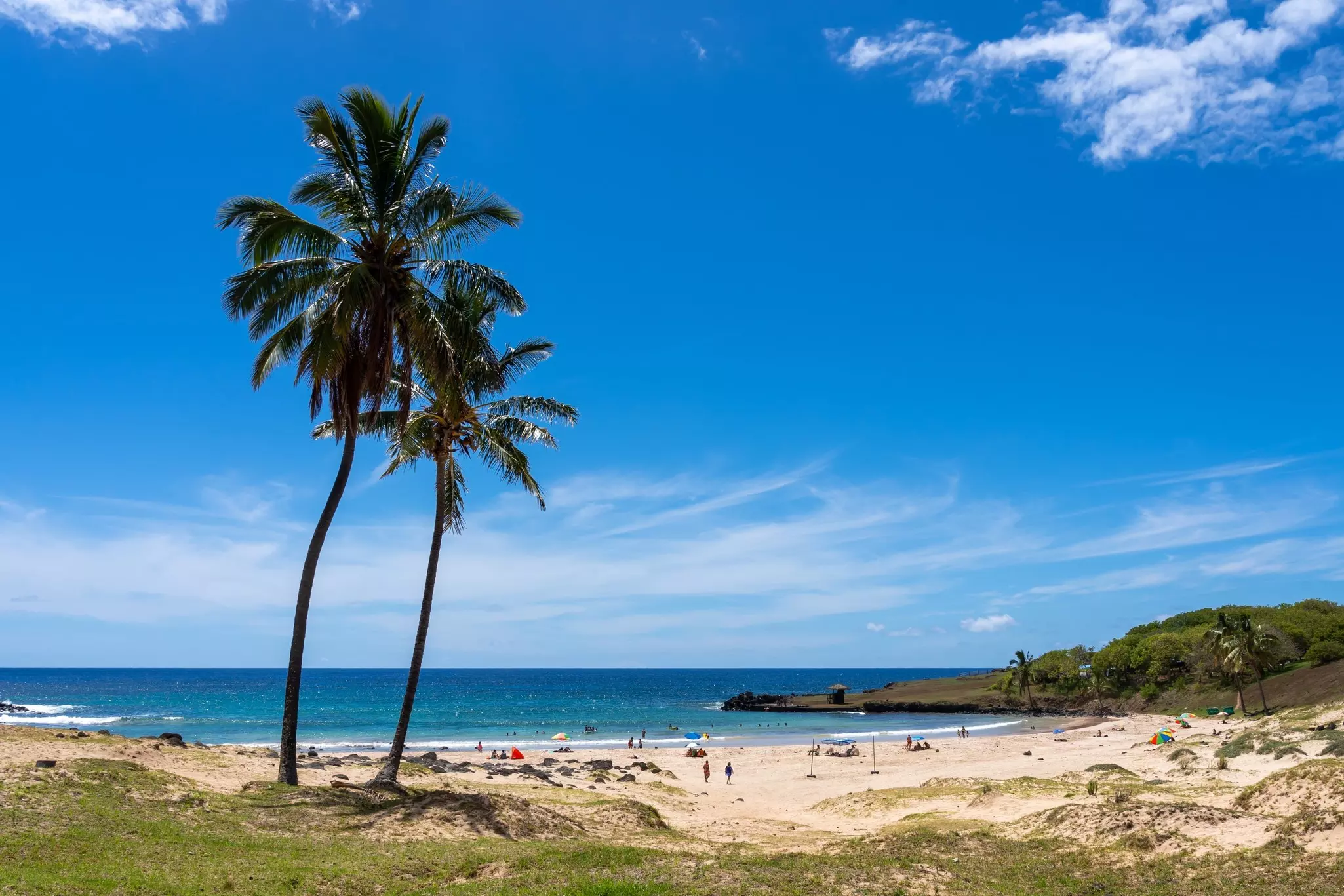
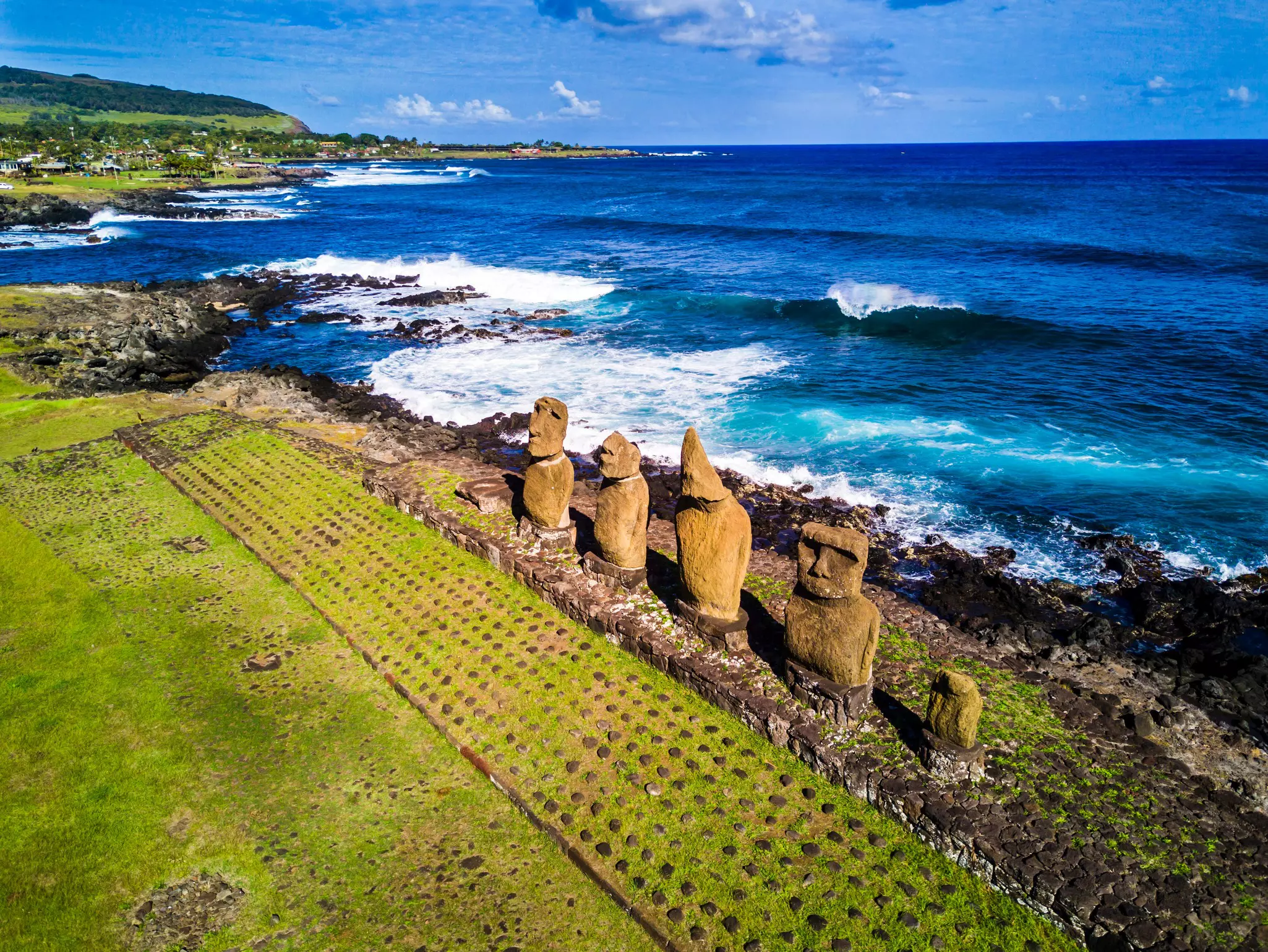
In a truly idyllic location, surrounded by swaying palm trees, the seven moai of Ahu Nau Nau stand in front of Anakena’s pristine white sands. The statues here are among the best preserved on the island, and some bear their original pukao topknots.
This site can be visited without a guide, meaning you can spend as much time as you like with the moai. Come early in the morning to enjoy the site at its most peaceful. At other times, head to the quieter beach at Ovahe to escape the crowds. According to oral tradition, Anakena marks the spot where King Hotu Matu’a arrived with the island’s first settlers, an event that’s reenacted each July.
Nearby, on the hillside to the east of the crescent of sand, the lonesome moai atop Ahu Ature Huki was the first to be restored to its platform during the 1956 expedition by Norwegian explorer Thor Heyerdahl, with the help of a dozen islanders.
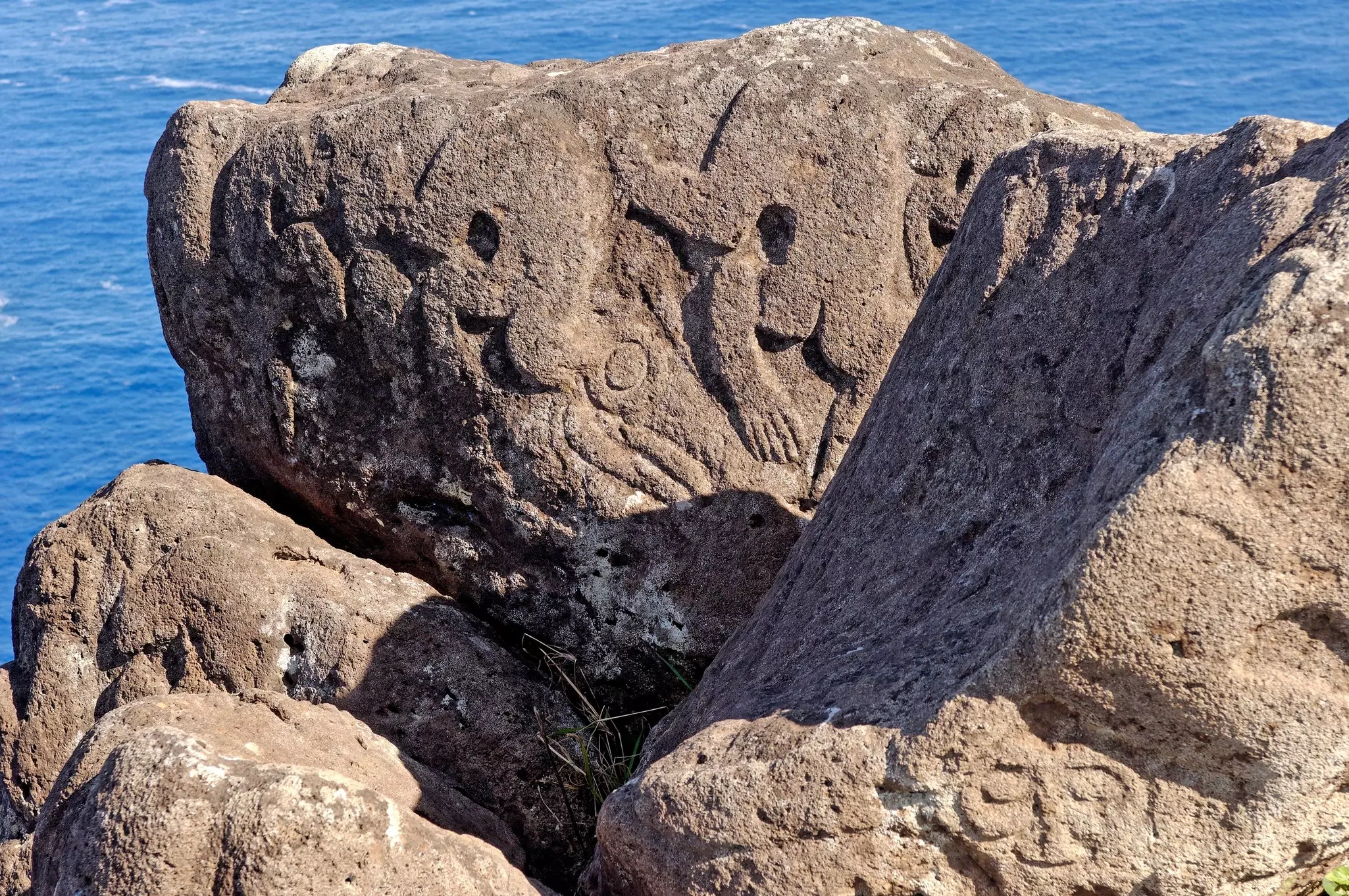
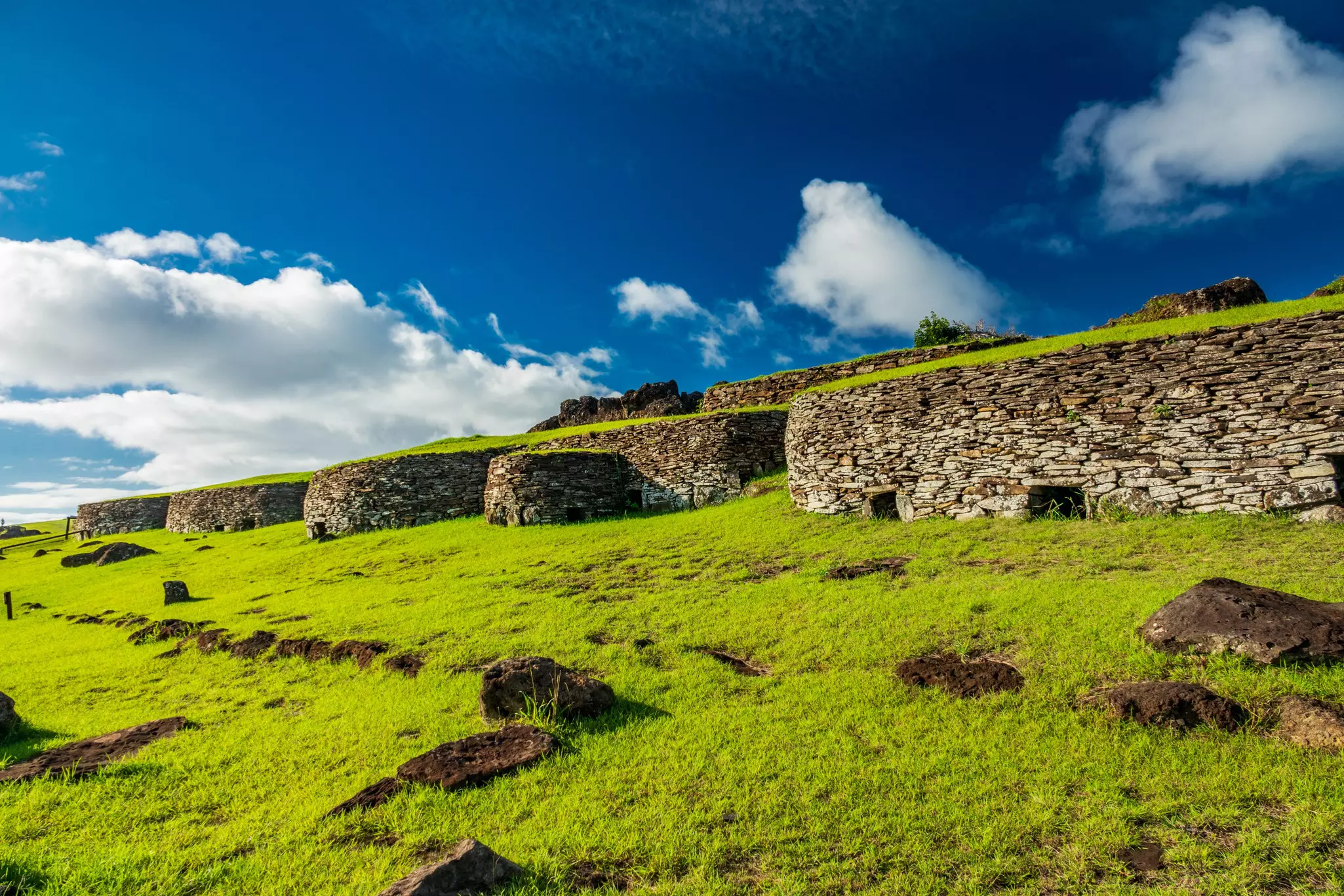
Perched on the edge of the Rano Kau volcano, with the crater on one side and a vertical drop plunging down to the ocean on the other, Orongo Ceremonial Village is set in one of the South Pacific’s most dramatic landscapes. Overlooking several small motu (offshore islands), this millennia-old settlement was the focus of the Tangata Manu (Birdman) cult, which replaced the culture that created Rapa Nui’s moai sometime between 1250 CE and 1500 CE.
Every year, the clans of Rapa Nui would gather at Orongo, and champions from each clan would swim to Motu Nu to retrieve an egg from a migratory sooty tern. The first to return would win their clan the right to rule Rapa Nui for the coming year. You can see petroglyphs created by followers of the cult on boulders between the cliff top and the edge of the crater.
At the heart of the village are 53 circular homes with walls made of stone slabs and arched roofs covered in earth. The only moai found at Orongo, Hoa Hakananai’a, was removed in 1868 and installed in the British Museum in London. It is one of roughly a dozen moai that Rapa Nui hopes to repatriate.
Don’t miss the small archaeological sites at Vinapu, on Rano Kau’s eastern slope. Here you can see a rare female moai pillar made of red scoria. It once had two heads, representing two female spirits.
More ancient sites lie dotted around the island. Archaeologists believe that the rust-colored pukao topknots crowning many moai depict a male hairstyle once common on Rapa Nui; unlike the main statues, these finishing details were quarried from the soft scoria found in the volcanic crater at Puna Pau.
At Ahu Huri A Urenga, a lone moai is aligned to mark the winter solstice, while the statues at Ahu Akivi stand inland from the coast and look towards the setting sun on the equinoxes. South of Hanga Roa, Vaihu has reconstructions of traditional houses with enclosed gardens, a stone circle, and an ahu platform with eight toppled moai. Over on the south coast, Akahanga features a royal tomb, a ruined village and more toppled statues, while the caves at Ana Te Pahu were used by ancient islanders to shelter crops from the island winds.
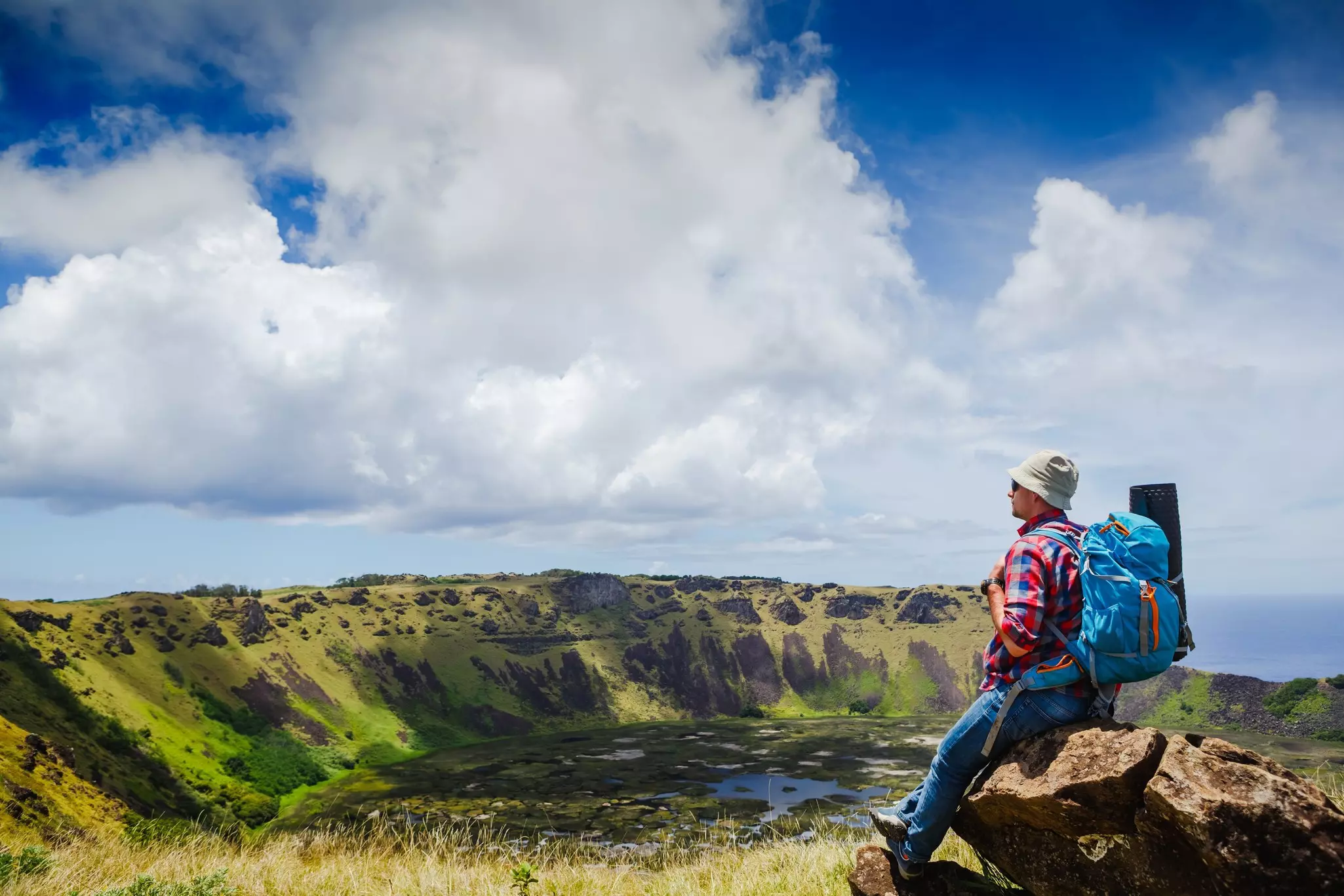
There’s good hiking on Rapa Nui’s wild north coast, stretching some 14km from Ahu Te Peu to the sandy shores of Anakena. Agencies in Hanga Roa can arrange a guide for the 6-hour hike, which takes in a string of unrestored archaeological sites. Look out for moai incorporated into ahu platforms at locations such as Ahu Maitake Te Moa, and more recent poe-poe platforms shaped like boat prows, built after the first contact with Europeans in the 18th century.
At the eastern end of the island, the Poike Peninsula is crowned by the extinct Maunga Pu A Katiki volcano and dotted with little-visited archaeological sites. A 12km hiking trail circles the peninsula, while an 8km trail crosses from Ahu Mahatua to Ahu Tongariki via the Maunga Pu A Katiki crater. Again, these routes are best hiked with a guide.
For a shorter hike, the 7km Te Ara O Te Ao trail climbs from Hanga Roa to the Mirador Rano Kau, a dramatic viewpoint overlooking the Rano Kau volcano.
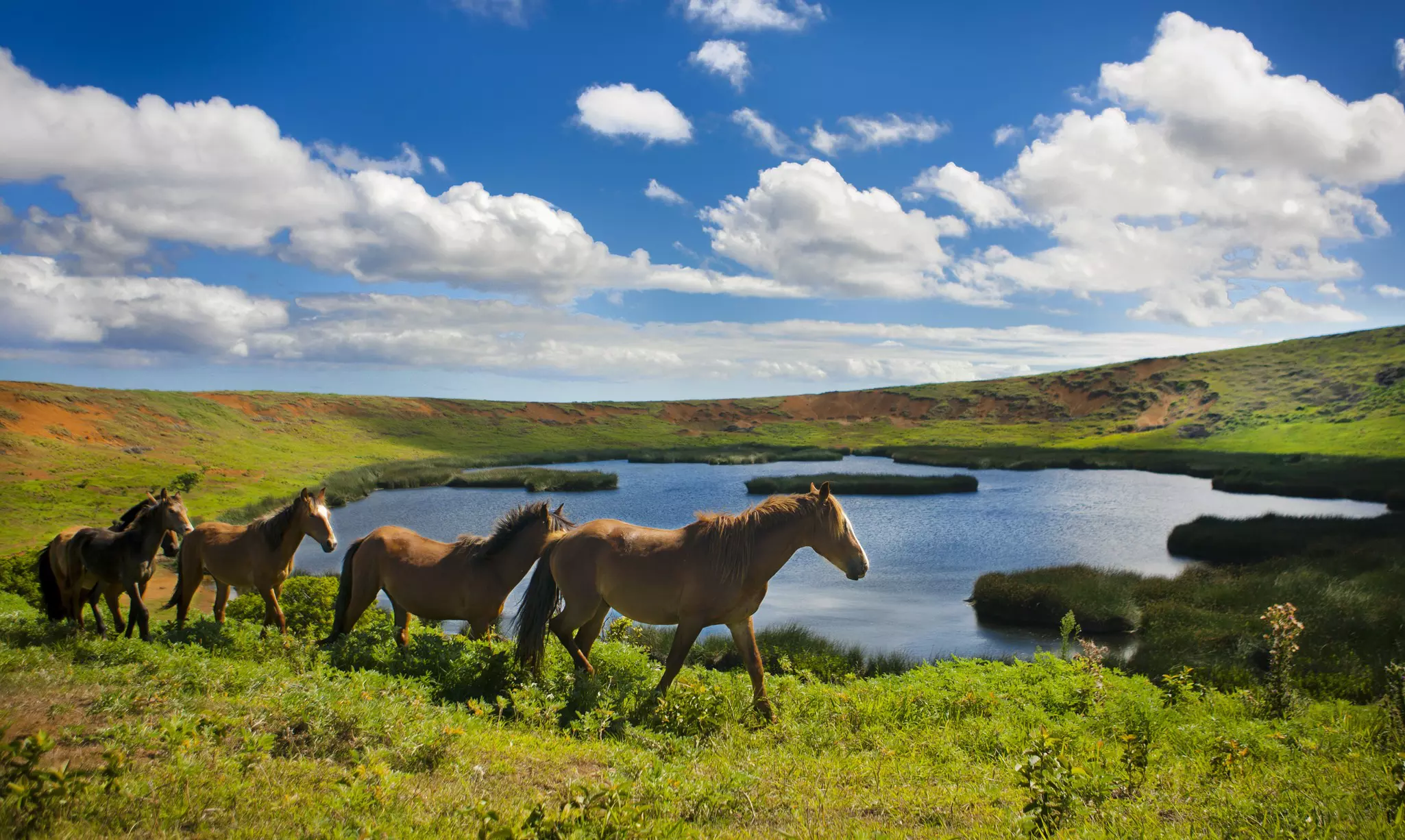
Local stables can arrange guided horseback rides along the 9.5km trail that climbs from Ahu Akivi to the island’s highest peak, 507m Maunga Terevaka, where Rapa Nui elders once taught youngsters how to navigate using the stars. From here, you can see the whole island and appreciate the vast expanse of the horizon. Several agencies in Hanga Roa rent out bikes; they’re useful for exploring town and cycling over to Anakena beach, which you can visit without a guide.
Few of the moai sites at Rapa Nui have dedicated facilities for disabled travelers, but with some assistance, wheelchair users and other travelers with mobility issues can get close to many of the statues via stone paths. If you have mobility issues, renting a 4WD is the best way to reach the various archaeological sites on the island.
This article was adapted from Lonely Planet’s Chile & Rapa Nui (Easter Island) guidebook, published in October 2025.
Book your Easter Island trip with Lonely Planet Journeys
See Easter Island how it's meant to be seen
Planned by local experts and tailored to you, Lonely Planet Journeys handles the logistics so you can just enjoy the trip. Tell us what you want and we'll build your Easter Island itinerary from scratch, or browse our bookable trips to get inspired.


Explore related stories