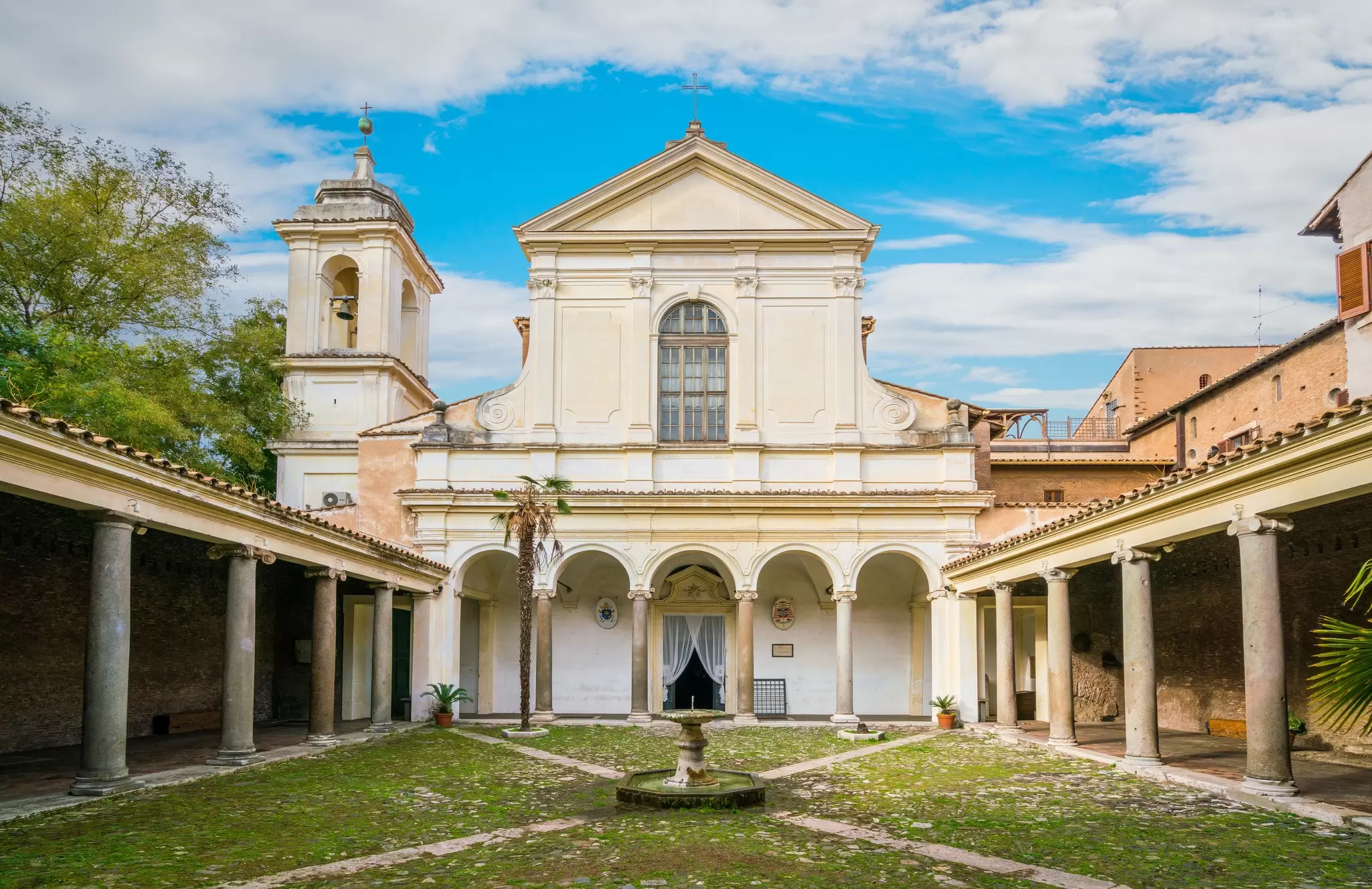
Nowhere better illustrates the various stages of Rome’s urban development than the Basilica di San Clemente, a fascinating multilayered church.
The street-level Basilica di San Clemente dates to the 12th century, but beneath it you’ll find the remnants of an earlier 4th-century church, which, in turn, stands over a series of ancient Roman ruins and a 2nd-century pagan temple.
Main Basilica
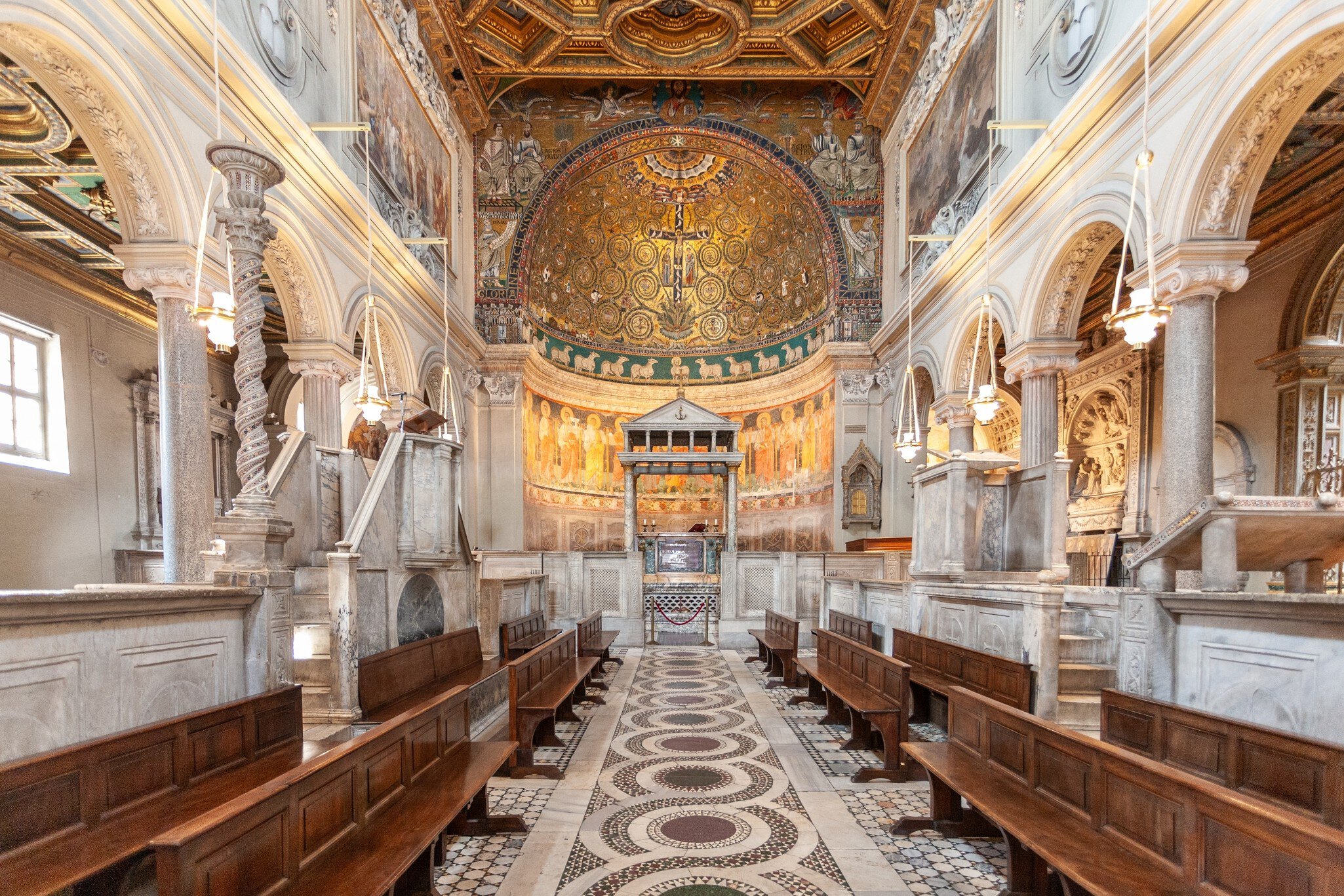
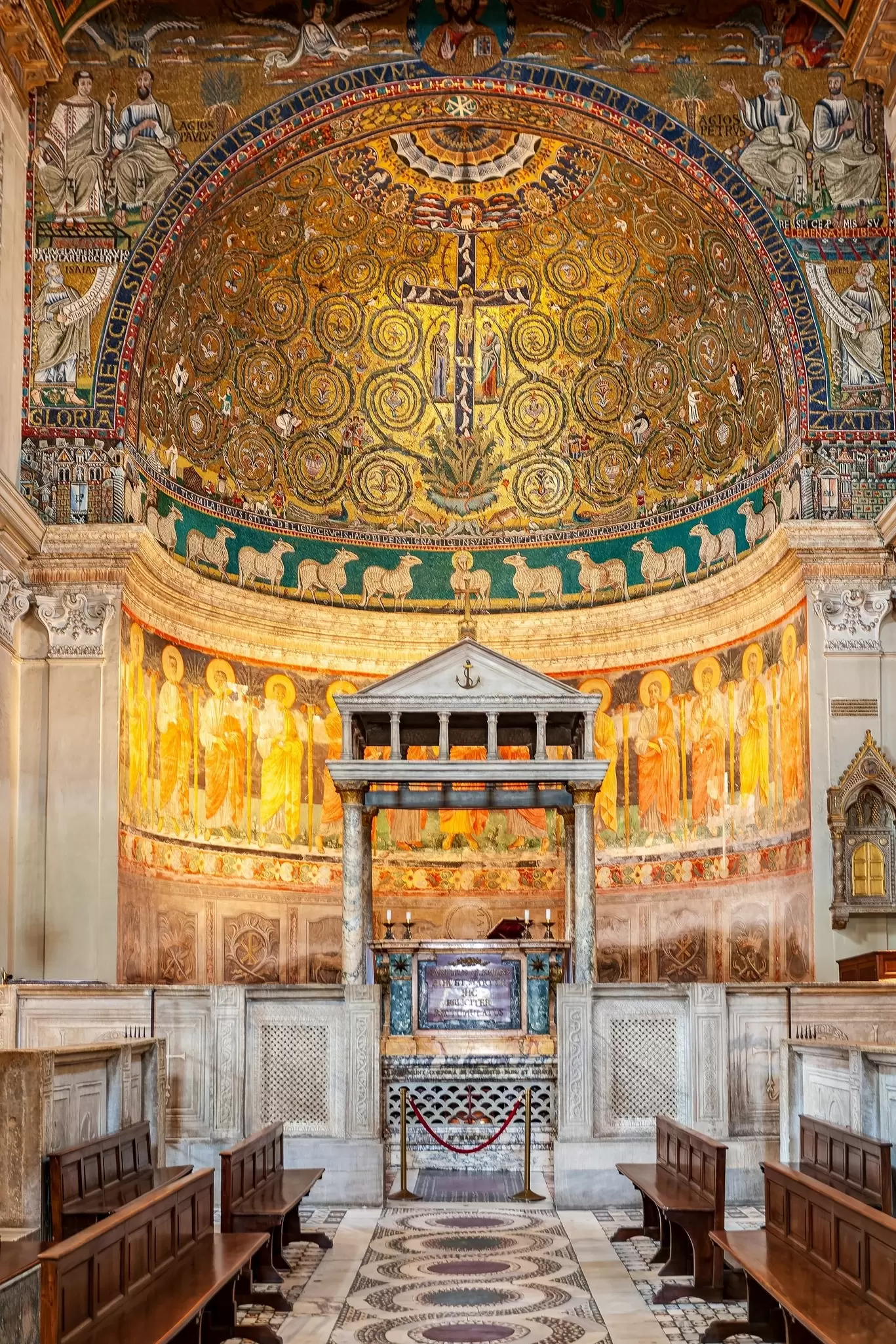
The ground-level basilica superiore, accessible through a colonnaded atrium, harbors some wonderful treasures. These include a dazzling 12th-century apse mosaic depicting the Trionfo della Croce (Triumph of the Cross) and a series of 15th-century frescoes by Masolino showing a crucifixion scene and episodes from the life of St Catherine.
Underground Areas
From the sacristy, steps lead down to the 4th-century basilica inferiore. This was mostly destroyed by Norman invaders in 1084, but it retains some faded frescoes illustrating the life of St Clement. Curiously, one fresco, to the left of the main altar, contains one of the first swear words ever written in vulgar Italian.
Follow the steps down another level, and you come to a series of dark corridors. These are flanked by rooms from a 1st-century Roman domus (house) and a building believed to be the 1st-century imperial mint. But the star of the show is the 2nd-century mithraeum (temple to the god Mithras), with an altar showing the god slaying a bull.
Beneath everything, you can hear the rush of an underground spring through a grill in the floor.