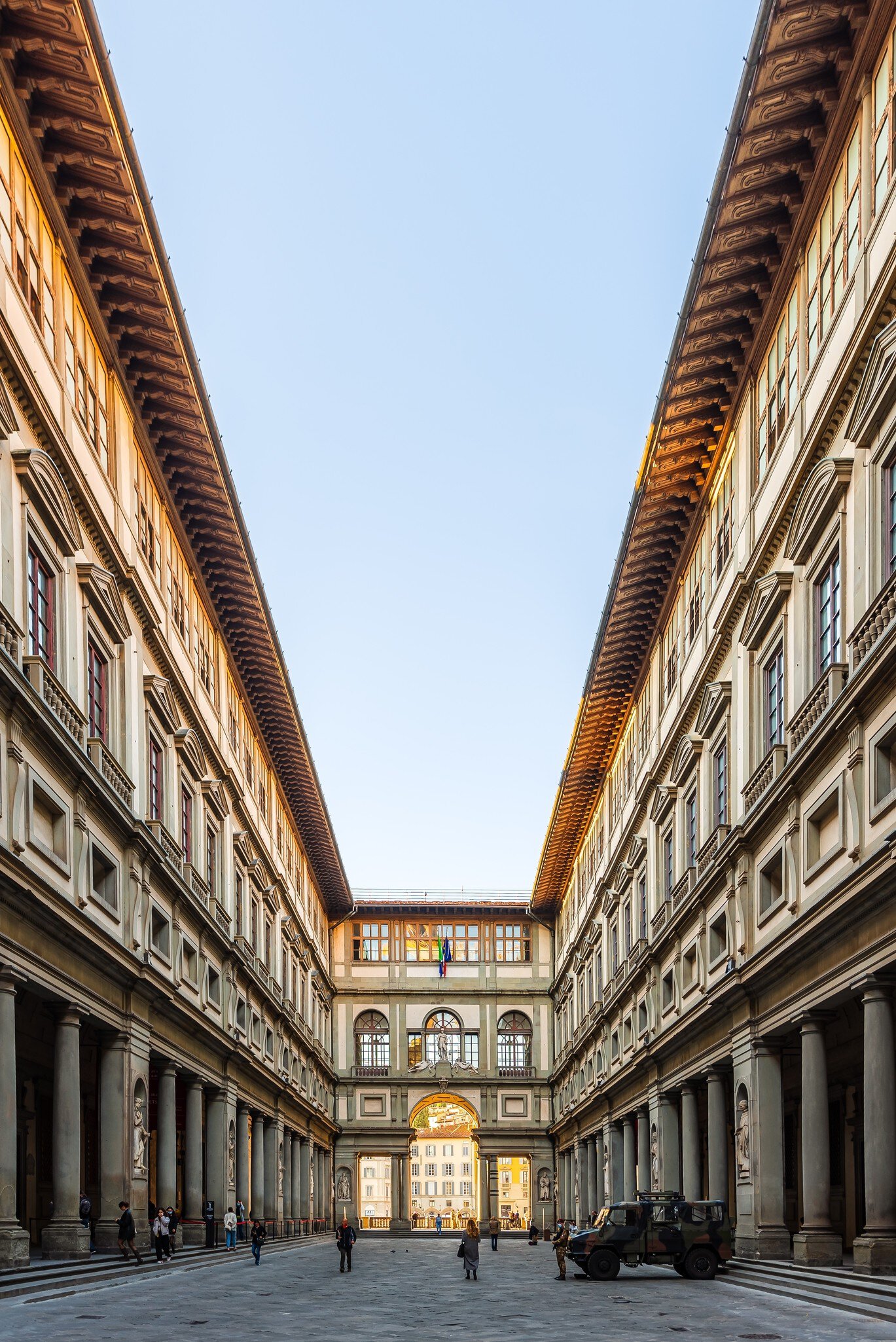
Exhibiting invaluable artworks produced between the 13th and the 18th century, the Uffizi is one of the world’s great museums – an institution rooted in the Renaissance and deeply intertwined with Florence’s identity.
Giotto, Botticelli, Leonardo, Michelangelo and Caravaggio are just some of the names you’ll encounter as you immerse yourself in a collection without parallel.
The Origins of the Uffizi
Before the Uffizi – one of Europe’s first modern museums – opened to the public in 1769, only a few privileged people could admire the treasures acquired by the Medici. In 1560, Grand Duke of Tuscany Cosimo I commissioned the construction of the palace to court architect Giorgio Vasari, who designed a modern but classically inspired U-shaped set of galleries stretching from Palazzo Vecchio to the Arno River. The three-story structure housed the duchy’s administrative and judicial offices (uffizi) until Francesco I, Cosimo’s introverted son and Grand Duke of Tuscany from 1574 to 1587, converted the upper floor into a gallery "of precious things" to exhibit the family’s collection of paintings and sculptures. The addition of the Medicean Theatre (later dismantled) and the Tribuna, designed by Bernardo Buontalenti, attracted Grand Tourists with the right connections throughout the 17th and 18th centuries. With the end of the Medici in 1737, the family’s collection was handed over to the Lorraine dynasty under the condition that it would remain in Florence.
The Exterior
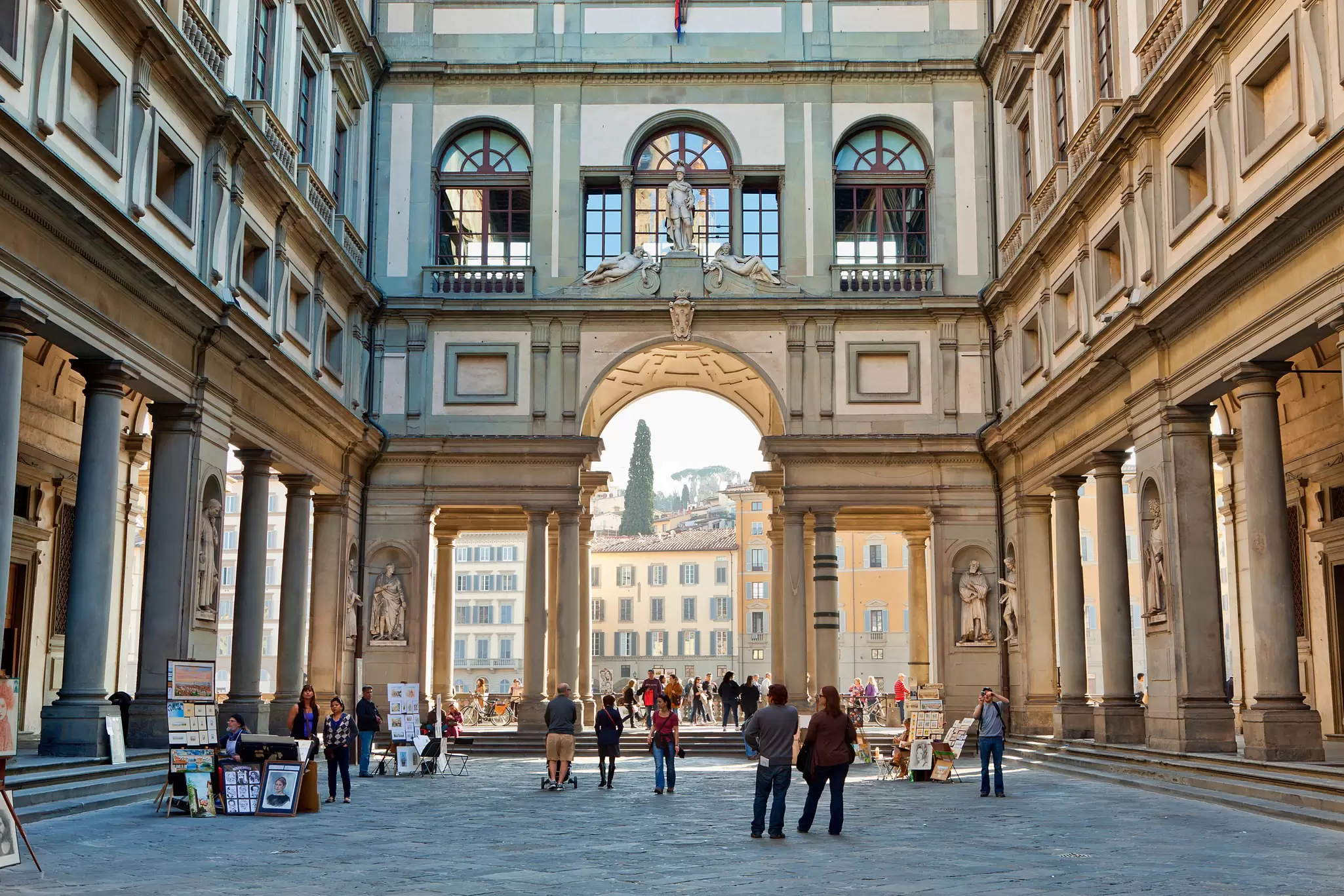
As you walk toward the entrance of the Uffizi (on the eastern side of the square) from Piazza della Signoria, take a moment to admire Vasari’s architectural project. Following 16th-century ideas of modernity, the palace replaced medieval buildings, cramming the area with symmetrical corridors sustained by rows of Doric columns enclosing the wide Piazzale degli Uffizi. The straight lines marking the exterior guide the view toward the Arno via an imposing portal opening, under which artists set up their tripods. Cosimo I’s original commission included a series of sculptures of illustrious Florentines to be placed in the loggia. The Grand Duke would never see this request completed, but 28 statues were added by the Lorraine government in the 1840s, as tributes to Tuscan artists, scientists, politicians and generals, such as Giotto, Dante, Michelangelo, Machiavelli, Leonardo Da Vinci and Galileo Galilei.
Duecento E Trecento
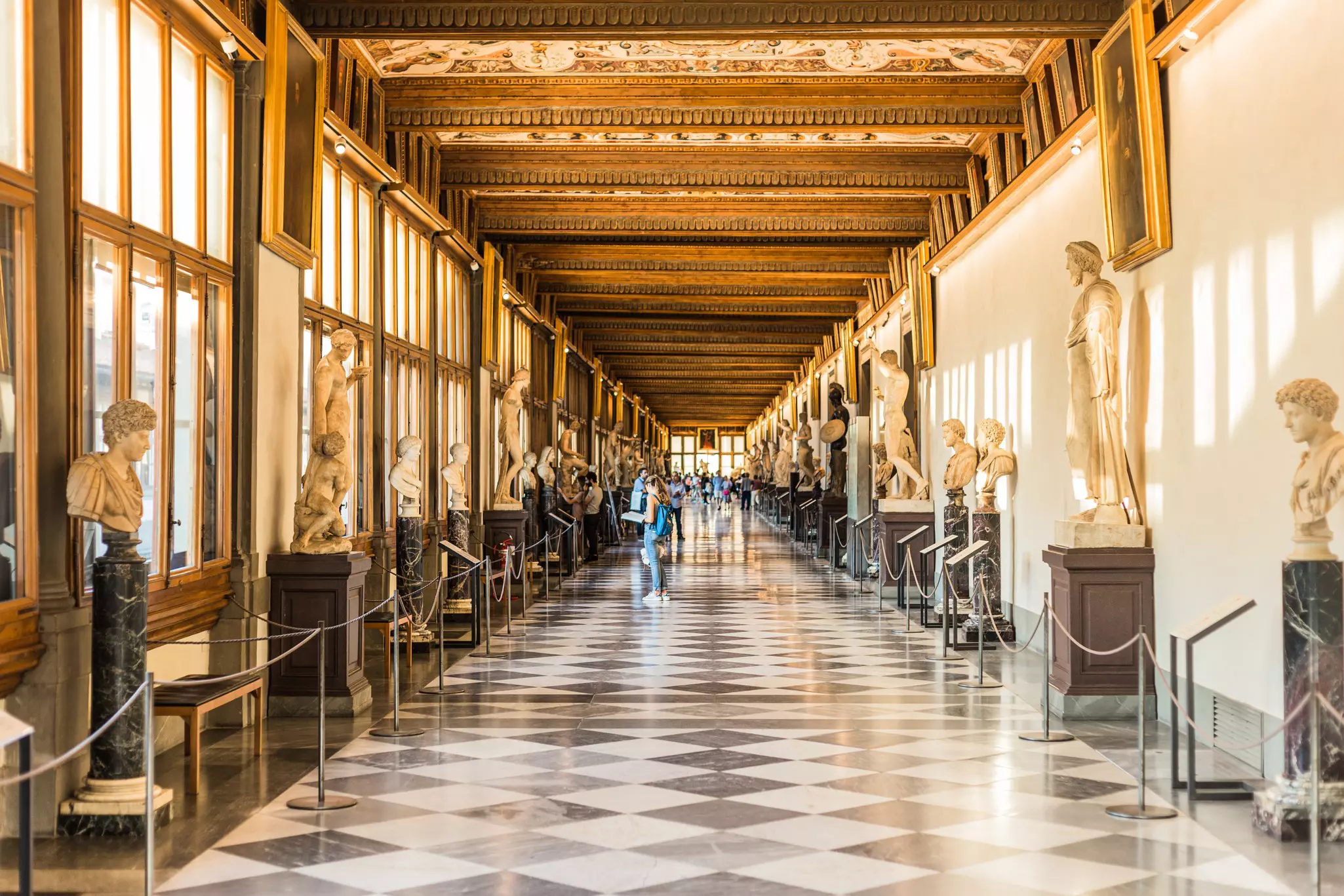
Enter the museum and climb the monumental Scalone Granducale to reach the 2nd floor, where you’ll begin your Uffizi journey starting from the halls dedicated to 13th and 14th century art. It is tempting to dive right into the halls exhibiting religious works of medieval masters, but take a moment to look up at the ceiling of the Corridoio di Levante, the first corridor, richly decorated with grotesques by painters of Alessandro Allori’s workshop. As you enter the halls, gilded backgrounds exalt the 700-year-old panel paintings produced by some of Italy’s most revered Gothic artists – delicate representations of the Virgin Mary that once adorned Florentine churches such as Madonna Rucellai by Duccio di Buoninsegna (1285), Maestà di Santa Trinita by Cimabue (1290–1300) and Maestà di Ognissanti by Giotto (1300–05) are gathered here.
Primo Rinascimento
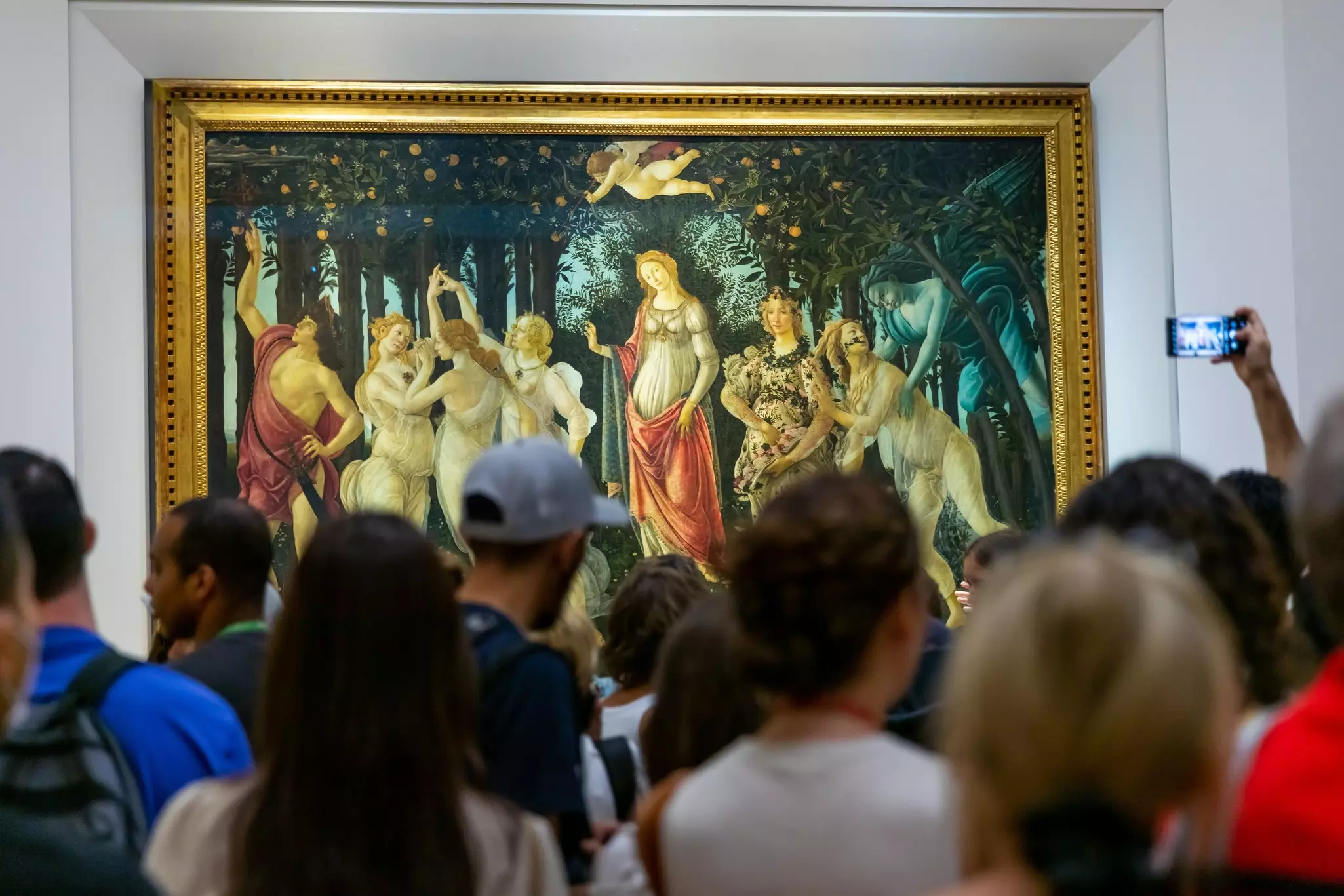
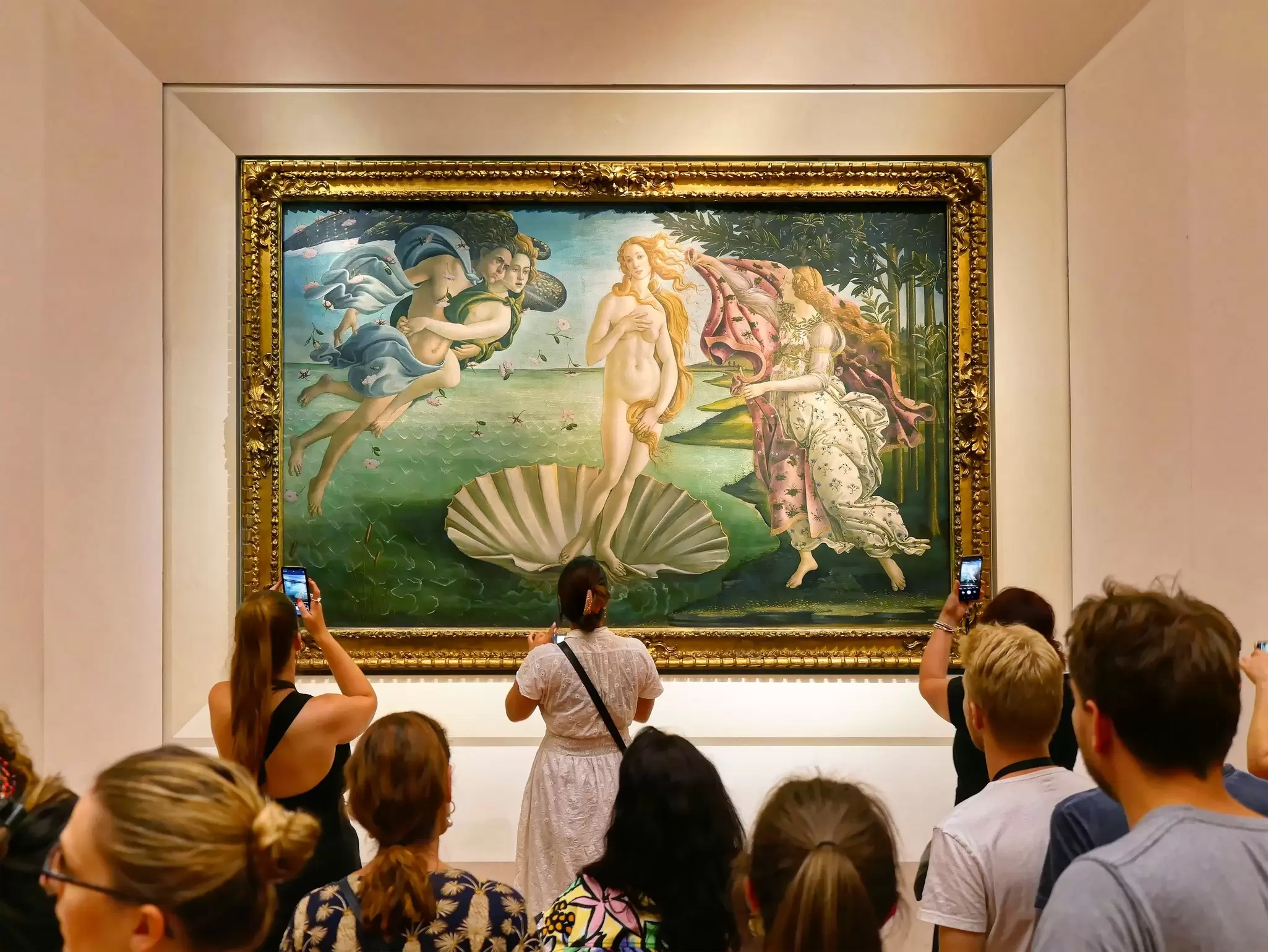
The use of perspective, chiaroscuro techniques and realistic proportions lead you into the golden era of Florentine art. The innovative paintings of Masaccio and Beato Angelico mark the passage into the early Renaissance, together with the portraits of the Duke and Duchess of Urbino (1465–72) looking straight into each other’s eyes by Piero della Francesca. You may have to elbow your way to Sandro Botticelli’s La Primavera (1480) and Nascita di Venere (1485) hanging in halls 11 and 12. But getting close to these large-scale masterpieces is worth your patience. Don’t miss the recently restored Terrazzo delle Carte Georgafiche – closed to the public for 20 years until 2021 – where 16th-century geographical maps of the Medici's dominion in Tuscany, hand-painted by Ludovico Buti, cover entire walls. The view over Santa Croce and San Niccolò from the windows isn’t bad either.
Tribuna degli Uffizi
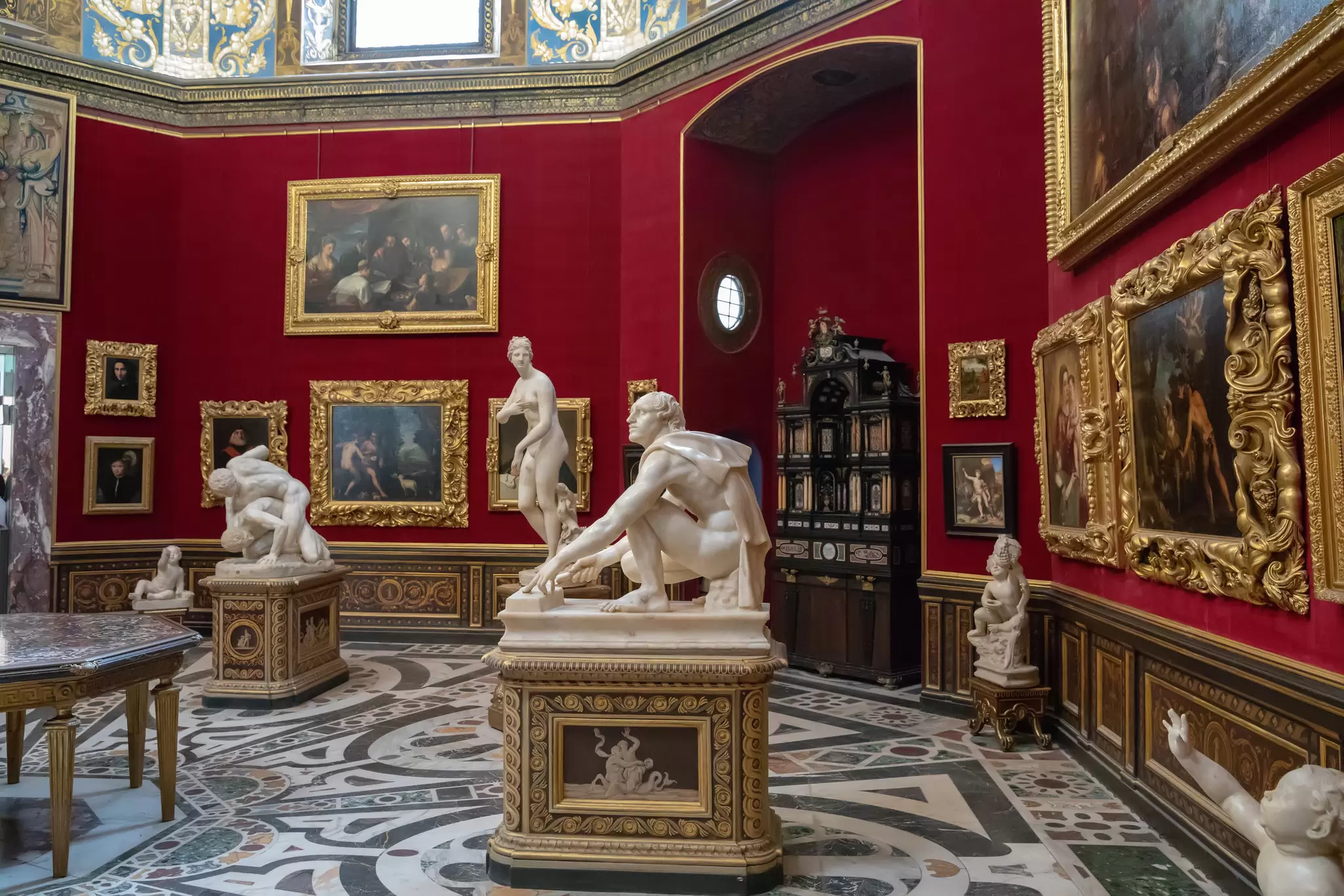
In 1776, German artist Johan Zoffany produced the painting Tribuna degli Uffizi – an emblematic image testifying to the significance of this octagonal hall for European art enthusiasts. Added to the Uffizi between 1581 and 1583, this red room was designed by architect Bernardo Buontalenti under the orders of Francesco I. It was meant to function as a cabinet of curiosities featuring elements symbolizing the four elements of the natural world – fire, earth, air and water. It also included a cupola clad with nearly 6000 ostrich shells. Housing the core of the Medici collections, the Tribuna became a key destination on the Grand Tour among British and German aristocrats. They traveled for months to see its contents, with the Greek marble statue Venere de' Medici, dated to the end of the 1st century BC, the main highlight.
Secondo Rinascimento
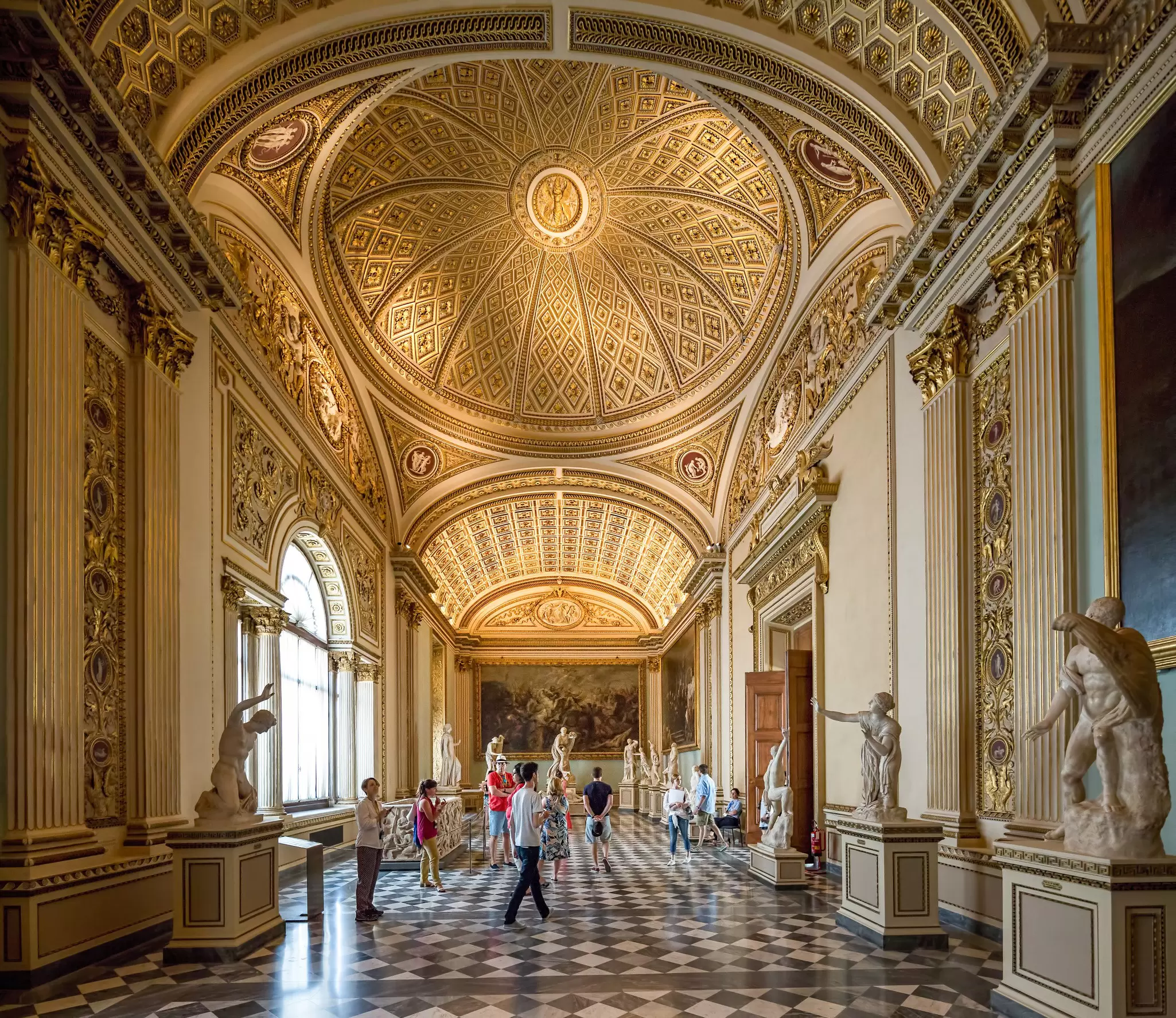
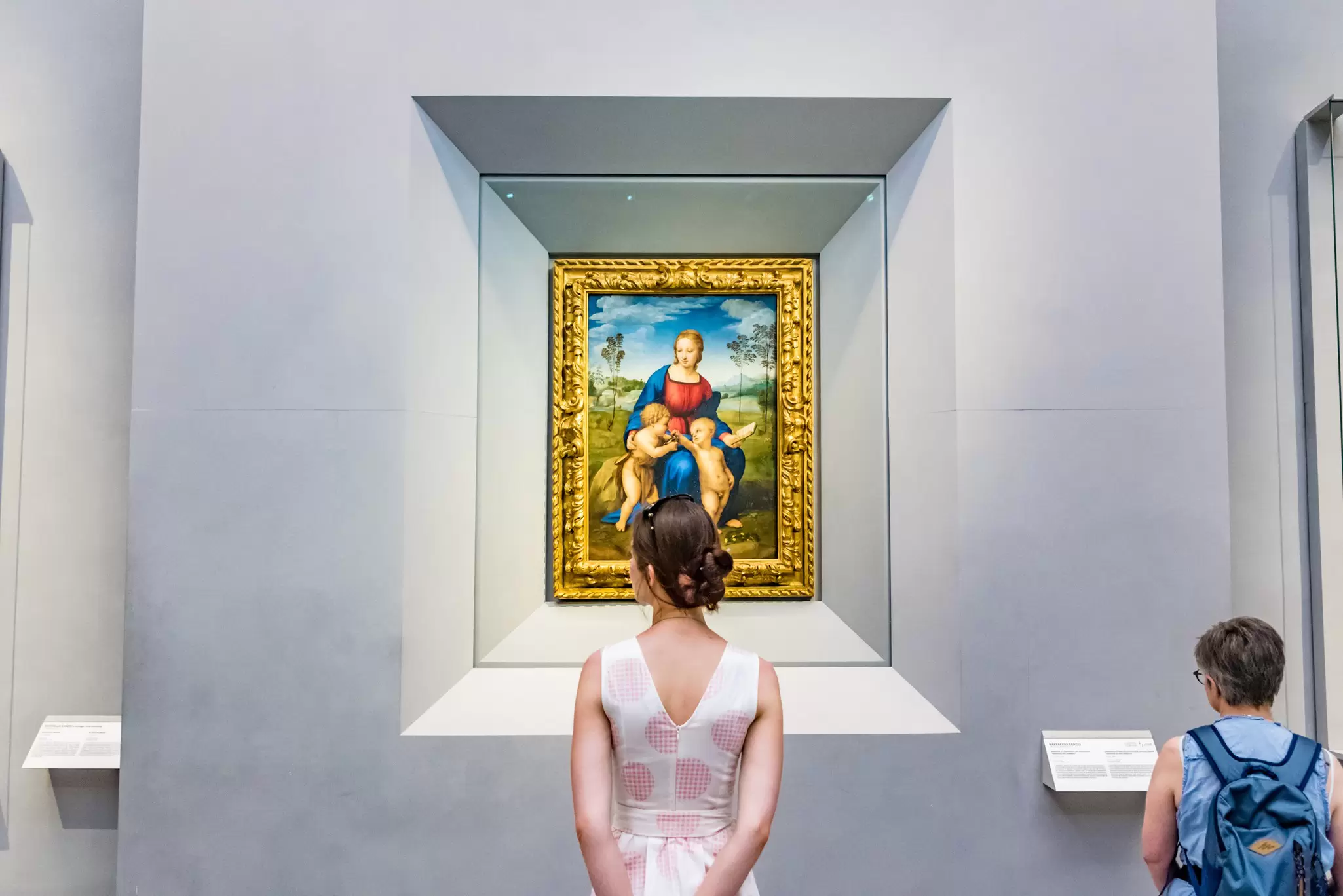
Following the section dedicated to Renaissance artists beyond Tuscany, take the U-turn to reach the Corridoio di Ponente and meet the protagonists of the High Renaissance. Battesimo di Cristo (1475–76), Annunciazione (1472) and the unfinished Adorazione dei Magi (1482) are the three paintings exhibited in Leonardo’s hall, followed by Michelangelo's only existing panel painting – the circular Tondo Doni (1504–06), still contained within its original, intricately carved frame – and Raphael's delicate Madonna del Cardellino (1506). Besides the astonishing beauty of the artwork, this space recalls the few years of the early 16th century in which three of the world’s most revered artists found themselves crossing paths in Florence, leaving an indelible mark on the city’s history and heritage. On the same floor, you’ll also find the sleeping Ermafrodito Roman sculpture (2nd century BCE) and the neoclassical Sala della Niobe, an 18th-century architectural addition to the Uffizi wanted by Lorraine Grand Duke Peter Leopold. This room is a stage for the 12 Roman copies of original Greek statues, unearthed in a vineyard in 1583, representing the tragic myth of Niobe.
Collezione degli Autoritratti
To put a face on some of the great names of art history, continue the tour of the Uffizi by walking back down to the 1st floor, where you’ll find the collection of 250 self-portraits hanging on pink walls since 2023. Chronologically ordered, the paintings range from Renaissance "selfies" of Andrea del Sarto to those of Rembrandt, Antonio Canova and contemporary greats such as Ai Weiwei.
Cinquecento E Seicento
Less crowded than the exhibition spaces dedicated to High Renaissance art are the halls housing works from the 16th and 17th centuries, the final stretch of the Uffizi’s complete itinerary updated in 2018. Observe the impact of Renaissance values beyond Tuscany in the work of artists from Lombardy, Ferrara, Bologna and Rome before returning to Florence with the scenes depicted by Mannerist innovators such as Pontormo and Rosso Fiorentino. Next, check out the 1st floor’s main draw – Caravaggio’s gruesome Giuditta che Decapita Oloferne (1620) and Medusa (1598). According to the Greek myth, the goddess Athena transformed Medusa’s hair into a bunch of snakes, punishing the woman for desecrating her temple with Poseidon. Turned into a monster, Medusa could turn people into stone with her gaze – this until hero Perseus chopped off her head, captured by Caravaggio a moment after death.