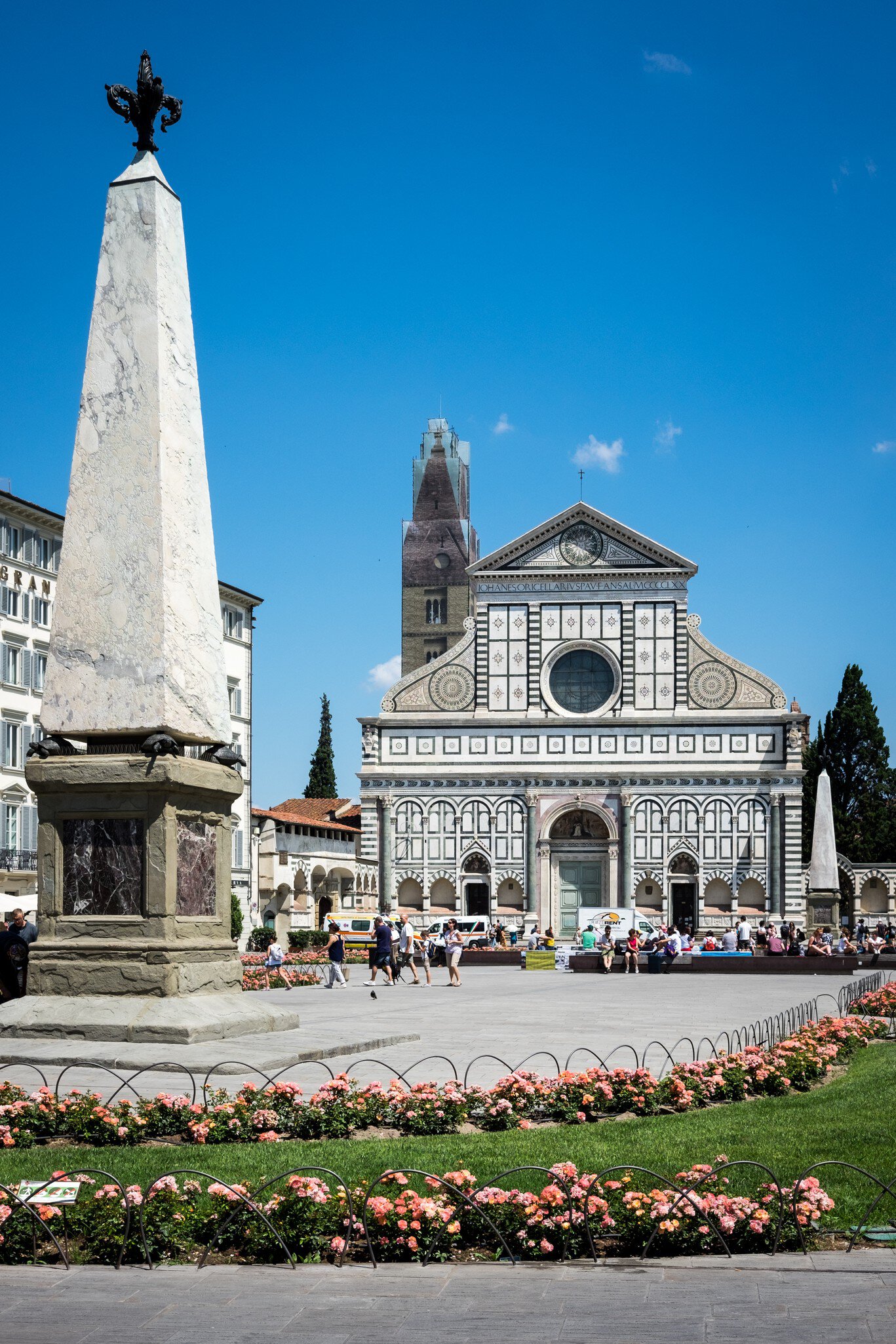
Dominican monks founded the Basilica di Santa Maria Novella (smn.it; adult/child €7.5/5) in the 13th century, setting the stage for what would later become a monumental complex housing the work of Gothic masters and Renaissance pioneers.
Step beyond Leon Battista Alberti’s facade to encounter Giotto, Masaccio, Ghirlandaio and many of the Florentine artists who left a mark on art history books.
Leon Battista Alberti’s Facade
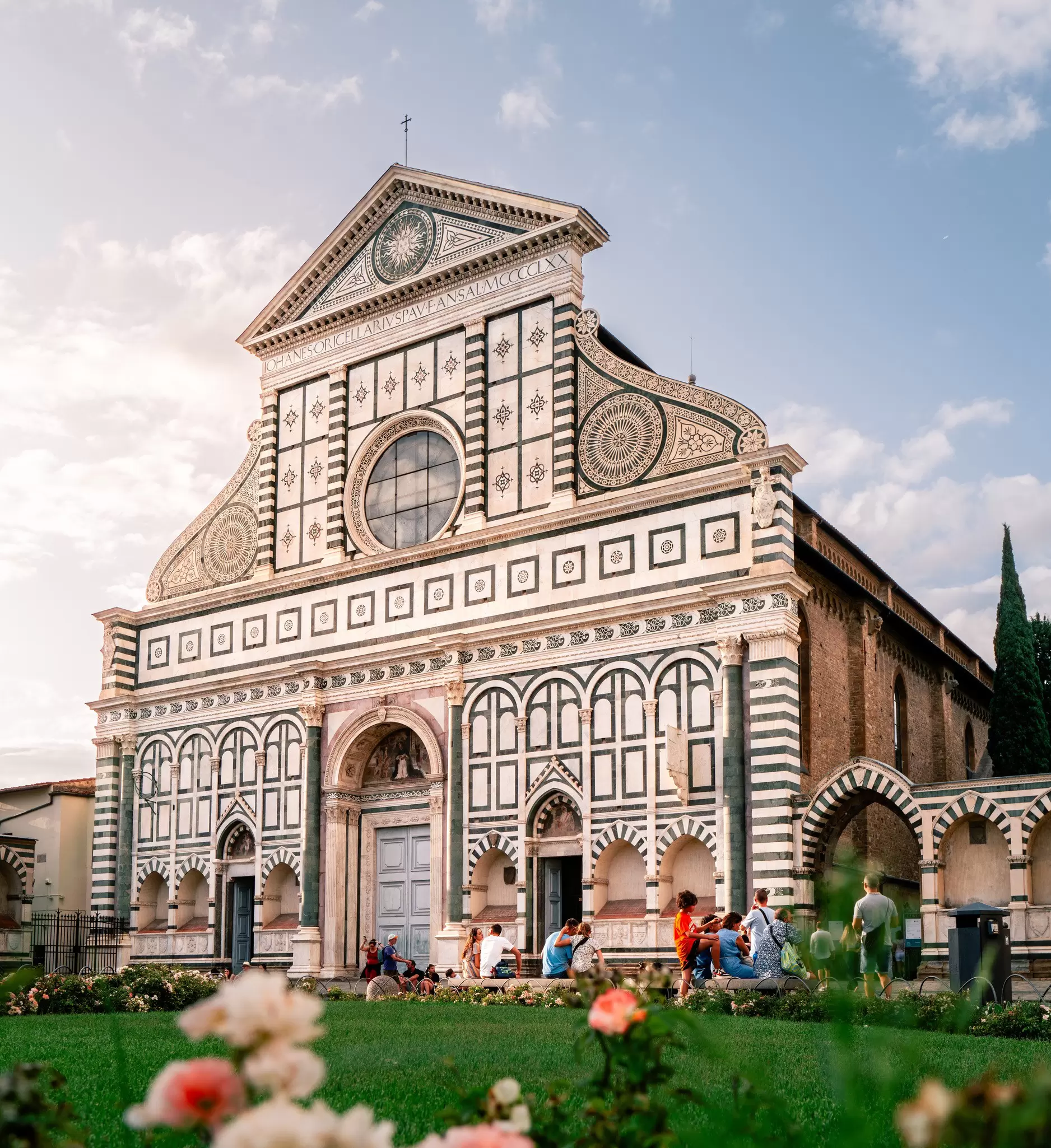
A 15m inscription stretching under the basilica’s tympanum makes clear to whom we owe the basilica’s current form – "Giovanni Rucellai, son of Paolo, year 1470." A member of one of Florence’s most powerful families, Rucellai sponsored the reconstruction of Santa Maria Novella’s exterior. To complete the facade project, he commissioned none other than Leon Battista Alberti, the influential architect who had already completed the dynasty’s residence, Palazzo Rucellai in Via della Vigna Nuova.
Alberti’s vision for the basilica’s symmetrical front section complemented an existing Gothic lower section formed by three portals and six niches. On top of it, the architect added a harmonious composition made of bichromatic squares, rectangles, triangles and circles echoing the Florentine Romanesque style. Dominating the structure from the tympanum’s center is the beaming sun the Dominican Order adopted as its emblem, but look closely and you’ll notice another symbol repeated above the portal – a sail blowing in the wind, the heraldic emblem of the Rucellai dynasty, recalling the sea journeys made by the merchants who built the wealth of one of Florence’s richest families.
Giotto’s Crucifix
As with many medieval churches in Florence, the 100m-long main nave is barely decorated. Apart from a pattern of black and white marble that outlines the Gothic arches pointing to the ceiling from the pietra serena columns, the church is solemnly simple. Standing out on this minimal backdrop is the precious crucifix attributed to Giotto, a gilded artwork hovering above the main nave, containing a realistic image of Christ believed to have been painted by the Gothic master between 1288 and 1289.
Brunelleschi’s Wooden Crucifix
The first chapel on the left side of Santa Maria Novella is home to one of the rare sculptures produced by Filippo Brunelleschi, the architect most responsible for Florence’s Duomo. The wooden crucifix adorns the simple Cappella Gondi and is believed to have been completed in 1415.
Cappella Maggiore & Cappella Strozzi
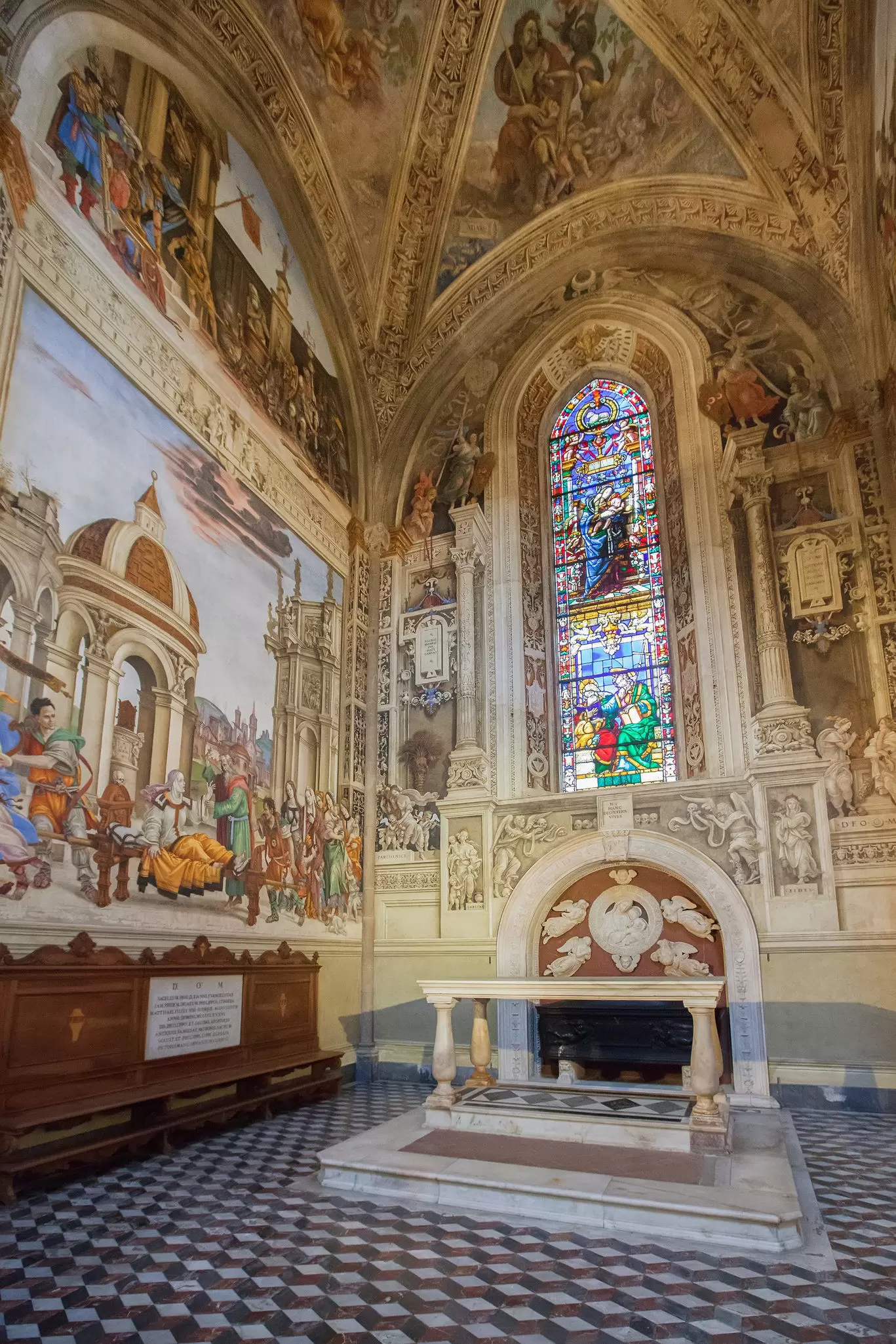
Santa Maria Novella’s largest chapel, the Cappella Maggiore, hosts Domenico Ghirlandaio's vivid frescoes depicting scenes from the Virgin Mary’s life, adapted to include portraits of the Tornabuoni family who commissioned the artwork in 1485. Nearby, Filippino Lippi’s visually striking Cappella di Filippo Strozzi contains one of the church’s most impressive cycles of paintings – the lives of Saint Philip and John the Evangelist, completed in 1502.
Masaccio’s Trinità
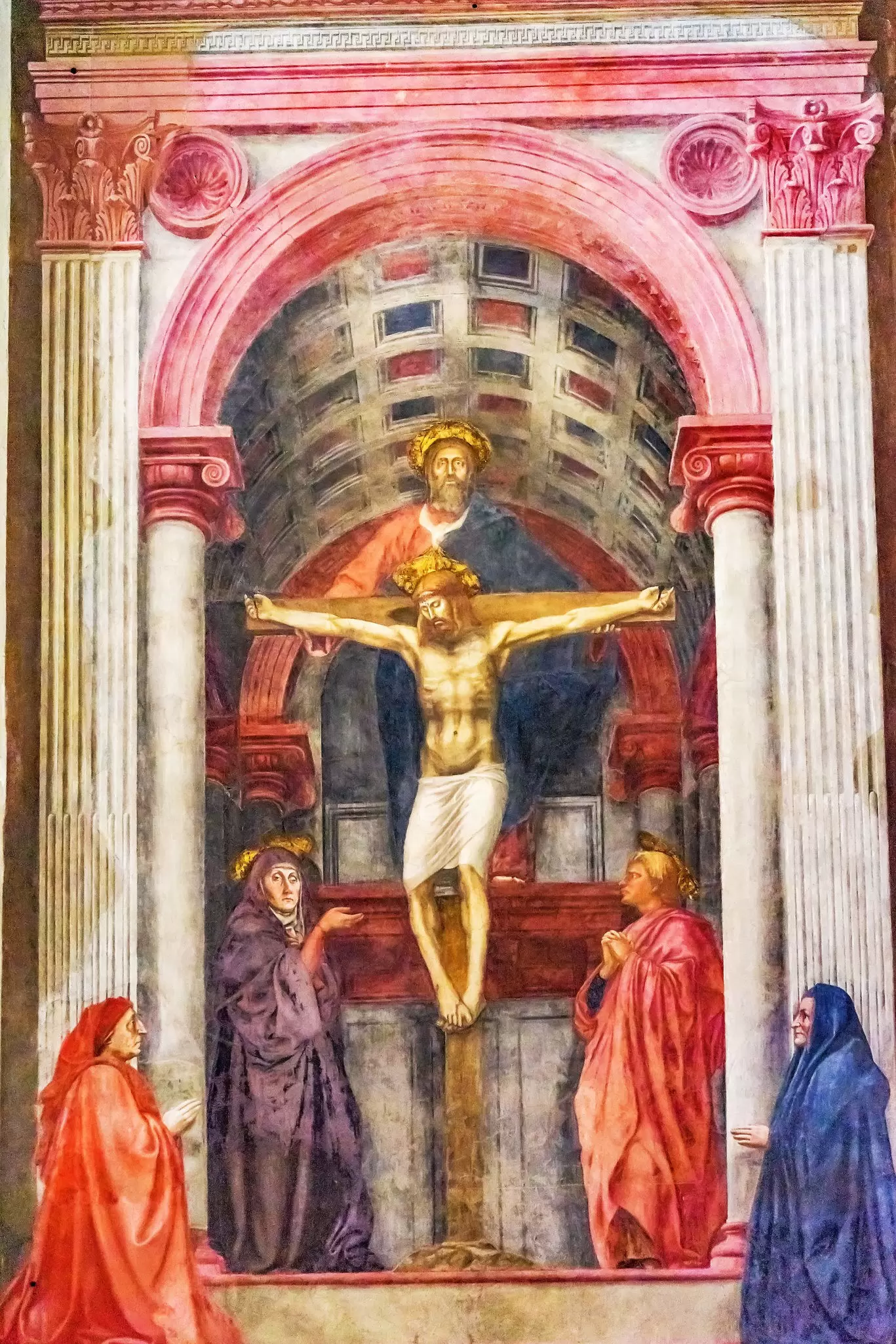
On the left nave of the basilica, spot one of the earliest Renaissance paintings to adopt the perspective technique, the Trinità (Holy Trinity) produced by Renaissance pioneer Masaccio between 1425 and 1426.
Chiostro Verde
Taking its name from the green earth base used for the frescoes, the Chiostro Verde (Green Cloister, 1332–50) is adorned with paintings by Paolo Uccello and leads to the visually striking Cappellone degli Spagnoli, titled after the Spanish congregation that worked here in the 16th century.