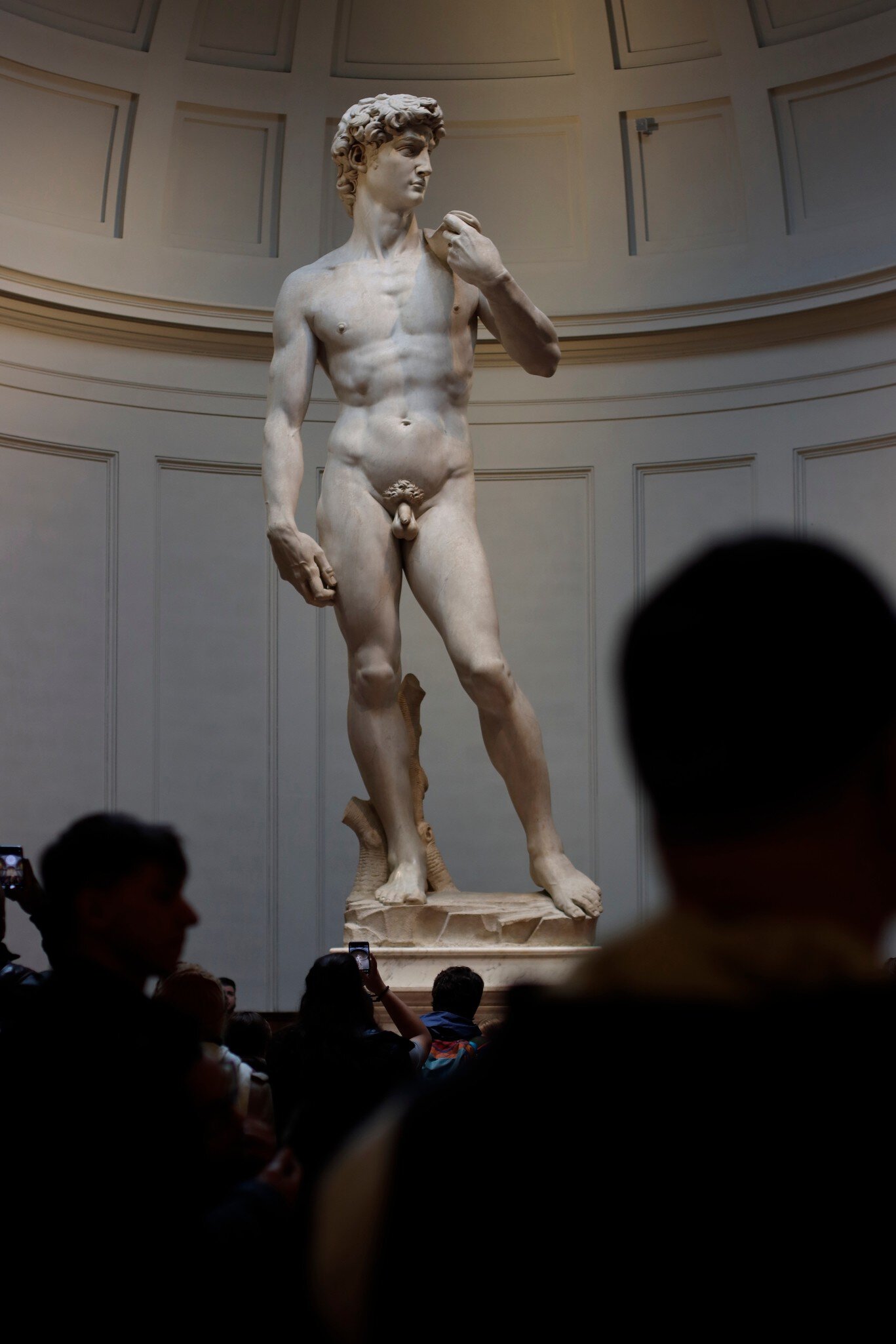
Michelangelo’s David is only one of the hundreds of artworks exhibited at the Galleria dell’Accademia, ranging from 13th-century gilded religious panels to Lorenzo Bartolini’s 18th-century busts of famous Florentines.
Born as a Medici-financed drawing academy in 1563, the Galleria opened to the public as a museum in 1784 and has since grown to become one of Florence’s top museums.
Sala del Colosso
Drawing all the attention at the heart of this elegantly renovated hall stands the impressive 1581 plaster model of Giambologna’s dynamic Ratto delle Sabine (Abduction of a Sabine Woman), the precursor of the finished sculpture now on display at the Loggia dei Lanzi. Surrounding this central piece, the deep-blue walls of the gallery are adorned with the grand Deposizione dalla Croce (1503–07) by Filippino Lippi and Il Perugino and Botticelli’s Madonna con Bambino, San Giovannino e Due Angeli (1468), an early work of the Florentine artist who would later become one of the Renaissance frontmen.
Galleria dei Prigioni
You’ll be tempted to walk straight to David at the end of the corridor, but take some time to admire the four "slaves" or "prisoners" crafted by Michelangelo between 1519 and 1534 for Pope Julius II, standing on both sides of the gallery. Purposely left incomplete to communicate the human struggle of leaving the material world behind to reach a higher spiritual dimension, these figures, all over 2.5m tall, are subsequent to Bonarroti’s great nude and express the artist’s famous ability to free bodies trapped in stone with a chisel. The tension creates the illusion of people actually trying to escape the white marble with their bodies contorted in strained poses.
Michelangelo’s David
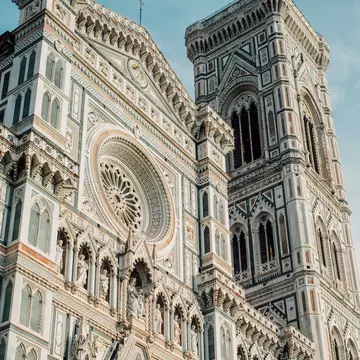
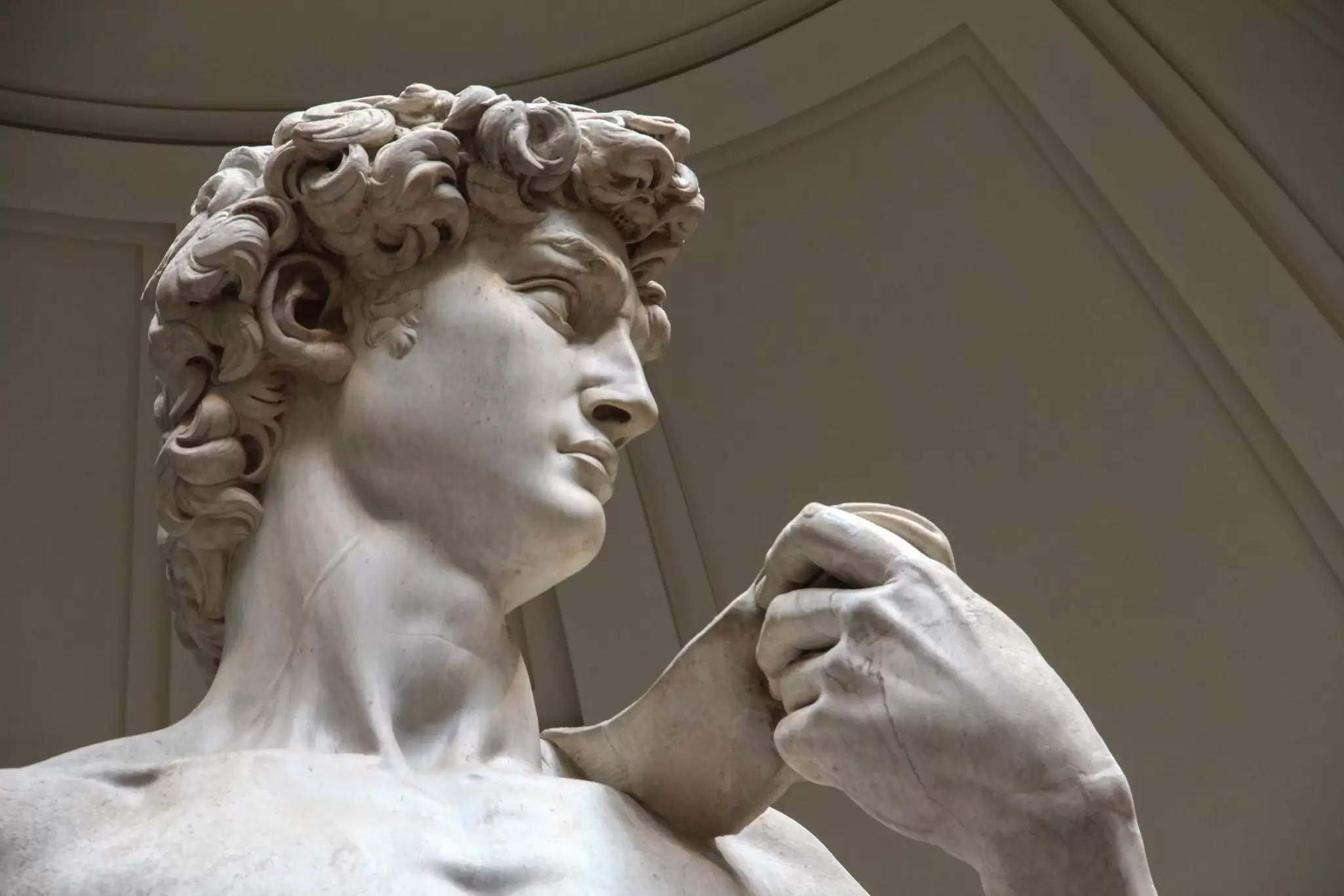
Michelangelo was only 29 when he completed this colossal work, unveiled in 1504. Sculpted from a single block of Carrara marble, Michelangelo's five-tonne David is the Galleria’s unchallenged focal point since 1874, when it was moved to its current location from Piazza della Signoria. Commissioned during the brief period when the Medici were ousted from Florence and the city was declared a republic (1494–1512), the statue symbolized freedom from authoritarian rule before becoming known as a canonical representation of male beauty. David's impressive scale – surpassing 5m in height – is matched by its intricate details, with veins, hair and muscles finely carved to an extreme level of realism. Emilio de Fabris, the architect who also designed the facade of Santa Maria del Fiore Cathedral, created the tribune where David stands today.
Gipsoteca Bartolini
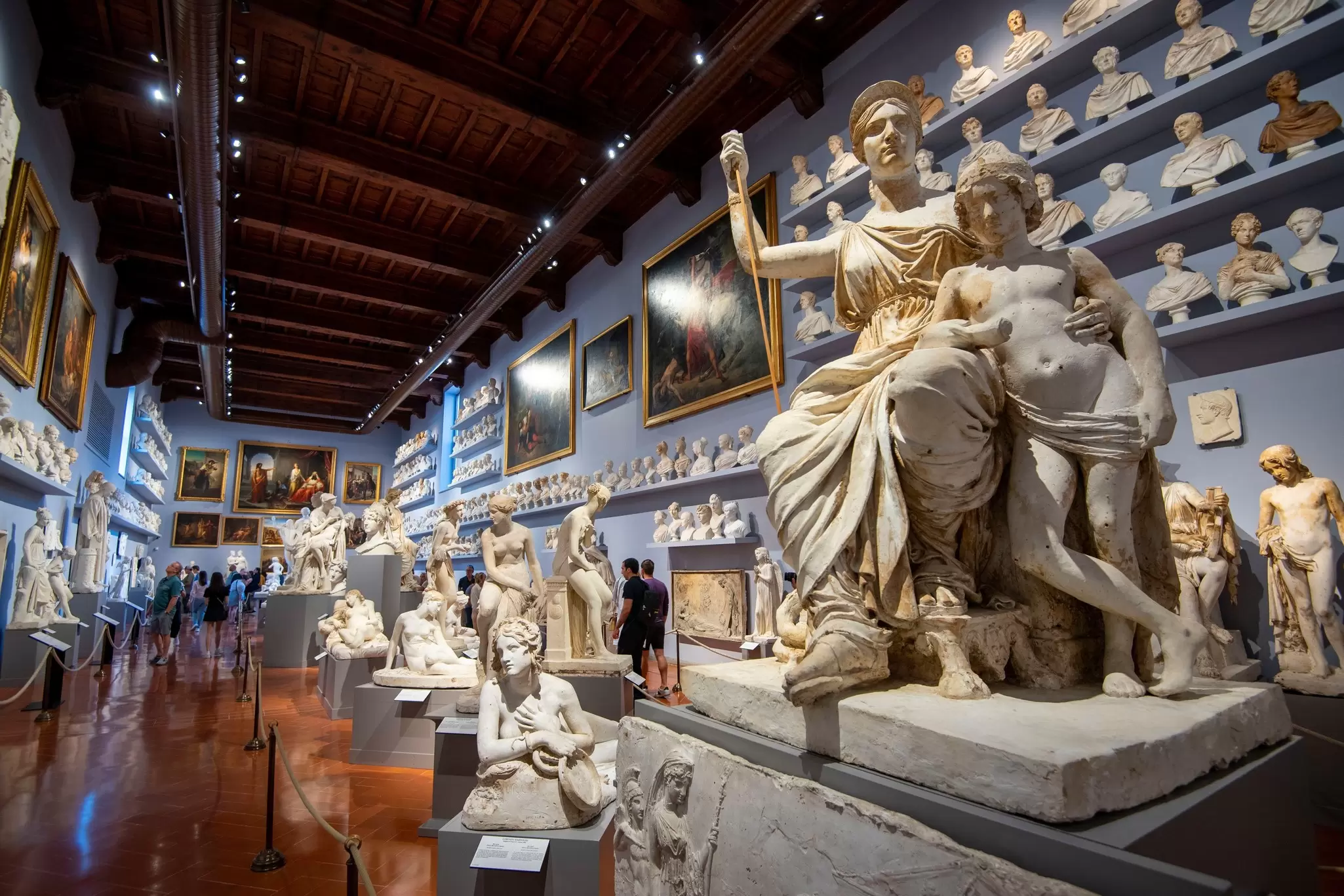
Showcasing the models created by 19th-century sculptor Lorenzo Bartolini, the Gipsoteca echoes the atmosphere of an artist’s studio, with hundreds of busts and statues of prominent figures crowding the hall. Spot Brunelleschi, Machiavelli and Elisa Bonaparte.
Sale del '200 E del '300
Religious paintings from the 13th and 14th centuries adorn the three small rooms showcasing the Florentine Gothic style of Giotto’s contemporaries. The central hall is dedicated to painter and miniaturist Pacino di Buonaguida, whose L’Albero della Vita (1310–15) represents biblical tales on the golden background en vogue at the time.
Museo degli Strumenti Musicali
Historical musical instruments are on show in the eastern wing of the museum – access it via the Sala del Colosso to see Stradivari’s 1716 violin and two instruments built by Bartolomeo Cristofori (1655–1731), the inventor of the piano, employed as the Medici’s musical artisan.