May 18, 20215 min read
A Walk Through the Charming Lanes of Kochi May 18, 2021
5 MIN READ
Writer
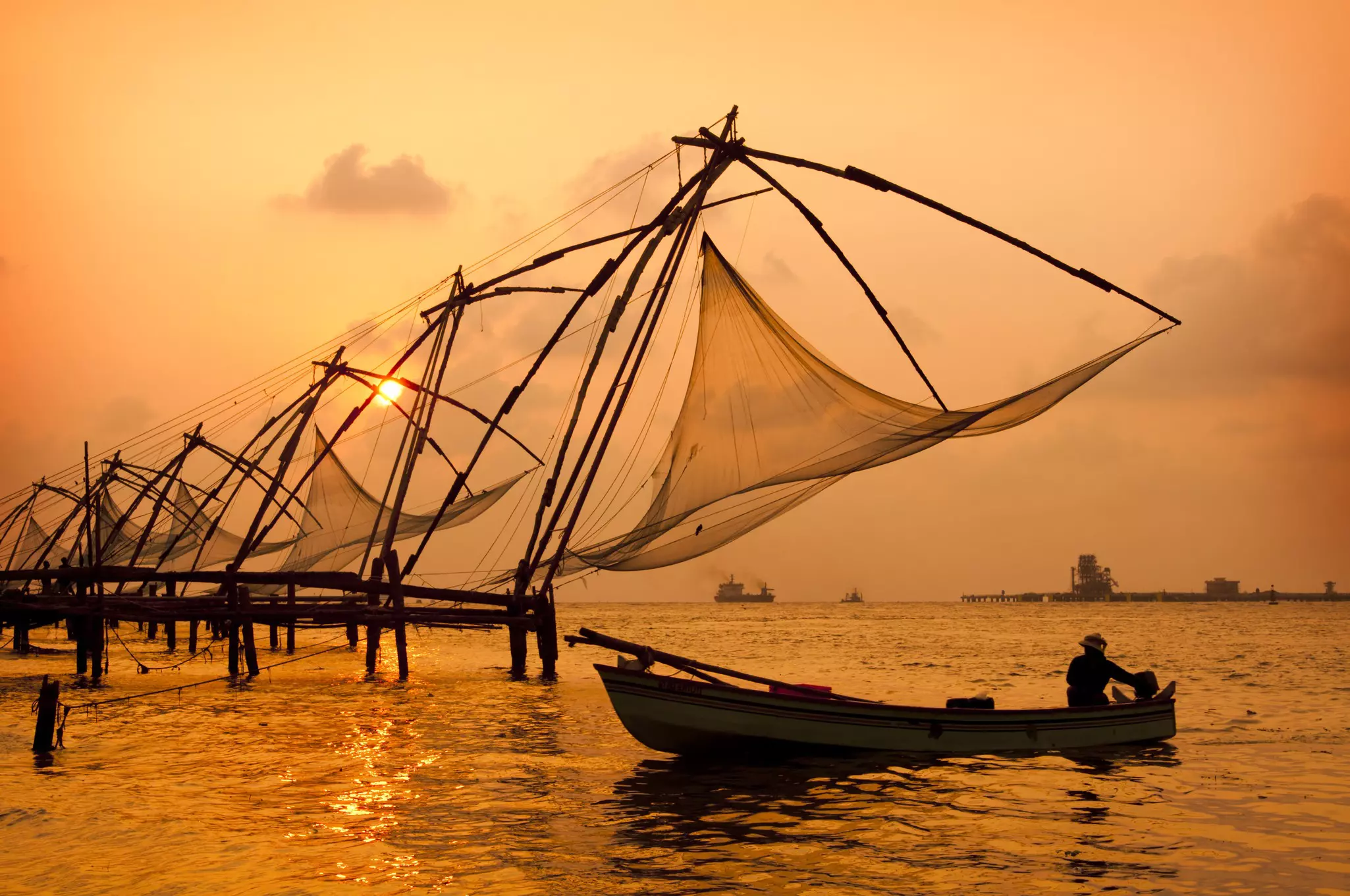
Chinese-style cantilevered fishing nets are the unofficial symbol of Kochi. johnnychaos/Shutterstock
Writer
Lonely Planet may earn a commission from affiliate links on our site. All recommendations and reviews reflect our own independent opinions.
Set on a magnificent estuary, Kochi has been drawing traders, explorers and travelers to its shores for over 600 years. Nowhere else in India do you find such an intriguing mix: giant Chinese fishing nets, a 450-year-old synagogue, ancient mosques, Portuguese and Dutch colonial-era houses, and the crumbling remains of the colonial British Raj. Kochi is a delightful place to explore architecture, laze in artsy cafes and relax at some of India’s finest heritage stays hotels. We bring you some interesting things to do in Kochi.
A few decades ago, even a local would have been blank if asked about the Muziris. It is now one of the biggest conservation sites in India and is gaining fame as one of the venues of the famous Kochi-Muziris Biennale. Muziris has solid history. Mentioned in the Ramayana as Murachipattanam, this ancient port was alive in 3000 BC when traders from Babylon, Assyria, and Egypt came to the Malabar Coast for spice. Three religions, Islam, Judaism and Christianity entered India through this port. The lure of Muziris ended in the 14th century when the Great Periyar floods wiped off this port and opened up Kochi port. The Muziris Heritage Project is huge and in the initial phase, 4 museums of the slated 27 were open to the public. You can see the first mosque of India, Cheraman Juma Masjid, built in 629 AD and last expanded in 1984. It is unpretentious and wears its badge without fuss. Explore the Paliam Nallukettu, Paliam Dutch Palace, Chendamangalam Jewish synagogue and the Paruvar Jewish synagogue, which is the oldest synagogue in India, from the list. The Paruvar Market Street, where once gold exchanged hands for pepper, is conserved. The Muziris is best experienced in day tours. You can book them a day in advance.
The name of this municipality came from the fort built by the Portuguese called Fort Emmanuel. There is very little of that fort remaining but there are plenty of other sights and experiences in Fort Kochi. Start off from the Vasco da Gama square, more a promenade along the beach, and go closer to the Chinese fishing nets, the first of its kind to be installed in the 15th century India. These nets are still used by the local fishermen and if lucky, you can see them in action. Then make your way to St Francis Church, the oldest European church in India, built by friars from Portuguese. The church is famous because Vasco da Gama was buried here for 14 years before his remains were transferred to Seville in Spain. The architecture is superb but what strikes you is the serenity inside and outside of the church. There is also a cemetery along the side and an unmissable cenotaph in front of the church commemorating the locals who died in World War 1.
Intrepid walkers should carry a list of bungalows which have a heavy air of colonial influence. Our recommendation is to make a pit stop at Pepper House. Two large godowns with Dutch style clay tiled roofs have been conserved and repurposed to house a café, library and a store. Order sandwiches, handmade pasta and coffee before walking across the big courtyard lawn to the waterfront for a back-in-time experience. The other bungalows to visit are David Hall, a Dutch heritage building that has a café with a wood-fire pizza oven, Bishop’s House, Koder House and the unpretentious Vasco House where Vasco da Gama is believed to have stayed. Today it is a homestay.
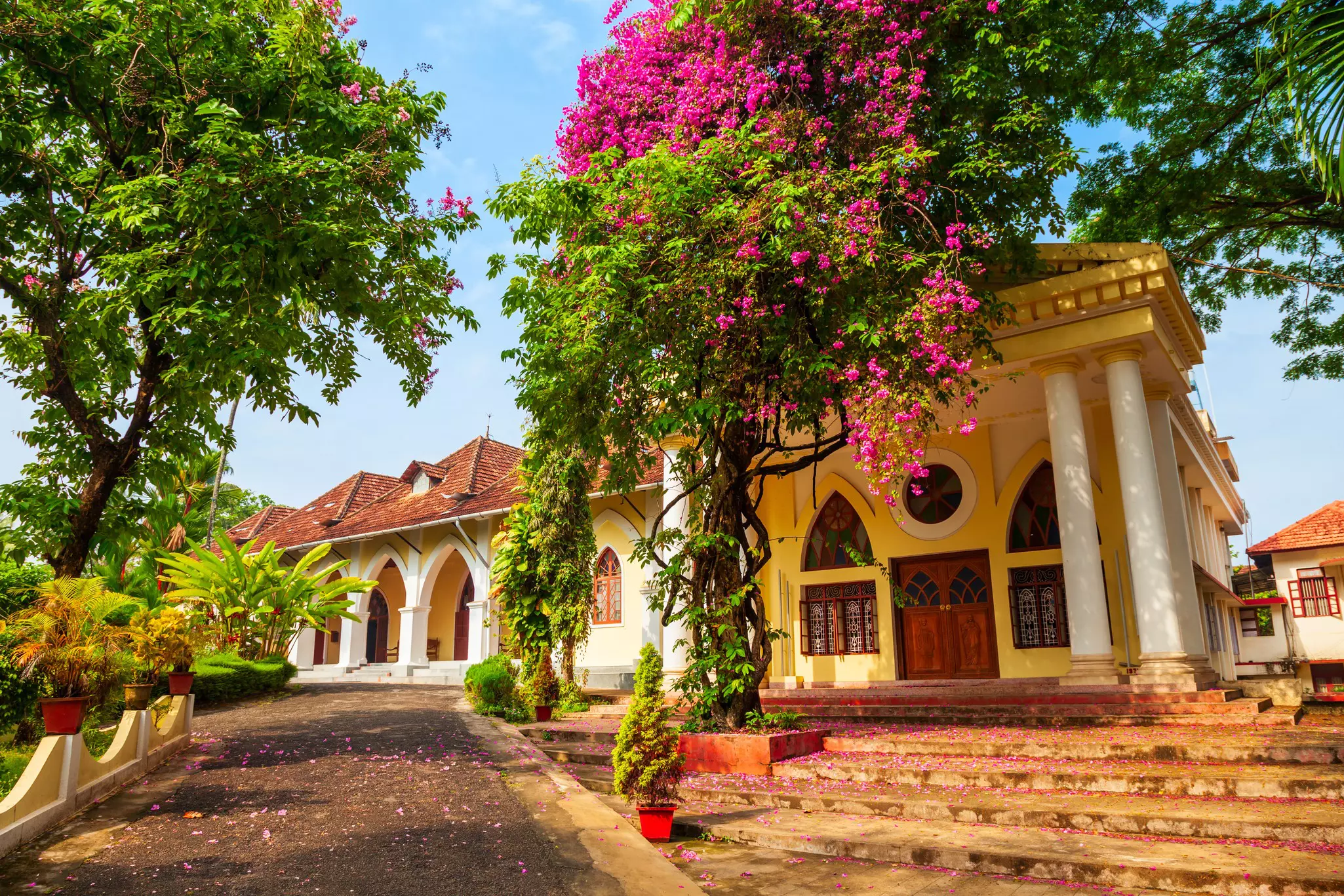
The Pepper House is actually between Fort Kochi and Bazaar Street of Mattancherry. A walk through the Bazaar Street will give a sense of the famous spice trail. There are plenty of spice stores and a few boutiques and art galleries. A strong aroma of ginger led me to a large courtyard with godowns where several workers were processing mounds of ginger. The septuagenarian owner was friendly and spoke at lengths of his fourth-generation business and its large network of customers. The bonus of the business, he added, was that he had never fallen ill thanks to inhaling the fumes of ginger every day.
The Mattancherry palace aka the Dutch Palace is a museum with well-preserved Kerala murals and artifacts belonging to the Rajahs of Kochi. Built in the Nalukettu style, the Dutch had presented it to the king in 1545. The rooms are fascinating to explore with informative signboards placed in every room. One of the officials ushered me to go through a trapdoor to a large room below where there are more exquisite murals. At the back of the palace is a temple where its 85-year-old elephant was tethered. Meeting the elephant is highly recommended.
The next stop is the Jewish synagogue or the Paradesi synagogue. The hand painted ceramic floor tiles, massive glass chandeliers, and the grand pulpit are shiny and well-maintained. The synagogue is closed to tourists on all Jewish holidays.
If there is time for one more stop, visit the Kerala Kathakali Centre. Housed in an old Kerala-style bungalow, the centre has daily performances of the 300-year-old Kathakali dance. The highlight is the makeup application done on-stage, showcasing a traditional art done entirely with natural colors. It takes hours to put on the make up but we get to see about half-an-hour of it including the point when they put choondapoovu (Turkey Berry) seeds in their eyes to make it red.
Book your India trip with Lonely Planet Journeys
See India how it's meant to be seen
Accommodations, activities and ground transportation all taken care of, so you can focus on the fun part. Tell us what your dream trip to India looks like, and our local experts will build it from scratch. Or start with one of our itineraries and make it your own.

Explore related stories