Sep 21, 202614 min read
A Guide to Québec, CanadaSep 21, 2026
14 MIN READ
Contributors
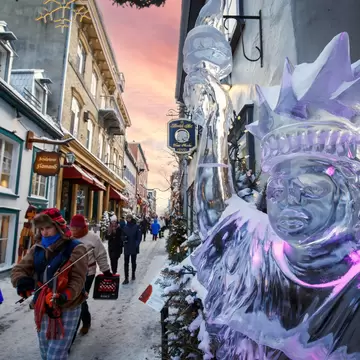
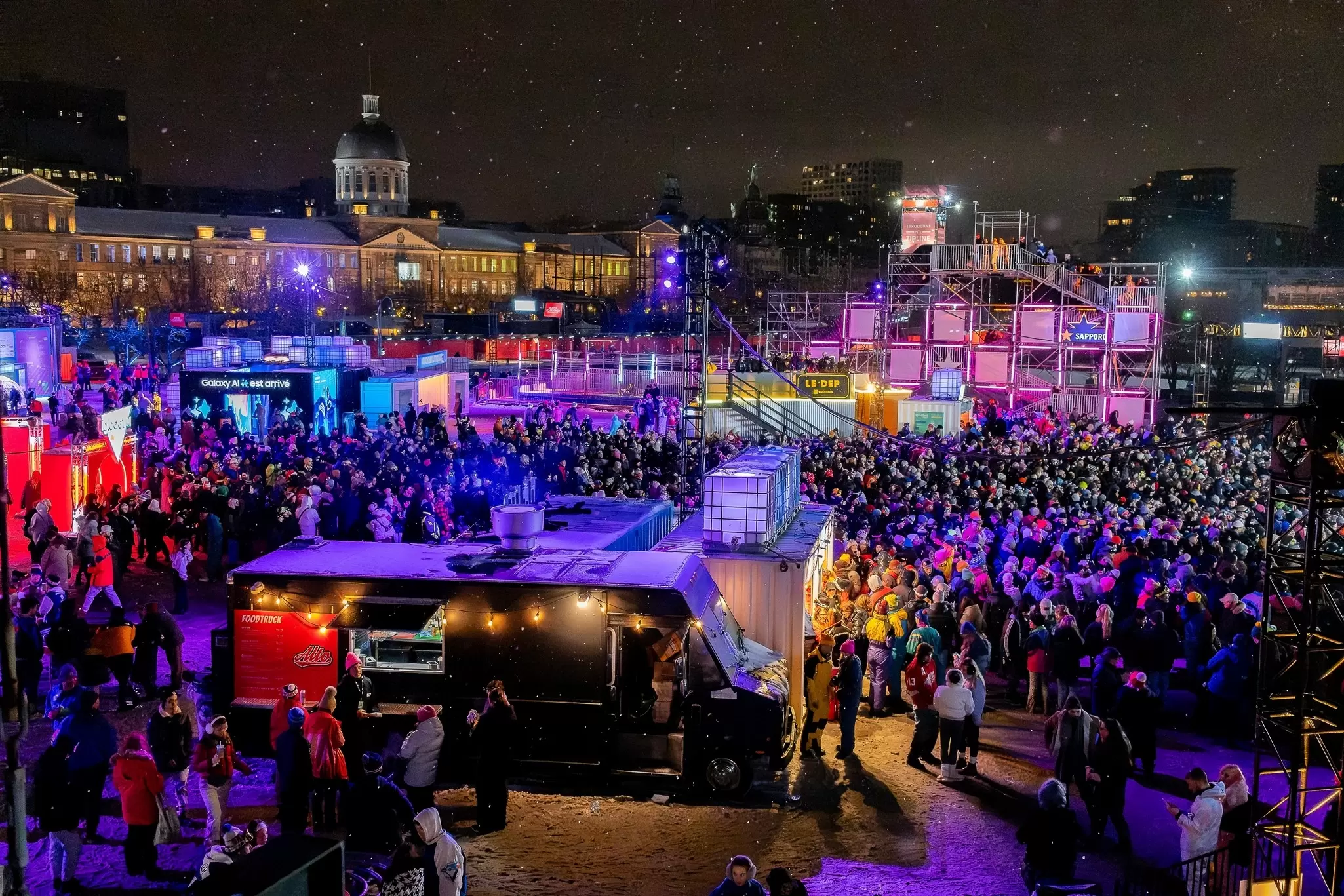
A street scene during the Carnaval de Québec, Québec City. senturkserkan/Shutterstock

Contributors


Joel Balsam, John Garry
Lonely Planet may earn a commission from affiliate links on our site. All recommendations and reviews reflect our own independent opinions.
French culture and identity, culinary delights from the local terroir, marvelous mountain ranges, whale-watching and secret island beaches: the Canadian region of Québec has so much to savor.
Canada’s largest province by land mass truly feels like a nation within a nation – an island of Francophone linguistic and cultural identity, taking its cues from the French (who landed here in 1535), rather than the British (who took over in 1759).
Montréal is Canada’s capital of fun, where creativity radiates from pedestrianized streets, vintage shops, top-notch restaurants, LGBTIQ+ clubs and psychedelic video projections on aging brick walls. The provincial capital, Québec City, is an open-air museum with more than 400 years of history written into its streets, along with an enticing restaurant and bar scene that’s earning international acclaim.
In Québec’s beguiling countryside, you can stay in a wooden chalet, gobble maple syrup-based treats and see majestic wildlife such as beluga whales, caribou and – for birders – a colony of 116,000 frisky northern gannets. In Les Laurentides, you can go skiing and lake hopping. In the Cantons de l’Est, it’s all about wine-tasting and staying in historic cottages.
Further afield, consider shopping for art in Charlevoix, whale-watching in Côte-Nord or heading off on a road trip of a lifetime through Bas-St-Laurent, Gaspésie and Les Îles-de-la-Madeleine to uncover the cultural delights of the Québec Maritime region.
While there’s enough to do in this French-flavored corner of Canada to last several lifetimes, here’s what you need to know to start planning your first trip to Québec.
Temperatures in Québec can swing from an icy -40°C (-40°F) in winter to a scorching 35°C (95°F) in summer. All manner of marvelous festivals fill the calendar in summer, while winter beckons with snow sports action and other wintry wonders. The weather during the shoulder months of spring and fall is unpredictable, though the fall foliage is reliably gorgeous.
The beginning of the year is the peak season at ski resorts such as Mont Tremblant in Les Laurentides and Le Massif in Charlevoix, and the time for sub-zero partying at Igloofest, where EDM-heads don their favorite retro snowsuits and keep warm as DJs spin tunes next to Montréal’s Old Port. In February, Carnaval de Québec – the world’s largest winter carnival – transforms Québec City into a frosted fun zone with two weeks of sleigh rides, night parades, maple taffy and “snow baths.”
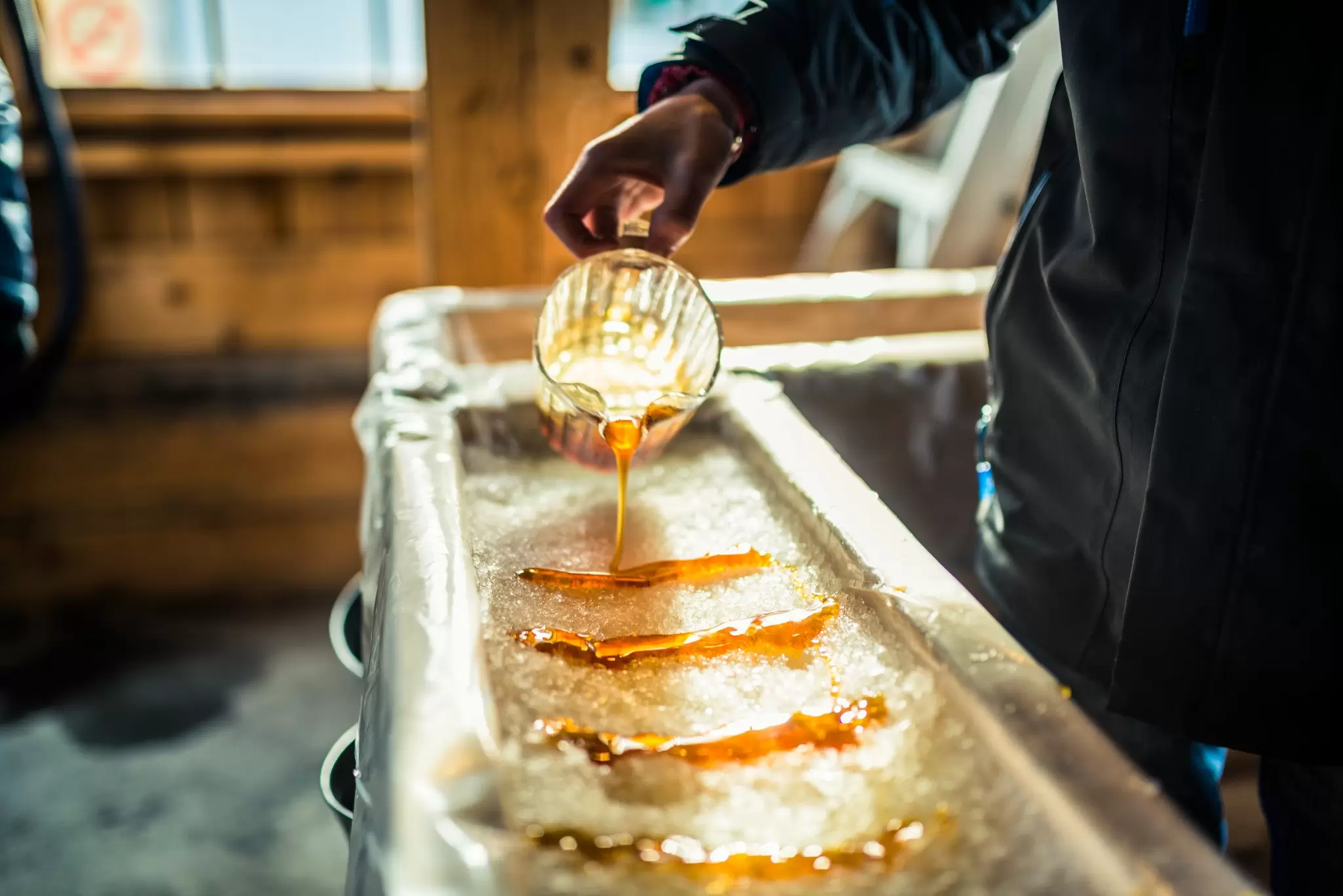
As winter turns to spring, the “sugaring off” season begins, as local farmers tap the area's maple trees to collect sap for the maple syrup served at sugar shacks across the province. Sap flow depends on the year's freeze-thaw cycle, but late February to late April is usually the peak season for sugary treats.
Fast forward to June, when Montréal’s festive season kicks off with the MURAL Festival and Festival International de Jazz de Montréal. Early June is a great time to visit the city, as the sights don’t tend to fill up until kids are out of school near the end of the month. In July, visit Baie-St-Paul for Le Festif!, a music festival with concerts at surprising venues. The last 2 weeks of July are extremely busy for Québec’s construction-industry holiday – avoid if possible.
In August, escape Québec’s scorching-hot cities to the beaches of idyllic Îles-de-la-Madeleine. And September is the time for leaf-peeping in Les Laurentides (The Laurentians), as the tree leaves turn radiant autumn colors. Fall is also the perfect time for a canoe trip through Parc National du Mont-Tremblant.
While you could spend weeks just in the city of Montréal and only scratch the surface, a weekend trip to Québec's biggest city is a lovely way to encounter the city’s – and the province's – charms. Start by digesting 5000 years of local history in Old Montréal at Pointe-à-Callière – an archaeological museum on top of the city’s original foundations – and Place d’Armes, a square dominated by the dazzling Basilique Notre-Dame.
Dig deeper into Montréal’s multicultural melting pot by strolling up mural-covered Blvd St-Laurent, past Chinatown and vintage stores, before lining up at Schwartz’s for smoked meats. And be sure to hike up Parc du Mont-Royal for panoramic views from Belvédère Kondiaronk.
Québec City also makes for a dreamy weekend trip. March to the town’s 18th-century stone fortifications and join a tour to explore corners inaccessible without a guide. Check out turreted Château Frontenac, the city’s prime piece of architectural eye candy, and nearby Terrasse Dufferin, then wander the cobbled Rue du Petit-Champlain.
If you’re thinking bigger, a road trip lasting 2 or even 3 weeks will showcase the best of what the province has to offer. Spend a few days in Montréal before driving east through the Cantons de l’Est region to visit family wineries and artisanal cheese producers, then hit Québec City for another few days of city living.
Pick a direction for the last week or two of your trip. Heading north, admire the huge waterfalls at Parc de la Chute-Montmorency before meeting artists and artisans in Charlevoix and watching whales on Côte-Nord, at the mouth of the Saguenay Fjord.
Heading east will take you through cute towns, lobster cantines (snack bars) in Bas-St-Laurent and the fabulous Gaspésie Peninsula. Learn about ingenious Indigenous creations at Site d’Interprétation Micmac de Gespeg, and gawk at the postcard-perfect Rocher Percé, before (reluctantly) driving back.
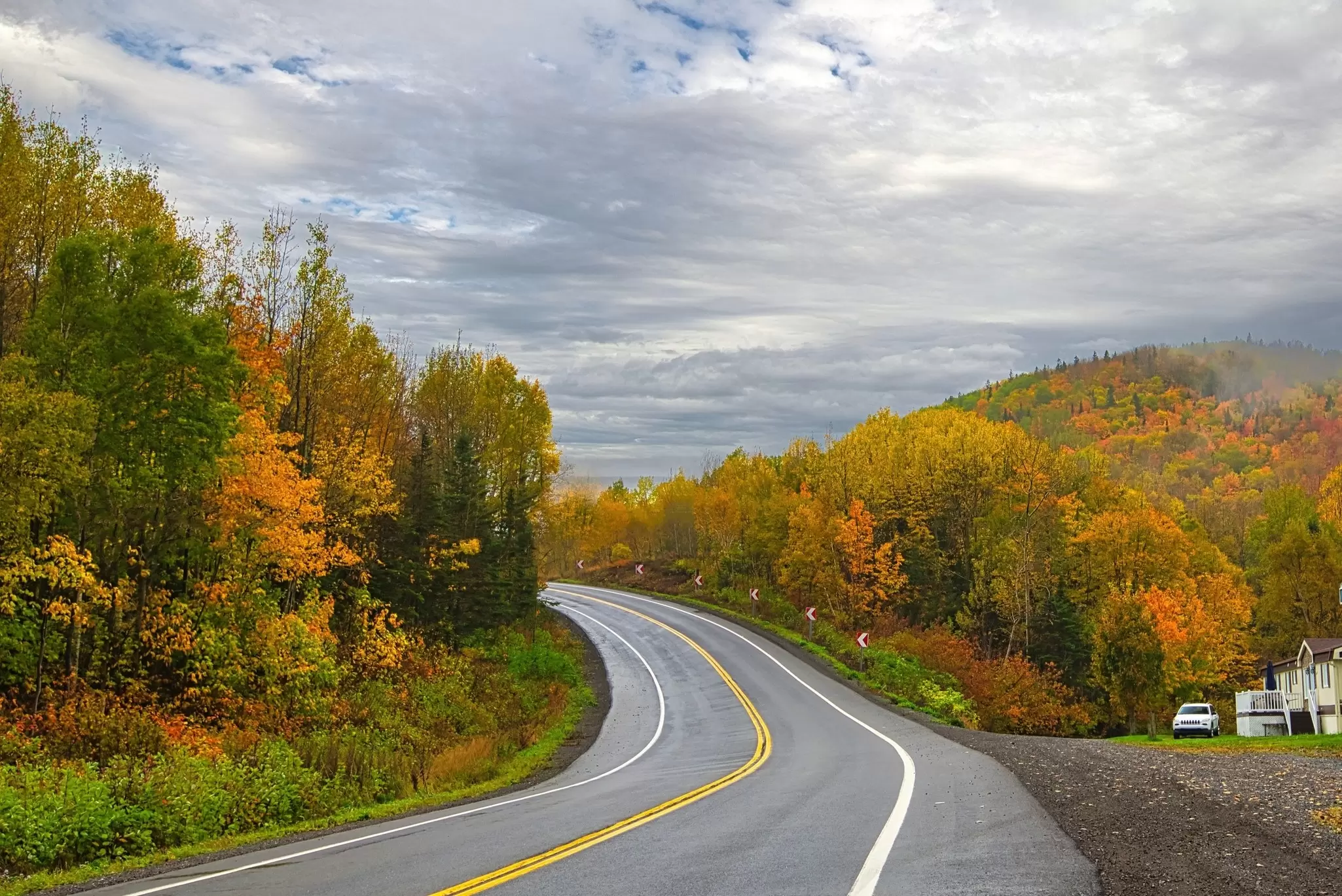
Yes – though outside of cities, you’ll need a car. Well-maintained highways crisscross the province, making driving a breeze, but keep in mind that Québec is nearly three times the size of Texas, even if the vast majority of Québecois are clustered along the St Lawrence River in the southeast. If you're arriving by air, Montréal and Québec City are both busy hubs for regional and international flights.
The most exciting parts of Montréal and Québec City are walkable or accessible via public transportation (Montréal’s 68-station metro system is especially excellent). If you prefer not to drive yourself, Orléans Express, Maheux and Intercar buses travel to Ontario and Québec towns and cities, but not to Les Îles-de-la-Madeleine, which are only accessible by boat or small plane.
VIA Rail trains provide a comfortable if pricey link between Montréal and Québec City or cities nearby in Ontario. Amtrak’s very pretty, very slow Adirondack service connects Montréal with New York City. For a purely scenic ride, hop on Le Train de Charlevoix between Québec City and La Malbaie.
The province of Québec is full to the brim with memorable things to see and do. Here are some of our favorite ways to enjoy the province's rich variety.
Splashed with street art, brimming with boutiques and bookended by gorgeous green spaces, Montréal's Plateau Mont-Royal (often called simply “the Plateau”) is home to some of the city’s most sought-after real estate – and food. Since the 19th century, the neighborhood has evolved from a hub for bourgeois families in greystones and working-class immigrants in multiplexes into a center of Jewish life, an outpost for the Portuguese community and most recently a magnet for newcomers from France.
Taste the pride of Montréal’s Jewish community with a Montréal must-do: sampling the smoked meats at Schwartz’s. This much-loved treat has been made the same way since 1928: cured for 10 days, smoked overnight and sliced by hand to order (prepare to wait in line to sit down).
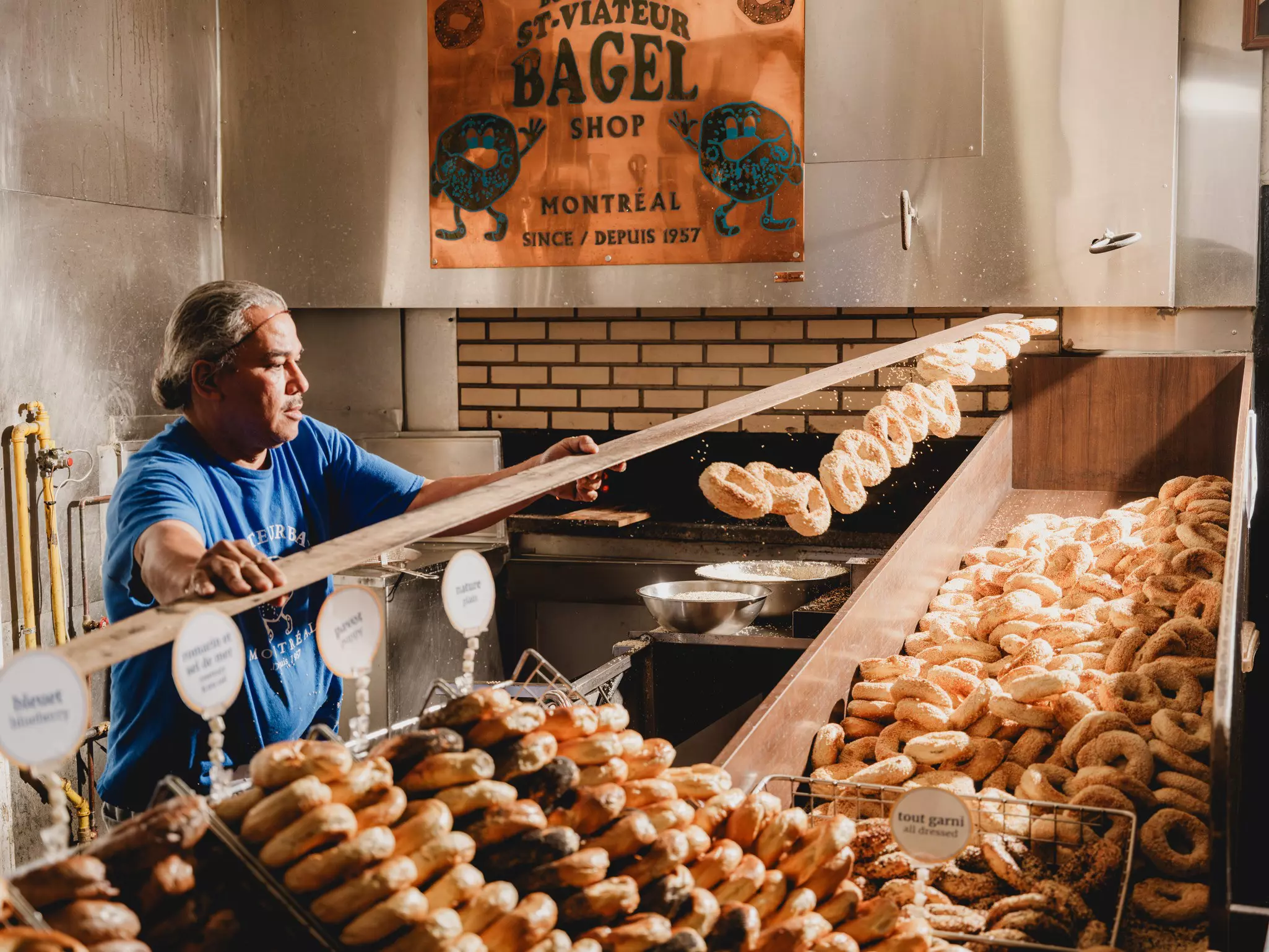
Up the road in Mile End, you can ponder the classic Montréal conundrum: who makes the better bagel, Fairmount Bagel or St-Viateur Bagel? We recommend you try both and decide for yourself. The shiny challah loaves, poppy-seed hamantaschen biscuits, babka rolls and rugelach (filled pastries) at Cheskie’s are another Jewish Montréal favorite, as are Falafel Yoni’s signature fried chickpea balls, served in fluffy pitas.
Over 50,000 people in the greater Montréal area have Portuguese roots – many connected to immigrants who settled in the Plateau throughout the 1950s and 1960s. Taste pastéis de nata (custard tarts) in Petit Portugal at Les Anges Gourmets, where sugar-sweet avós (grandmas) started serving the treats nearly half a century ago, and enjoy Portuguese-style piripiri chicken at Montréal stalwart Coco Rico. Prefer fish? Grab a table at Casa Minhota for scrumptious arroz de marisco (seafood rice).
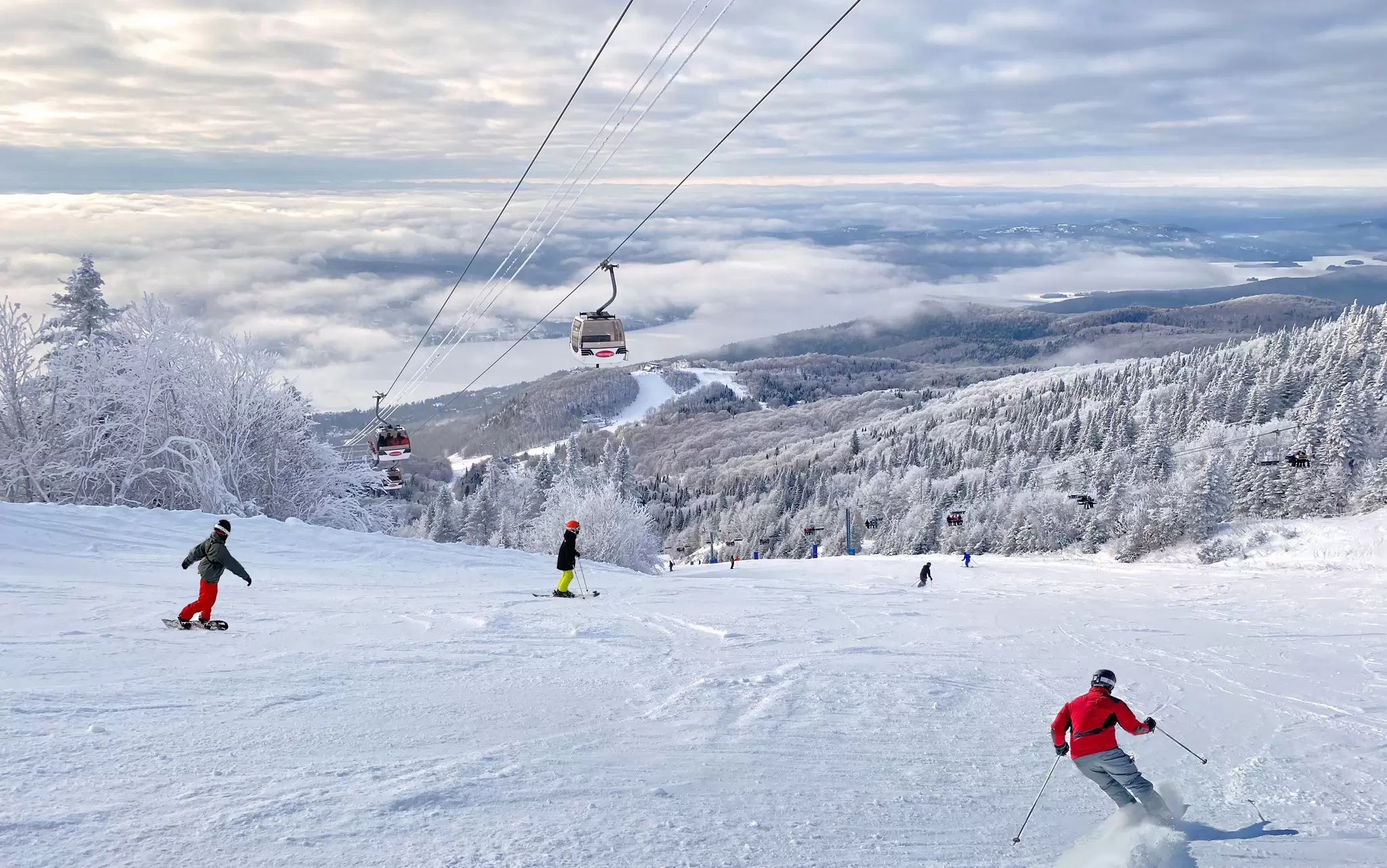
Founded in 1938, Mont Tremblant Resort is eastern Canada’s most popular ski resort during the season, which runs from late November to mid-April. With the resort's loyal following, the 100 or so runs and 14 lifts on this 932m-tall mountain can get mighty crowded on any winter’s day, and lift tickets are pricey.
Still, you’ll discover skiing at Tremblant is worth it when you disembark the gondola above the clouds and glide past evergreens sagging in marshmallow-white blankets. And while Tremblant’s Alps-style resort town might skew toward kitsch, a walk through its cobblestone streets, passing upscale resorts and condos with a hot chocolate or a portion of poutine in hand, remains a magical experience.
Closer to Montréal, Sommet St Sauveur is a sprawling ski resort with eight ski lifts and 42 trails across nearly 143 acres of forests and rolling slopes. The highland topography is fairly tame, with a maximum of 213m vertical drop, making this a great place for beginners and families to master some powder. Sauveur has many other conveniences as well: it’s less expensive and crowded than Tremblant, and you can comfortably drive up, ski throughout the day and return to Montréal by nightfall.
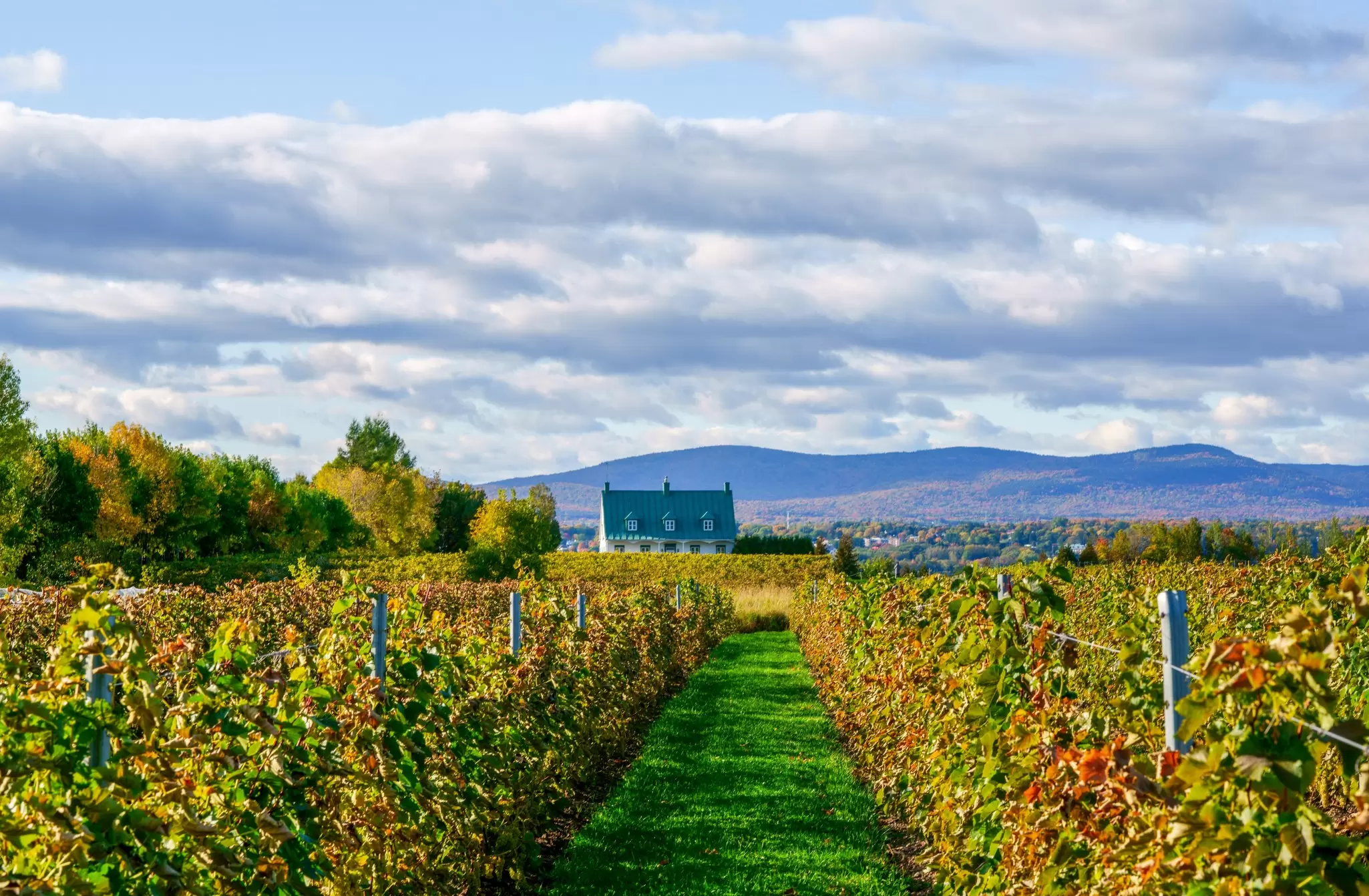
East of Montréal and hugging the US border, the Cantons de l’Est (Eastern Townships) region ferments about 60% of the wine produced in Québec, thanks to unique microclimates that make parts of the area several degrees hotter than neighboring regions. Established in the 1980s, Québec’s wine industry is relatively young – but local creative flair means the bottles here are a force to be reckoned with.
From May to October, local wineries host tours and tastings, and many continue to welcome guests throughout the winter. Taste for yourself on a road trip – there are 25 wineries listed on the Route des Vins wine trail, accessible via seven driving routes ranging from a 32km day trip to a 3-day, 120km-long grand tour.
The Eastern Townships are also filled with breweries, cideries (such as Clos Saragnat, whose owner came up with the brilliant idea of ice ciders) and gin distillers. Cheesemaking is another regional specialty; find out more by following the Têtes Fromagères cheese circuit.
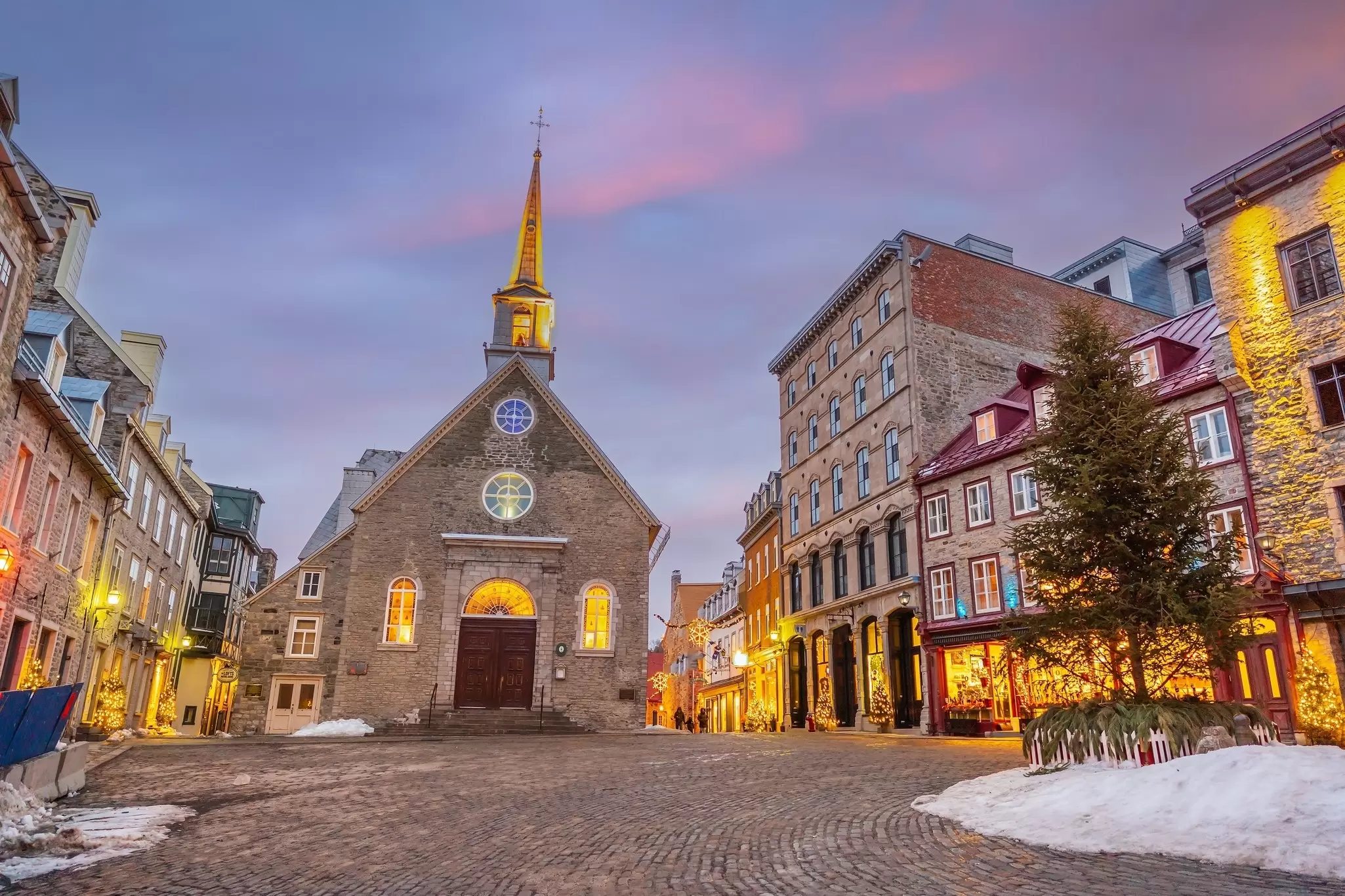
Discover the architecture, history and charm of Old Québec on a 2-hour, 4km-long walking tour of historic landmarks, quiet side streets and Instagram-worthy vistas. From Fontaine de Tourny, follow Rue St-Louis through Port St-Louis, turning right on Côte de la Citadelle. A walking path to the left leads to Terrasse Pierre-Dugua-de-Mons and its postcard-perfect view. Next, take the wooden staircase leading to Terrasse Dufferin, where you can stop for a chocolate-dipped ice cream at Au 1884.
Continue to the Rue du Trésor – an alley lined with art vendors – then head to Basilique-Cathédrale Notre-Dame-de-Québec. From Côte de la Fabrique, turn right on Côte du Palais for a sweet treat at Épicerie Québécoise, then follow Rue Charlevoix past the Monastère des Augustines, a 17th-century monastery turned wellness retreat.
Follow Rue Hamel to Rue des Remparts and take the wooden staircase down to the cobblestone Côte du Colonel-Dambourgès. On Rue St-Paul, have coffee and a pastry at Les Cafés du Soleil, then peruse the high-end galleries along pedestrianized Rue Sault-au-Matelot.
Across Côte de la Montagne is Rue Notre-Dame, with its giant Fresque des Québécois mural. Turn right on Rue Sous-le-fort for the famous Escalier Casse-Cou (Breakneck Steps), then follow Rue du Petit-Champlain to sample goat cheese at Ferme Audet. Take the staircase down to Blvd Champlain to find Umbrella Alley on the left; beyond, the junction of Rue Cul-de-sac and Rue Notre-Dame offers a great photo op of Château Frontenac. Turn right on Rue Sous-le-fort to end at the Batterie-Royale.
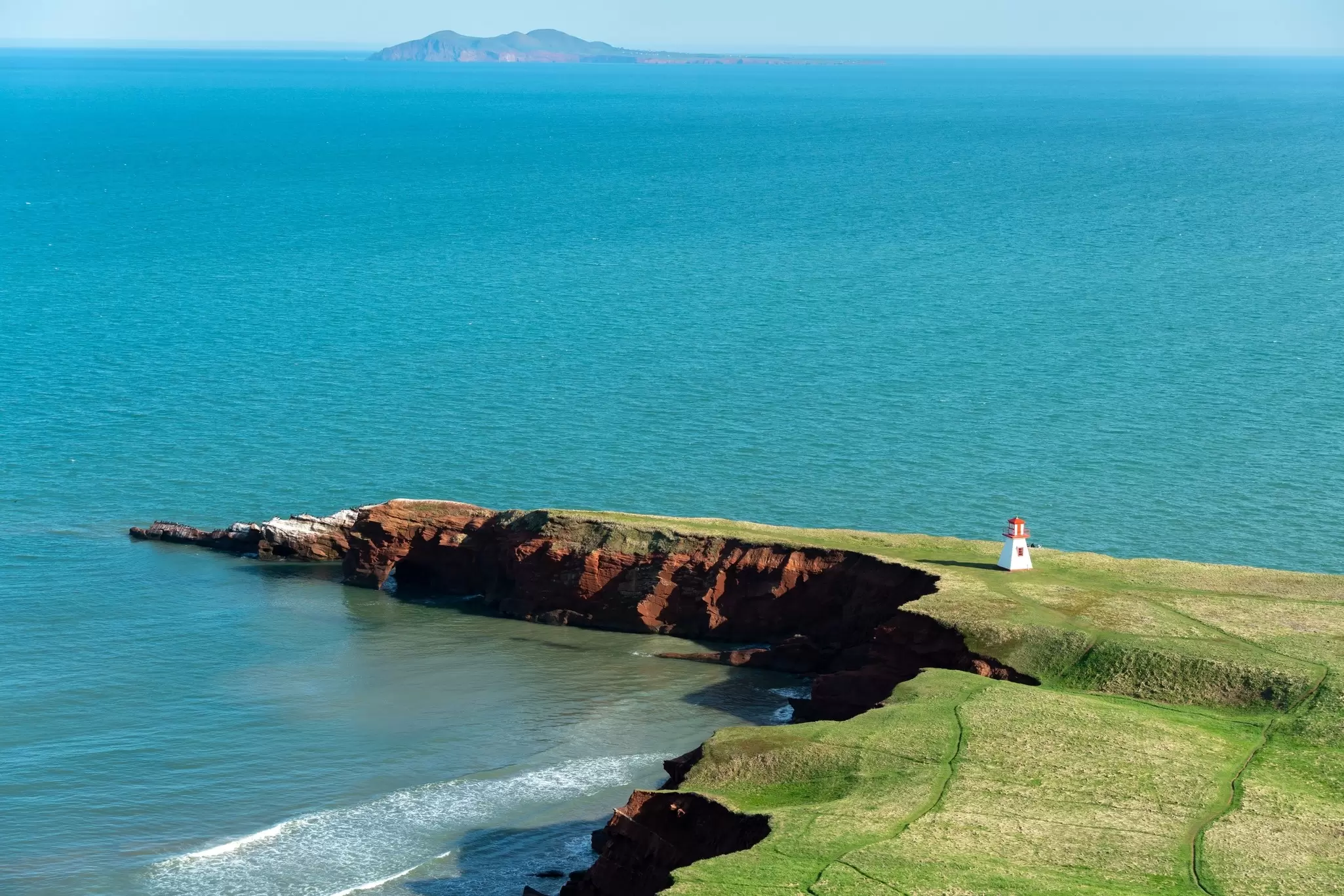
Off Québec’s northeastern tip, the Îles-de-la-Madeleine beckon with sandy beaches, rust-red cliffs, gourmet food, fantastic artisans and cute Québec Maritime-style houses painted in a kaleidoscopic palette. The best part? Few outside the province know about the archipelago, which comprises eight major islands, six of them connected by a 200km highway.
The striking landscapes here have long attracted artists and artisans who draw inspiration – and often their materials – from the place where they live. Drive around the islands to meet these creators and maybe take home some of their wares.
On Havre-aux-Maisons, Sophie Bourgeois and Catherine Chevrier-Turbide blow delicate jellyfish and other sea creatures out of glass at La Méduse. They also offer classes and can even make custom memorial pieces out of crematory ashes.
On Grande-Entrée, the expert ceramicists at La Maison du Potier make striking pottery with locally sourced brown clay (take a peek in the back to see the artisans working their magic). On Havre-Aubert, Atelier Côtier’s artisans make objects such as clocks and lamps out of sand from the islands. They also display a growing collection of colored sands from the world’s beaches.
On L’Étang-du-Nord, Le Flâneur displays and sells zany dolls from a local artist, and serves tea. On Cap-aux-Meules, France Painchaud of Émerance Bijoux makes silver and 14-karat gold jewelry using shells found on the islands’ beaches. Be sure to go upstairs to see more local art, including copper work from Claude Bourque and wooden birds carved by Anthony Bisaillon.
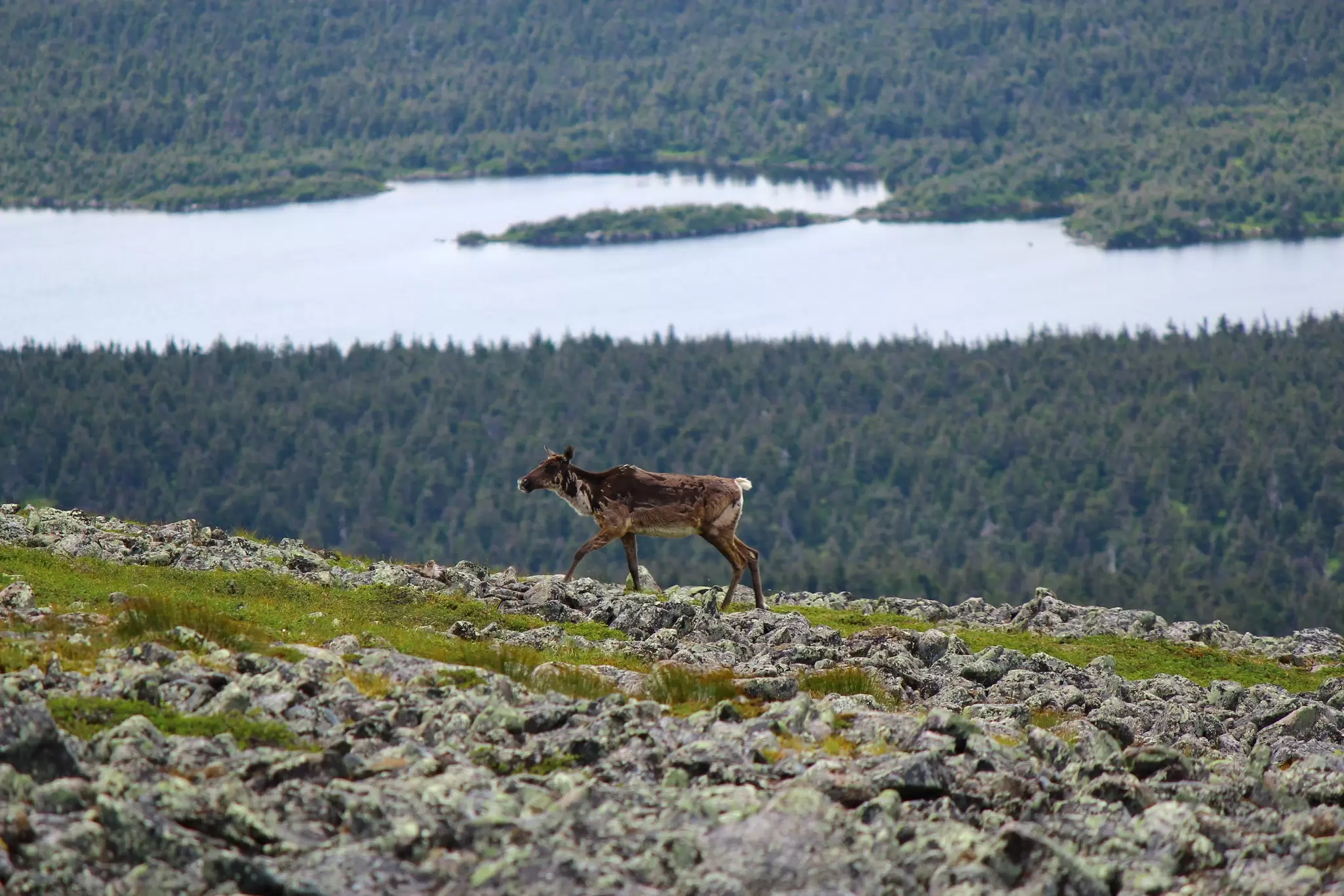
Over in Sépaq, Parc National de la Gaspésie offers the best chance of seeing caribou and moose in the wild in the south of Québec. This provincial park at the confluence of the Chic-Choc and McGerrigle mountain ranges is defined by its rugged peaks, which are cool enough for the caribou in their thick fur coats. Note that visiting doesn’t mean a caribou encounter is a sure thing (there are fewer than 40 living in the park); moose sightings are more common.
The most famous hike in the park is Le Tour-du-Mont-Albert, a challenging day-long trek of 12km or 18km to the summit of Mont Albert, with 850m or 870m of elevation gain depending on which side you tackle. Reached via a hike lasting 1.5 hours, 834m Mont-Ernest-Laforce is a much easier 4.5km climb that offers outstanding 360-degree views.
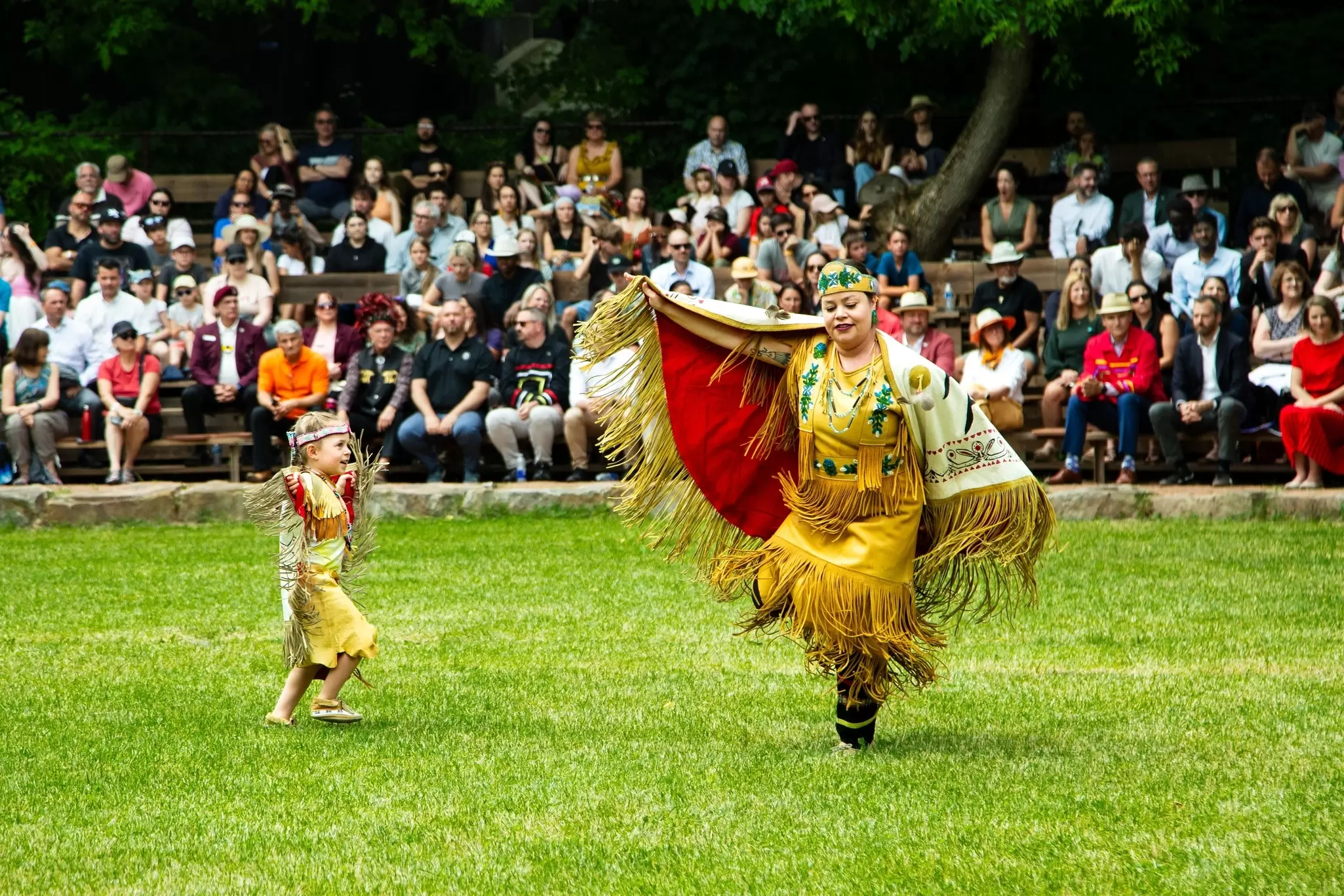
In Québec City’s western suburbs, Wendake is a pretty little borough of about 2000 people. Nearly all of its residents are descended from the Huron-Wendat, Indigenous people who once dominated this region. To explore their heritage, visit the Hôtel-Musée Premières Nations, an impressive modern complex on the wooded banks of the Akiawenrahk River (also known as the St Charles River). The well-curated museum here features interactive maps, artifacts and images illustrating the long history of the Huron-Wendat, the destruction wrought by colonialism, and the current operations of Wendake’s tribal government.
Outside, take the main path to the Ekionkiestha’ National Longhouse, a full-sized replica of the dwellings Huron-Wendat people built in the centuries before European influence (you can even stay the night). Another way to learn about Huron-Wendat culture is to enter the forest at night and let the land itself tell you a story. That’s the idea behind Onhwa’ Lumina, an immersive educational trail that uses recorded voices and sophisticated lighting effects to describe the cosmology of the Huron-Wendat.
Costs in Québec are in line with other parts of eastern Canada. A budget of 100 Canadian dollars ($) per person is a good starting point for a budget trip; expect to spend from $200 per day if you stay in mid-range accommodation. Here are some typical costs for a trip to Québec.
A double room at Hôtel AtypiQ in Québec City: around $165
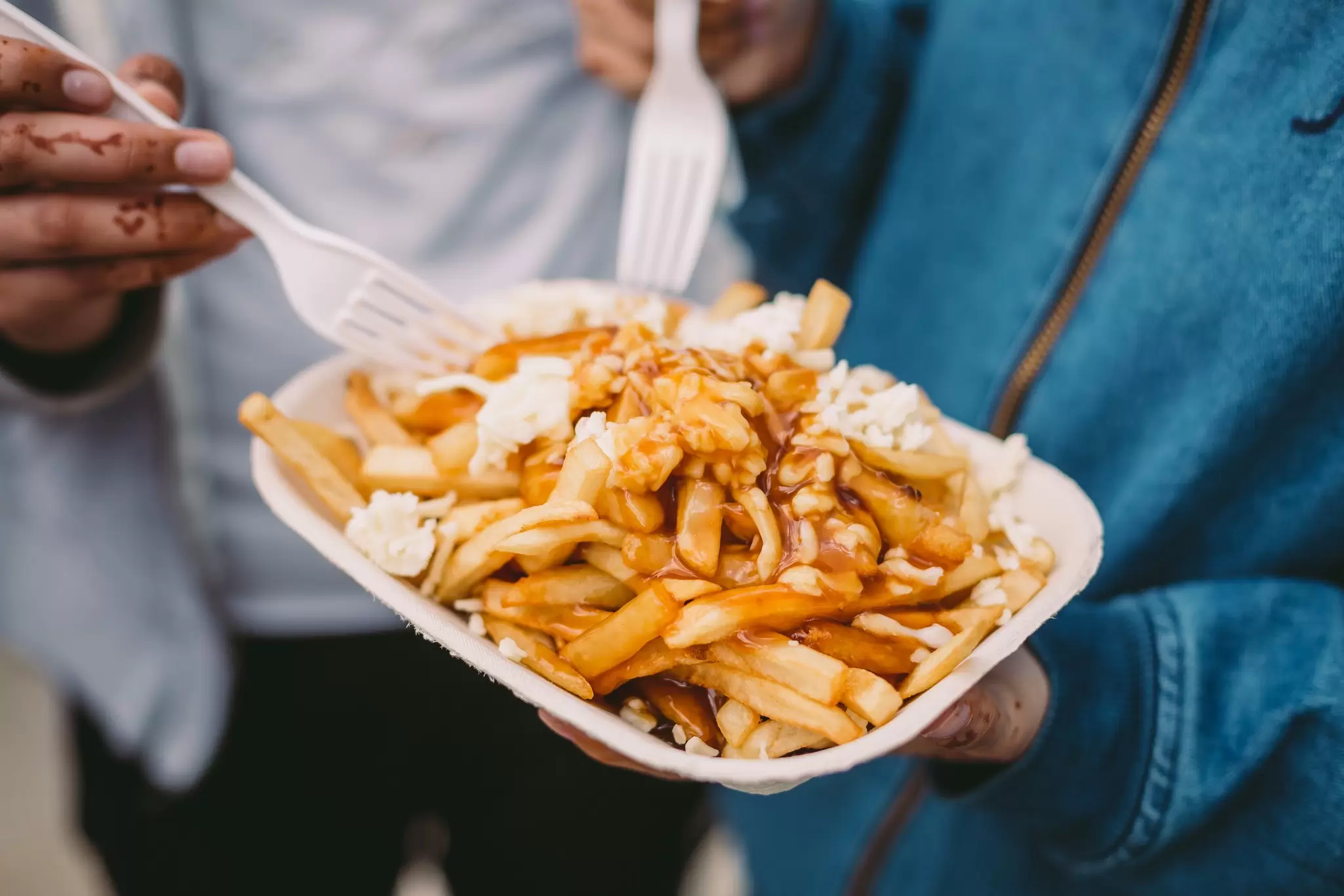
Poutine at a casse-croûte (roadside snack bar): $15
Smoked-meat sandwich at Schwartz’s in Montréal: $17
One-day adult lift pass at the Mont Tremblant Ski Resort: from $148
One-way VIA Rail ticket between Montréal and Québec City: from $40
Entry ticket to Parc National de la Gaspésie: $10.30
Adult admission to the Hôtel-Musée Premières Nations museum: $20
This article was adapted from Lonely Planet’s Canada guidebook.
Explore related stories