Jul 11, 20268 min read
A Guide to Montpellier, FranceJul 11, 2026
8 MIN READ

Writer
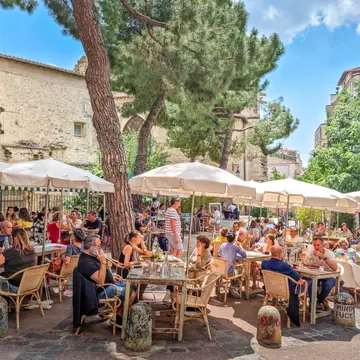
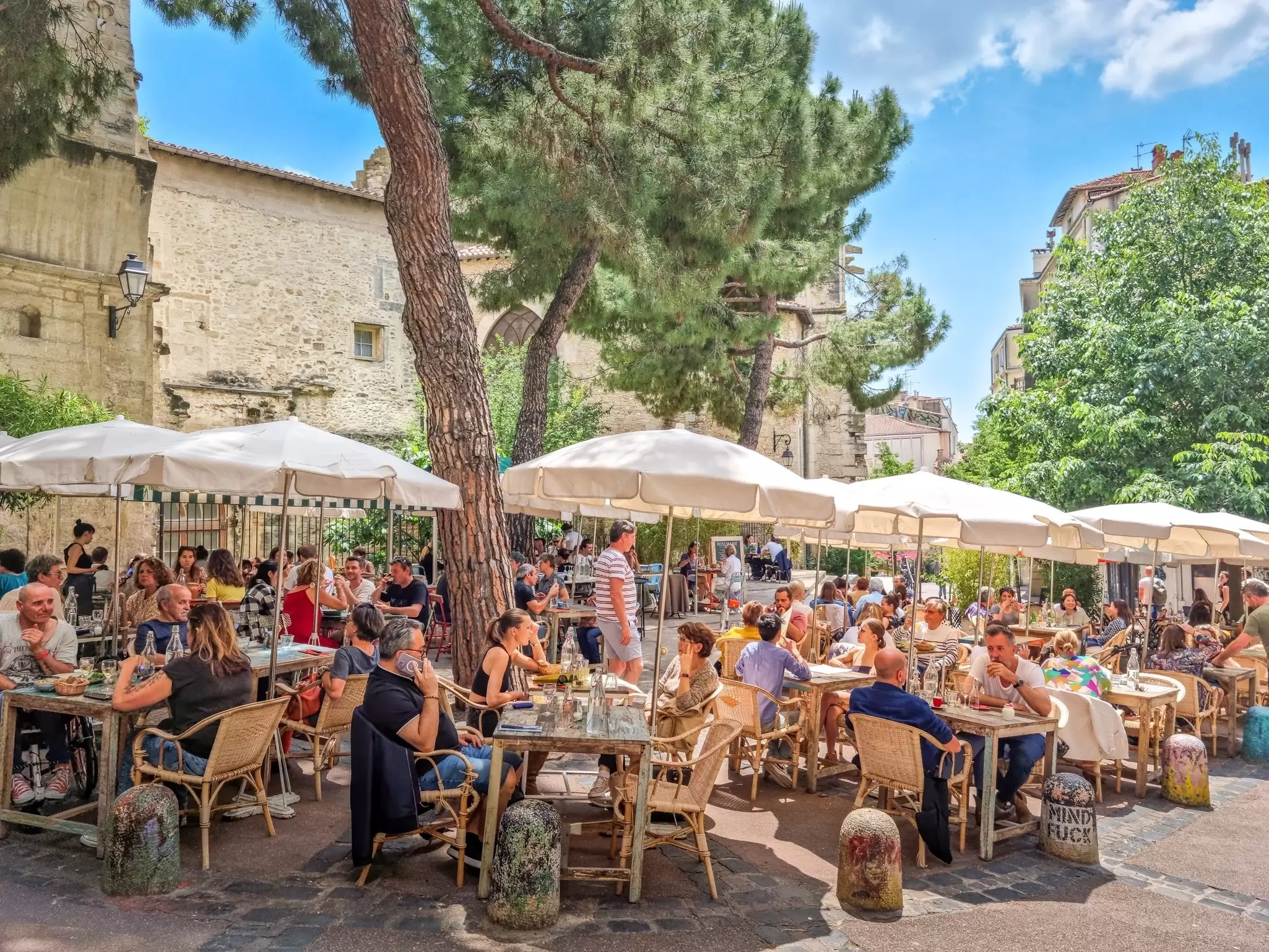
An outdoor cafe in Montpellier, France. Travel-Fr/Shutterstock
Writer
Highlights
Lonely Planet writer Paul Stafford guides you through Montpellier, France.
Visit in spring or early fall; the city rewards four leisurely days.
Art lovers should visit the Musée Fabre, MO.CO. or the outsider-art Musée d'Art Brut.
Ride a Vélomagg bike to Palavas-les-Flots beaches or the flamingo-rich Maison de la Nature.
Lonely Planet may earn a commission from affiliate links on our site. All recommendations and reviews reflect our own independent opinions.
The southern French city of Montpellier certainly feels youthful, with its creative energy and student-centered nightlife. Yet its roots date back to the Middle Ages, with the Université de Montpellier, established by papal bull in 1289, shaping the city’s youthful character for centuries. Its medical school is Europe’s oldest.
Montpellier is perhaps best known for its outstanding art and architecture. Although its hôtels particuliers (exquisite aristocratic mansions dotted around the city center) largely remain off-limits to visitors, Montpellier’s art museums showcase some of the finest collections in southern France.
The city is also a great place to dine out. With the Mediterranean on one side, rich farmland all around and the mountains of Haut Languedoc not far away, many intriguing ingredients find their way their way onto local menus. Hearty stews, delectable seafood and seasonal vegetables all get a fresh twist at inventive local bistros.
As you craft your own trip, our guide has everything you need to know about visiting Montpellier, France.
Spring, when the surrounding landscape is in full bloom, and early fall, when the grapes are being harvested, are the best times to visit Montpellier. Warm, calm weather is the norm during these months, without the cloying heat of summer or the chill of winter. Music lovers might want to consider a trip in late September, when the Internationales de la Guitare festival celebrates every type of guitar-inflected music through a series of shows and concerts.
Like much of low-lying southern France, the summers can get extremely hot; during this time many French businesses shut up shop as everybody heads on vacation. Outside of the Christmas season, winter is the best time to visit for budget-friendly hotel prices.
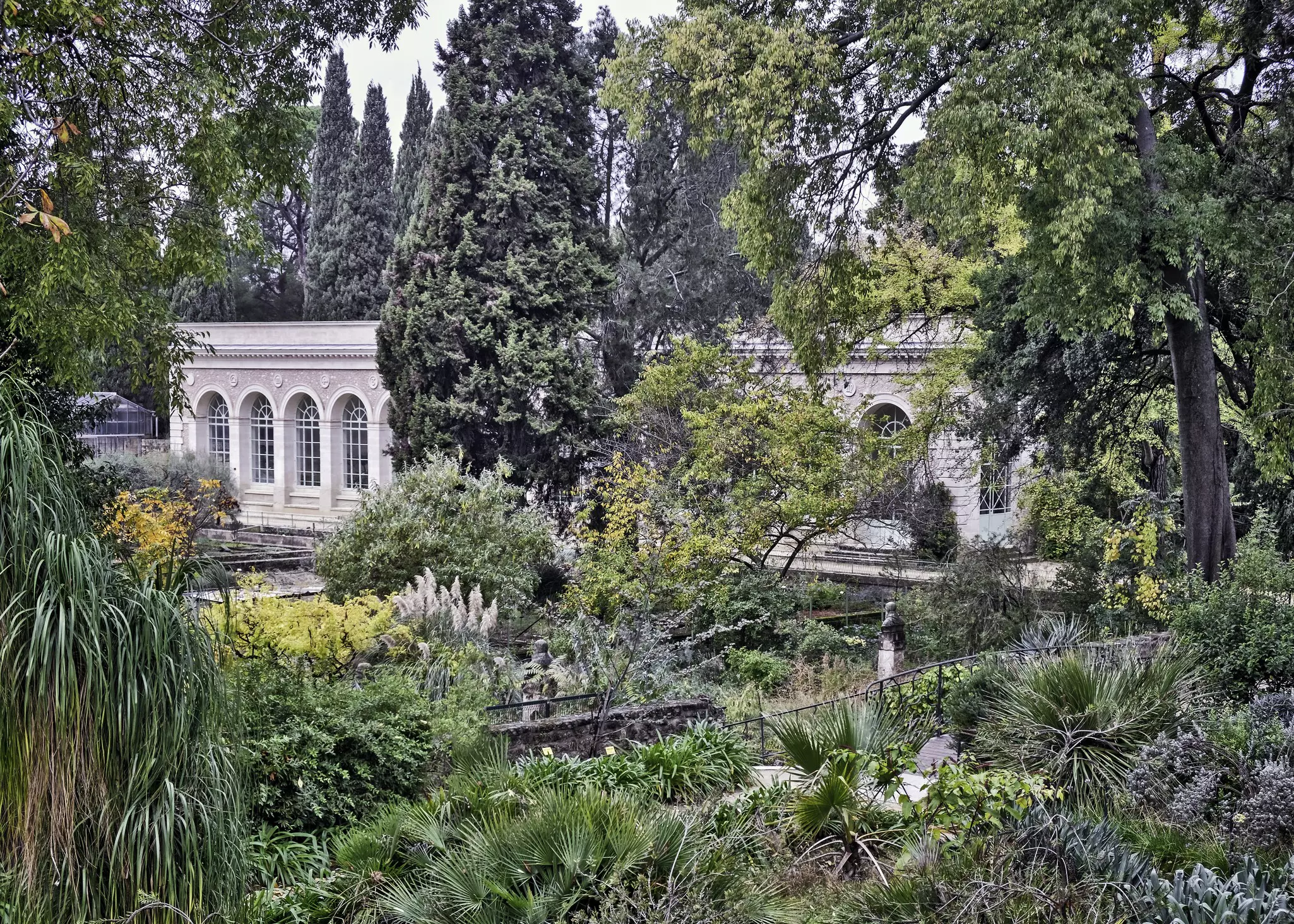
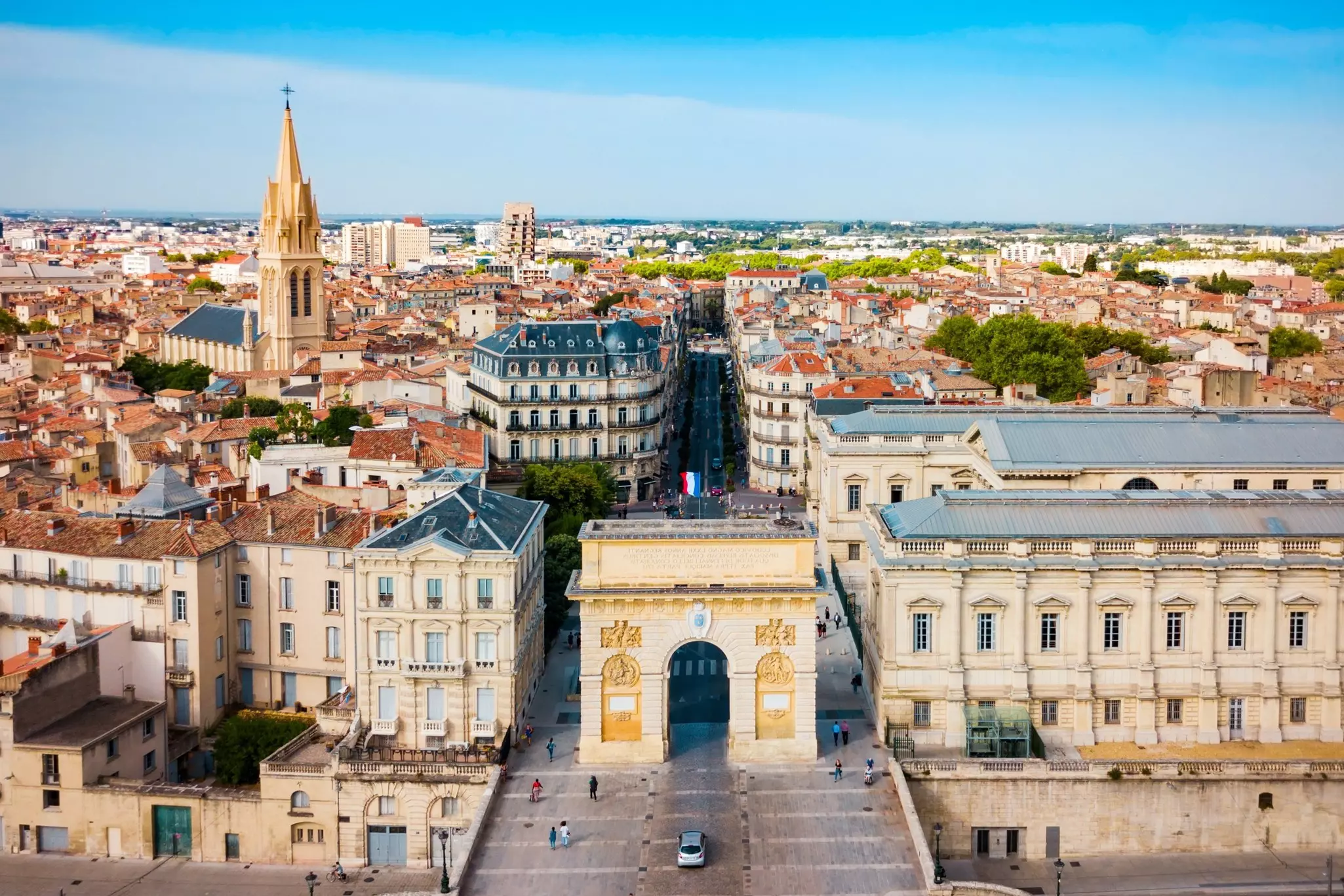
A weekend in Montpellier would be sufficient to visit one or two museums and get a feel for its creative life and nightlife. Yet to properly appreciate the city’s contrasting laidback side, give yourself 4 days – to enjoy a leisurely lunch in a shaded square, explore the Jardin des Plantes and wander past the city’s own Arc de Triomphe.
Montpellier’s transport connections make it a good choice for a longer stay if you want to explore further in the region. From here, you can take day trips to attractions in nearby towns such as the Roman ruins of Nîmes and the canals and oyster farms around Sète.
Montpellier has a compact city center, much of which is pedestrian-only or restricted to traffic. Additionally, there’s an extensive, four-route tram network; the Vélomagg bike-share scheme; and trains that connect Saint-Roch station, immediately south of the center, to cities throughout France and even Belgium.
Direct flights link Montpellier airport to destinations in the UK, Italy, Denmark, the Netherlands, Algeria and Morocco, among other nations. The 620 bus goes from the airport to Place de l’Europe in central Montpellier.
Driving is the one mode that’s tricky in Montpellier, as city center parking is hard to come by. Parking garages, although often pricey for longer stays, are the best option.
For people with restricted mobility, Montpellier’s heavily pedestrianized core, wheelchair-friendly trams and disability-conscious infrastructure in most of the main museums and public spaces make it a very accessible city. Although the center isn’t flat, inclines are usually gentle.
With so many great things to do in Montpellier, it’s surprising to think that the city is largely overlooked by most visitors, who head instead for Marseille, Toulouse or Nice. As such, you’ll rarely find its attractions overcrowded.
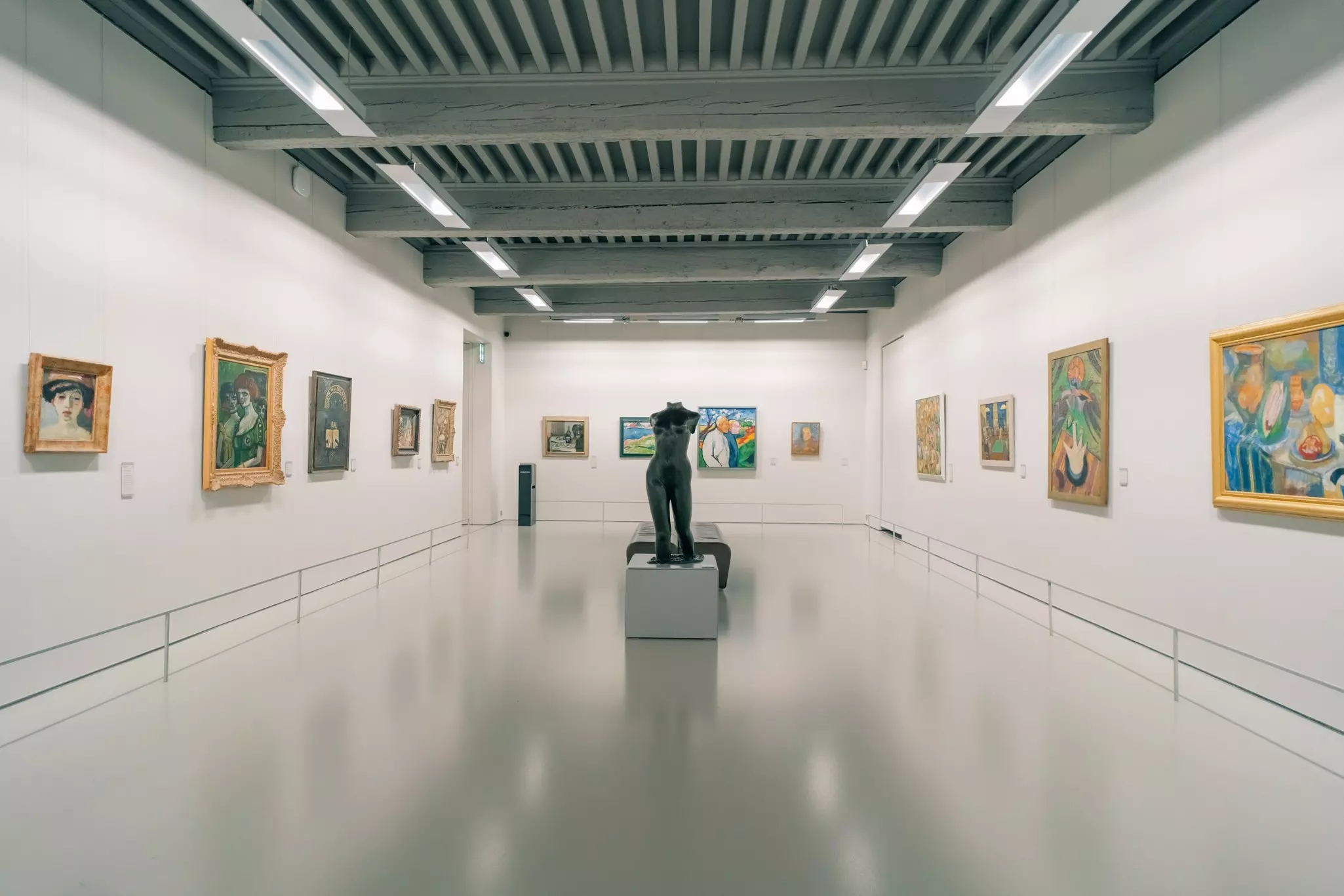
If you visit only one gallery during your trip to Montpellier, make it the Musée Fabre. Founded in 1825, the collection covers the history of art between the 16th century and the present day. In over 40 rooms, visitors will find an exceptional range of artworks by masters such as Peter Paul Rubens, Gustave Courbet, Claude Monet, Édouard Manet, Sonia Delaunay and Henri Matisse, among many others.
Continue exploring Montpellier’s creative scene at arts institution MO.CO., which encompasses an art school and public galleries. The main gallery space, on rue de la République, mounts provocative exhibitions from leading names in contemporary art, while the more central MO.CO. Panacée showcases the work of local artists. If you can, spare some time for the overlooked Musée d’Art Brut, where fascinating outsider art is displayed in the former home of artist Fernand Michel.
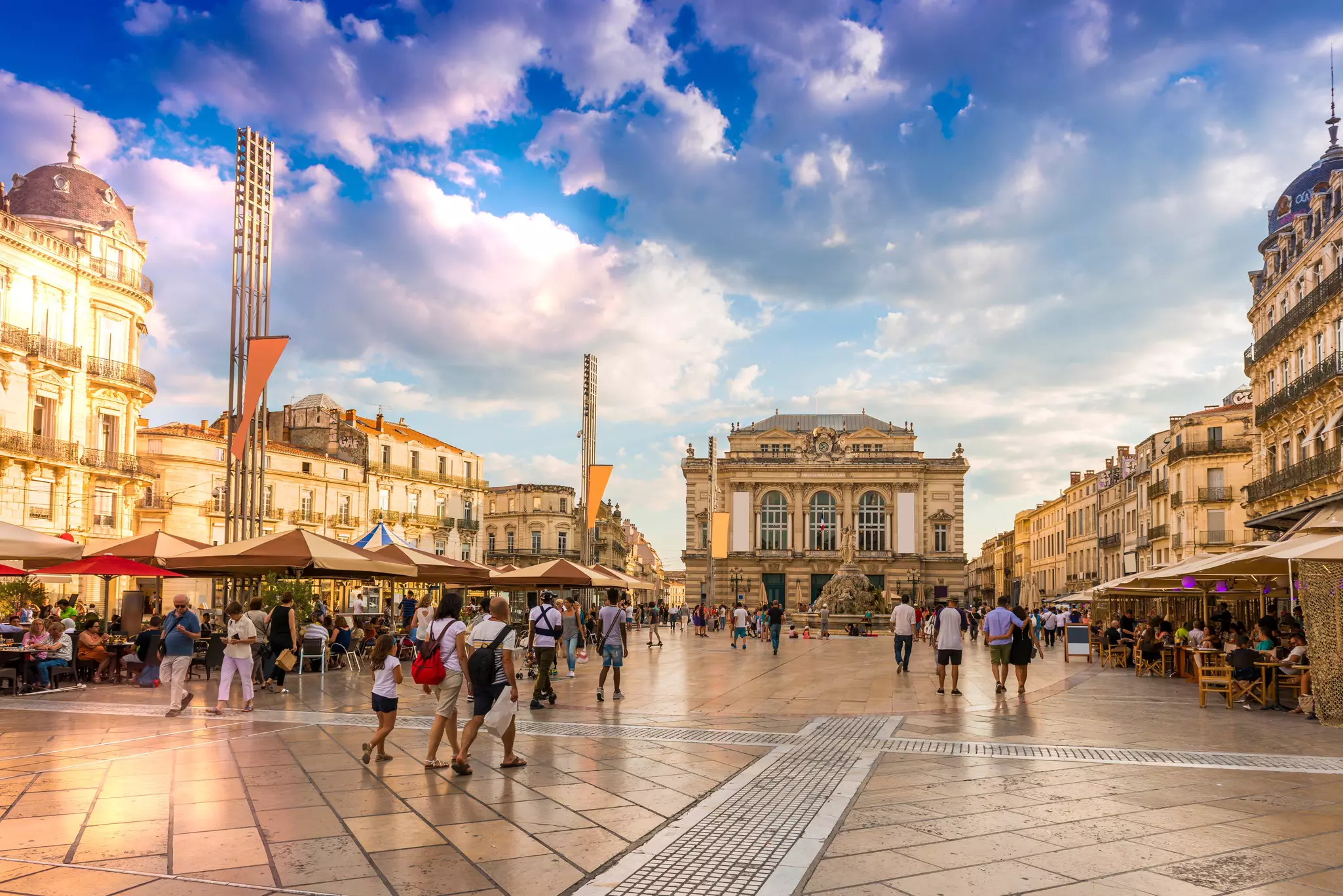
Public life in French cities happens in its places – large, often pedestrianized squares that are particularly impressive in Montpellier. Montpellier’s main square is place de la Comédie, punctuated by a central fountain featuring the Three Graces (youth, humor and elegance). Due to the place’s oval shape, it’s known to locals as "l’Oeuf" (the egg). Cafes line the square, as they do in virtually all the city’s places.
The exception is place Royale du Peyrou, which faces Montpellier’s own Arc de Triomphe. Pass through the 52m-high arch to reach a tree-lined square frequented by locals walking their dogs or playing games of pétanque. On the opposite side of the park is the Château d’Eau, a water tower connected to the 18th-century St-Clémont Aqueduct. Nearby is the 16th-century Jardin des Plantes, France’s oldest botanical garden.
The sheer range of produce local to Montpellier makes for varied, exciting and simply delicious cuisine. Head to the central food market, Halles Castellane, to try oysters from Bouzigues, creamy goat cheeses from the Cévennes, and picpoul white wines from the vineyards around Pinet to the south. Taste it all come together at Marché du Lez, where dozens of food trucks, bars and fine-dining restaurants have transformed a series of old agricultural buildings beside the River Lez into a humming place of youth culture and inventive gastronomy.
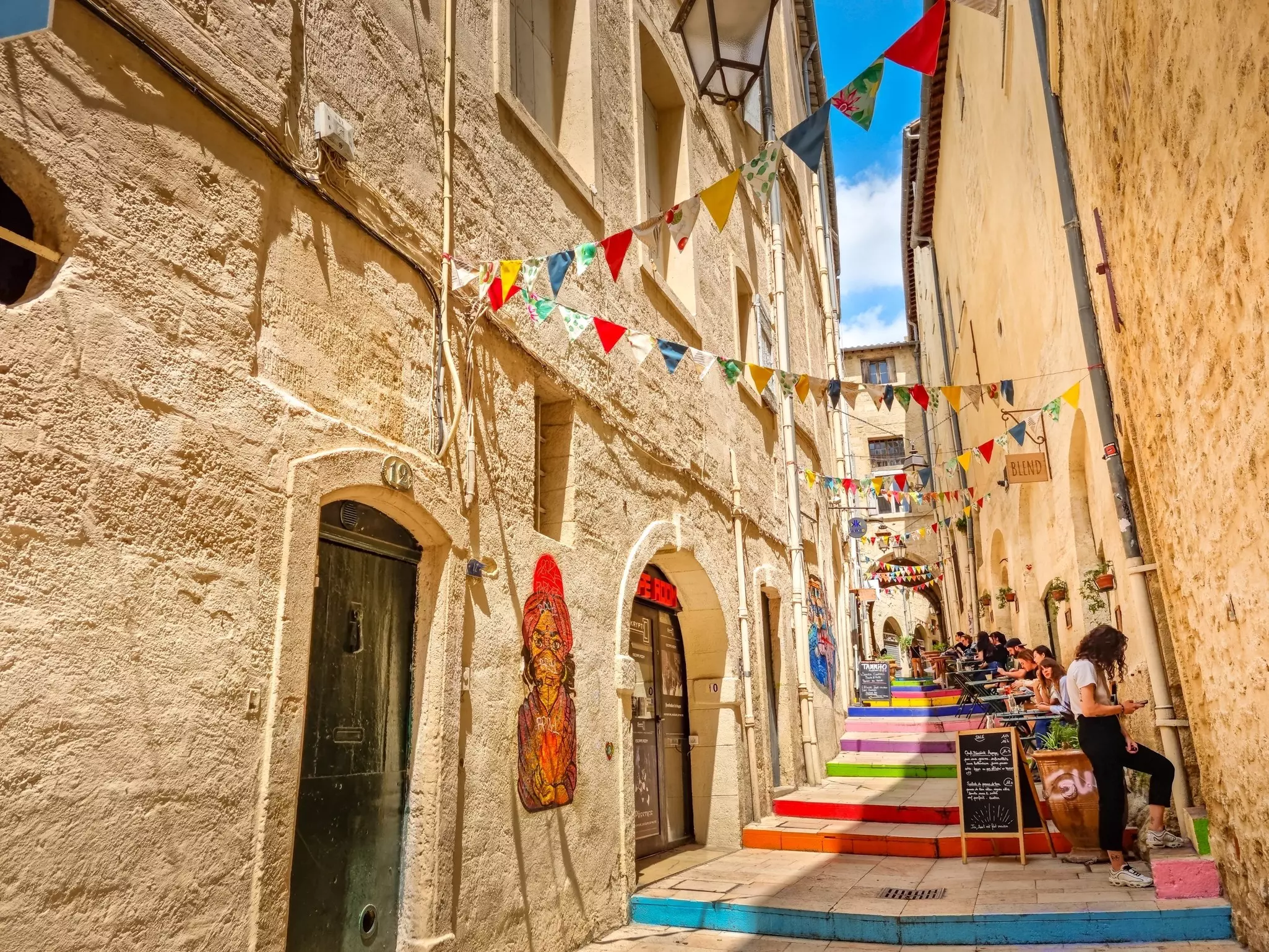
Get close to the city’s creative legacy in buildings that have survived its thousand years of history. Most revered are the hôtels particuliers, ornate townhouses built between the late medieval period and 19th century by wealthy merchants and nobles. Hôtel de Varennes is one of the few open to visitors, albeit only the entrance hall and the courtyard, with its ribbed vaulted ceilings. Elsewhere, La Tour de la Babote is a rare remaining vestige of the city’s original 12th-century fortifications. The evolution of design continues in the city’s striking modern buildings – in particular, the white, pineapple-shaped L’arbre Blanc by Sou Fujimoto, built in 2019.
Sandy beaches hug the Mediterranean, only 11km away from central Montpellier. A popular activity involves hiring a Vélomagg bike in the center and pedaling the public paths alongside the River Lez, heading south, to emerge at the pretty seaside town of Palavas-les-Flots. Around the port there are numerous water-sports companies, such as Samy Jet Skis, that offer equipment rentals.
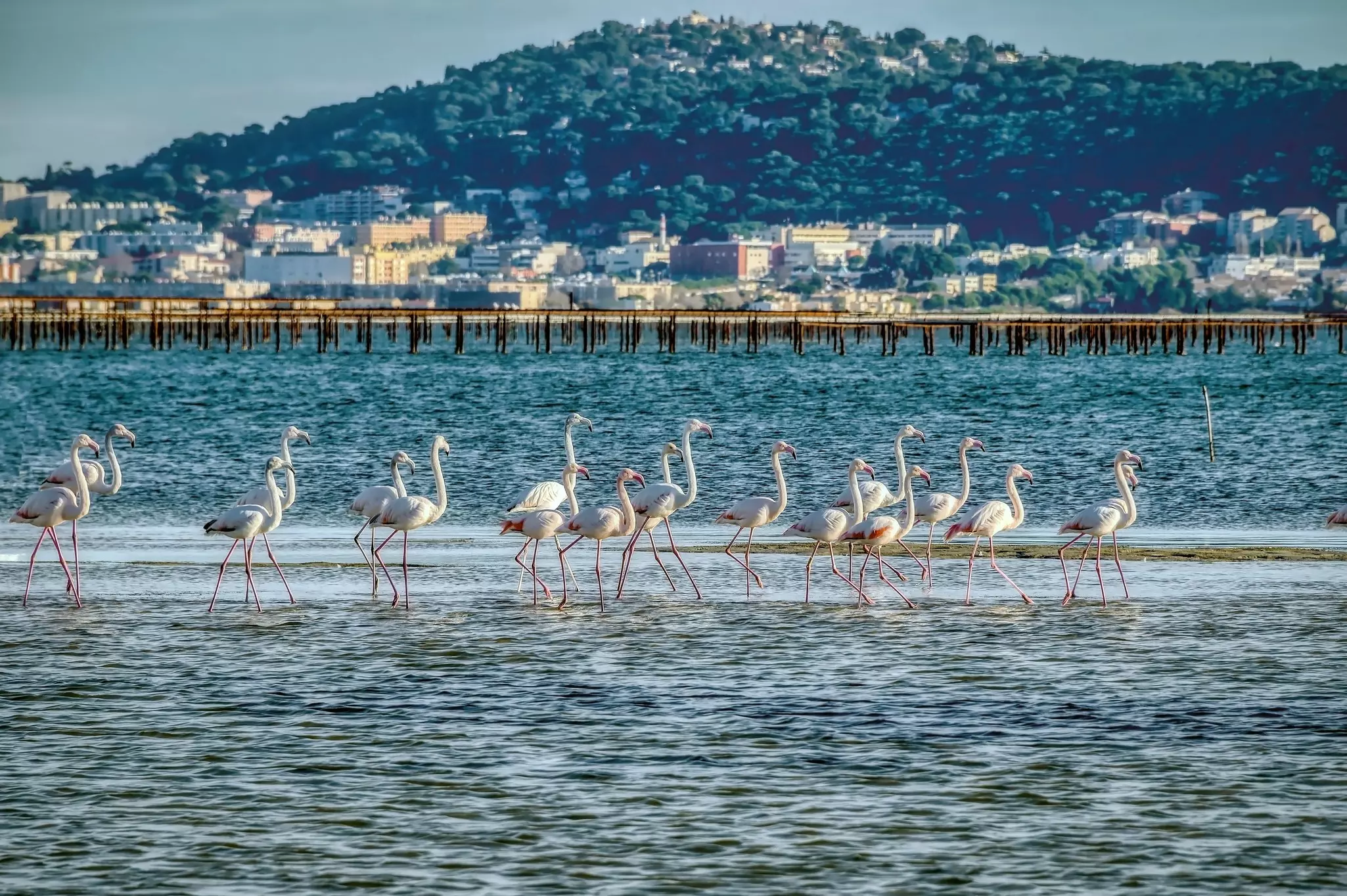
Montpellier is surrounded by some fascinating natural spaces. Before reaching the Mediterranean, the River Lez passes through a watery landscape of saltwater lagoons known as étangs – havens for wildlife. I enjoy cycling a couple of kilometers from the center to Maison de la Nature, where I can wander the peaceful boardwalks to get a better look at the flocks of flamingoes, ducks, egrets and (from spring to early fall) white storks, who make their giant nests atop electricity pylons.
At a bare minimum, budget around 60 euros per day in Montpellier. This will get you a bunk in one of the city’s few hostels, at least two good meals and entry to a gallery or other attraction. As with all travel, the bigger the budget, the greater the luxury you can afford. Still, Montpellier’s large student population ensures that you can always find good-value places to eat and drink. Card payments are now universal.
Hostel dorm: €25–40
Standard hotel room: €70–120
Vélomagg bike rental: €0.50 per hour
Single tram ticket: €1.90
Coffee in the city center: €3–5
Apéro (pre-dinner drink) from a student-friendly bar, like Le Rebuffy: €3–6
Draft beer: €5–7
Pizza or sandwich on the south side of place de la Comédie: €6–13
Simple dinner: €15–25 per person
Good-quality three-course dinner: €50–60 per person
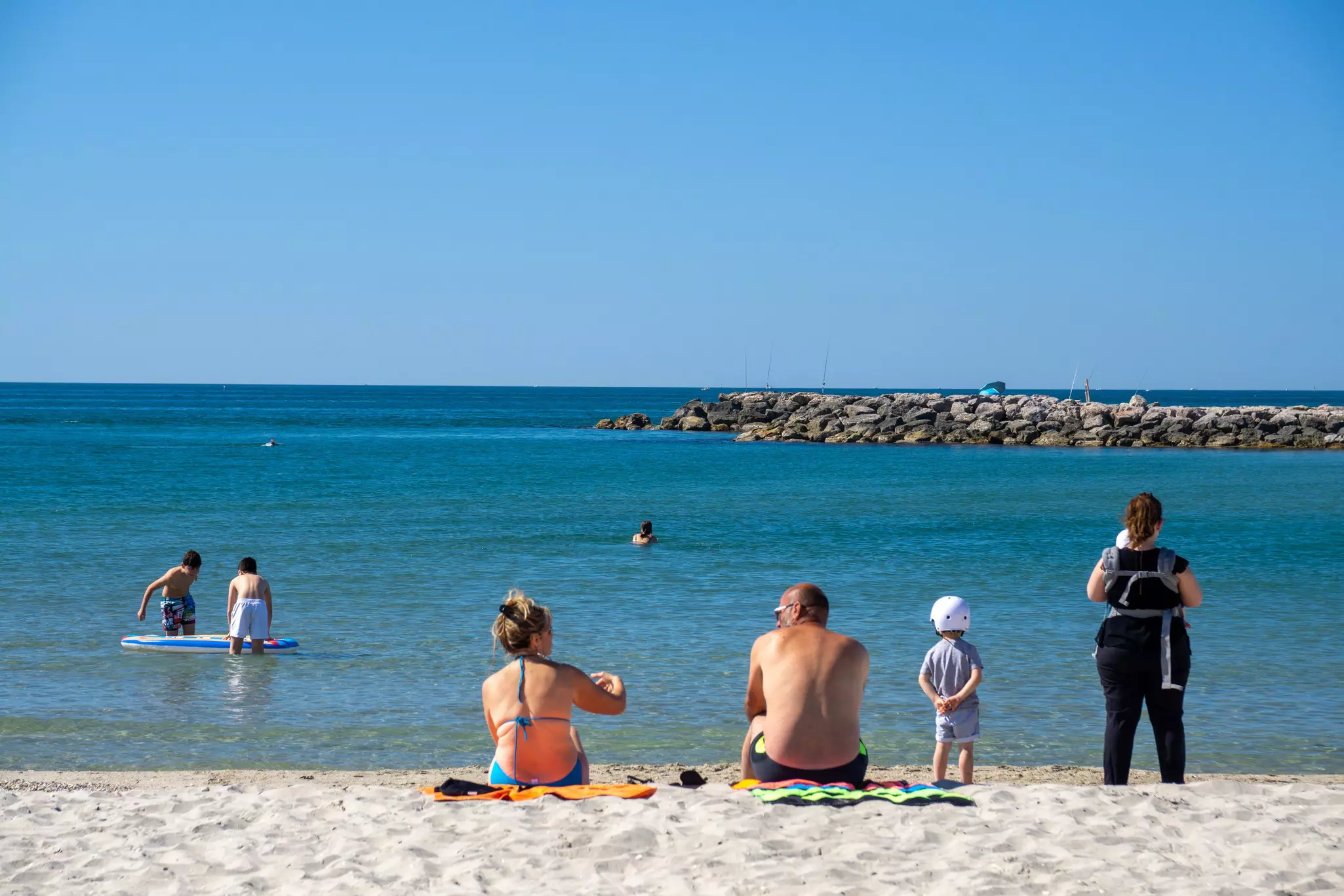
Montpellier is located slightly inland from the Mediterranean coast, with beaches about 11km away. The beaches at Palavas-les-Flots are the most popular, while pebble-strewn Plage du Pilou and Plage du Grand Travers are quieter alternatives.
If you’re visiting Montpellier by train, it’s worth checking out one of the many great hotels and hostels located around Montpellier Saint-Roch, the main station. Great options include JOST Hotel, Hôtel Eurociel Centre Comédie and EKLO.
For finer dining establishments, especially those listed in the Michelin Guide, we recommend making dinner reservations ahead of time. The best restaurants are typically only open for 2 or 3 hours in the evening – a narrow window that rewards advance planning.
Explore related stories