May 27, 20265 min read
The 7 Best Beaches on CuraçaoSponsored by
May 11, 2026
6 MIN READ

Writer
Porto Mari, a beach in Curaçao. Simon Dannhauer/Shutterstock

Writer
The island of Curaçao delivers the whole package: a bustling capital city with a flourishing art and culture scene, a striking coastline peppered with sandy inlet beaches and spectacular underwater excursions.
Serving as the island’s beating heart, the capital, Willemstad, melds the old and the new. Contemporary street-art sprawls across the walls of 17th- and 18th-century Dutch buildings, while a distinctly hip energy manifests in creative bars and restaurants.
Outside of the city, Curaçao’s wild side delivers a big dose of adventure for those who want to see the Caribbean at its most magnificent. Its natural beauty is distinct from all its neighbors, and it continues into the underwater world off its shores.
Whether you’re climbing Christoffel Mountain, enjoying the sea spray at Shete Boka or diving among the reefs encircling the island, you’ll arrive at the same conclusion – there’s no place quite like Curaçao. Here's how to make the most of your vacation.
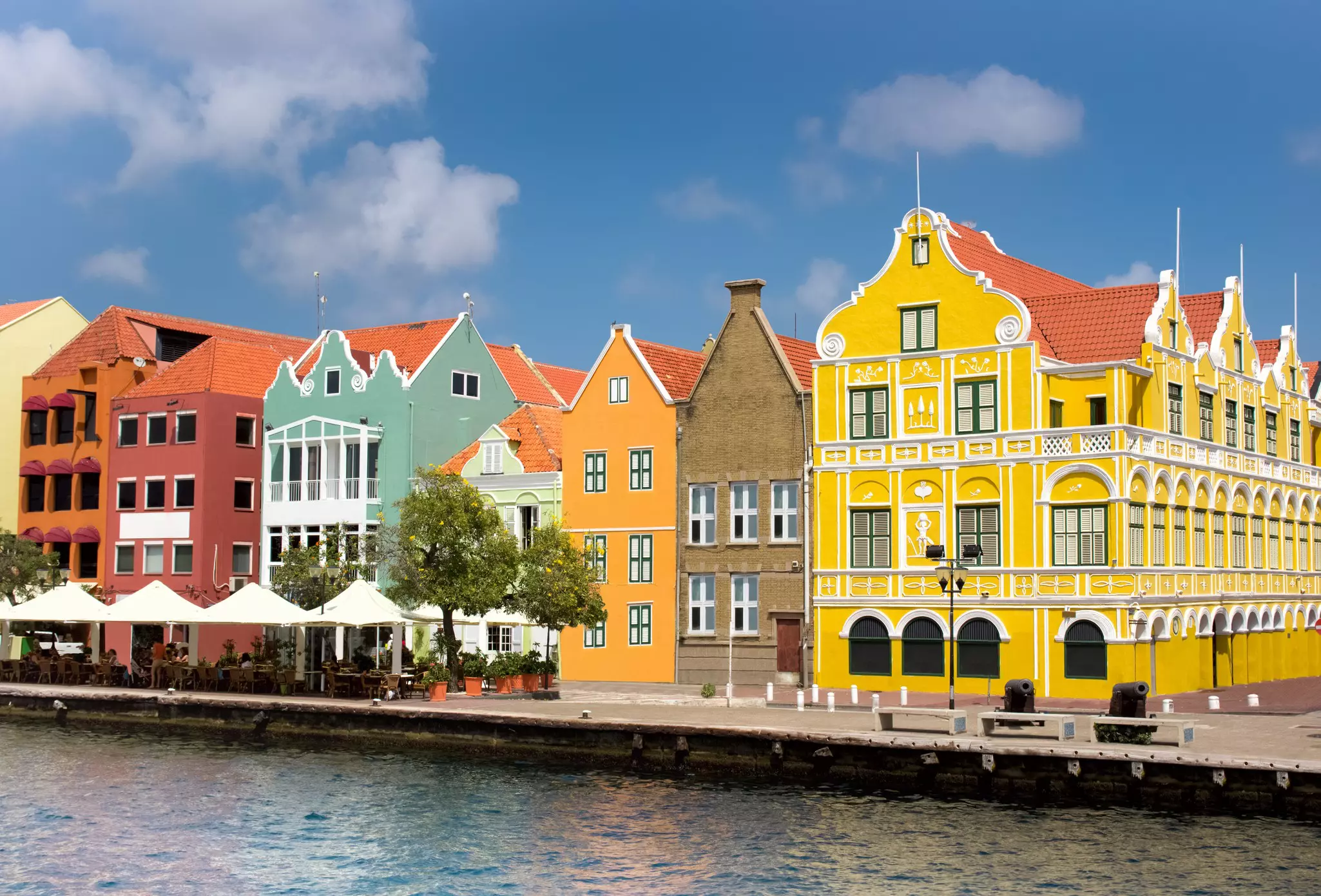
Wandering the capital of Willemstad feels like a treasure hunt thanks to the incredible street art around every corner, and neighborhoods that each have their own unique personalities. Downtown Willemstad was deemed a UNESCO World Heritage Site in 1997, and it’s home to nearly 800 official historical monuments strewn across the districts of Otrobanda, Punda, Scharloo and Pietermaai.
For a taste of contemporary Curaçao, make the quick drive over to Landhuis Bloemhof. This former plantation house was once worked by enslaved people, but it has been converted into a cultural center highlighting the talent of Curaçao artists. Take in the exhibition in the main gallery, wander the trails behind the house for pop-up art installations, or walk over to the impressive Cathedral Labyrinth of Thorns – a giant labyrinth/gallery made of bush thorns from the acacia tortuosa.
Then, to experience the eclectic energy of Willemstad at night, make your way to the rejuvenated neighborhood of Pietermaai, a candy-colored sector of the city that comes alive when the sun goes down. Try the best of Asian–Caribbean fusion cuisine at Ginger, or elevated international fare with a Curaçao twist at Kome (which means "eat" in Papamientu, a language spoken locally).
End your day at the posh Saint Tropez Ocean Club and sip cocktails on the pool deck. If you’re ready to grab a partner and dance, head to the Cuba-inspired Mundo Bizarro for live music and a dance party that spills onto the street.
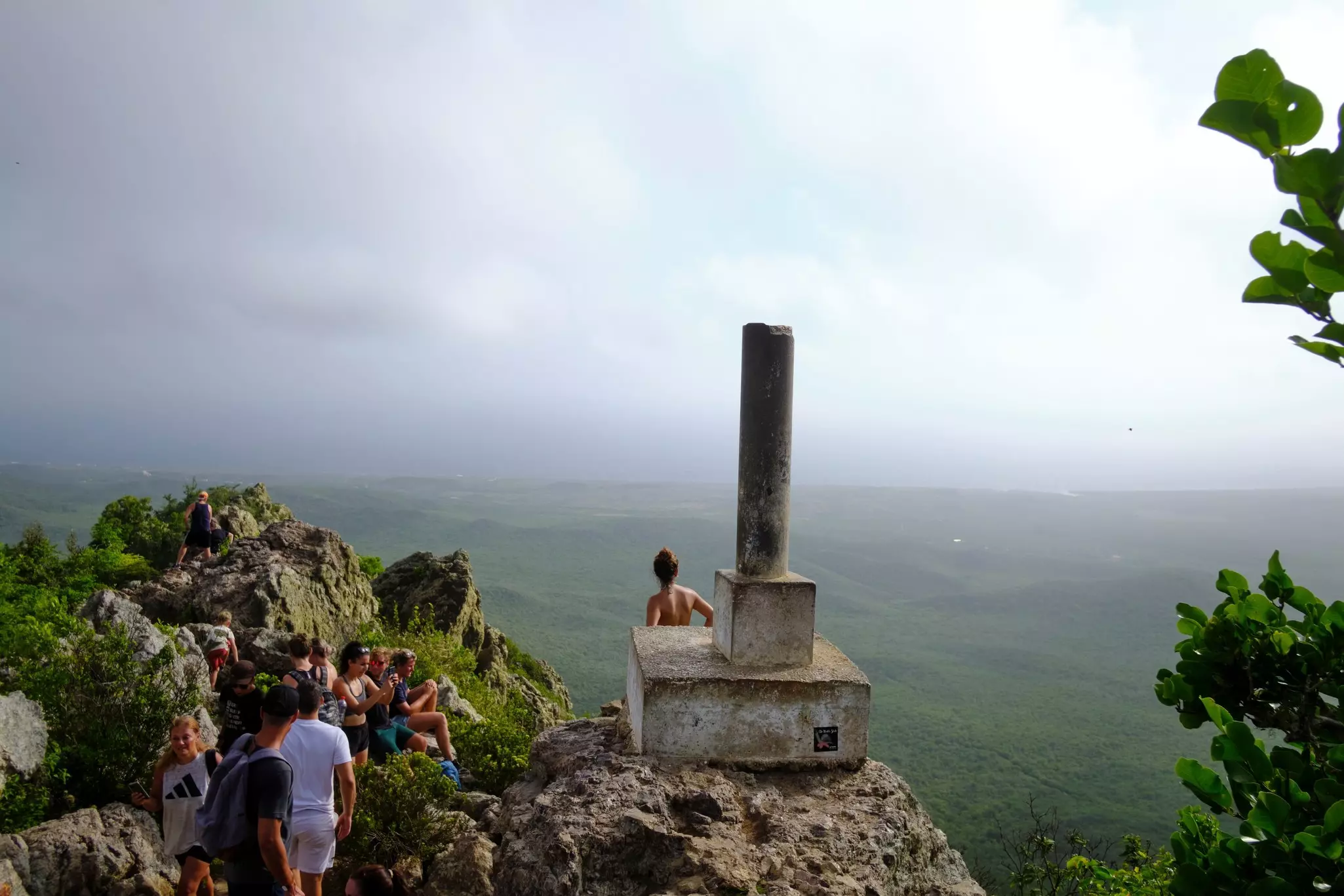
Outside of the city, you’ll find Curaçao’s vast wilderness, a hilly, green expanse rimmed by rocky cliff lines, pocket inlets and great beaches. A large section of Westpunt is occupied by the island’s two national parks, each delivering a unique outdoor experience.
Centered around Christoffel Mountain, Christoffel National Park encompasses the Savonet Plantation – formerly a large-scale agricultural and livestock plantation. It has since returned to a mostly untouched landscape teeming with wildlife such as white-tailed deer, barn owls, hummingbirds, blaublau lizards and iguanas. One of the most unique features of the park is its mountainside plant life, a florid mix of bromeliads, orchids and hanging lichen.
Shete Boka National Park is the yang to Christoffel’s yin, a dazzling stretch of coastline that puts the power of Curaçao’s sea on full display. The area is a protected nesting site for hawksbill, loggerhead and green turtles, with local researchers monitoring the area year-round.
Planning tip: Accessing Christoffel takes a bit of planning, as the park closes at 2pm, with last admittance at 1:30pm (a measure taken to avoid heat-related injuries). If you plan on making the hike up Christoffel Mountain or driving the mountainside loop, the rangers require that you arrive prior to 10am.
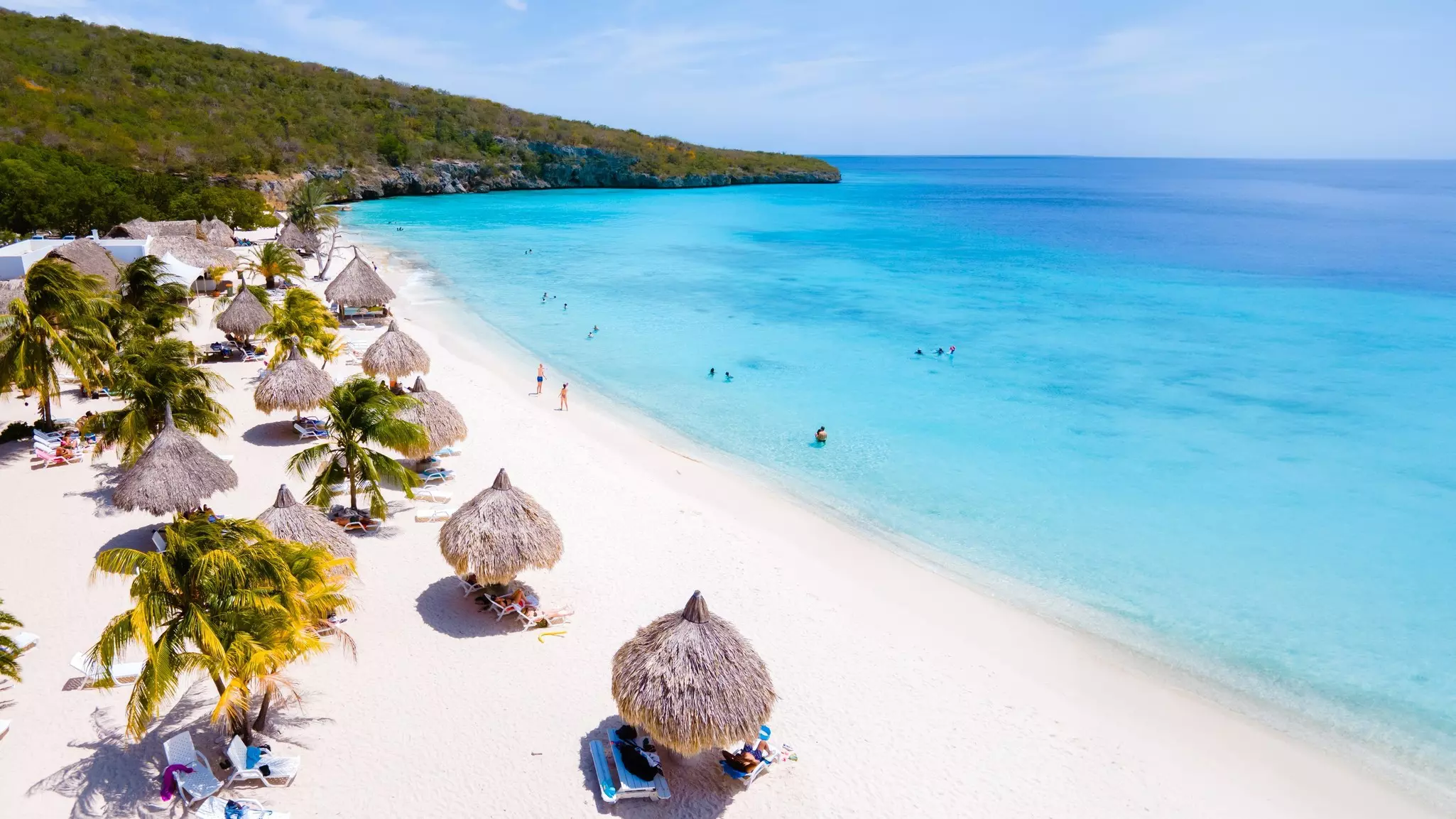
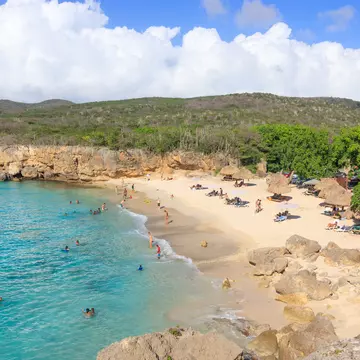
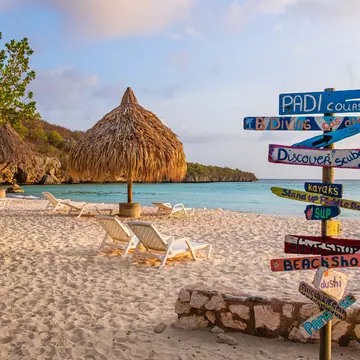
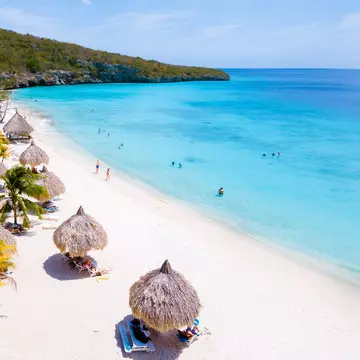
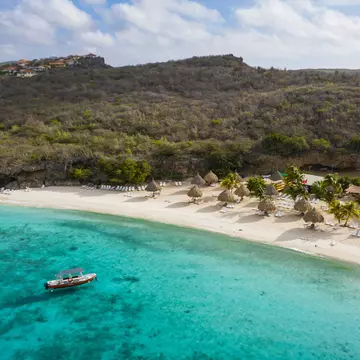
Hemmed in by dramatic coralstone cliffs, Curaçao’s beaches are refreshing tropical getaways with cozy, intimate atmospheres, and each one feels like its own secret. They vary in size and amenities, ranging from rustic to fully kitted out.
Cas Abao is the Goldilocks of Curaçao beaches – not too big and not too small, home to a sparkling sand/water combo and a restaurant to sustain you during your visit. Playa Porto Mari takes amenities up a notch with a beach shop, showers, lockers and a more robust restaurant.
Meanwhile, Curaçao’s south coast is full of curated beach clubs that offer all the amenities, perfect for families looking for a luxe day on the sand. Mambo Beach is a small mall "boulevard" full of shops and restaurants overlooking the beach itself. Access the sands via the area’s beach clubs: Bonita Beach Club, Madero Ocean Club, Riléks Beach Bar and Wet & Wild (Mambo’s biggest nightlife spot). Loungers and cabanas are available for rent, and each club features its own restaurant/bar.
A quick 15-minute drive down the road will take you to Jan Thiel Beach and Papagayo Beach Club. The set-up is similar to Mambo in that the beach is paid access, but this area feels a bit more low-key, trading shops and foot traffic for a smattering of restaurants.
If you’re looking to leave the resort area behind, keep heading south to Caracasbaai, a distinctly nautical sliver of land near Spaanse Water and Santa Barbara. Here you’ll find an active marina, from which the boats to Klein Curaçao depart, a charming little pier, and a quiet, pebbly beach with good snorkeling.
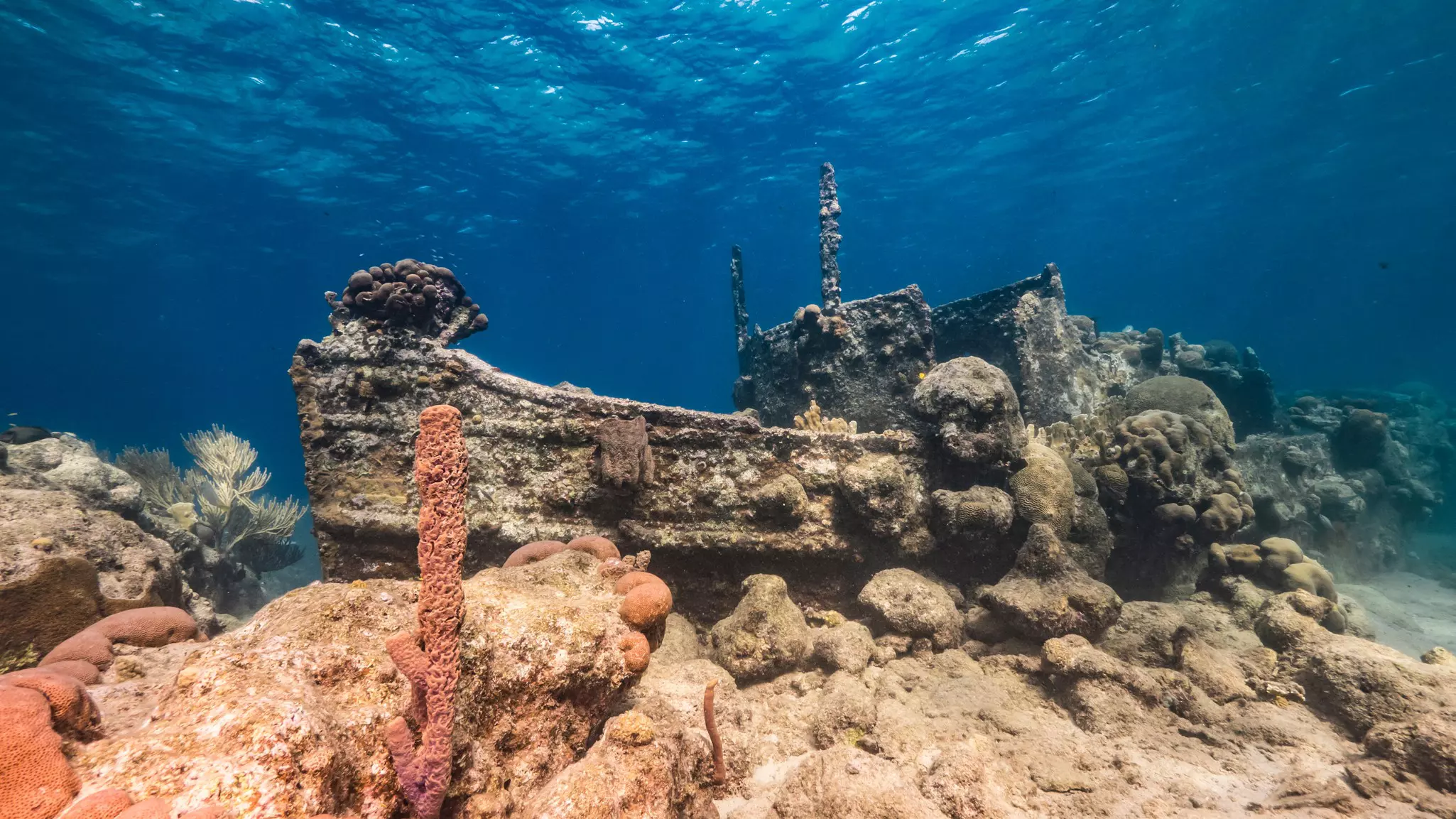
Curaçao’s west coast is replete with snorkeling and dive sites, both boat- and shore-accessible. Spot angelfish in an underwater cave at the Blue Room, float above fractured boat parts-turned-reef at Shipwreck Point or marvel at the prolific coral and fish life in the dive sites around Caracasbaai.
However, the buzziest Curaçao diving spot is Double Reef on the south-central coast. You can opt for a boat or shore dive to explore this (yes) pair of reefs, whose landscapes include a shallow reef, sandy area and massive reef mesa. You’ll be visually delighted by small crabs, puffers, angelfish and other brightly colored creatures. Mushroom Forest near Playa Santa Cruz is loaded with mushroom-shaped coral expanses that resemble an underwater forest. Creole wrasses, cornet fish and spotted eagle rays are among the more unusual creatures you’ll see during a dive here.
Planning tip: To catch the coral spawning, target an excursion 7 days after the full moon in September or October. During this magnificent underwater display, it will feel as if the coral is generating stars around you.
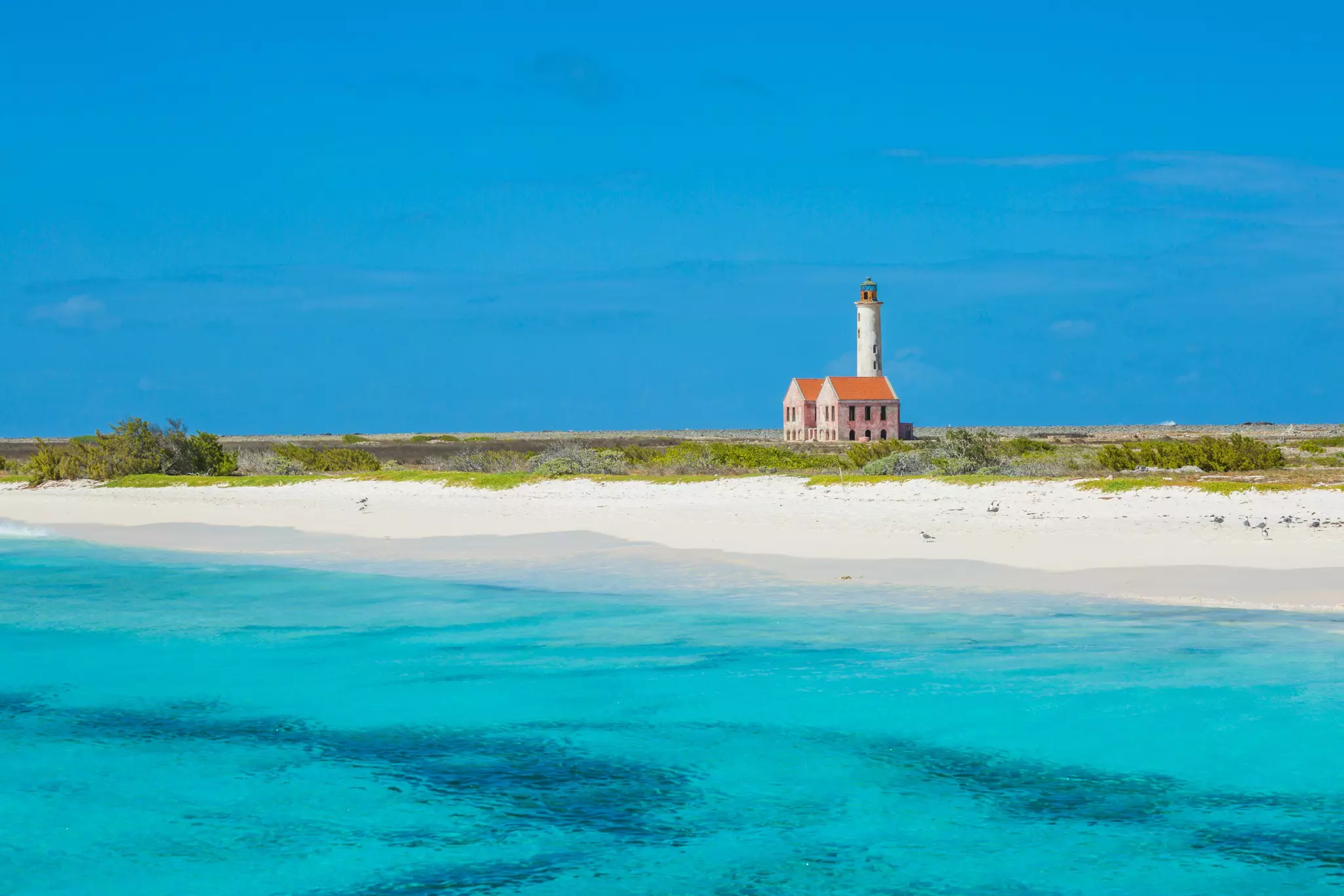
Klein Curaçao was first occupied as a lookout to protect Curaçao from pirates (really!), and became a phosphate mine in the 19th century – the island’s flatness is a direct result of this activity.
These days, this uninhabited island evokes the feeling of a true tropical paradise with astoundingly clear Caribbean waters, sparkling sand and numerous nautical landmarks. Reforestation efforts have brought back the seabirds that have historically roosted here (including some rare species), and the waters teem with fish and sea turtles.
You can check out the photogenic lighthouse, shipwrecks like Tchao and Maria Bianca or snorkel in the water. Birdwatchers will also enjoy spotting the herons, sandpipers, least terns, blue winged teals and ospreys. However, the biggest appeal is the chance to unplug and simply relax. The island is only 1.7 sq km in size, meaning you can wander most of it via a short network of trails.
Planning tip: We recommend exploring when you first arrive to avoid walking in the afternoon sun.
Explore related stories