The Taj Mahal is one of those monuments that you imagine long before you visit, and remember long after you depart. Put simply, this vision in white marble – the tomb built by Shah Jahan for his third wife Mumtaz Mahal, who died during childbirth in 1631 – is architectural perfection.
Construction of this dazzling monument, which made "the sun and the moon shed tears from their eyes" according to the devastated emperor, started in 1632, but it took eight years and 20,000 laborers and craftspeople to complete. The surrounding complex was only finished in 1653.
Shah Jahan’s all-consuming grief supposedly turned his hair gray overnight, and he reputedly avoided all contact with the child he blamed for his wife's untimely death. In 1658, the mourning emperor was deposed by his ruthless son Aurangzeb and imprisoned in Agra Fort – gazing out at his matchless masterwork until his death in 1666.
However, before you get to gaze on the wonder that is the Taj Mahal(tajmahal.gov.in; entry ₹1100, centotaph entry ₹200, guides from ₹1500; closed Fri), you must first walk or take an electric shuttle from the vehicle drop-off point near the East or West Gates.
Then there are slow security and bag checks (no food, camera tripods, smoking paraphernalia or alcohol) before the magic can begin. There's an X-ray check with separate queues for men and women, and it can take as much as an hour to get through.
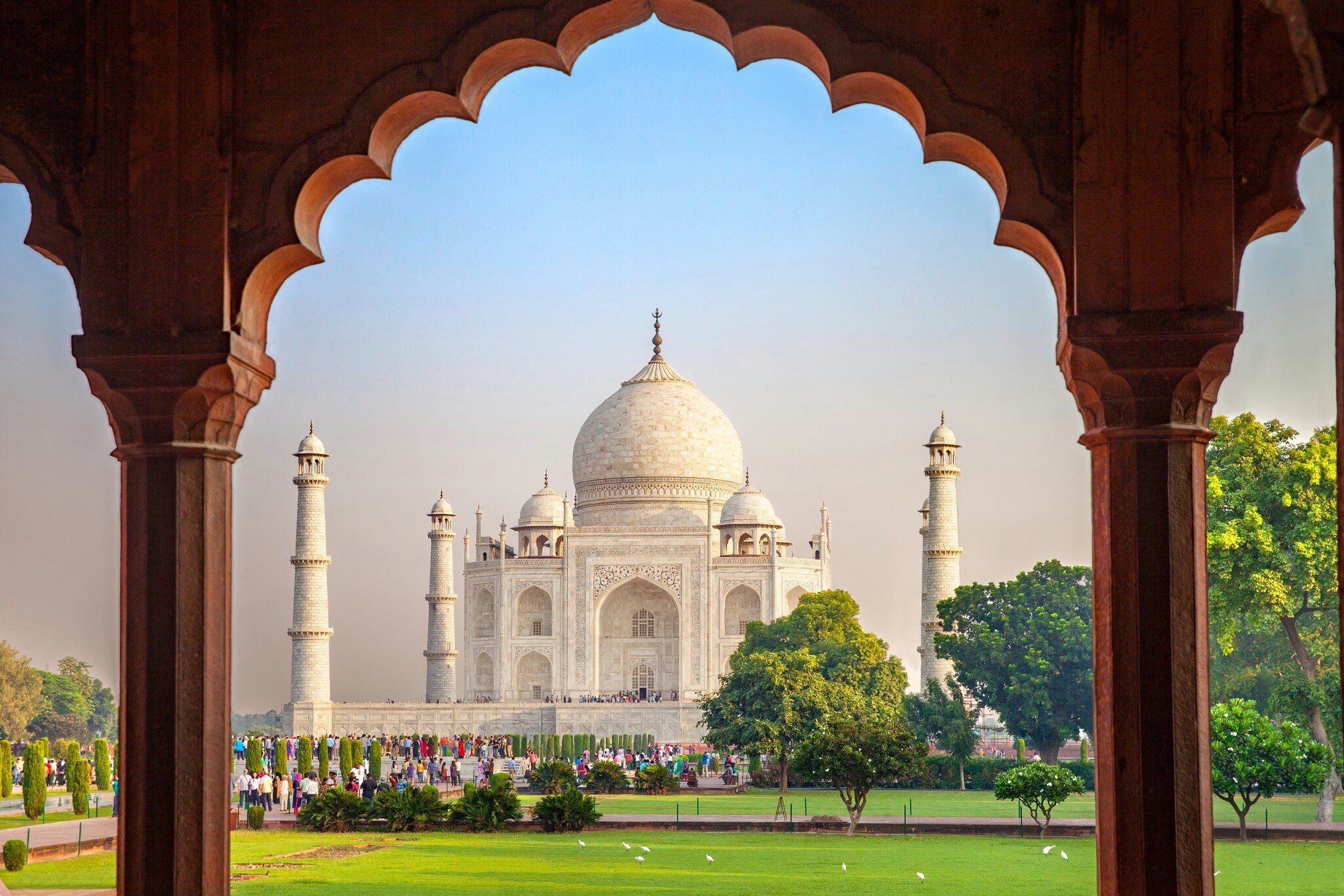
But once all that is over, you'll step through the tomb's central gateway to get the view everyone is after, with the Taj's soaring dome and symmetrical minarets lined up at the end of the water channel dividing the tomb's charbagh-style gardens.
As you enter, pause to admire the gateway above you, with its splendid calligraphy, tomb-like arches and rows of mini-turrets. Inside, the Taj looms dramatically into view for the first time, and it only gets better as you get closer.
However, you'll likely want to pause to grab the "Lady Diana" photo (made famous when the British princess visited alone, without her husband) from the fountain at the center of the gardens.
Don't rush inside the mausoleum; instead, circle the gleaming marble terrace that surrounds the tomb, taking in the surprising perspectives as you gaze up and admire its milky-white perfection.
Pay particular attention to the pietra dura inlays – a tracery of flowers, scrollwork created from 35 types of semi-precious stones, including lapis lazuli, jasper, jade and carnelian. The technique was copied from medieval Italy – and some would say improved!
Created from white marble inlaid with jasper, the Islamic calligraphy surrounding the monumental arches on each side of the tomb gets larger as it rises but appears to be a uniform size when viewed from the ground.
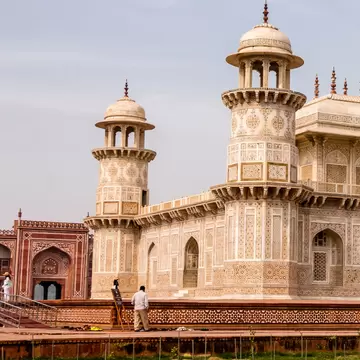
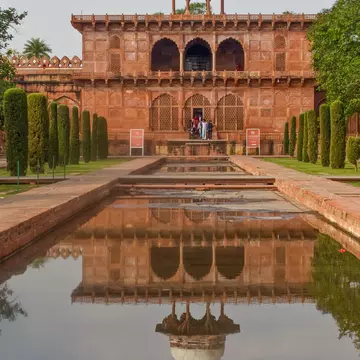
Before you leave, examine the two very similar structures lying east and west of the tomb. The building to the west is a functioning mosque used by local Muslims. The building to the east mirrors it, but it faces away from Mecca, and was instead used as a mehmankhana (guesthouse). It's name, Jawab, means "answer."
Many people come for sunrise, hoping to be at the front of the queue when the gates open, but you can still expect a wait. Once you tire of being awestruck, you can exit the compound via the East, West or South Gates. Special "night viewings" from 8pm during each full moon can be booked on the Taj website (tajmahal.gov.in/night-view.aspx).
Every February, the Shilpgram district by the Taj's East Gate is the setting for the Taj Mahotsav festival (tajmahotsav.org), celebrating the city's culture and cuisine and the arts.