Aug 17, 20267 min read
Sydney to Perth by train: What to expect on one of the world’s longest train trips Jul 23, 2026
8 MIN READ

Writer
Beach driving on K’gari, Queensland. Go Gala/Shutterstock

Writer
Highlights
Writer Sarah Reid guides you through K'gari, the world's largest UNESCO-listed sand island.
Take a ferry from Hervey Bay or Rainbow Beach, then drive K'gari's sand tracks by 4WD.
Swim at ice-blue Boorangoora/Lake McKenzie, or float the crystal-clear waters of Eli Creek.
Whale-watchers should head to Platypus Bay from July to October; dingoes roam the island freely.
Lonely Planet may earn a commission from affiliate links on our site. All recommendations and reviews reflect our own independent opinions.
Only a short hop from southeast Queensland, K’gari (formerly Fraser Island) feels utterly otherworldly. With its wild beaches, towering old-growth forests, crystal-clear freshwater lakes and native wildlife, this UNESCO-listed place offers one of the best wilderness adventures in all of Australia.
Indeed, exploring the world’s largest sand island independently, by 4WD – there are no paved roads – cranks up the adventure factor even more, and gives you the flexibility to explore at your own pace. If you don’t feel comfortable sand-driving in a rental (or your own car), organized tours provide a great alternative. With a smattering of resorts and vacation homes on the island, you don’t even need to camp (though we highly recommend it). Here’s more of what you need to know before you set off for K’gari.
Forming part of the Great Sandy National Park, K’gari is a year-round destination. Autumn (March to May) and spring (September to November) offer mild weather and fewer crowds. Summer is perfect for swimming and camping. And winter April to August is ideal for whale-watching, long hikes and a more serene island experience.
While you can get a taste of K’gari on a guided 4WD tour lasting just a single day, we recommend a multiday guided tour or tag-along tour, which typically include camping accommodation. If you’re driving yourself, aim for at least 3 days and 2 nights, ideally midweek. A week-long trip is ideal for exploring the island more deeply, and at a relaxed pace.
While the distances between K’gari’s key attractions may look relatively short on a map, it can be slow going on the island’s narrow sand tracks. Traffic “jams” are common: if one vehicle gets bogged or stuck in the sand, it can make the entire road impassable to others. Another factor to consider is the tide: it’s safest to drive on the eastern beach (75 Mile Beach), within 2 hours on either side of low tide. If you arrive or need to leave via Inskip Point at high tide, you’ll need to take the slower inland track.
A 4WD vehicle is essential for exploring K’gari independently, with rentals available in Hervey Bay and Rainbow Beach. You’ll need to take a barge or ferry to the island first.
Mantaray Barges makes the 10-minute journey between Inskip Point (which has a picturesque beachfront campground) and Kgari’s southern tip continuously from 6am to 5pm daily (7am to 4:30pm in winter). The other option is the SeaLink K’gari Ferry, which runs six daily services each way between River Heads (near Hervey Bay) to Kingfisher Bay Resort on the western side of the island between 7am and 5pm (about a 50-minute journey time). Booking ahead is recommended.
It’s possible to take the ferry as a passenger, then jump on 4WD tours operating from Kingfisher Bay Resort on the island’s west coast and K’gari Beach Resort on the east coast. For a fully guided experience, organized 4WD excursions of K’gari with outfitters like K’gari Explorer Tours generally begin on the mainland at three primary gateway towns: Hervey Bay, Rainbow Beach (near Inskip Point) and Noosa.
Scenic flights and fly/drive tours are also offered by Air Fraser Island, and heli tours by Great Ocean Helicopters.
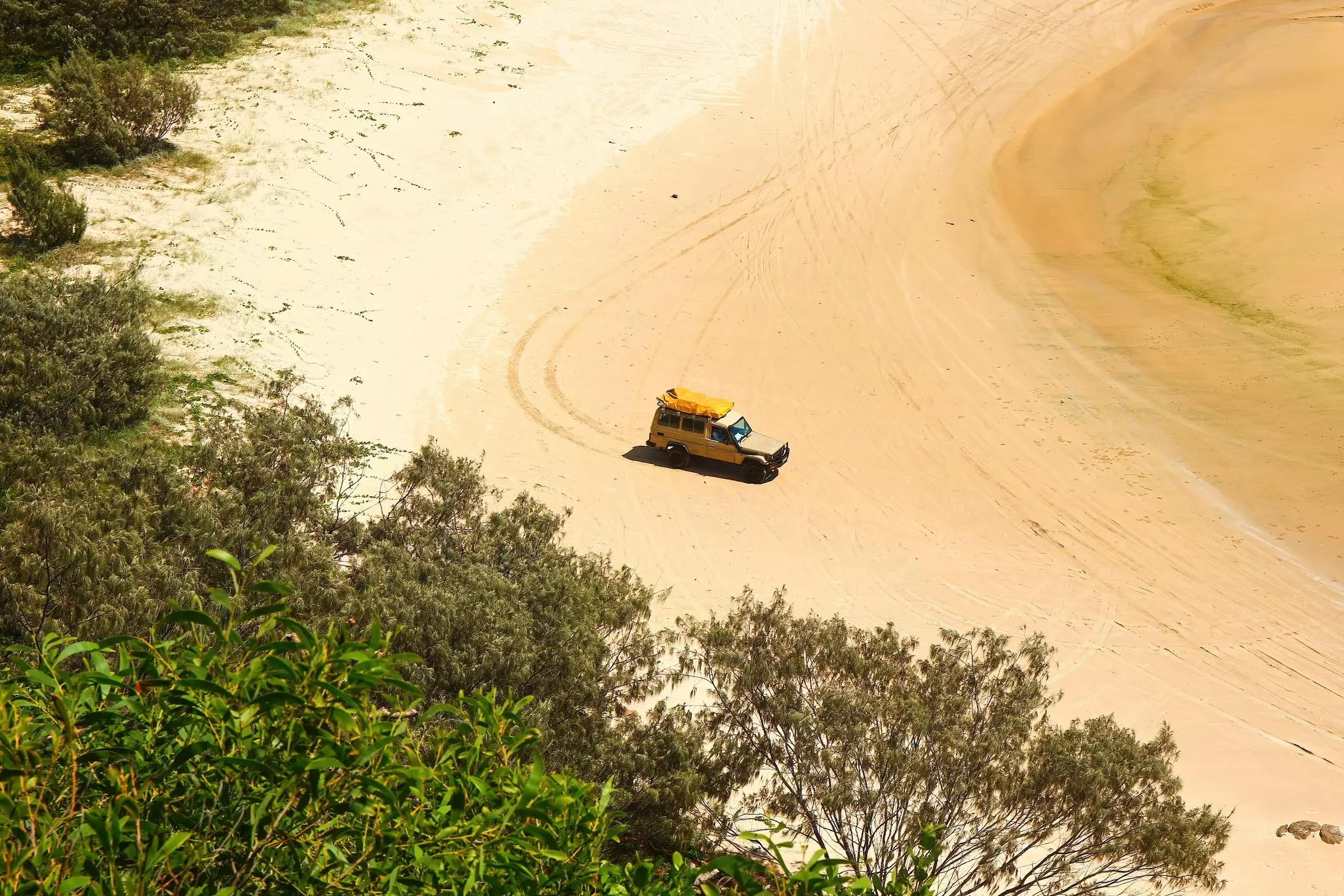
Bumping along the island’s 4WD tracks is the quintessential K’gari experience. First-time visitors won’t want to miss the Central Lakes driving route, which takes you past Boorangoora/Lake McKenzie – it’s a highlight among the dozens of tracks to explore.
Beach driving is largely restricted to 75 Mile Beach. Dotting it are such attractions as the rusting SS Maheno, a former passenger ship and later WWI-era hospital ship, which was wrecked on the island in 1935; the striking multicolored sand formations known as the Pinnacles; and the Champagne Pools rock pools. At the island’s northern tip is the 1870 Sandy Cape Lighthouse, Queensland’s tallest.
More than 40 miles of walking trails will let you get immersed in the unique landscape of K’gari – the only place on Earth where subtropical rainforests grow natively out of sand dunes. Most epic is the 90km K’gari Great Walk, which takes 6 to 8 days to complete; memorable short walks include the Valley of the Giants, known for its towering tallowwood and satinay trees, and the 8.2km round-trip bushwalk from 75 Mile Beach to Lake Wabby.
Bring plenty of drinking water and adequate sun protection for all K’gari walks, no matter the length or difficulty.
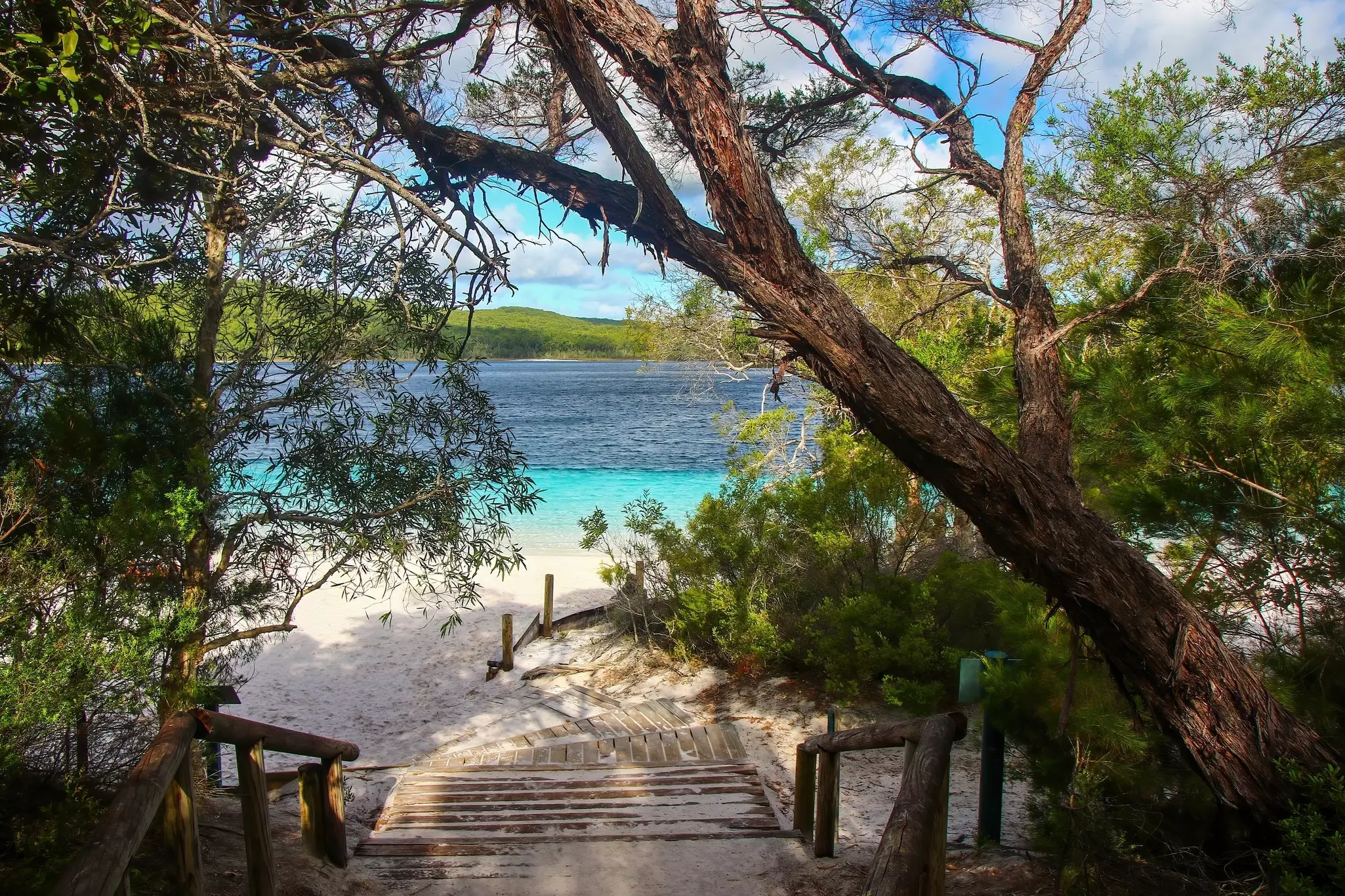
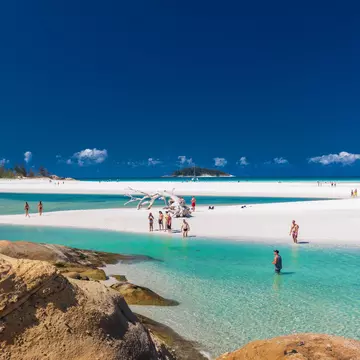
K’gari is home to over 40 unique freshwater dune lakes that are safe for swimming. The most famous is Boorangoora/Lake McKenzie, with its inviting ice-blue waters. Emerald-green Lake Wabby is another popular swimming spot, while more remote Basin Lake offers more solitude.
Roughly halfway along the east coast, the shallow, crystalline waters of Eli Creek all but call out for an invigorating dip. First, follow the 200m boardwalk, taking time to read the signs along the way to learn about the plant and animal species that thrive in this special place. Then jump in and float back to the beach. Further along 75 Mile Beach you’ll find the Champagne Pools, a series of volcanic rock pools that get their name from the “spa” effect of waves spilling over the rock barriers.
K’gari’s beaches may look inviting, but ocean swimming is discouraged due to rough rips, sharks and the dangerous marine stingers present from November to May.
K’gari is famous for its dingoes (wongari), ancient wild dogs that roam freely across the island (for safety, view them from at least 20m away). There are plenty of other native animals to look out for, too, as well as some 350 bird species. Swamp wallabies and eastern gray kangaroos are common, and you may also spot short-beaked echidnas, northern brown bandicoots and long-nosed potoroos foraging in the undergrowth. If you’re very lucky, you might even get a glimpse of a nocturnal marsupial glider.
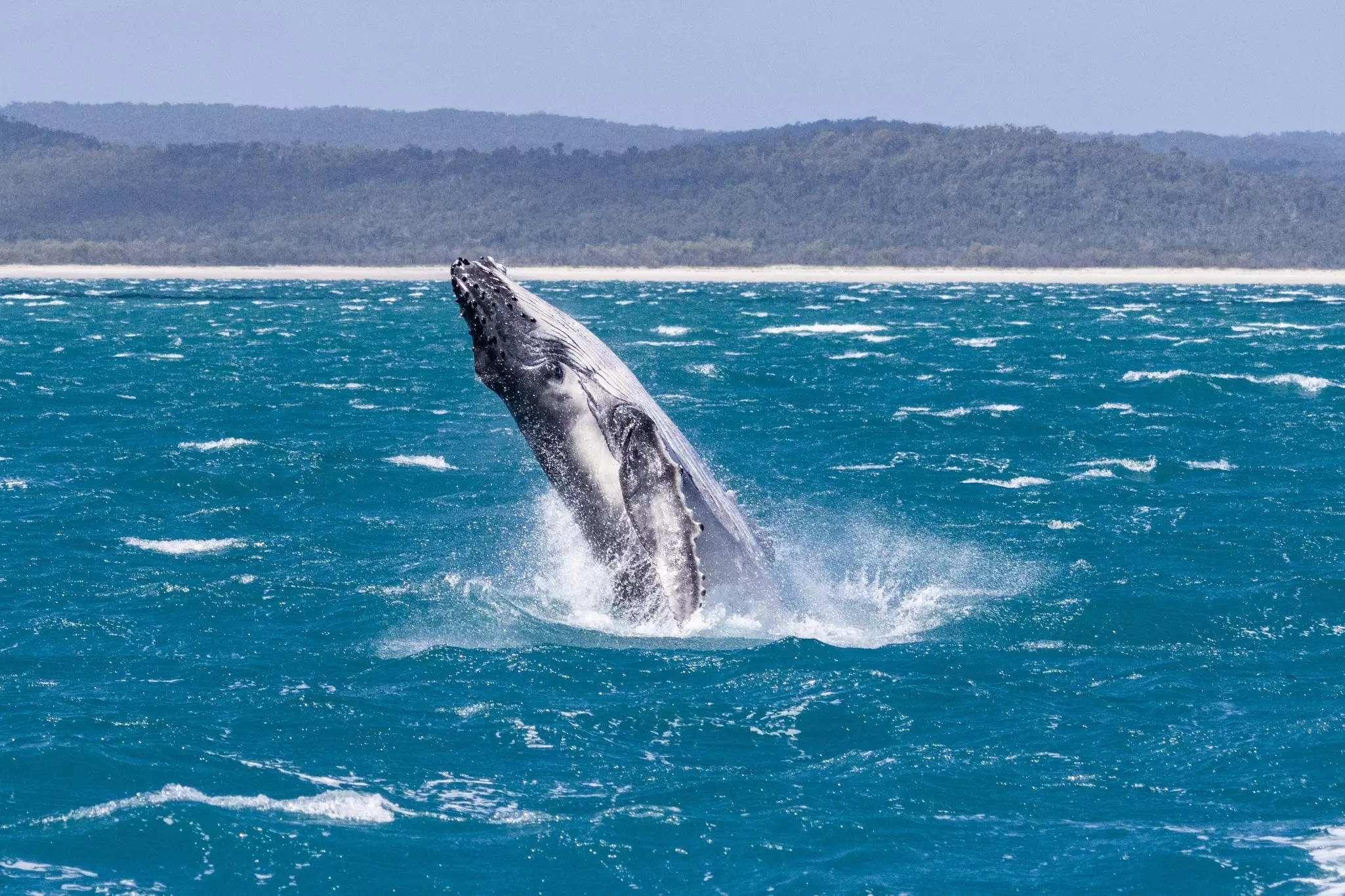
Whale season runs from July to October, peaking from late August to early September. During this time thousands of humpback whales pause in the calm waters of Platypus Bay between K’gari and the mainland to rest, play and nurture their calves, while others continue along the island’s east coast. Keep an eye out for dolphins year-round.
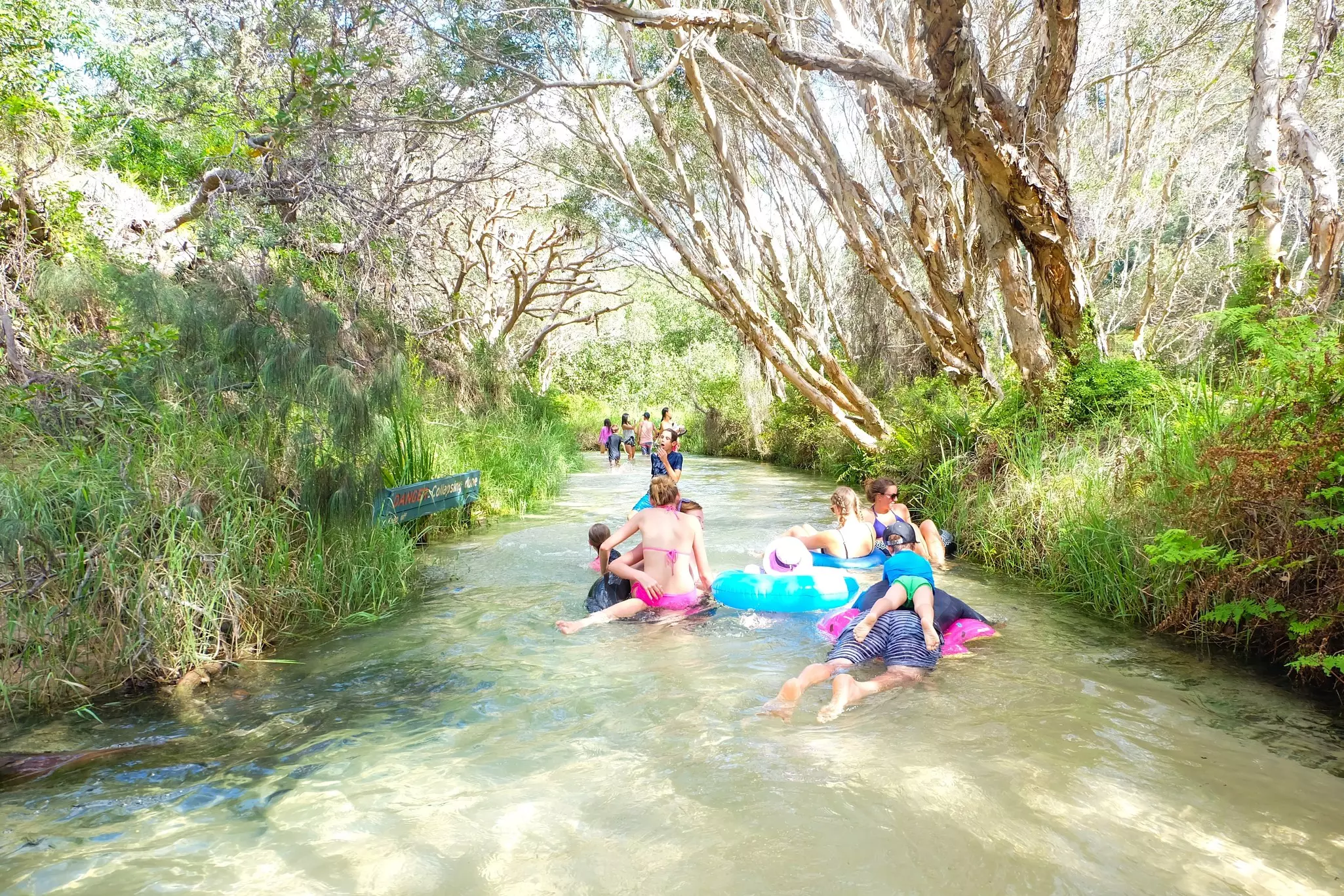
Floating along Eli Creek is a cherished K’gari camping trip pastime. The lush setting is magical, the cool water amazingly refreshing on a hot summer’s day. Framed by pandanus and paperbark trees, this creek pumps an astonishing 80 million liters of water into the Pacific Ocean every day.
Ferries and 4WD permits can add up quickly, though once you’re on the island, there’s not much to spend your money on.
K’gari day tour from the mainland per person: 250 Australian dollars–$400
National park campsite per person/family per night: $7.50/$30
K’gari vehicle-access permit per month: $59.80
One-way/round-trip car ferry from Inskip Point (Rainbow Beach) per 4WD: $105/$140
One-way ferry from River Heads (Hervey Bay) per 4WD: $135
One-way/return ferry from River Heads (Hervey Bay) per walk-on adult: $50/85
One night’s accommodation at Kingfisher Bay Resort: from $277
K’gari’s 45 national park campgrounds are scattered across the island and range from remote beach campsites with no facilities to more-structured facilities with coin-operated hot showers (bring $2 coins), at Central Station, Dundubara and Waddy Point. There are nine camping areas with dingo-deterrent fencing; these are recommended for families with young children.
But you don’t have to rough it on K’gari. Just steps from the ferry dock on the west coast, Kingfisher Bay Resort is the island’s largest and most comfortable property. Ranger-guided activities are available, and guests have free access to the K’gari Discovery Centre and exclusive access to the resort’s daily Illumina light show. There are also a handful of vacation homes in this area.
In the tiny settlement of Eurong on the eastern side of K’gari is K’gari Beach Resort, which has a basic general store; there are also a few vacation homes and villas here. Further north, at Happy Valley, are the Sailfish on Fraser and Ganagoor K’gari resorts, plus more vacation homes. Even further north, past the Pinnacles, is Cathedrals on Fraser, which has cabins and camping. All resorts have restaurants open to the public.
If you’re camping independently, you’ll need to bring along everything you’ll need, including drinking water and extra fuel. Gasoline and diesel are available at five locations on the island, but at significantly higher prices than you’ll pay on the mainland. Visit the Queensland Parks & Wildlife Service website for essential packing and safety information.
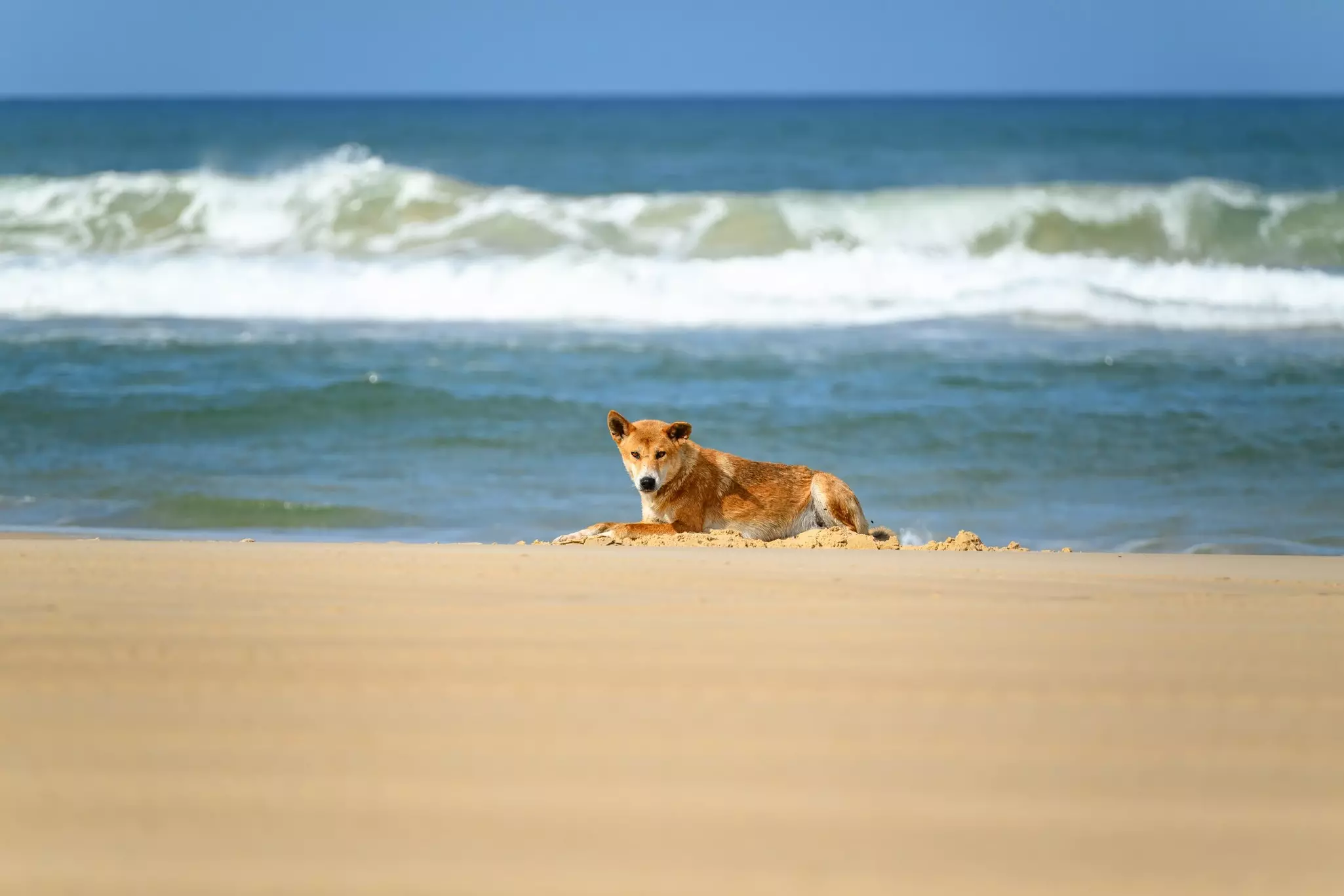
While the sand-colored wild canines generally avoid humans, dingo attacks have occurred on K’gari. Stay safe by always walking (never running) in groups in unfenced areas, and always keeping children at arm’s reach. Never feed dingoes, clean up immediately after cooking and eating, and ensure food is never left unsecured by locking it in your car.
If you are threatened by a dingo, face it and make yourself look dominant. Yell “Dingo!” to alert others, then calmly back away. Wait until the dingo is gone before you continue on your way.
Explore related stories