Aug 17, 20267 min read
Sydney to Perth by Train: What to Expect on One of the World’s Longest Train Trips Aug 17, 2026
7 MIN READ

Writer
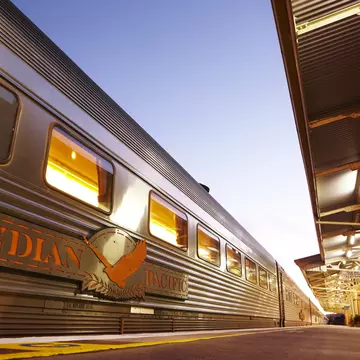
The Indian Pacific train. Matt Munro for Lonely Planet

Writer
Highlights
Editor Jessica Lockhart shares what to expect on Australia's four-day Indian Pacific.
Pack a soft-sided bag and earplugs – the first night through the Blue Mountains is rocky.
Roam Cook's eerie ghost town and catch pre-dawn drag bingo in Broken Hill.
The bar car fills with on-board musicians, wine and deep conversations with strangers.
Lonely Planet may earn a commission from affiliate links on our site. All recommendations and reviews reflect our own independent opinions.
It all started with an Instagram Reel, sent to me late one night by my friend, Alice.
Set to a jaunty soundtrack of Benny Goodman, it featured Hollywood actress Anna Kendrick with her head out the window of the Venice Simplon-Orient-Express. The wind whipping her hair, she grinned as the train zipped through mountain peaks.
“This could be us,” suggested Alice, suddenly swept away by the romance of rail.
I, however, was lured by the idea of a set itinerary with excursions, fuelled by all-inclusive food and beverage. We wouldn't need to plan activities, figure out where to stay, or decide what to eat. A train holiday, it seemed, would be the antidote to decision fatigue. We could simply go along for the ride.
So, with our 20-year friendship anniversary on the horizon, we boarded the southern hemisphere’s version of the Orient Express: Journey Beyond’s Indian Pacific train journey across Australia.
One of the longest railway lines in the world, the 4,350km (2,704-mile) trip from Sydney to Perth cuts across the southern girth of Australia with plenty of stops along the way. Over 4 days, we met outback drag queens, crossed the legendary Nullarbor Plain, and explored long-abandoned ghost towns in the middle of the desert.
Thinking of choo-choo-choosing the Indian Pacific? Here’s what you can expect – and how to prepare for your journey.
Departs: Sydney or Perth
Journey time: 4 days, 3 nights
Fares: Begin at AU$3,190 for the economy ("Gold") class
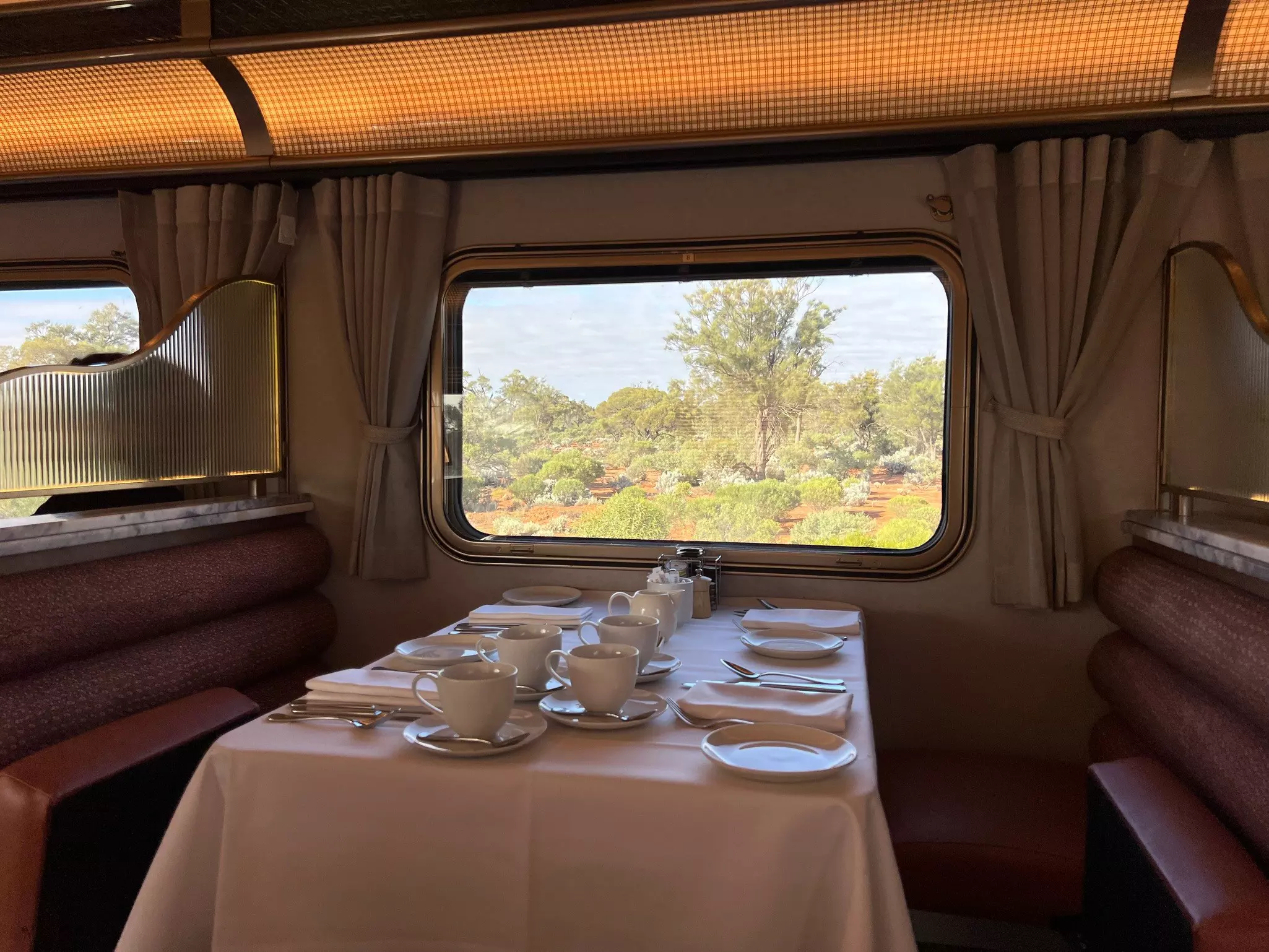
Heavily influenced by Anna Kendrick, I was convinced that I needed to pack three cocktail dresses – one for each night on the train. The reality? I wore the same pair of yoga pants nearly every day. It didn't take long before I realized that overstuffing my bag was a grievous error in judgement. Because unlike Kendrick’s plush suite, space was at a premium in our cabin.
Here’s what I would actually recommend packing for the Indian Pacific.
Unless you’ve booked the new-in-2026 Aurora Australis Suites (which feature a separate bedroom and butler service), you’ll only have enough room in your cabin for a carry-on bag. Choose one with soft sides, as you’ll want to shove it under the bed or into the tiny closet so you have space to move around freely in your cabin.
If you are holidaying in Sydney beforehand or Western Australia after your train trip (like I did), you’ll be able to check a large suitcase onto the train – but you won’t have access to its contents for the duration of your journey.
I used a soft-sided packable duffel bag, which was easy to collapse into my larger bag at the end of my train trip.
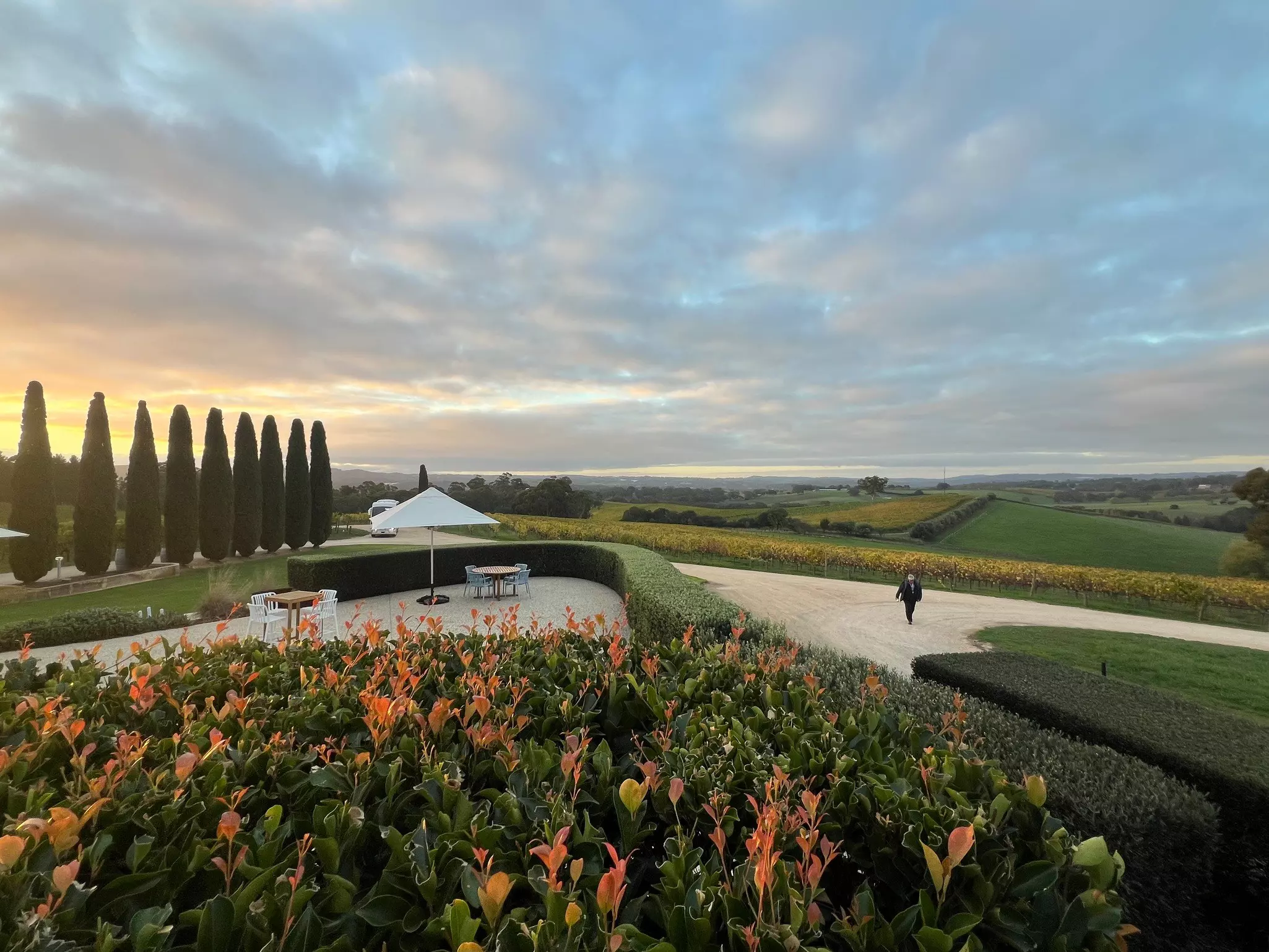
Australia’s outback regions can reach soaring daytime temperatures, but then drop to the single digits overnight. For our off-train excursions, I was exceptionally grateful to have packed a scarf and wool sweater, both of which got daily use.
With most of your time spent sitting or walking between your cabin and the bar car, comfort is key, as are flat shoes. (You are going to be walking around a moving vehicle, after all.)
On the final night, you’ll be attending an off-train barbecue at Rawlinna, Australia’s largest operating sheep station. So feel free to break out your Akubra and be sure to pack a jacket that you don’t mind getting smoky.
If you do want to dress up for an evening meal, save your nice outfit for your excursion in Adelaide.
The first portion of the train journey from Sydney to Broken Hill is notoriously rocky. And I mean that quite literally – it was so bumpy in the top bunk that I dreamt I was stuck in a never-ending earthquake. If you, like me, are a light sleeper, don’t expect to get much shut-eye on night one.
Although the evening nightcap delivered to your room might help, I’d recommend arriving with good earplugs to block out the din, as the train clickety-clacks its way up through the Blue Mountains and beyond.
By the morning of day two, the journey smooths out considerably, but if you’re susceptible to motion sickness, make sure to pack medicine. (I don’t usually get sick when riding the rails, but I felt a particular creeping malaise that could only be attributed to the sway of the train.)
Owing to the distance and the remote nature of outback Australia, the Indian Pacific traverses landscapes and stops in towns that few travelers will see in their lifetime.
Our first excursion was in Broken Hill, filming location of the 1994 film Priscilla: Queen of the Desert, which is pretty much a required watch before any trip to Australia. I was fully expecting that the train would be greeted by drag queens – what I wasn’t anticipating was that it would be at 7:30am. (You haven’t truly lived until you’ve played drag bingo before the sun has even cracked over the horizon.)
Then, in Adelaide, we visited a winery in the Adelaide Hills and had a meal with live entertainment in the cute German town of Hahndorf.
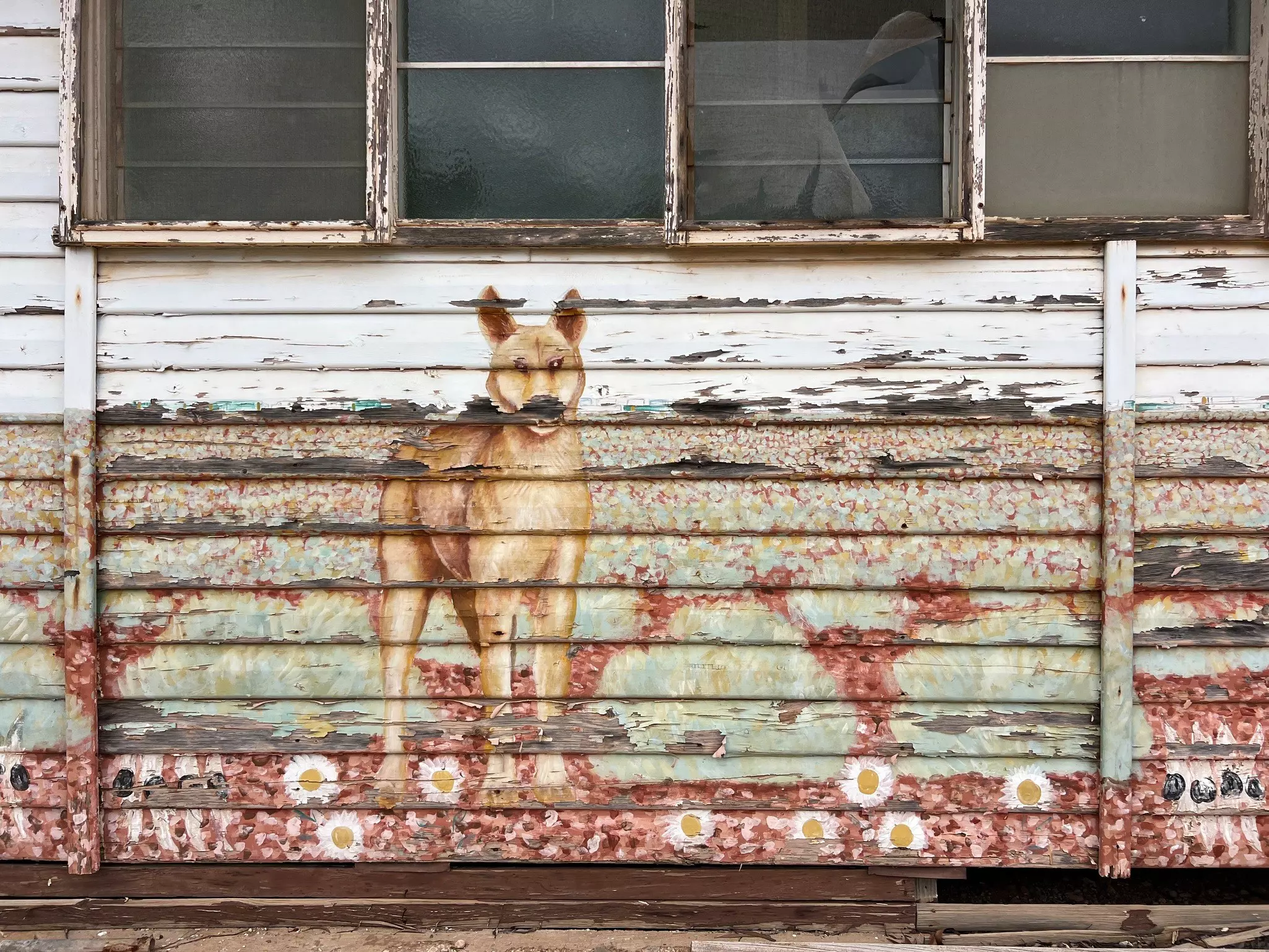
Our favorite stop, though, was the ghost town of Cook. Once a thriving railway town responsible for train track maintenance, it was all but abandoned with innovations in railway engineering. Today, the remains of a school, golf course, and filled-in swimming pool create an eerie setting that train passengers get to roam, like something out of a post-apocalyptic film.
Ultimately though, be prepared to spend minimal time off the train (two hours or less at each stop), with the exception of Adelaide, when the train’s staff changeover.
If you’re looking for a journey with more robust off-train excursions, The Ghan expedition – which includes full-day excursions in Alice Springs and Coober Pedy – may be more your speed.
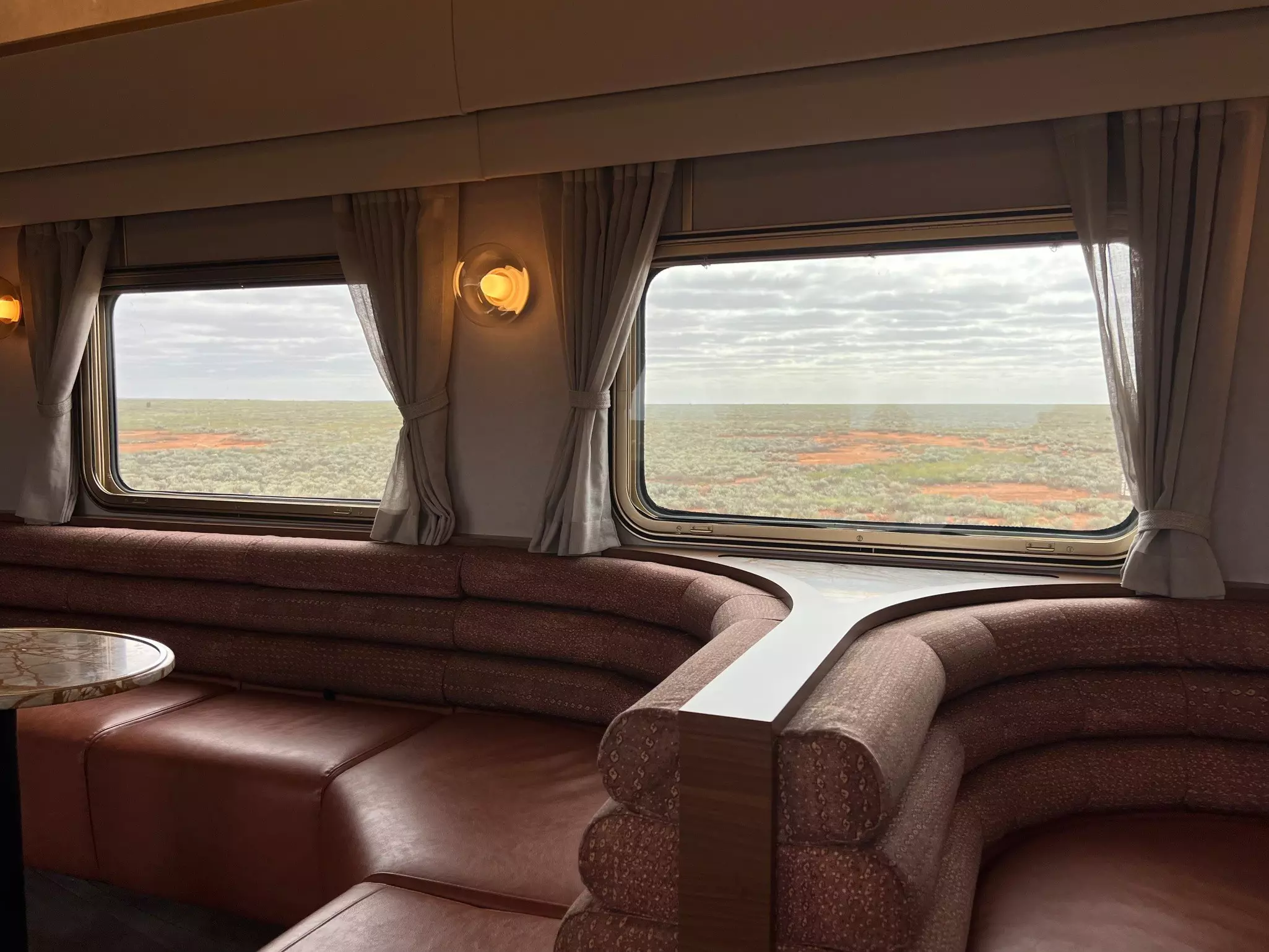
Like any great train journey, the main source of on-board entertainment aboard the Indian Pacific is gazing out the window at the passing scenery, including massive wind and solar farms, and occasional wildlife like eagles, emus and kangaroos.
The main selling point of this journey, though, is Australia’s vastness. Perhaps nothing gives you a better sense of the country’s scale than crossing the Nullarbor – a 200,000 sq km (77,000 sq mile) flat and nearly treeless plain. It’s considered a rite of passage to travel across, although I’d describe it more as a test of endurance. Absent of landmarks, you soon lose sense of time and whether you’re traveling backwards or forwards through the expansive scrub-filled landscape.
When the scenery is more about the absence of something, and you have limited connectivity (WiFi and cell phone reception on the journey are spotty as you're traveling across the outback), chances are you’ll find yourself deep in conversation with total strangers in the club car or over breakfast. (To maximize space, couples are seated with other passengers on the train for meals, which can sometimes feel like real-life chat roulette, usually with positive results.)
Other than hanging out in the bar car sipping wine, playing board games, and listening to the on-board musicians (an absolute don’t-miss), most guests spent their days lounging in their cabins. The exceptionally attentive staff will convert your bunk beds to a couch while you’re at breakfast, creating a cozy daytime space for reading, daydreaming, or having deep conversations with your travel companion.
“In a world of mediated digital experiences, it’s very low-fi. A lot of it is just sitting in a bar car with people you don’t know," said Alice on our final day. "It’s amazing to see Australia – but the lasting impact is the people you meet.”
Jessica Lockhart travelled on the Indian Pacific at the invitation of Journey Beyond Rail. Lonely Planet does not accept freebies for positive coverage.
Book your Australia trip with Lonely Planet Journeys
See Australia how it's meant to be seen
Planned by local experts and tailored to you, Lonely Planet Journeys handles the logistics so you can just enjoy the trip. Tell us what you want and we'll build your Australia itinerary from scratch, or browse our bookable trips to get inspired.

Explore related stories