Sep 21, 20269 min read
A Guide to Connemara, IrelandSep 21, 2026
9 MIN READ

Writer
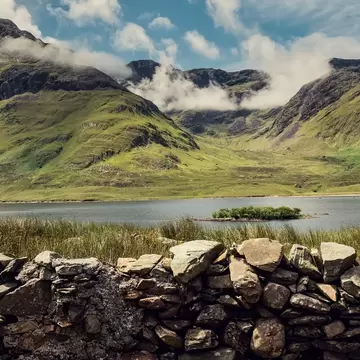
A landscape in Connemara, Ireland. mark gusev/Shutterstock

Writer
Lonely Planet may earn a commission from affiliate links on our site. All recommendations and reviews reflect our own independent opinions.
A landscape of blanket bogs, quartzite mountains, and jagged Atlantic coastline shattering into sandy bays, islands and peninsulas, Connemara is Ireland at its most dramatic. Stretching across the western corner of County Galway along the Wild Atlantic Way, the region includes one of Ireland’s largest Irish-speaking regions and has long attracted writers, artists and walkers.
Beginning just over an hour north-west of Galway City, Connemara offers a marked contrast to the city – replacing traffic and crowds with mountain passes, Atlantic beaches and open countryside. At its heart lies Connemara National Park, home to the popular Diamond Hill Trail, one of Ireland’s most satisfying hikes.
Here’s everything you need to know about planning your next trip to Connemara.
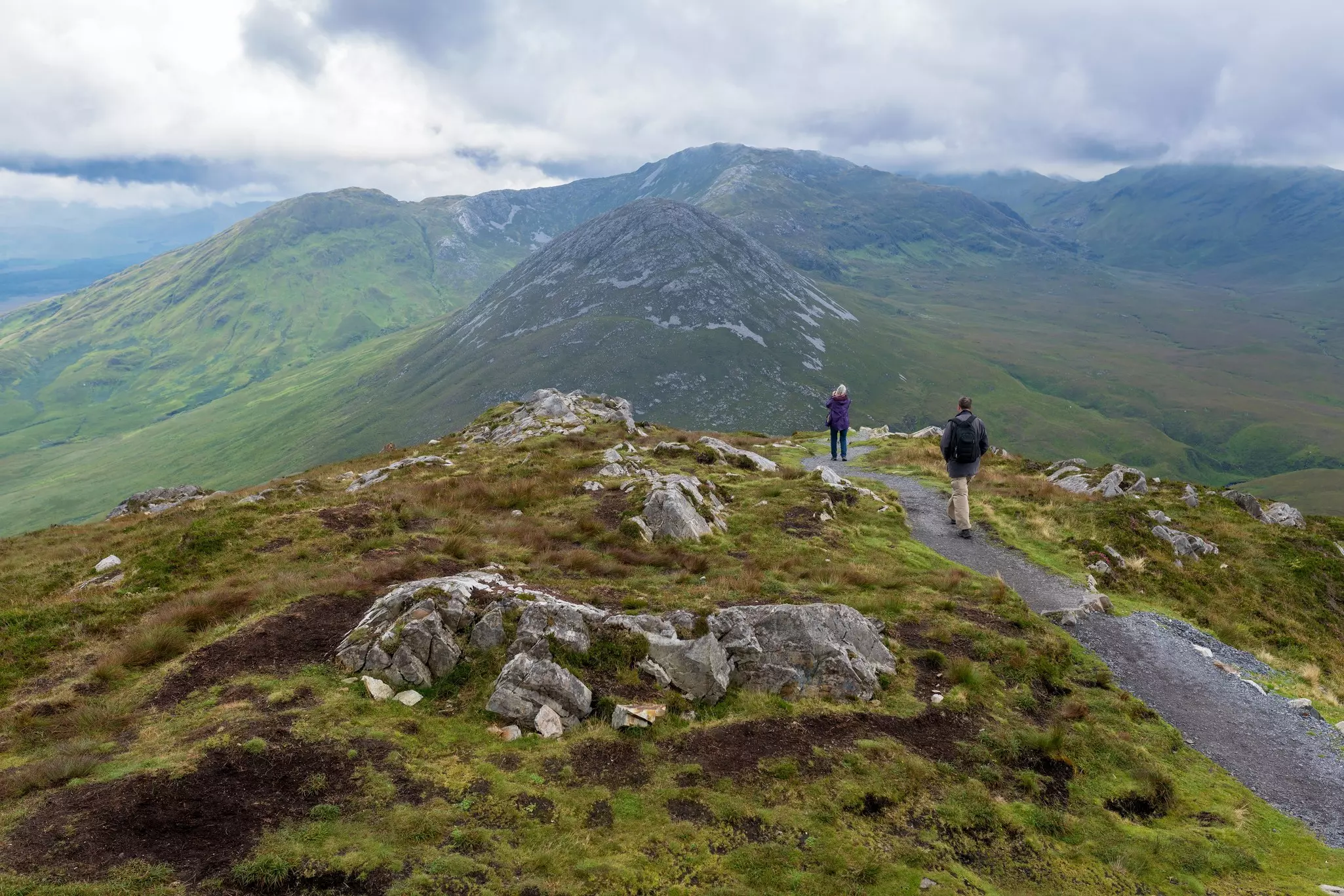
Late spring through early autumn is generally the best time to visit Connemara. May and June bring long evenings and hillsides bright with flowering yellow gorse, while heather begins to color the landscape from late July into early autumn. July and August are the busiest months, so it’s worth booking accommodation well in advance (be prepared for peak rates). If you’re visiting in August, take in the annual Connemara Pony Show in Clifden.
April and September suit hikers and those who want to avoid the peak-season crowds. The weather is less predictable and the days shorter – but roads, beaches and walking trails are noticeably quieter, and still quite lovely. Winter brings the shortest days, strong Atlantic weather and reduced opening hours for some accommodation providers, cafes and boat operators. If you’re happy to plan around the forecast and nestle in by a fireside pub in the evenings, these cold months can be a rewarding time to visit.
While many visitors explore Connemara on a day trip from Galway City, spending 3 or 4 days will allow enough time to experience more than just the main driving routes, as you slow down and fall in with the region’s natural rhythms.
If you have 2 days, base yourself in the handsome town of Clifden. Spend your first day exploring the high mountain passes of the Twelve Bens and hiking Diamond Hill in the national park. On your second day, head north to tour the lakeside estate of Kylemore Abbey before taking a fjord cruise of Killary Harbour.
If you have 4 days, start with the 2-day itinerary above, then use your third day to catch a passenger ferry from Cleggan to the offshore island of Inishbofin for a day of cycling and traditional music. Save your final day to explore the craggy southern coast, walk the white-sand beaches at Dog’s Bay and trace aviation history across Derrigimlagh Bog.
Galway City is the main gateway to Connemara and has frequent express coach connections with Dublin’s international airport. Bus Éireann and Citylink operate regular services from the city to gateway towns like Oughterard, Roundstone, Letterfrack and Clifden. Public-transport options become limited, however, once you venture off these primary transit routes. The closest rail links are on the Galway City and Westport lines.
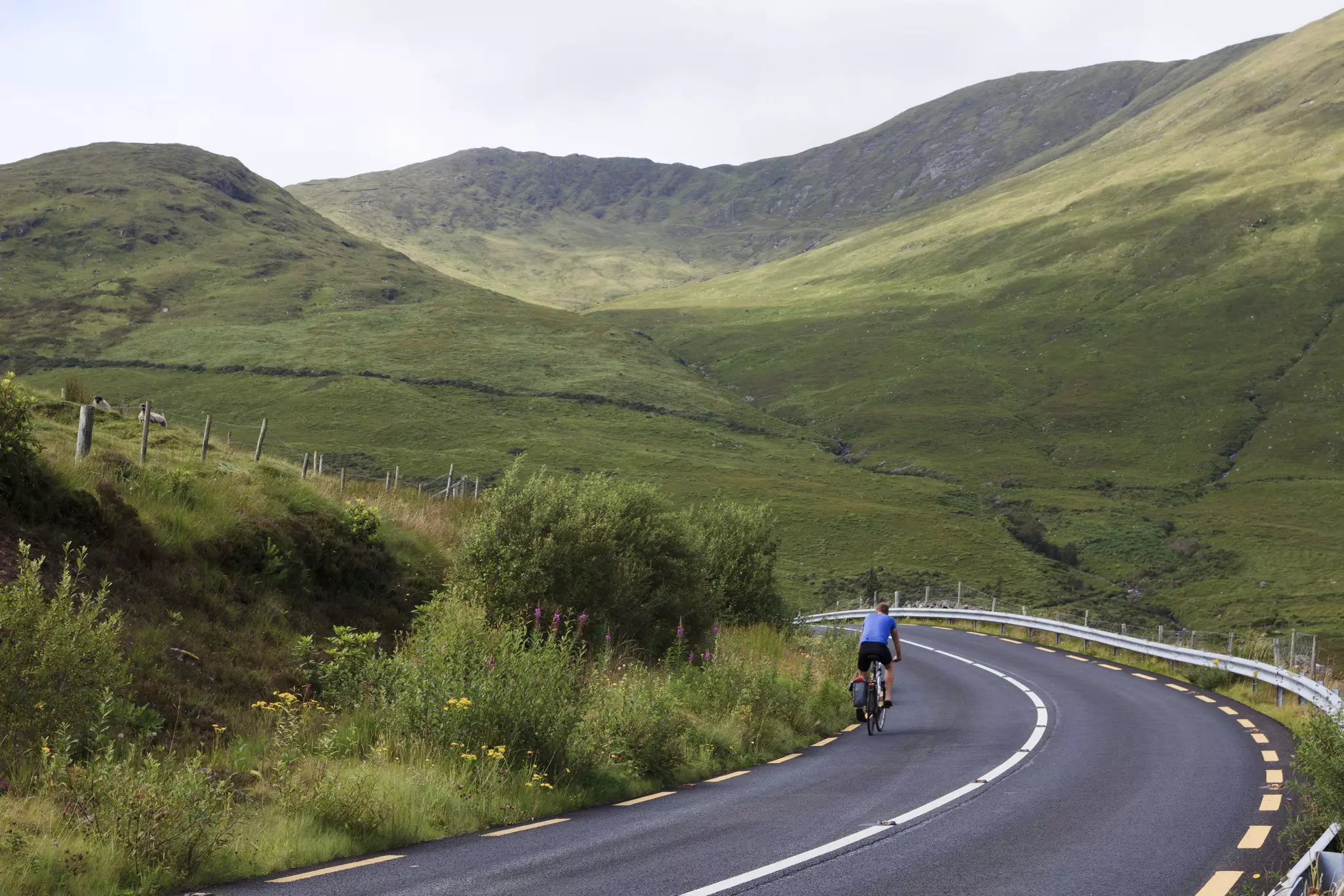
Renting a car remains the easiest and most practical way to explore the region. Having your own wheels gives you the freedom to access remote beaches, small villages, mountain trailheads and hidden valleys that remain largely unreachable by bus. Cycling and hiking are rewarding options for active travelers, particularly along the completed traffic-free off-road sections of the developing Connemara Greenway and quieter coastal roads.
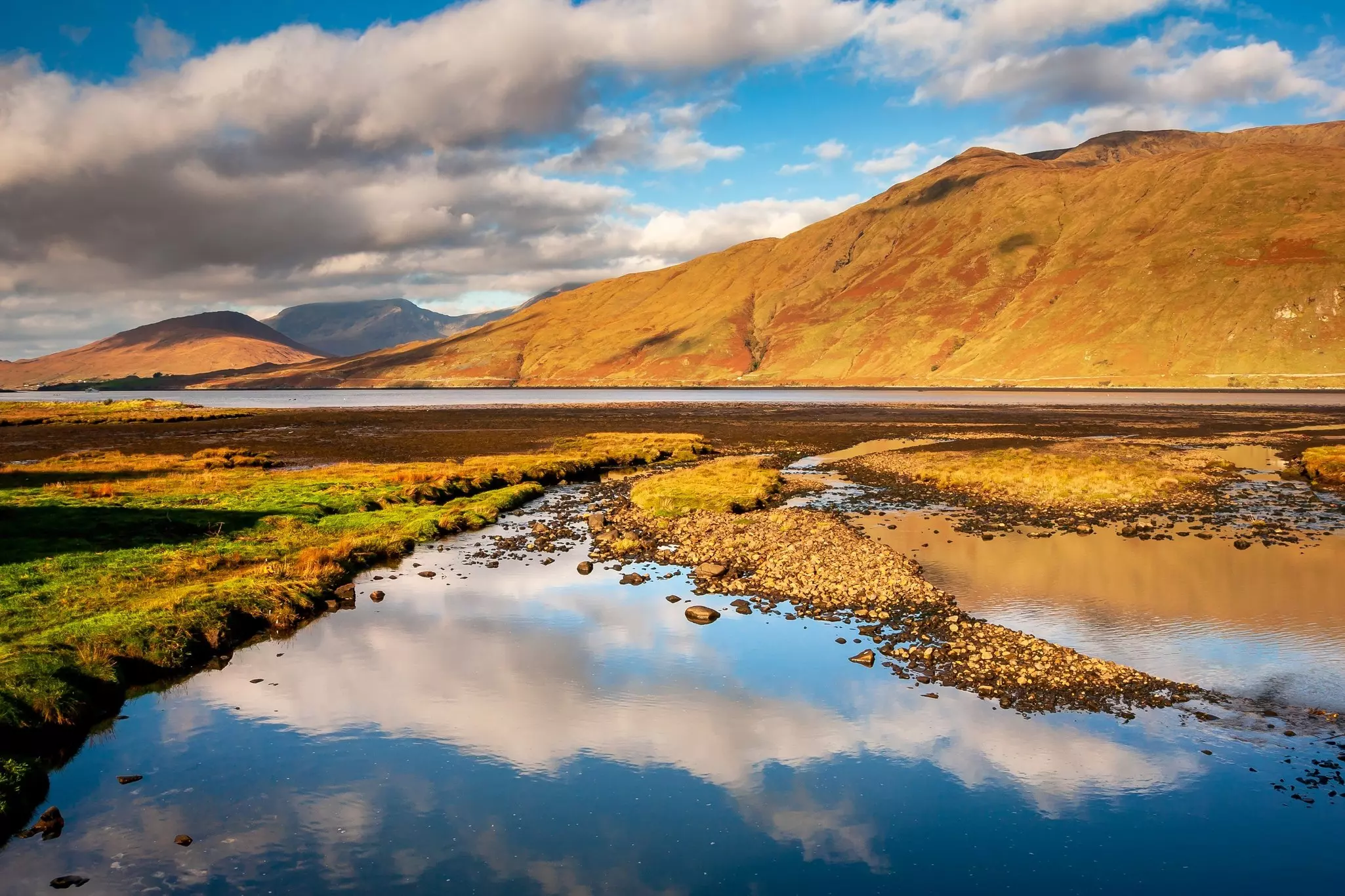
A captivating glacial fjord, Killary Harbour forms the natural boundary between Counties Galway and Mayo. For 16km, it cuts deep into the dramatic landscape between Mweelrea (the highest mountain in Connacht, Ireland’s historic western province) and the peaks of Connemara to the south. The best way to experience its sheer scale is from the water: Killary Fjord Boat Tours operates 90-minute sightseeing cruises from Nancy’s Point near Leenane, taking you past navigational landmarks, local mussel farms and regular pods of gray seals.
Two monumental milestones of 20th-century global technology took place in the remote and wild expanse of Derrigimlagh Bog, just south of Clifden. In June 1919, aviators John Alcock and Arthur Brown completed the first nonstop transatlantic flight in history, crash-landing their Vickers Vimy biplane into the soft Connemara turf after a grueling 16-hour journey from Newfoundland. Today, you can walk a 5km interactive looped trail to the crash site, which lies near a commemorative limestone tail-fin monument.
The trail also snakes through the concrete foundations of the Marconi transatlantic wireless station. On this site, Guglielmo Marconi sent some of the world’s very first commercial long-distance radio transmissions across the ocean between 1907 and 1922.
Escape the mainland by taking a 30-minute crossing on the Inishbofin Ferry from the small pier at Cleggan. Inishbofin (“Island of the White Cow”) is a peaceful ecotourism destination renowned for its traditional Irish music sessions, bird-watching and traffic-free lanes. Rent a bicycle right at the island harbor to explore three waymarked loop trails. Don’t miss the foreboding stone ruins of the 17th-century Cromwell’s Barracks guarding the harbor mouth, or a walk along the pristine shores of Dumhach Beach.
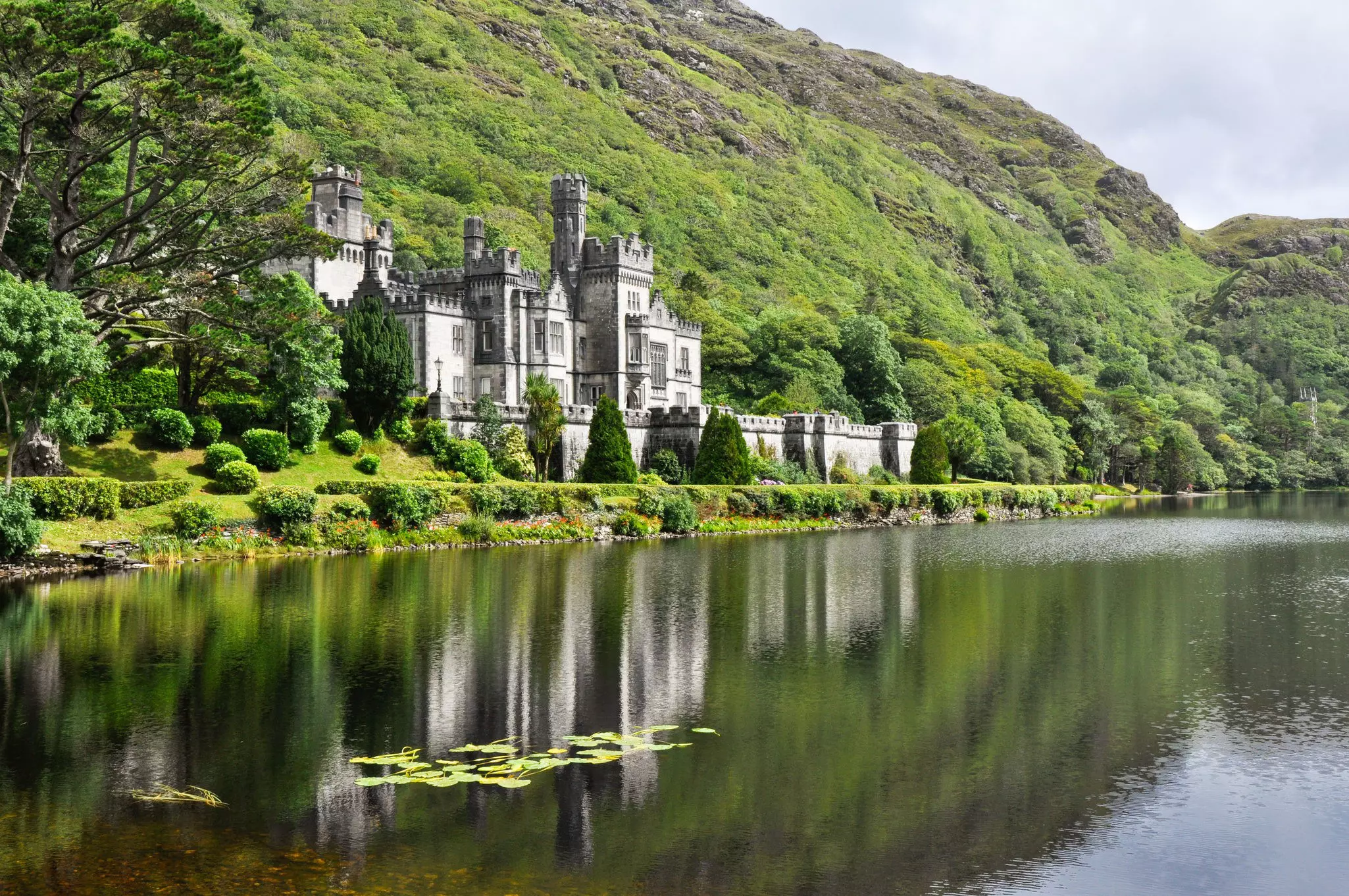
Built in the late 19th century as a grand private castle, the magnificent lakeside estate of Kylemore Abbey has been home to a community of Benedictine nuns since 1920. Visitors can take a self-guided tour of the beautifully restored ground-floor period reception rooms; stroll along the shore of Pollacappul Lough to a miniature neo-Gothic church; and ride the shuttle bus to the fabulous, 6-acre Victorian Walled Garden, immaculately manicured using local heritage techniques.
Ballinakill Bay, located near Letterfrack, produces some of Ireland’s finest seafood. (And that’s saying something.) At DK Connemara Oysters, visitors can join a guided oyster-farm tour to learn how the bivalves are cultivated in the pure Atlantic waters of Ballinakill Bay over a 3-year growing cycle. The tour covers the history of the bay, demonstrates the art of oyster shucking and concludes with a tasting of freshly harvested oysters accompanied by local refreshments. Book ahead – and stop by Spuds and Shells near Kylemore Abbey afterward to enjoy the farm’s bounty prepared to perfection.
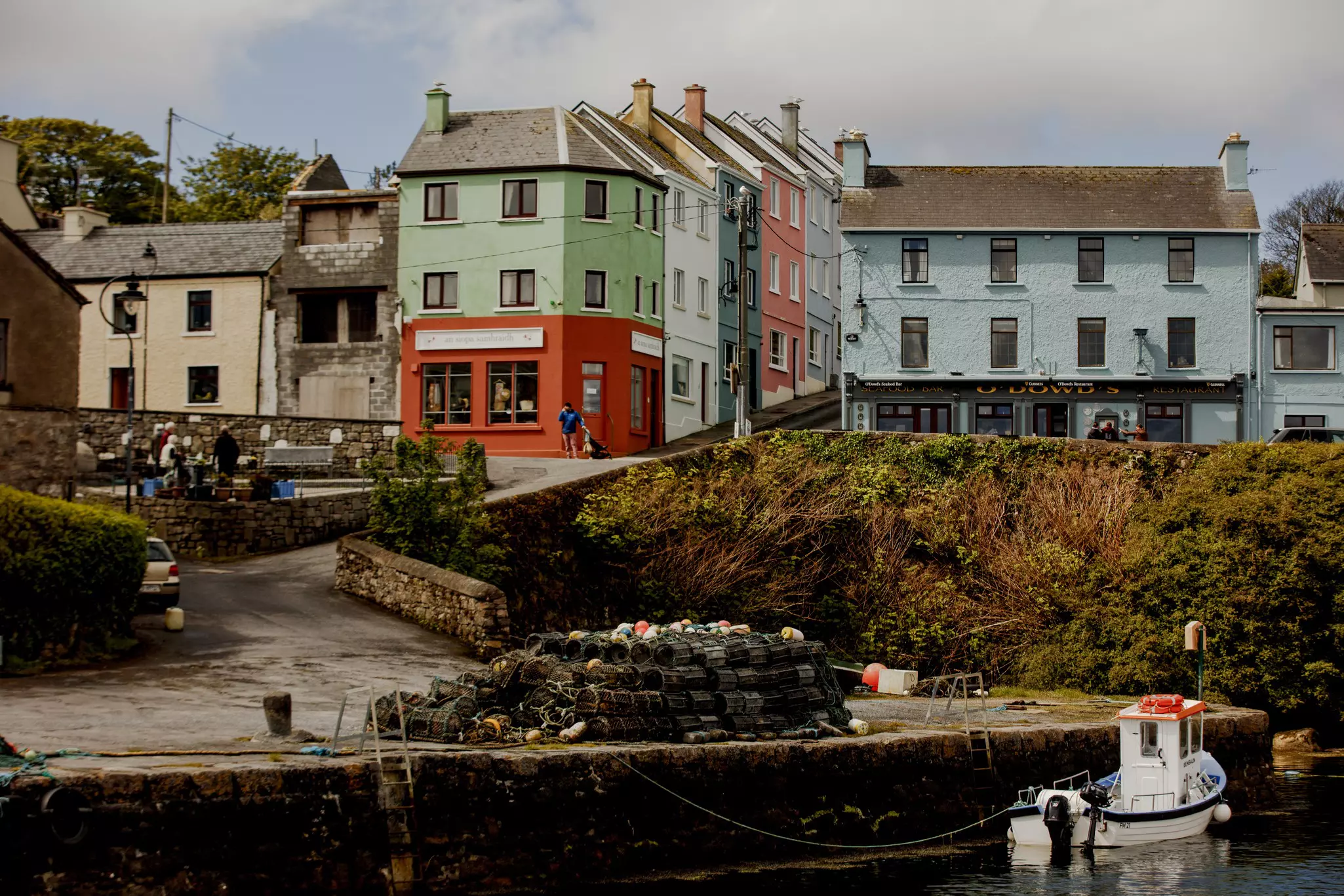
The 19th-century fishing village of Roundstone, on Connemara’s southern coast, is a haven for creatives. Built by famed Scottish engineer Alexander Nimmo, this harbor village has an active arts scene that has long inspired dreamers from artist Paul Henry to rock star Sting. At traditional instrument workshops like Roundstone Music and Malachy Bodhrán, you can watch intricate Irish handheld drums being handcrafted.
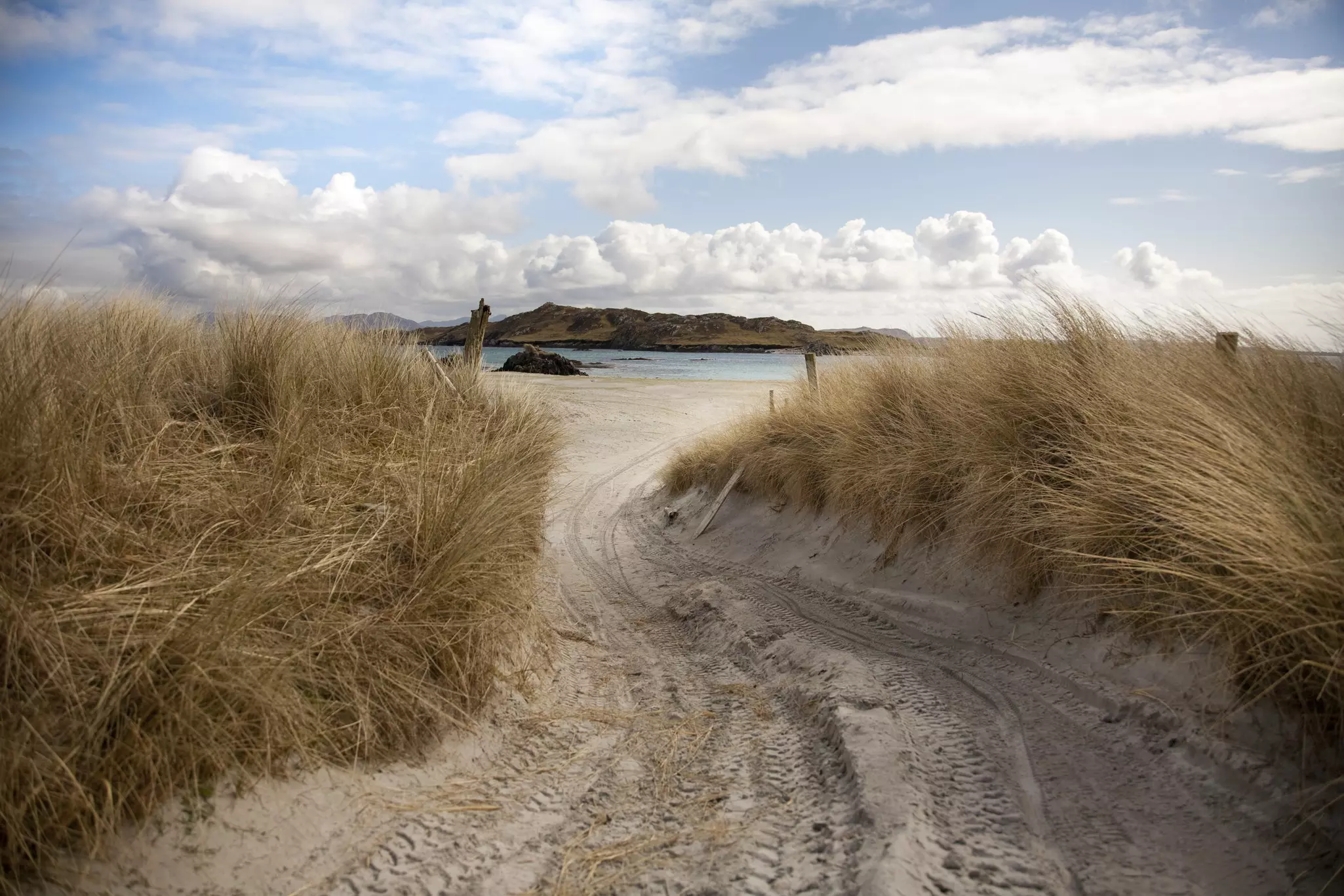
Just 3km outside the village sits a spectacular sandy isthmus (called a tombolo) that forms two back-to-back bays. The first is Dog’s Bay, famed for its brilliant turquoise water and pure white sand made predominantly of crushed microscopic seashells. On the reverse side is Gurteen Bay, a larger, sweeping strand that is highly popular for windsurfing and summer beach walks.
The Upper Diamond Hill Trail inside Connemara National Park delivers one of the most rewarding day hikes in Ireland. Begin near the park’s visitor center in Letterfrack, which displays interactive exhibits and maps from Wednesday to Sunday.
From the trailhead, a wooden boardwalk leads safely over fragile blanket bog before transitioning into a stone-pitched mountain path that climbs steeply along a narrow quartzite ridge. Standing at the 442m summit rewards you with spectacular 360-degree views over the peaks of the Twelve Bens, Kylemore Abbey, Pollacappul Lough and the jagged Atlantic coastline.
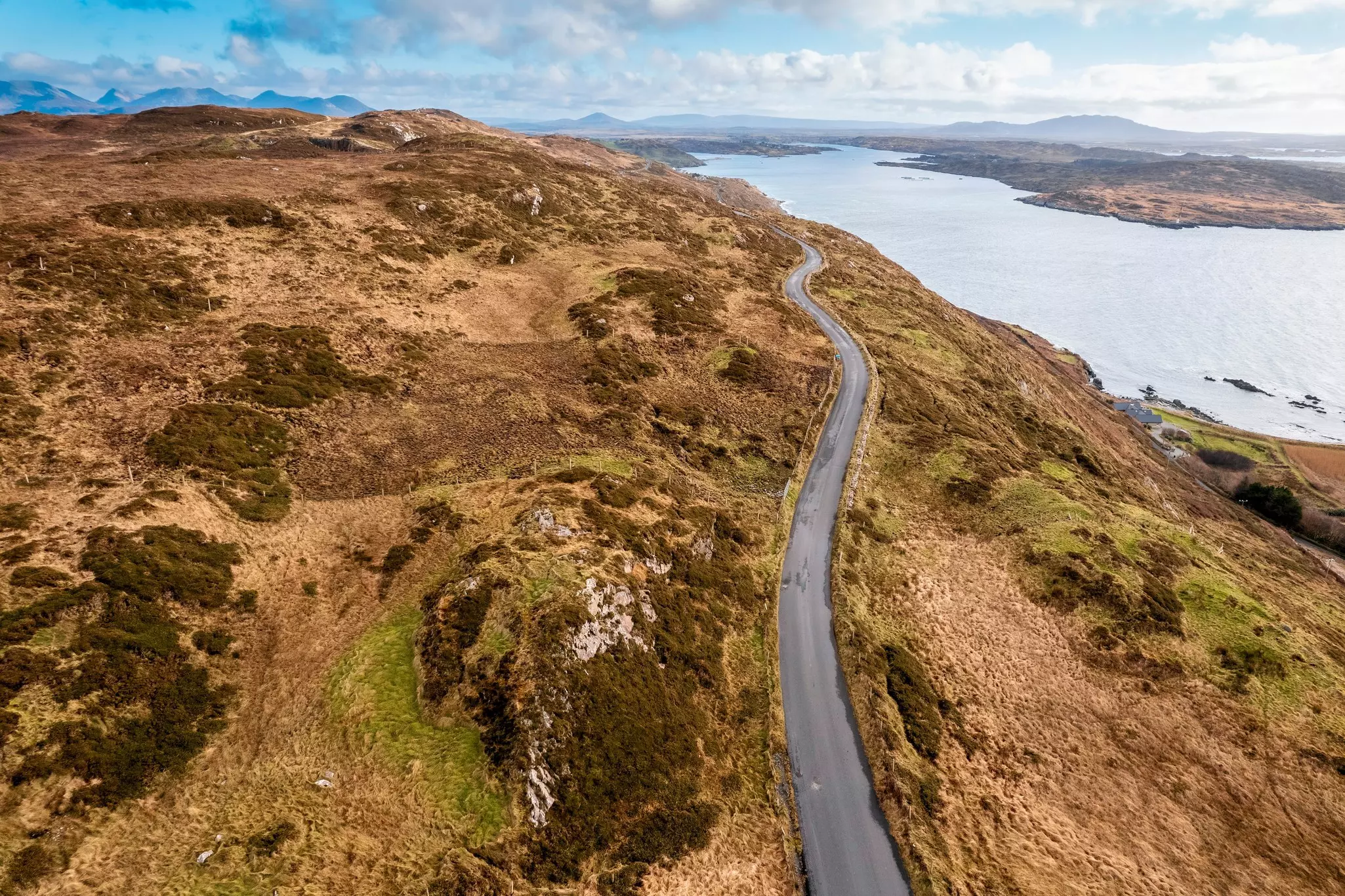
As the sun begins to set, the Sky Road loop just outside Clifden is one of those unforgettable settings that I summon in stressful situations (in the dentist’s chair, say, or during a turbulent flight). This narrow 16km ribbon of asphalt climbs steeply out of the town, tracking high along the edge of the peninsula before splitting into an upper and lower route.
Always choose the upper road. As you reach the crest, the landscape opens up completely into a spectacular view of the Atlantic Ocean, the crumbling stone shell of 19th-century Clifden Castle down in the valley, and the distant silhouettes of Turbot and Inishbofin islands slicing through the waves. It is one of those quintessential Irish drives that reminds you how much of Connemara is still powerfully shaped by its raw, ancient landscape rather than by modern towns or roads.
While natural attractions like Connemara National Park, hiking trails and the beaches at Dog’s Bay are completely free to enjoy, your primary expenses will come down to transport and local accommodations. Chip-and-PIN credit cards and contactless payments are universally accepted across almost all hotels, pubs and restaurants. Still, we highly recommend carrying a small amount of cash in euros for island transport, roadside honesty boxes, small rural cafes and craft shops.
Room for two at a mid-range guesthouse: from 120 euros–€180 per night
Adult round-trip passenger ferry ticket to Inishbofin: €25
A pint of locally brewed craft beer or Guinness: €5.80–€6.50
Bowl of seafood chowder at O’Dowd’s Seafood Bar: €9.50
Standard adult admission ticket to Kylemore Abbey and Gardens: €18
Daily bicycle rental on Inishbofin or in Clifden: from €20
Dinner main course at a seafood restaurant: €20–€35
Connemara’s dramatic Atlantic weather is notoriously fast-moving and unpredictable. Bright sunshine, intense rain showers, heavy coastal mist and gusty winds can easily all occur within the span of a single afternoon. To stay comfortable, it is vital to pack high-quality waterproof outer layers, windproof gear and versatile clothing layers. If your itinerary involves walking across the damp blanket bogs, navigating the coastline or hiking up into the mountain ridges, sturdy waterproof hiking boots are an absolute necessity over standard sneakers.
No – but a few words will win the hearts of any local. Much of Connemara lies within the South Connemara Gaeltacht, Ireland’s largest continuous Irish-speaking region – and while every single resident speaks English fluently, Irish remains the natural, everyday language spoken across local homes, schools, shops and neighborhood pubs.
You will notice that official road signs change to Irish-only text once you enter the Gaeltacht borders. Taking the time to learn even a couple of basic phrases – such as go raibh maith agat (thank you) or slán (goodbye) – will get you huge amounts of local goodwill.
Book your Ireland trip with Lonely Planet Journeys
See Ireland how it's meant to be seen
Planned by local experts and tailored to you, Lonely Planet Journeys handles the logistics so you can just enjoy the trip. Tell us what you want and we'll build your Ireland itinerary from scratch, or browse our bookable trips to get inspired.


Explore related stories