Sep 20, 20268 min read
A Guide to Batang Ai National Park, MalaysiaSep 20, 2026
8 MIN READ

Writer
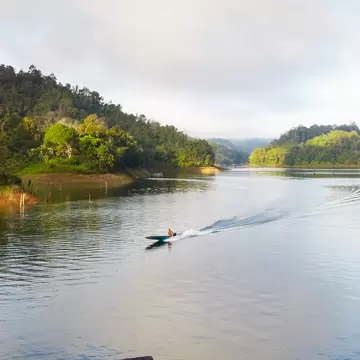
Traveling by boat in Batang Ai National Park, Malaysia. Matt Munro/Lonely Planet

Writer
Lonely Planet may earn a commission from affiliate links on our site. All recommendations and reviews reflect our own independent opinions.
When you think of the Malaysian state of Sarawak in Borneo, one of the first things that comes to mind is orangutans. A 30-minute bus ride from the state capital, Kuching, Semenggoh Wildlife Center is one of the easiest places in the world to see these amazing apes. But it’s quite far from a truly wild experience, and from proper jungle.
Those more interested in the thrill of walking through a green wilderness alive with cicadas, squawking hornbills and other sounds should instead look a few hundred kilometers east. Batang Ai National Park, a part of a largely untamed area named the Heart of Borneo, remains under the radar, but is one of the best places in Sarawak to encounter truly wild orangutans and the Iban people who live in this remote, ancestral landscape.
Just arriving is an adventure. Seated in a longboat, you glide across the waters of the artificial Batang Ai Lake, looking out at jigsaw stretches of rainforest sprouting from the shore, passing submerged trees and remote islets. When you realize that your signal-less smartphone is about as useful as a brick, modernity is already behind you. As the lake narrows into the green channels of the Batang Ai River, the unknown begins to swallow you in.
The Heart of Borneo is a joint conservation initiative between Malaysia, Brunei and Indonesia. Sarawak’s part extends along the border with Kalimantan and includes the 24-sq-km Batang Ai National Park and the Lanjak-Entimau Wildlife Sanctuary, Sarawak’s largest protected area at 1687 sq km. Together, they form part of a huge transboundary protected area that blends into Betung Kerihun National Park in Indonesia’s northwestern Kalimantan.
Reaching the Heart of Borneo requires driving 280km (4 to 5 hours) from Sarawak’s capital, Kuching, where the nearest airport is located, plus another 1 to 1.5 hours by longboat.
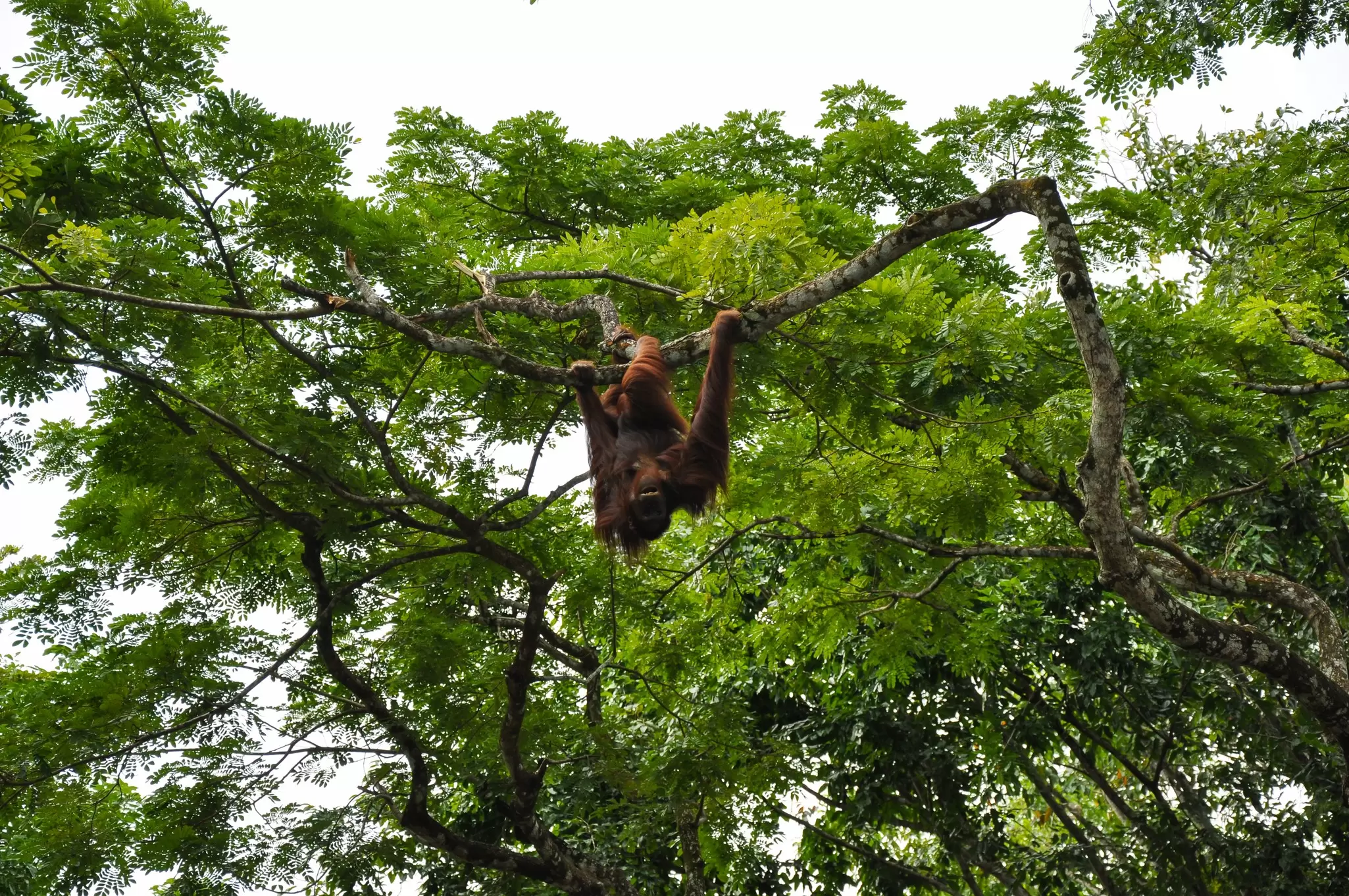
Batang Ai offers one of the best chances in Sarawak to encounter the elusive orangutan in its natural habitat. Of Sarawak’s estimated 2000 orangutans, close to 80% are found in the core areas of Batang Ai National Park and Lanjak-Entimau Wildlife Sanctuary. A significant population also lives outside the parks’ boundaries in the rainforest connecting Sarawak and Indonesia’s Kalimantan border.
There are also resilient people here. When the Batang Ai Dam flooded in 1985, many of its original Iban communities were displaced to settlements a few kilometres up the paved road that ends at the dam. Some resolute families chose to remain in their now water-hemmed ancestral lands, about an hour by longboat from the nearest signs of modern civilization.
The rainy season normally stretches from November to February. Visiting is still possible during these months, but orangutans tend to avoid heavy rain, and wet conditions can make trekking and other outdoor activities along the river more difficult.
The drier, more stable period runs from March to October, with July and August generally seeing the lowest rainfall. Unexpected showers, however, can happen year-round.
Beyond the rainforest, the main reason to visit Batang Ai is to see its elusive population of wild orangutans. Encounters are never guaranteed, regardless of the price tag, although the longer you stay, the greater your chances of seeing them in the wild.
What you can certainly see, however, are traces of abandoned orangutan nests. These clever primates construct a new sleeping platform high in the trees almost every night. You may also spot fruit leftovers bearing their teeth marks scattered on the forest floor.
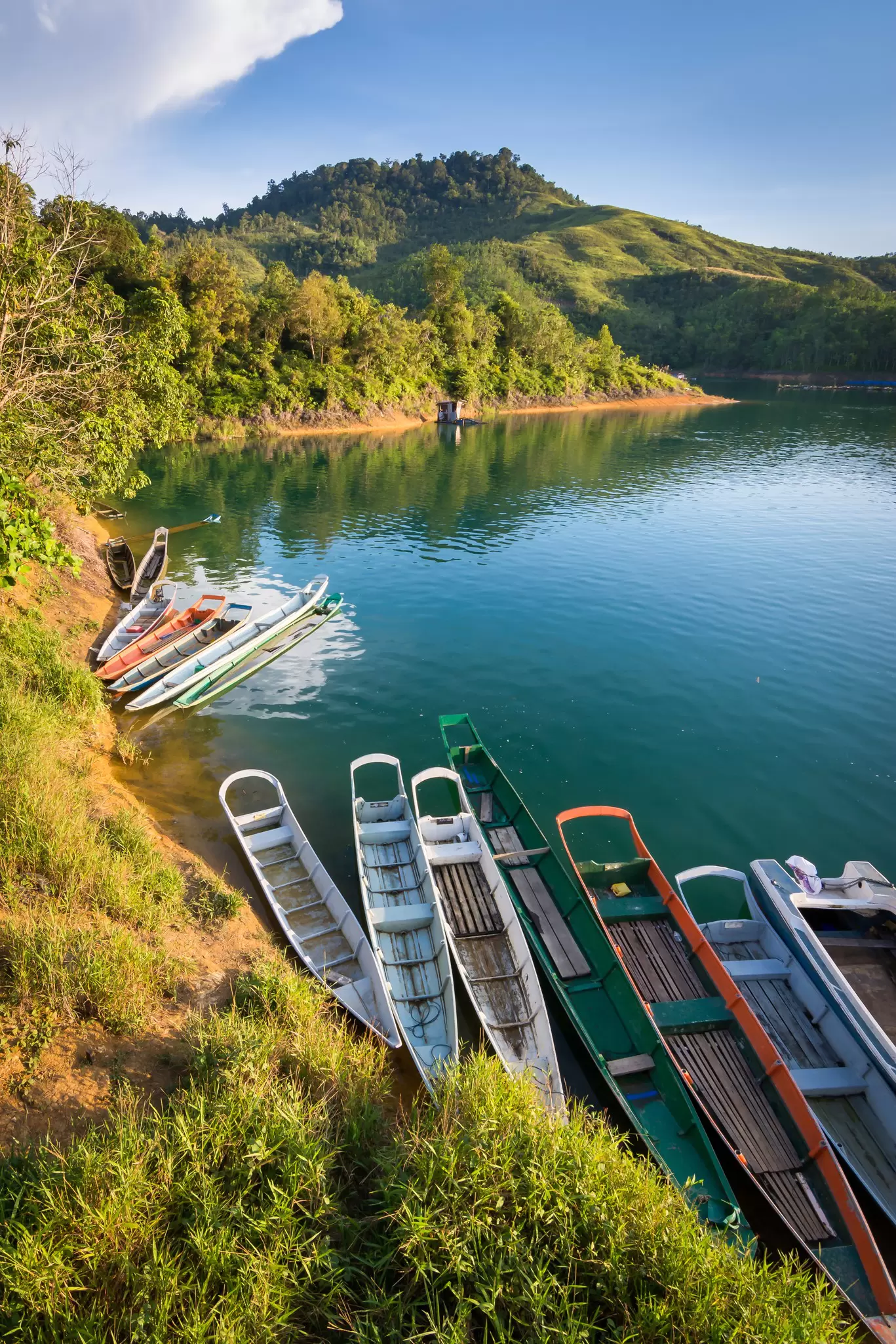
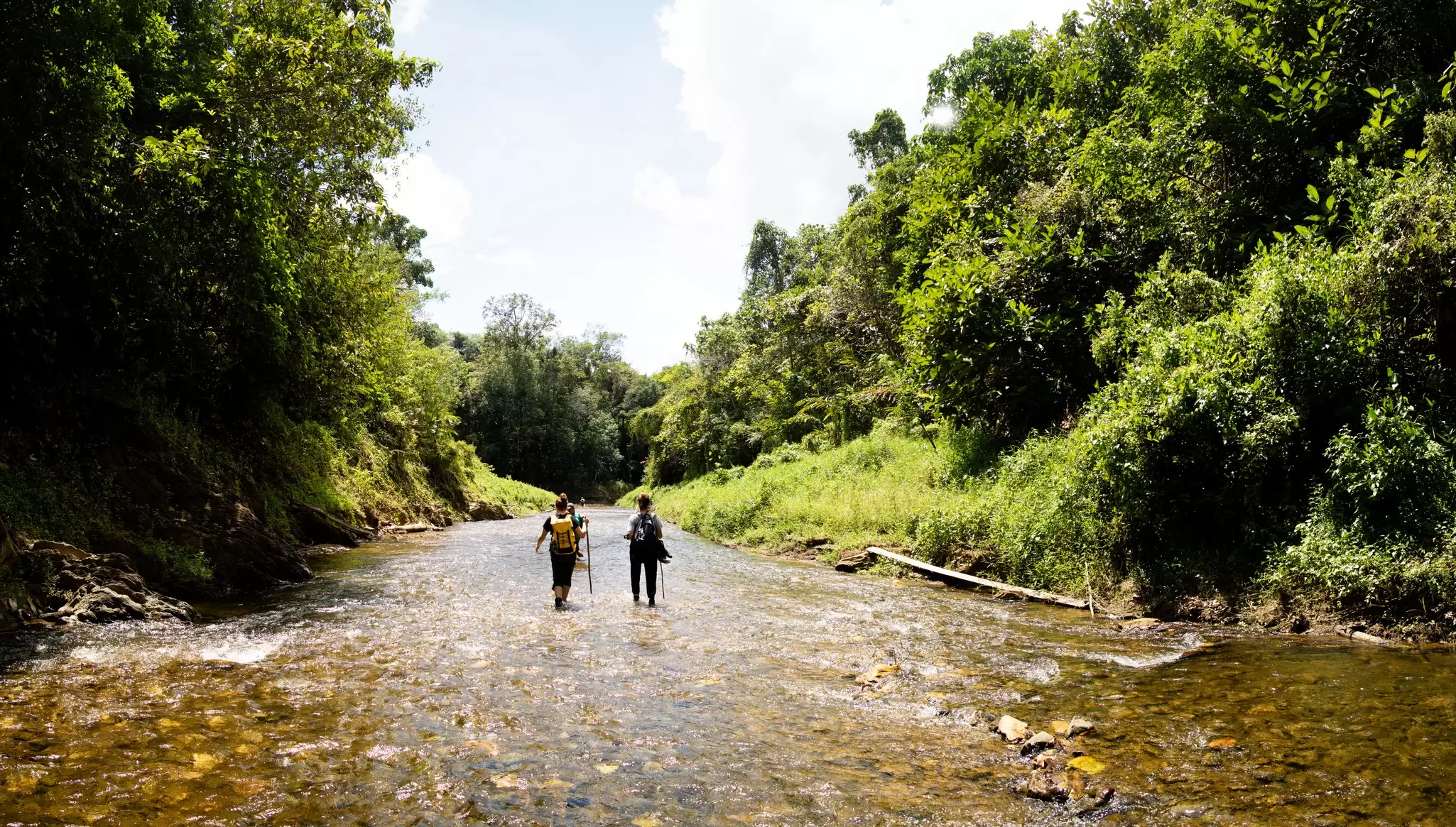
Even if you don’t see orangutans, gliding across Batang Ai Lake before disappearing into the narrow Delok and Batang Ai rivers is one of Borneo’s most unforgettable experiences. As you proceed deeper into the forest, the river narrows, and the journey takes you past dense forest and jungle vegetation.
Skilled boaters can also take guests upriver to swim at secluded waterfalls while preparing a traditional riverside Iban meal. Try ayam pansuh, a delicious mix of chicken and jungle leaves steamed inside freshly cut bamboo tubes over a fire.
The Red Ape Trail is a system of trails outside the park boundary, ranging from day trips to demanding 5-day, 4-night expeditions. These hiking tours focus on finding wild orangutans along routes developed and maintained by Batang Ai’s main tour operator, Kuching-based Borneo Adventure. Prices start at RM1800 per person for a group of four, including food, accommodation, guides, boat transport and transport to and from Kuching.
Those without the passion or stamina to spend so long in humid jungle conditions can base themselves at Borneo Adventure’s Nanga Sumpa Lodge and take day hikes. Further upriver, the Lalang Trail leads to the rustic Kasai Lodge, also operated by Borneo Adventure. Set on a scenic bend of the river and surrounded by rainforest, the lodge is a good base for a second night deeper in the forest and for heading out early to search for orangutans in the canopy.
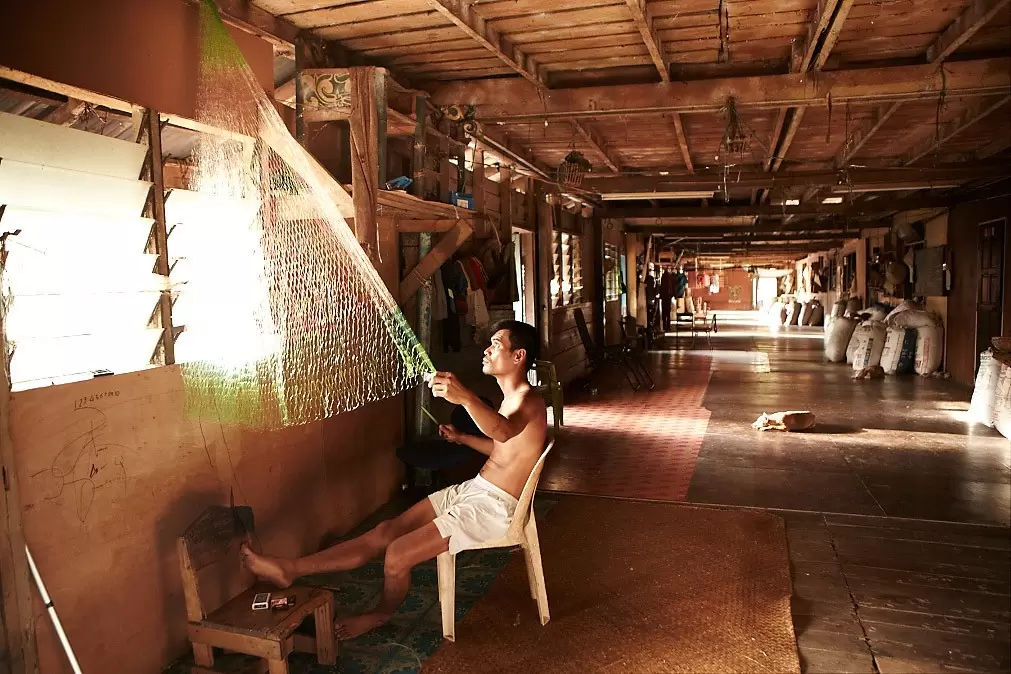
The Iban, one of Sarawak’s largest Indigenous Dayak peoples, are spread across Sarawak, Brunei and parts of Kalimantan. Their traditional dwelling is a long, stilted structure called a longhouse, whose ruai, or common covered veranda, connects the individual homes and doubles as a communal working and living space.
Hospitality has long been central to Iban culture, and visitors to a longhouse may receive a heartfelt invitation to sit with the headman and share a round of tuak, the local sweet rice wine.
Unlike other Southeast Asian destinations, getting here is not easy. You could self-drive from Kuching along the Pan Borneo Highway towards Sri Aman, then inland to Lubok Antu and finally to the Batang Ai jetty, but you’ll be disappointed to find no public boat departures.
The most practical option is to join an organized tour, and the recommended operator is long-established Kuching-based Borneo Adventure which, since 1987, has managed a lodge next to Nanga Sumpa Longhouse, a traditional Iban settlement on the Delok River, just south of Batang Ai National Park’s boundary.
Borneo Adventure is noteworthy because, for the past 40 years, it has supported the area’s local communities and advocated for conservation, recording data on the orangutan population it encountered on expeditions.
When the buffer area was licensed for timber extraction and conversion to oil palm land in 2012, joint research by Borneo Adventure, the Sarawak Forest Department, Sarawak Forestry Corporation and the Wildlife Conservation Society helped reverse the decision and designate some 14,000 hectares of buffer forest as an orangutan conservation area.
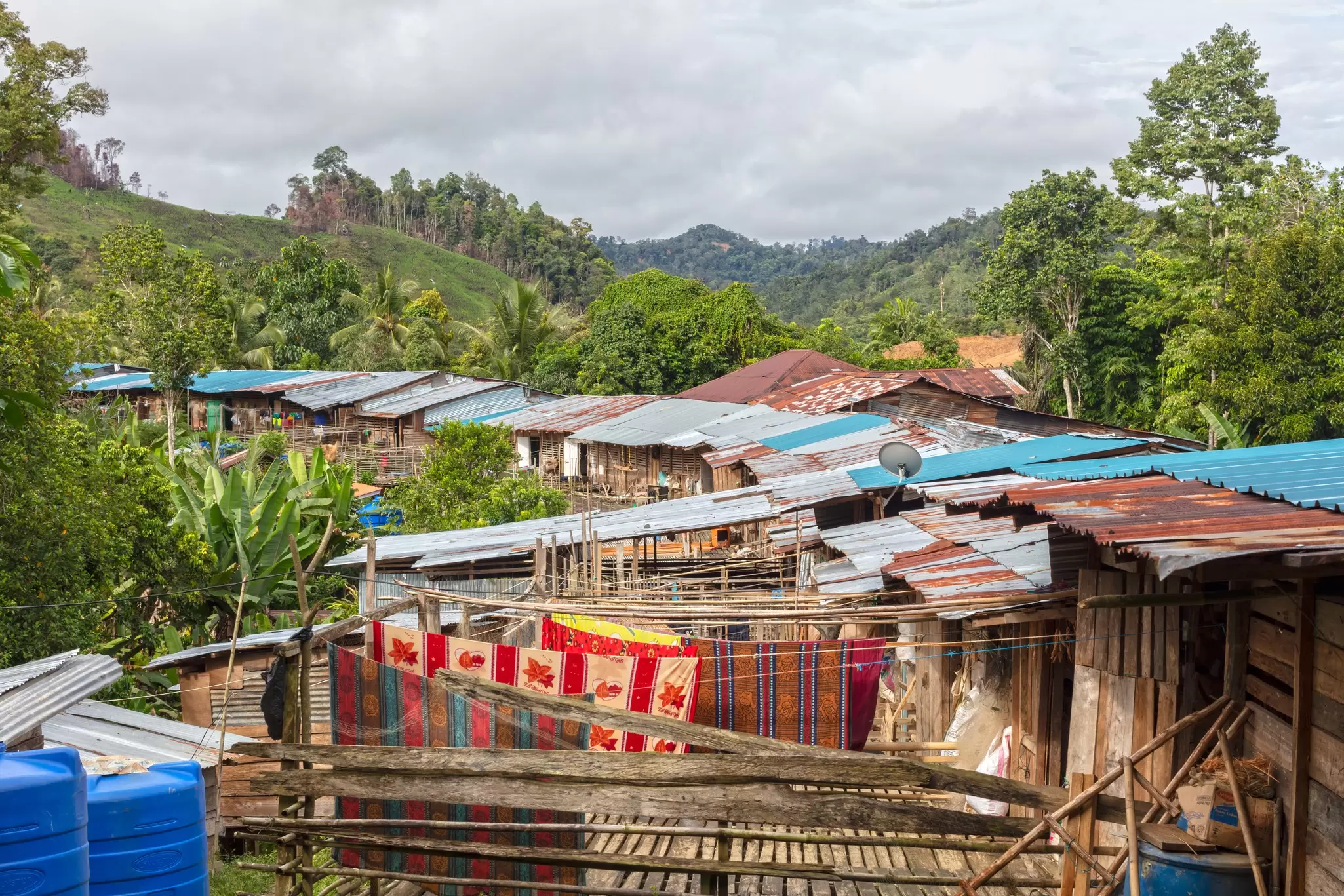
Borneo Adventure’s main base is at Nanga Sumpa on the Delok River. Three Iban communities live along this river, comprising about 50 families, most of whom live in three longhouses: Nanga Sumpa, Nanga Jambu, or Pala Ta’ong. Because hosting visitors directly in the longhouse was considered too disruptive to everyday life, Borneo Adventure Lodge was built next door.
The lodge features large en suite rooms, spacious bathrooms and heavy hardwood tables sourced from nearby Kalimantan, some carved with traditional motifs of the Iban and Orang Ulu peoples. A beautiful riverside veranda, where guests can relax and eat, was built in 2019 using recycled wood.
In keeping with the spirit of disconnecting from the modern world, phone reception here is minimal and there is no immediate plan to improve it. Time instead follows the rhythms of the sloshing Delok River and the cacophony of insects.
Bring sturdy hiking shoes as well as a pair of rubber shoes (available at Mr DIY shops all over Malaysia or along the way in sundry shops at Serian or Lachau). Locally known as Adidas kampung, these inexpensive rubber shoes are excellent in wet conditions, dry quickly and work surprisingly well on the muddy trails of Sarawak’s rainforests.
Also pack mosquito repellent, sunscreen, loose-fitting hiking pants and quick-drying, breathable shirts. Since you'll spend time in small boats with no roofing, long sleeves are also useful for sun protection.
Everything you need, including transportation, food, guides and accommodation, is provided as part of an organized package. At a minimum, a 3-day, 2-night trip to Nanga Sumpa, including Iban longhouse visits and an upriver boat journey to Enseluai Waterfall, starts at RM1600 per adult and RM1300 per child aged six to 11, based on a group of six people.
As it takes the best part of a day to reach Batang Ai, it’s advisable to spend at least 2 nights in the area, and longer if you want more chances to spot wild orangutans. Serious jungle trekking and wildlife enthusiasts can arrange tours lasting up to a week.
Explore related stories